

Madagascar. Part VI: Ranomafana
We left Antsirabe the next morning. Only four days earlier, we’d watched the sun set behind ancient Baobabs and walked through forest where every tree had dropped its leaves for the dry season. We’d also cross miles of dirt road, travel down riverways in wooden pirogues and climb up steep limestone peaks.
Now the terrain was changing once again.
As the road continued to climb further to the south, the flat lands of the West began to disappear from view. Rice paddies stretched out across whole valleys, eucalyptus plantations blanketed hillside after hillside and villages were becoming more common. Water ran under bridges that had run dry in Menabe, while patches of green forest were reclaiming the slopes. The transformation happened fast!
Madagascar is depicted as a singular large island on maps. Yet traveling across Madagascar is a vastly different story. There are extreme variations in climate, elevation and geology occurring over relatively short distances resulting in unique eco-systems which seem like two completely different countries rather than opposing ends of the same island.
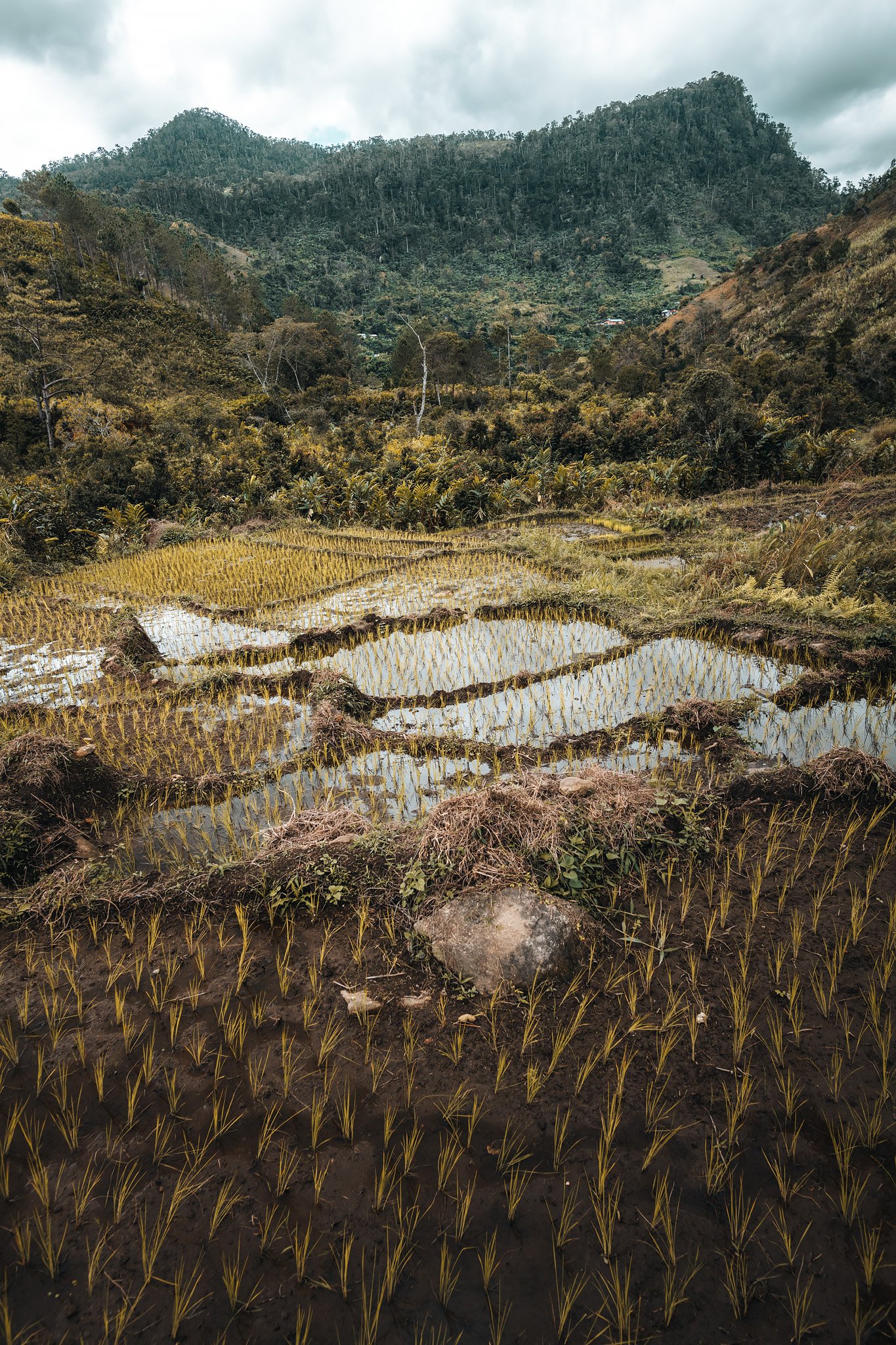
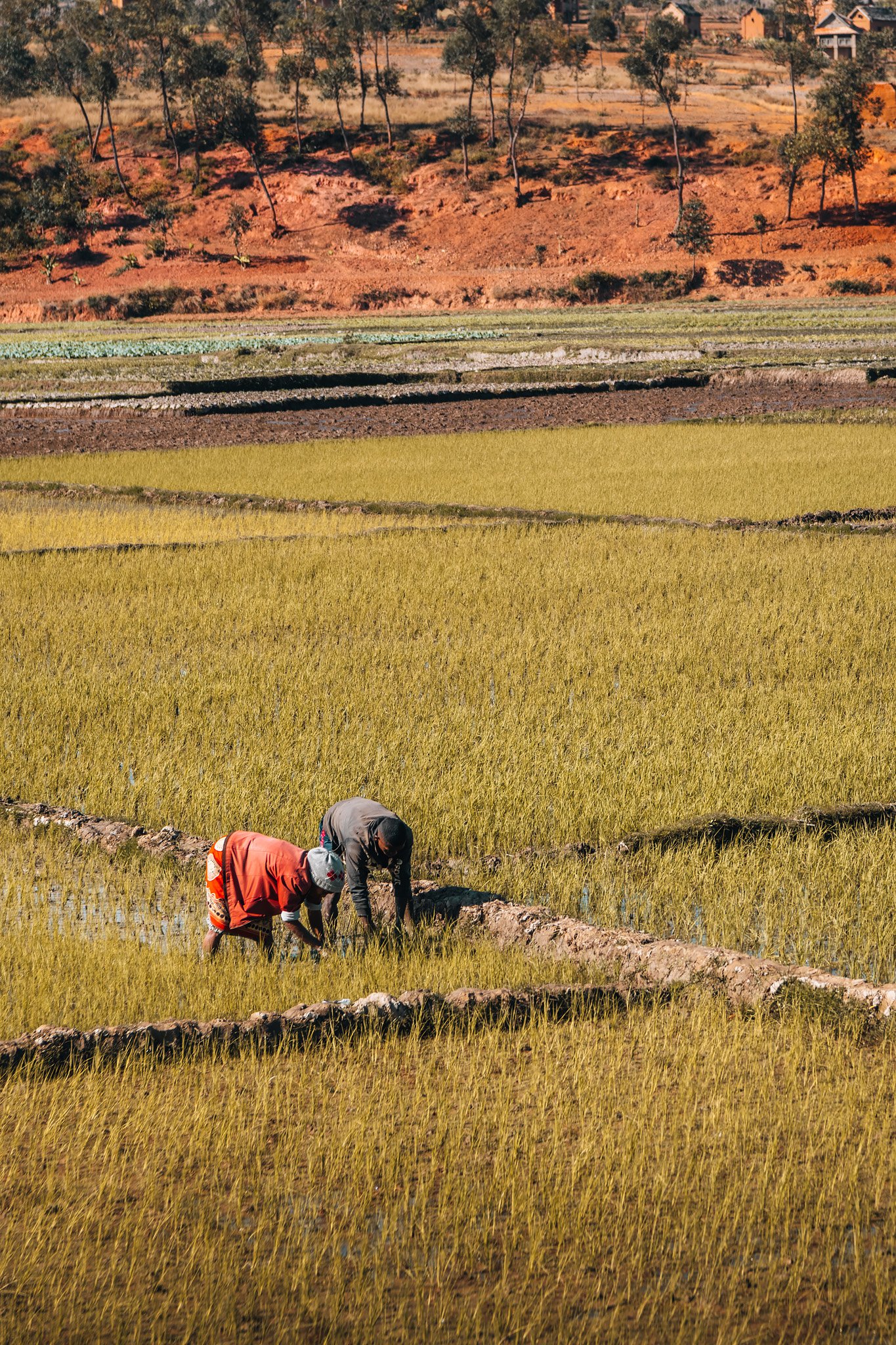
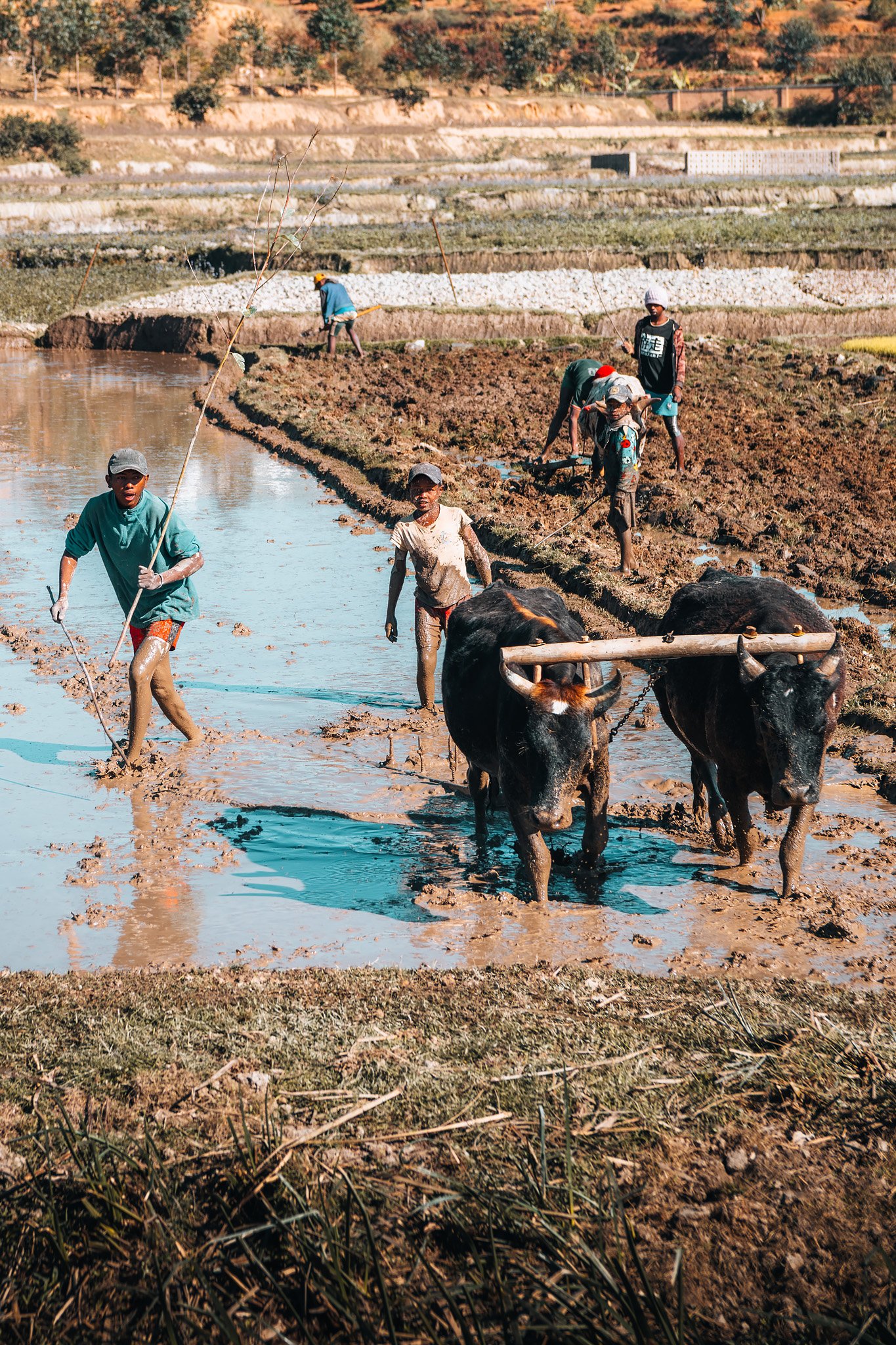
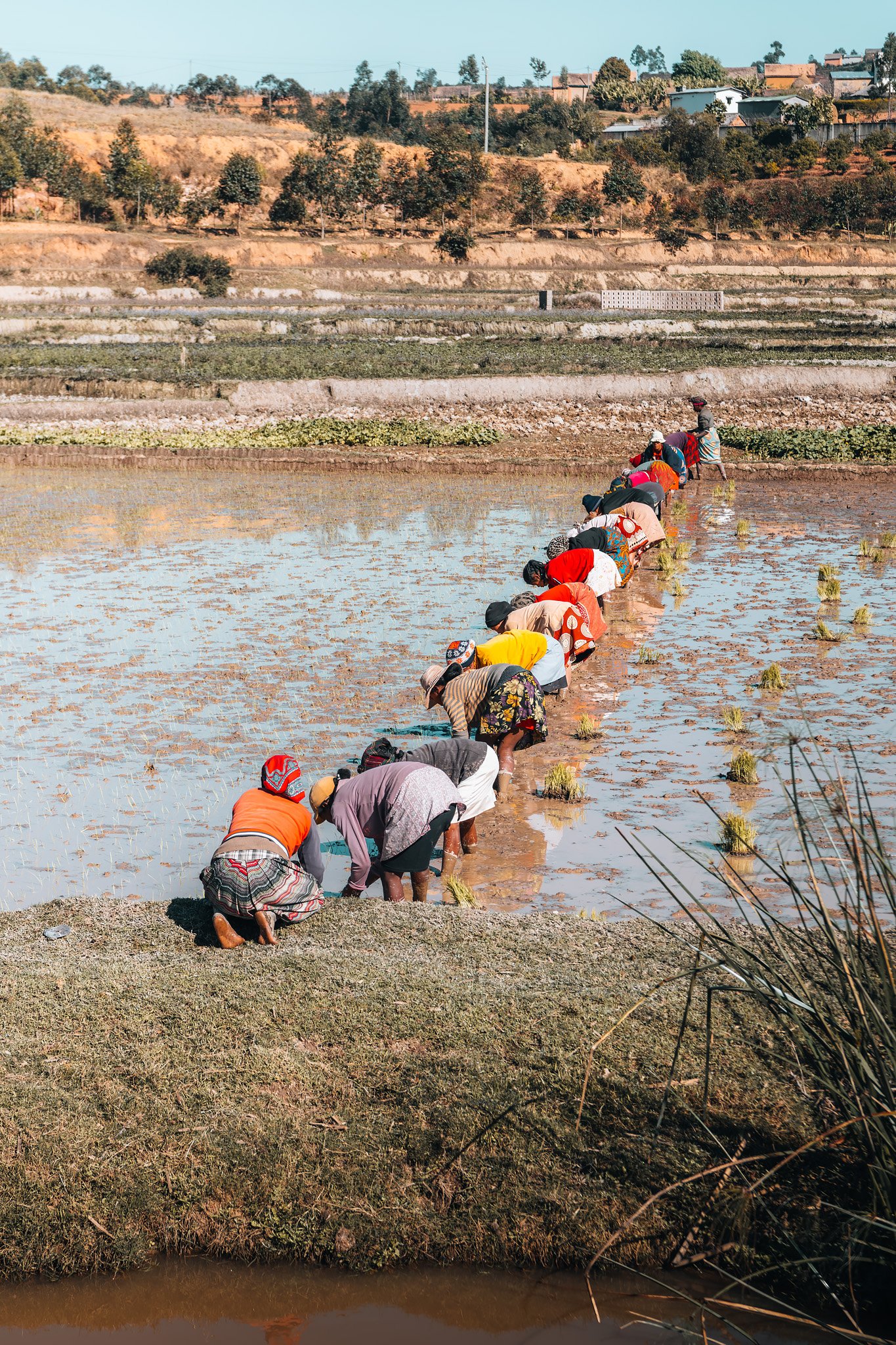
The central Highlands area of Madagascar contains some of the highest population densities anywhere in the country. Most every square metre of land appeared to be cultivated. Hill sides were developed into intricately stepped rice paddies, vegetable gardens and small orchards, and farmers worked extremely small areas using farming methods that have changed very little over centuries. Rice is much more than just Madagascar’s main source of nutrition. Its influence extends into people’s daily routine, local economies and even cultural traditions. Each town we drove through seemed to center around their crops, and even the tiniest valley had been expertly designed to capture precious water.
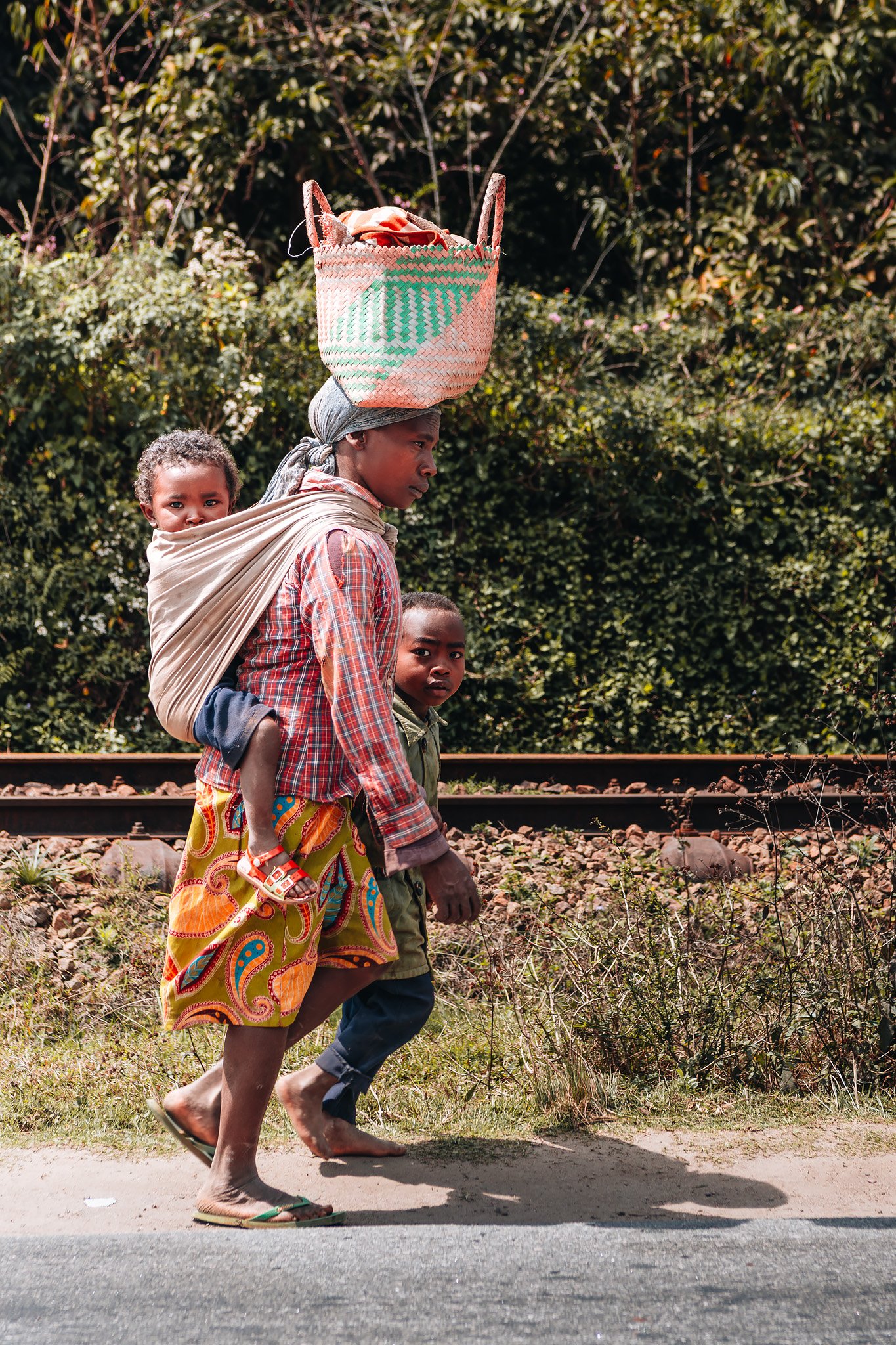
Life was everywhere unlike in the remote and sparsely populated west. School children wearing colorful uniforms strolled along side the road in groups. Women carried baskets filled with produce or bundles of firewood easily on their heads. Road side vendors sold bananas, cassava, Llychee and neat stacks of tomatoes awaiting travelers who pass by. The road provided a window into everyday life in Madagascar.
By the time we reached Ranomafana, the dust that followed us throughout western Madagascar was gone. The air felt different too, much cooler and denser.
A Forest Reborn
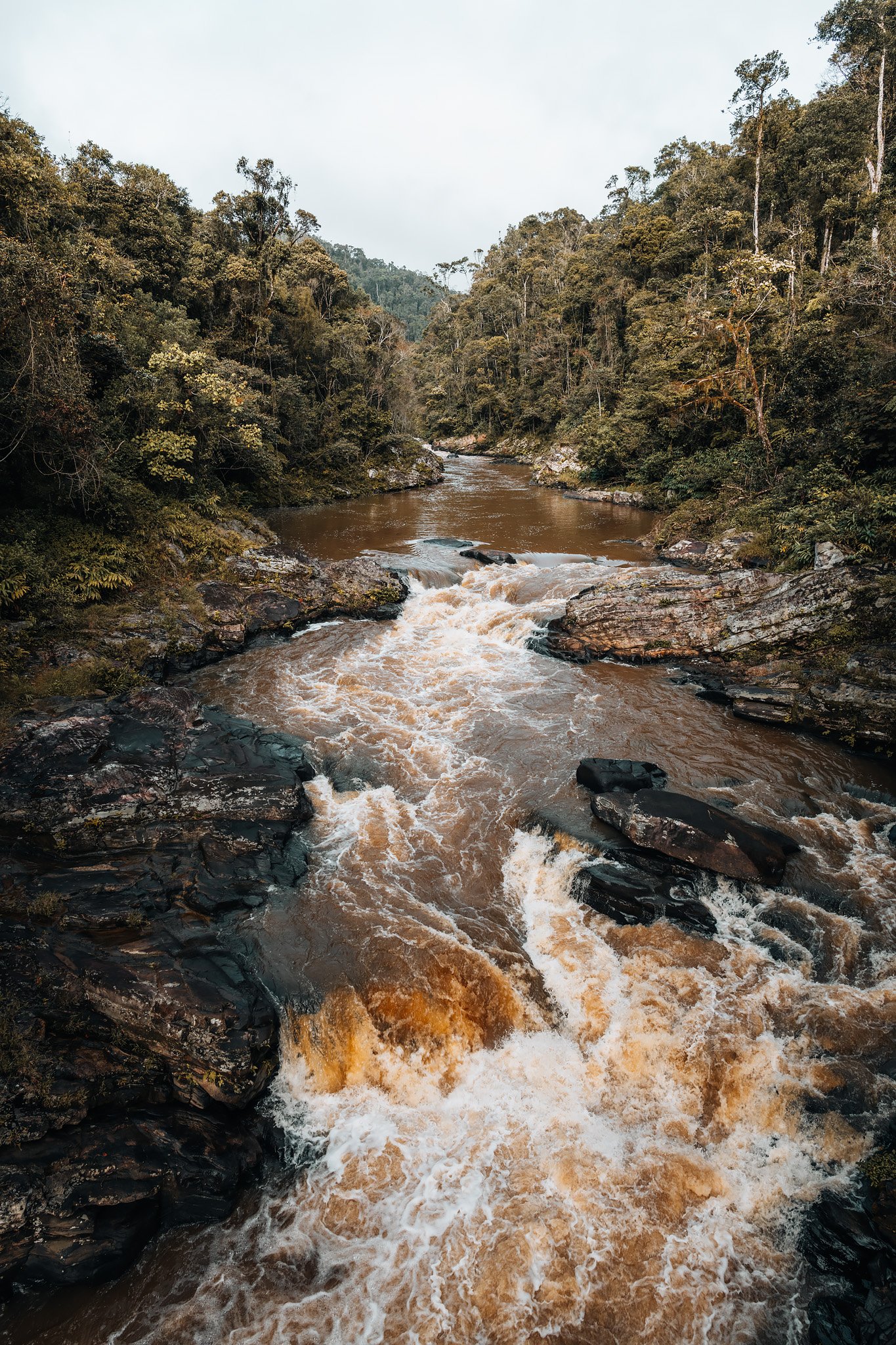
Ranomafana, which translates in the local language to “Hot water” or “Hot Spring” owes its existence to similar processes as those which formed Andasibe at the start of our trip.
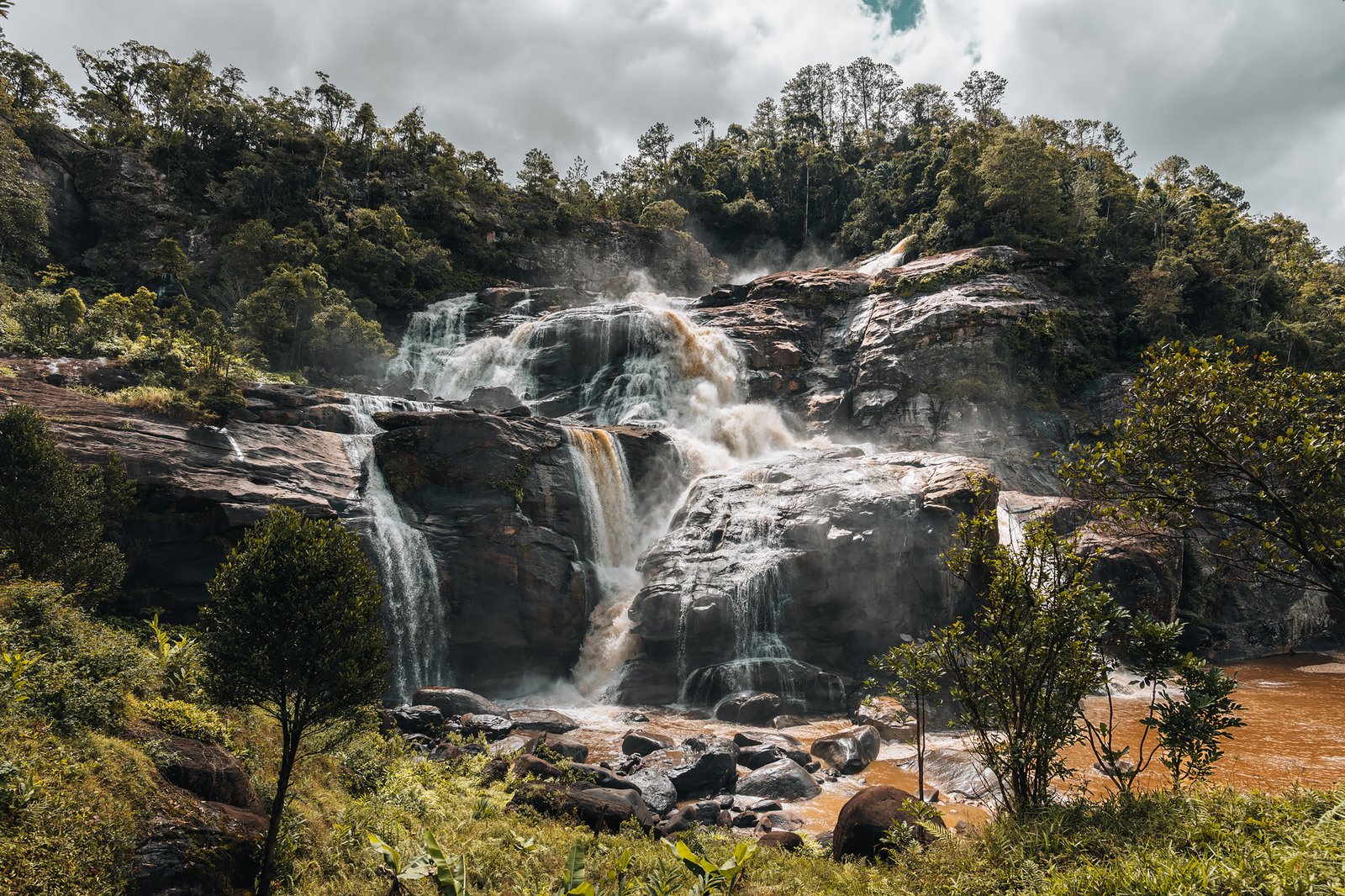
Moist ocean winds flowing inland off the Indian Ocean meet Madagascar’s eastern escarpment, cool as they climb and release tremendous amounts of precipitation. Year after year. Century after century. These processes have supported one of the island’s most fertile rainforest environments.
However, Ranomafana is not merely another protected forest. Its history is quite recent.
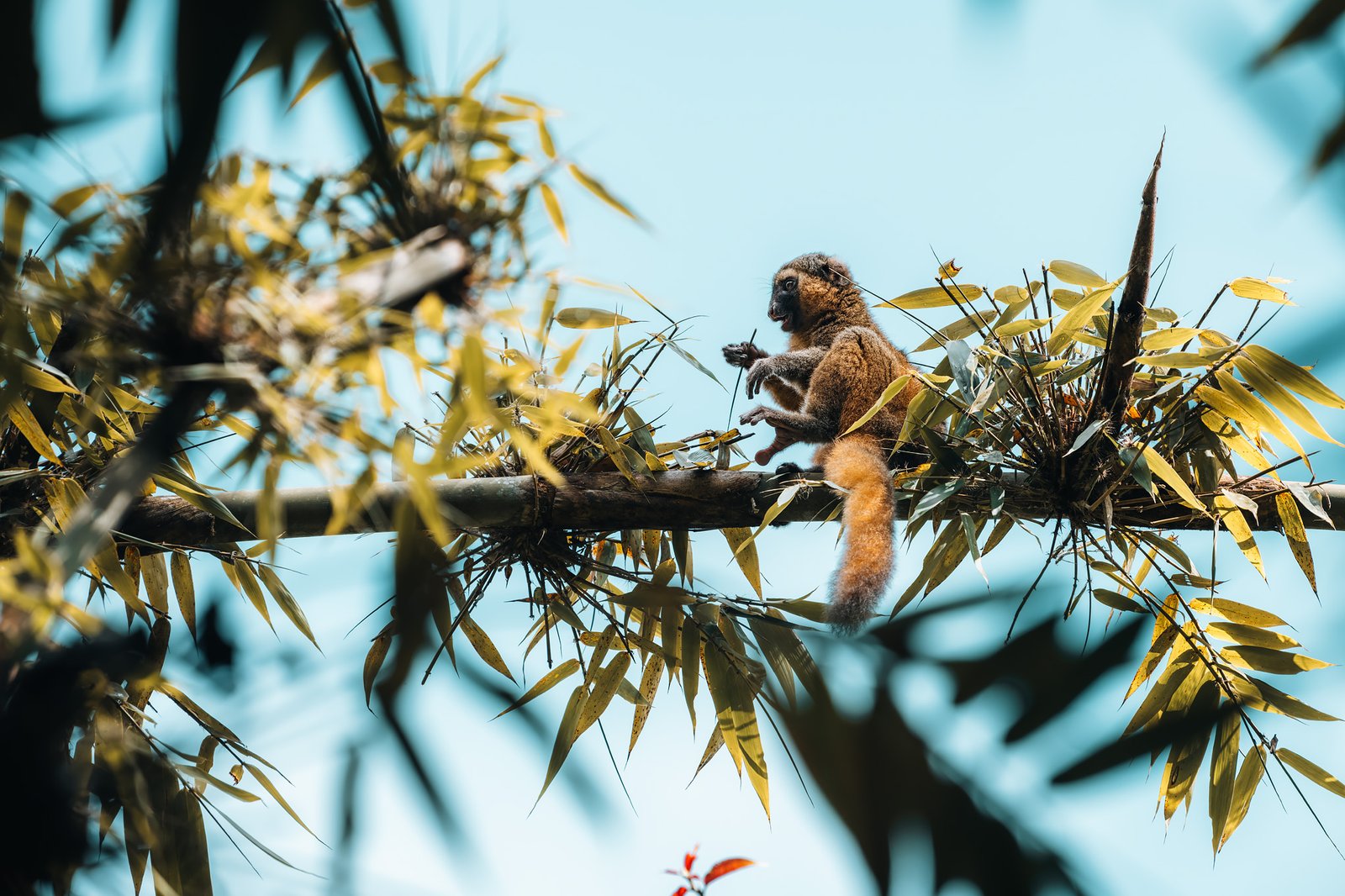
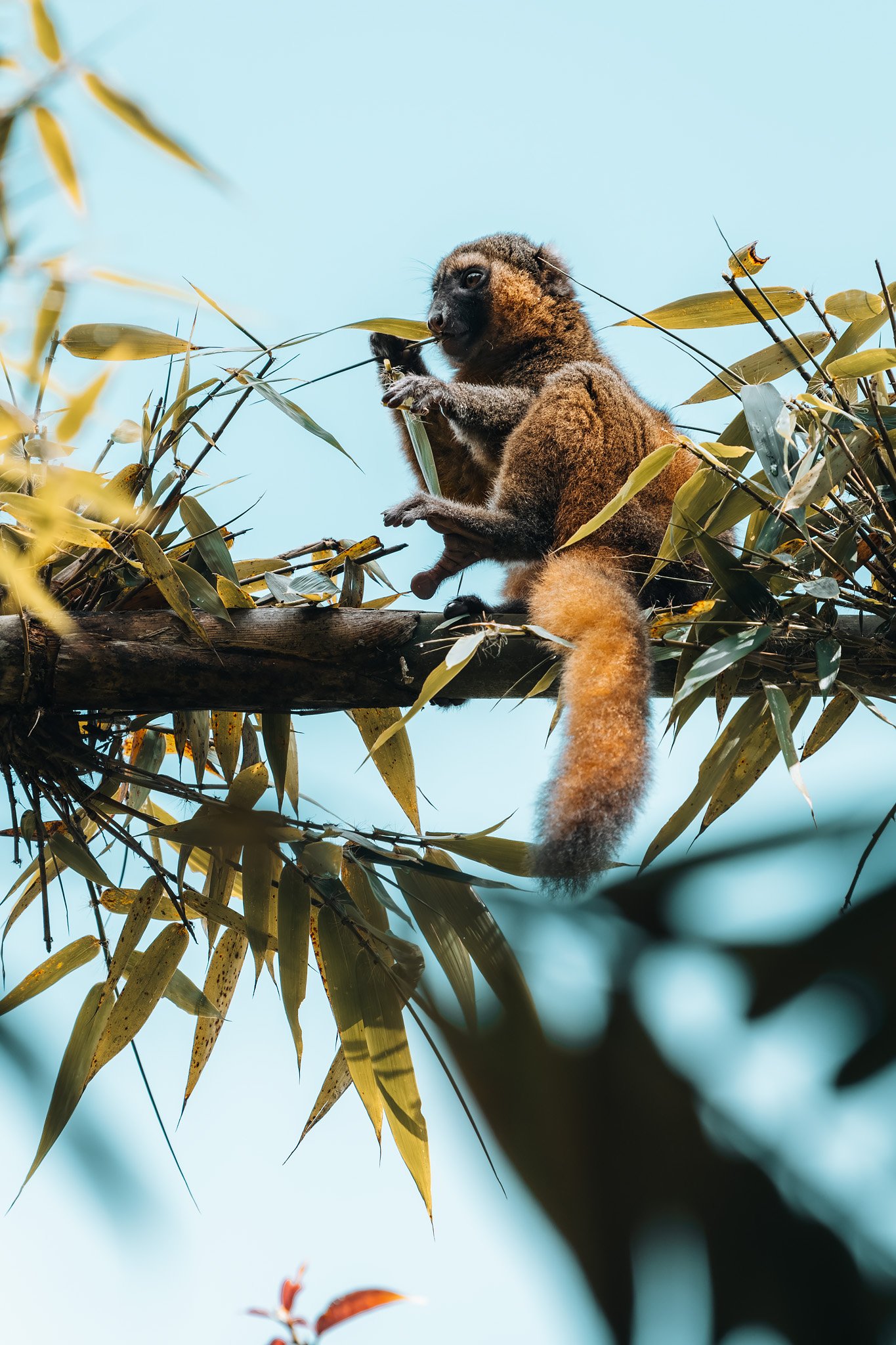
In 1986, scientists made one of the most surprising zoological discoveries of the twentieth century when they identified a hitherto unknown primate inhabiting these forests, The Golden Bamboo Lemur. When Madagascar’s mammals were already thought to be reasonably well studied, finding a completely new lemur species surprised the scientific community and emphasized the biological value of the area.
Not long after that discovery, the Malagasy Government created Ranomafana National Park and protected over 40,000 ha of Montane Rainforest. Today, Ranomafana is part of the UNESCO-designated “Rainforests of the Atsinanana,” recognized as one of the world’s most important Biodiversity Hot Spots.
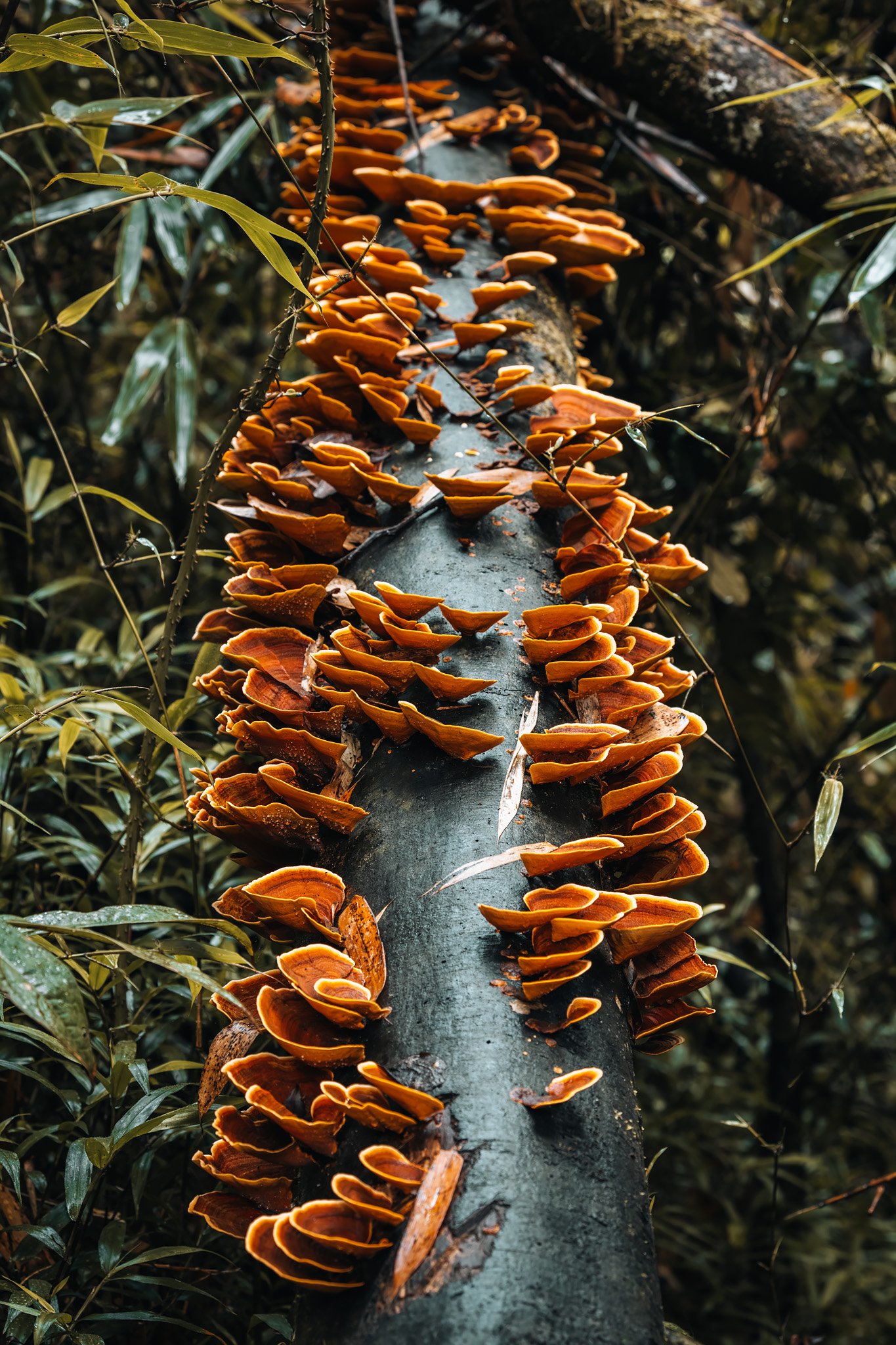
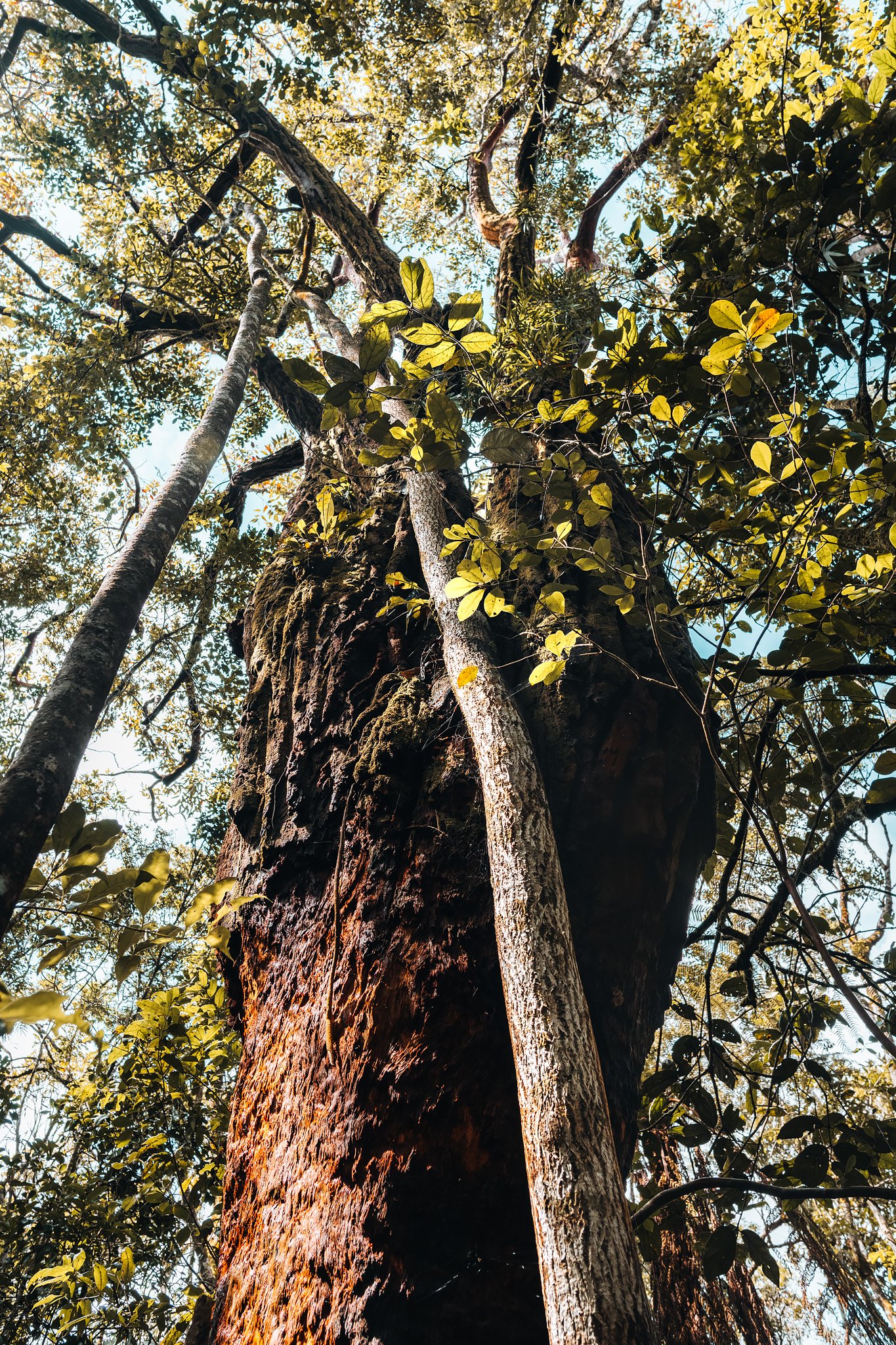
Underneath its canopy it quickly became apparent why. While sunlight penetrated nearly every corner of the forest floor at Kirindy, Ranomafana encloses you underneath layers upon layers of superimposed vegetation. Tree ferns towered above the paths and vines dangled between gigantic trunks coated in mosses, lichens & orchids. Every branch on the forest floor seemed to carry another layer of growth.
None of it appeared dormant, all of it grew.
Rainforests tend to appear disorganized at first glance but all layers perform a specific ecological role. The tallest canopy trees compete for sunlight high above the forest floor and shrubs, ferns and young saplings exist below them in constant shade. Microorganisms (such as bacteria), fungi and countless other organisms rapidly recycle nutrients to ensure that poor mineral-rich soils will sustain incredible levels of biodiversity.
Rather than forming a single, interconnected environment, rainforests form multiple “vertical” worlds stacked above each other. Many animals never descend from the canopy and many live their lives among tree trunks, dense understory or leaf litter covering the ground. In fact, a single tree may provide habitat for dozens of different species without competing directly for the same resources.
This complexity helps explain why Madagascar’s rainforests are among the most biologically diverse locations on Earth.
Searching the Canopy
At first we didn’t see anything but leaves. However, as we watched the canopy, we started to notice shapes. A family of Milne-Edward’s Sifakas leaped from one tall tree to another. The way they jumped between the trees was unbelievable. There is a difference between the two species of sifakas. The sifakas of the drier forests of Western Madagascar are thin grayish brown. We had thick black and white coats because we live in cooler temperatures in the Eastern Highlands. The family of sifakas would disappear behind a curtain of foliage and reappear several meters away. This made them harder to track than I thought.
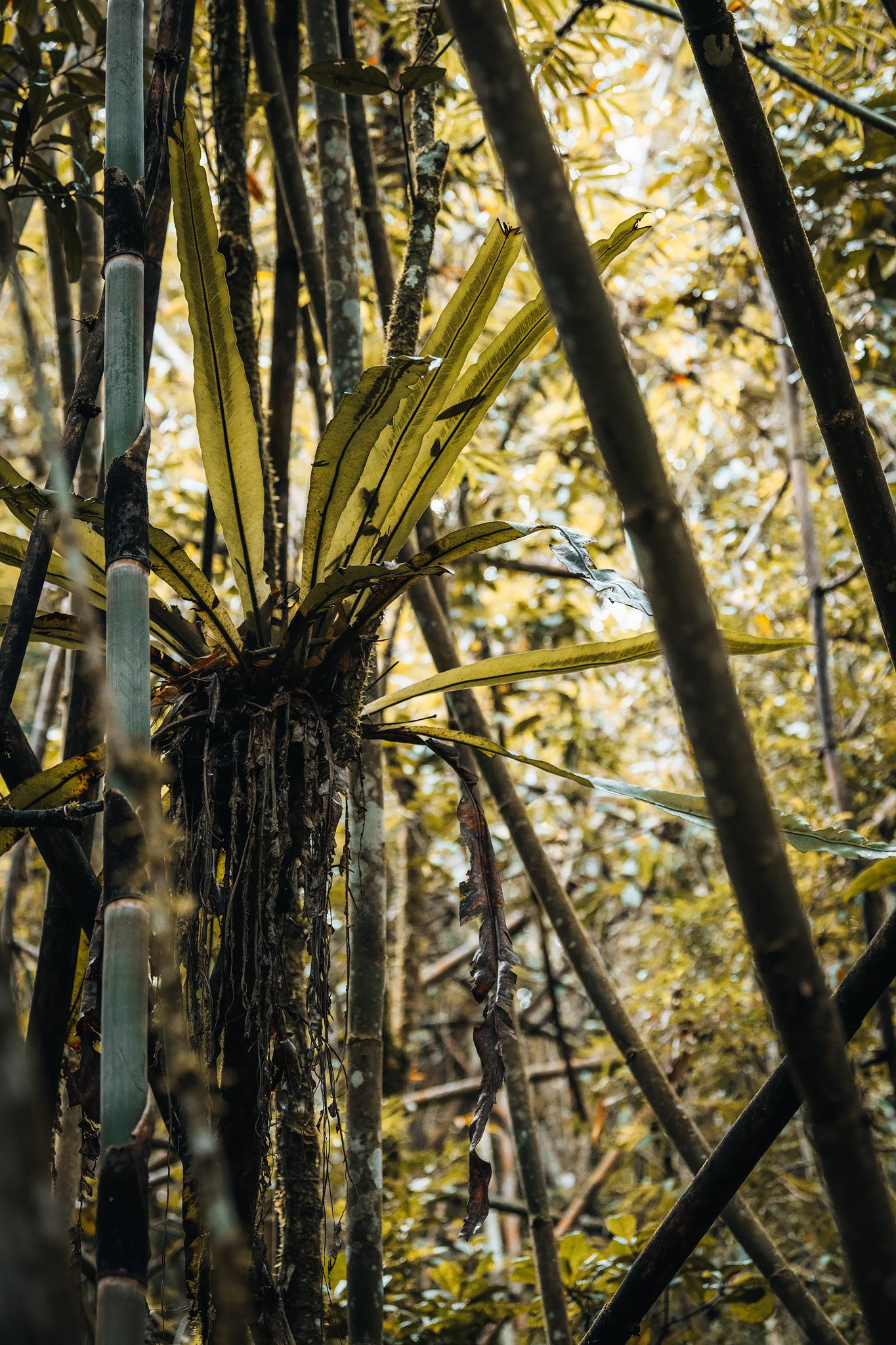
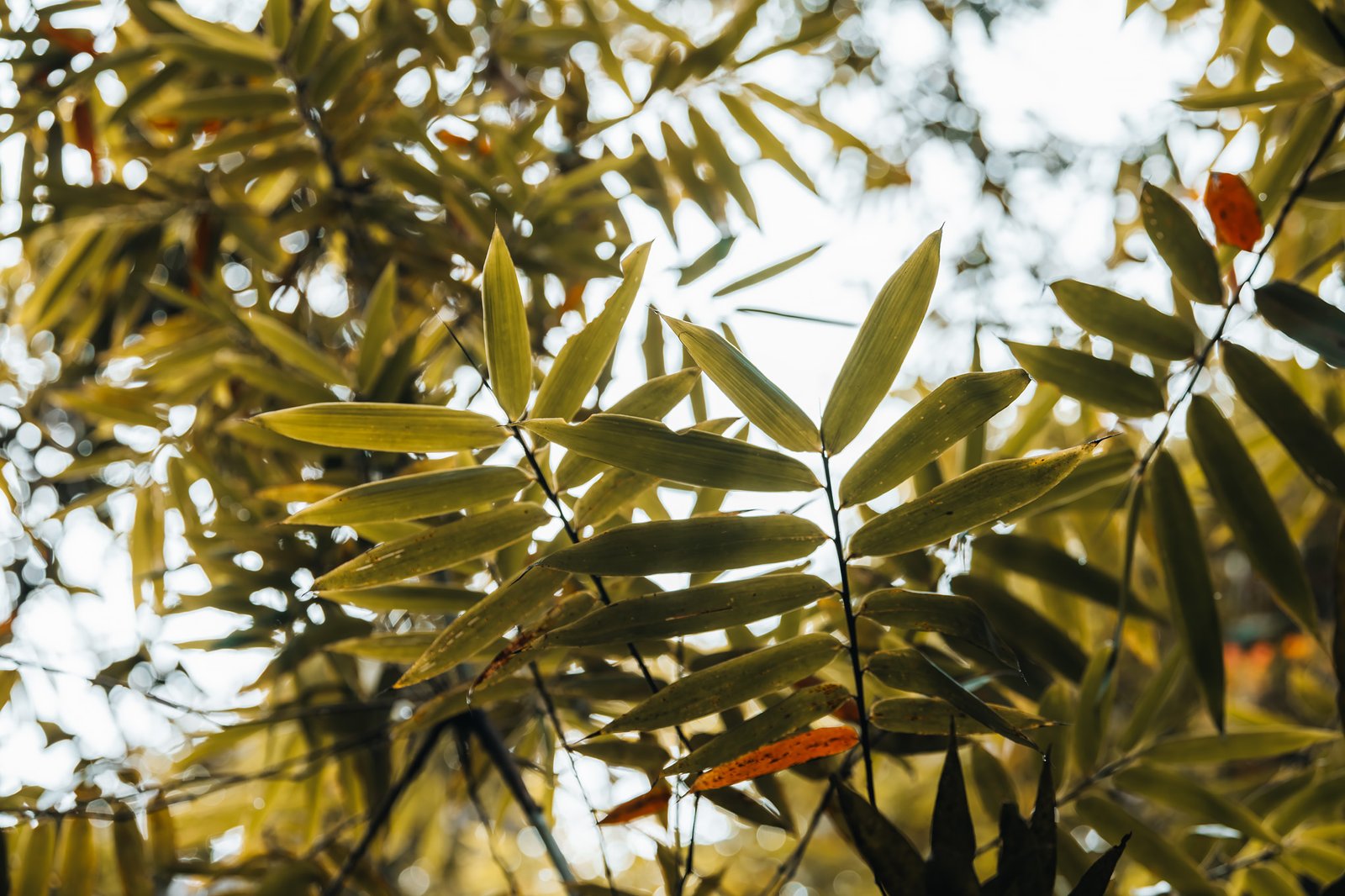
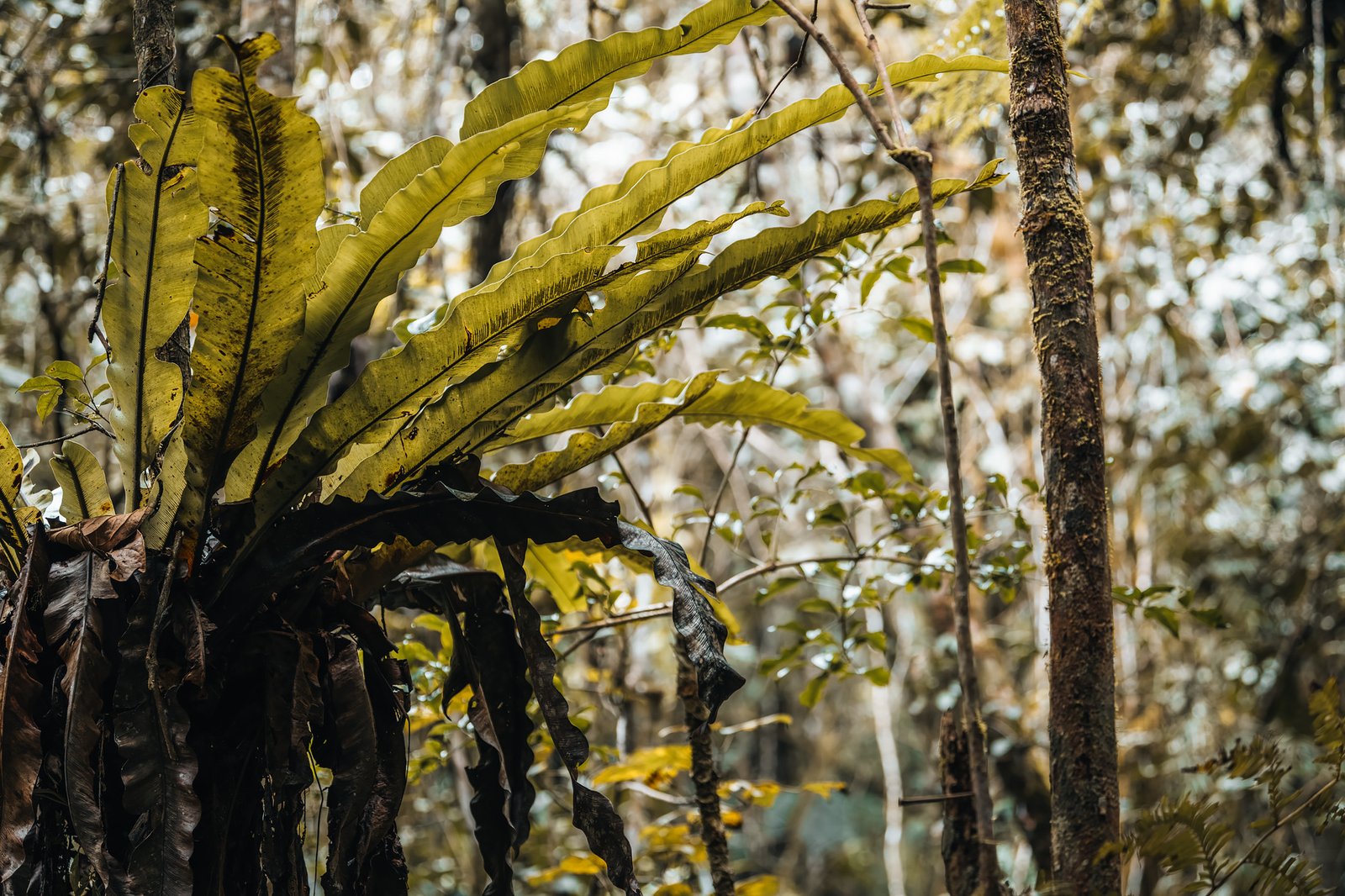
The forest we walked through was just as impressive as the wildlife. Large trees rose into the canopy and disappeared. The canopy was layered with mosses, lichens and ferns growing on top of each other. Giant bird’s nest ferns grew high above us while orchids and climbing vines wrapped around trunks that were hundreds of years old. In some areas large bamboo stalks created green tunnels where the trail would disappear.
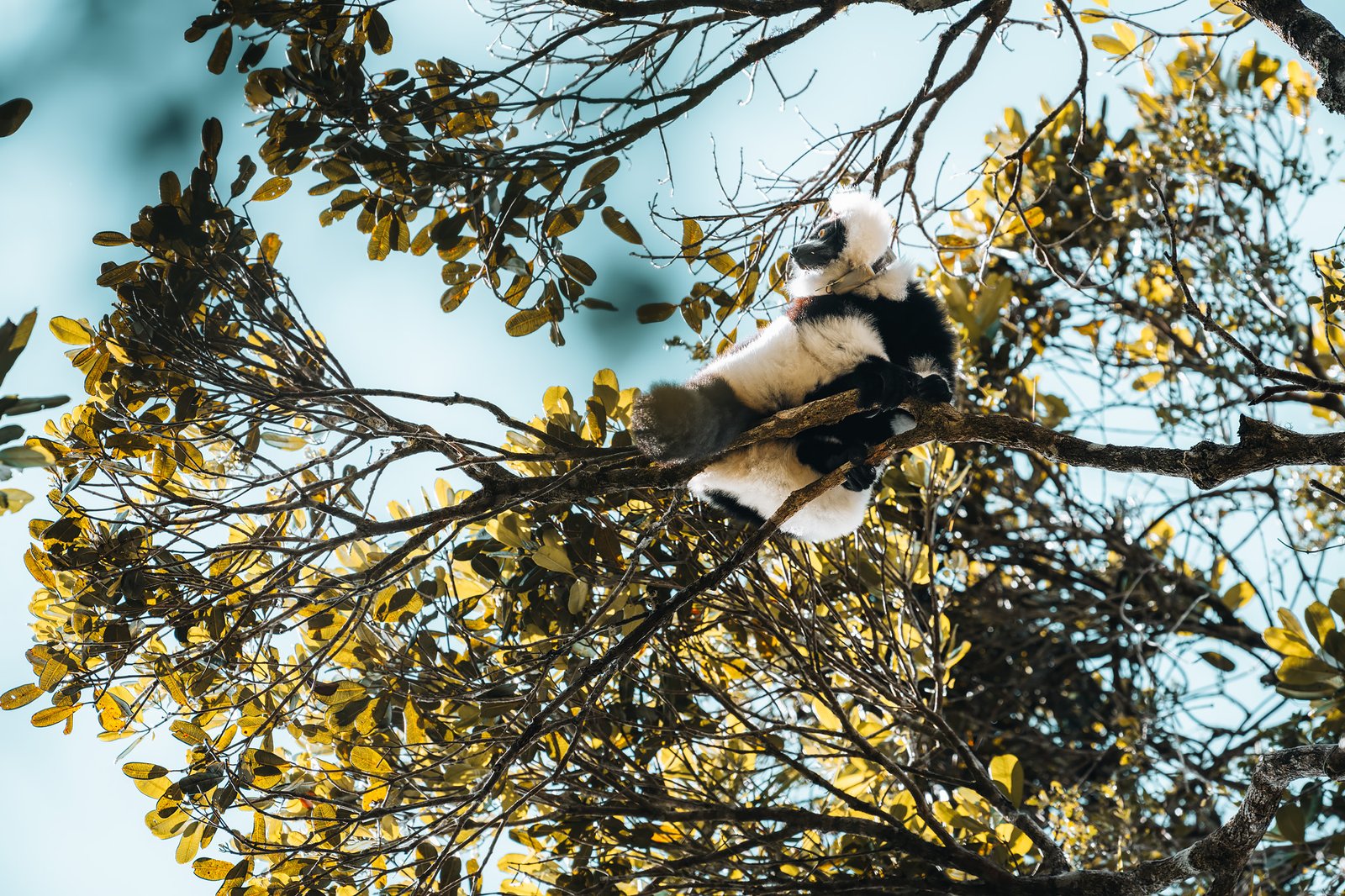
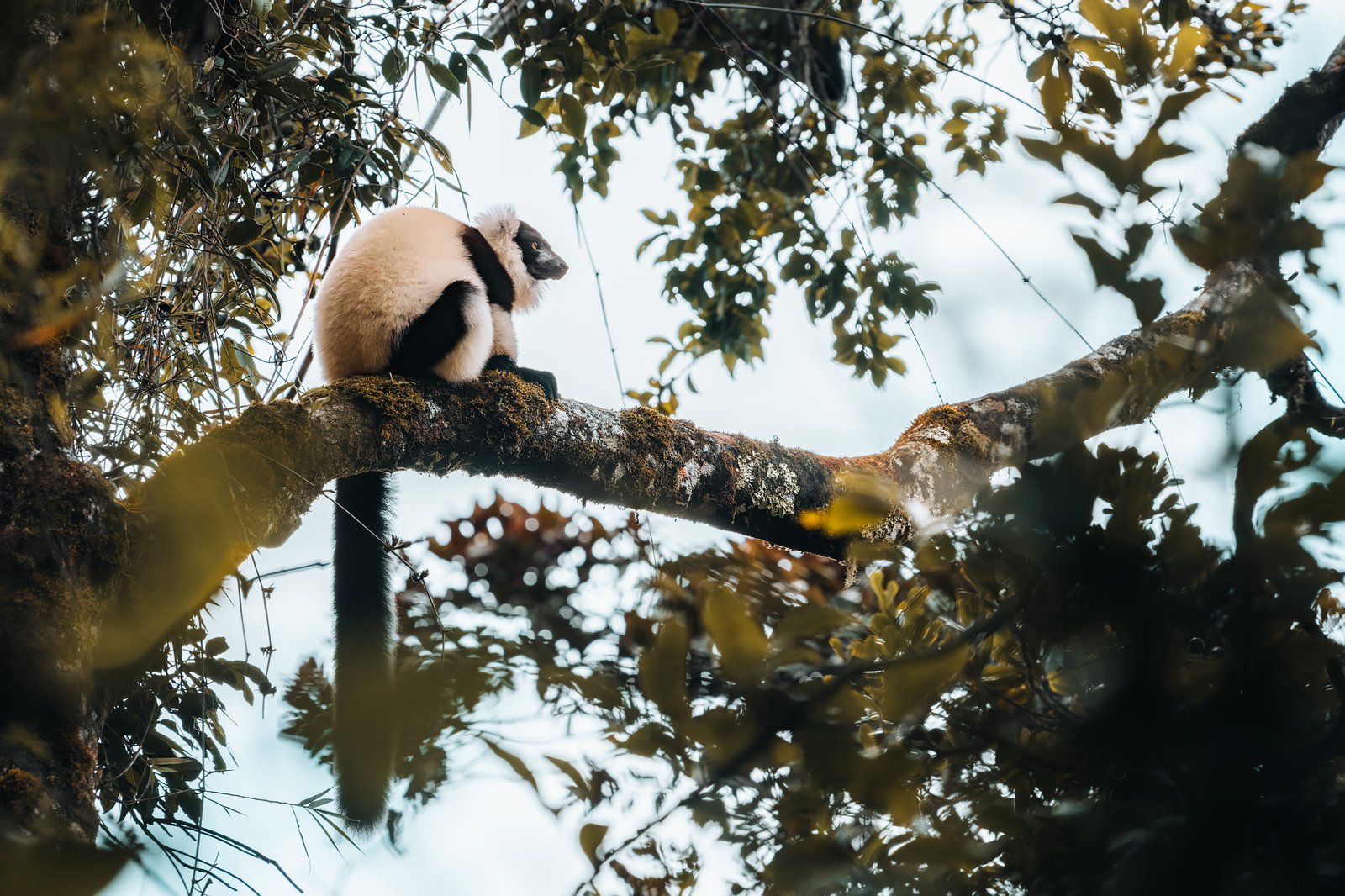
When we were tracking a group of Black-and-white ruffled lemurs, we were able to get close and watch them. They have beautiful coloration on their fur. Because of their size you wouldn’t think they would move well in the canopy. But once again, they moved quickly through the trees and vanished into the forest.
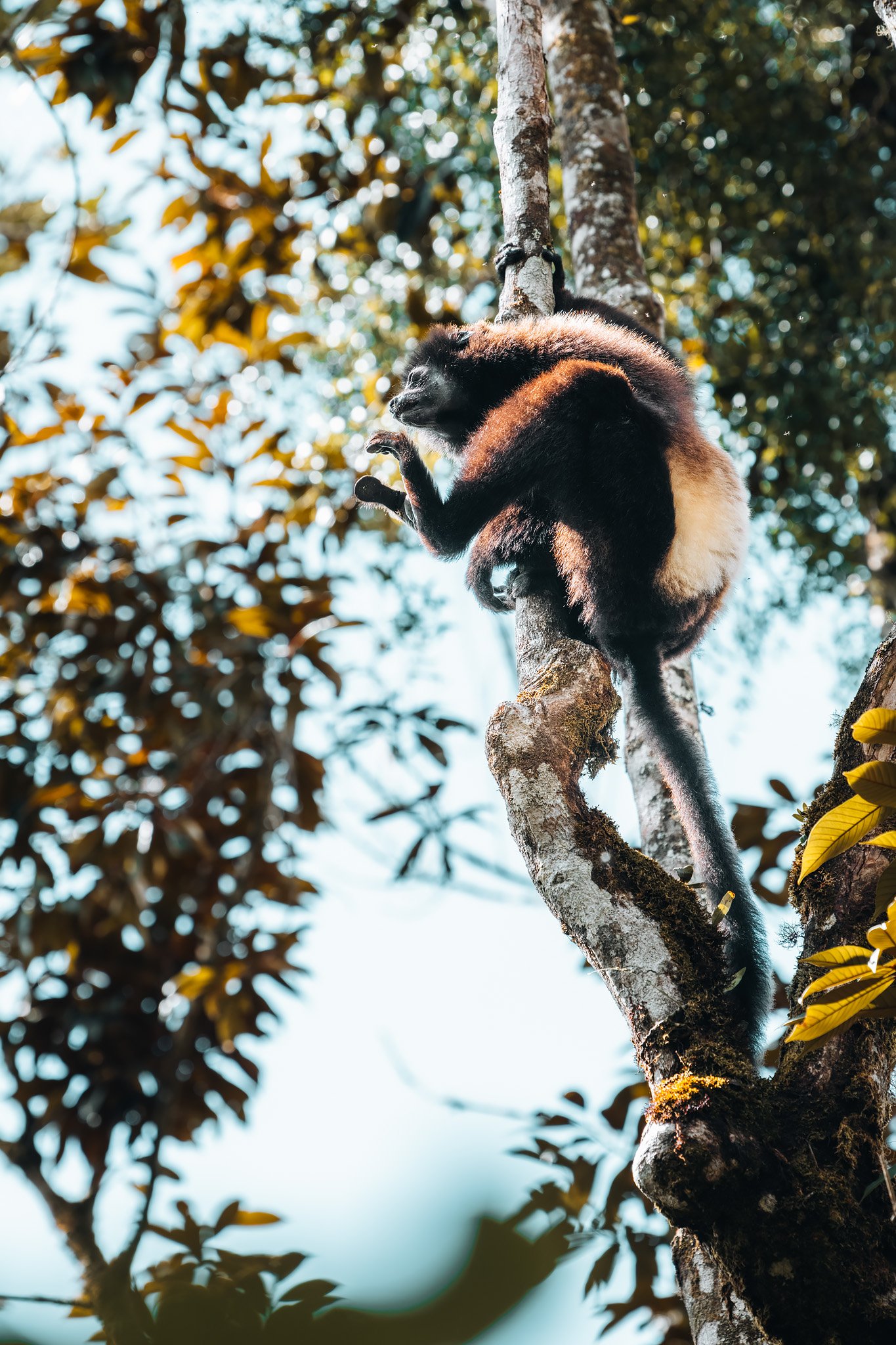
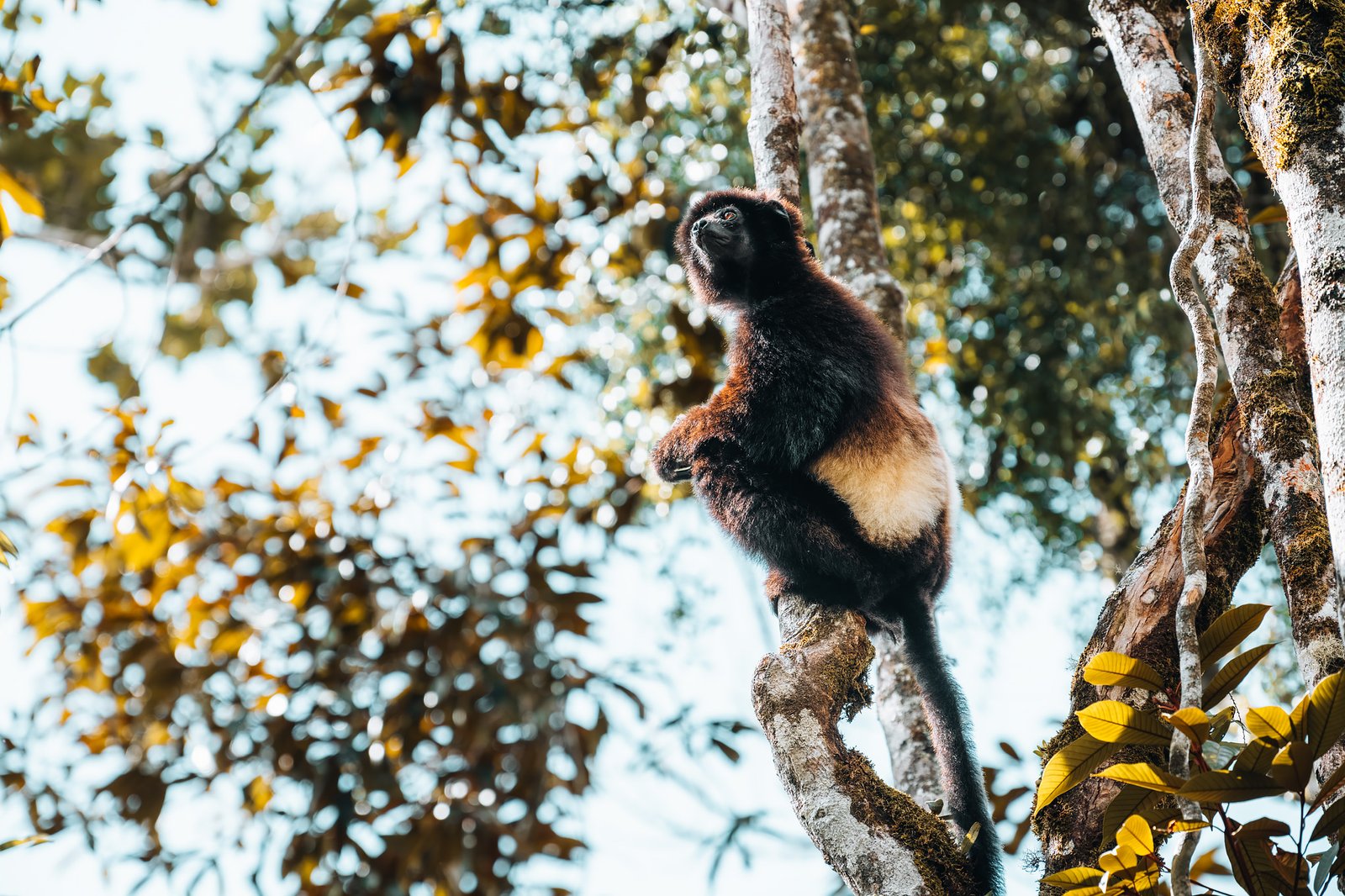
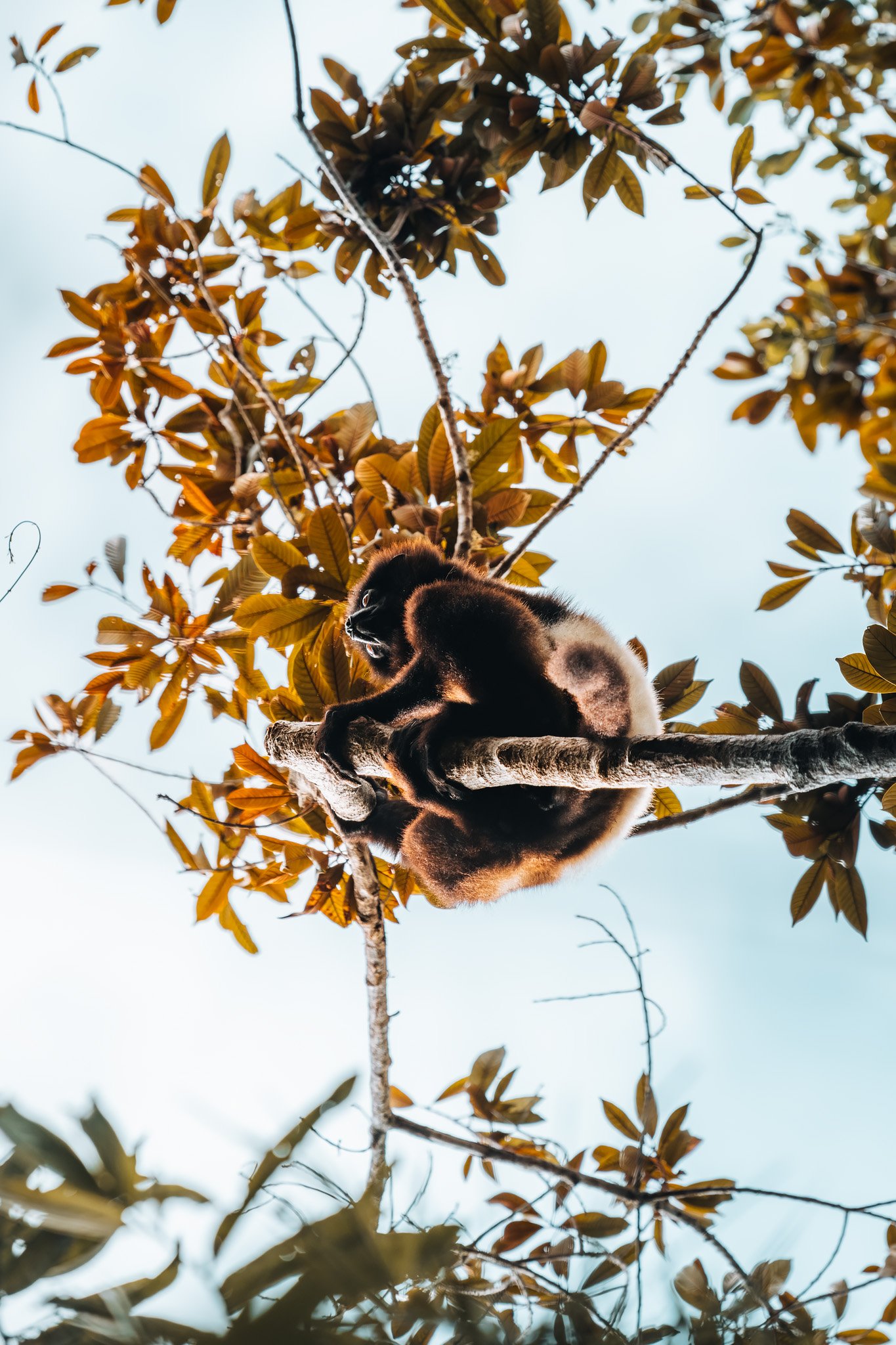
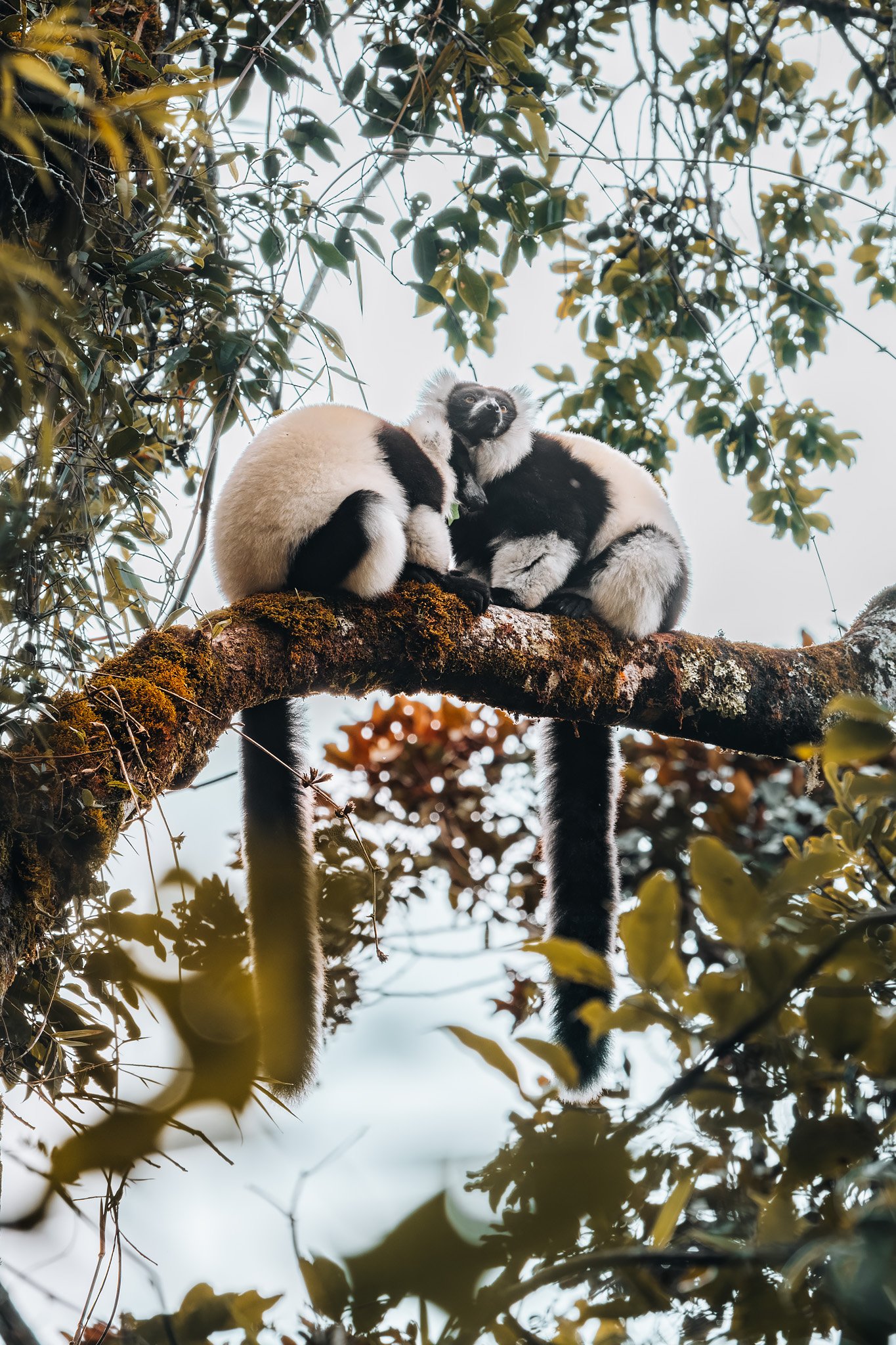
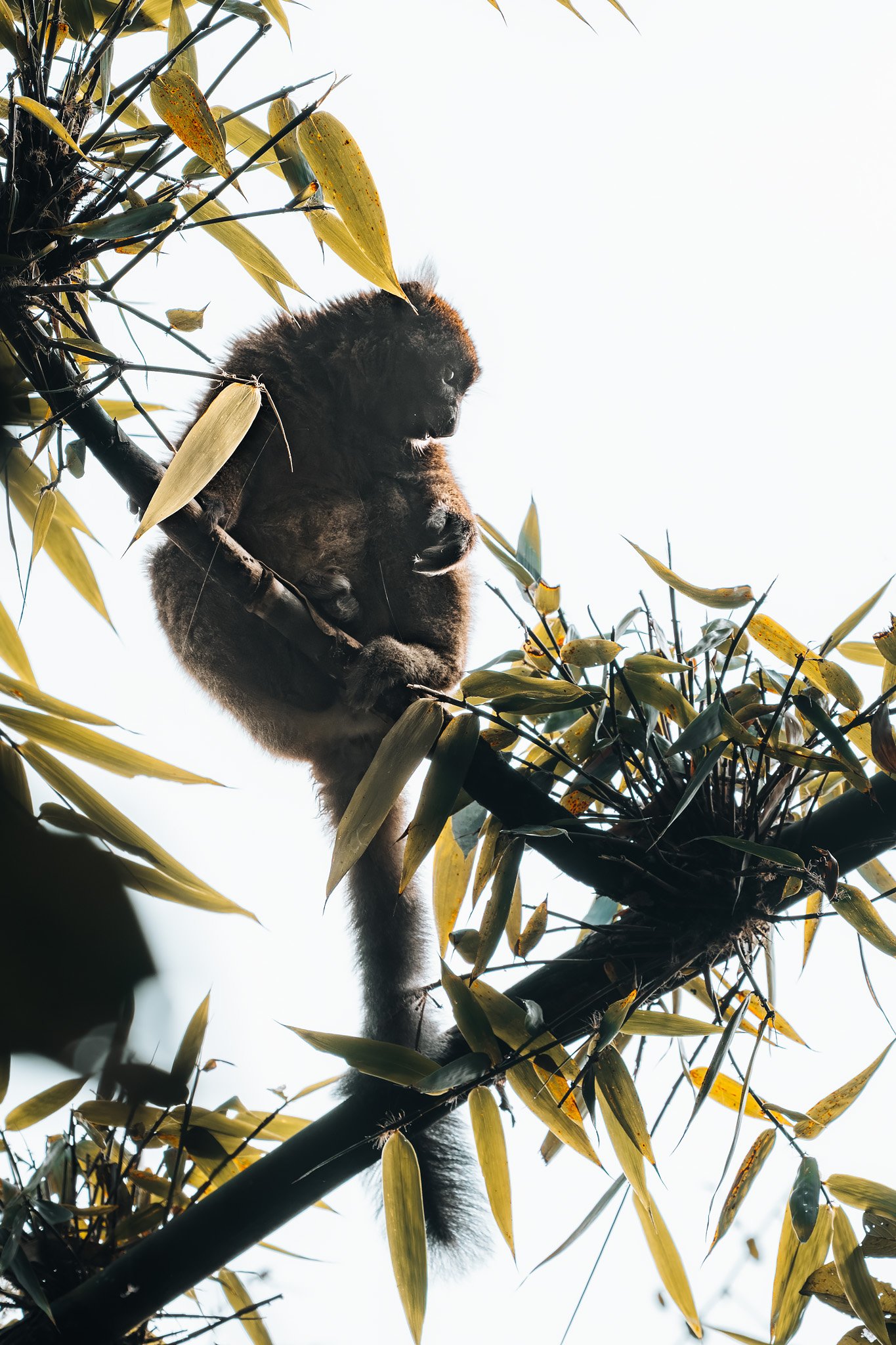
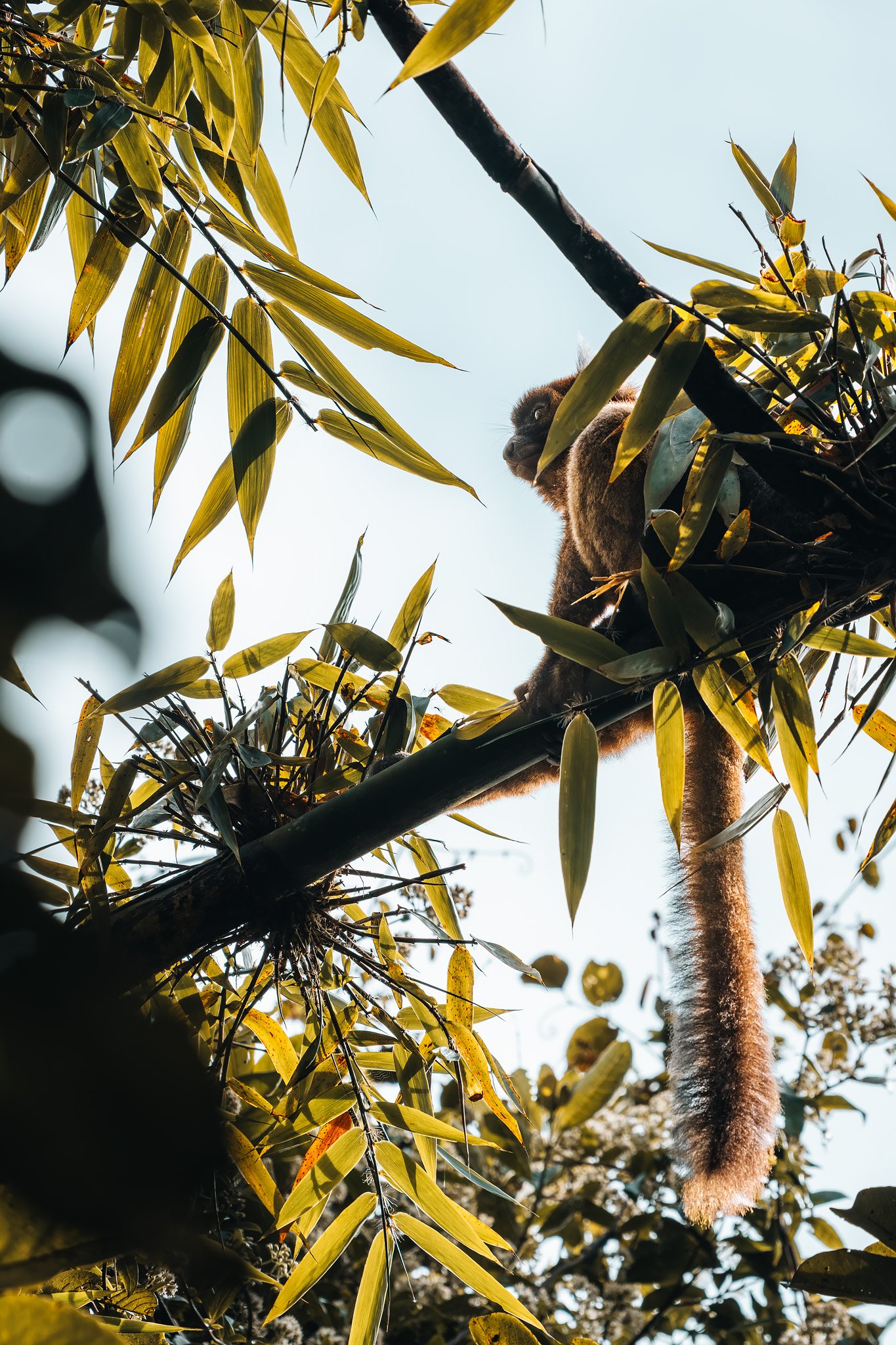
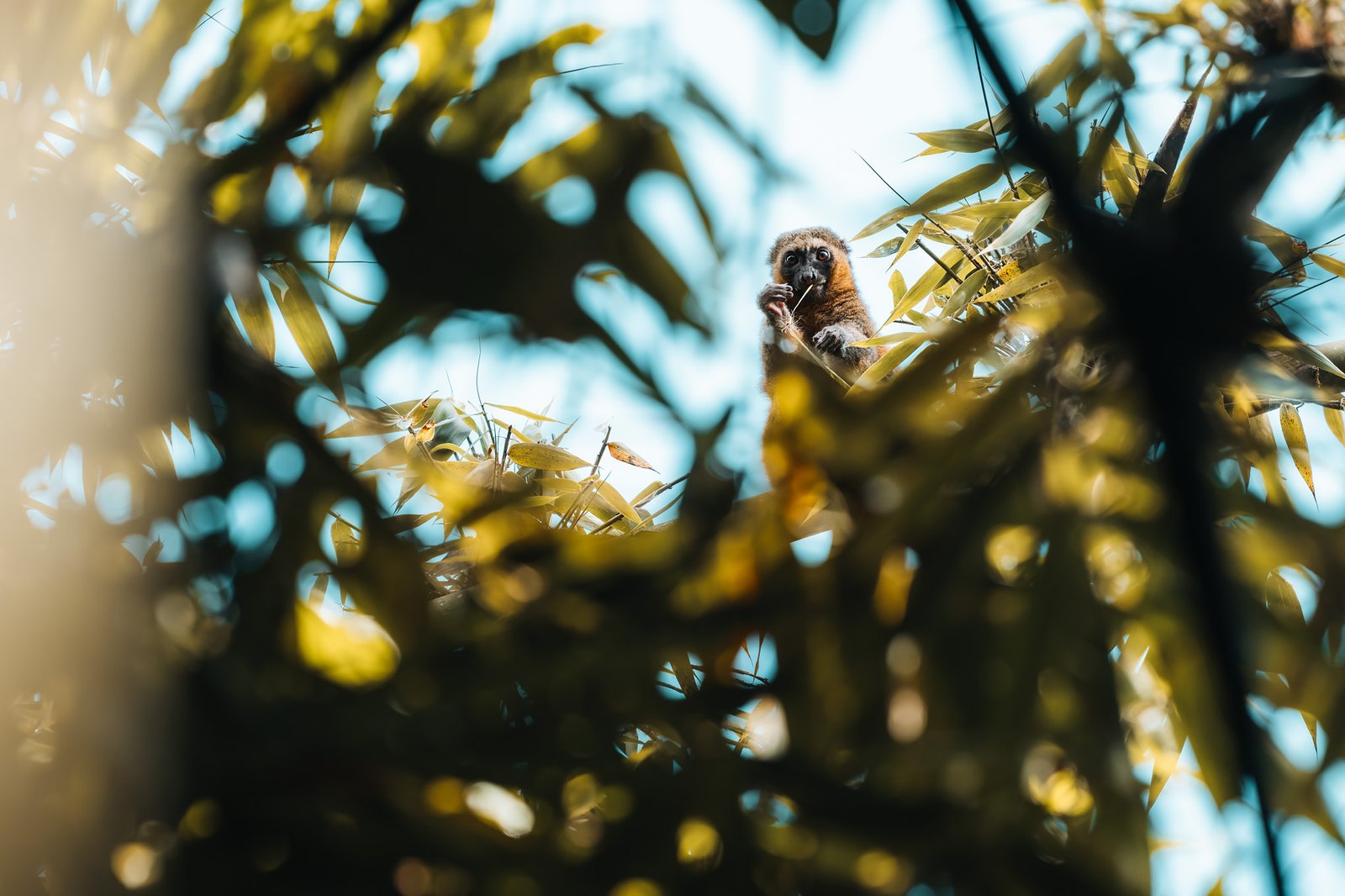
In the late morning we finally found what makes Ranomafana National Park so special. The Golden Bamboo Lemur feeds almost exclusively off of bamboo shoot (that contains a poisonous chemical called cyanide). If any other type of mammal ate this amount of poison it would die immediately. Scientists believe that the golden bamboo lemur can eat amounts of cyanide that are five times higher than what would kill a person. The exact reasons why this happens is still being studied. Watching them eating bamboo it was hard to think about how scientists discovering these lemurs in 1986 ultimately led to creating this protected area.
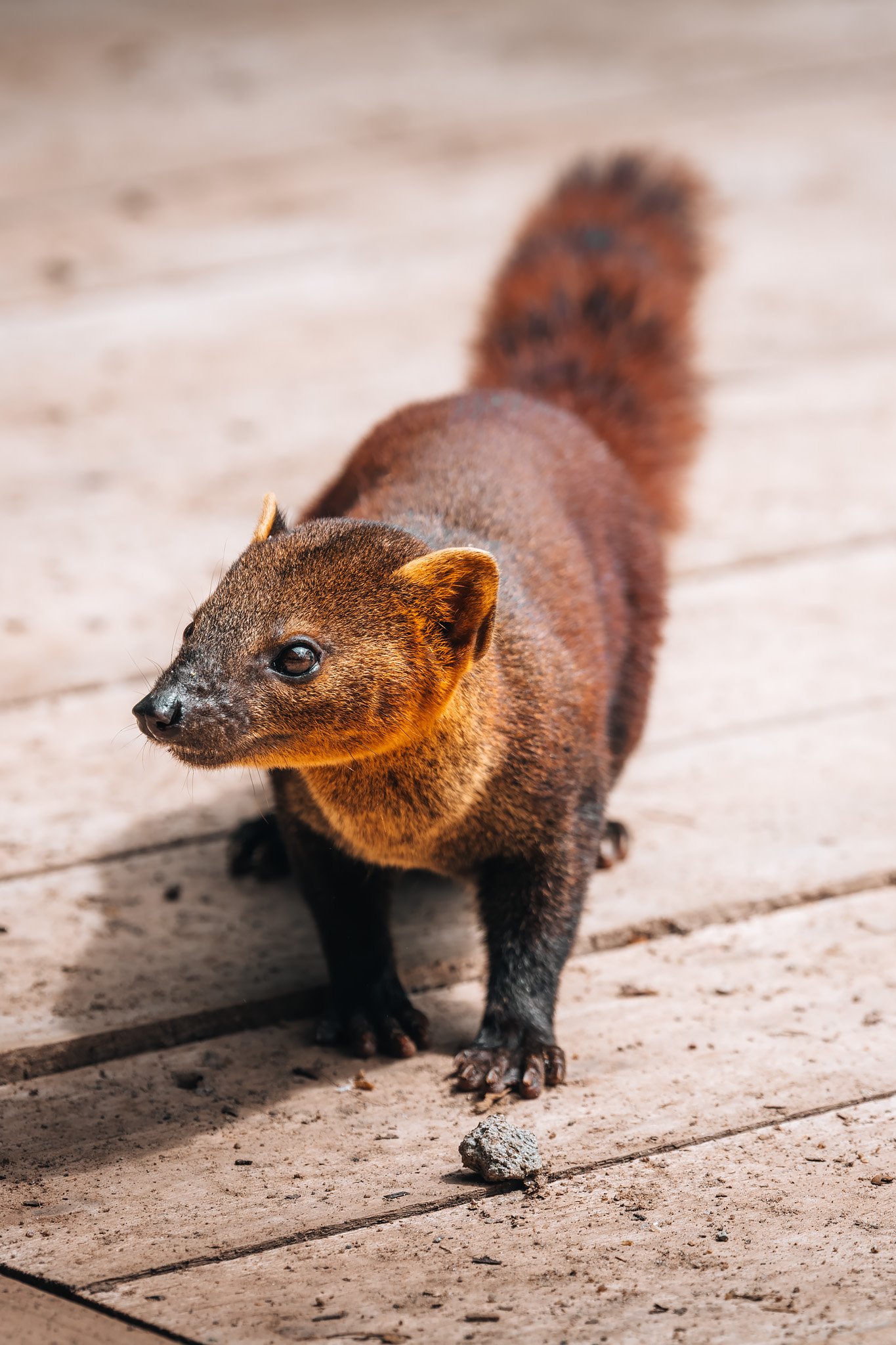
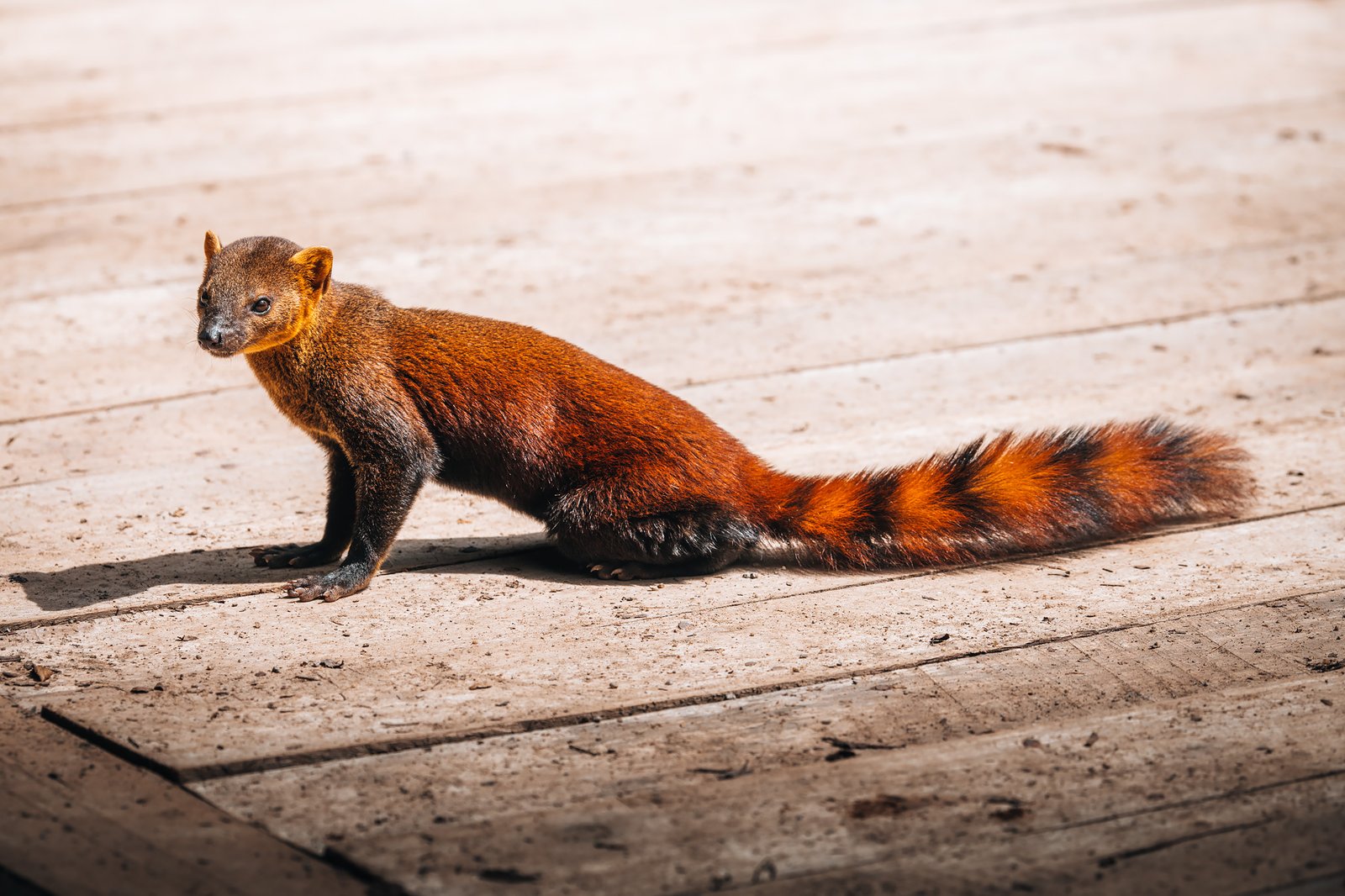
Not every encounter came from looking upwards. As we continued along the trail, a Ring-tailed Mongoose briefly emerged from the undergrowth before disappearing back into the dense vegetation. One of Madagascar’s endemic carnivores, it moved with remarkable speed and confidence, offering only a fleeting glimpse before vanishing.
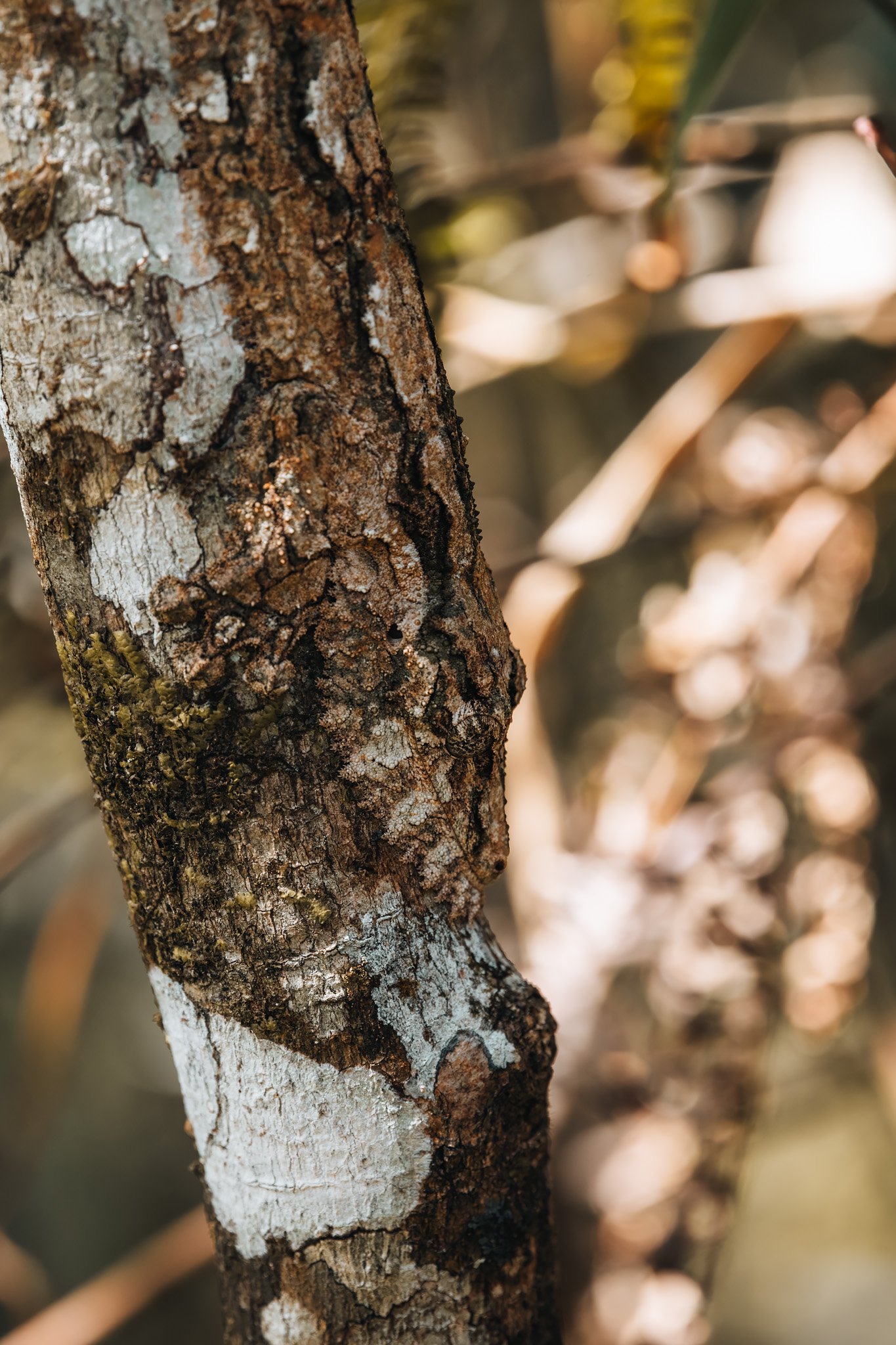
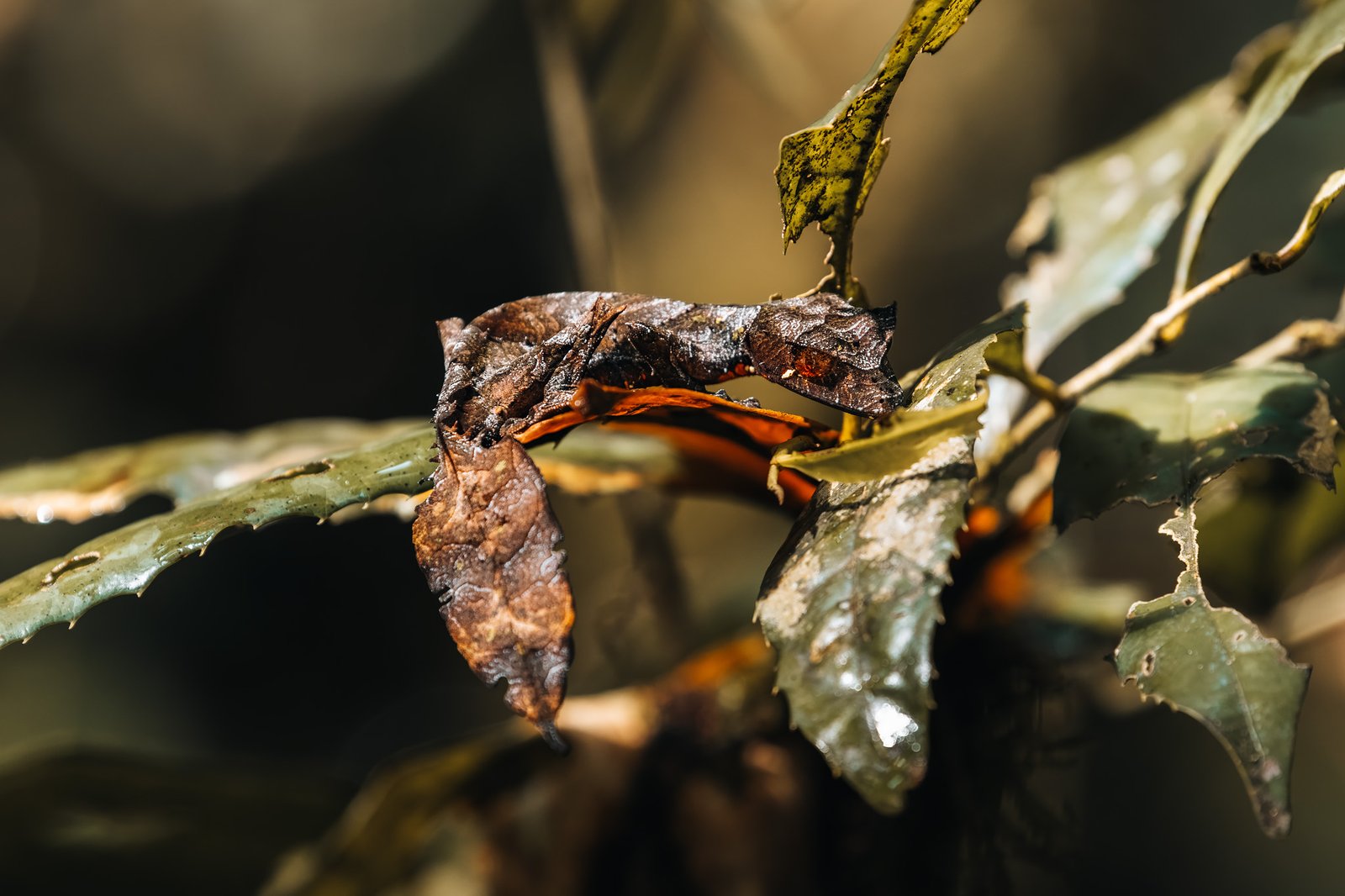
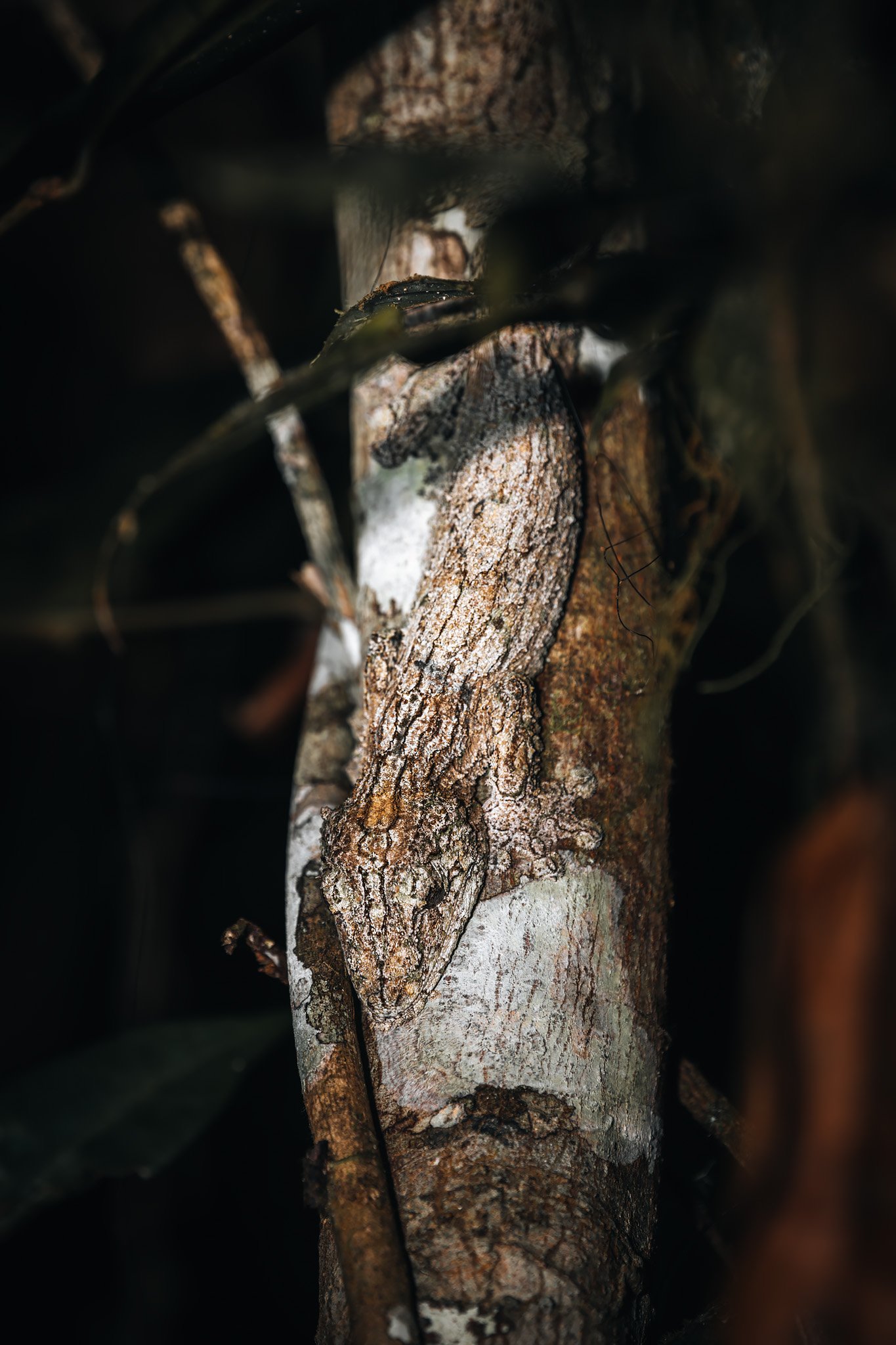
Our guide constantly stopped by tree trunks and pointed to what I thought was just bark. After about three minutes I finally realized there was a gecko hiding under the bark. First we saw a Satanic Leaf-tailed Gecko, then a Mossy Leaf-tailed Gecko. These two species of geckos are experts at blending in with their surroundings. Their flat body shape, wavy edges and tail shaped like a leaf make them almost invisible. Once I was able to find them with my eyes I lost them every time I turned my head away for even a second.
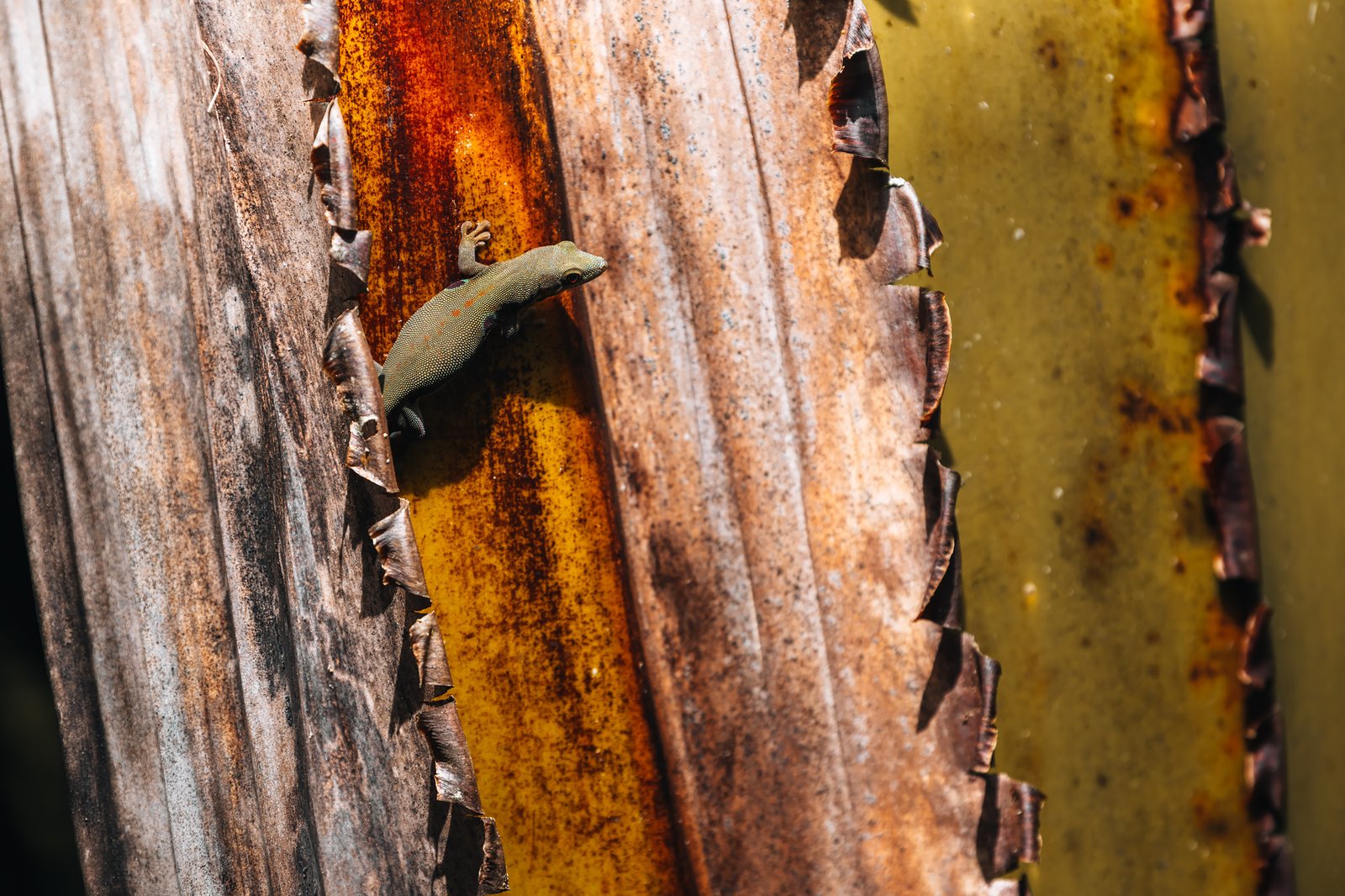
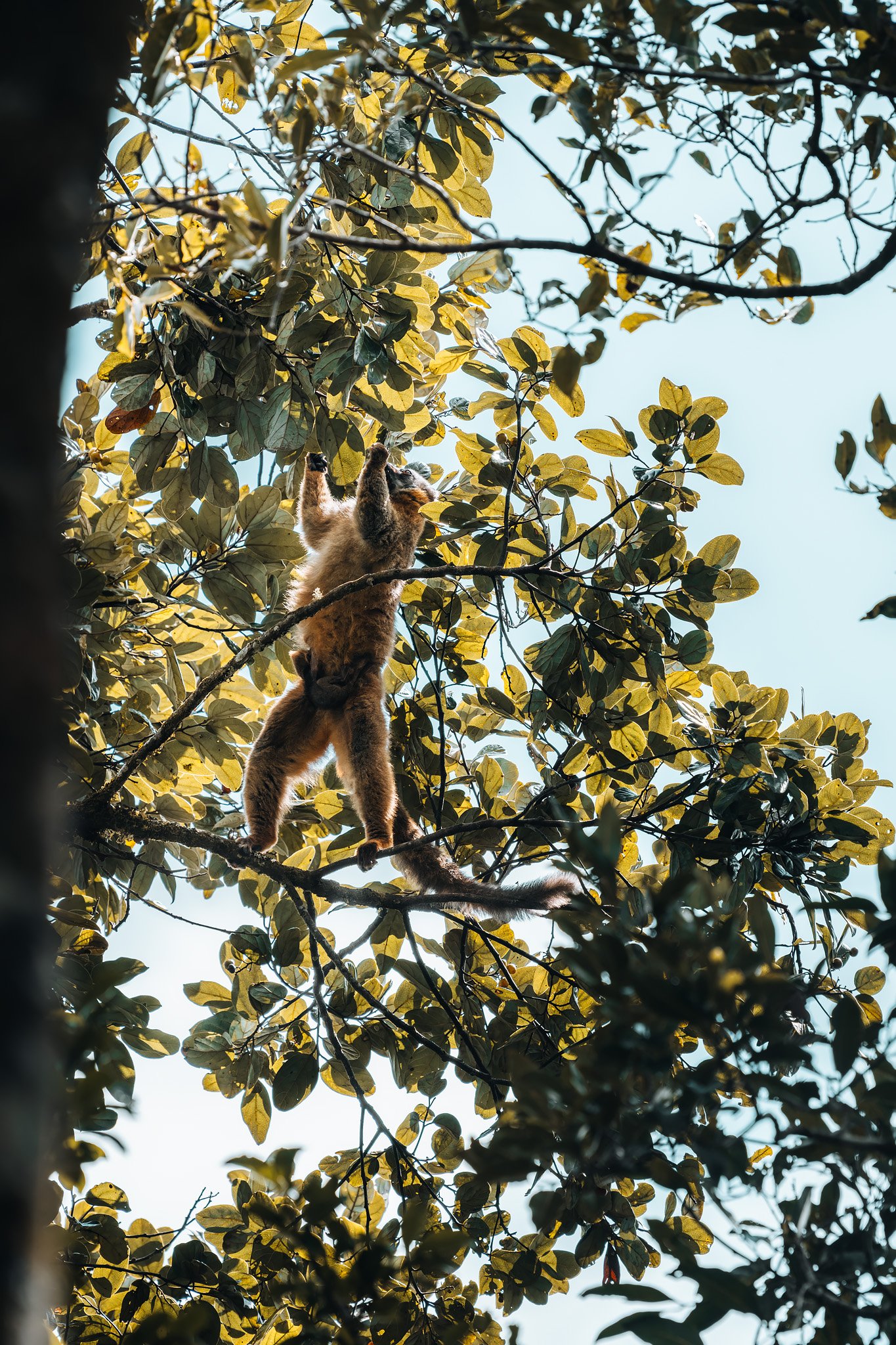
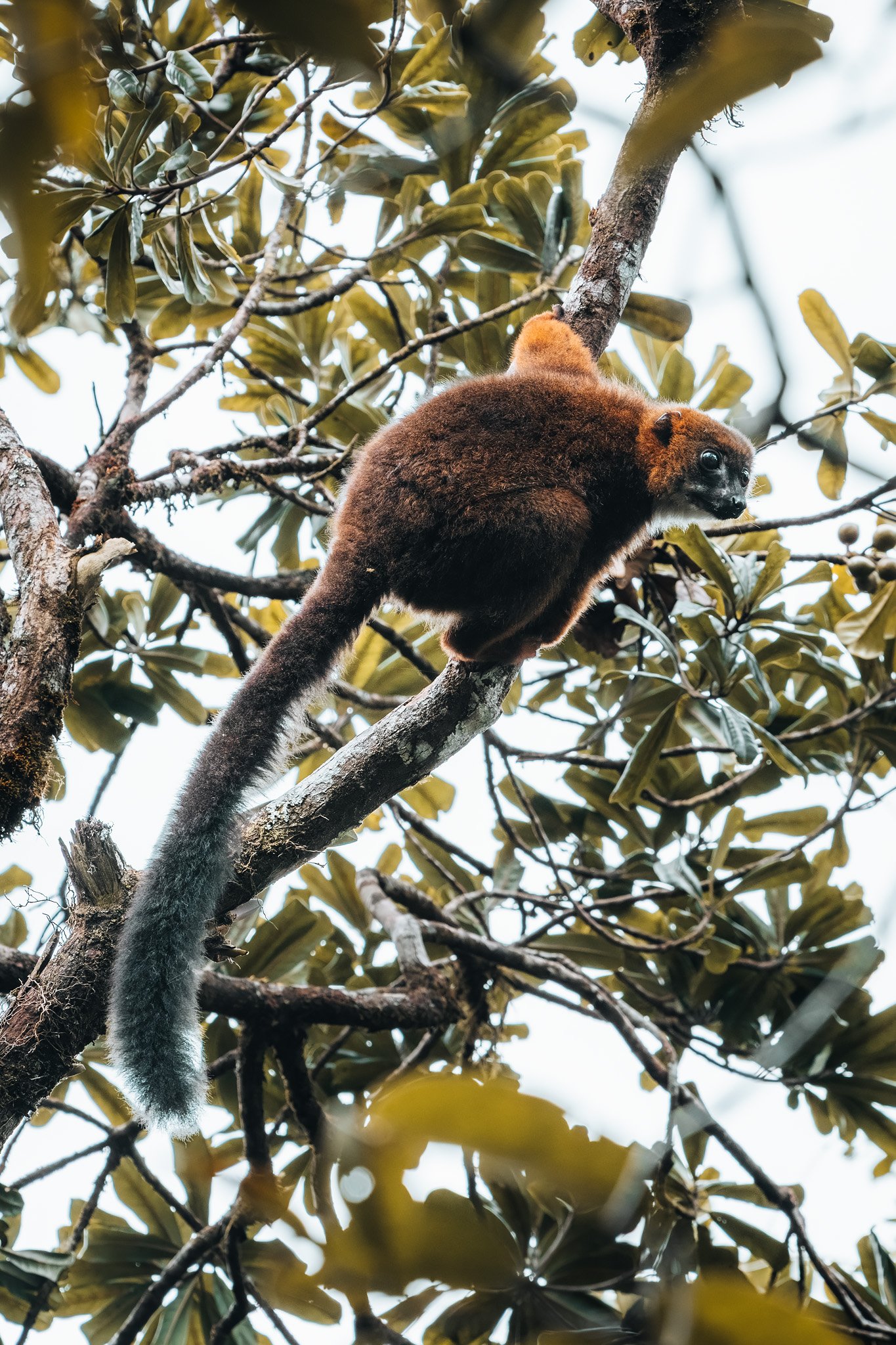
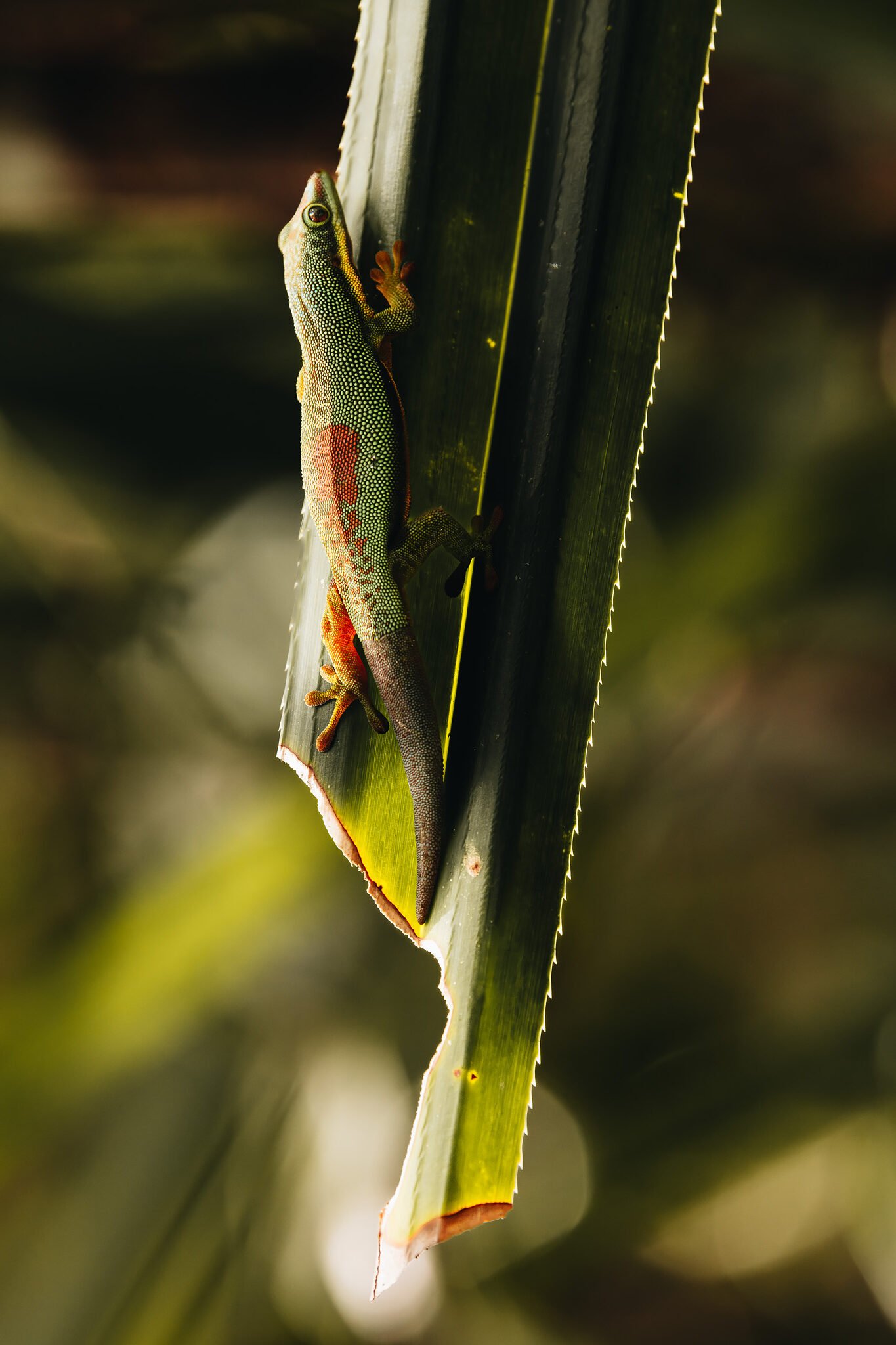
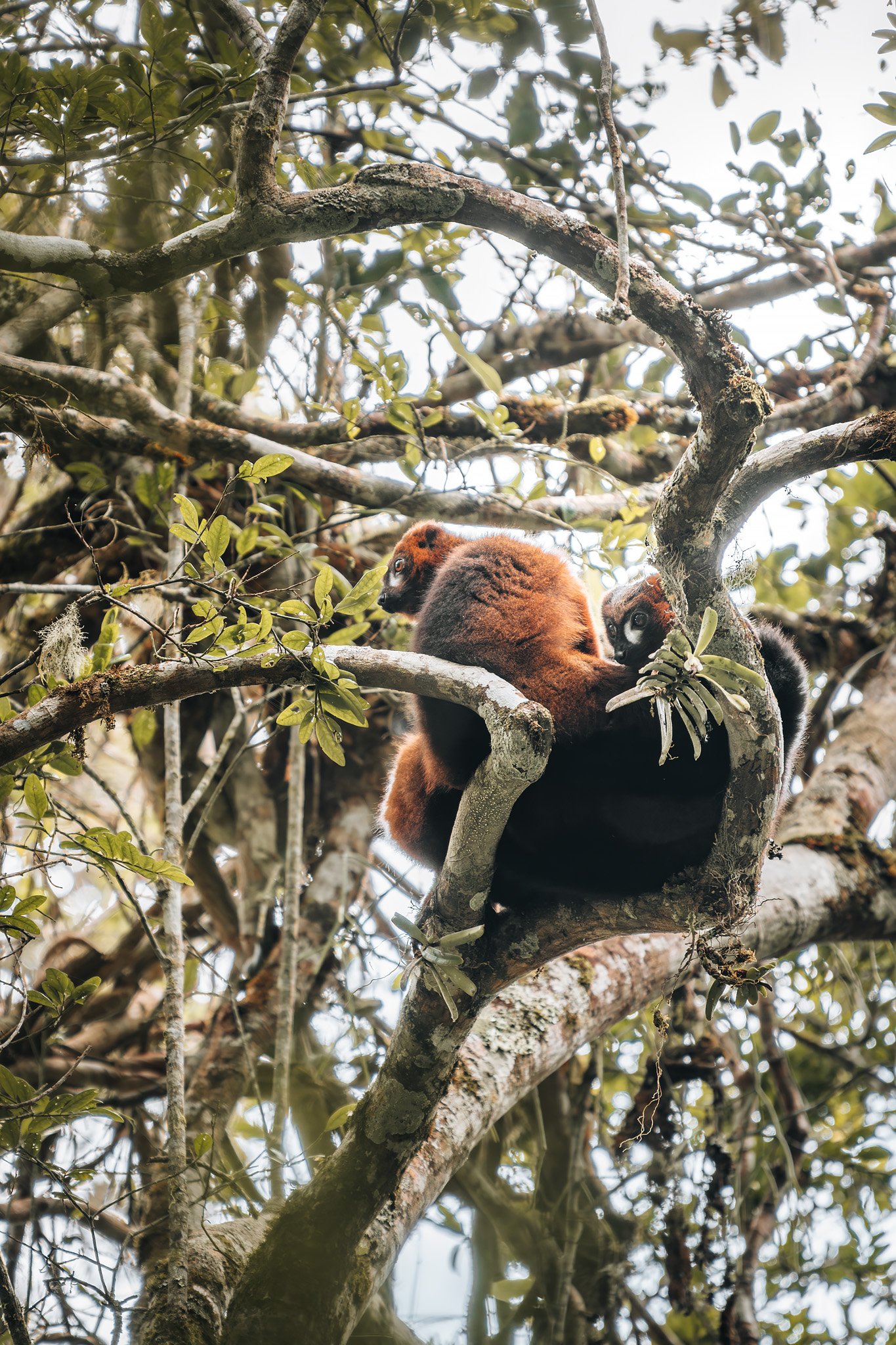
There were many small day geckos that were endemic to Ranomafana basking on warm leaves. Emerald green contrasts with the dark colors of the rainforest. The Red-bellied Lemurs traveled through the mid-canopy and birds flew in and out of branches before disappearing into the dense jungle.
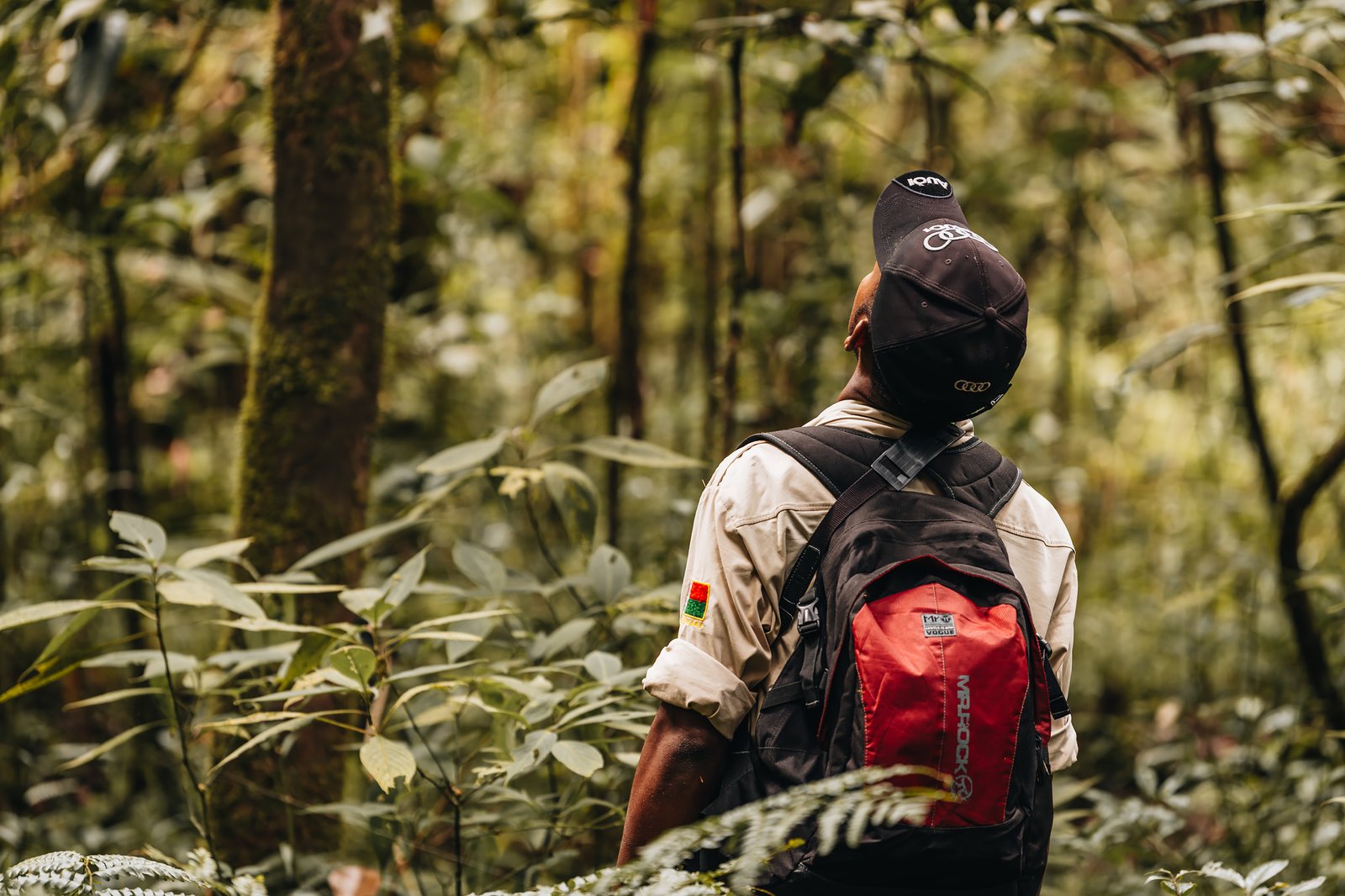
Our guide helped us locate many different animals that we never would have seen if he hadn’t been with us. He was always pointing in the right place and giving us directions on exactly where to look.
The Forest that Never Sleeps
After a short break in one of the hotel’s hot springs and a great dinner, we returned to the forest as dusk fell. This experience reminded me of Kirindy instantly. The atmosphere couldn’t have been more different.
There, our lights shone clearly between leafless trees revealing animals at considerable distances. Here, dense foliage consumed our light within meters. Darkness felt heavier and more intimate.
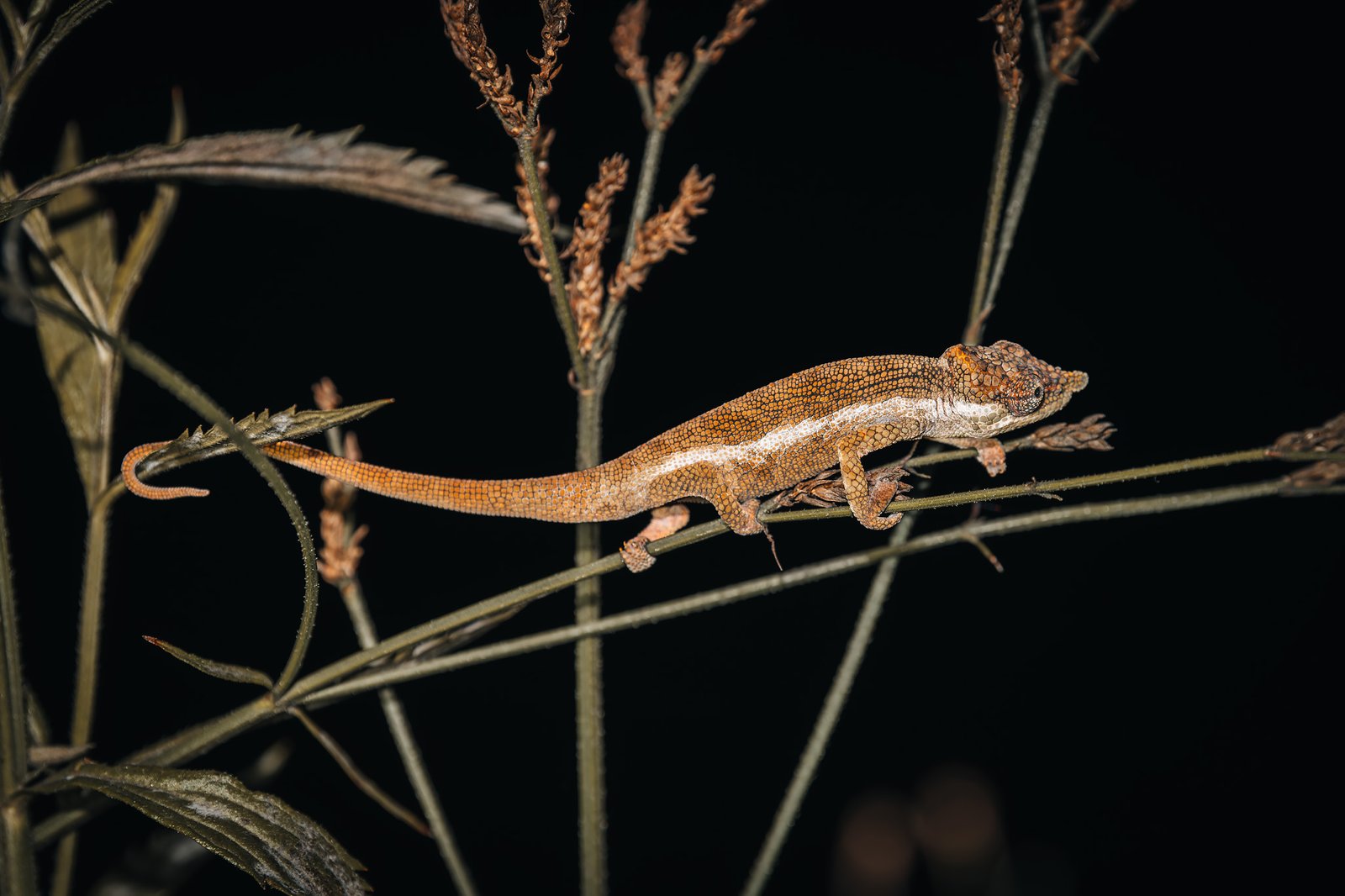
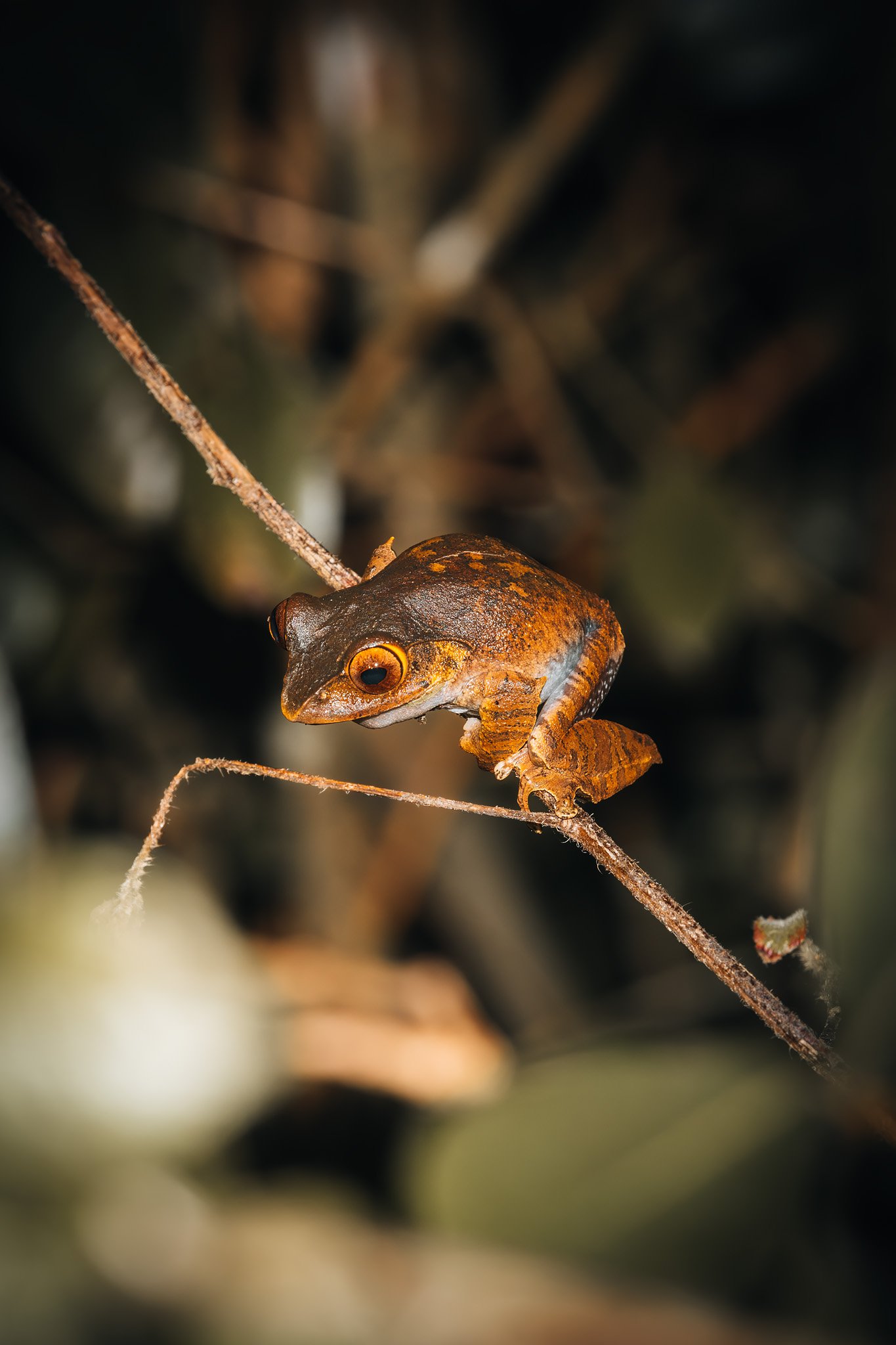
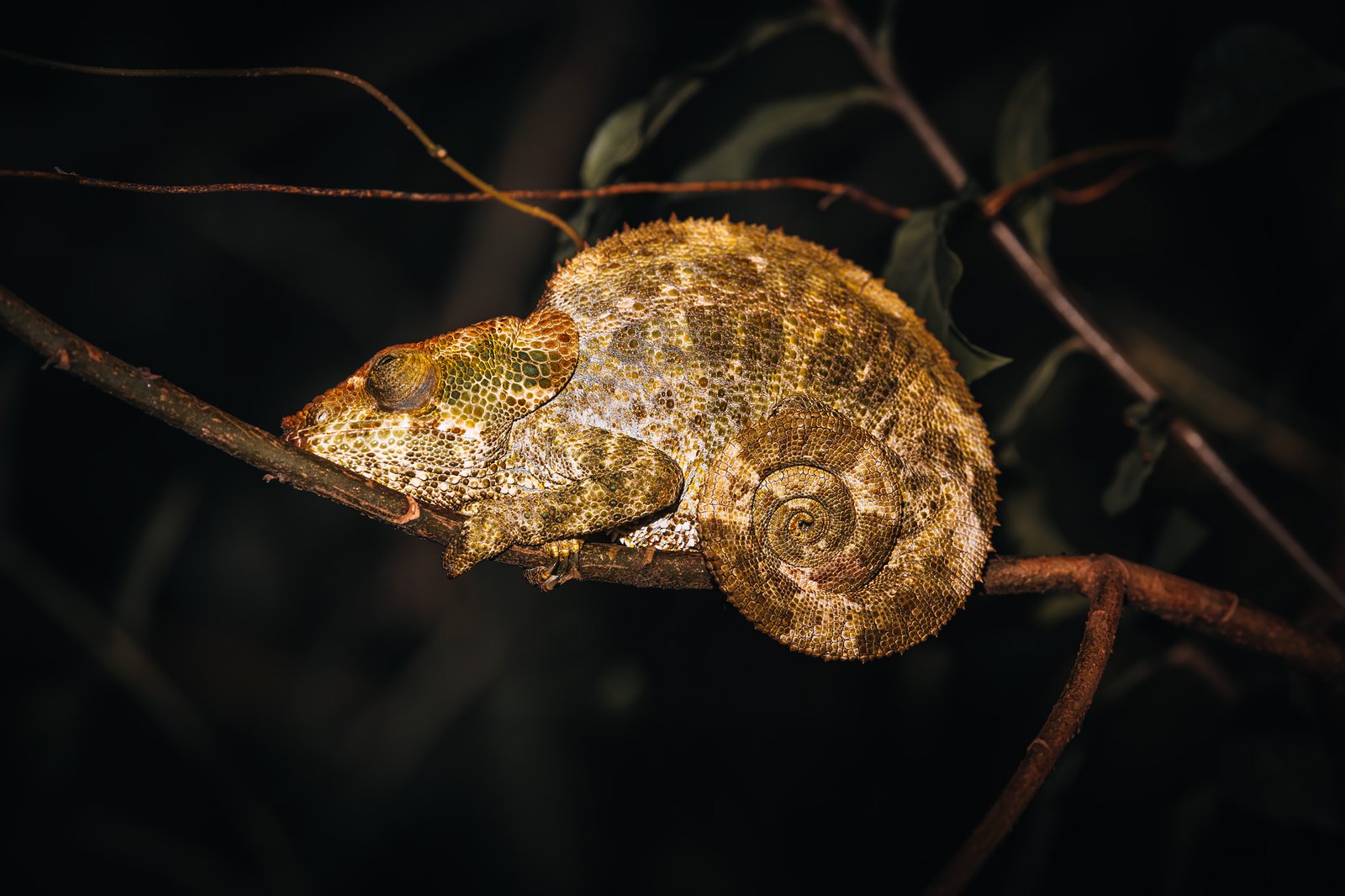
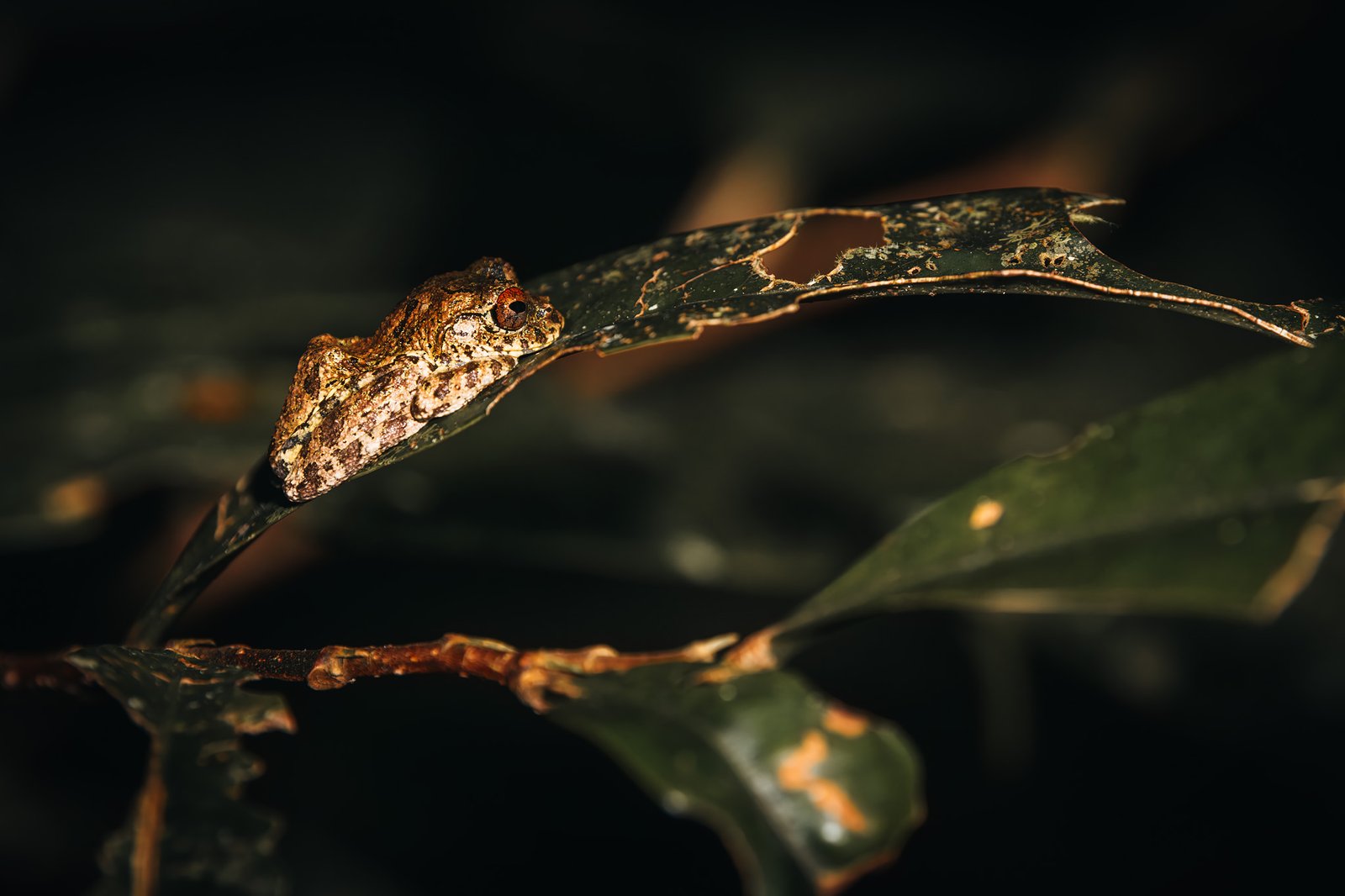
Each noise seemed magnified by the surrounding forest. Tiny frogs emerged adjacent to our path while calling loudly as their voices blended together into nearly constant song emanating beneath the canopy, and chameleons sleeping on thins branches seemed paler due to nocturnal colors causing them to stand out better than during daytime hours.
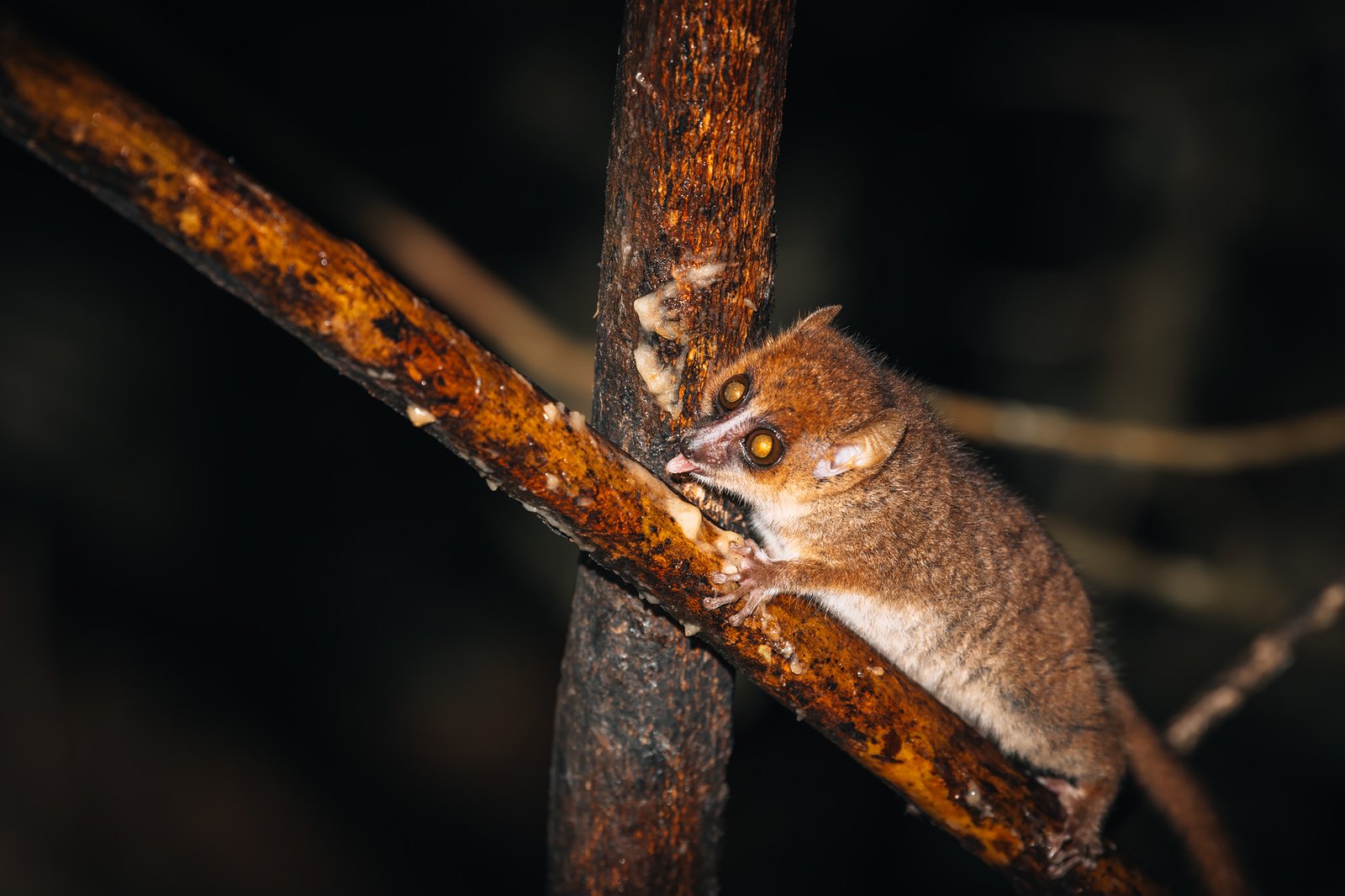
Like the dry forests of Western Madagascar which frequently accompany complete silence with darkness, Ranomafana never stopped moving. Water dripped constantly from leaves overhead. Streams flowed invisibly through narrow valleys, and insects generated a steady base level of sounds while beyond our range of vision mouse lemur vocalizations echoed occasionally through the canopy.
I doubt I could have identified each noise. Perhaps it was this uncertainty which contributed to my impression that the rainforest seemed so full of life! On our way back to our lodge I reflected on how differently Madagascar had changed during our last few weeks.
Andasibe and Ranomafana are not particularly far apart if measuring distance on a map. However ecologically they are two distinctly separate islands. One reason Madagascar has such an impressive amount of diversity is due to the number of extreme dissimilarities in landscape, climate, ecosystems… all contained within a single journey. Almost every week or less it felt as though we entered a completely foreign country; with its own forests, wildlife, geology and daily rhythms.
The next morning we would depart the forest. Before us lay granite walls bordering Tsaranoro Valley, Ring Tailed Lemurs at Anja Community Reserve and another Madagascar that we knew by now never to take lightly.

Madagascar. Part V: Back Across the Highlands
Returning to Morondava was strange, much too familiar. Just a handful of days ago, we had traveled northward on the same road filled with excitement and curiosity, we were on our way to find Kirindy and the limestone labyrinths of Bemaraha. After traveling hundreds of kilometers of corrugated dirt roads, crossing numerous rivers, and experiencing some of the most unique landscapes we had ever seen, the very same road was carrying us southward toward the coast.
Nothing had changed about the landscape, but our experiences had shaped completely the way we looked at everything surrounding us.
One Final Night Beneath the Baobabs
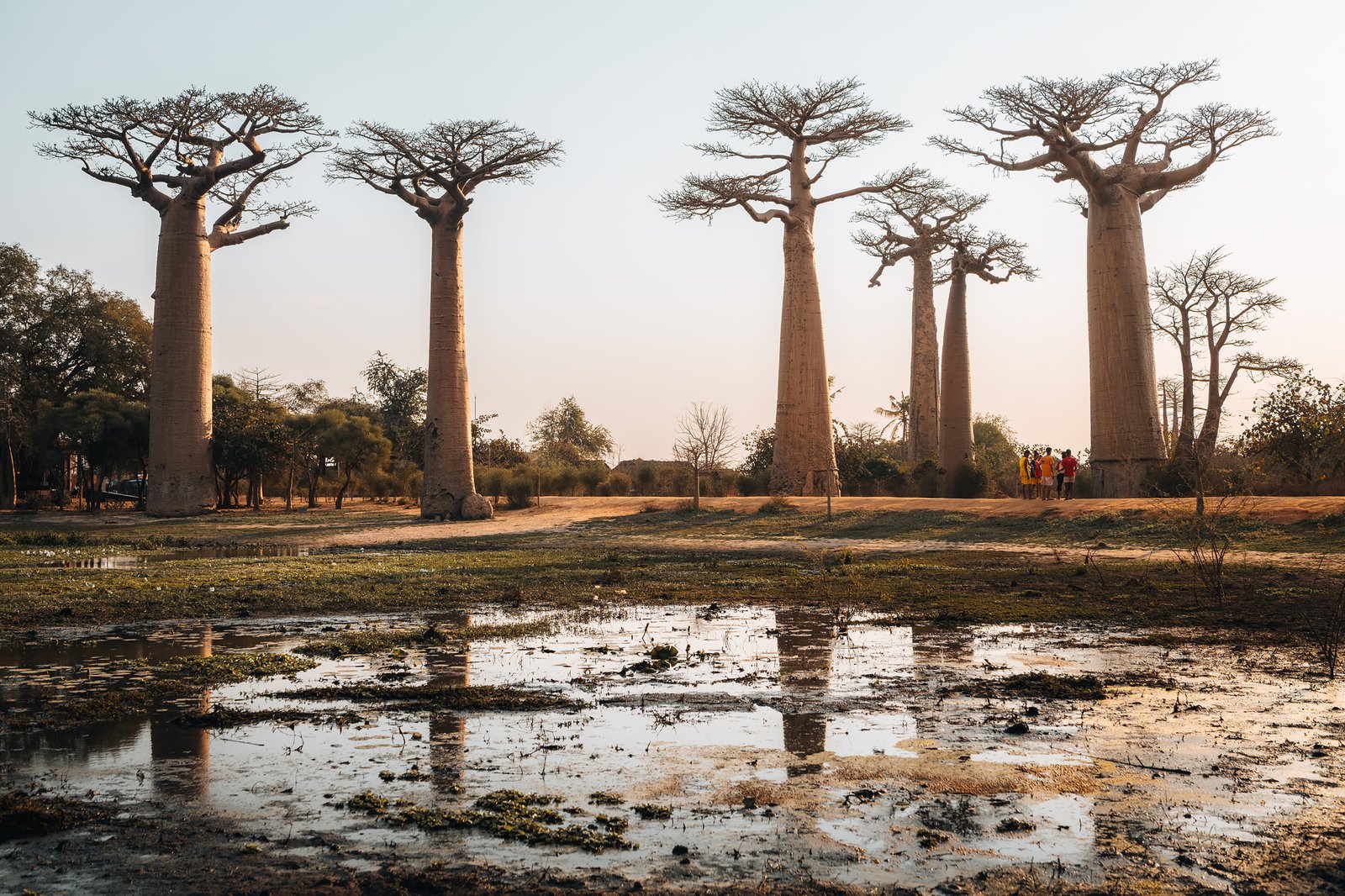
When approaching Morondava, the silhouettes of the baobab trees reappeared on the horizon, once again, and this time we had carefully timed our arrival to enjoy the evening at the very place our travels through Western Madagascar started, The Avenue of the Baobabs.
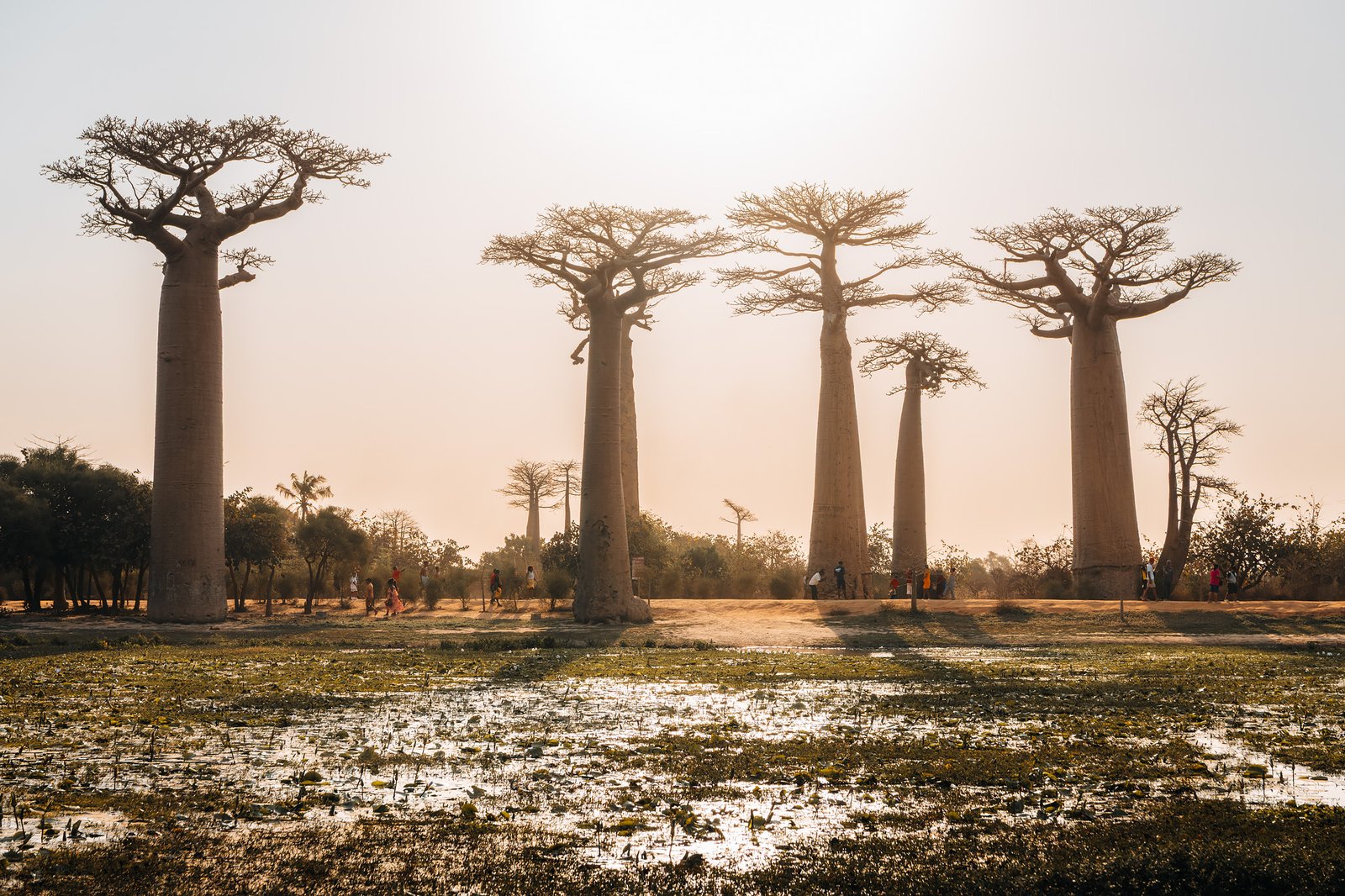
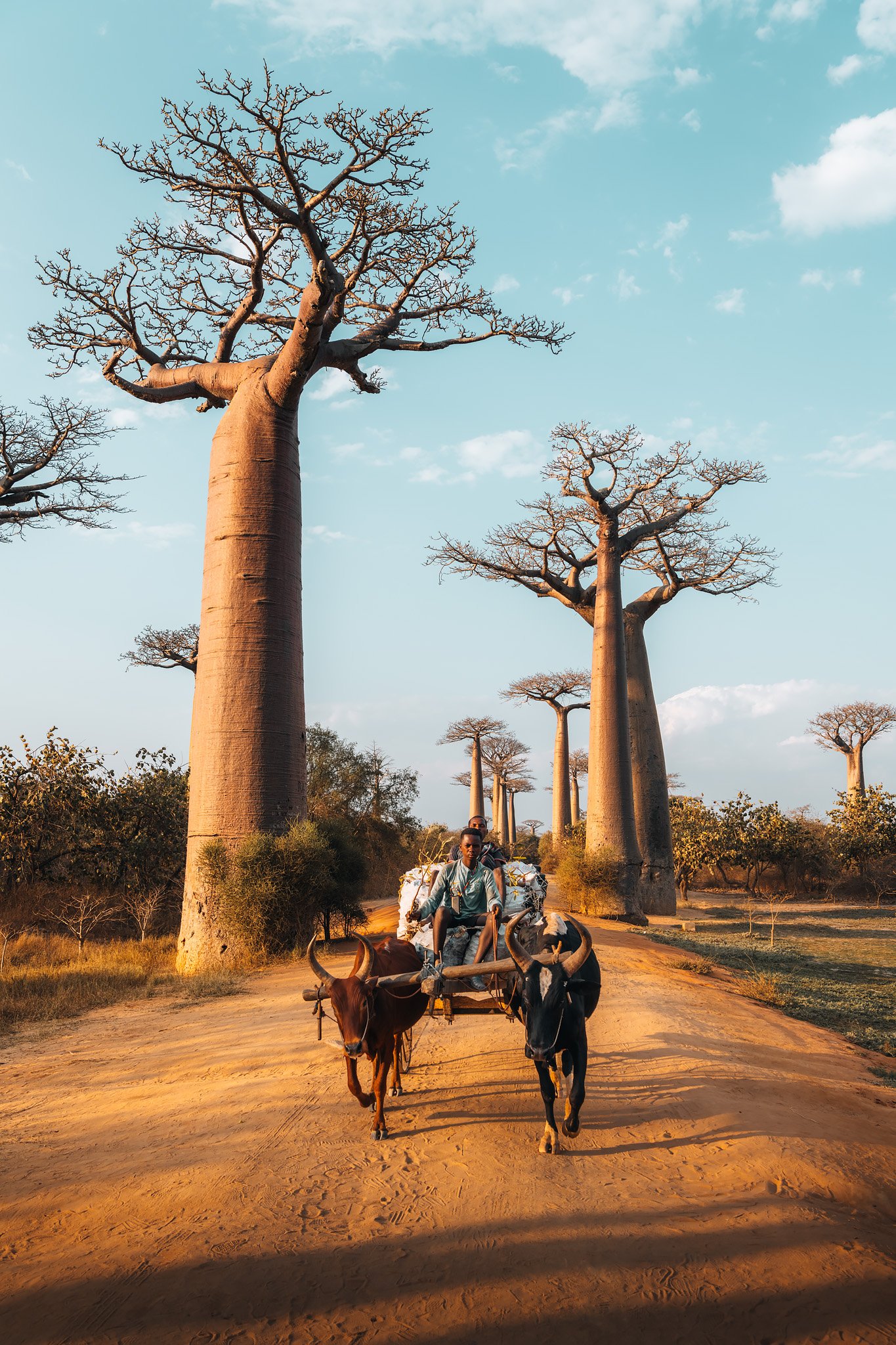
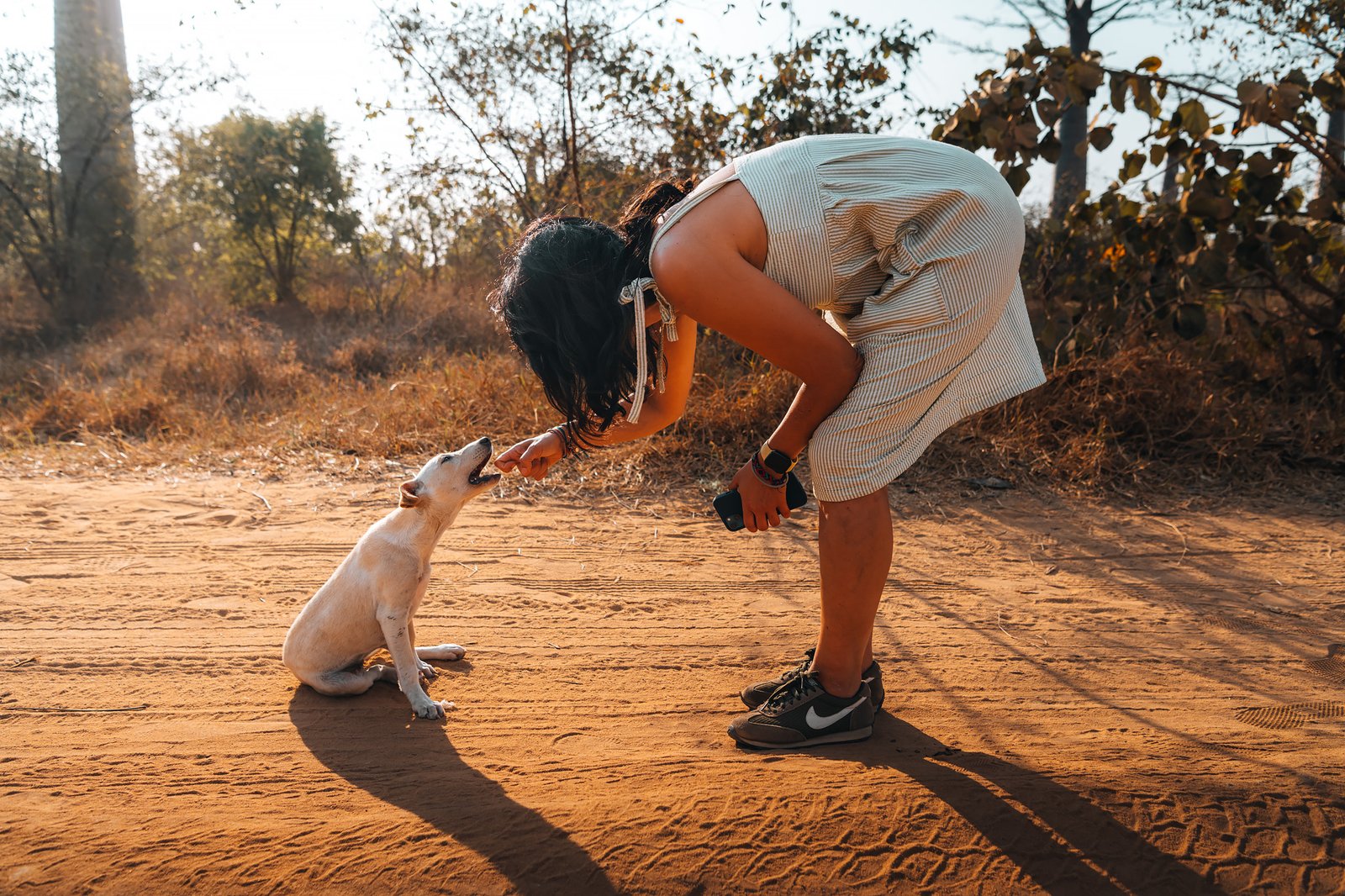
Late afternoon had arrived, and the intense light of day was fading into soft, warm tones. Families began to gather beneath the trees. Photographers were quietly searching for photo opportunities between massive tree trunks. Zebu carts were returning from nearby fields. Motorcycles kicked up clouds of red dust that hung in the air for miles in the soft evening light. In comparison to when we visited a few days prior, what initially seemed like a popular tourist attraction in Madagascar now felt like a normal part of everyday life.
The baobabs were never far from the people who lived close-by. Life went on all around them. Women carried large bundles of firewood easily perched atop their heads. Farmers led their zebus back to their homes before it got dark. Children played chasing each other between trees that were older than European cathedrals.
Perhaps that is why this area will always be remembered. It is not just a beautiful landscape. It is a living landscape.
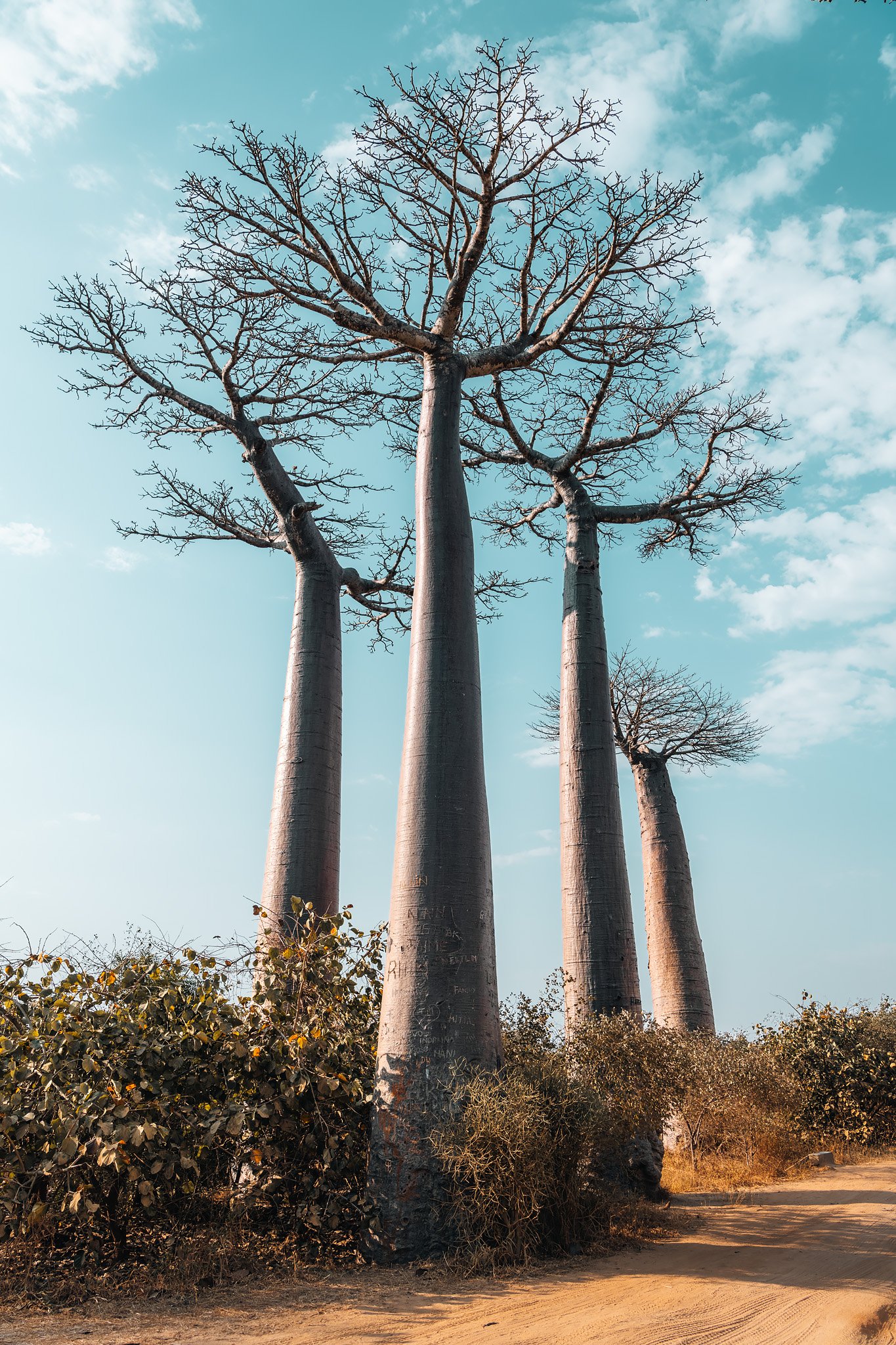
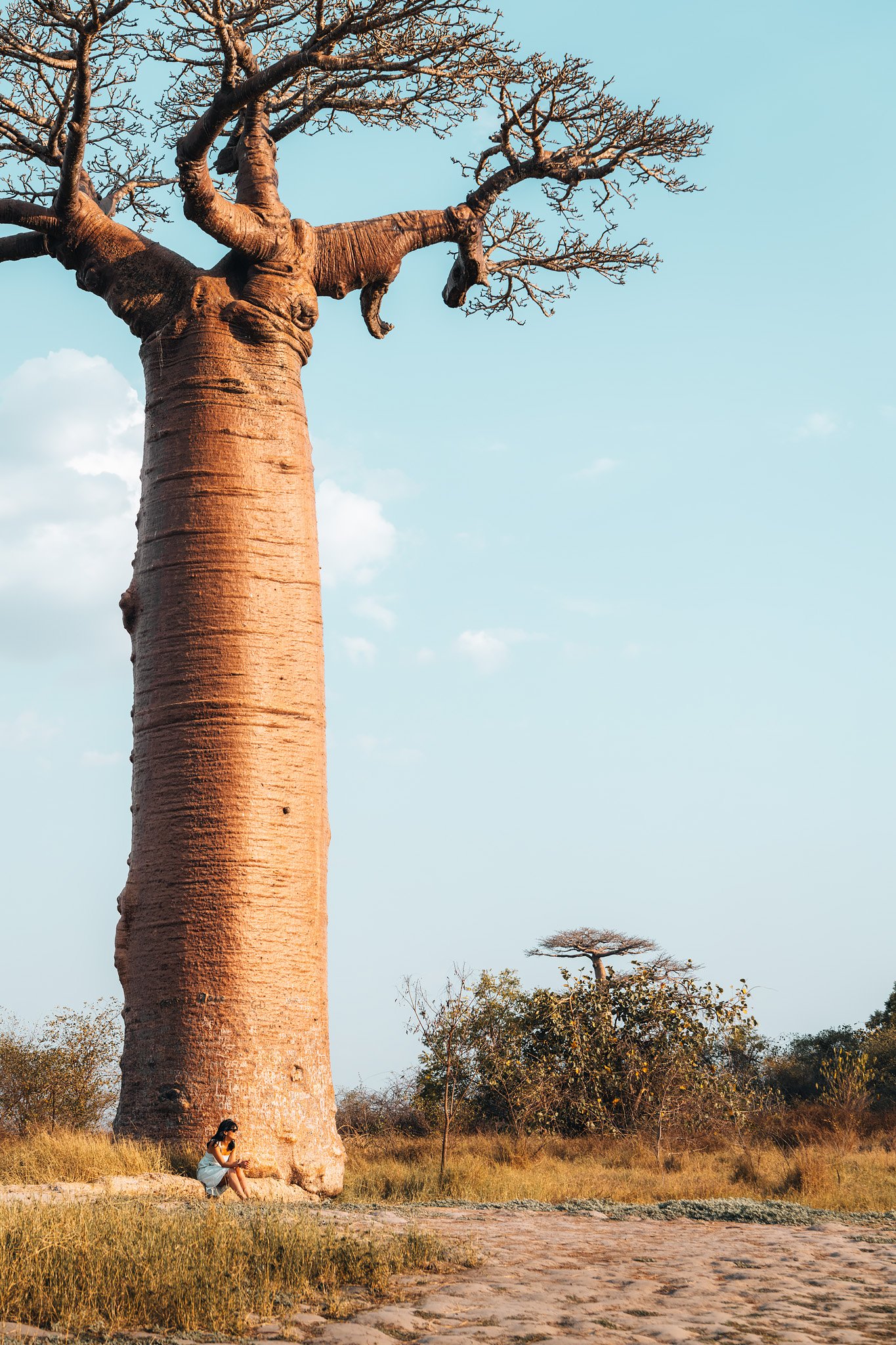
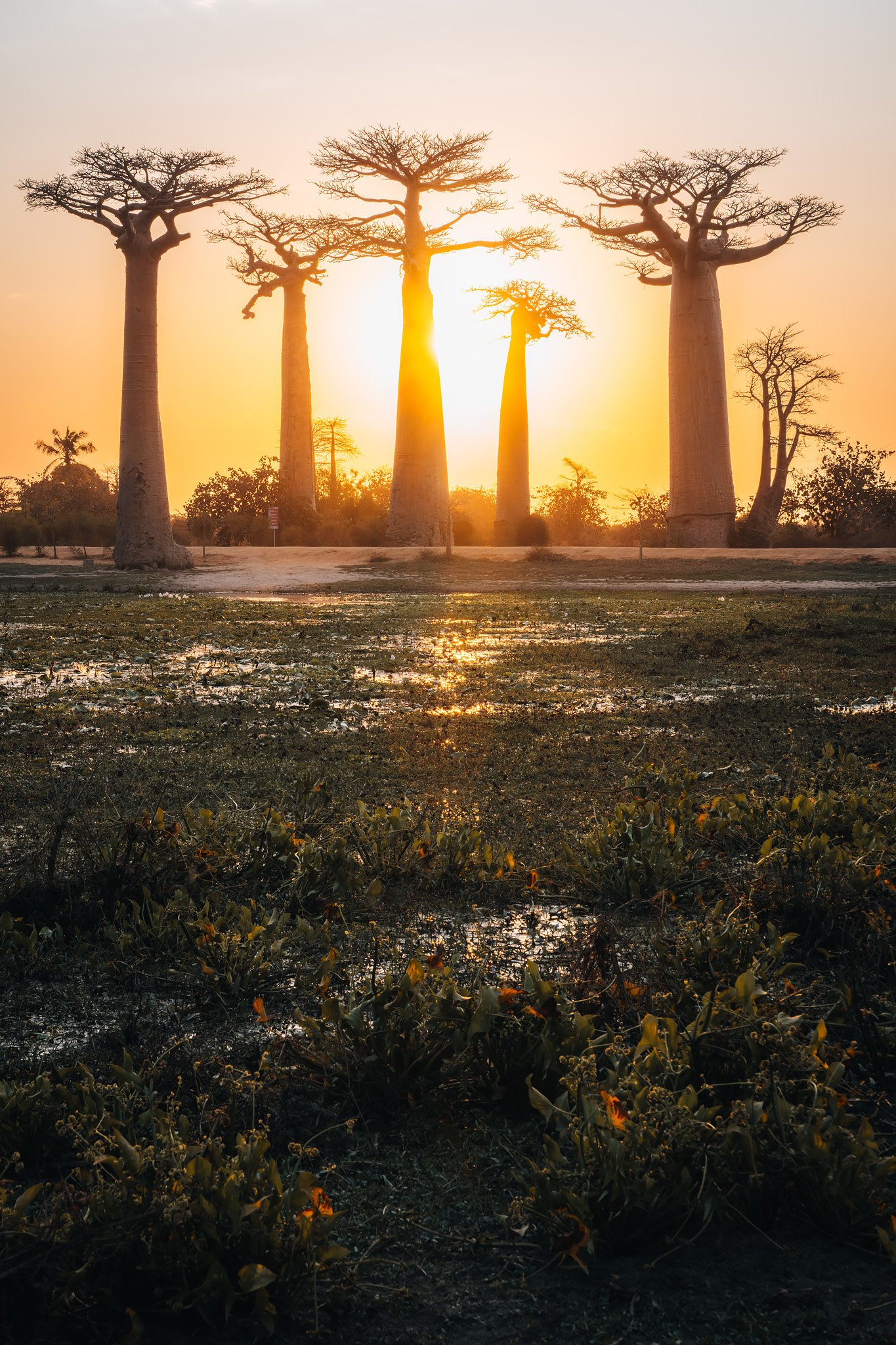
As the sun slowly set below the horizon, the trunks turned color from light gray to deep orange and ultimately dark silhouette against a brightening western sky.
Nearly an hour of complete silence followed. Looking back, this was one of those places where photography eventually takes a backseat to mere observation, and you can’t help but enjoy one of the most beautiful sunsets in the world.
Leaving Morondava
The next morning we embarked upon one of the longest drives of the entire trip. Our destination was located hundreds of kilometres inland in Madagascar’s Central Highland Plateau.
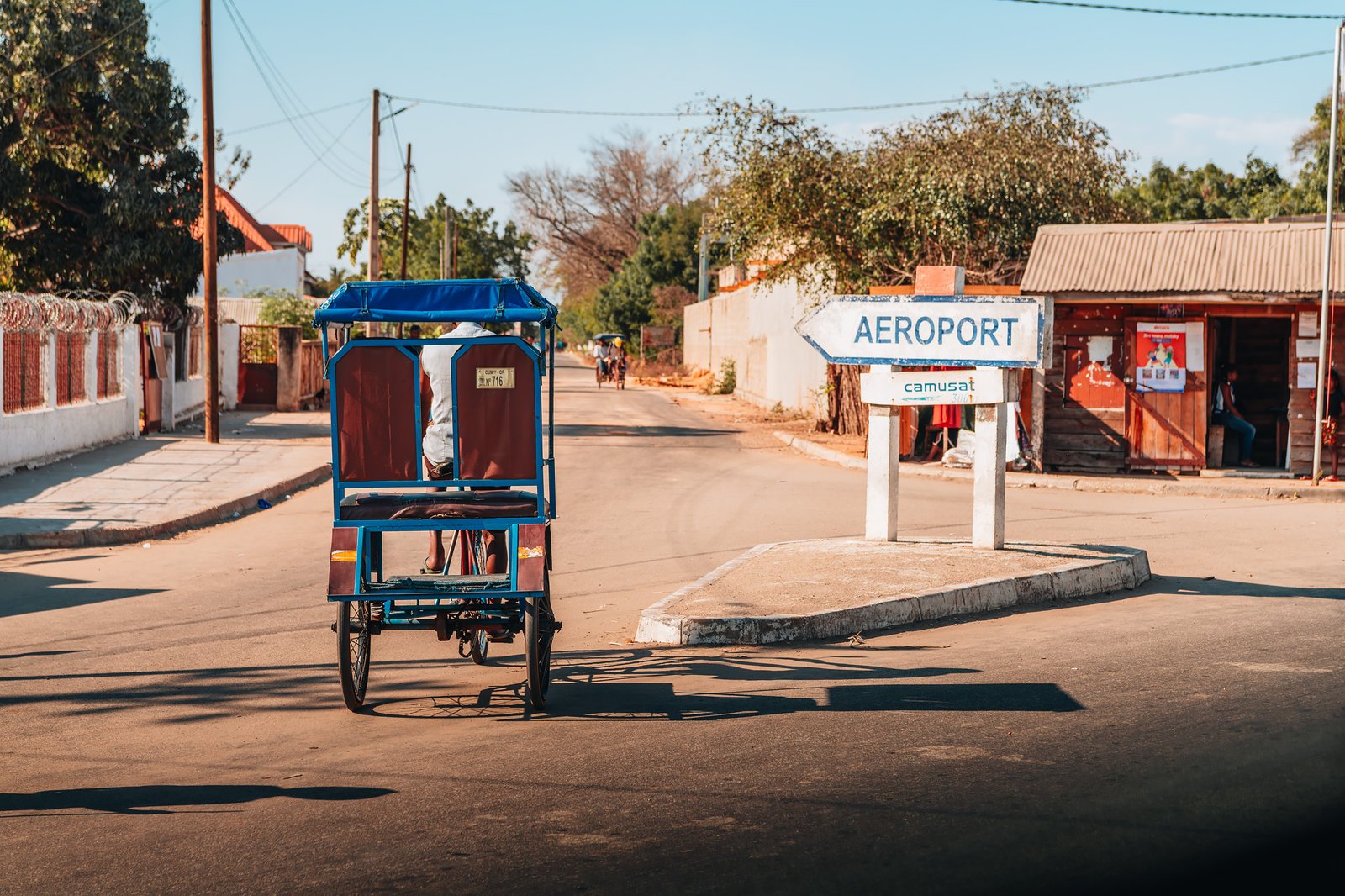
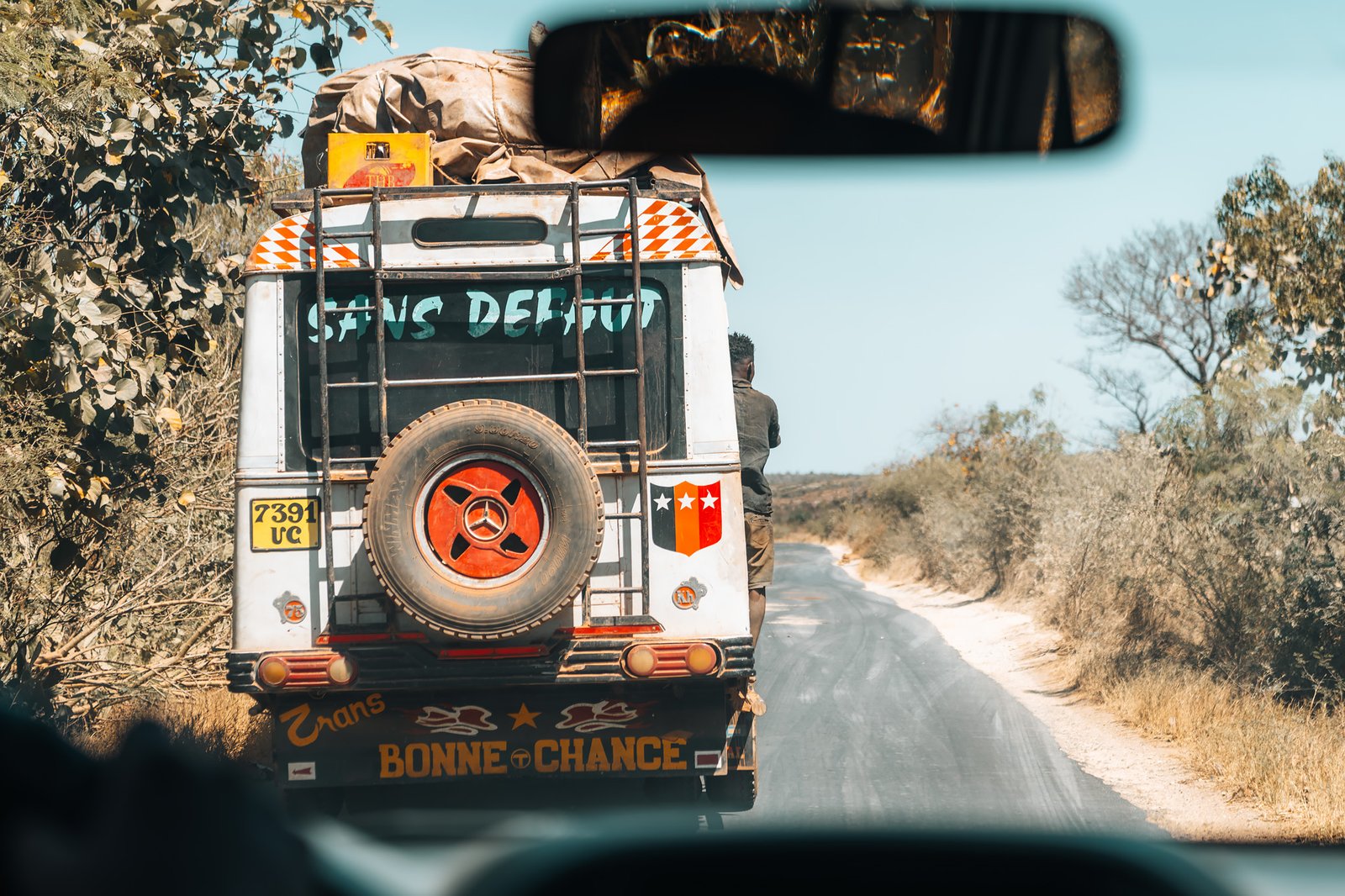
Maps do not provide a true sense of what it means to travel across this massive country. Many times distances that seem reasonable may take an entire day driving. Average speeds remain unexpectedly slow due to constant attention being needed to watch for pot holes, poor roads, construction zones and people, zebu, bicycle, and taxi traffic sharing the same lane of travel. Distance becomes measured in terms of hours versus kilometres.
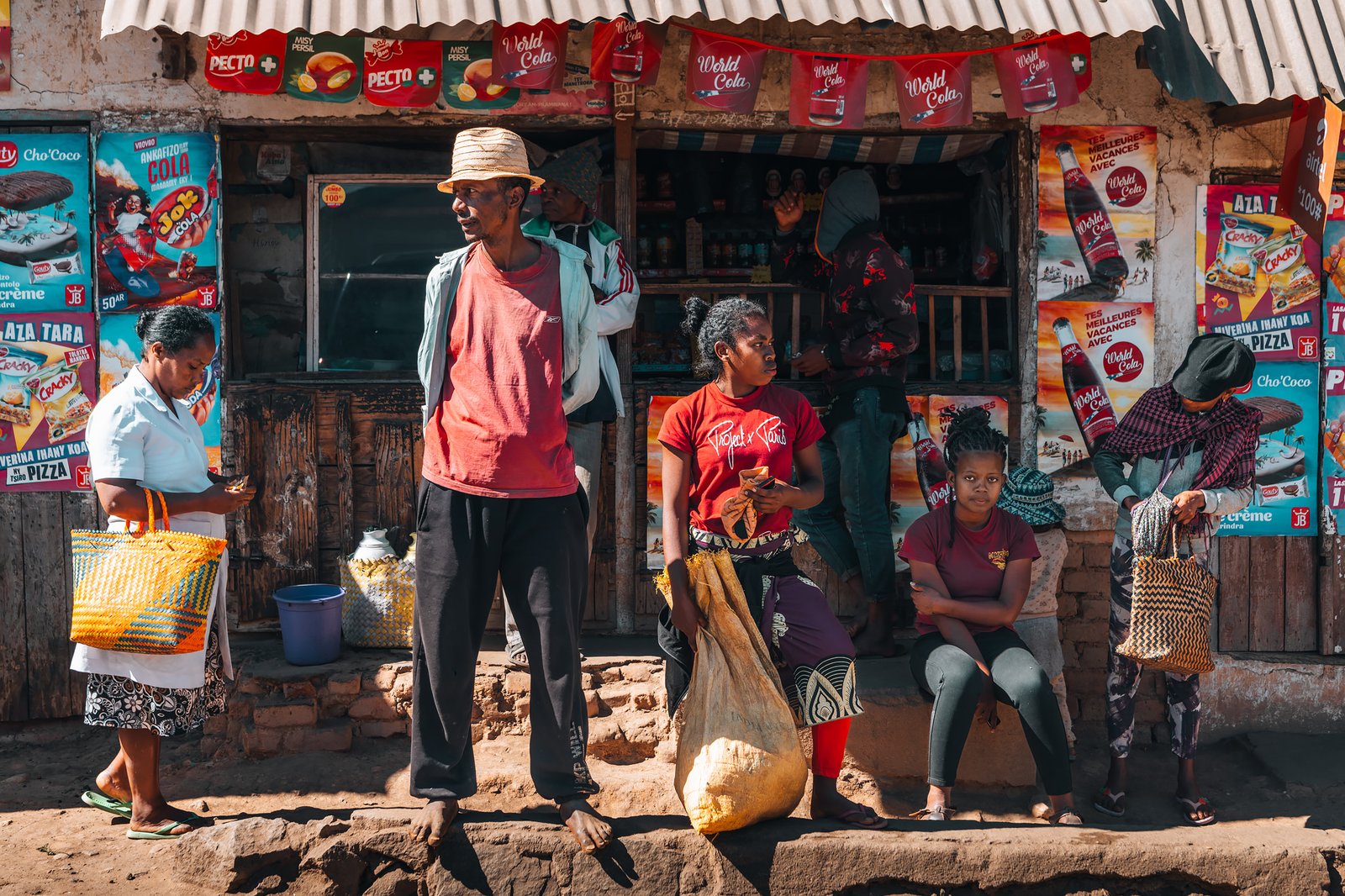
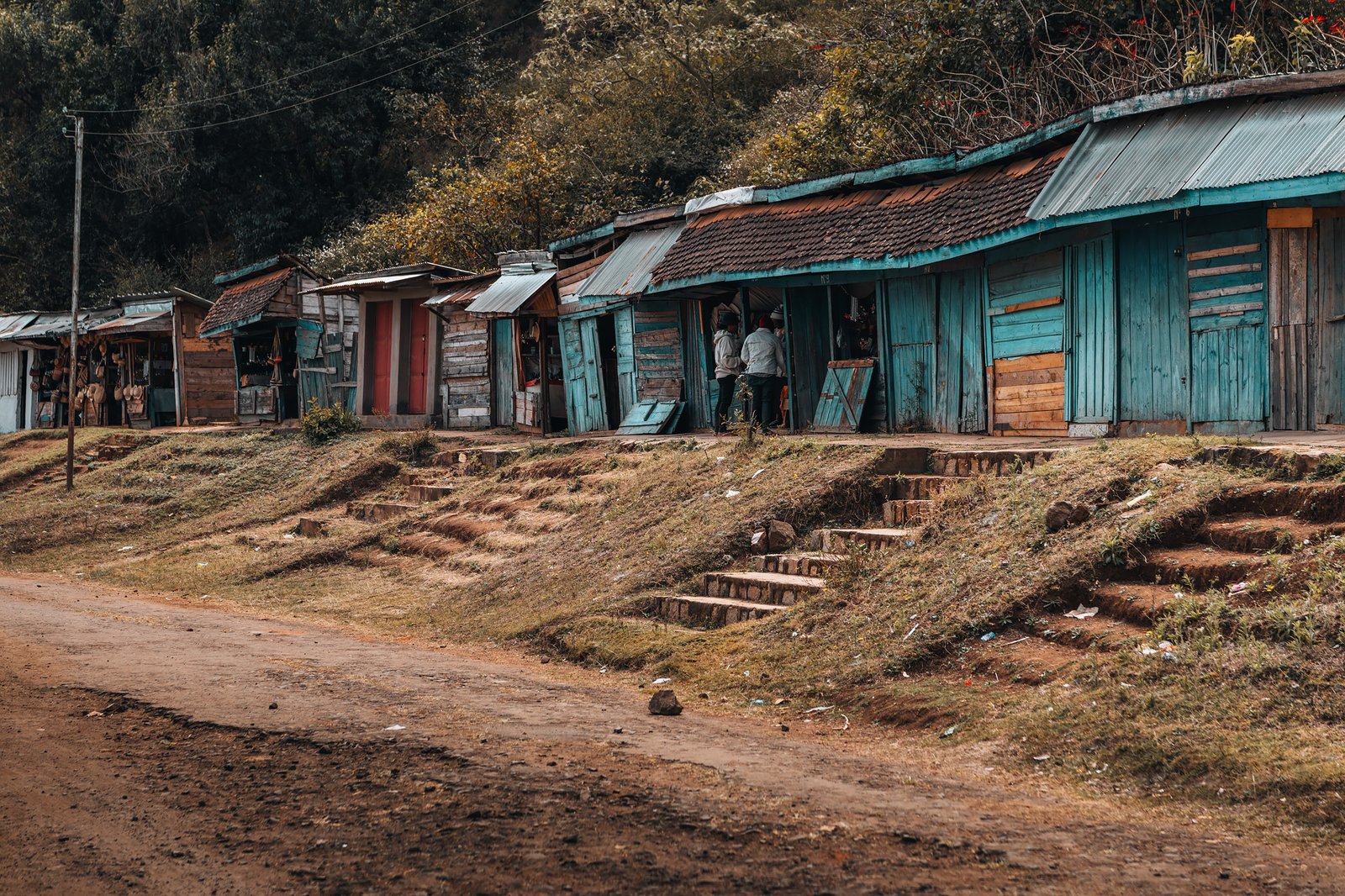
However, these extended periods of travel also show travelers a part of Madagascar that most visitors never see. Small roadside markets appeared constantly. Each market displayed various local produce including bananas, cassava, lychee fruits, charcoal and seasonal fruits laid out in neat piles. Every child encountered us as we drove past waved enthusiastically. Often children called out “bonjour” which faded quickly behind us as we disappeared into a cloud of dust.
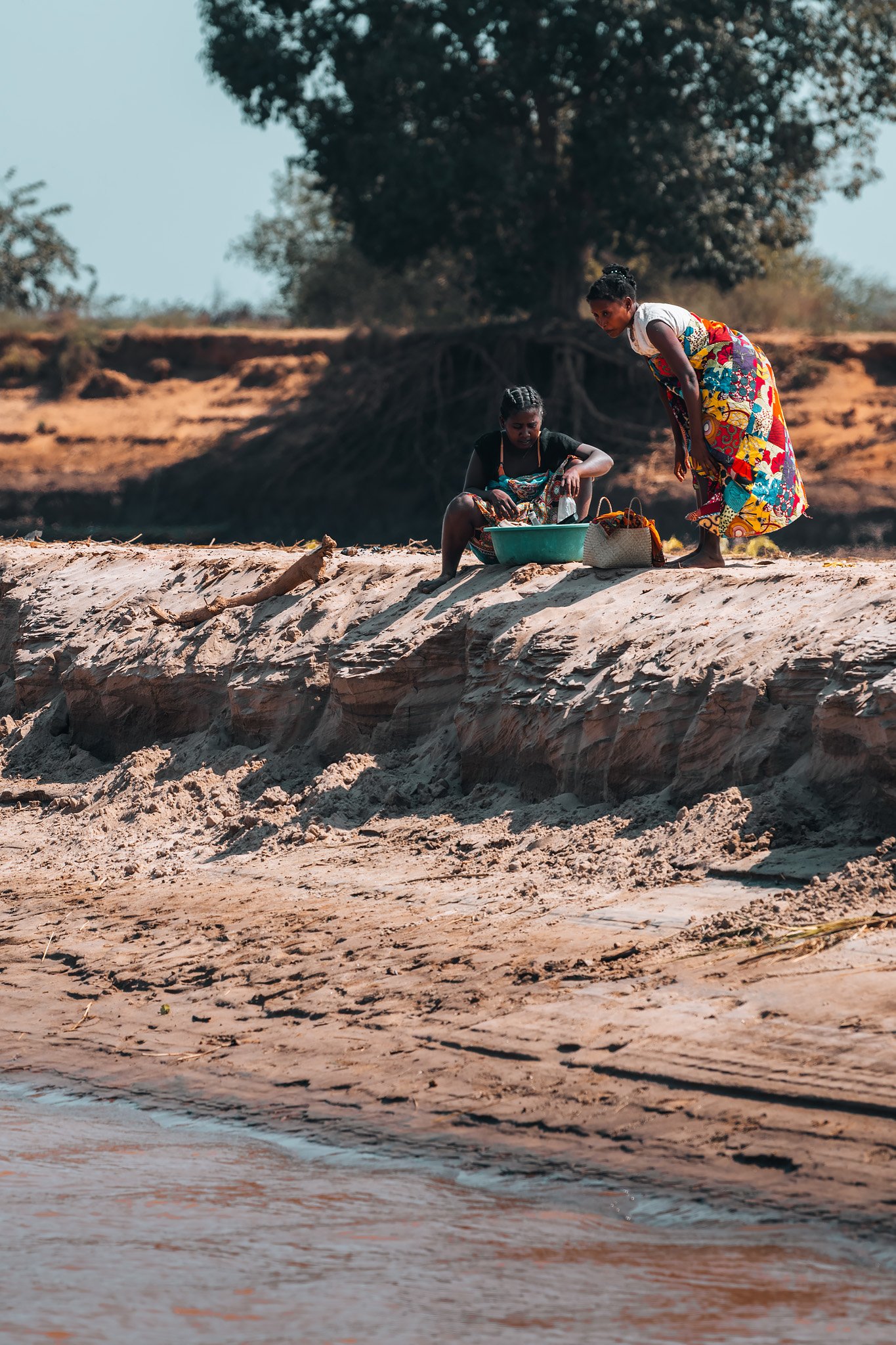
Daily routines took place alongside every inch of the road. Clothes were washed by women in nearby streams as they used small bridges to cross over the waterways. Large herds of zebus roamed freely through rice fields. Colorful taxi-brousse vehicles loaded with passengers, luggage and/or animals seemingly defied every physical law in order to accommodate everyone inside.
Madagascar’s roads serve as transportation routes, but they are also where life takes place daily.
The Worst Travel Companion
No, it was not my wife. At that point though I was giving more thought to something besides her and scenic views. I had been feeling ill for several days now. And it wasn’t malaria, it was the cure for it.
Like many travelers to malaria-prone countries, I had taken anti-malarial medications for the duration of my trip, and since the very first pill, I had been feeling worse and worse.
Long drives were considerably less fun than they otherwise would have been.Bouncing down bad roads for hours can be unpleasant enough even without stomach pain, but that was misery.
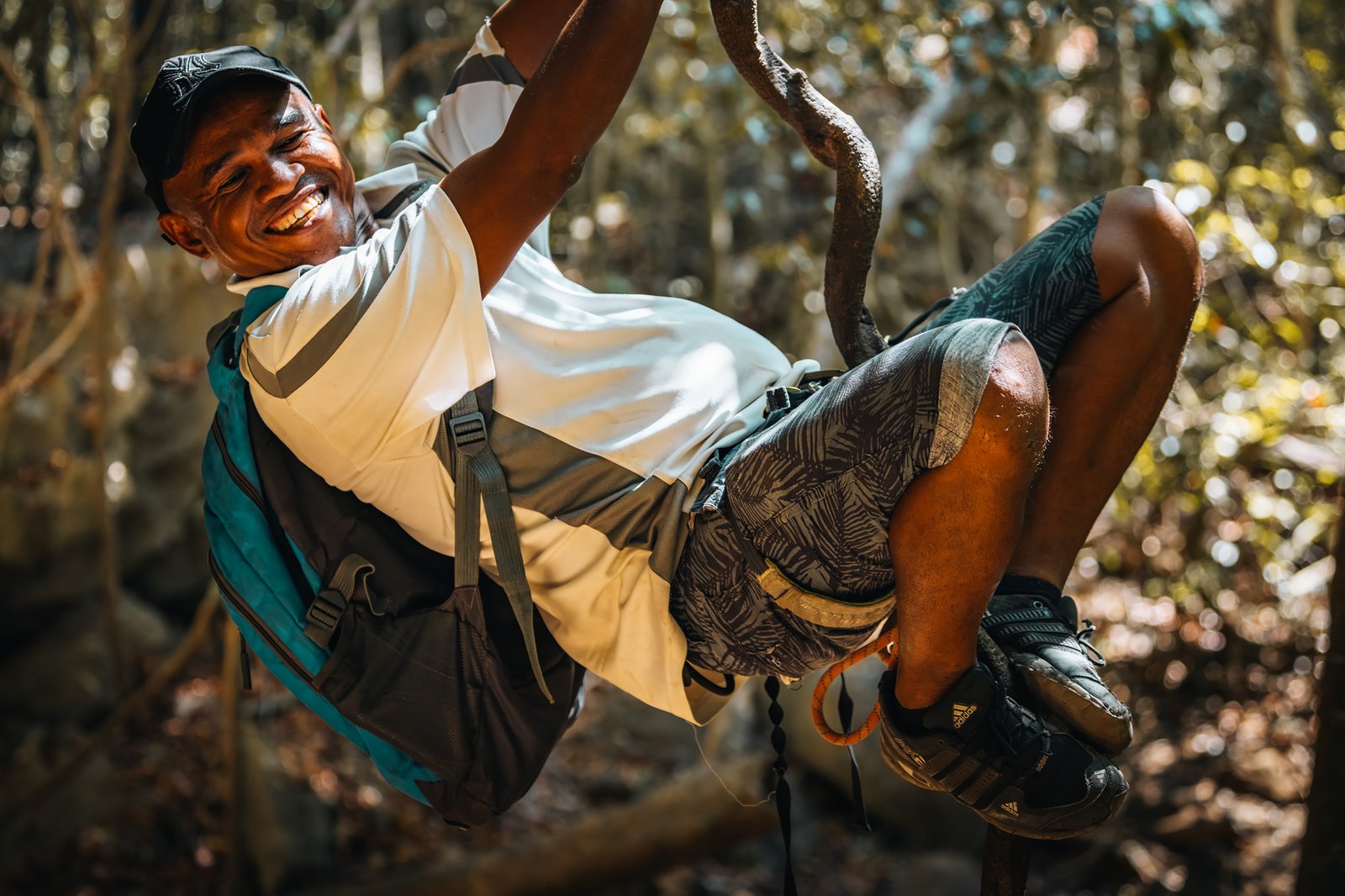
Fortunately though Rado didn’t seem bothered by either of us stopping every hour or so, as he continued to smile and wait patiently until it was safe to proceed. After traveling together for a week, minor annoyances such as ours were nothing more than another aspect of our journey.
These are some of the aspects that create lasting impressions regarding our trips, both the amazing landscapes we encounter and the more mundane events that remind us how unpredictable long journeys can be.
Back Into The Highlands
Slowly though, our surroundings began to change yet again. Western Madagascar’s dry deciduous forests gradually disappeared as we headed east and entered rolling hills, rice paddies and cooler weather as we ascended into Madagascar’s Central Highland Plateau.
The transformation occurred quite suddenly. Eucalyptus groves replaced baobab trees. Rice terraced hillsides once again dominated the view while brick buildings became more common than wood frame structures characteristic of western Madagascar. We essentially felt as if we were entering a different country.
Madagascar’s incredible biological diversity was one of the dominant themes of our journey so far. In less than two weeks, we had moved from tropical rainforests to dry forests, traversed extensive river plains, discovered limestone karst formations and now found ourselves again among volcanic plateaus developed by farming rather than aridity. Very few islands pack such dramatically varied ecosystems within such limited space.
Fire Lakes & Legends
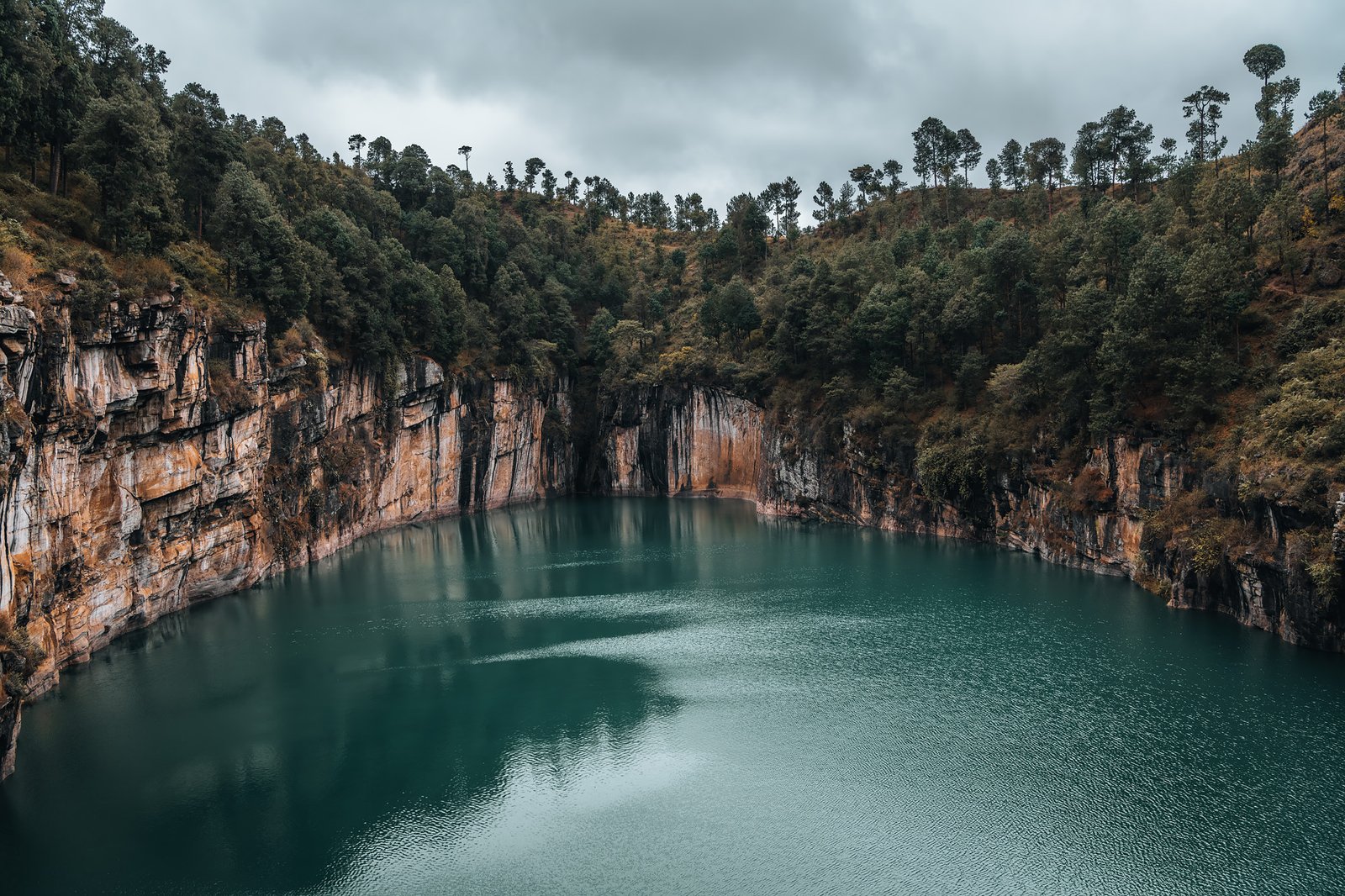
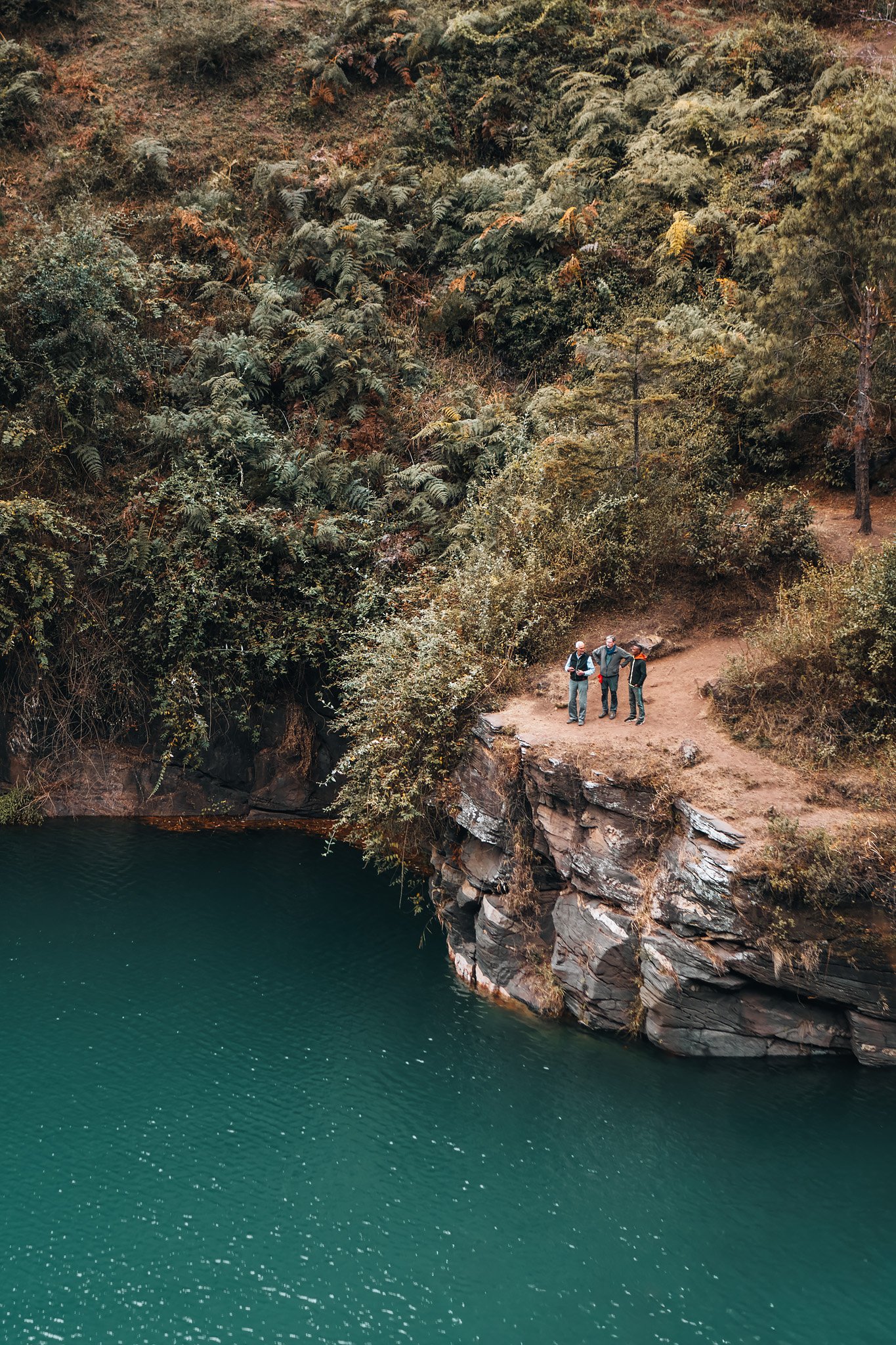
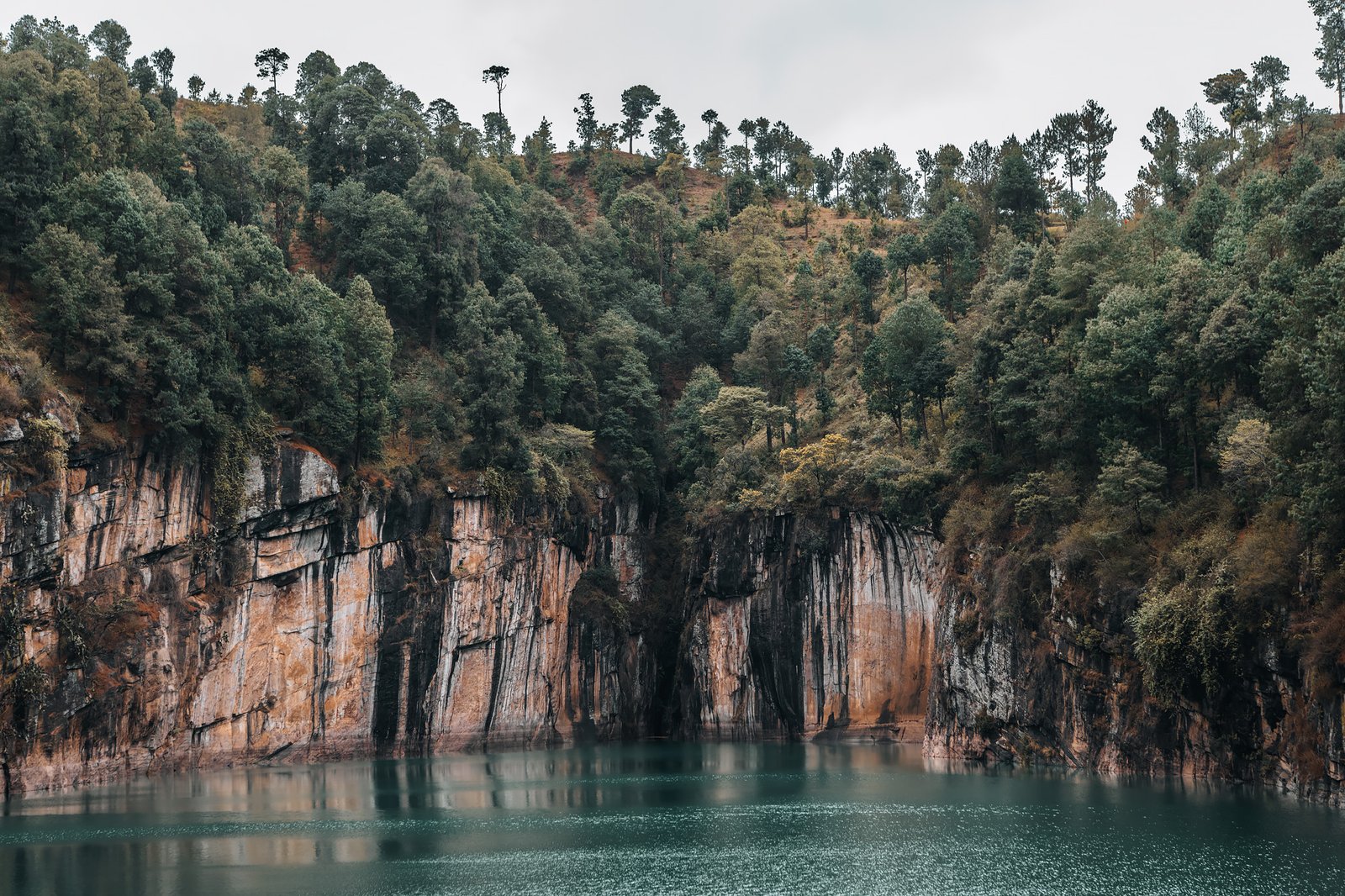
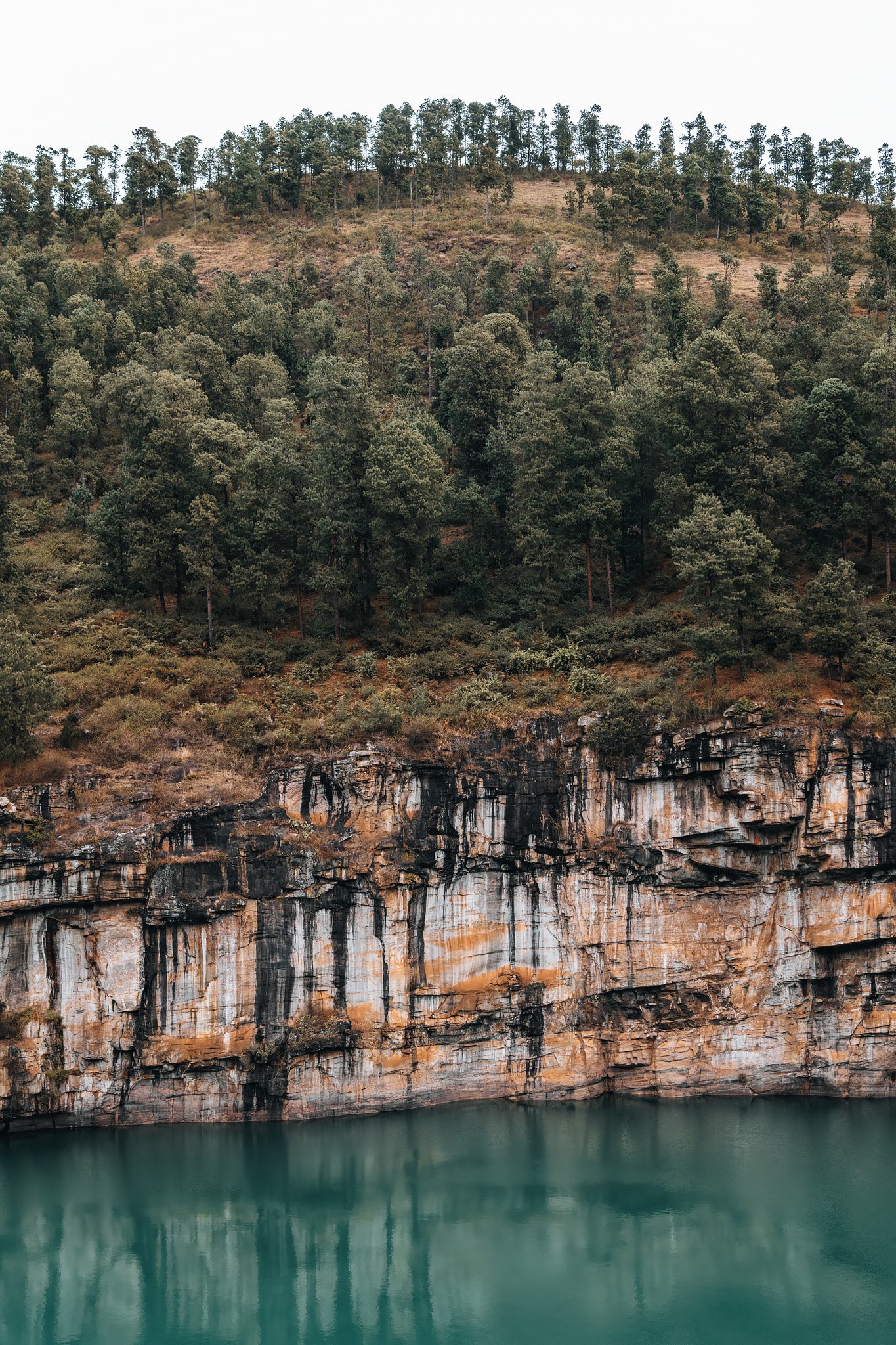
On our last couple of nights before heading off to Ranomafana National Park, we made two final visits in the vicinity of Antsirabe. First we visited Lake Tritriva, possibly Madagascar’s most well-known volcanic caldera lake.
Tucked away amidst pine trees and towering volcanic walls stands a deep blue body of water whose ambiance differs greatly from the broad rivers and vast expanses of barren plains we had just exited behind us. The history of Lake Tritriva includes a tale told by local traditions, two young lovers who couldn’t get married because of their families, and chose to throw themselves into the lake together rather than be separated. The two lovers allegedly became two trees standing side by side on opposite sides of the lake and have remained joined forever in their love for each other.
Today Lake Tritriva is considered still a sacred location. People continue to leave offerings on portions of its shores, there is even zebu sacrifices still. Certain areas continue to hold spiritual value for nearby residents. It is easy to see why this environment has inspired tales for generations whether or not one believes in the legend.
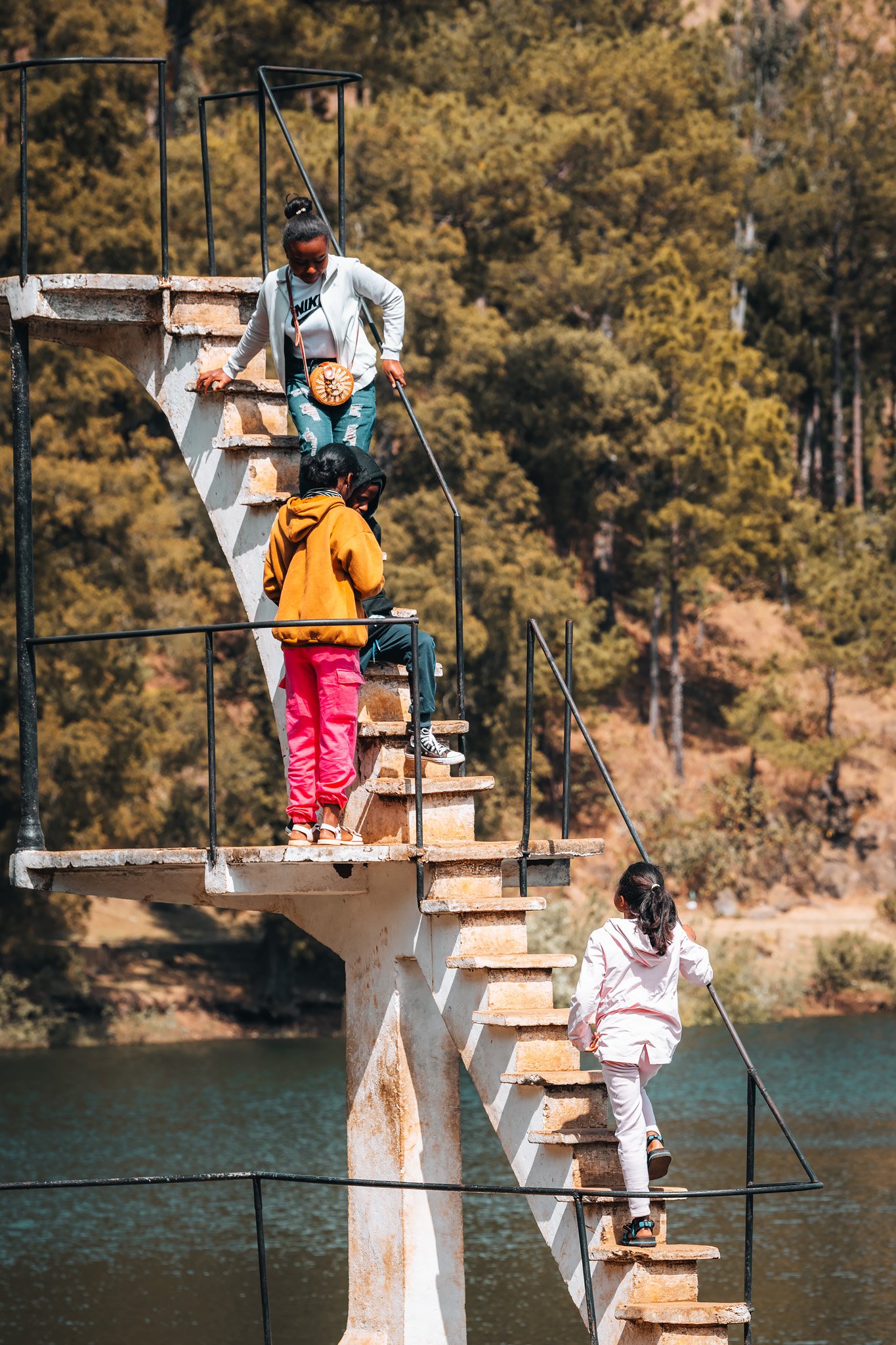
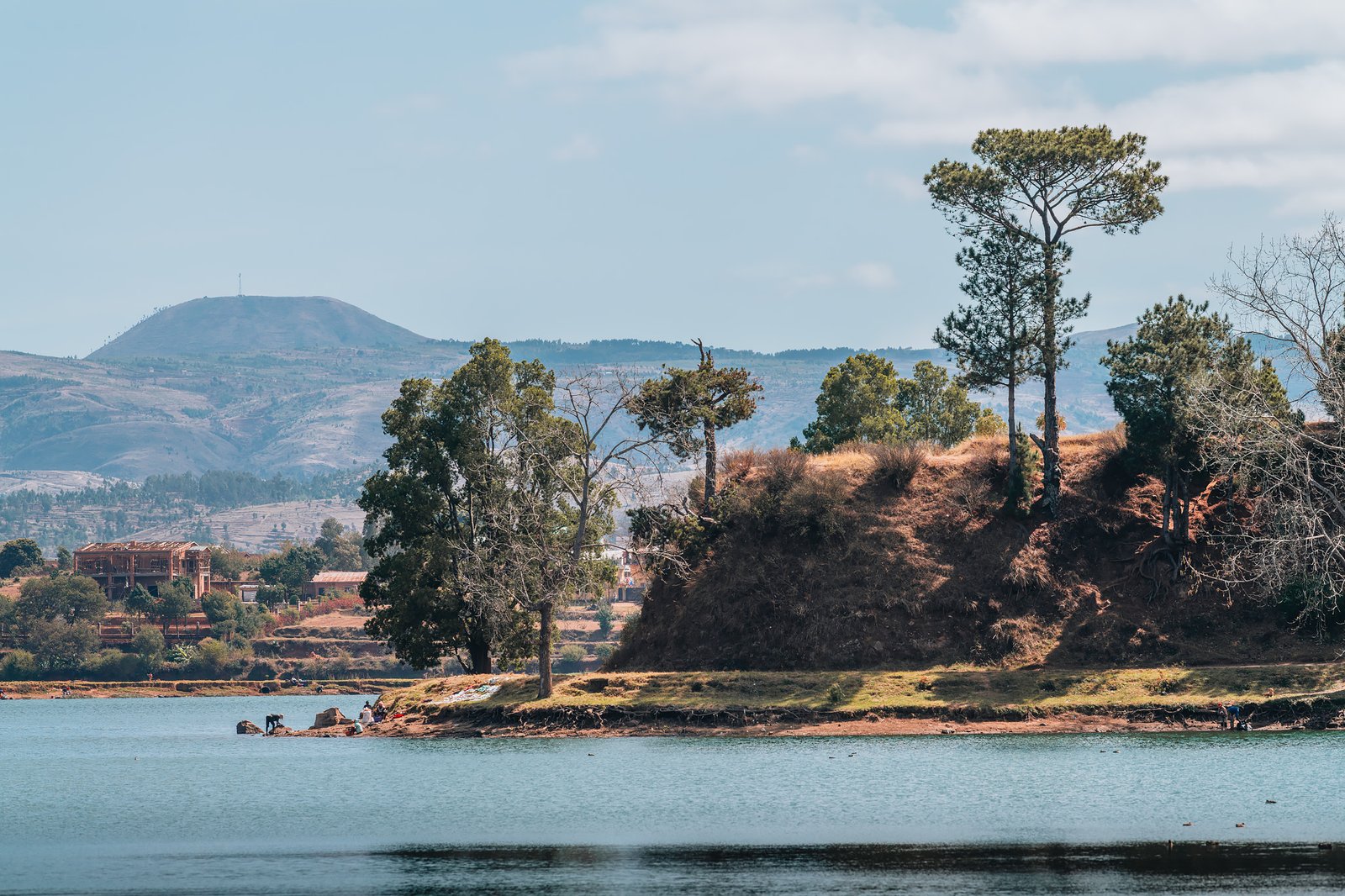
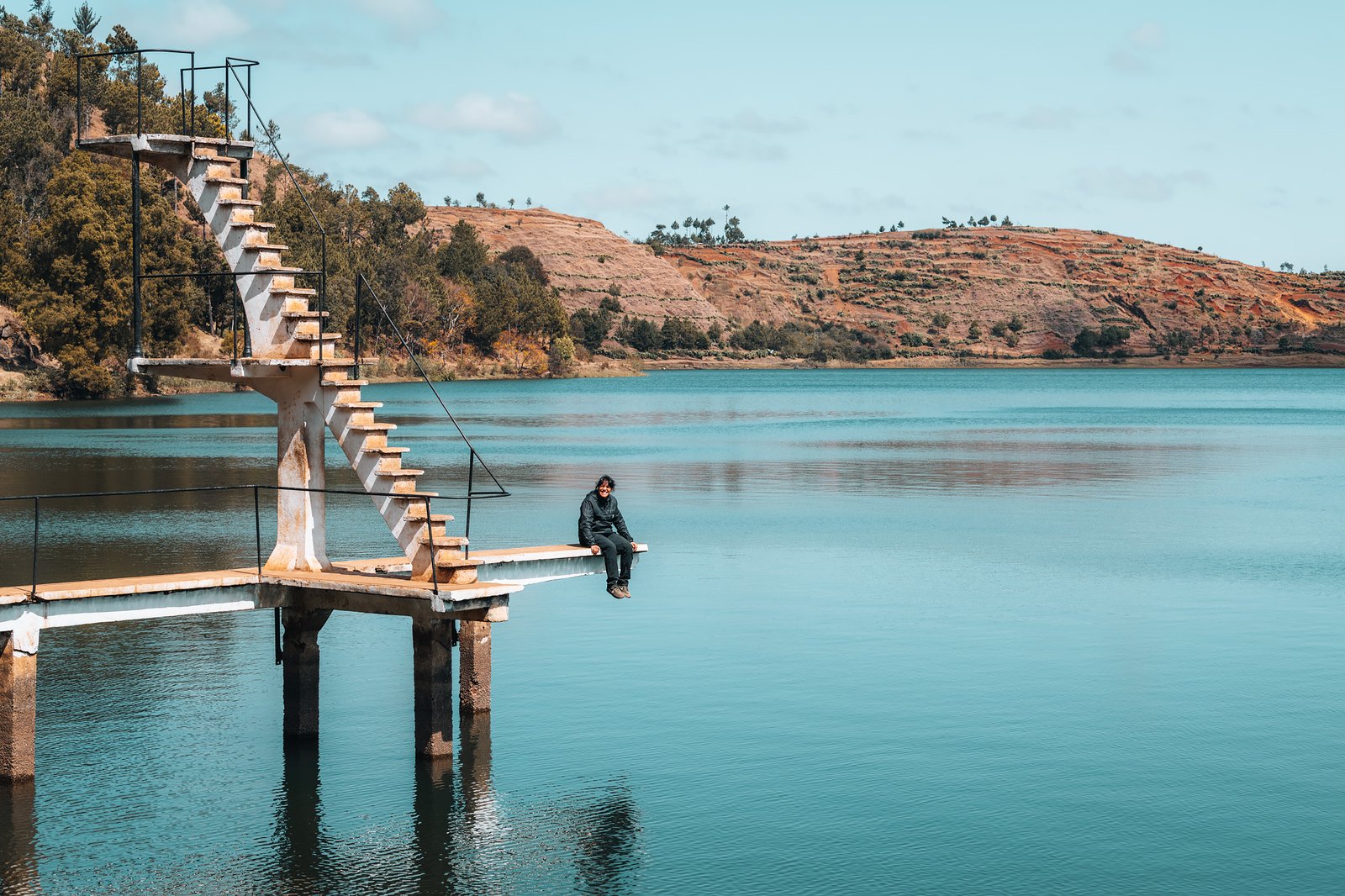
Not far from Lake Tritriva lies Lake Andraikiba. Its ambiance is worlds apart from Lake Tritriva though. Children playfully leaped into the water as families enjoyed the afternoon along its shorelines. Couples strolled hand-in-hand along its lakefront road while vendors sold snacks under eucalyptus trees providing welcome shade.
Together these two lakes exemplify another facet of Madagascar, one shaped by culture, tradition and quiet rhythms of daily life in Madagascar’s central highlands.
Later that evening we returned to Antsirabe for our last night before moving south. It was a very cold night, which gave us a huge relief from western Madagascar’s heat for the first time in many days. It was great to smell damp earth instead of dust for once. Early morning we would head south toward the escarpment dividing Madagascar’s highland plateaus from its eastern rainforests.
Ranomafana waited ahead of us.
Madagascar. Part IV: The Great Tsingy de Bemaraha
The previous day had been the best introduction to Bemaraha’s limestone landscape, but everyone we spoke to mentioned the same thing: “You’ll see the real Tsingy tomorrow.” Repeatedly being told the same thing created high expectations. Surprisingly, expectations were far too low.
We departed Bekopaka shortly after sunrise and traveled through patches of deciduous dry forest before arriving at the entrance of the Great Tsingy. Waiting for us was Taina, our Sakalava guide from the previous day’s boat tour, who would again lead us through one of Madagascar’s most unique protected areas.
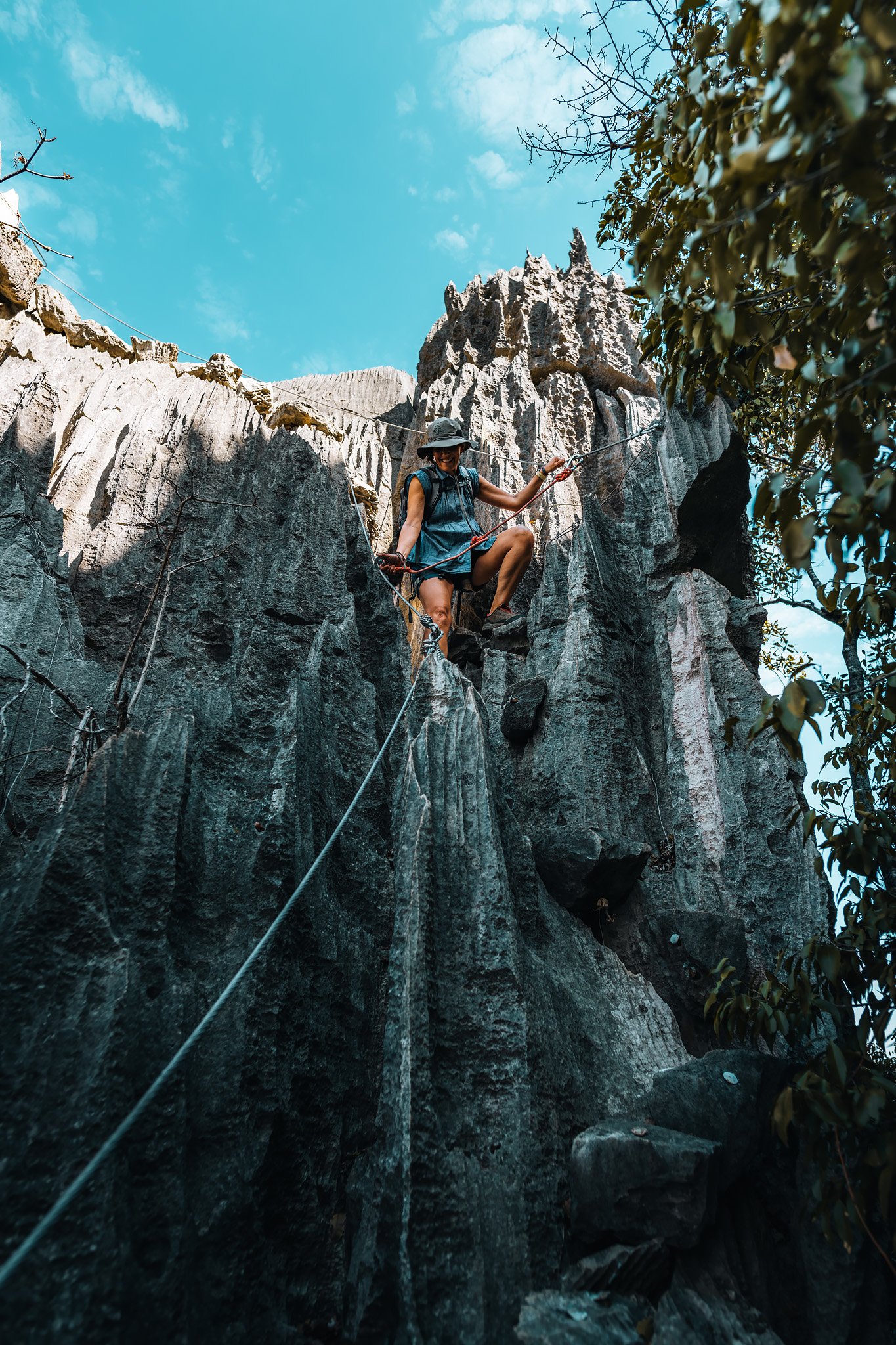
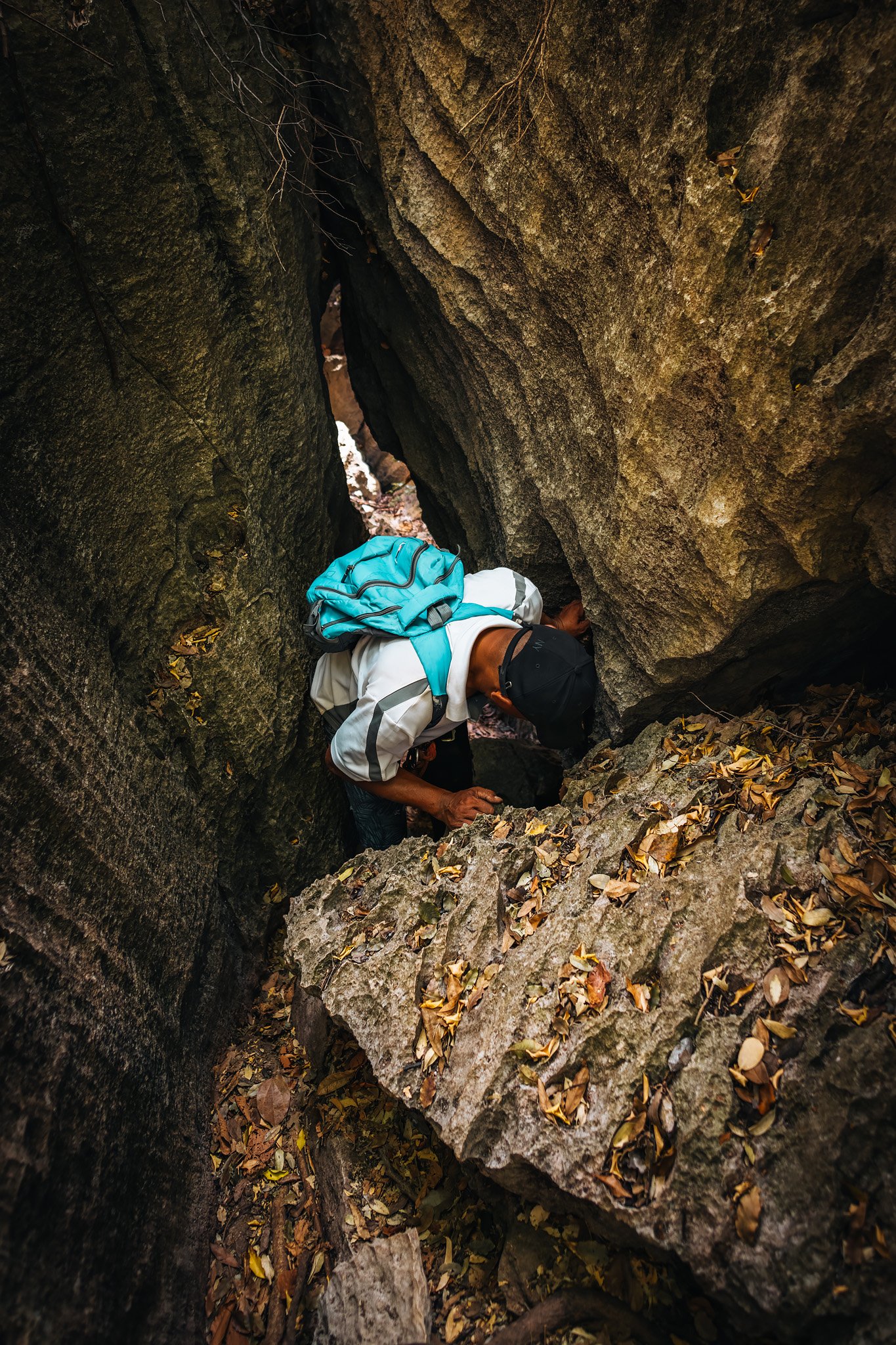
Similar to many national parks, the Great Tsingy does not allow visitors to merely hike through its beauty. Visitors need to participate. From the start of our journey the path consisted of climbing, navigating narrow rock passageways, and walking on uneven limestone that seemed to intentionally punish each careless step.
Before viewing the vistas that make the Great Tsingy famous we were fully immersed in the landscape.
Hiking Through an Old Sea
It is difficult to understand the full nature of the Great Tsingy without first learning about its geologic history. This area was under a shallow tropical sea approximately 200 million years ago. The sea contained numerous corals, shellfish and other marine organisms which built up layers of sediment on the seafloor. These sediments accumulated layer by layer for millions of years until massive amounts of limestone formed.
Eventually, tectonic forces uplifted this massive amount of limestone above the sea level and allowed it to be eroded by rainfall which dissolved it in fractures and weak points in the rock.
As a result, the Great Tsingy is an example of tropical karst that ranks among the finest in the world.
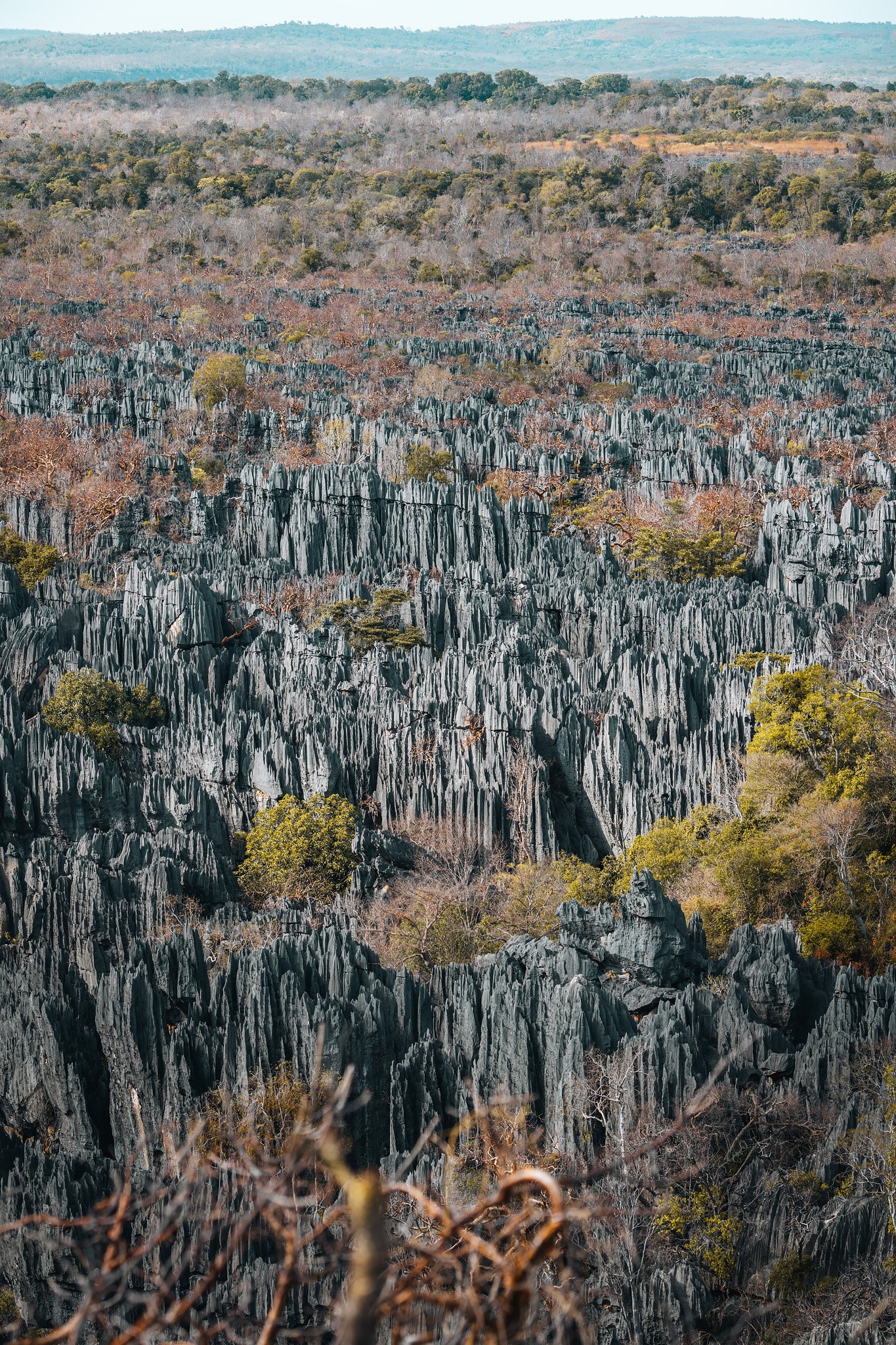
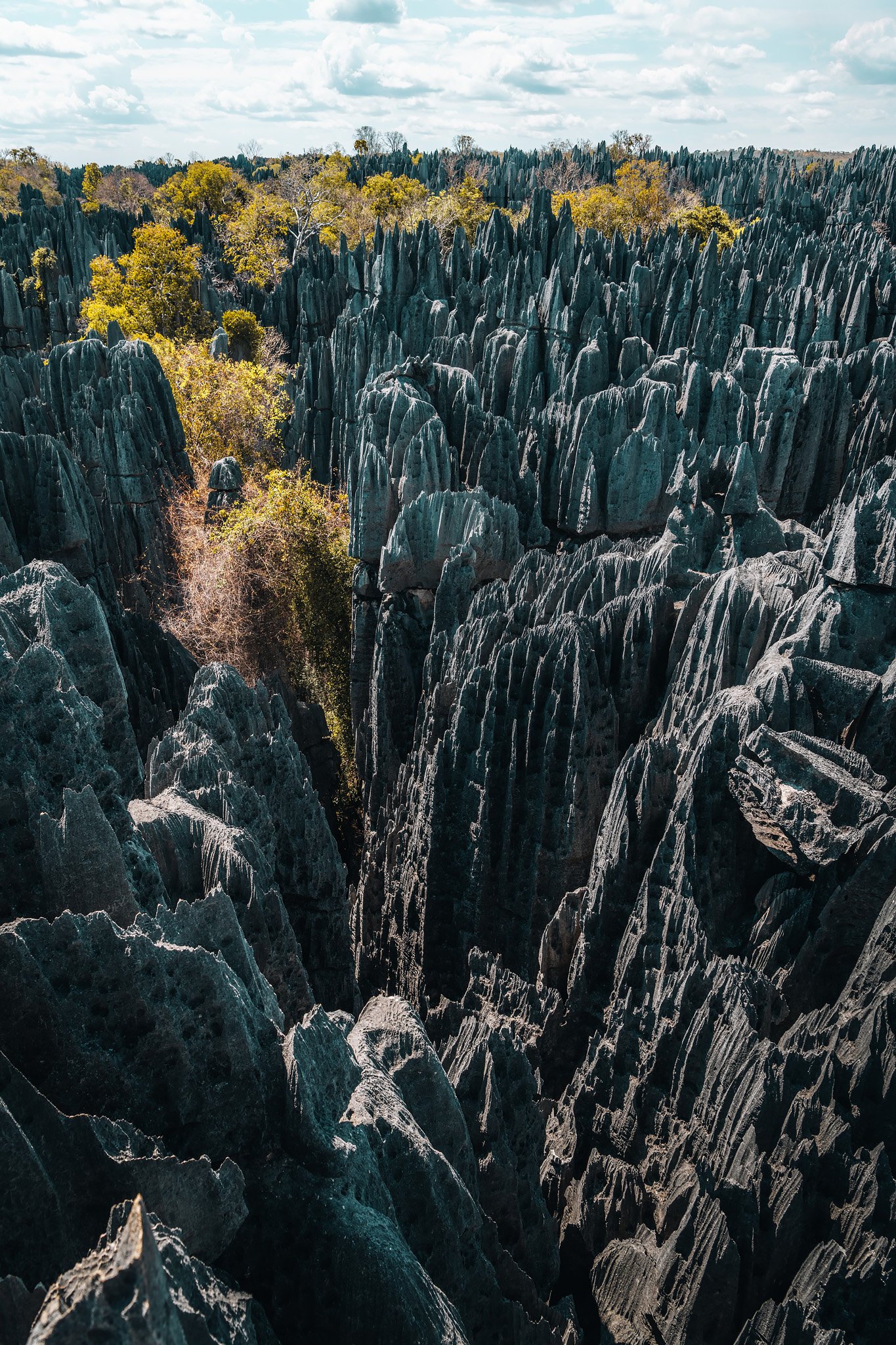
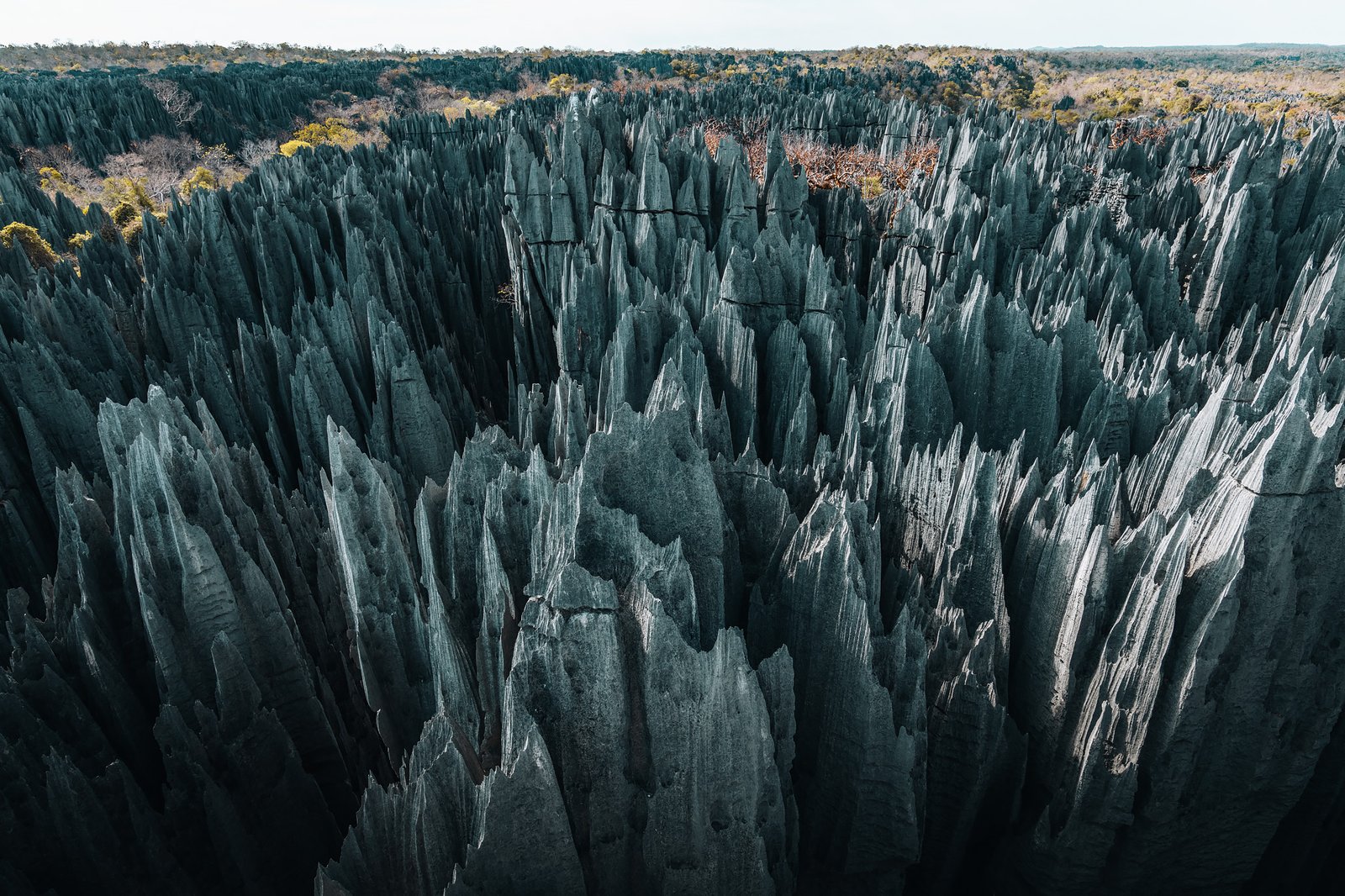
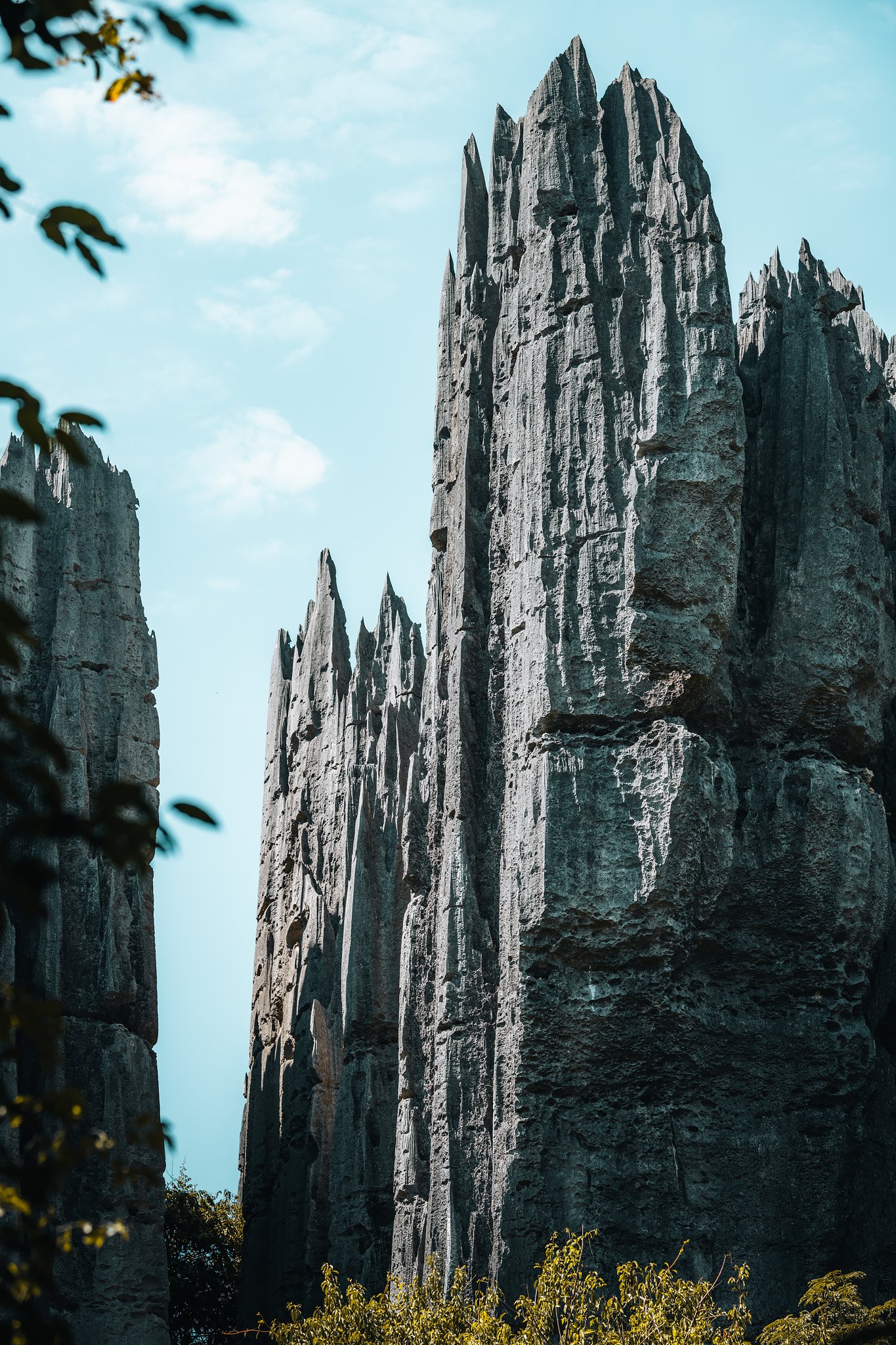
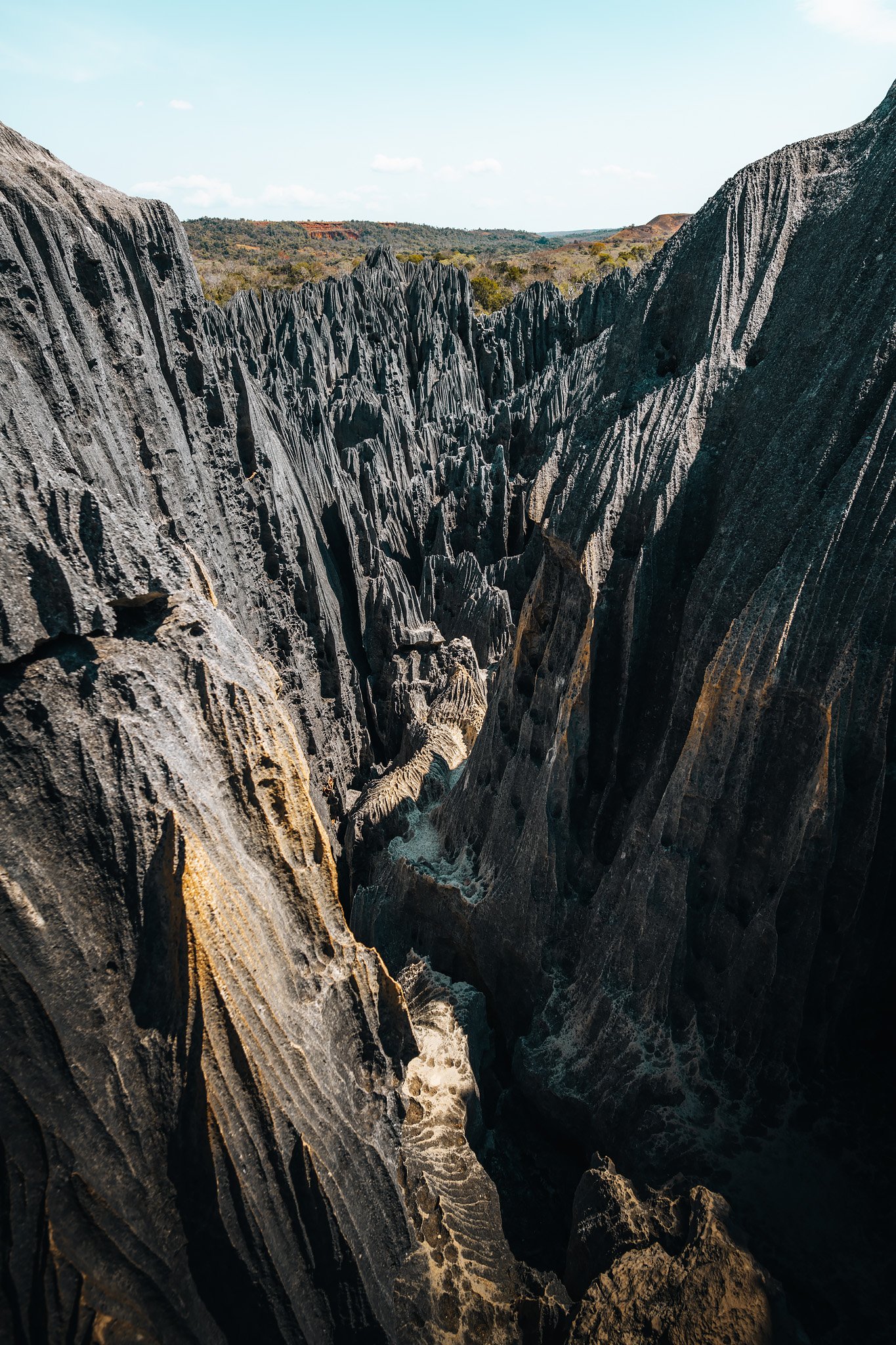
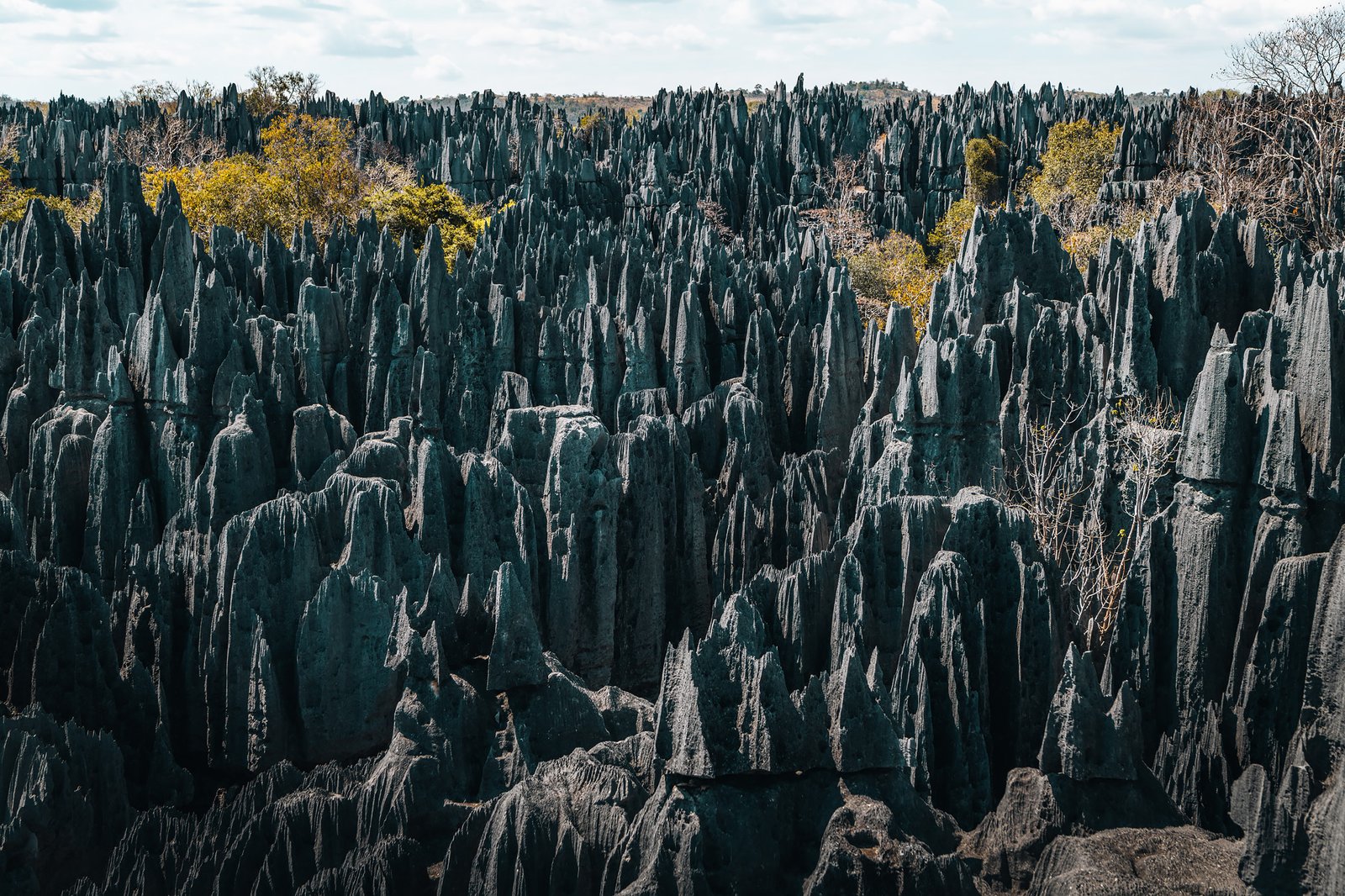
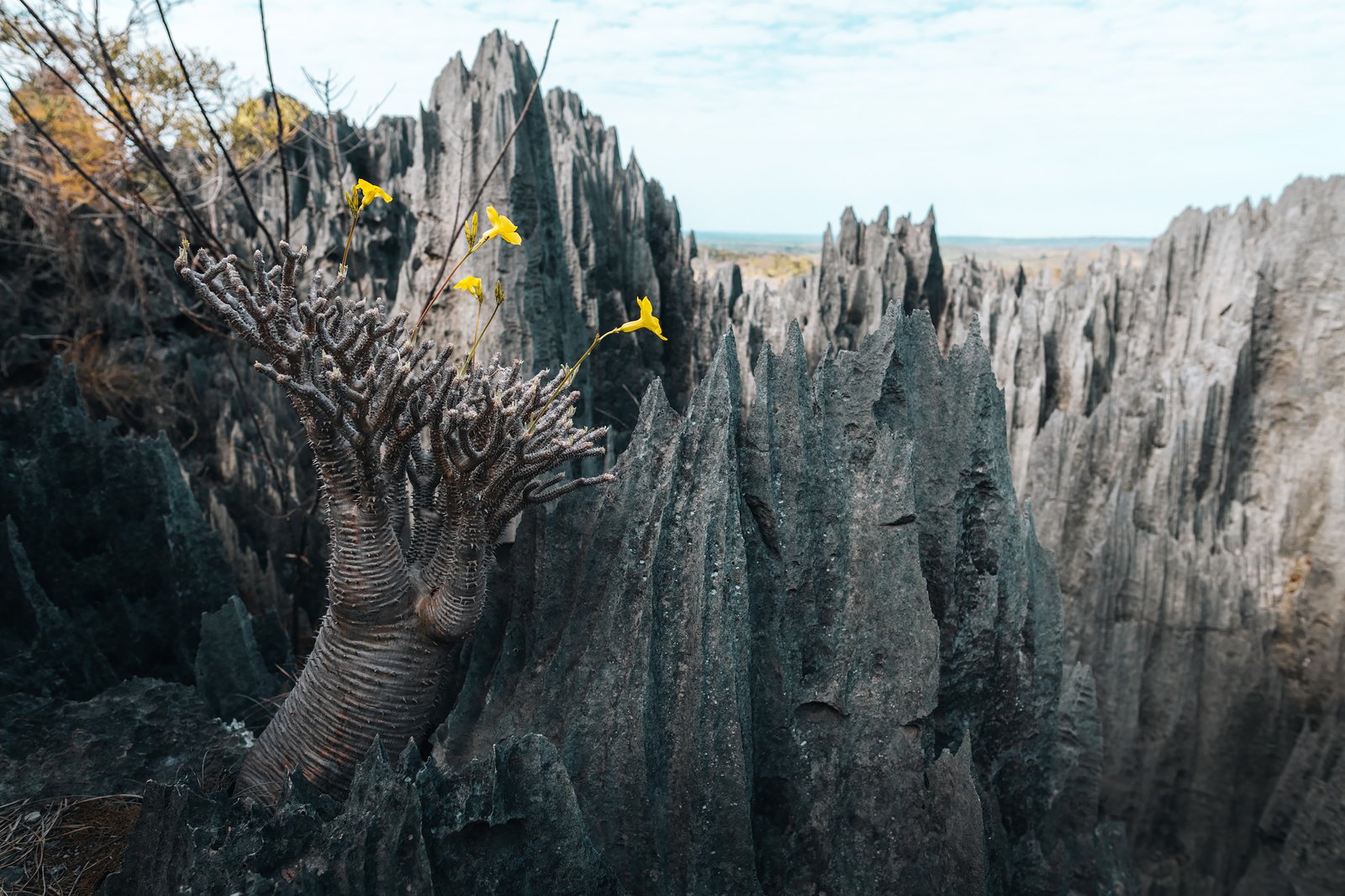
During extreme periods of time, water carved the limestone into thousands of sharp pinnacles separated by deep canyons, dark caves and narrow ravines. In some cases, the stone pinnacles now stand at least 100 metres higher than the forest floor below and form an impassable labyrinth.
Each exposed edge appeared capable of cutting through boots, clothing or skin without much challenge. It quickly became obvious why significant portions of the reserve are generally off limits to visitors.
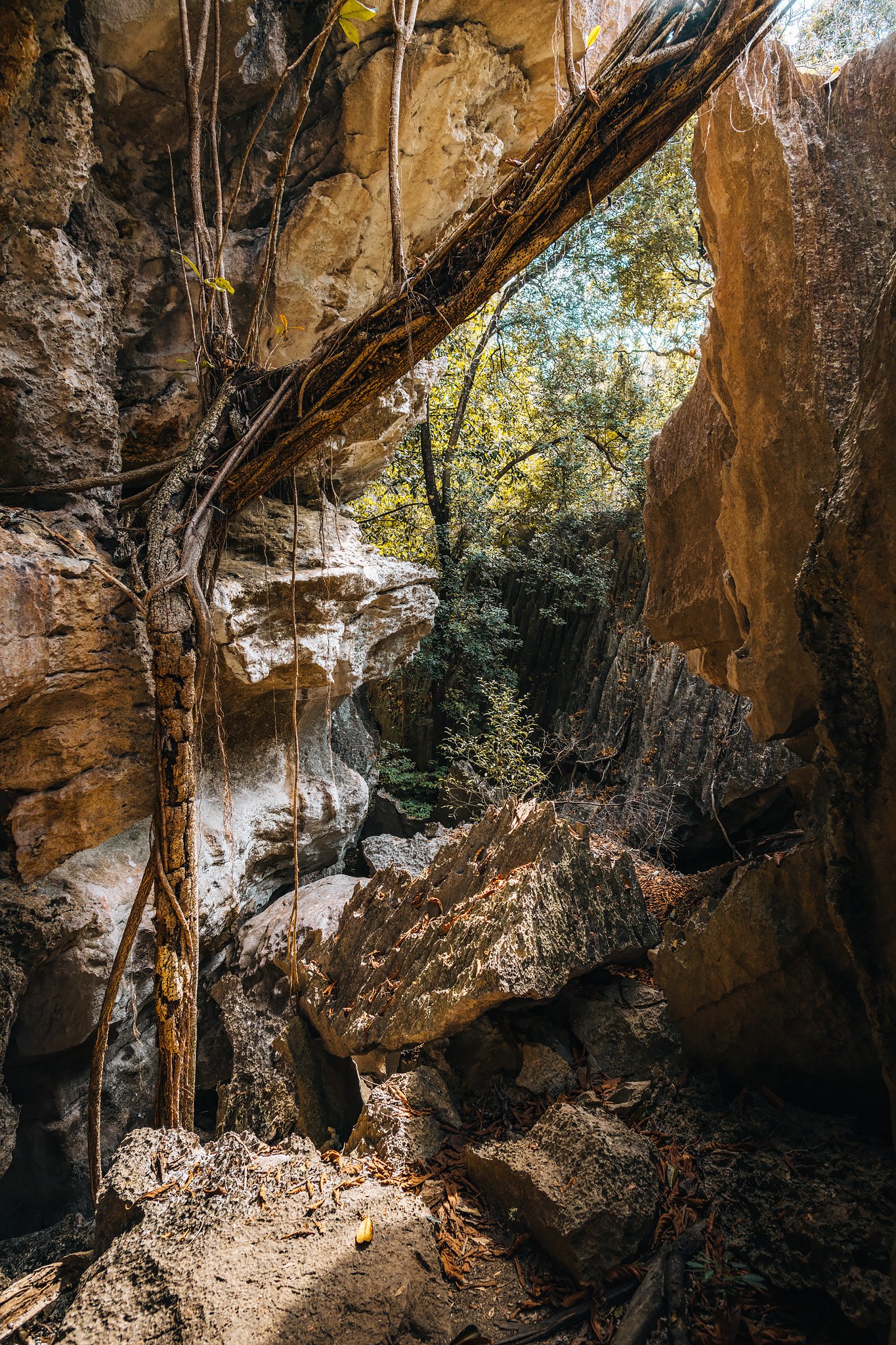
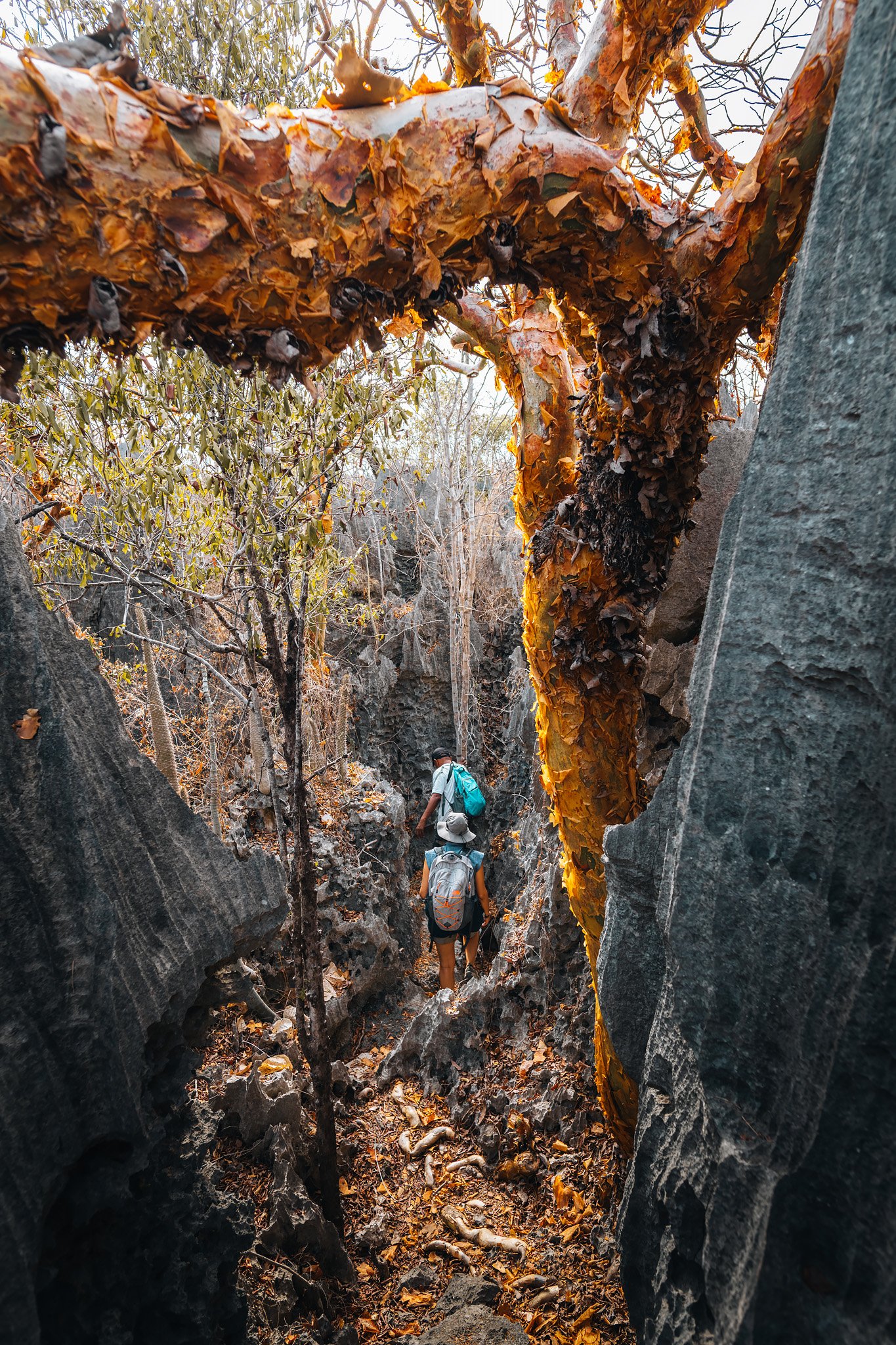
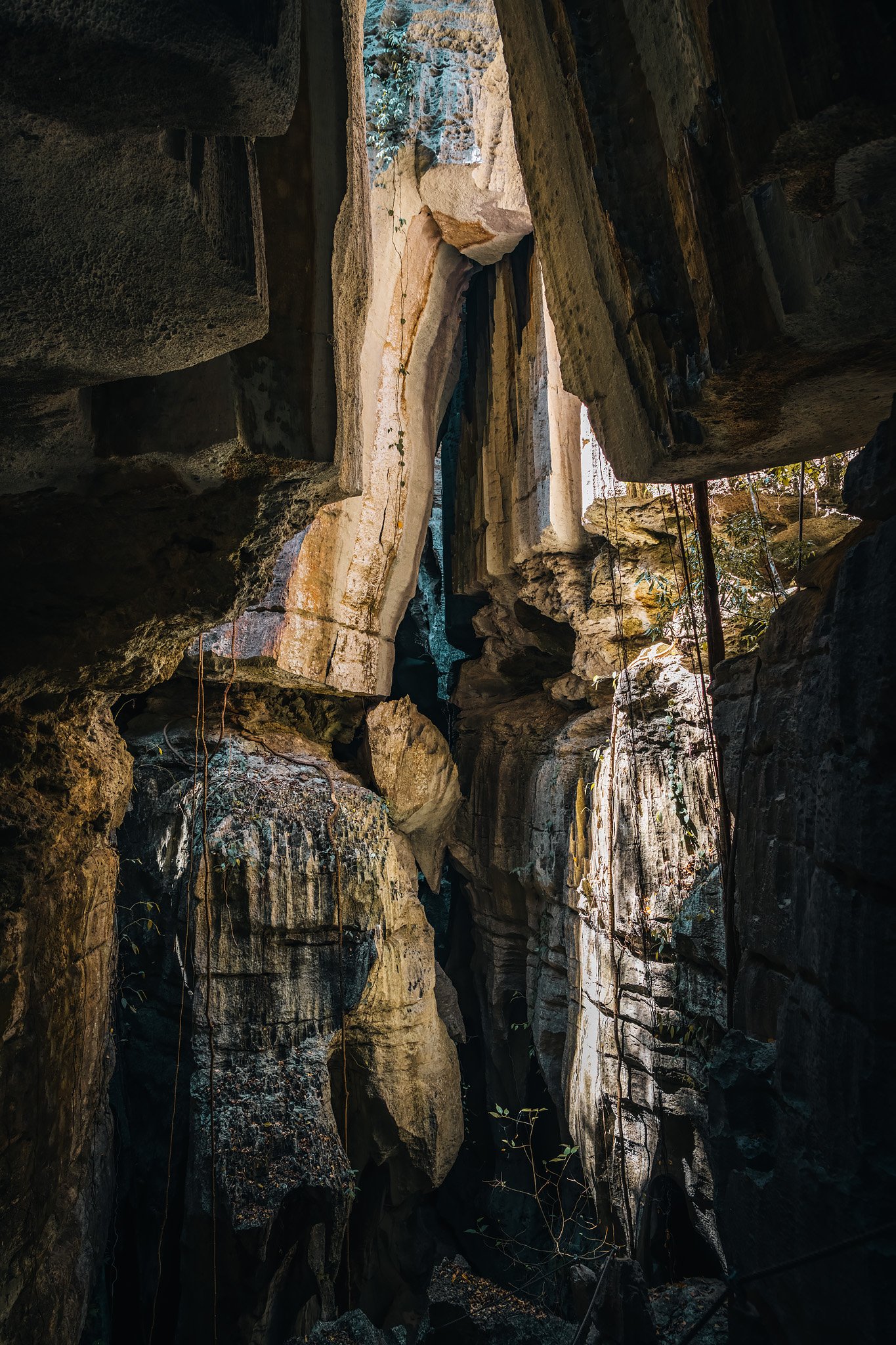
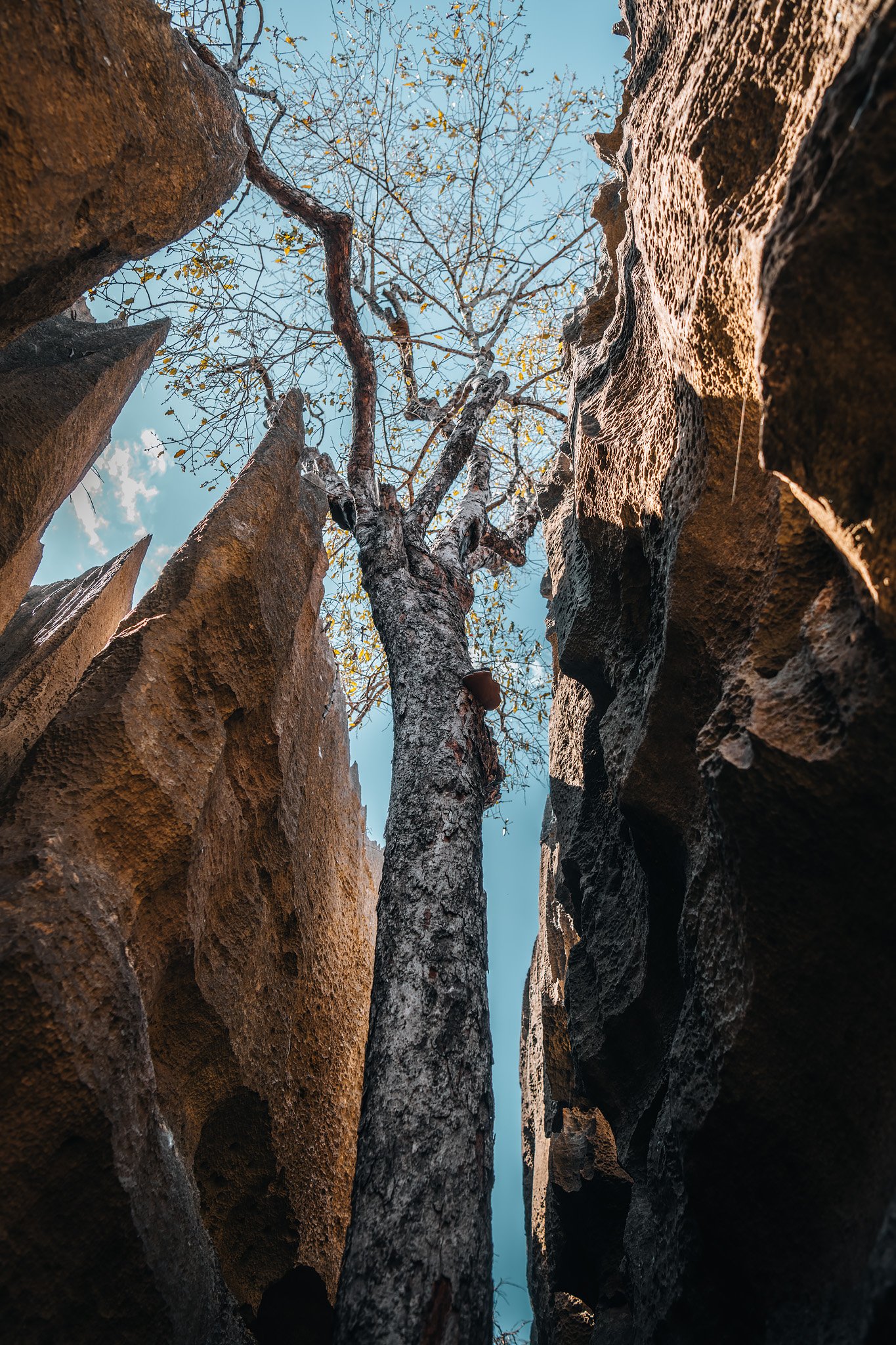
Our initial segment of trail took us into great cracks in the limestone itself. Tower walls flanked us on either side while tree roots searched for hidden moisture beneath narrow slits in the floor. We experienced a noticeable drop in temperature inside these shaded corridors which produced cool, moist microclimates compared to the arid environment outside.
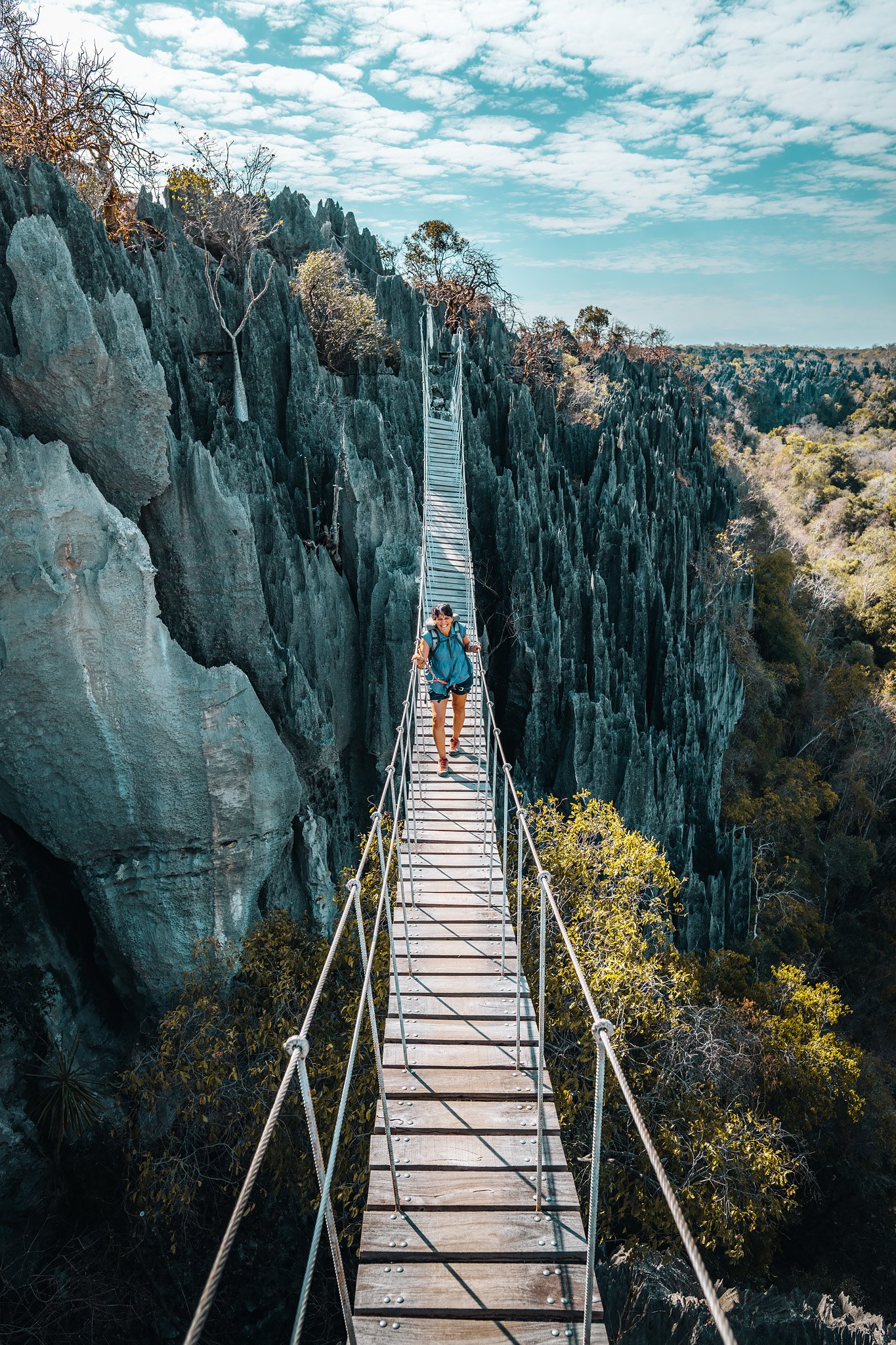
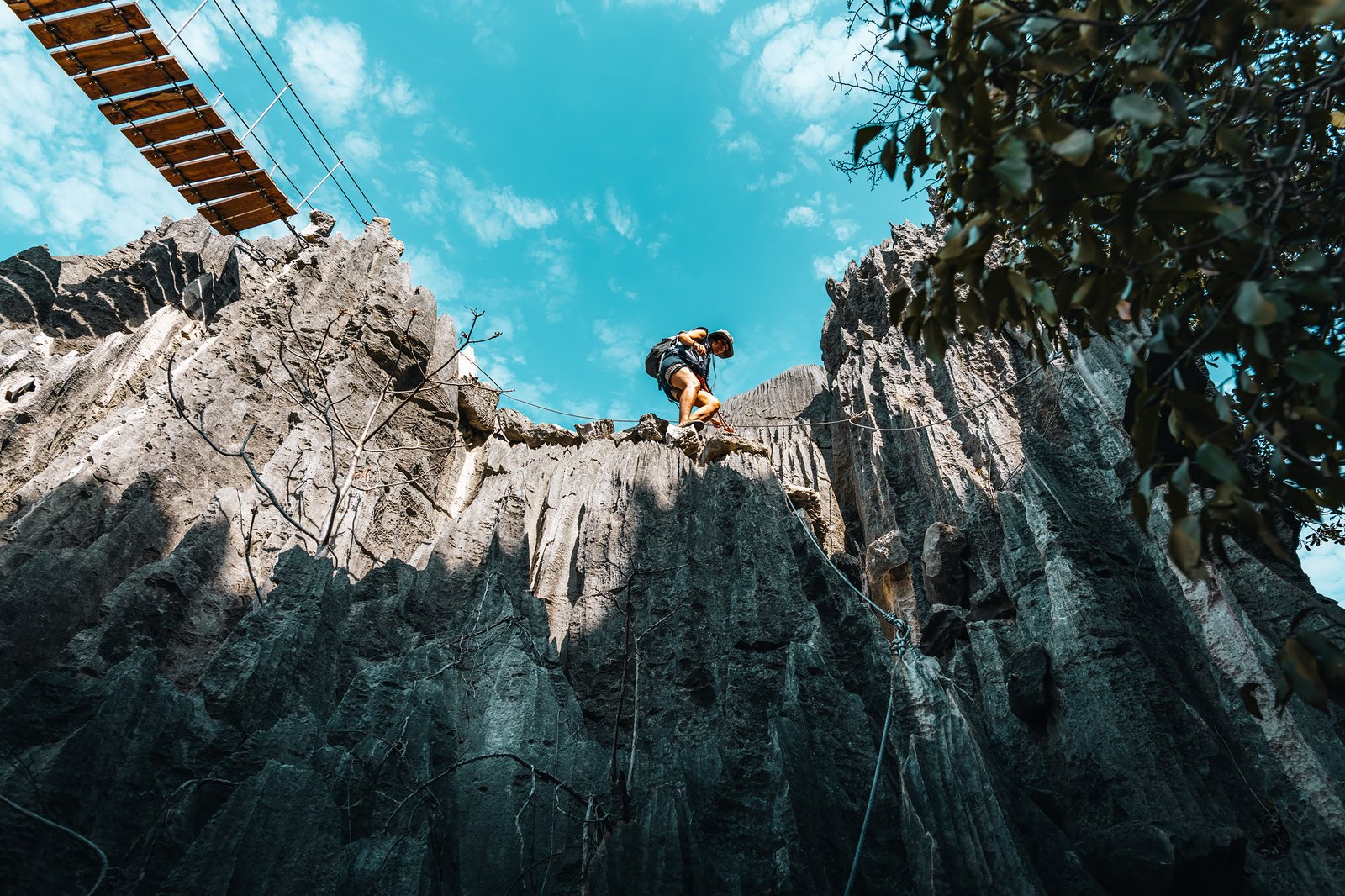
At times our path became essentially nothing more than a series of ladders attached vertically to rock faces. Otherwise, steel cables assisted in helping visitors move through exposed sections where good balance was significantly more important than haste. The overall experience felt quite similar to traversing a via ferrata.
While not particularly difficult in technical terms, it did require absolute focus. Each handhold, foot-hold and movement needed constant consideration. Looking downward usually revealed narrow crevices vanishing into blackness below. Sometimes we emerged onto isolated forest platforms only to disappear into another complex network of limestone.
Transitions between sheltered corridors and viewpoints contributed greatly to the sense of drama and theatre associated with the landscape. Just when we thought we finally understood its size and scope, another section presented us with a new perspective.
Beyond the Pinnacle Landscape
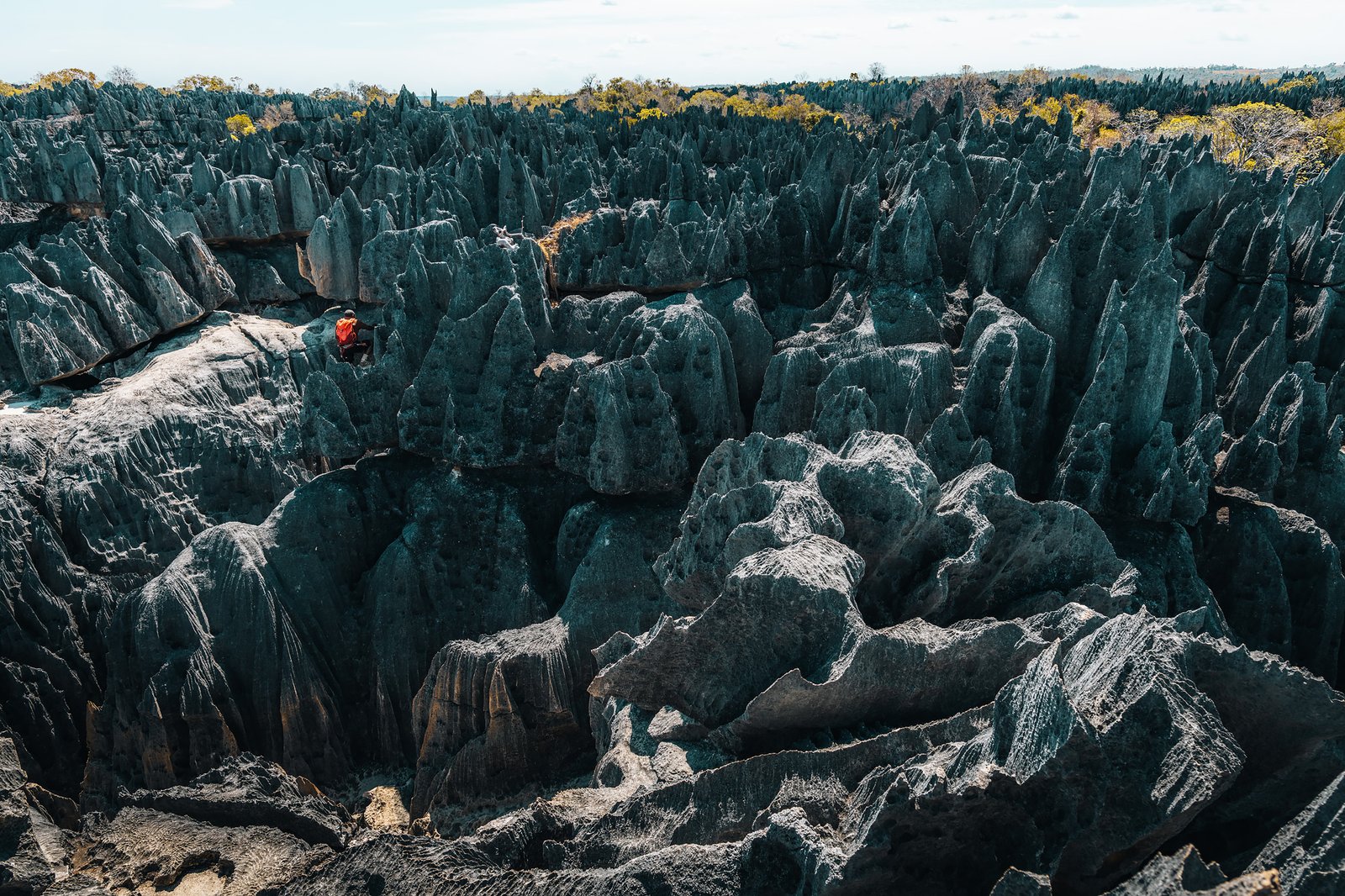
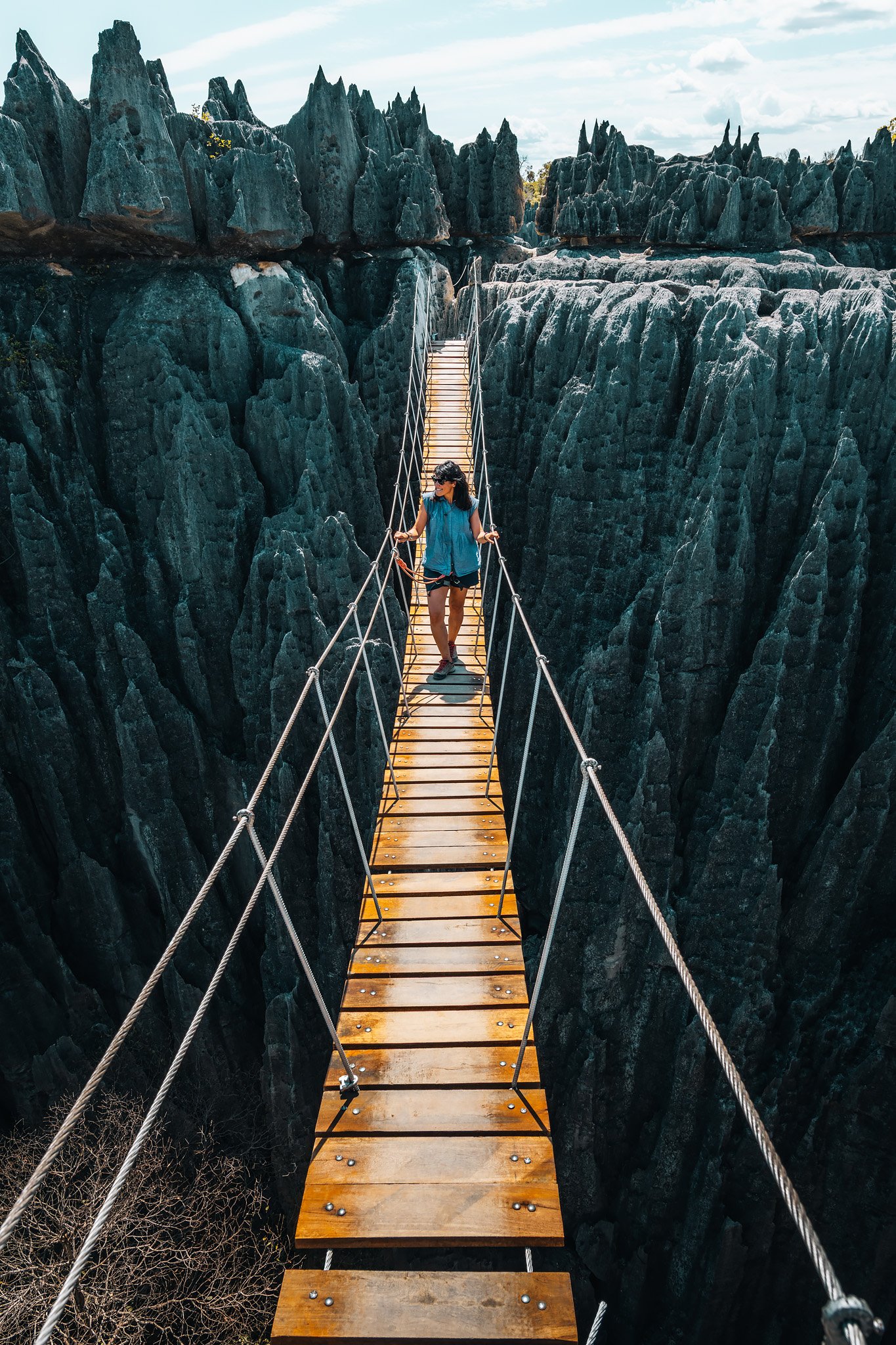
Finally, the forest gave way to the ground beneath our feet. One last ladder placed us on a suspension bridge elevated high above the stone forest. The experience was indescribable. Endless gray-blue limestone pinnacle formations stretched toward the horizon forming unending wave patterns of jagged rock unlike any others we had previously seen. Rather than towering mountains or rugged cliffs, this landscape resembled an ocean suddenly frozen into solid rock.
The complete silence intensified the surreal quality of the stone maze. Aside from rare bird calls rising from the forest below, nothing interrupted the quietness. We stood there for several minutes simply staring.
There are places that encourage you to move forward in pursuit of your next view point. However, the Great Tsingy was an exception. It consistently forced us to slow down. No photograph seemed able to capture the total complexity of the sprawling landscape that existed beneath our feet.
Life Amongst the Limestone
For all its geological majesty, the Great Tsingy is certainly not devoid of life. The isolation has rendered this labyrinthine landscape one of Madagascar’s most exceptional evolutionary refuges. Rainforests exist in deep canyons where humid conditions prevail and yet lie mere metres away from dry deciduous woodlands subjected to intense tropical sunlight. Every conceivable ecosystem type seems to exist within this realm.
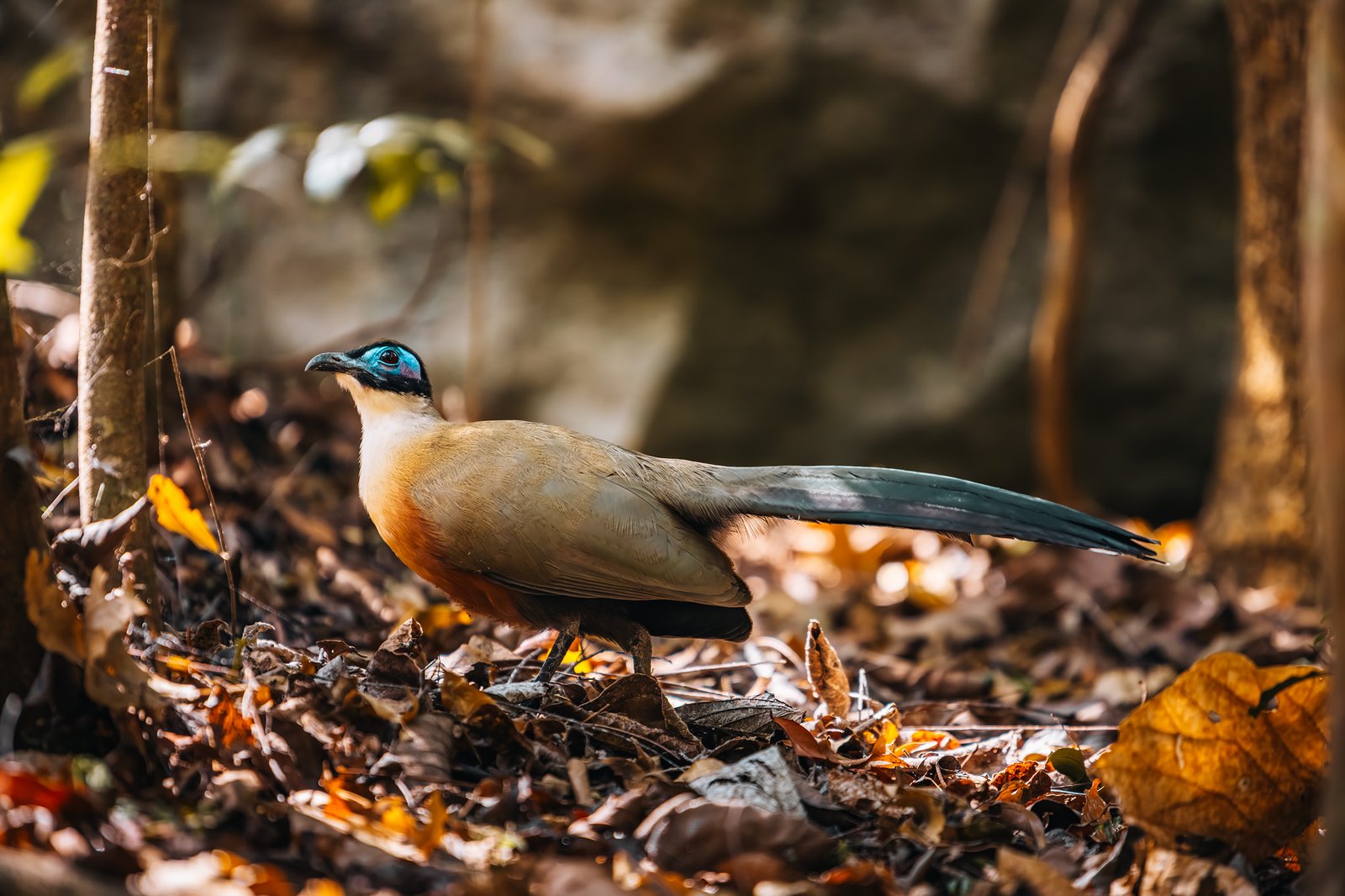
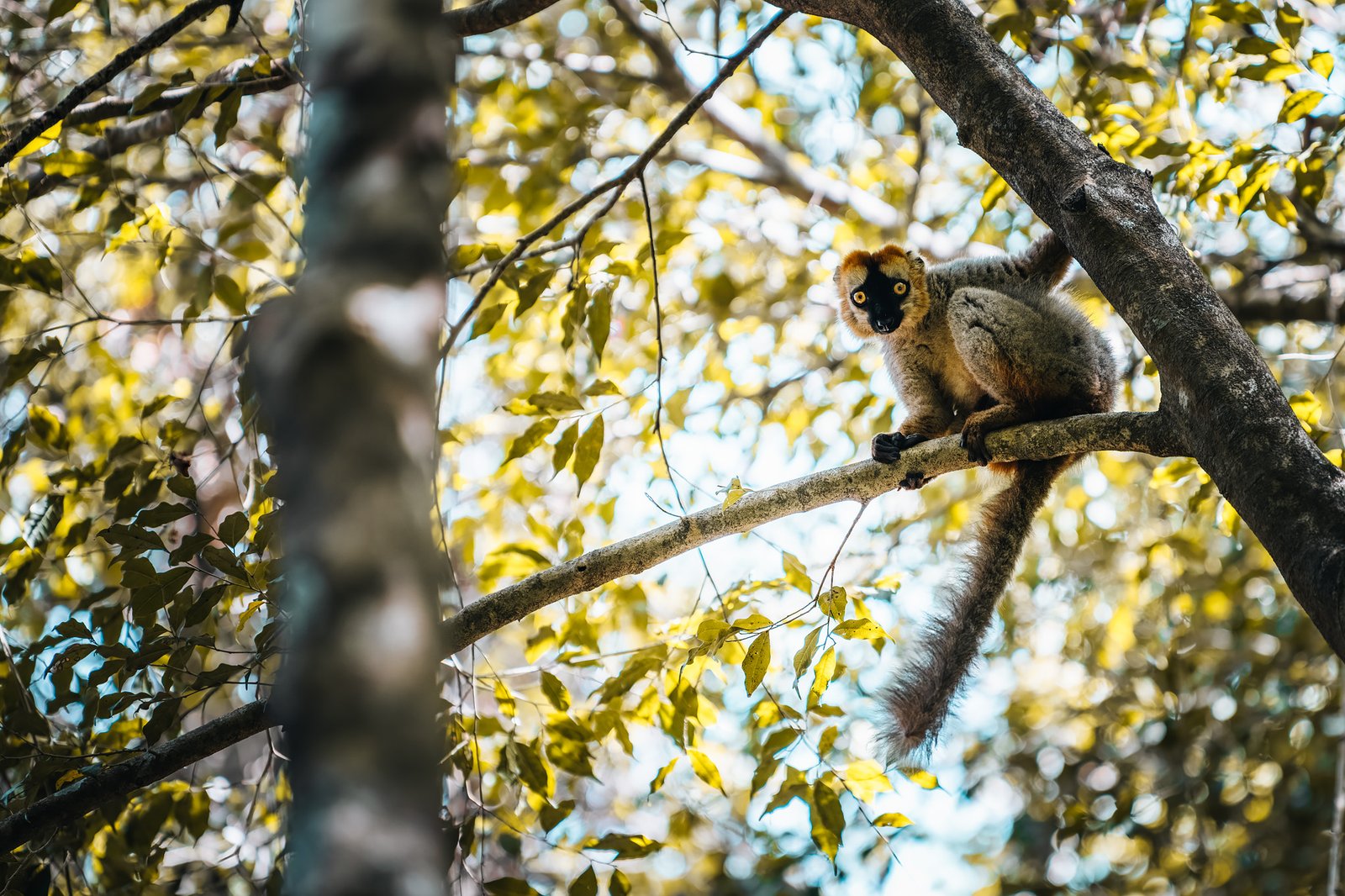
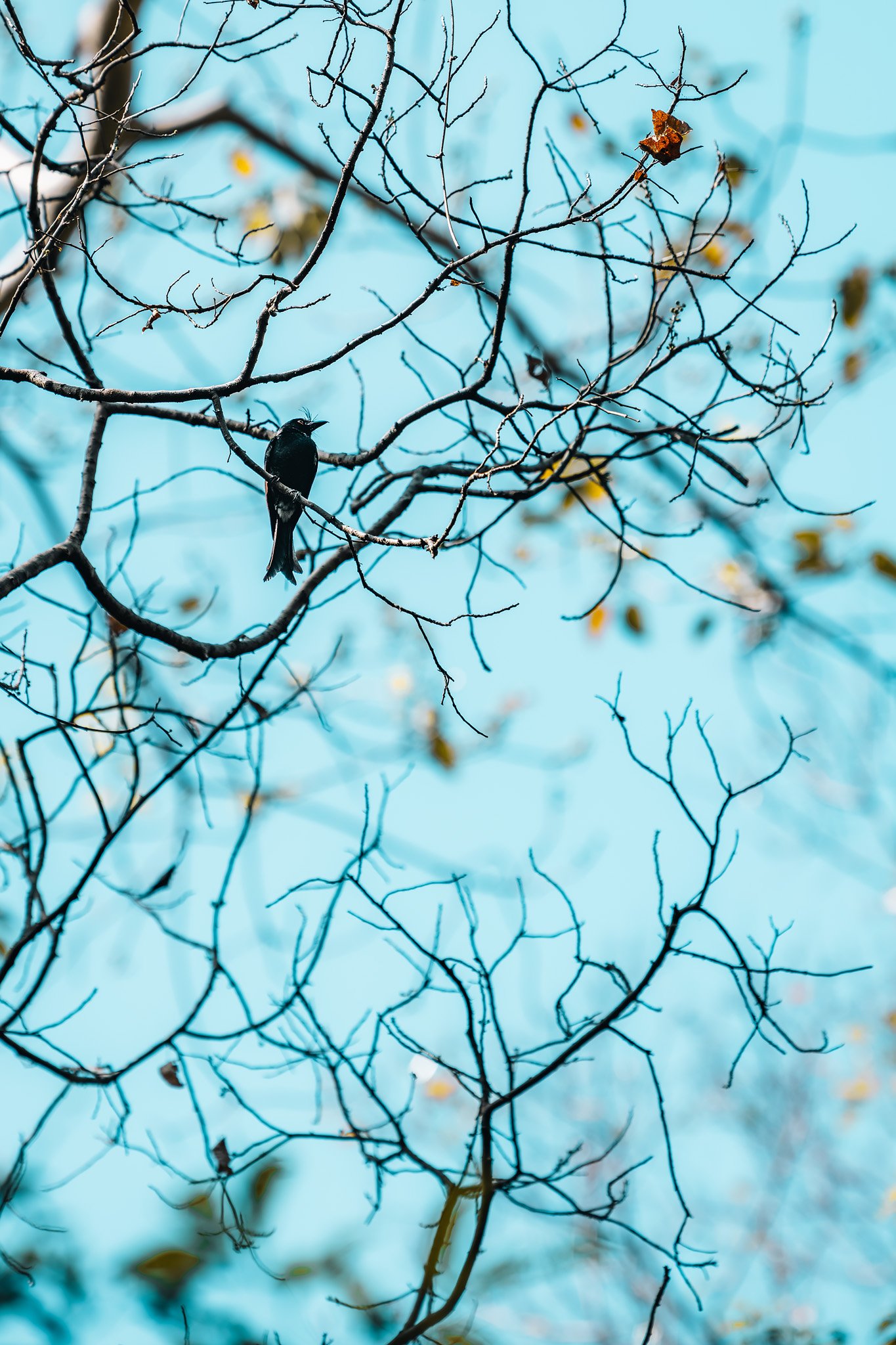
Madagascar giant couas wandered between branches while crested drongos shot through gaps in the canopy below. One red fronted brown lemur briefly gazed at us before disappearing into vegetation sprouting improbably amongst the rocks. Perhaps even more striking than the animals were the plants themselves.
Pachypodiums grew directly from narrow limestone crevices, their bulbous trunks store precious water during Madagascar’s lengthy dry seasons prior to producing delicate flowers that seemed incongruously situated amidst such unforgiving terrain.
Peeling bark trees twisted themselves into bizarre shapes due to shallow soils and perpetual exposure. Staggeringly large staghorn ferns clung precariously to cliff faces while strangler figs slowly encircled sections of limestone using fine root systems.
Survival here occurs through tenacity rather than profusion. All things appear tailored to use limited available resources as efficiently as possible.
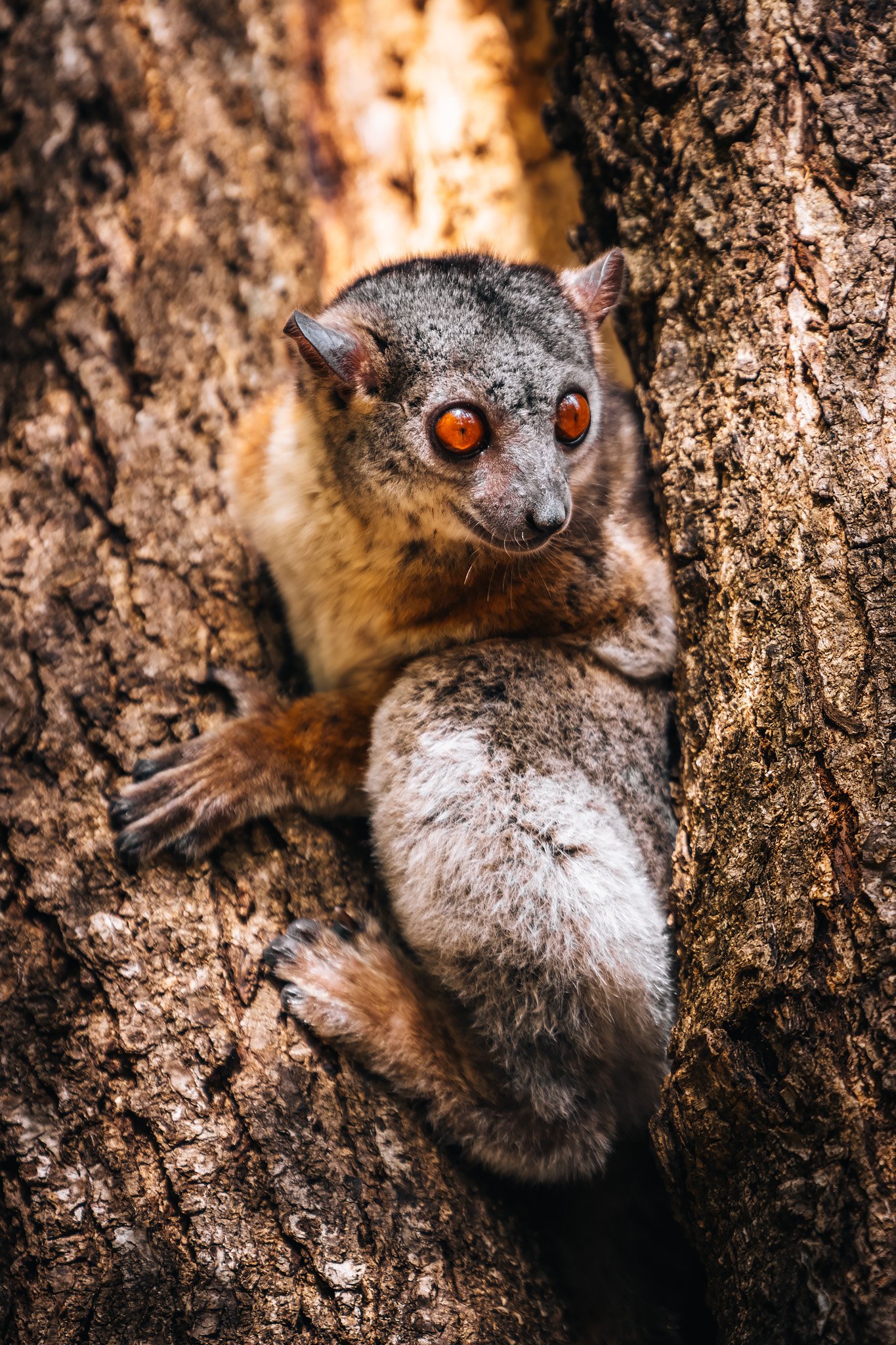
At some point, Taina discreetly indicated a shaded crevice located beneath an overhanging cliff. From within that crevice a Bemaraha Sportive Lemur quietly regarded us from its daytime hiding place. This species is found nowhere else in existence on Earth. That gave us a reminder that although Bemaraha offers breathtaking scenery, it remains one of Madagascar’s centers of greatest endemism.
Leaving the Forest
Late afternoon we arrived back at Bekopaka exhausted physically and mentally overwhelmed. The Great Tsingy exceeded every expectation we had. Some landscapes are impressive because they are aesthetically pleasing. Other landscapes are inspiring because they possess incredible magnitude. Bemaraha was different.
It was inspiring because it seemed nearly impossible. Impossible that rain could carve stone into such intricately shaped forms solely through erosion processes, that forests and various animal life could thrive amidst jagged limestone barriers, that such an area remained largely unknown internationally until relatively recent times.
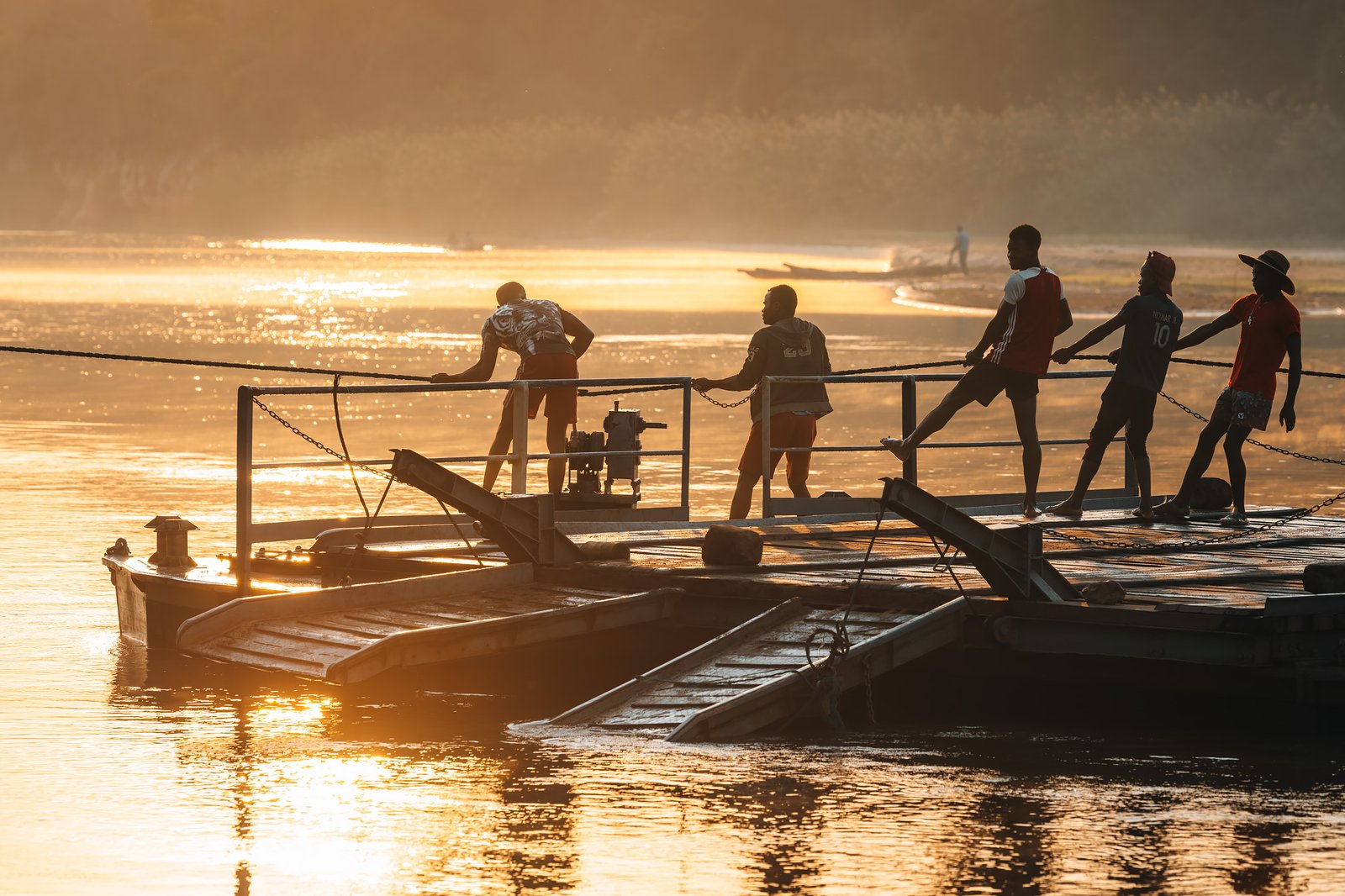
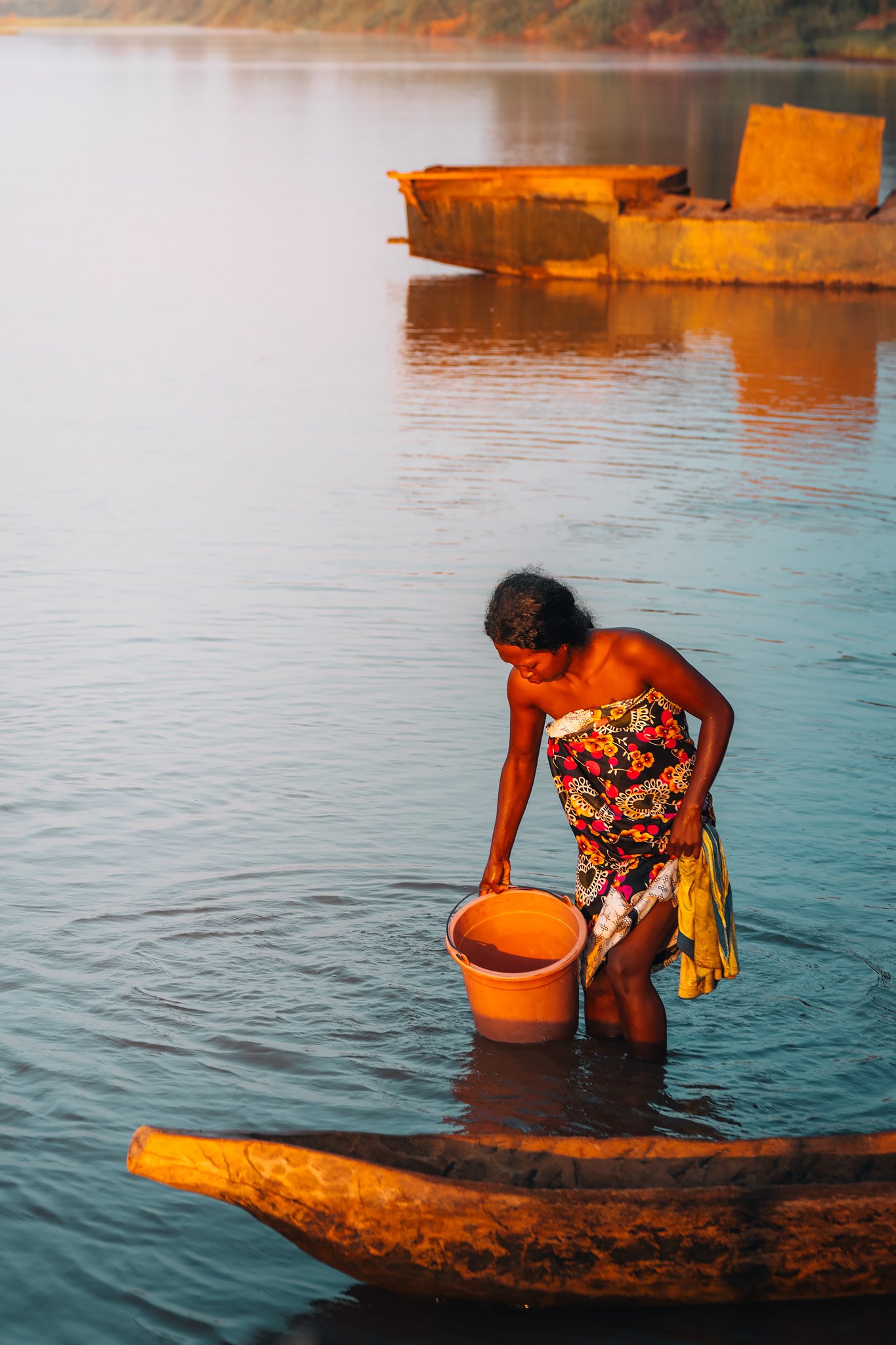
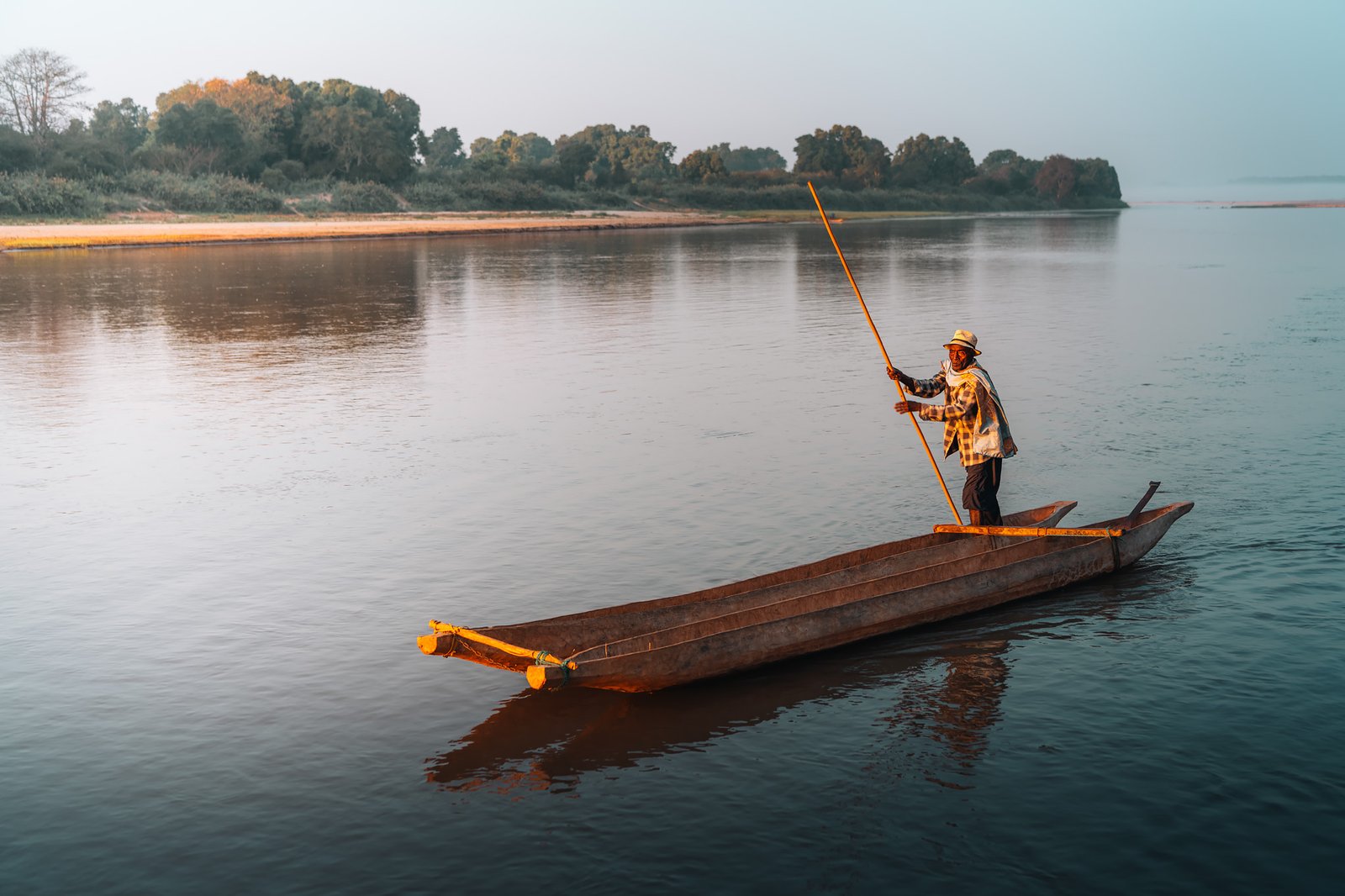
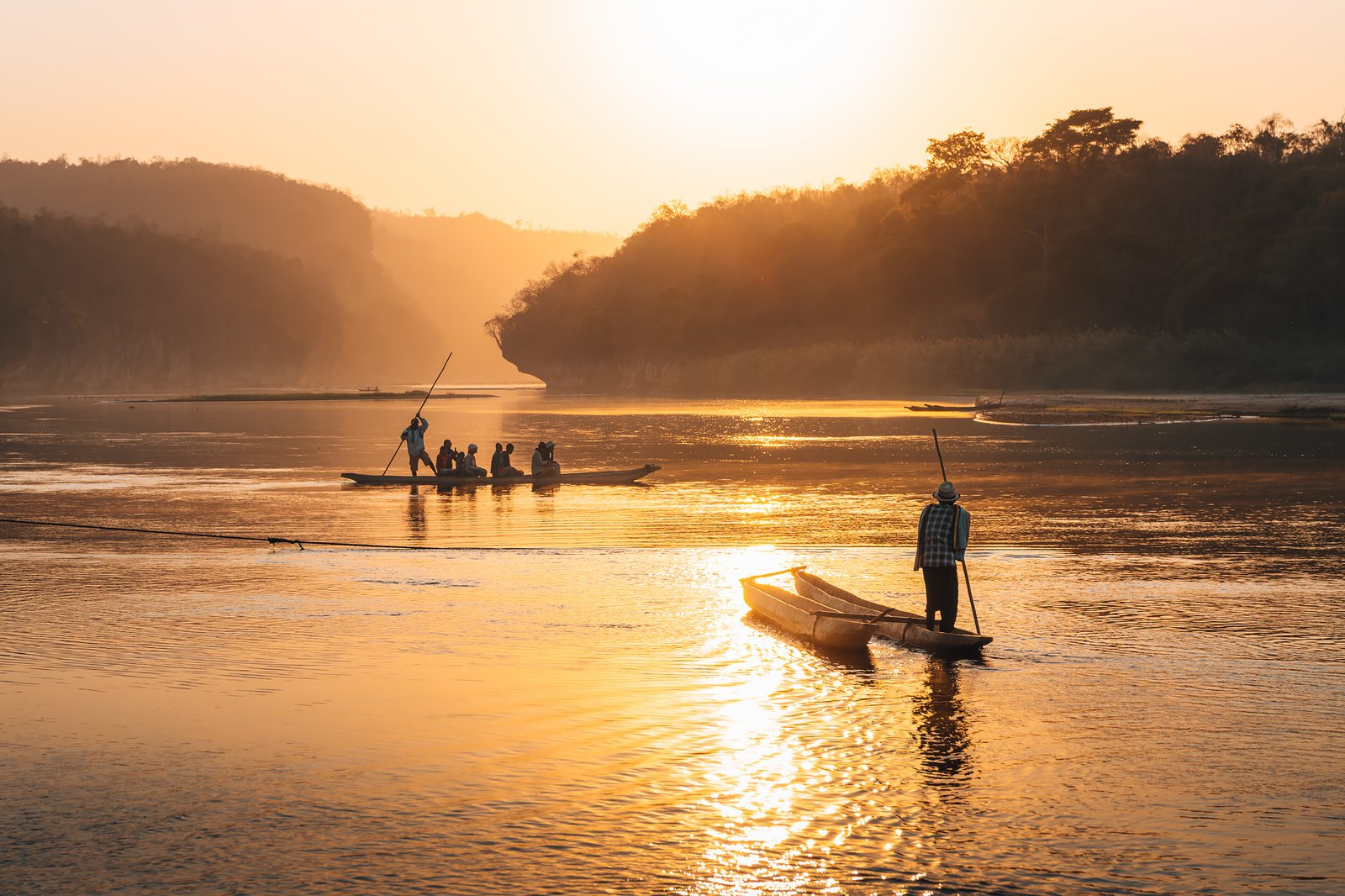
We left Bekopaka before sunrise on the following morning. A light fog hung above the Manambolo River while ferry operators slowly pulled a raft across the tranquil waters by hand. Fishermen quietly paddled their slender wooden pirogues through golden light near Bekopaka providing one final scene representing life along Madagascar’s rivers.
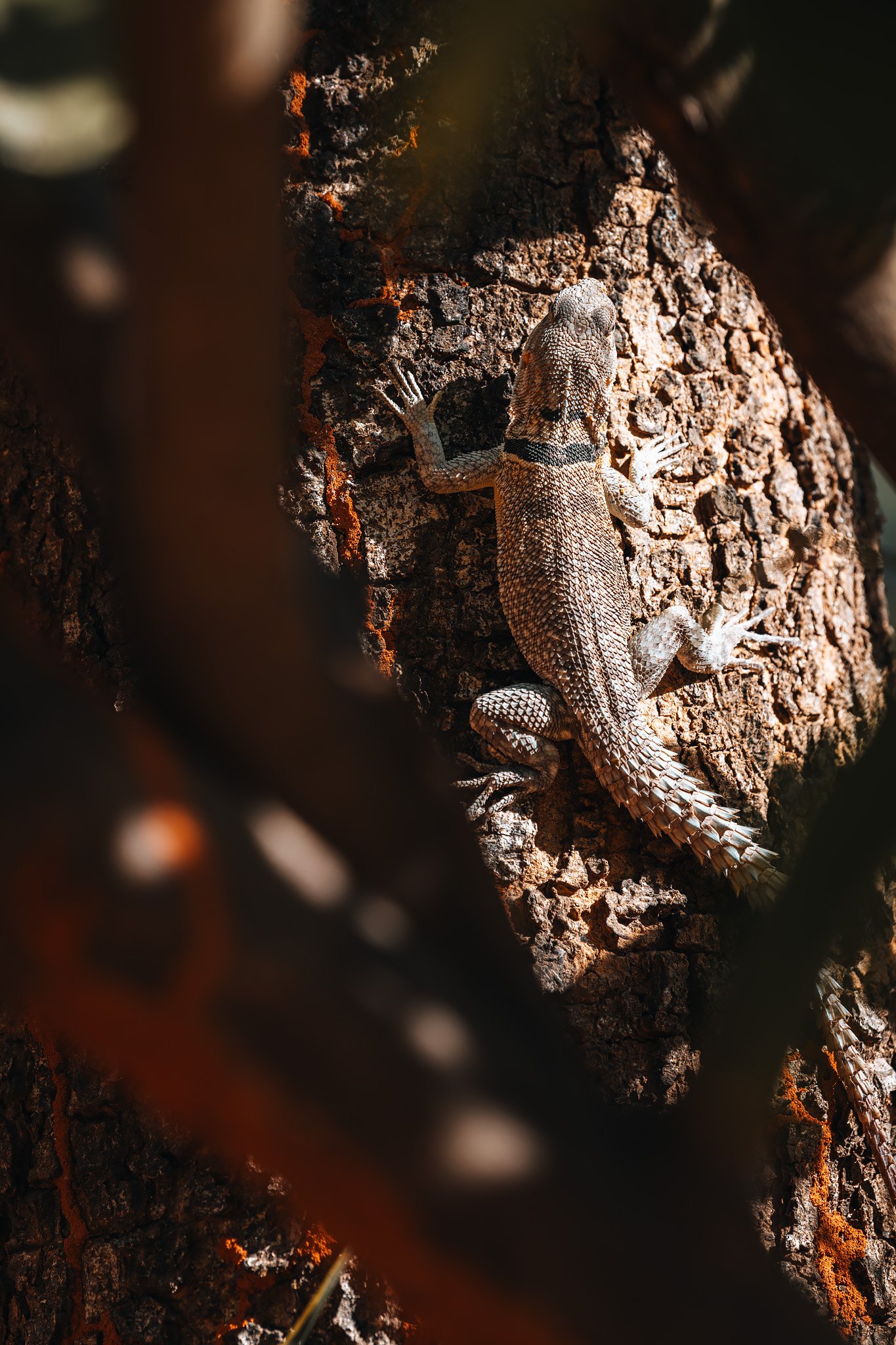
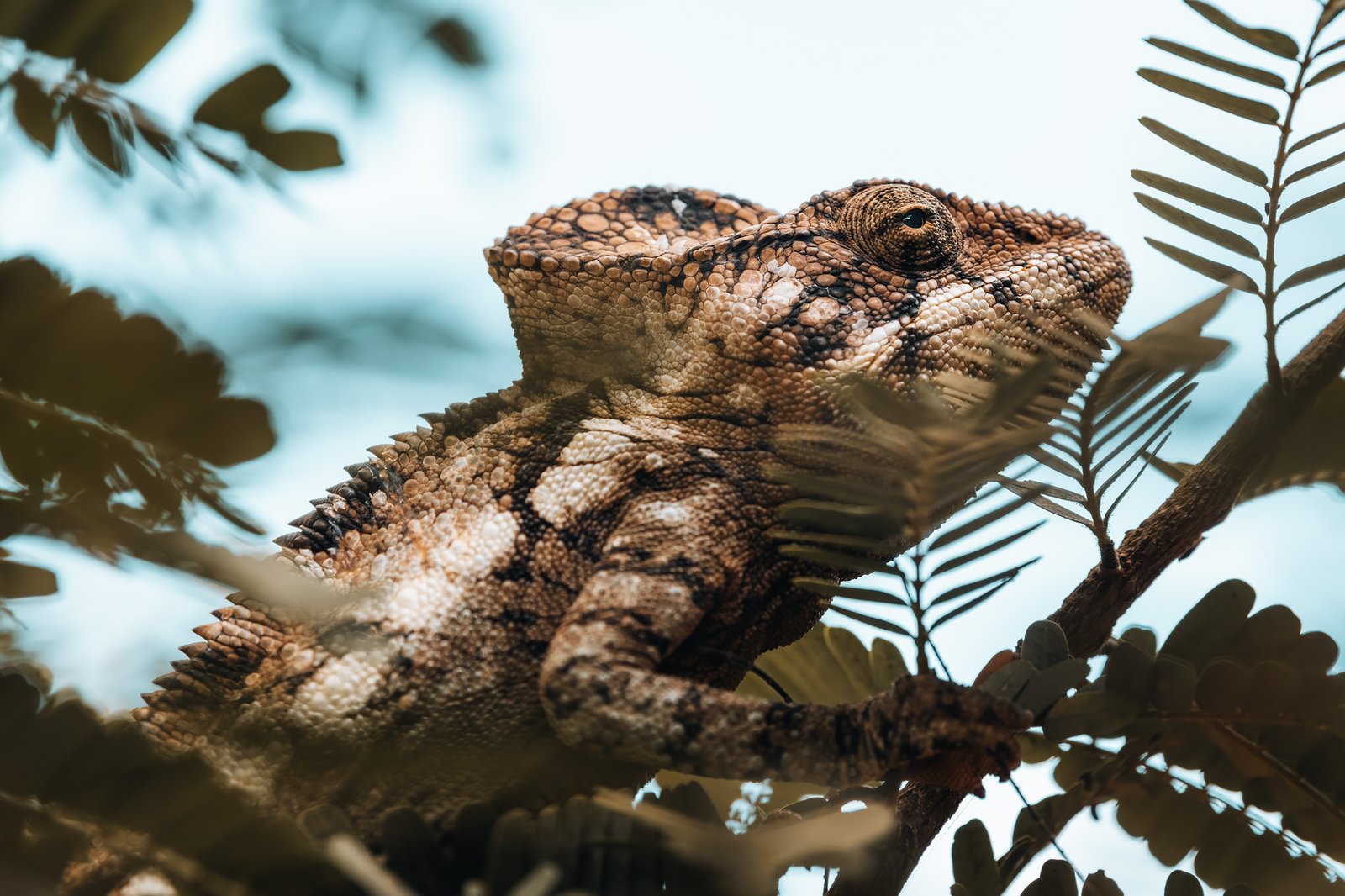
Across from Bekopaka our journey had hardly commenced when unexpected wildlife greeted us. A Giant Malagasy Chameleon rested unmoving atop a branch, while closer a Madagascar Spiny-Tailed Iguana basked on a tree trunk oblivious to our presence.
Short time thereafter the red dirt road reappeared beneath our tires and Bemaraha rapidly receded from sight behind us. Ahead lay Kirindy once more along with The Avenue of The Baobabs and ultimately our return journey to Madagascar’s central highlands. We sensed that perhaps our most impressive scenery was already behind us.
Luckily we were wrong. The island still had so much to show us.
Return Journey To Kirindy
Upon arrival at Kirindy by mid-afternoon we once again covered the same red dirt roads en-route to the forest. Just two days before, it showed us the entrance to one of Madagascar’s wildest regions. Today it seemed familiar and almost inviting after experiencing crazy limestone passages and crossing countless rivers on our previous journey.
Kirindy itself served as merely a brief fuel stop before continuing southward to Morondova. Or so we thought.
Once again Rado smiled and pointed toward a narrow dirt track winding through trees. He then stated, “Let’s take a quick peek.”
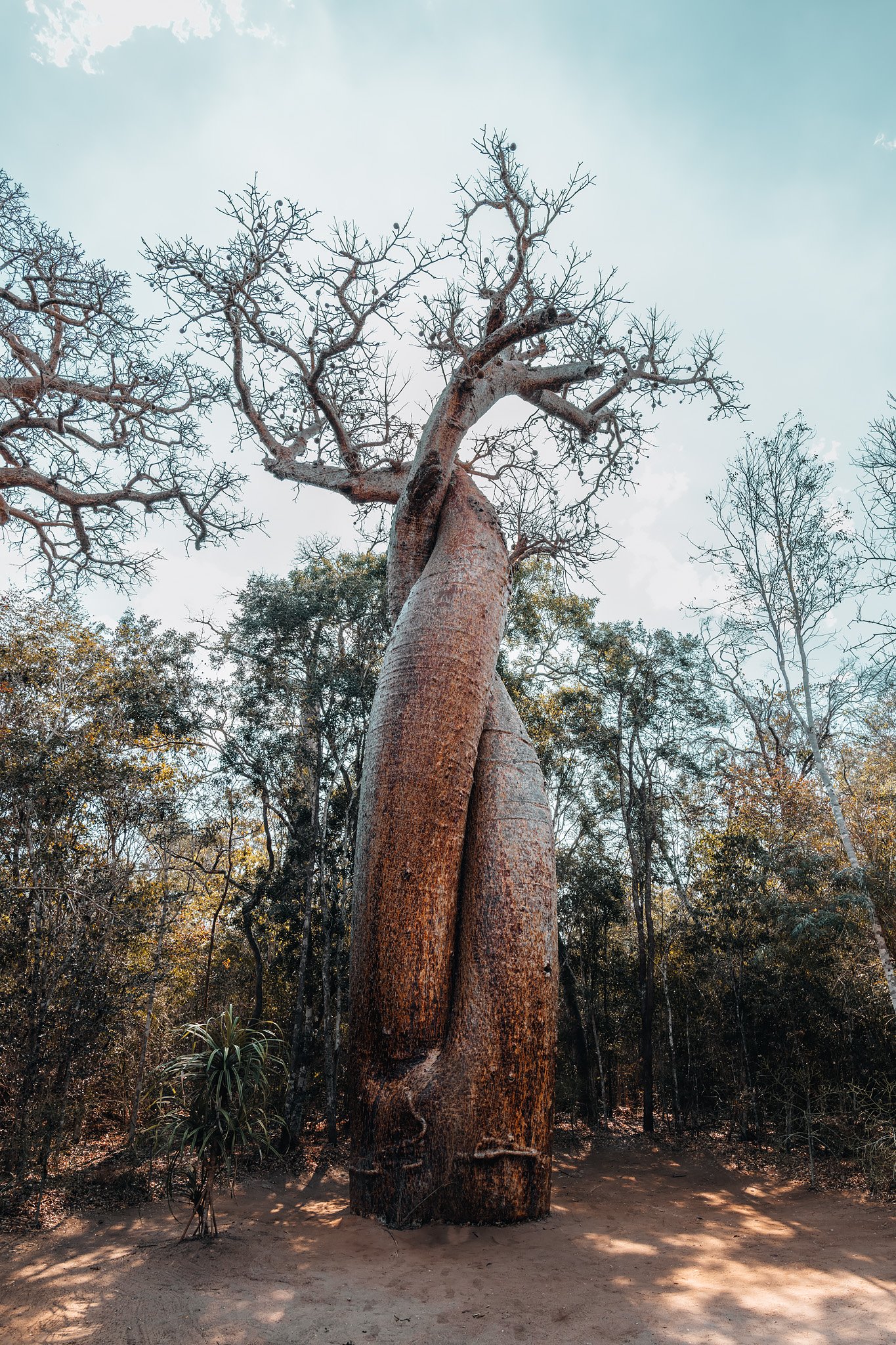
Only a few minutes passed before we were positioned underneath one of the most uniquely shaped baobabs we had seen thus far in Madagascar. Unlike perfectly straight giants lining the avenue, this tree twisted in upon itself before bifurcating into two interlocking trunks ascending upwards together. Locals sometimes call it “The Lovers Baobab”, due to their intertwining trunks appearing inseparable although they originate individually.
Setting aside that fact alone warranted our short deviation. There was something else behind that tree we hadn’t noticed before.
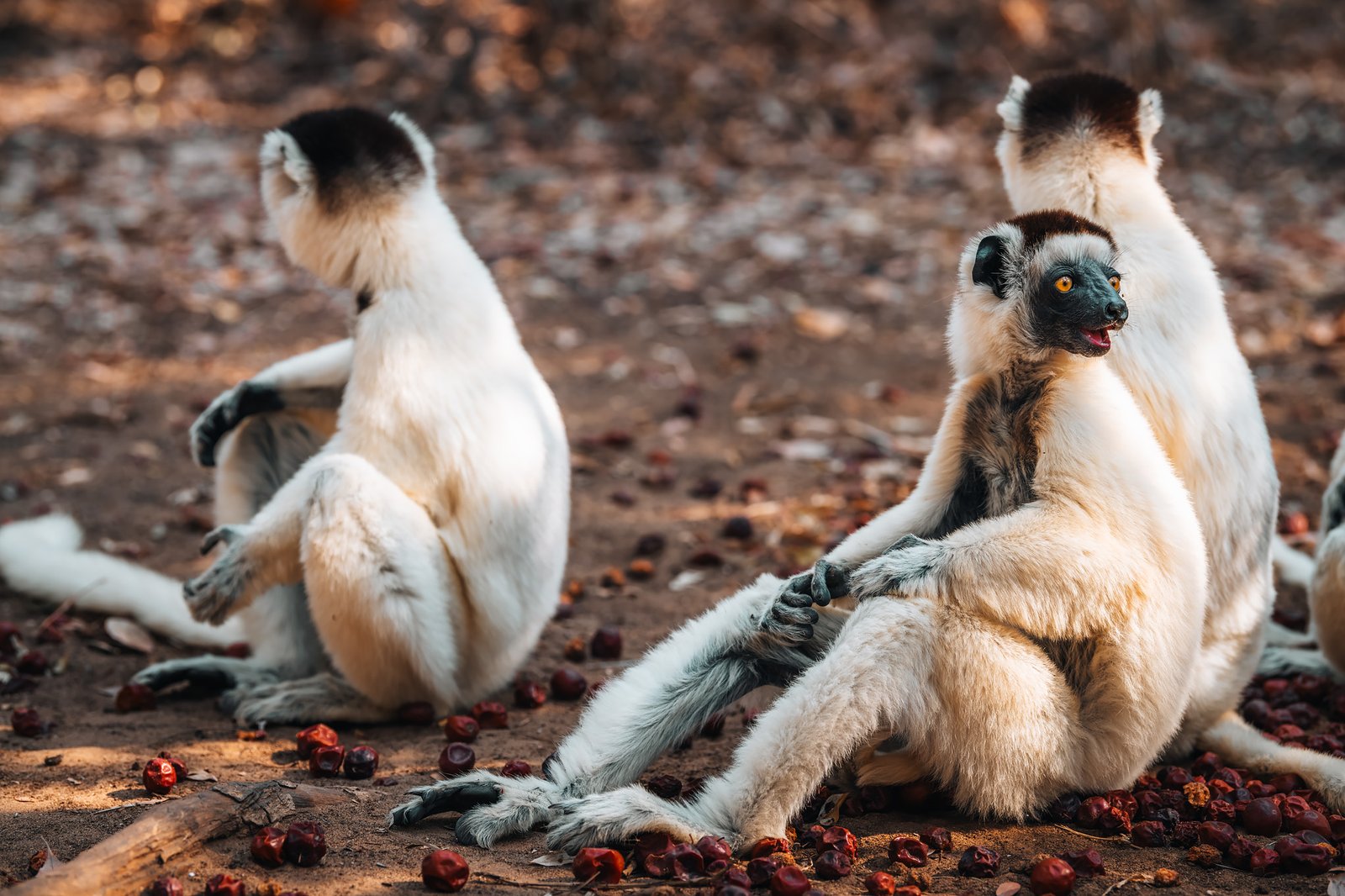
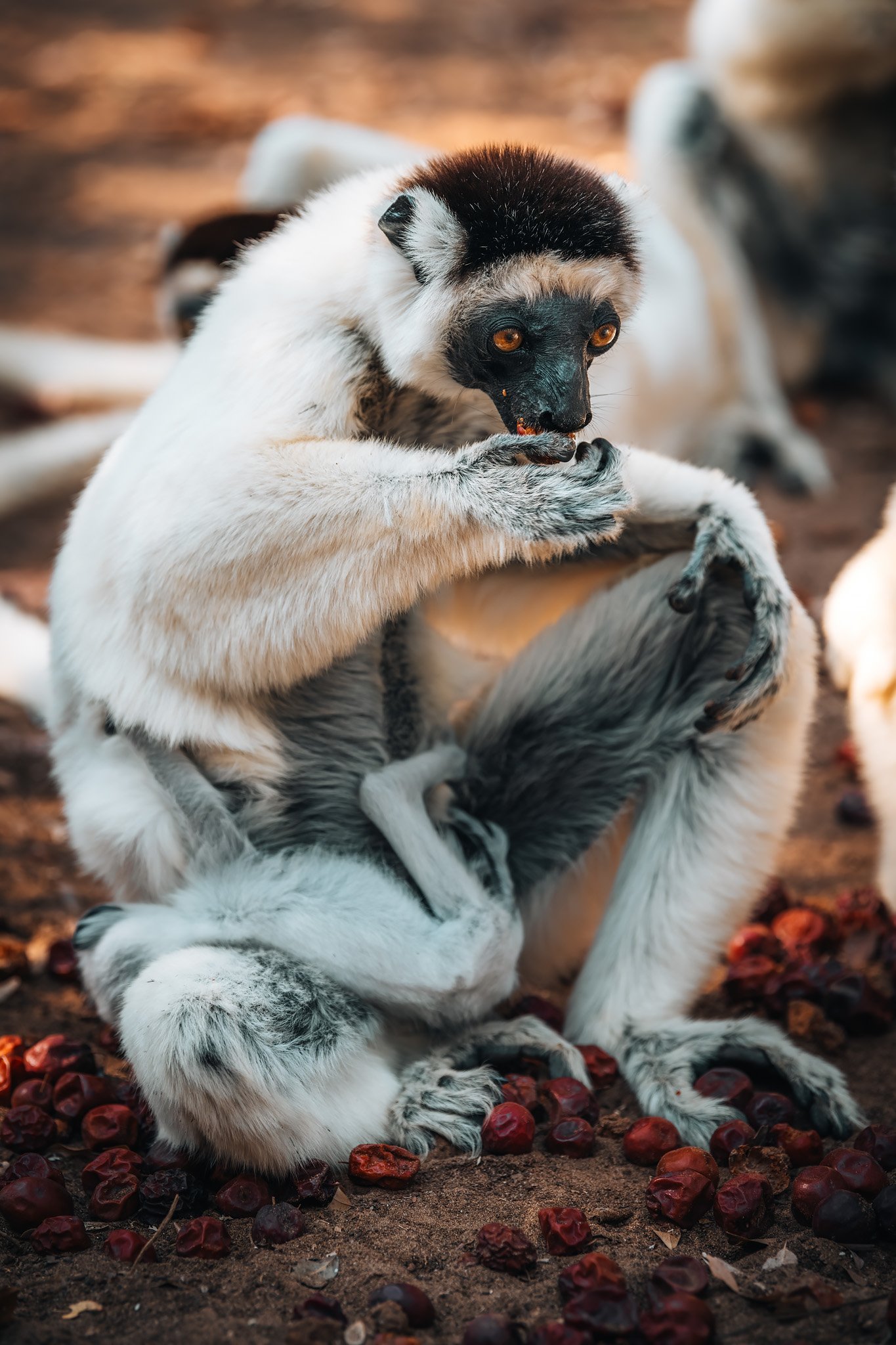
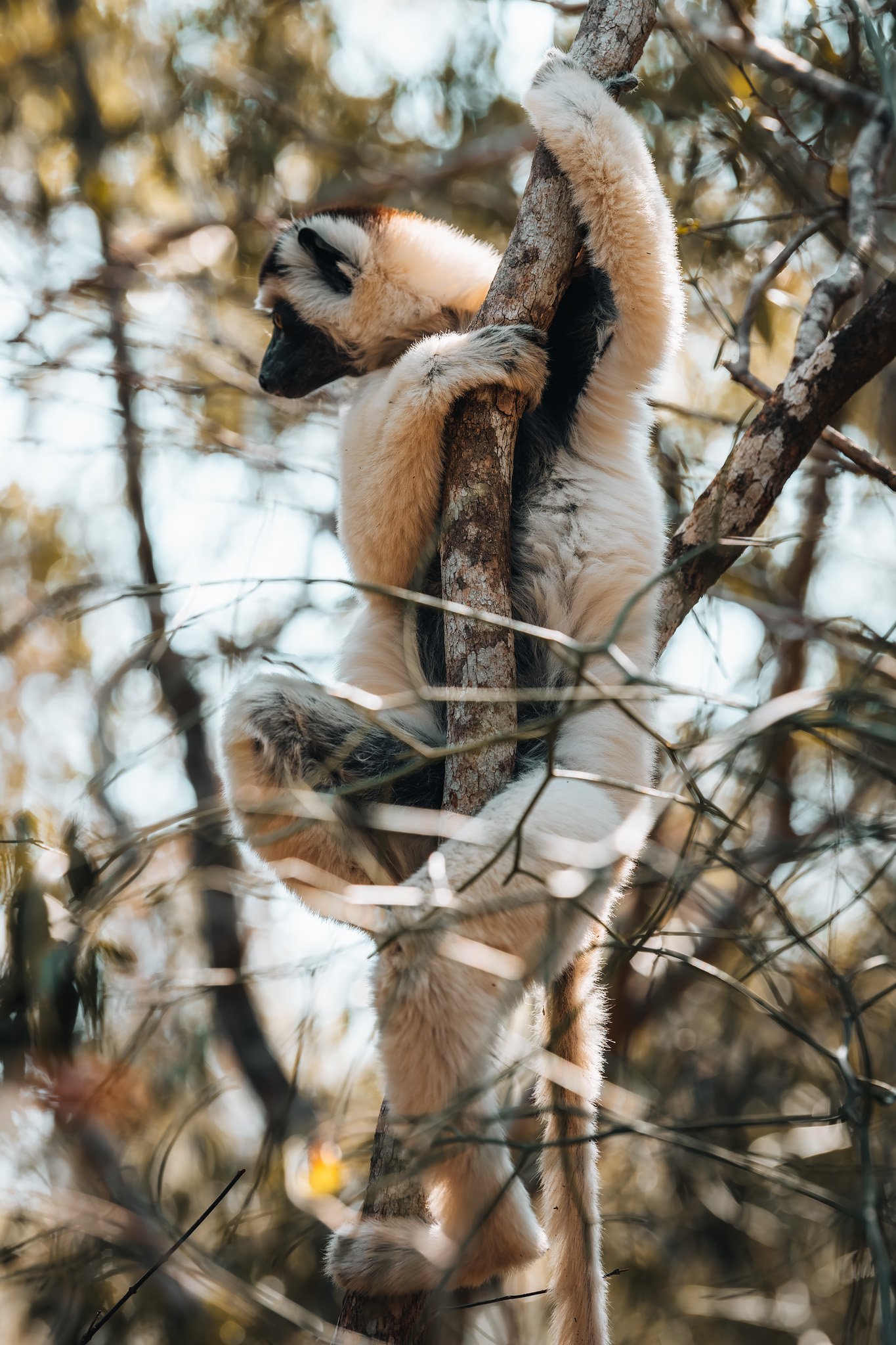
A family of Verreaux Sifakas had congregated beneath the baobab peacefully feeding in the shade of adjacent dry forest. No hurry, no additional observers. Infants rode on mothers’ stomachs while the younger lemurs played between branches before returning to their parents.
Rado explained that local personnel sometimes leave fruit near this portion of Kirindy Reserve allowing groups to frequent the edge of forest without becoming overly reliant on people. Possibly due to this familiarity or possibly simply due to peacefulness of the afternoon, the sifakas appeared unusually comfortable with us.
Rather than taking photographs continuously we eventually found ourselves simply sitting on the ground observing them.
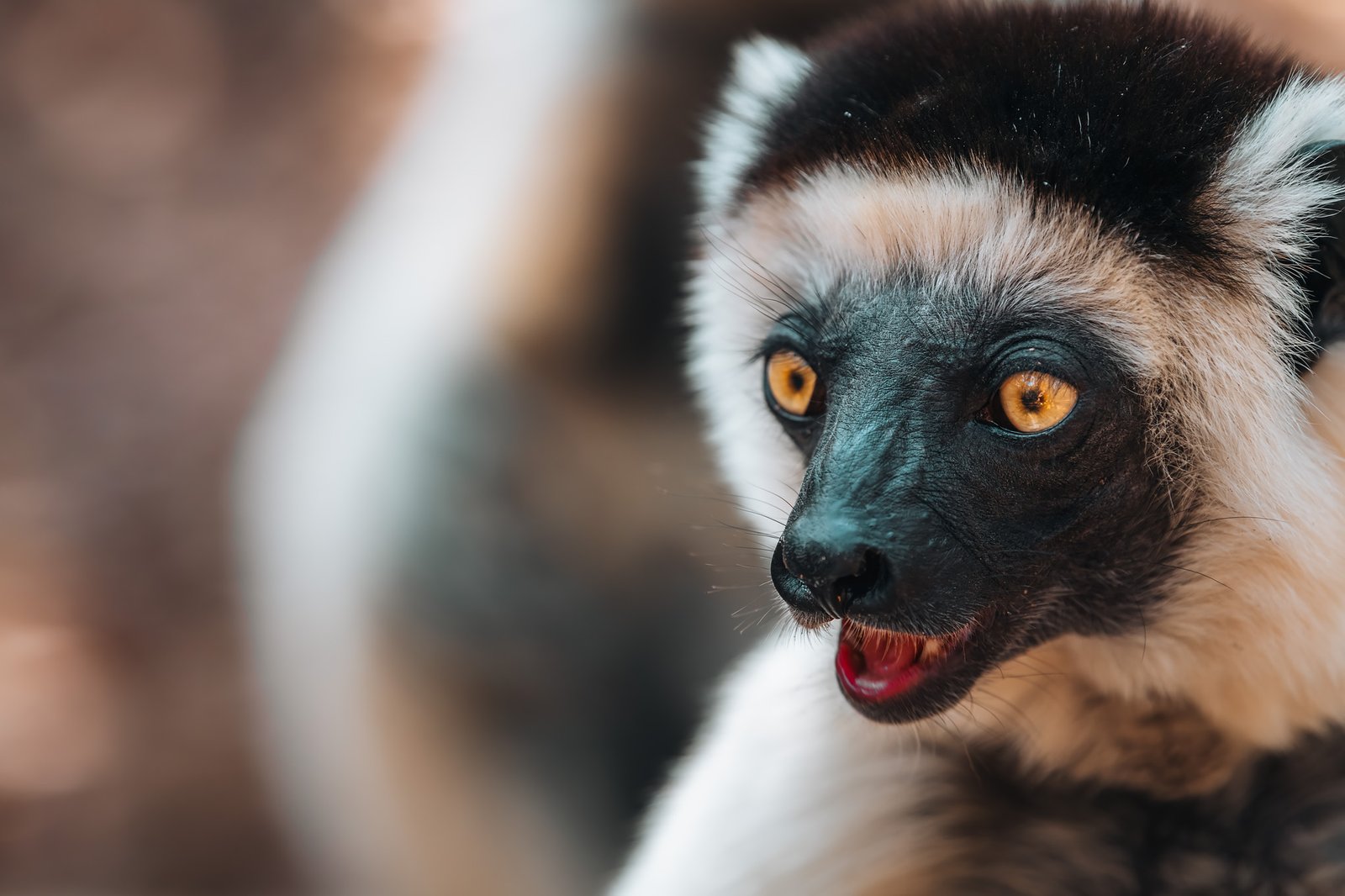
The sifaka was completely absorbed by eating fruit, concentrating on each piece with unbelievable intensity. The adults sat up straight as if contemplating something and watched us every now and then with their bright golden eyes before going back to whatever they were doing.
There wasn’t anything remotely spectacular happening. Nature has a way of making just as big of an impact sometimes, without using drama or grandiose events, it is all based upon how still you are willing to remain.
Eventually the sifakas wandered further into the woods jumping effortlessly from branch to branch until all we could see was a single large baobab standing alone in the harsh light of day against a very pale blue sky. It felt as though it was time to say good-bye to western Madagascar.
We then returned to our vehicle and finished off the last part of our trip to Morondava. As we continued down the widening road and saw some of the first buildings in town on the horizon, we once again spotted another familiar shape coming over the hill. This time, however, we weren’t in such a rush. We had said we would come back to see the sun go down.
Madagascar. Part III: Into the Stone Forest
Light filtered softly through the nearly leaf-less canopy, casting a warm, golden glow throughout the forest. The dry leaves that had cracked beneath our feet during the night now glistened with a rich ochre color against the reddish earth. Birds sang melodies replacing the nocturnal insect chorus that had accompanied us on our return to camp.
Unlike the dense rainforest of eastern Madagascar which conceals all but the most vibrant colours from view, Kirindy frequently shows off its wildlife for anyone who takes the time to stop and watch. During the previous evening’s darkness, some of the animals we saw today were hidden from sight. They now rest quietly in hollow trees, or move freely through the open woodland. However, our experience of perhaps the most memorable animal of the day started with something as simple as water.
The most precious resource
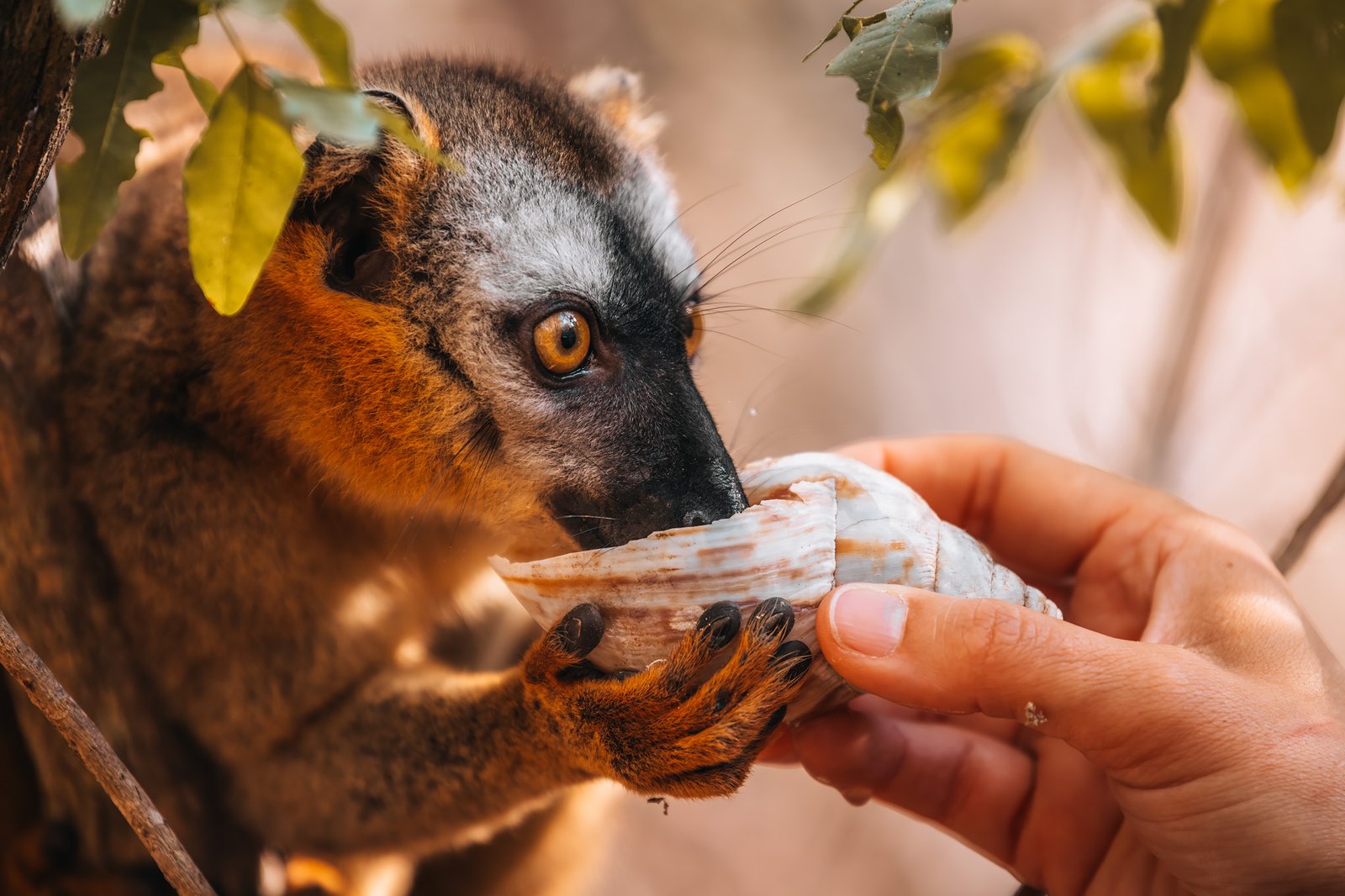
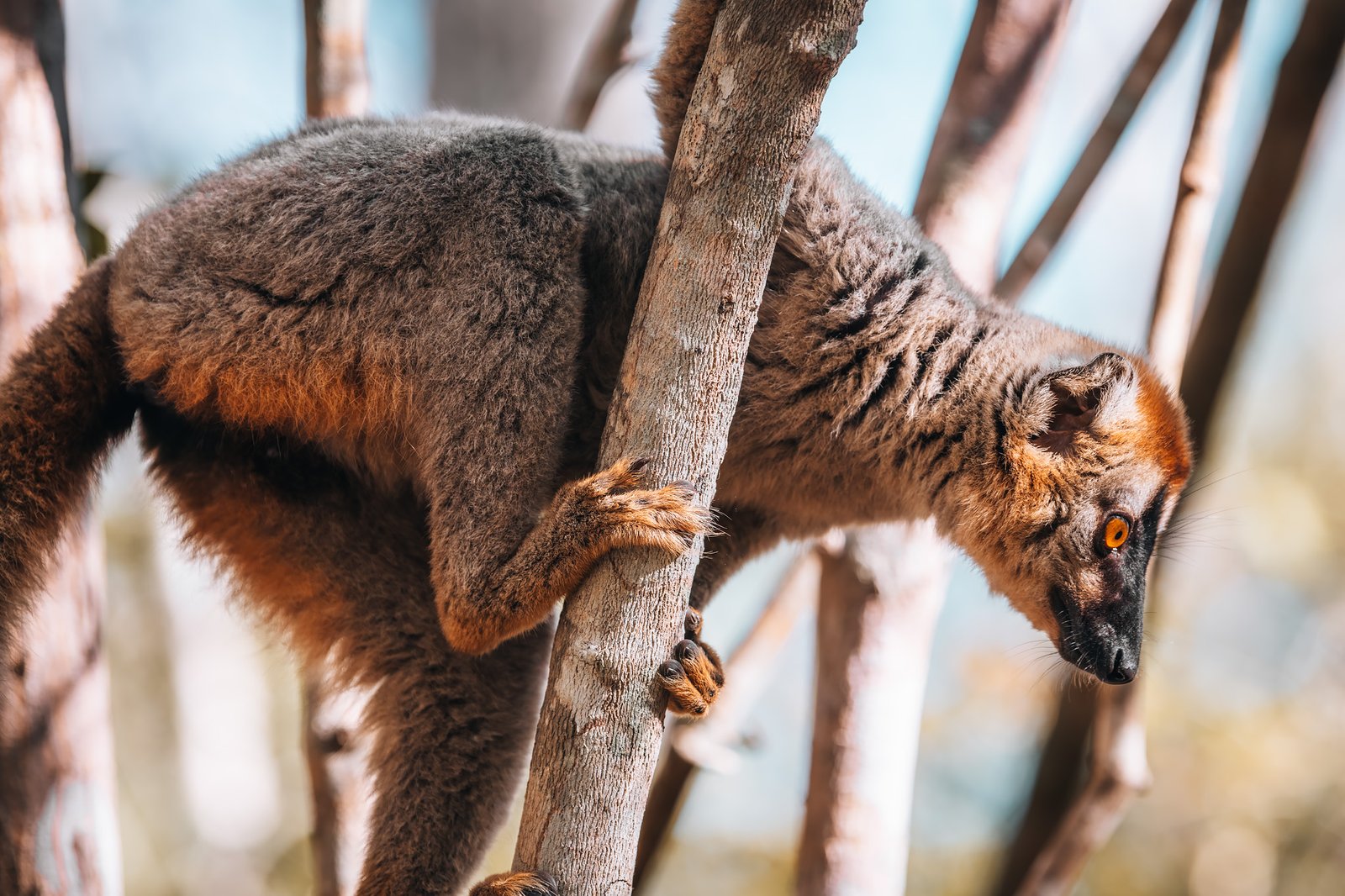
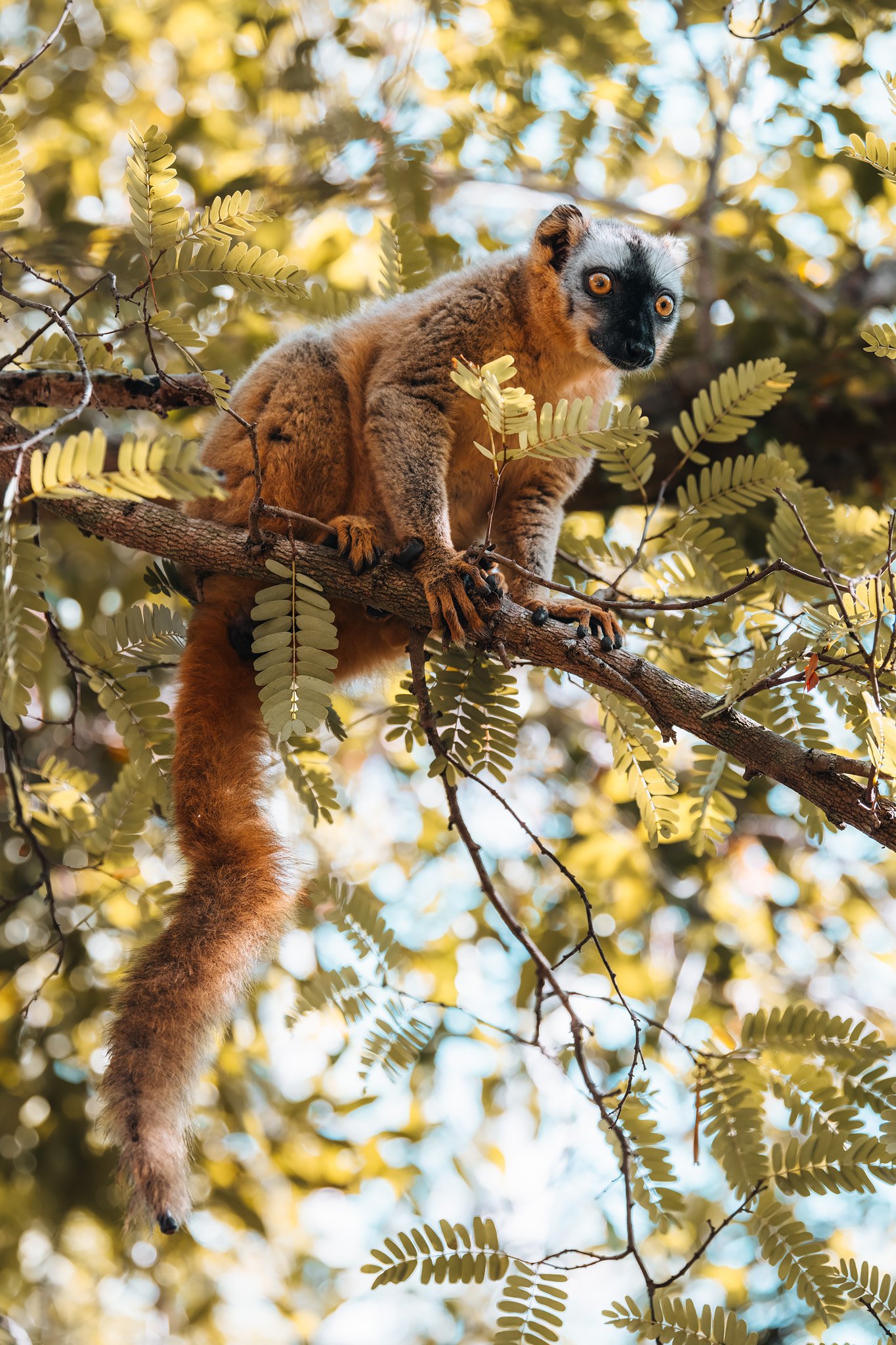
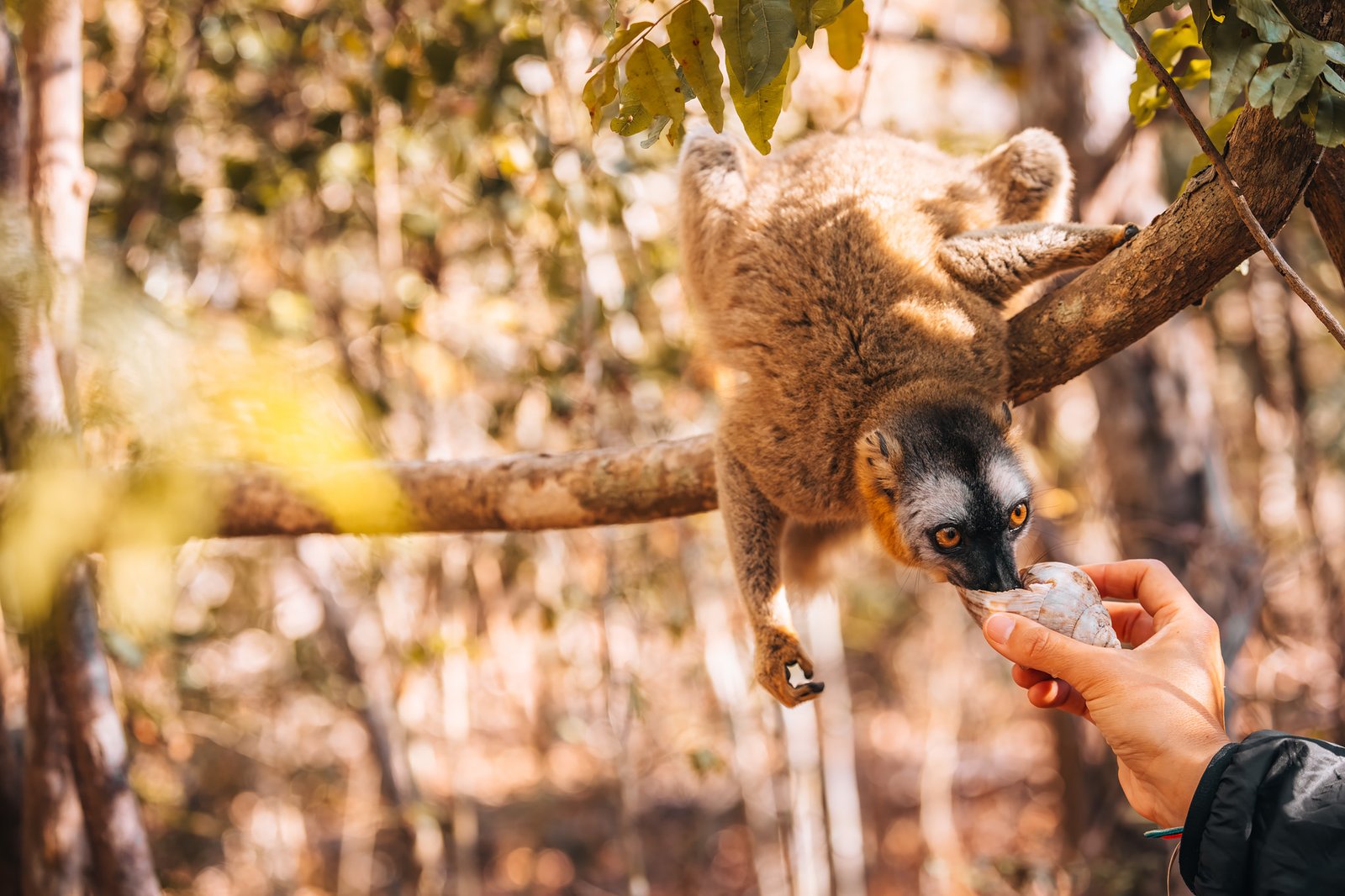
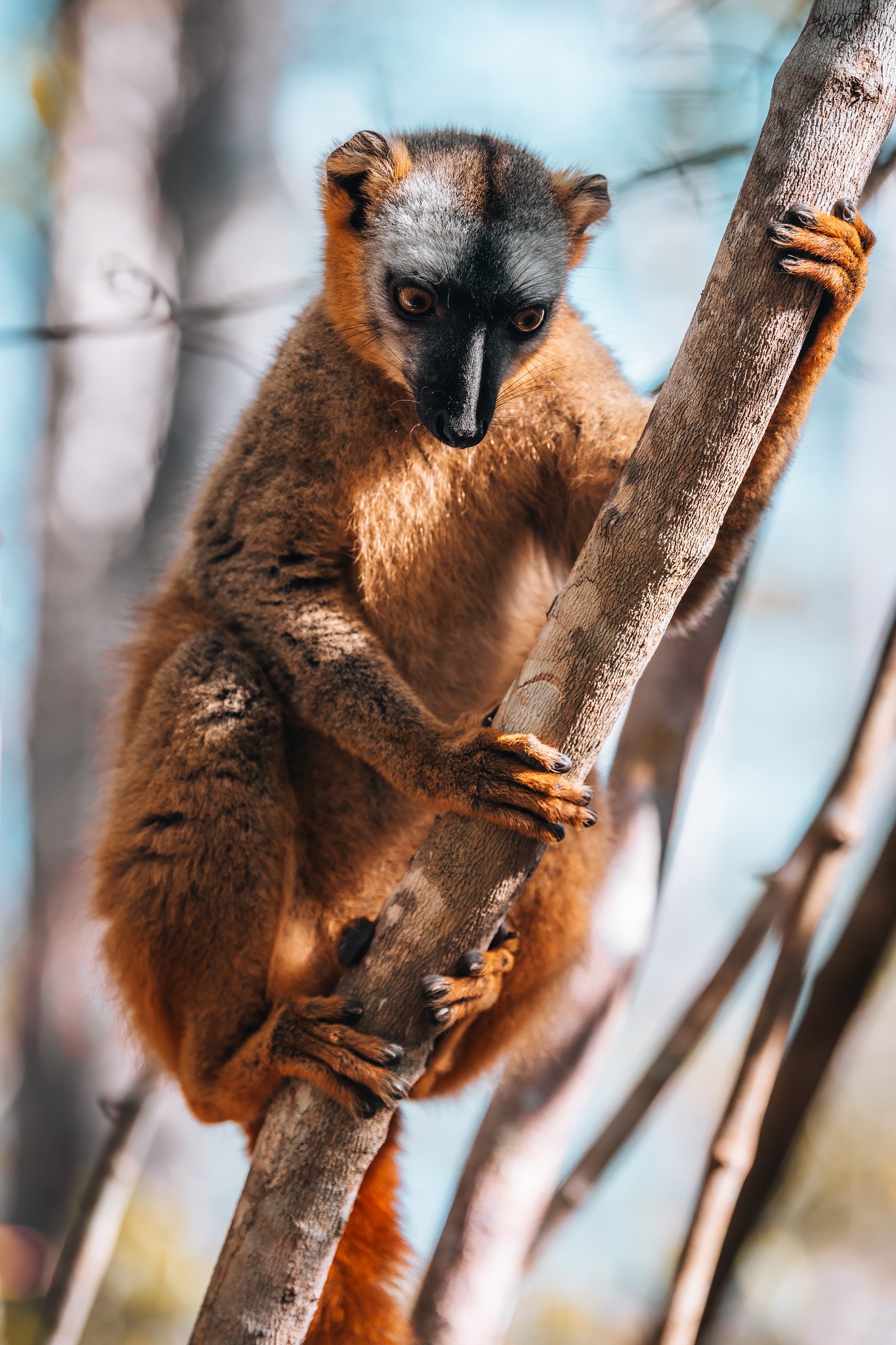
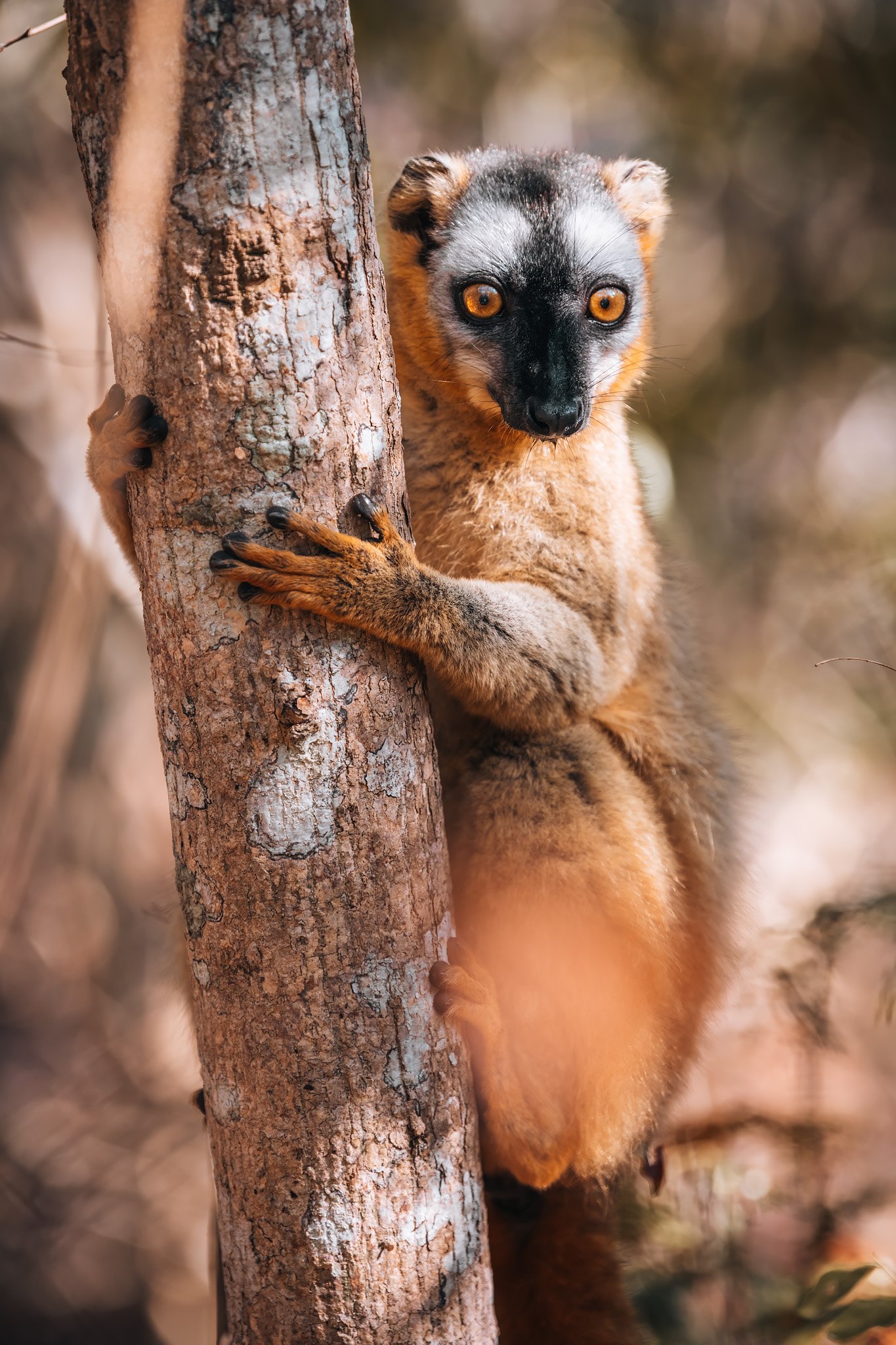
A small group of red-fronted brown lemurs had settled just outside the trees bordering our lodge, and were carefully watching each of our actions. Initially, we thought they were simply curious about us, but every time someone went to reach for a water bottle, the lemurs’ eyes followed the action.
Only later did we realize why they were so focused on them.
In August (near the end of the dry season) in western Madagascar, water is a rare commodity due to lack of rainfall for extended periods, many streams are dry, and access to clean water is limited in many ways. The lemurs have come to associate visitors who carry bottles with providing them with a vital resource that is scarce during this period. Noemí quietly held an empty snail shell filled with water and waited. There was no response.
For a few seconds the group of lemurs stood there watching. Then one cautious member descended, stopped and looked toward us before bending its head down to drink. A second lemur followed shortly thereafter. And a third. Within a minute or two, the shell had become the focal point of attention.
There was nothing sensational about the event, no loud cries, no rapid movement, only a number of parched creatures drinking a limited supply of water during one of the driest seasons of the year.
And even though the event lasted only two minutes, it was one of those quiet events that you will remember long after you forget the pictures you took. For a moment or two, it seemed that there was relatively little difference between us and the wildlife we were viewing.
A New Side of Kirindy
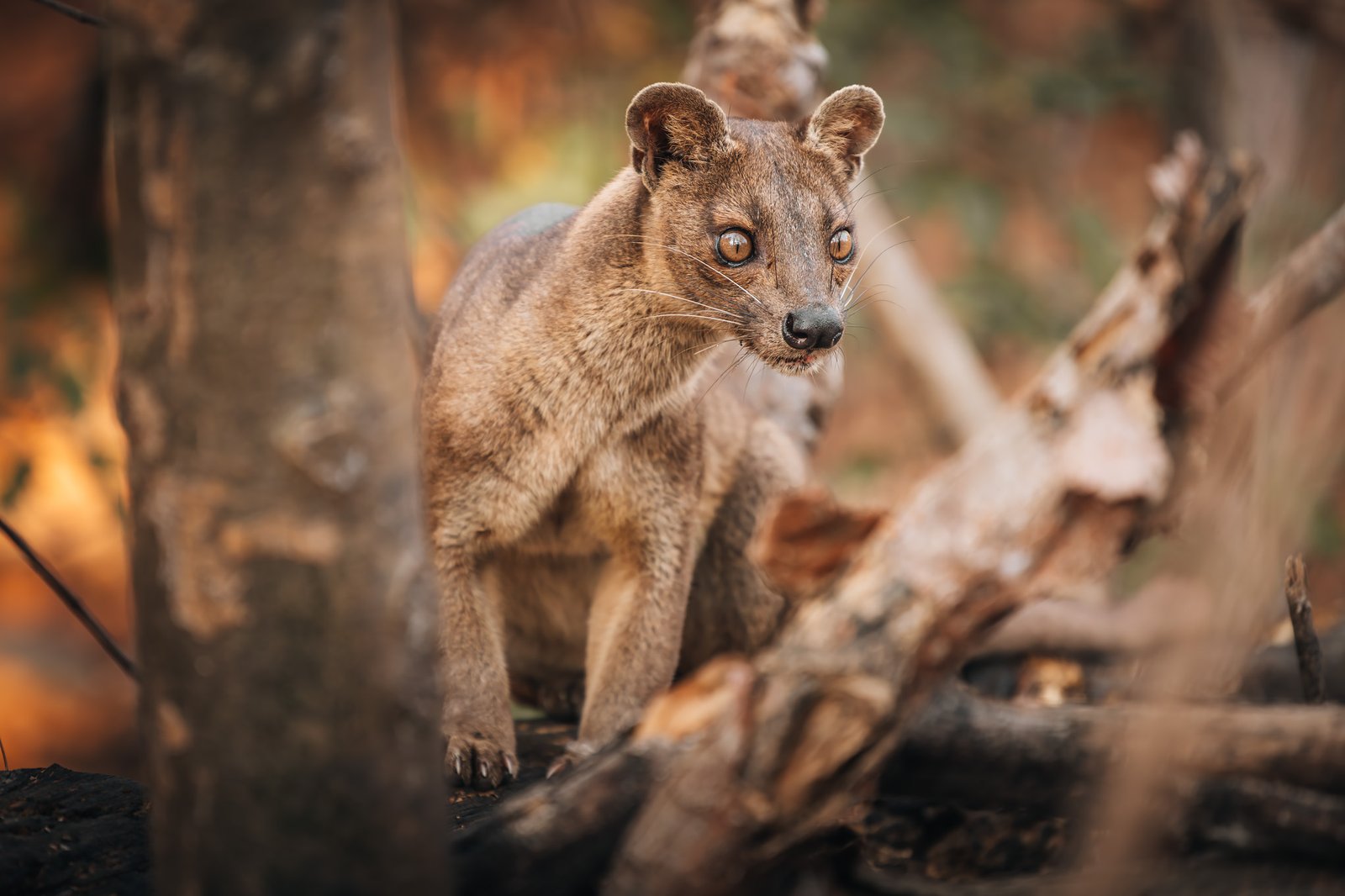
The forest rewarded us quickly again. A female fossa emerged only a short distance from where we were camping, representing a totally different type of interaction with this elusive creature than we experienced on the prior night. Rather than stalking silently in the dark, she walked casually beneath the morning sun, stopping periodically to survey her surroundings before moving along between trees.
In addition to being able to see her better because of her exposure to sunlight, we also gained greater appreciation for her physical stature. Long bodied and muscular with an extremely long tail, she was as agile moving through the trees as she was walking through the forest floor. Seeing two fossas within less than twelve hours was incredibly lucky. Many people visit Kirindy hoping to see one and fail. Our good fortune continued through out the remainder of the morning.
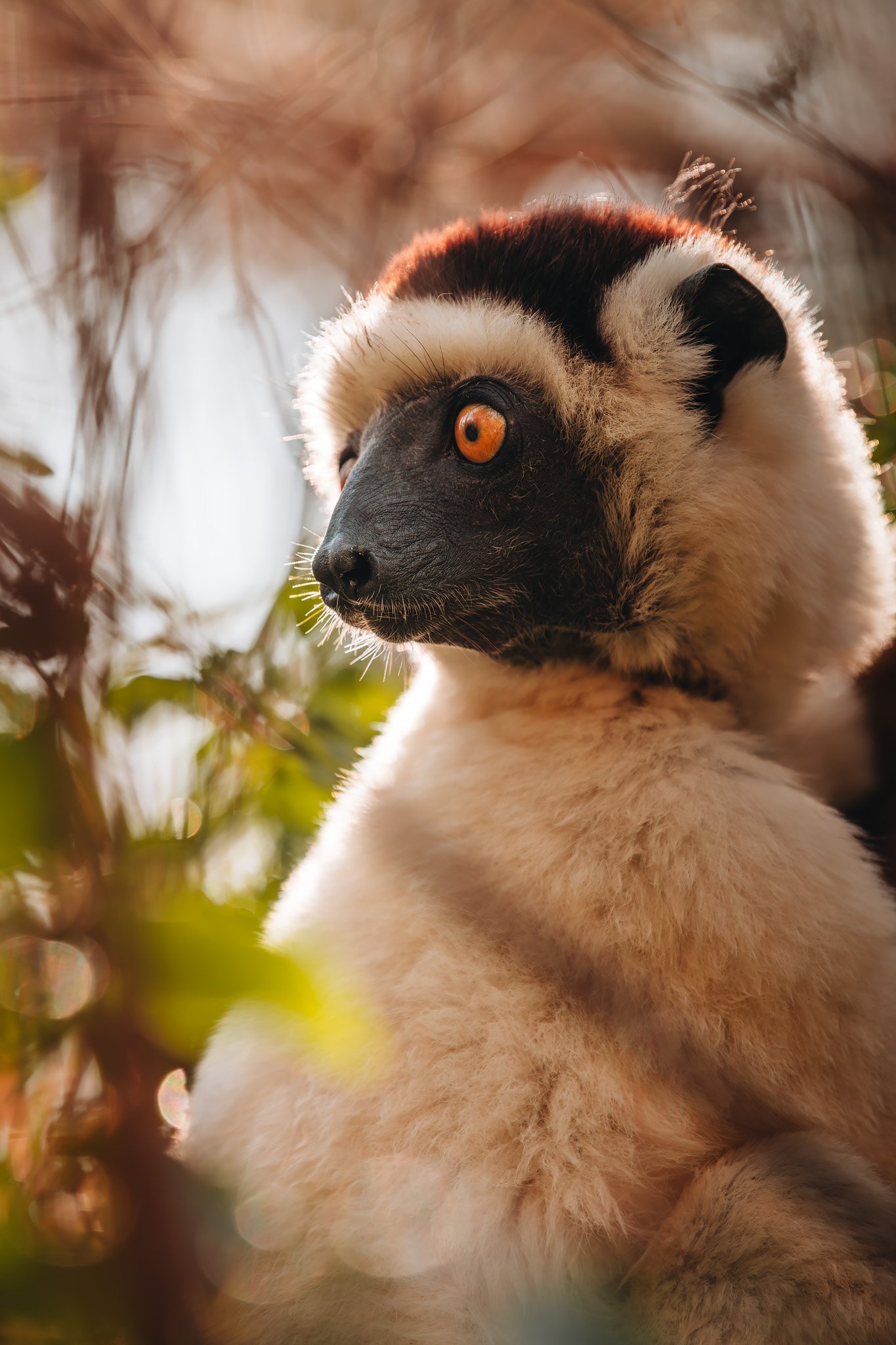
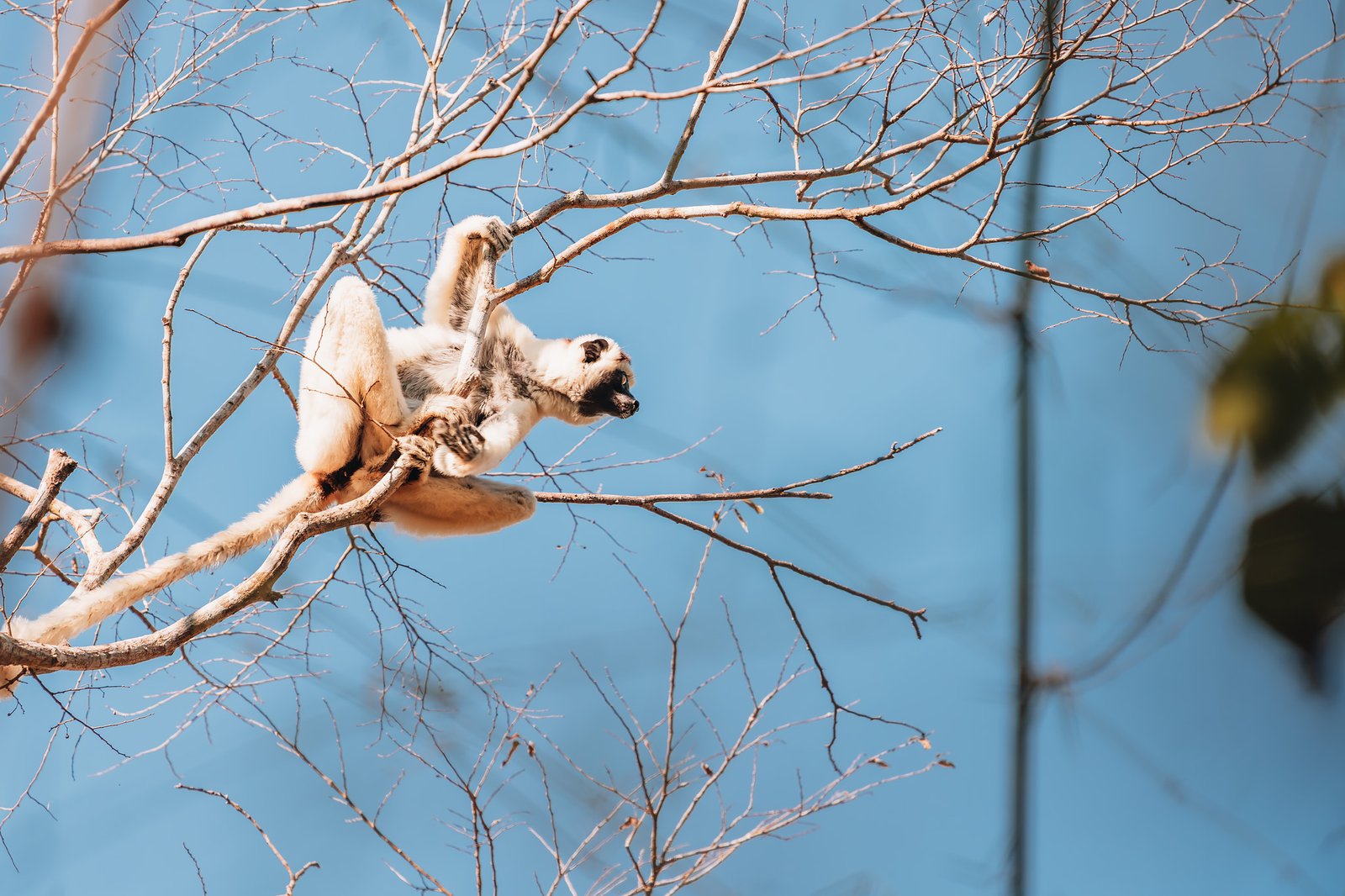
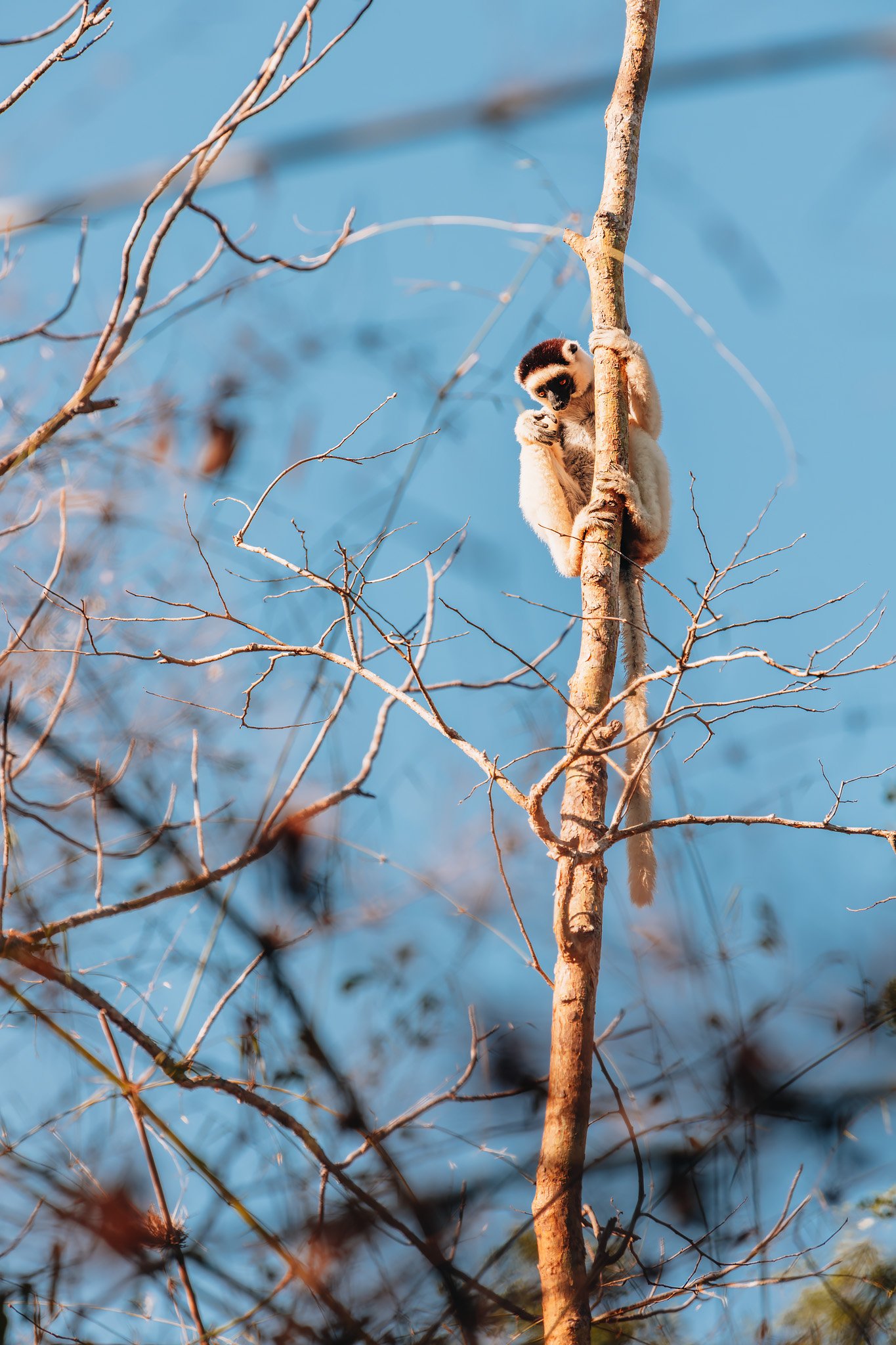
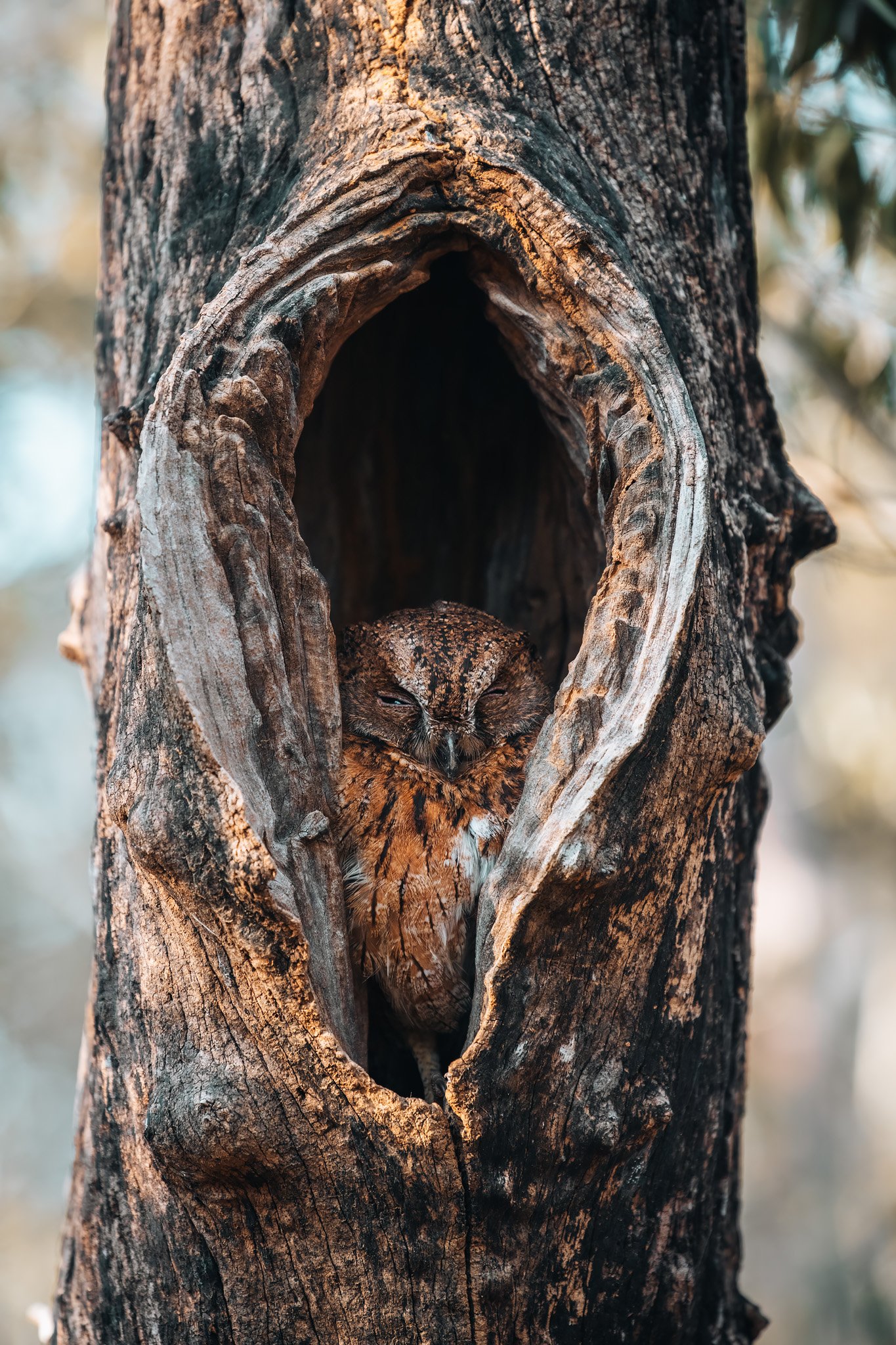
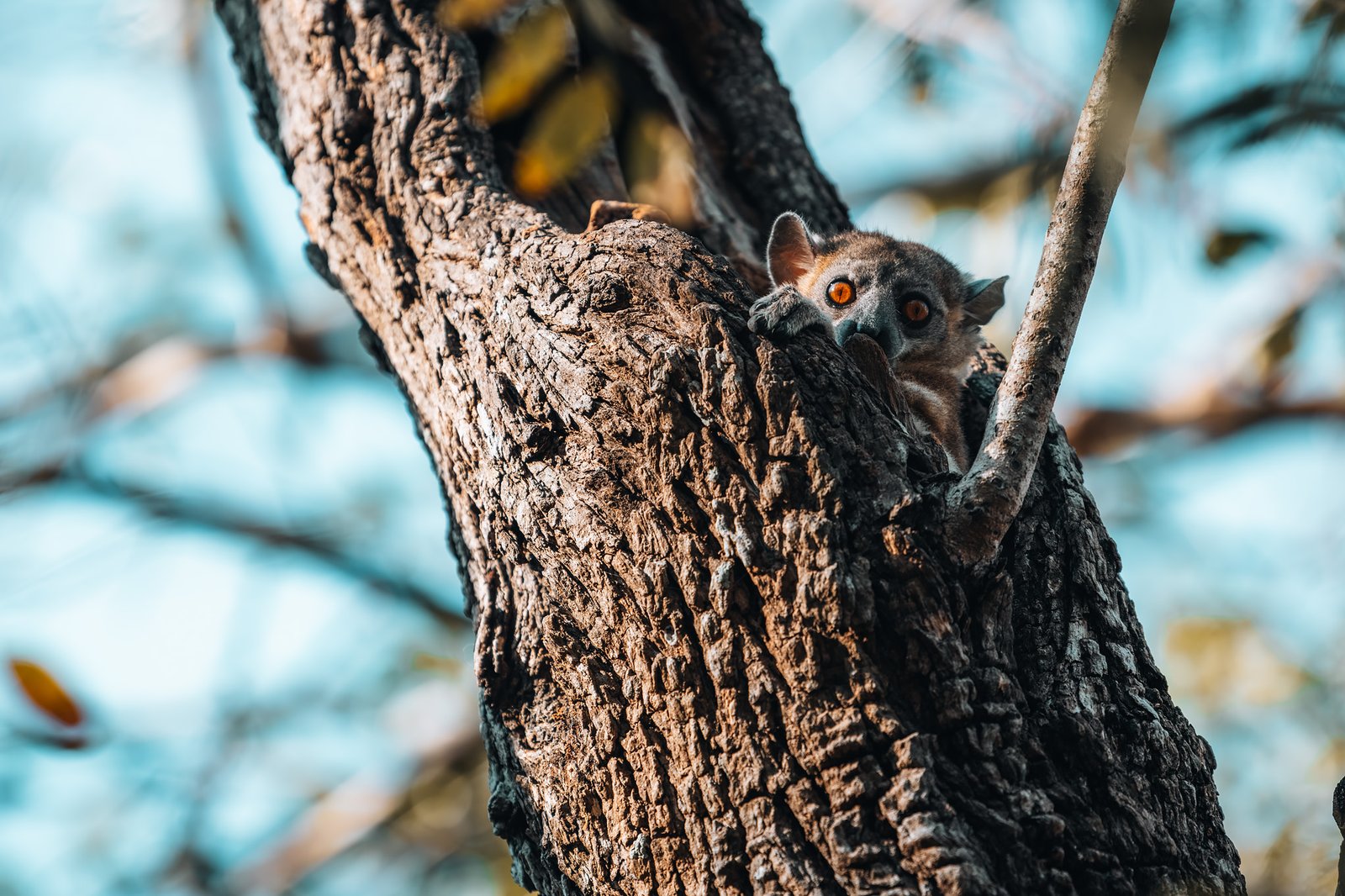
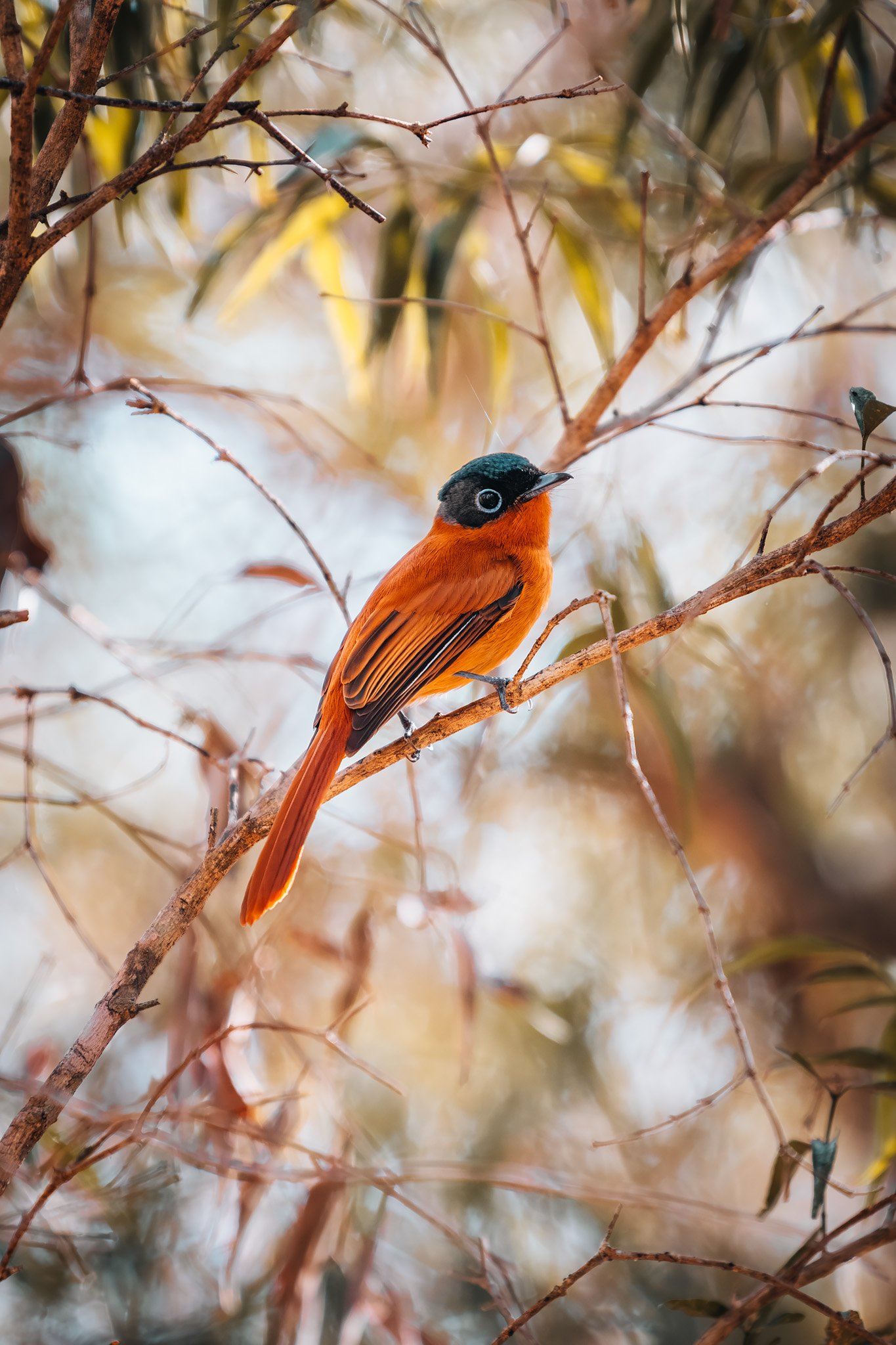
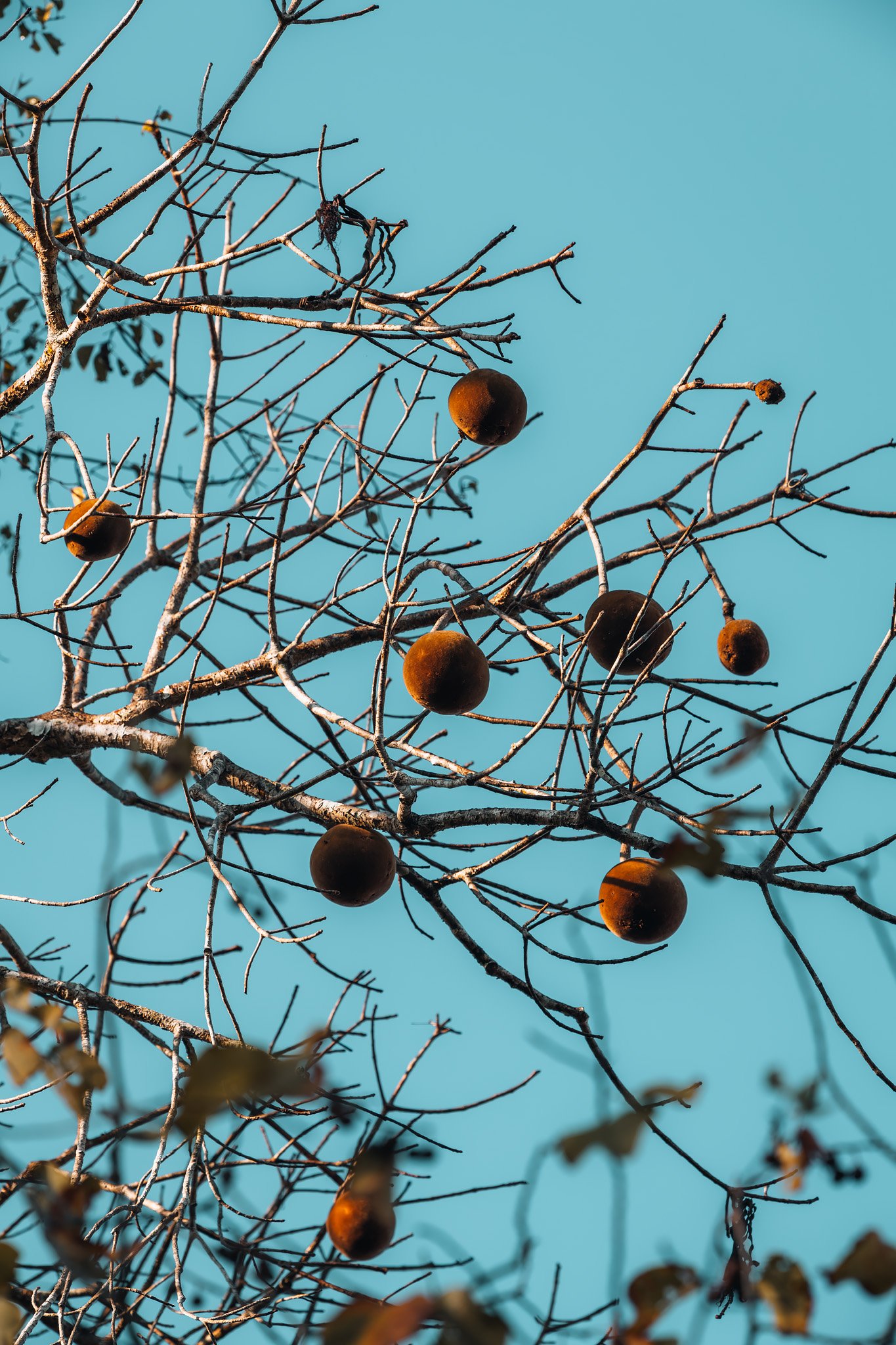
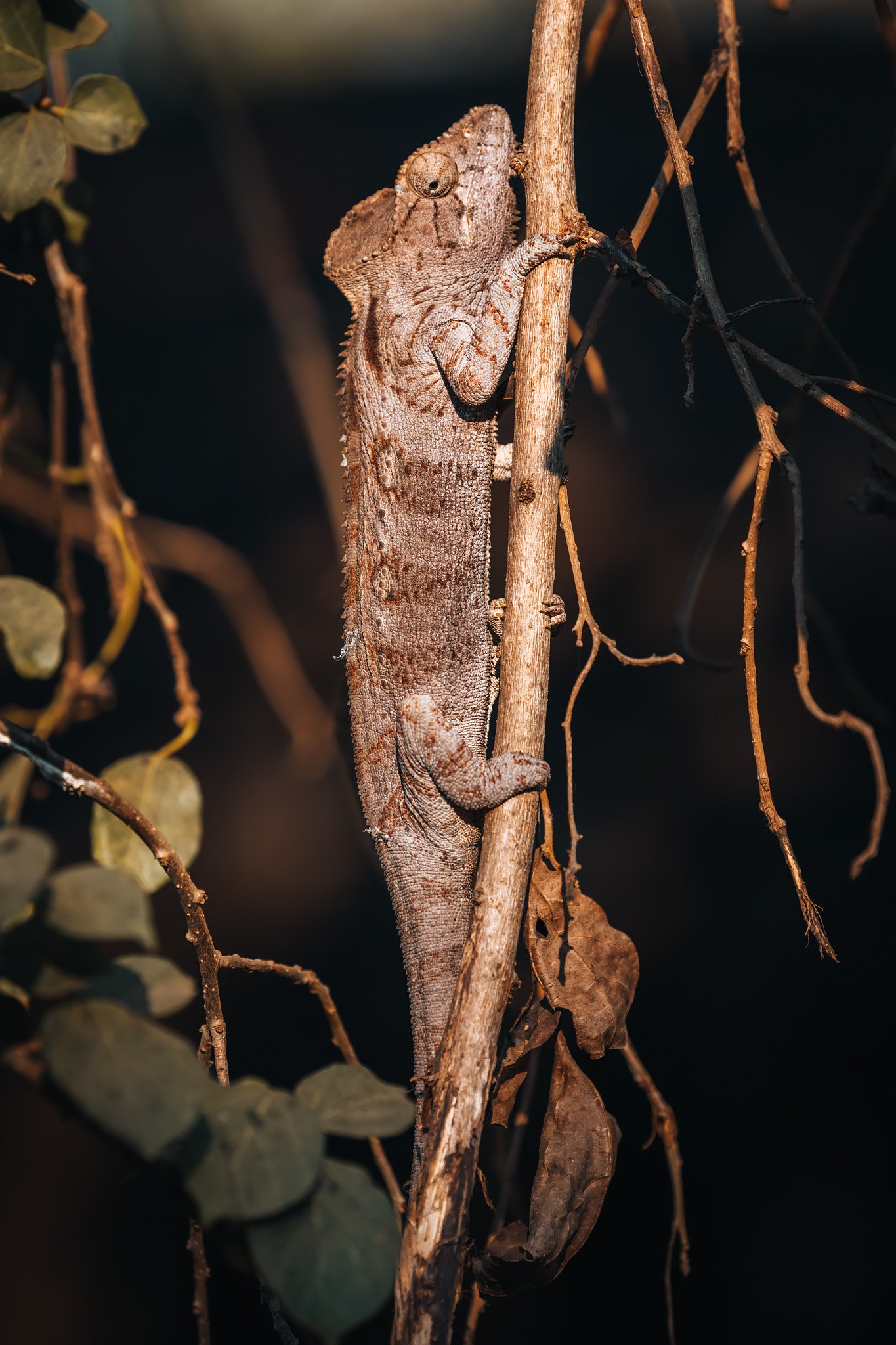
Verreaux’s sifakas ran easily from tree trunk to tree trunk using their distinctive sideways jumps which make them one of Madagascar’s most recognizable primate species. Sportive lemurs remained curled up inside hollow trees seemingly unaware of their surroundings illuminated by daylight. A sleeping Madagascar scops owl sat staring from inside another hollow tree. Even the vegetation offered visual interest. Large baobab fruits remained hanging from tall branches overhead while giant chameleons blended almost perfectly with their pale bark despite their considerable size.
By mid-morning it was time to begin our drive northward. Ahead lay one of Madagascar’s most remote (and famous) national parks.
The Road to Bekopaka
Distances in western Madagascar can be quite misleading. While Bekopaka lies only slightly over 200 km north of Kirindy, driving to get there consumes an entire day.
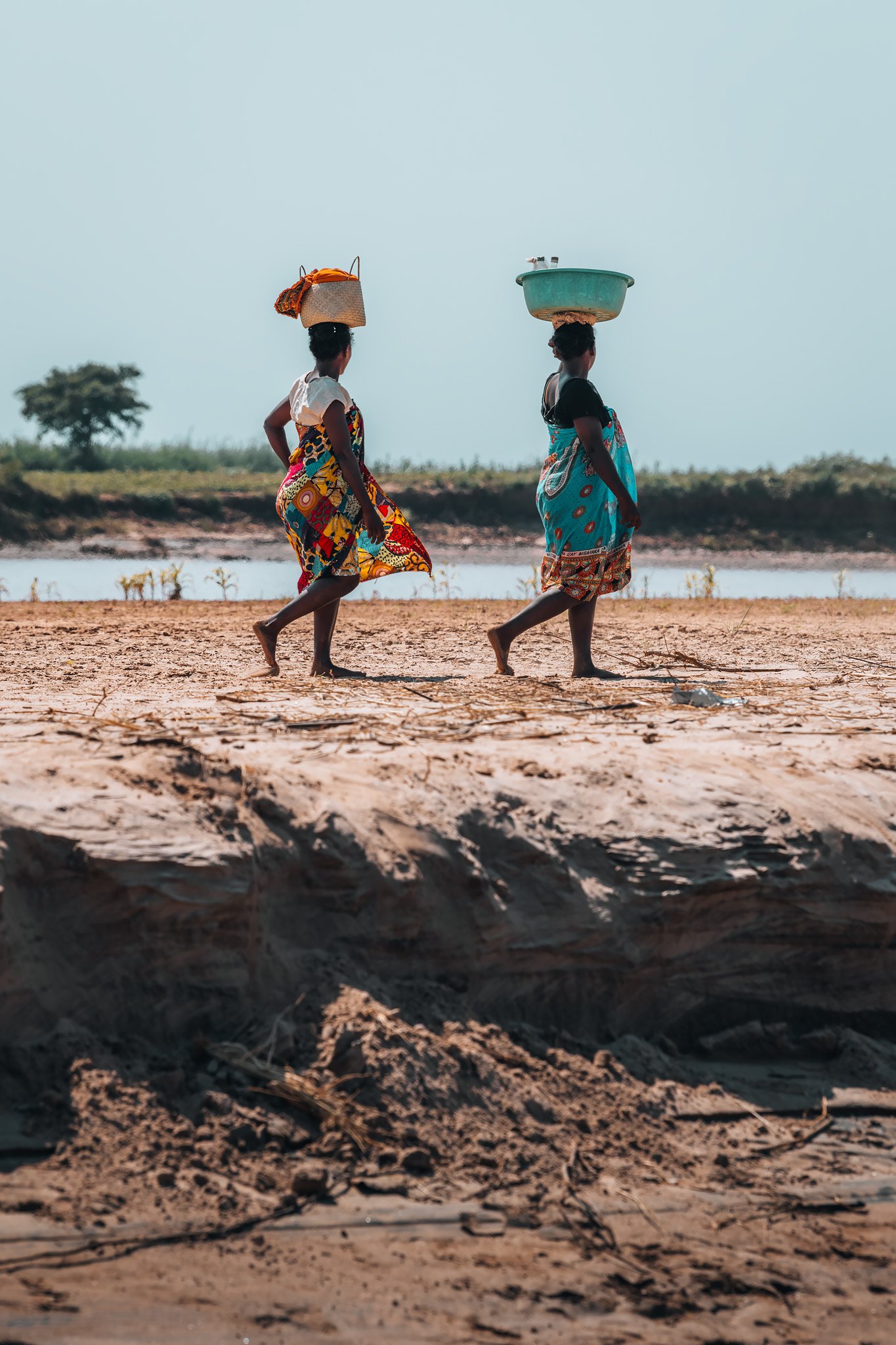
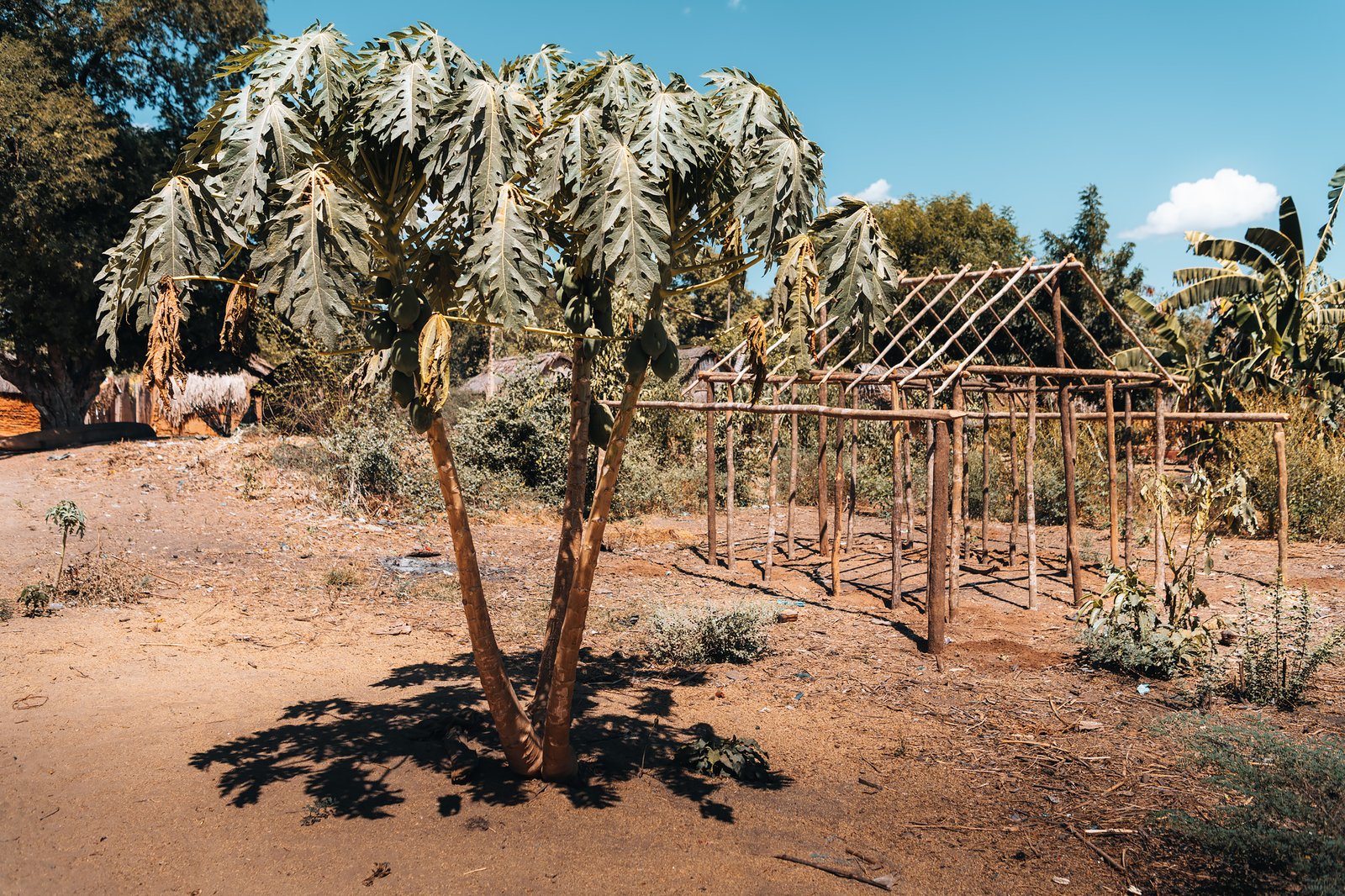
As we drove northward, the road rapidly deteriorated into countless kilometres of endless corrugated dirt trails which threw up enormous clouds of fine red dust with every passing vehicle that hung suspended in the still air for minutes afterward. We encountered numerous small Sakalava villages located sporadically along the way, consisting of homes constructed from wood and mud beneath scattered baobabs, and children waving enthusiastically as we passed by.
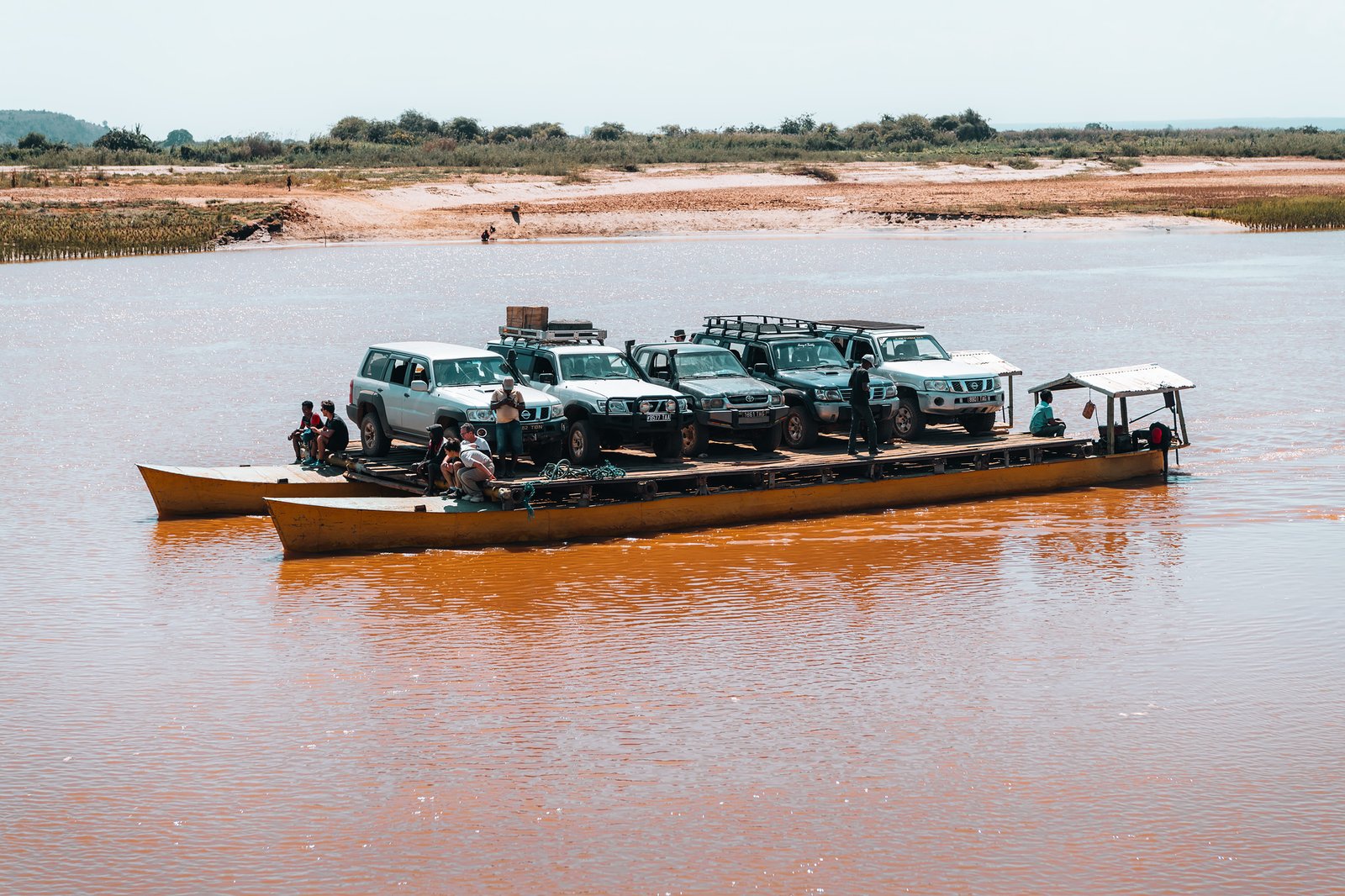
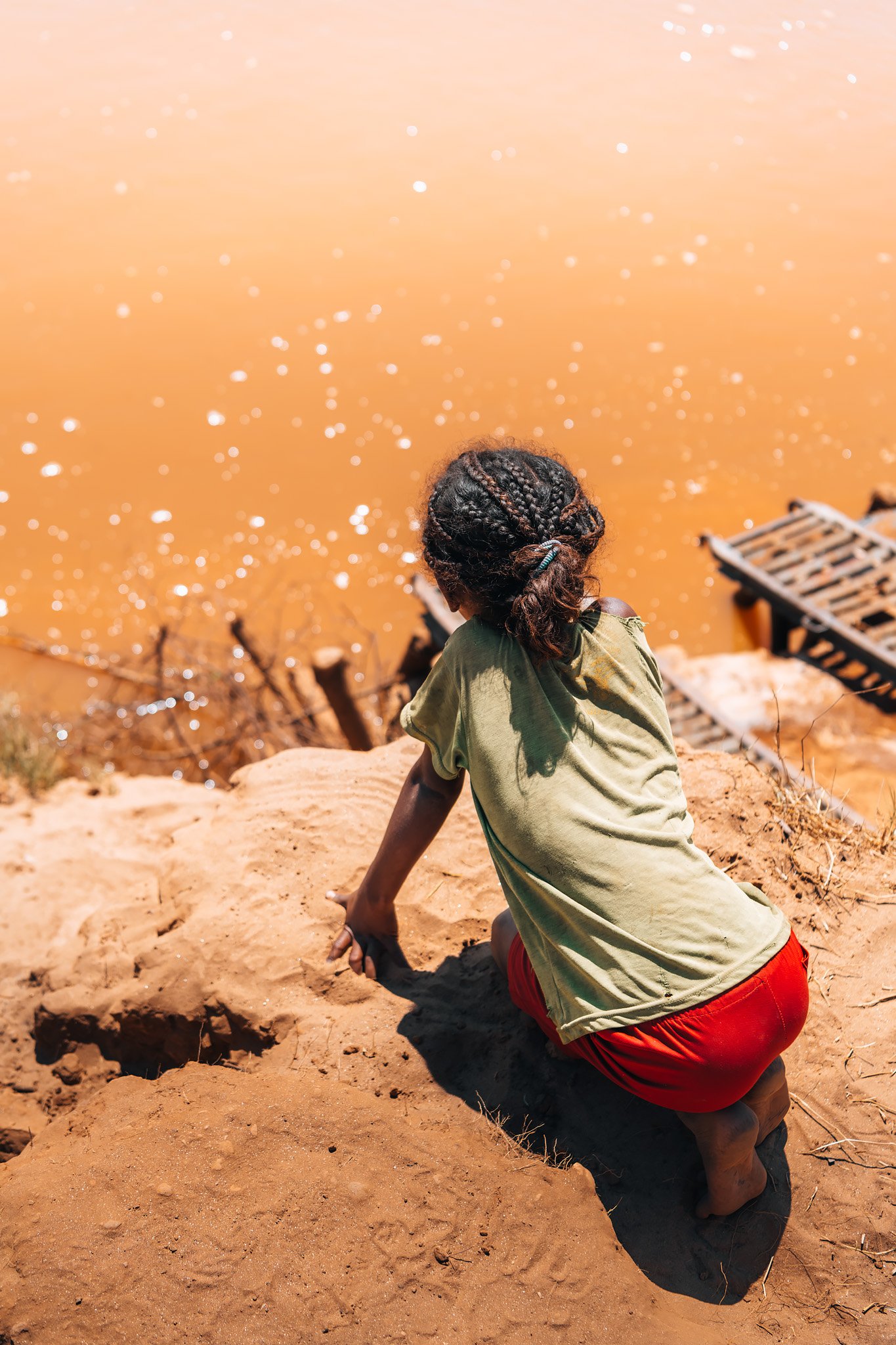
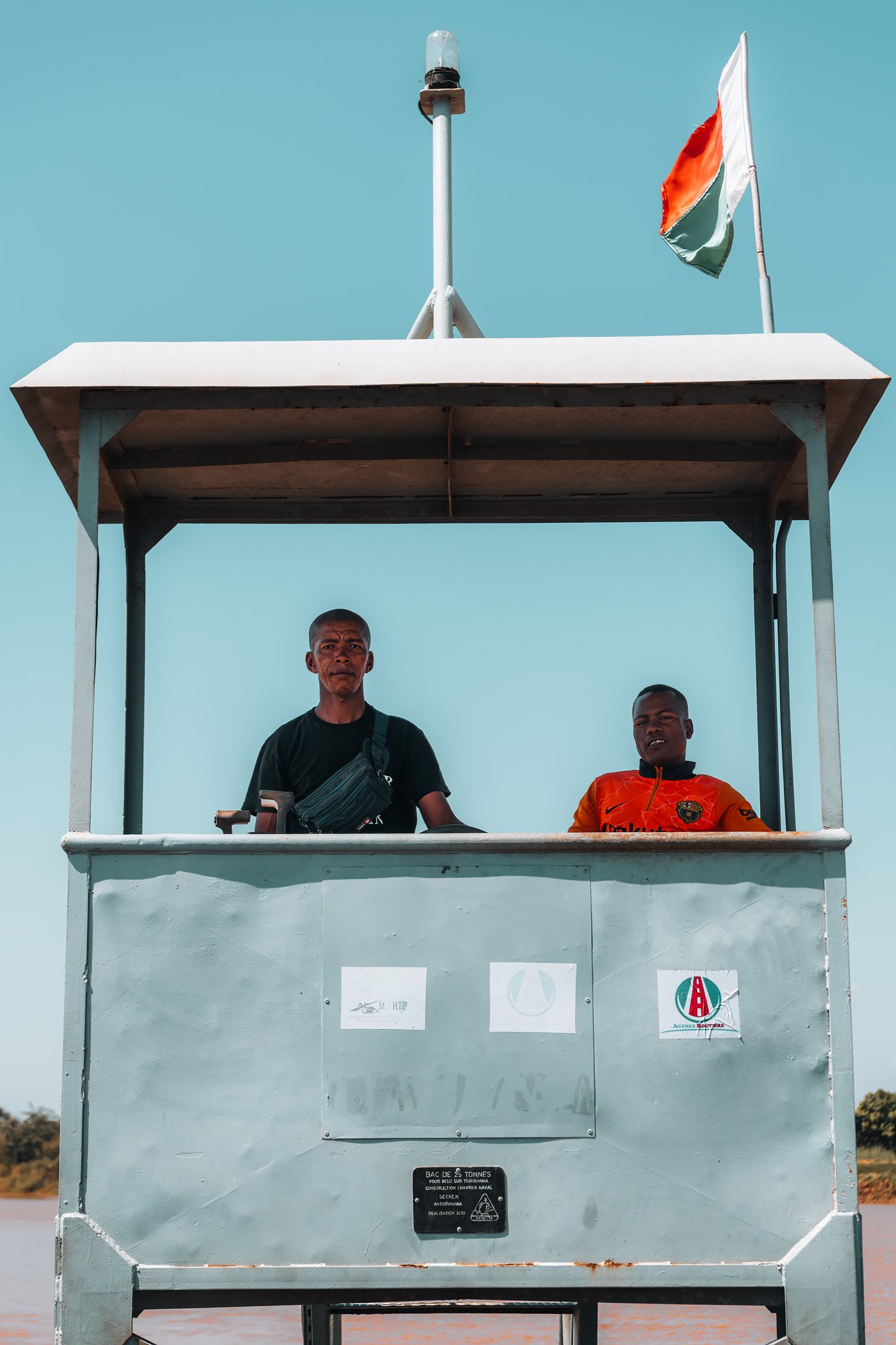
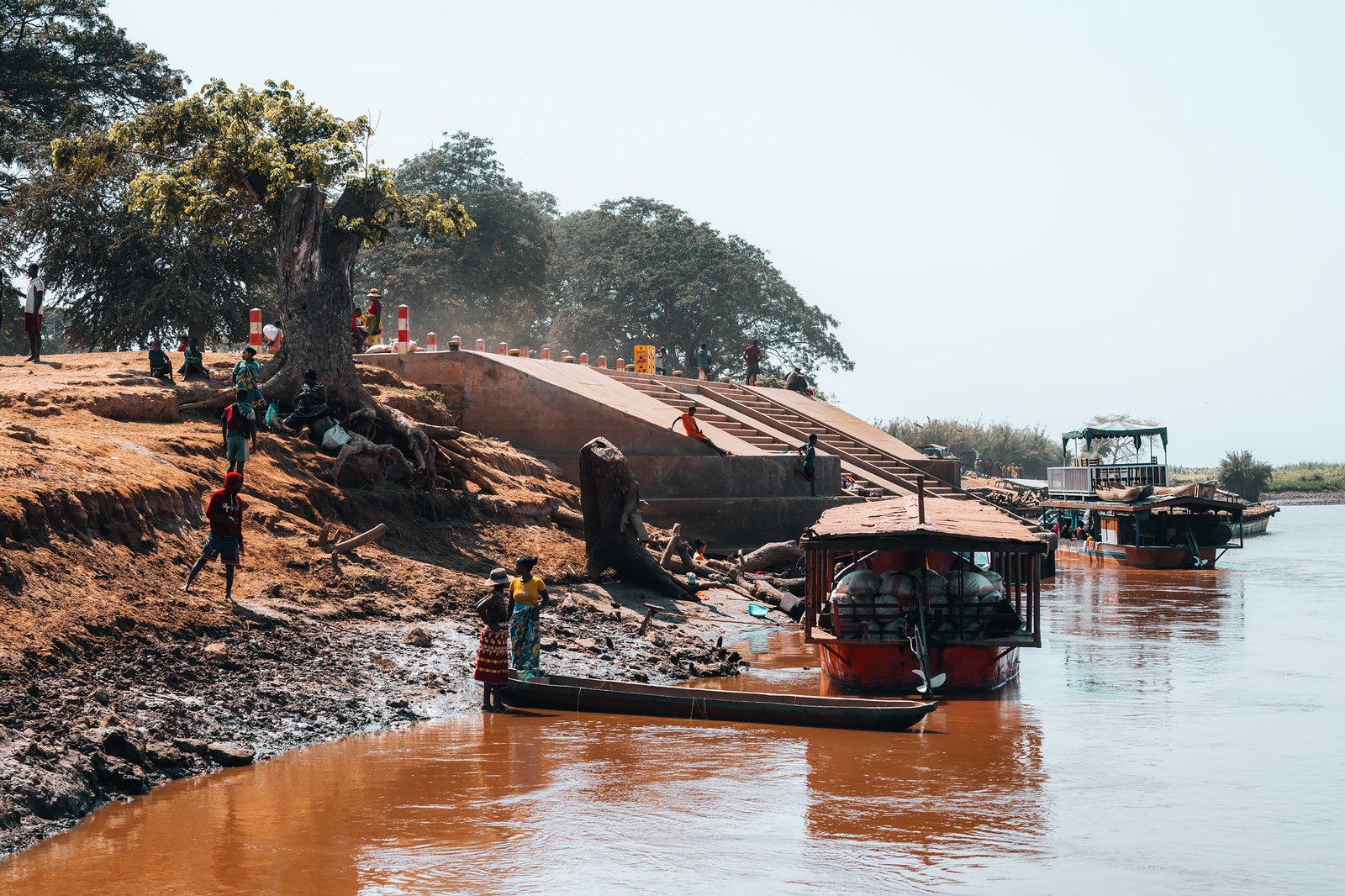
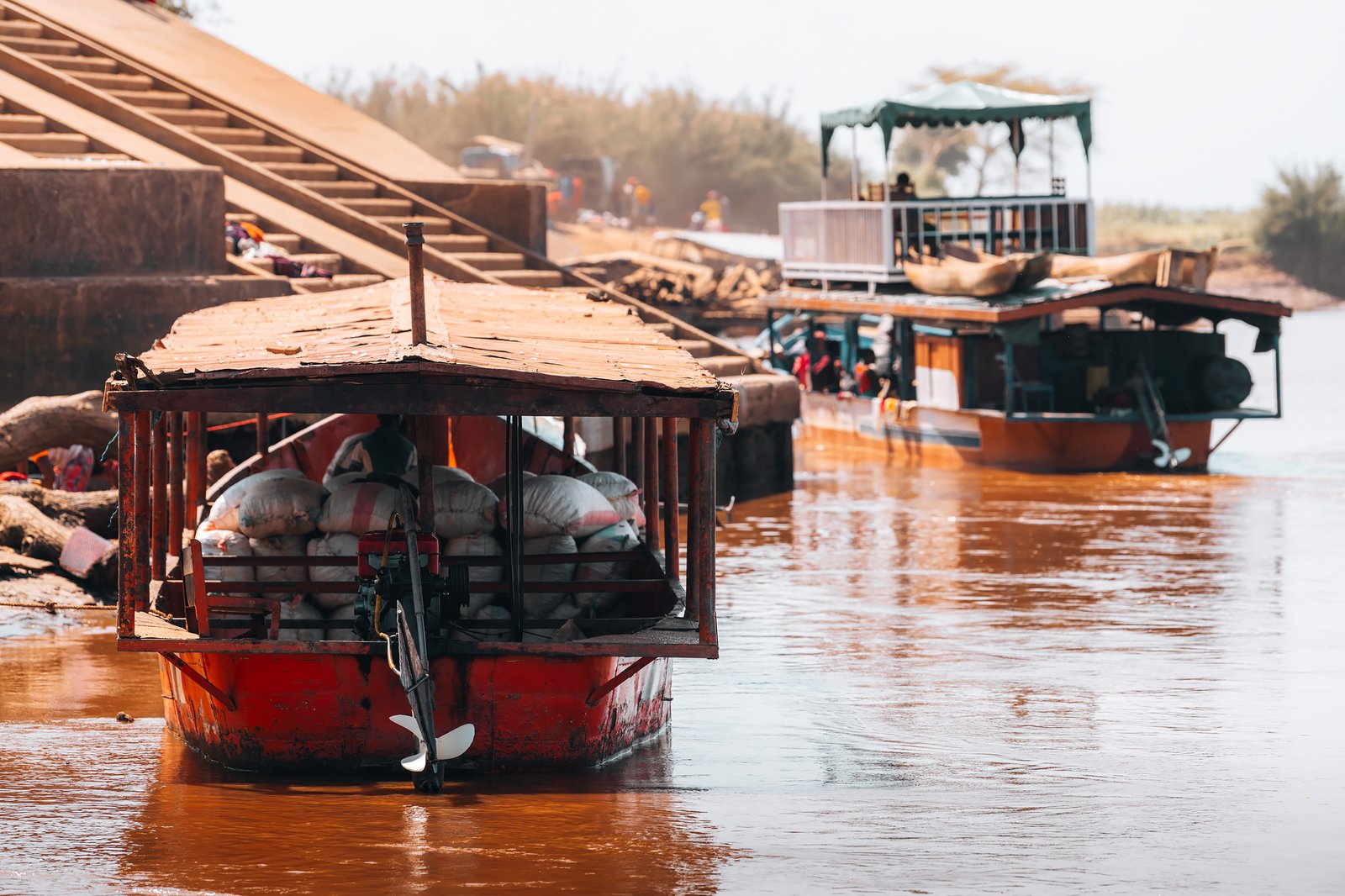
Unlike Madagascar’s eastern highland regions where rivers play a significant role in connecting many parts of the country, in western Madagascar rivers create obstacles. Our first major barrier was the Tsiribihina River. Instead of having a bridge over it, vehicles cross via a simple flat ferry that transports trucks, buses, motorcycles, livestock and pedestrians from one bank to another.
Everybody seemed relaxed. Drivers socialized under shaded areas while vendors sold food and drinks between waiting vehicles as if traffic congestion was simply an accepted part of daily routine. The crossing took only a few minutes, but it represented a psychological boundary beyond which traveling became distinctly more remote.
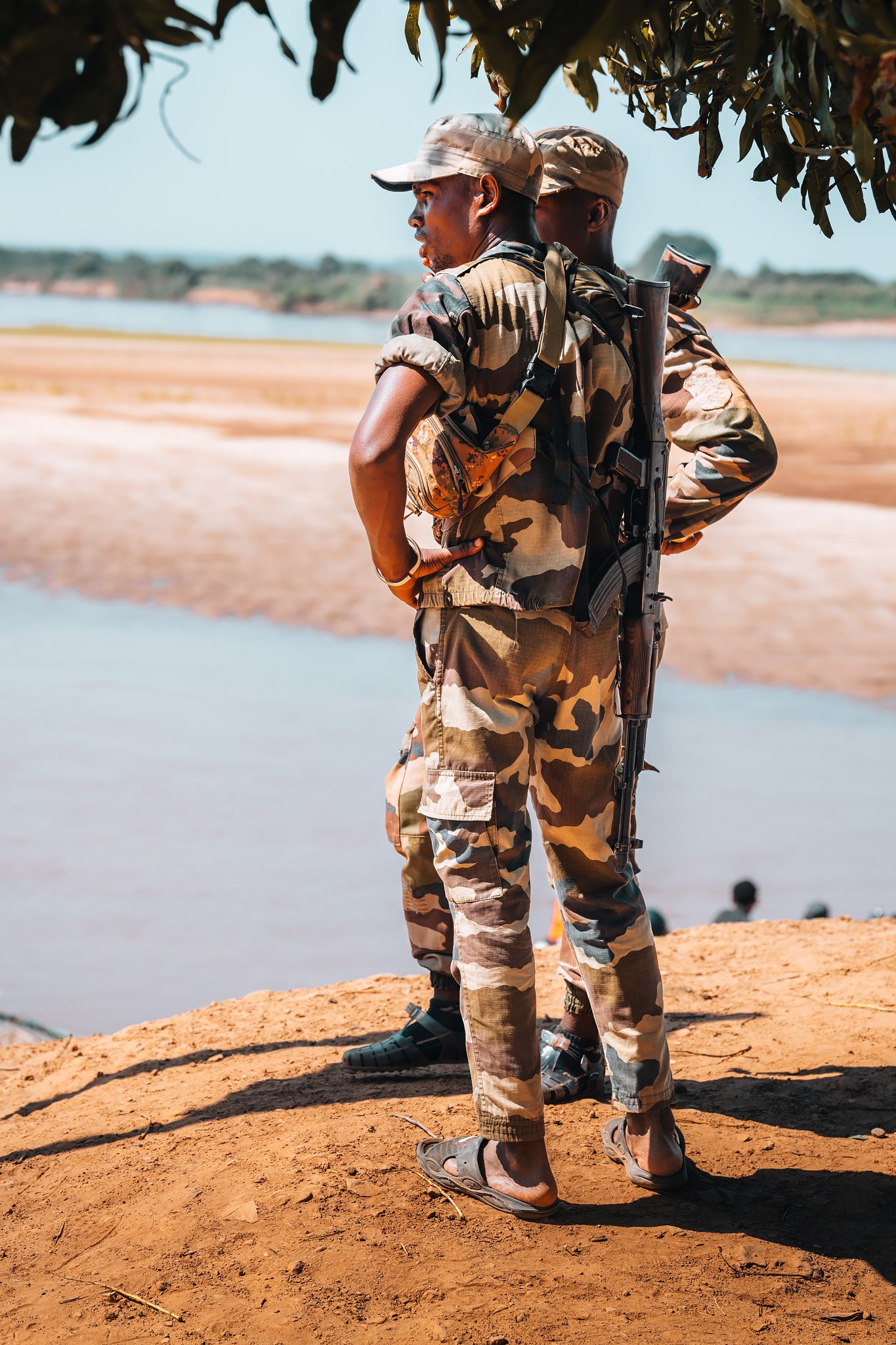
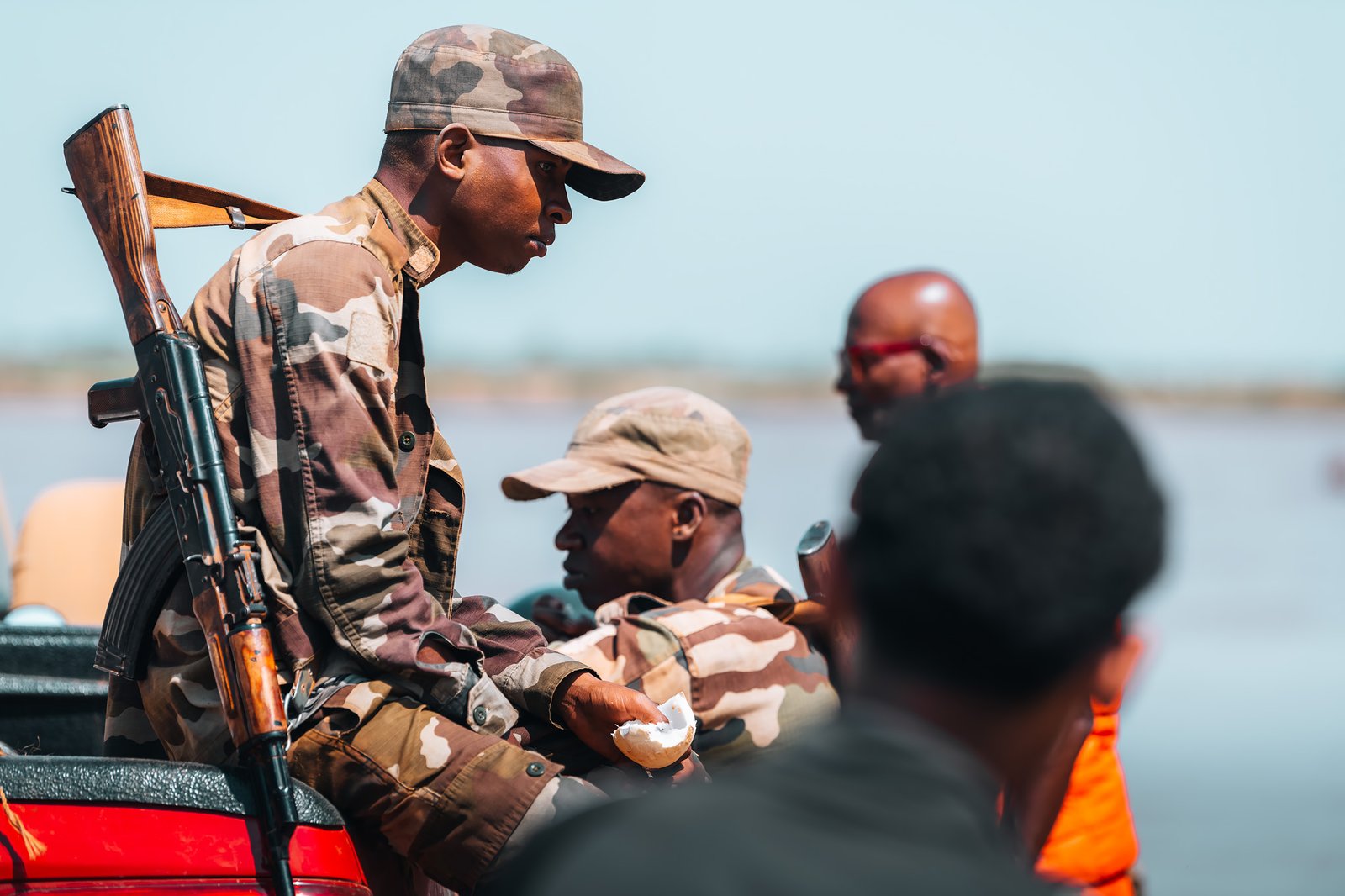
Once on the opposite side, we found ourselves joining an unusual convoy. Military vehicles took the lead, followed by a colourful procession of four-wheel drives from different tour operators, carrying travellers from all over the world. It felt almost like a small expedition setting off together into one of Madagascar’s most isolated regions.
The road to Bekopaka is among the country’s most challenging. The combination of rough tracks, seasonal isolation and virtually non-existent infrastructure makes every journey unpredictable. While incidents are uncommon, this is also one of the few areas where security is taken seriously, as some vehicles have occasionally been targeted by dahalo, bandits who prey on lone cars. Convoys, especially those accompanied by the military, are rarely disturbed, making the shared journey both a practical necessity and a reassuring presence.
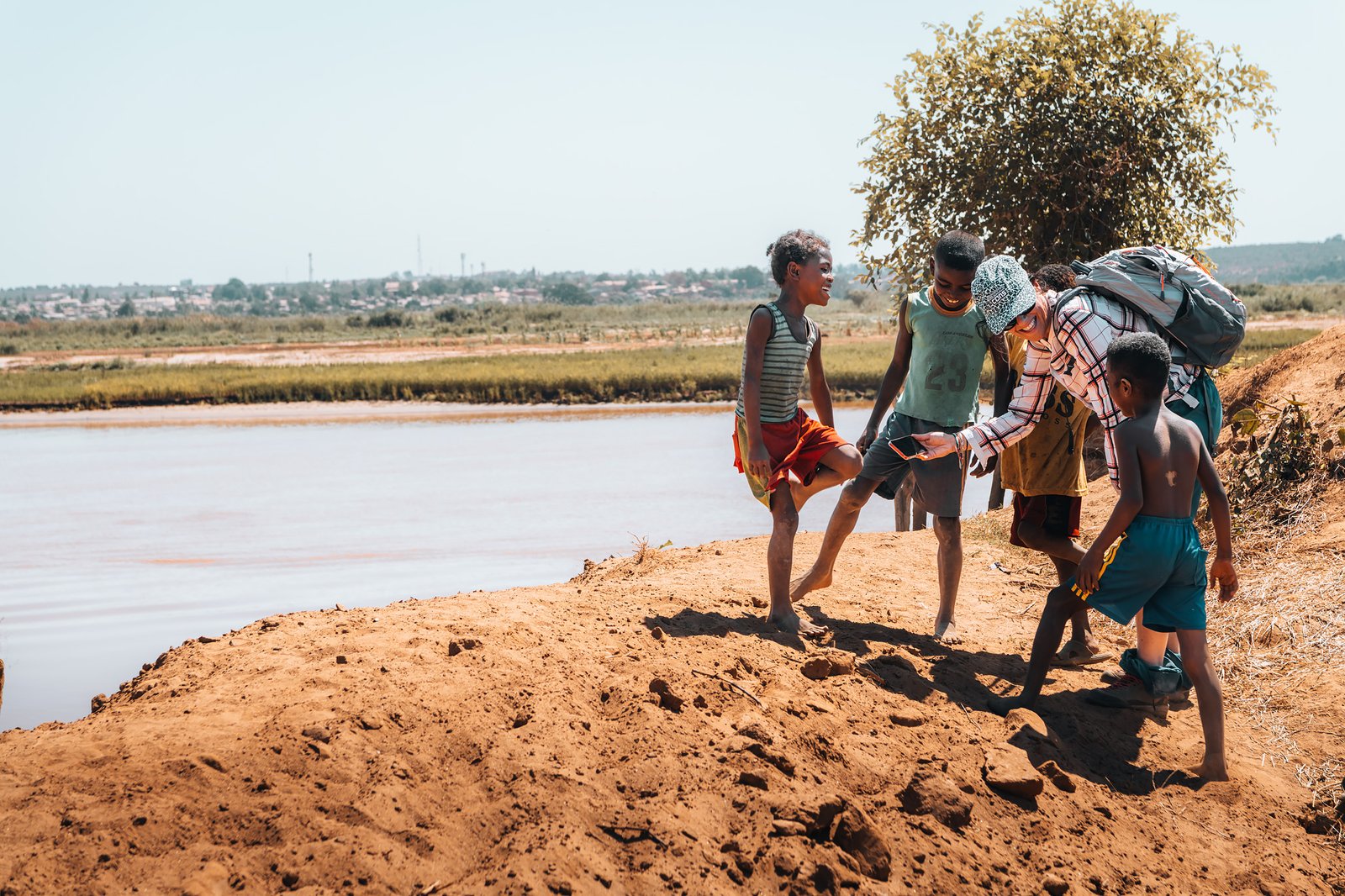
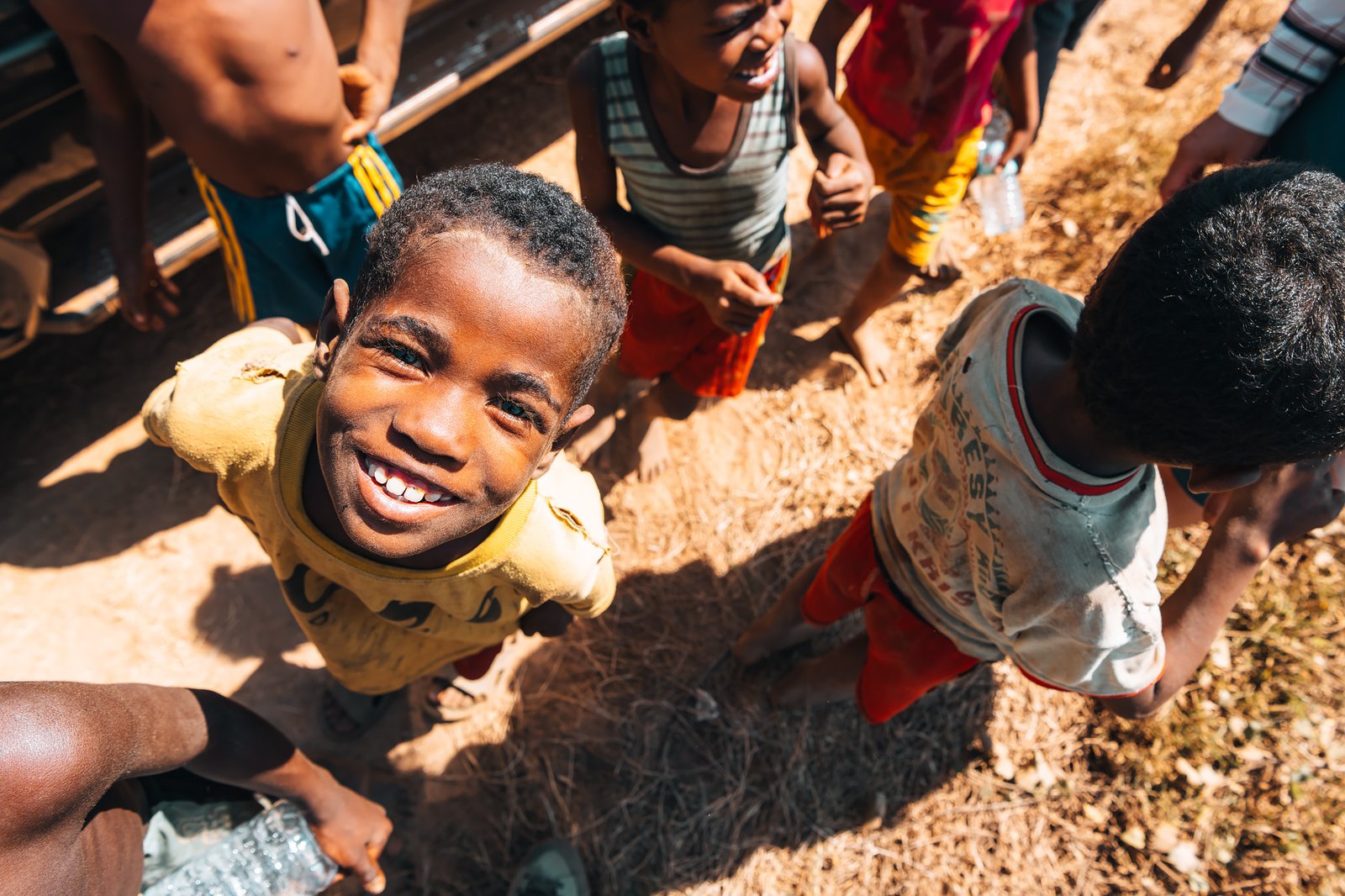
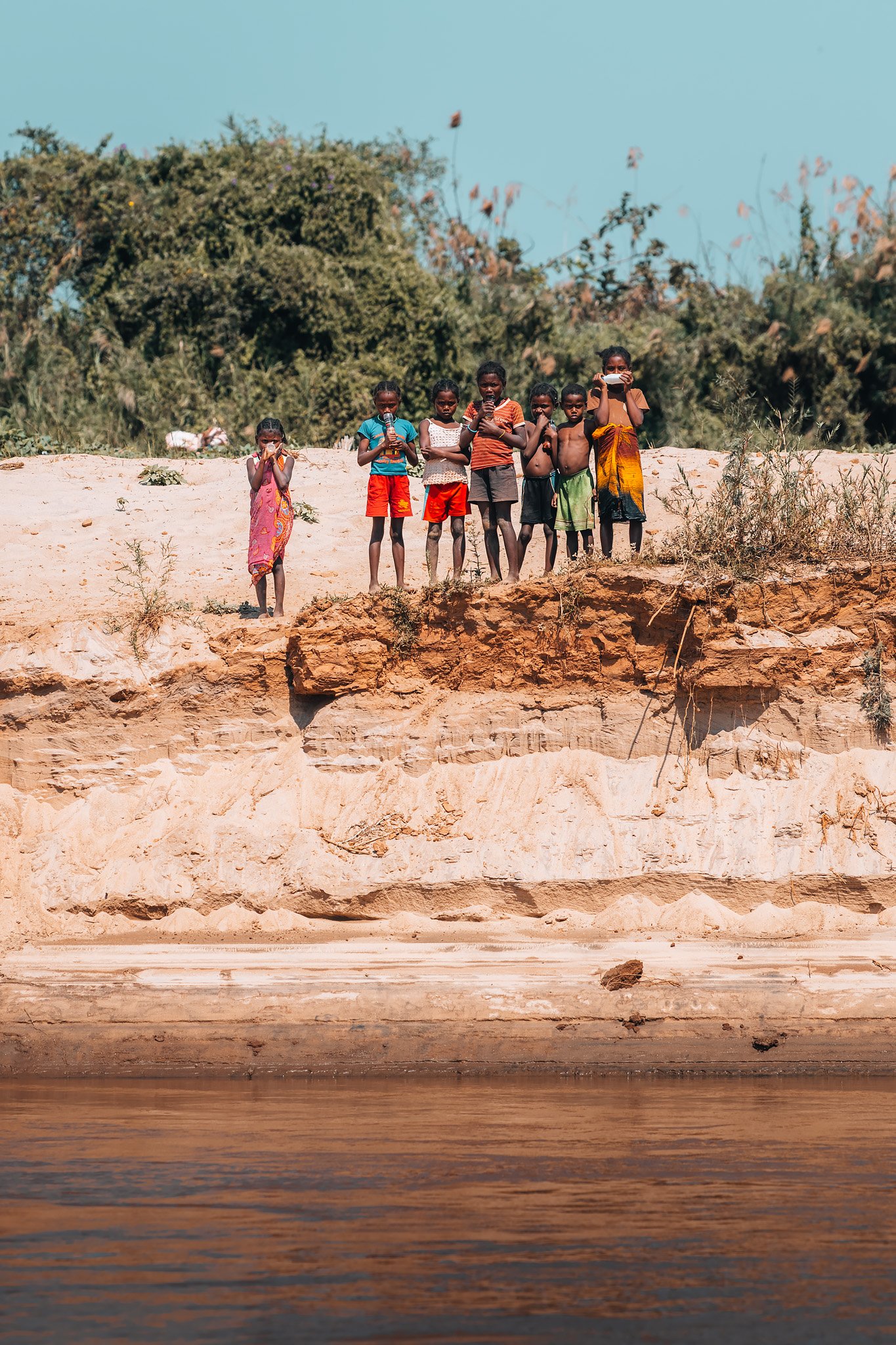
As the kilometres passed, we experience another side of western Madagascar. We crossed village after village where children ran towards the road, waving enthusiastically and shouting “Bonbon! Bonbon!”, their cheerful request for sweets from passing travellers. In one particularly memorable village, dozens of children sat beneath the enormous canopy of a baobab, attending what served as their classroom while their teacher conducted the lesson in the open air.
Before leaving the last fuel stop, our guide Rado had suggested buying a few bags of sweets for moments like these, and as we slowly drove through the villages, we shared them with the children. Their smiles and laughter echoed long after the convoy had disappeared into the dust, providing a joyful contrast to the harshness of the landscape and a fitting end to a long but unforgettable day before finally reaching Bekopaka.
The Gorges of the Manambolo River
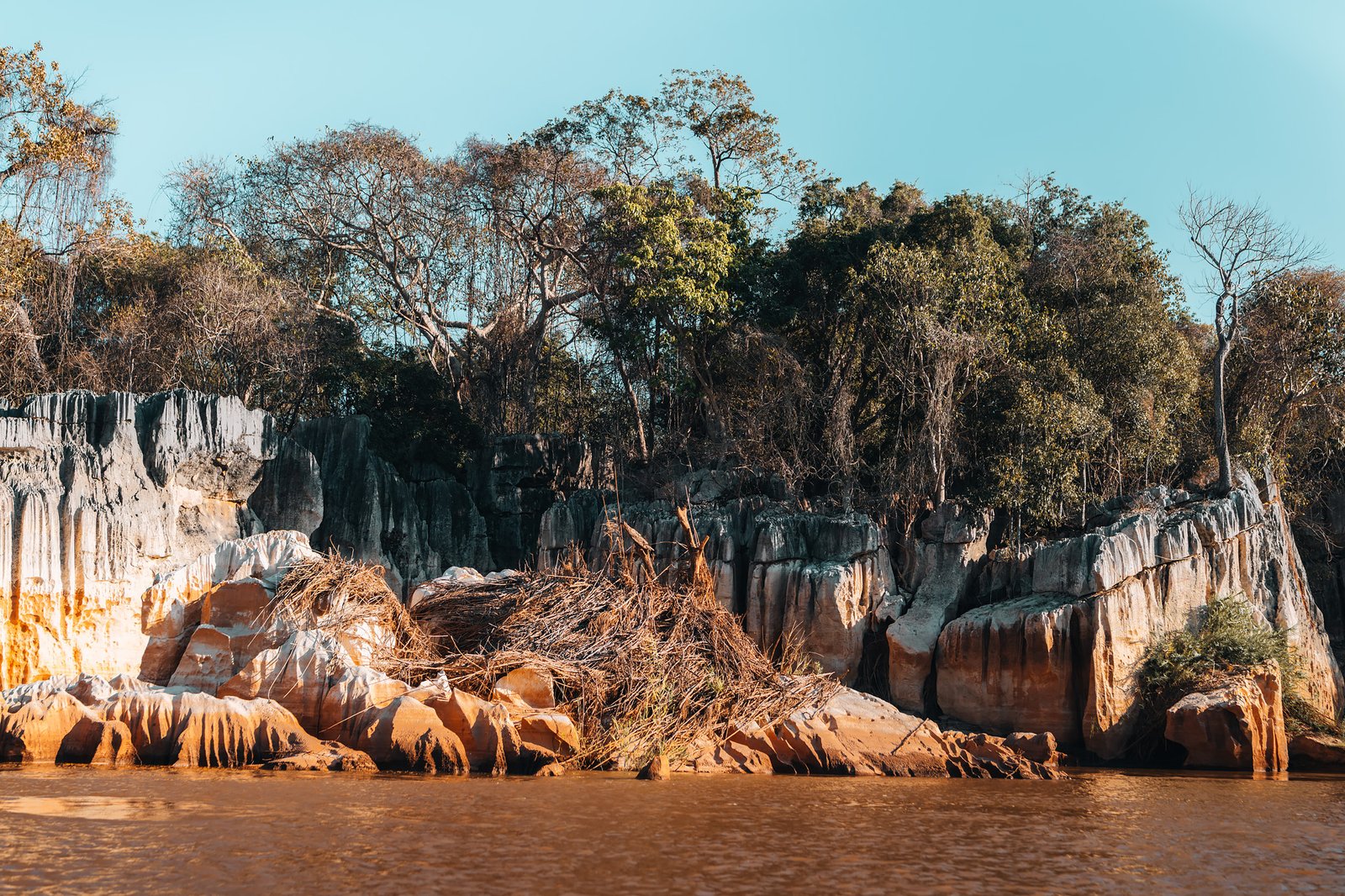
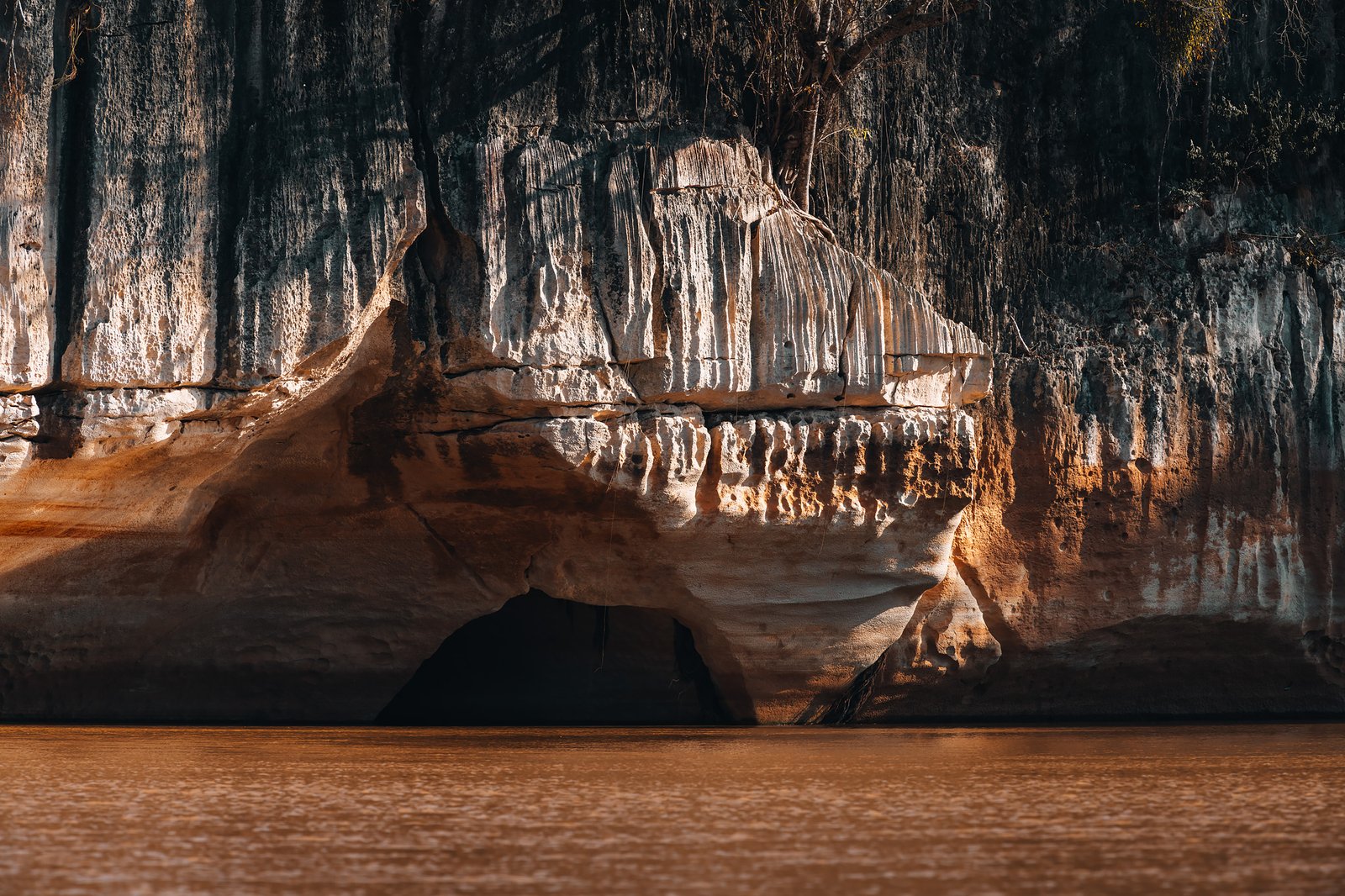
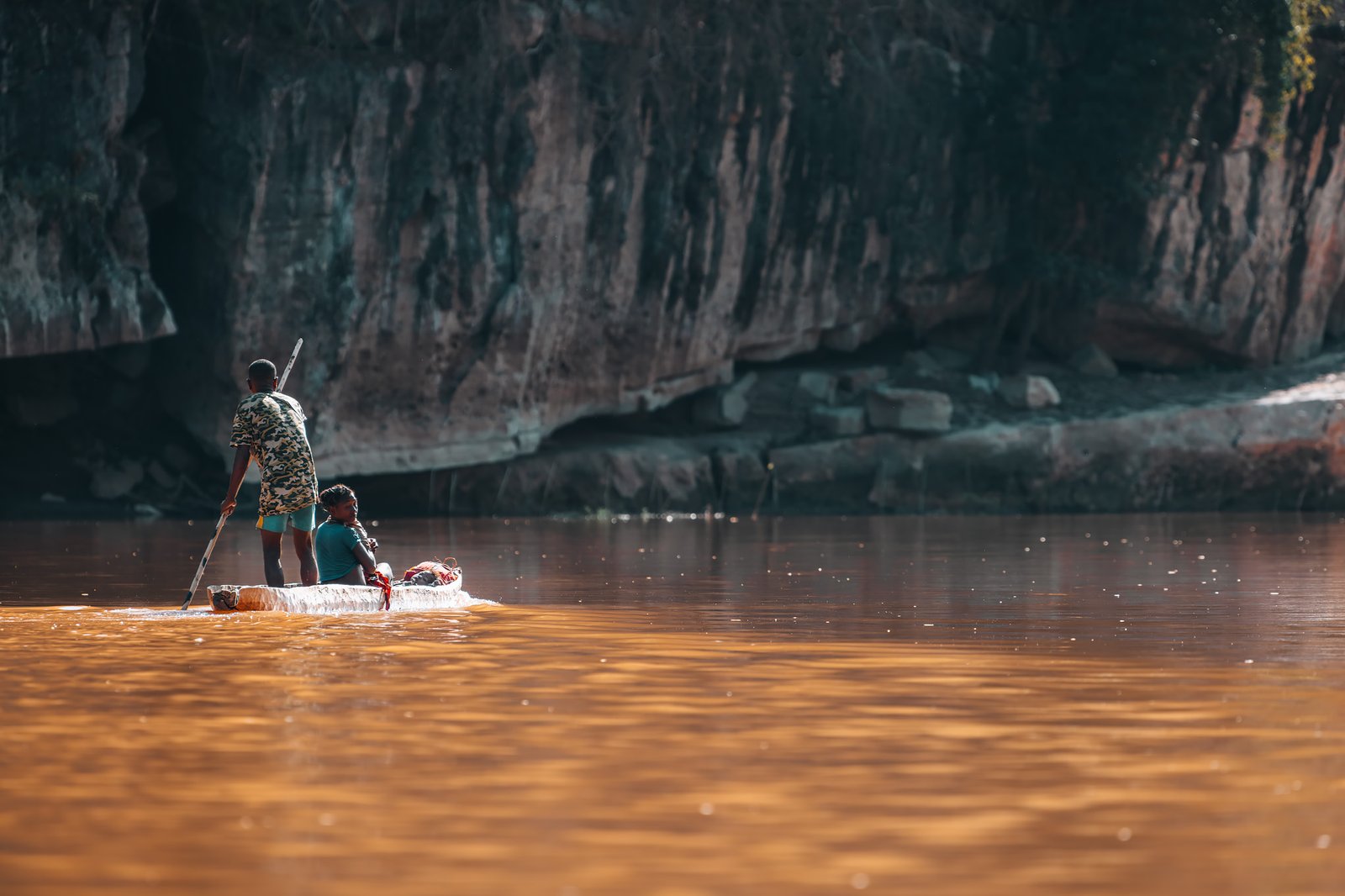
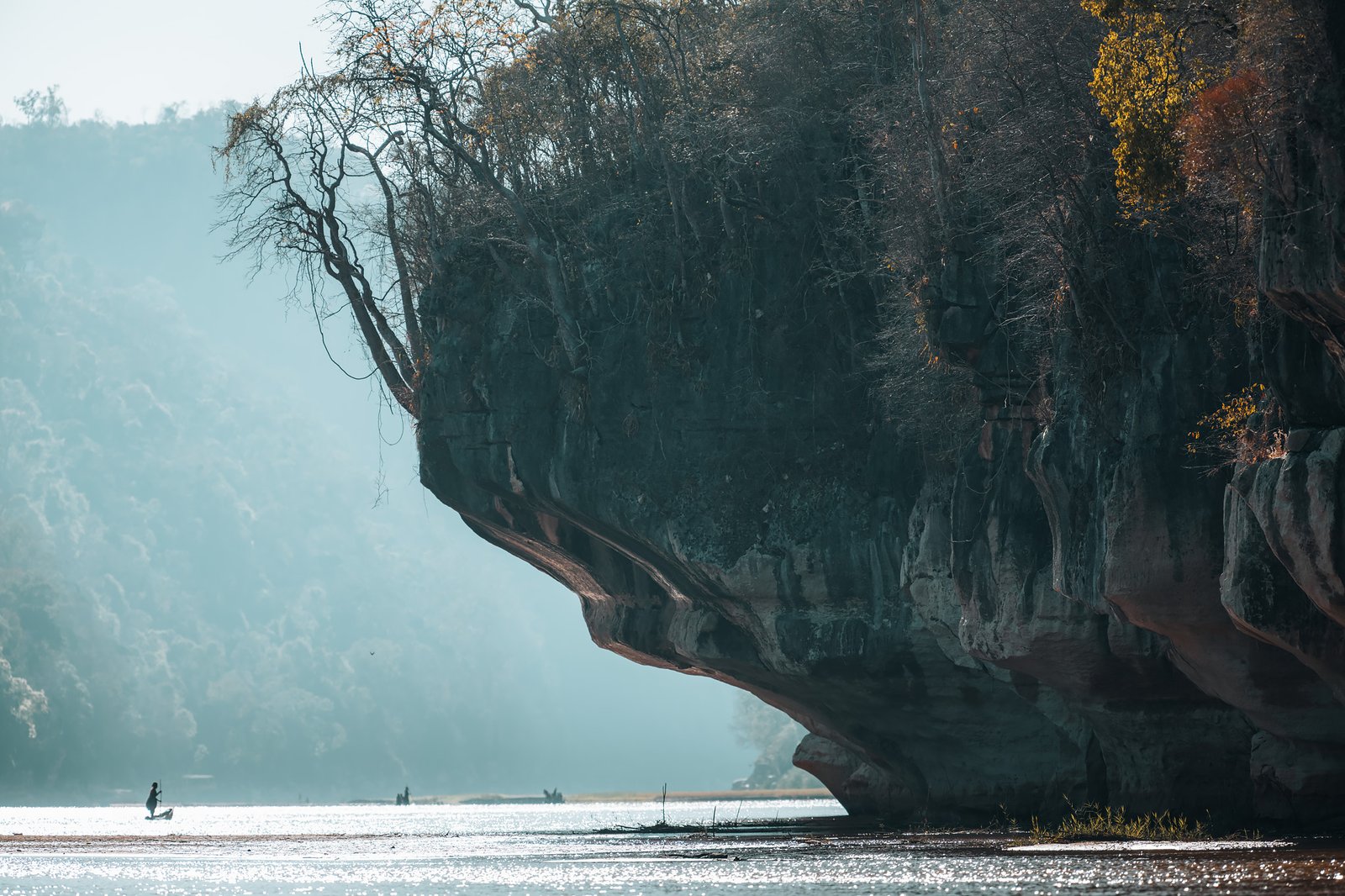
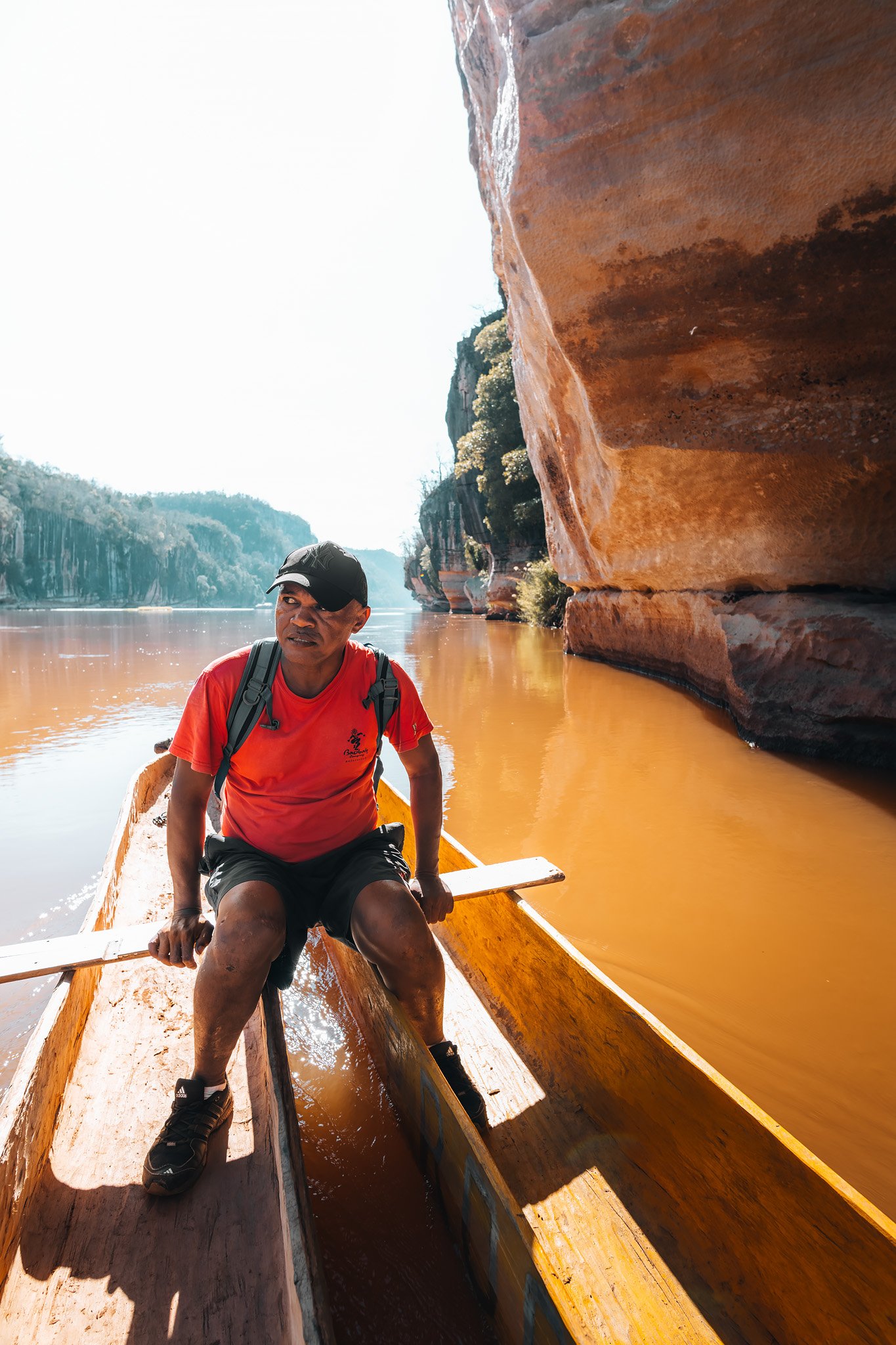
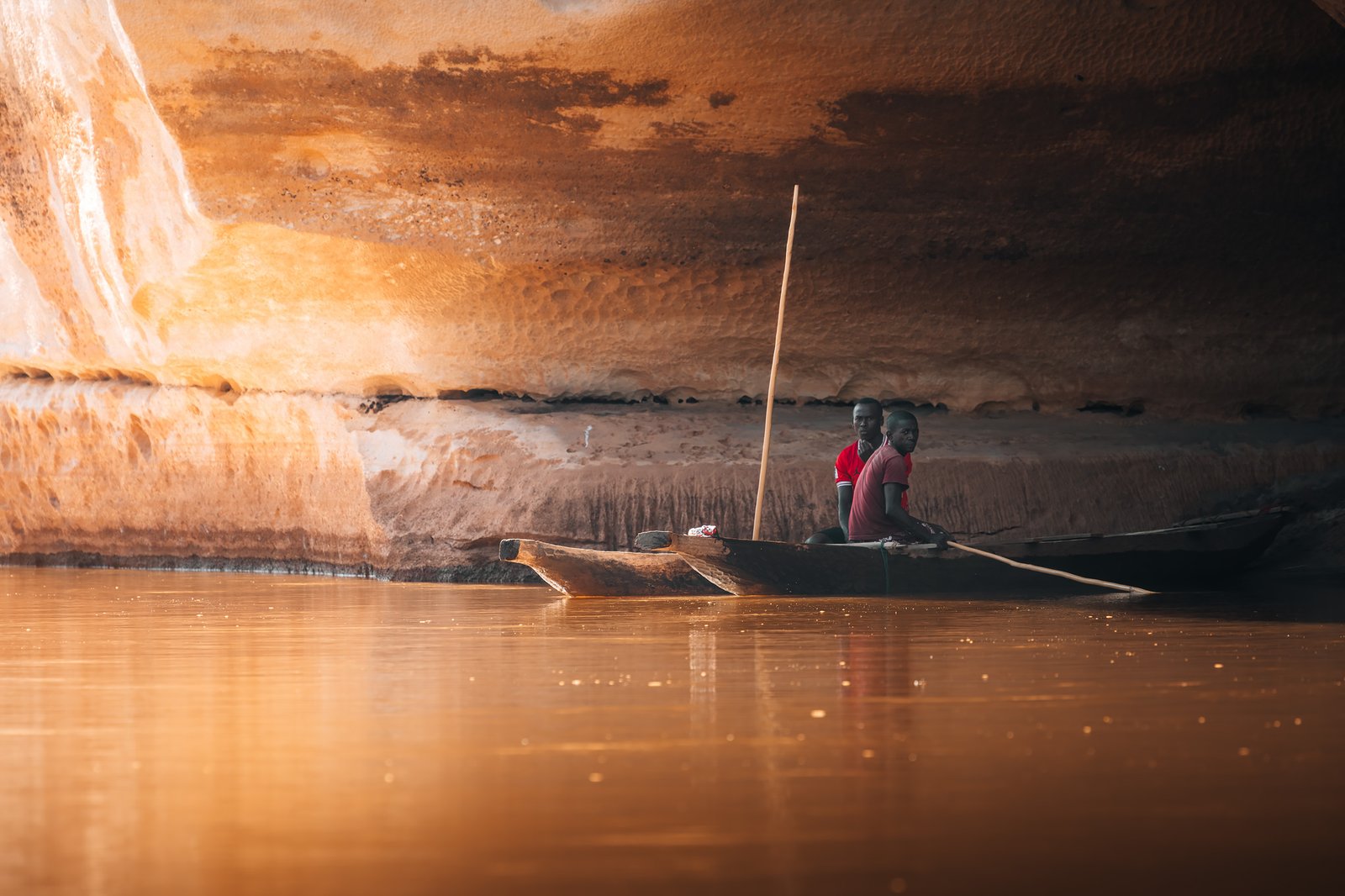
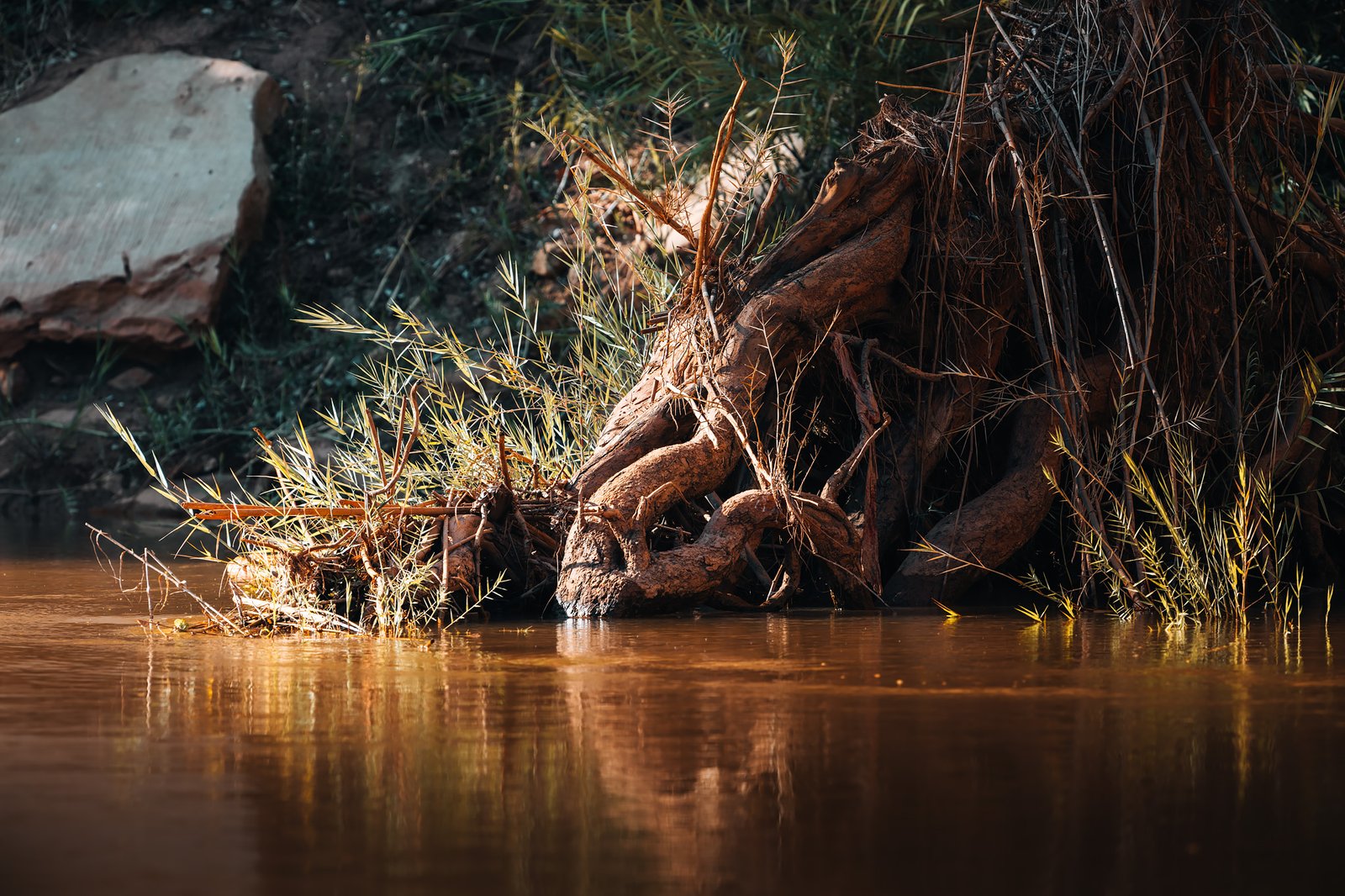
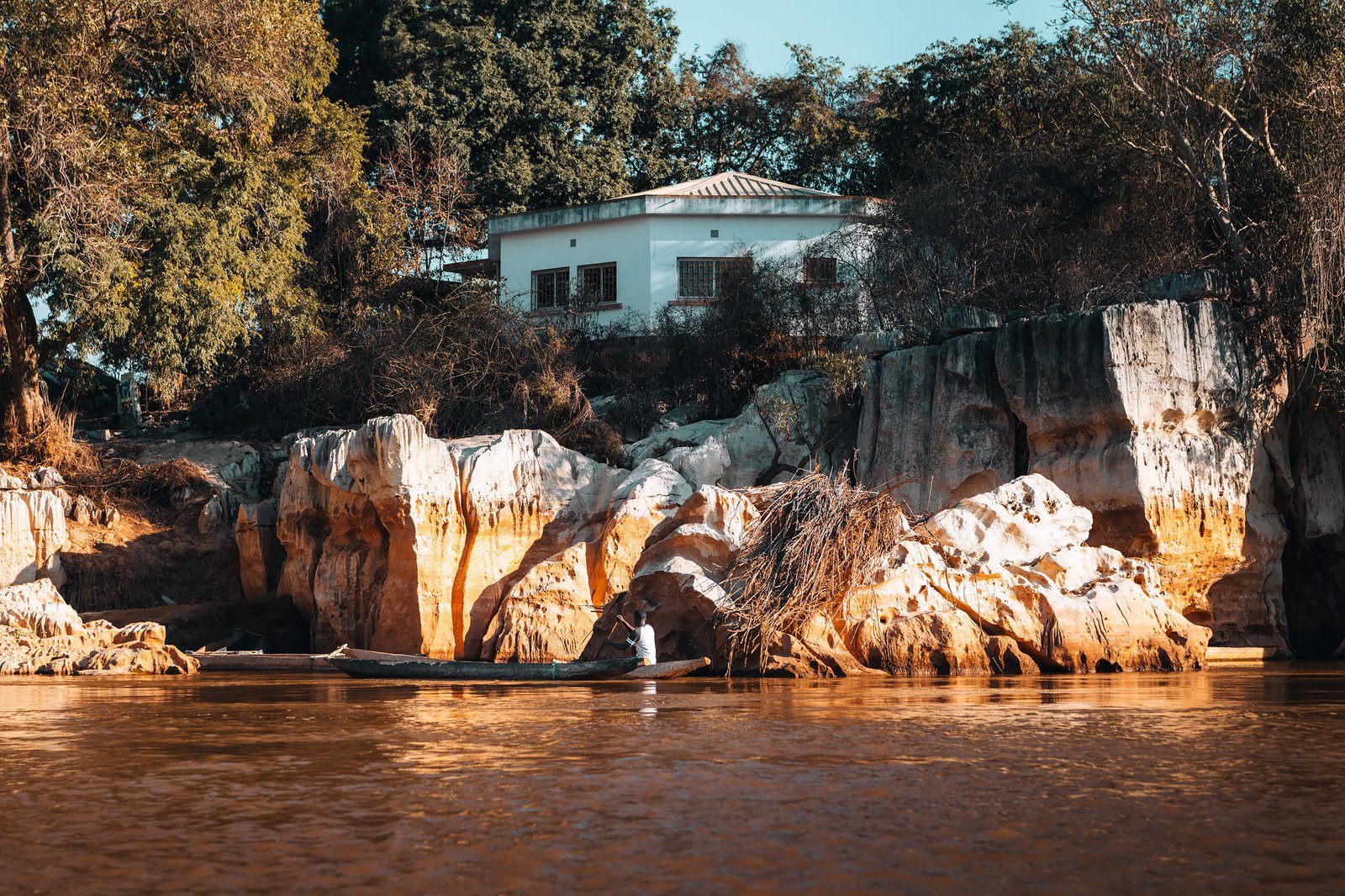
The morning after Taina was waiting for us with a tiny wooden pirogue. Our local Sakalava guide guided us into one of western Madagascar’s most visually stunning environments. Towering limestone cliffs dramatically rose on both sides of the river creating pale gray walls that mirrored perfectly into the stillness of the water below them.
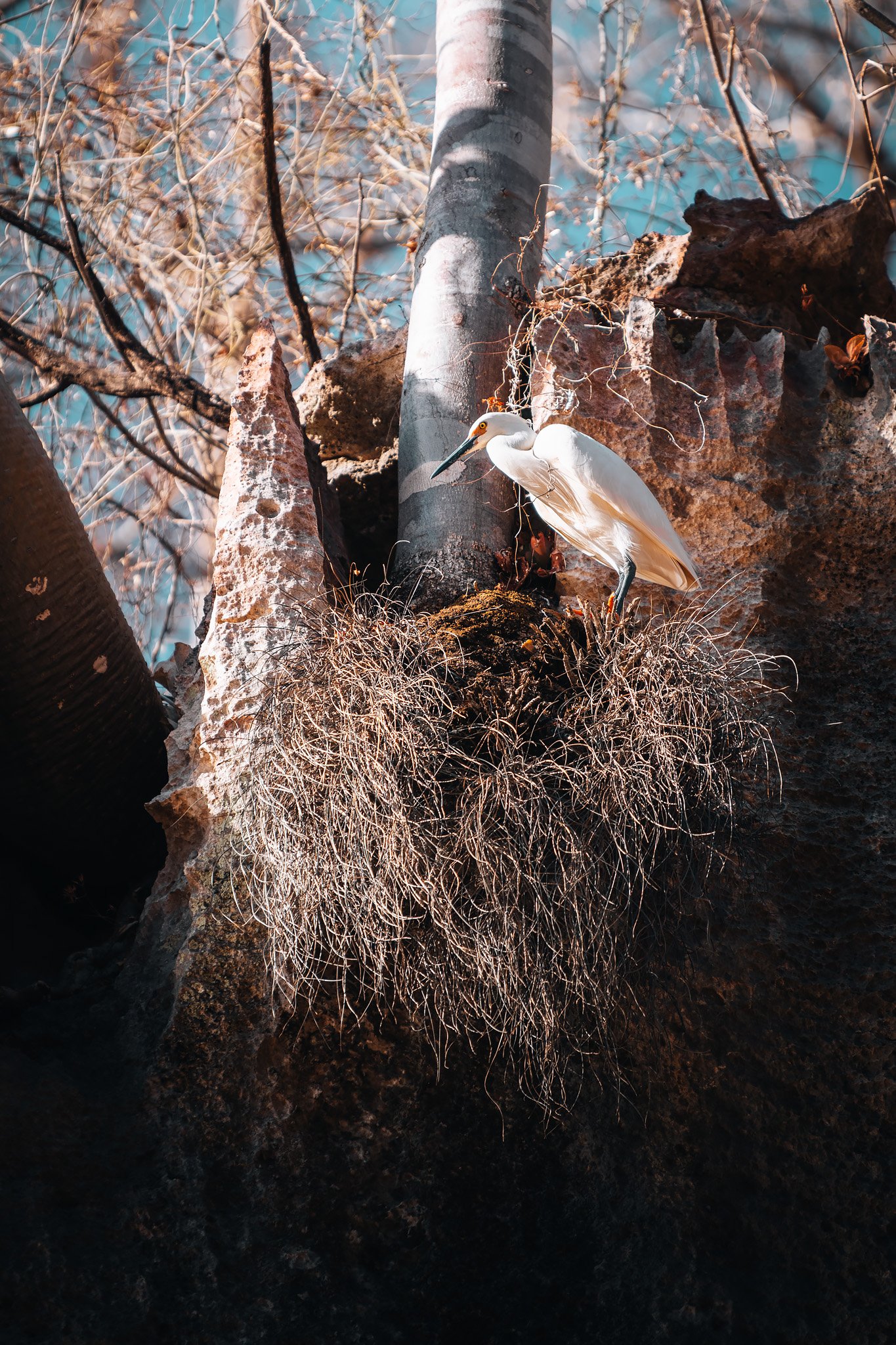
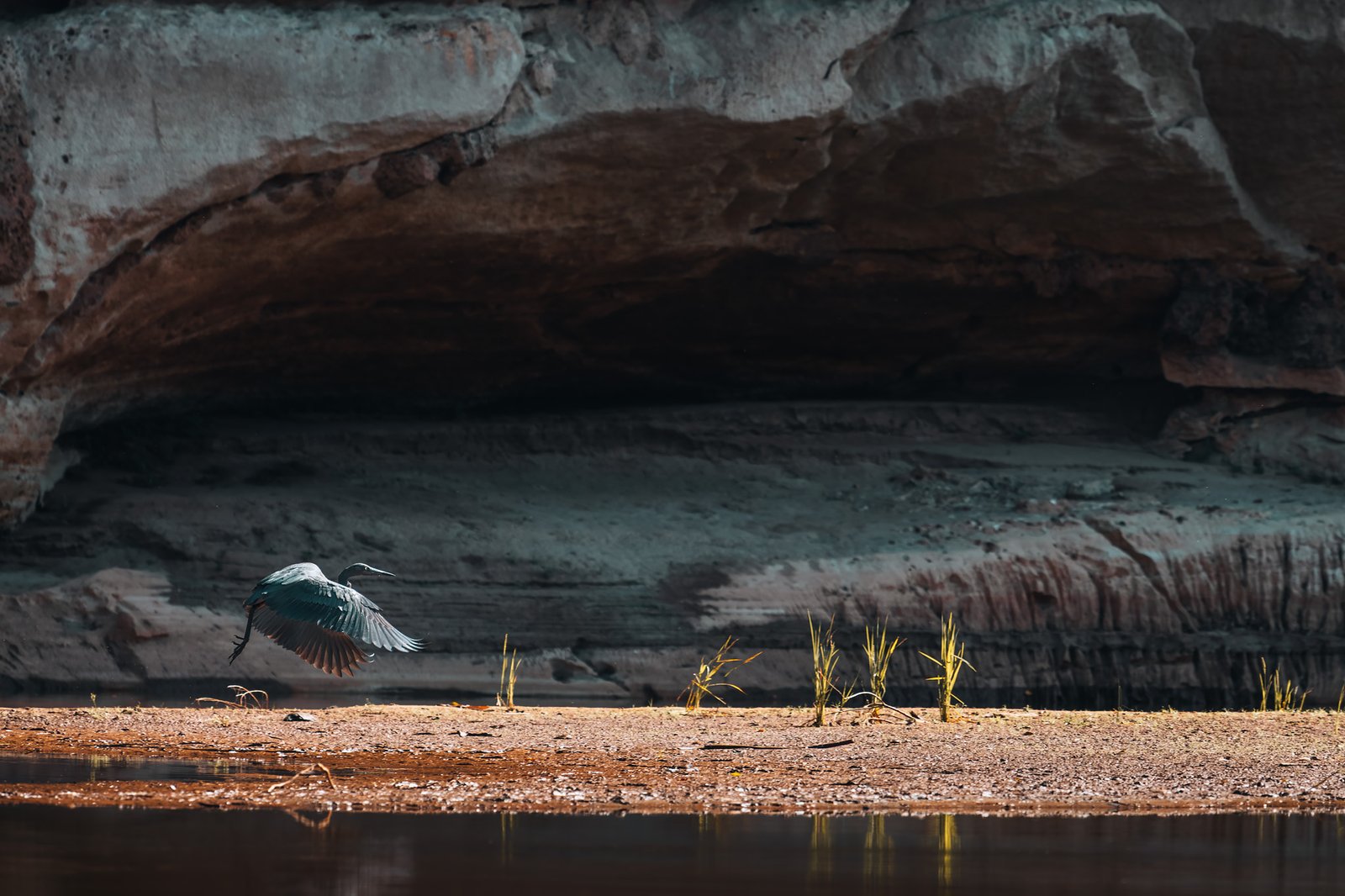
White egrets hunted prey along muddy riverbanks while kingfishers darted between overhanging branches above us, and Nile crocodiles (yes! They reached the island long ago…) were basking silently on rocks along cliff faces using camouflage that was as successful as that of geckos we observed the day before.
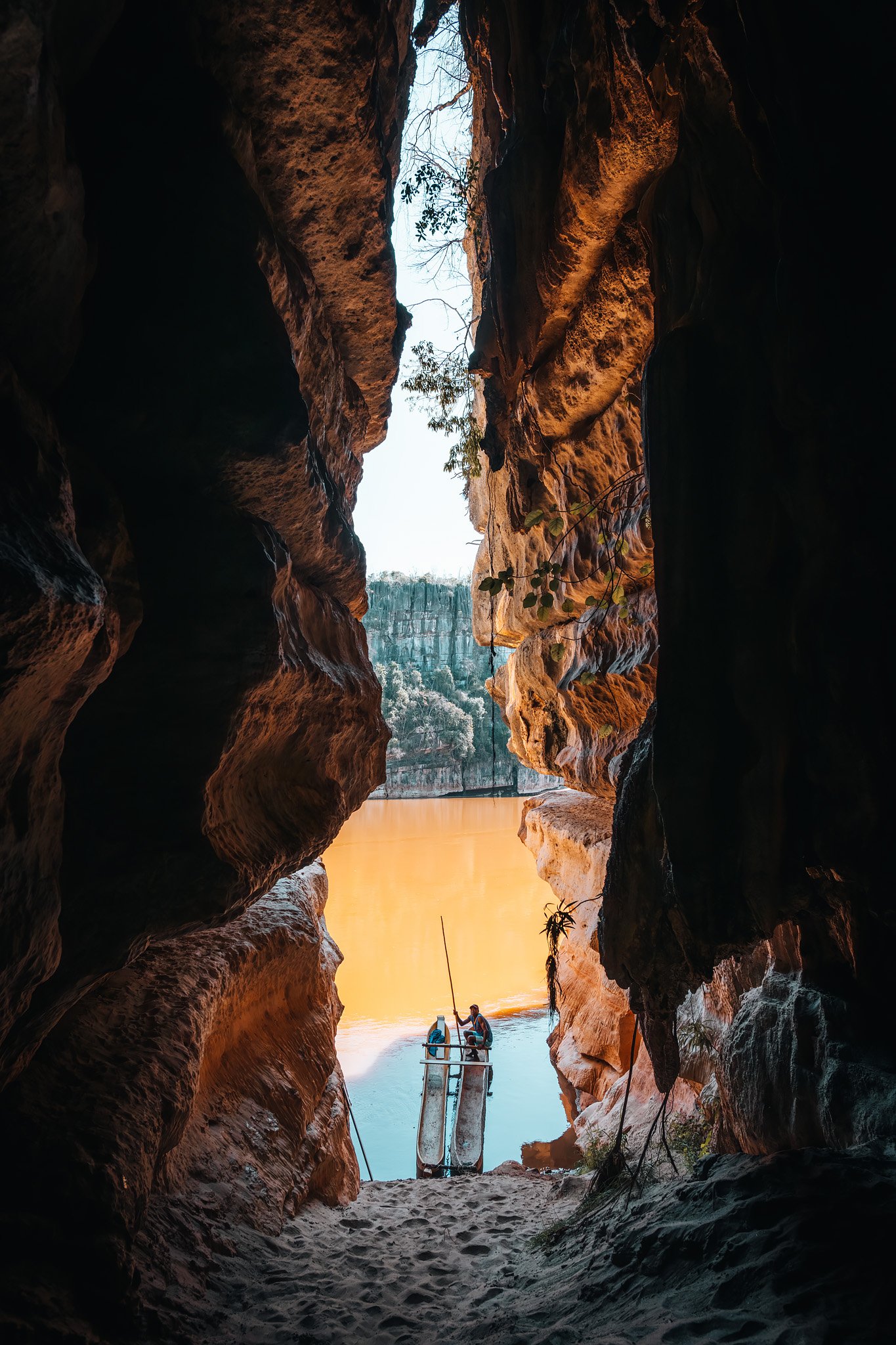
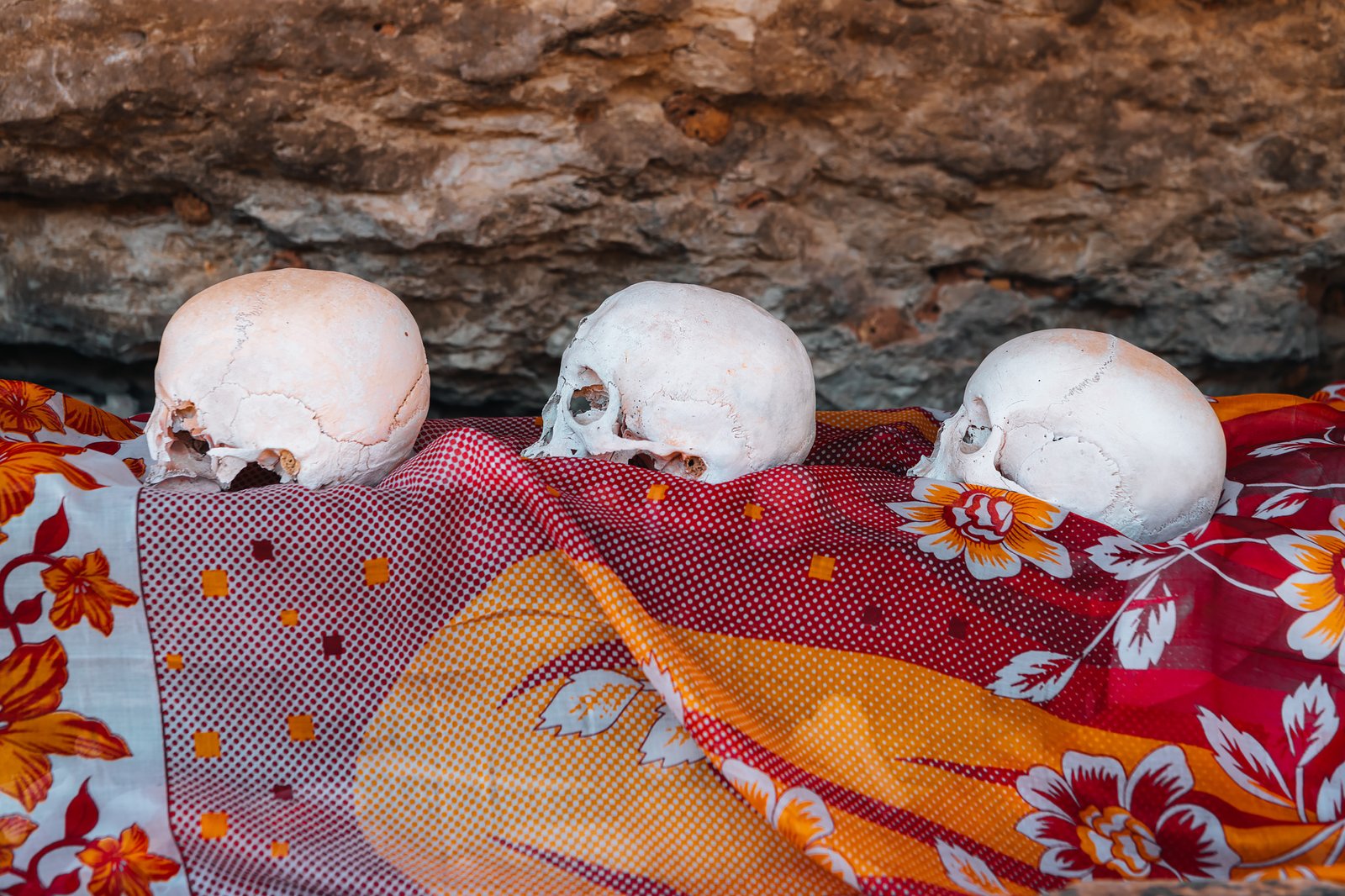
For thousands of years, the Manambolo has provided passage for trade and cultural exchange, and hidden within its limestone walls are cave systems containing ancestral Sakalava tombs guarded by local customs and taboos. Stepping into these caves felt more like entering historic spaces than visiting archaeological sites, and understanding that these cliffs continue to represent important cultural landmarks in addition to natural ones added a distinct flavour to our pirogue ride that was significantly different from a typical boat tour.
First Glimpse at the Stone Forest
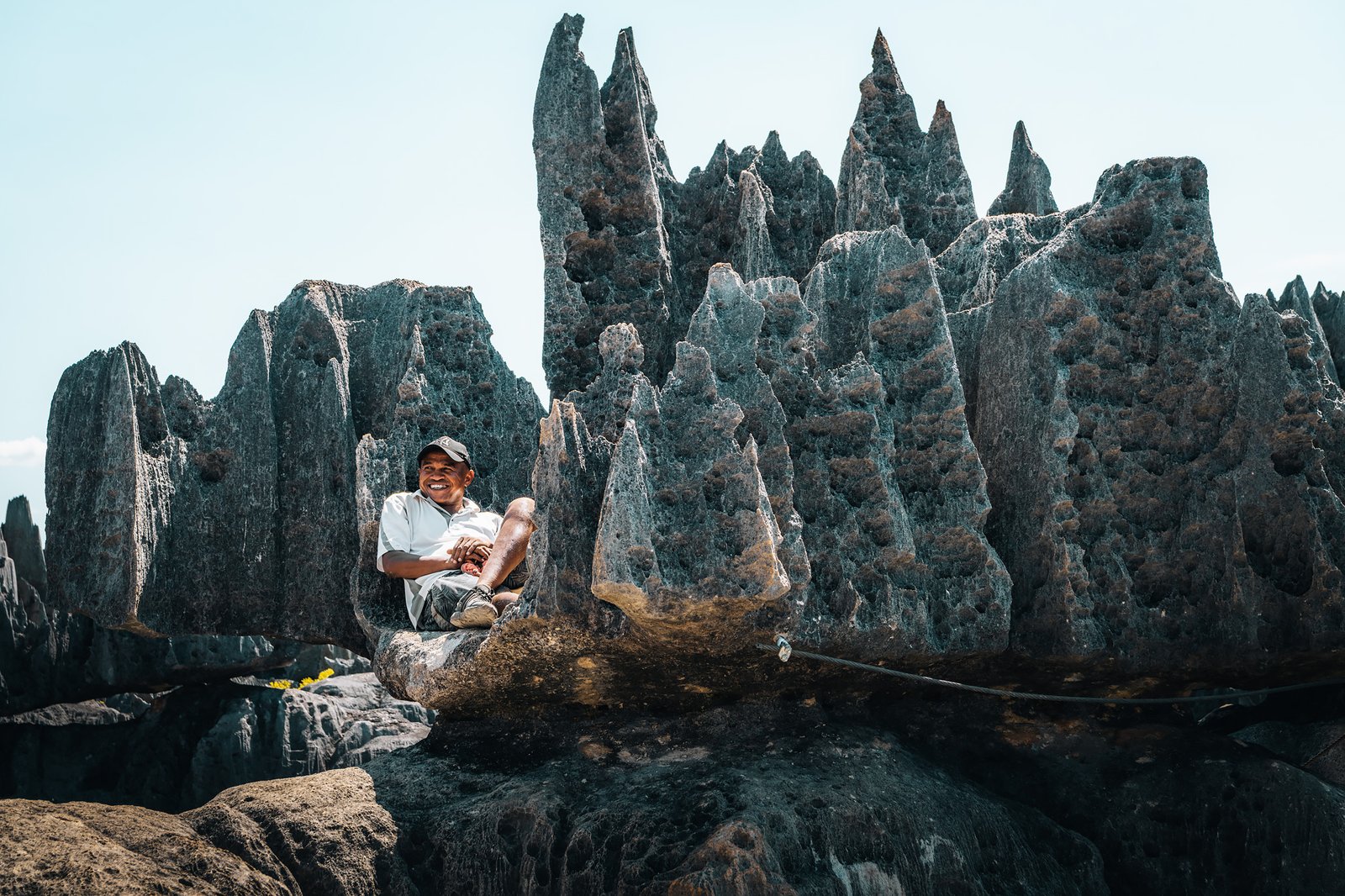
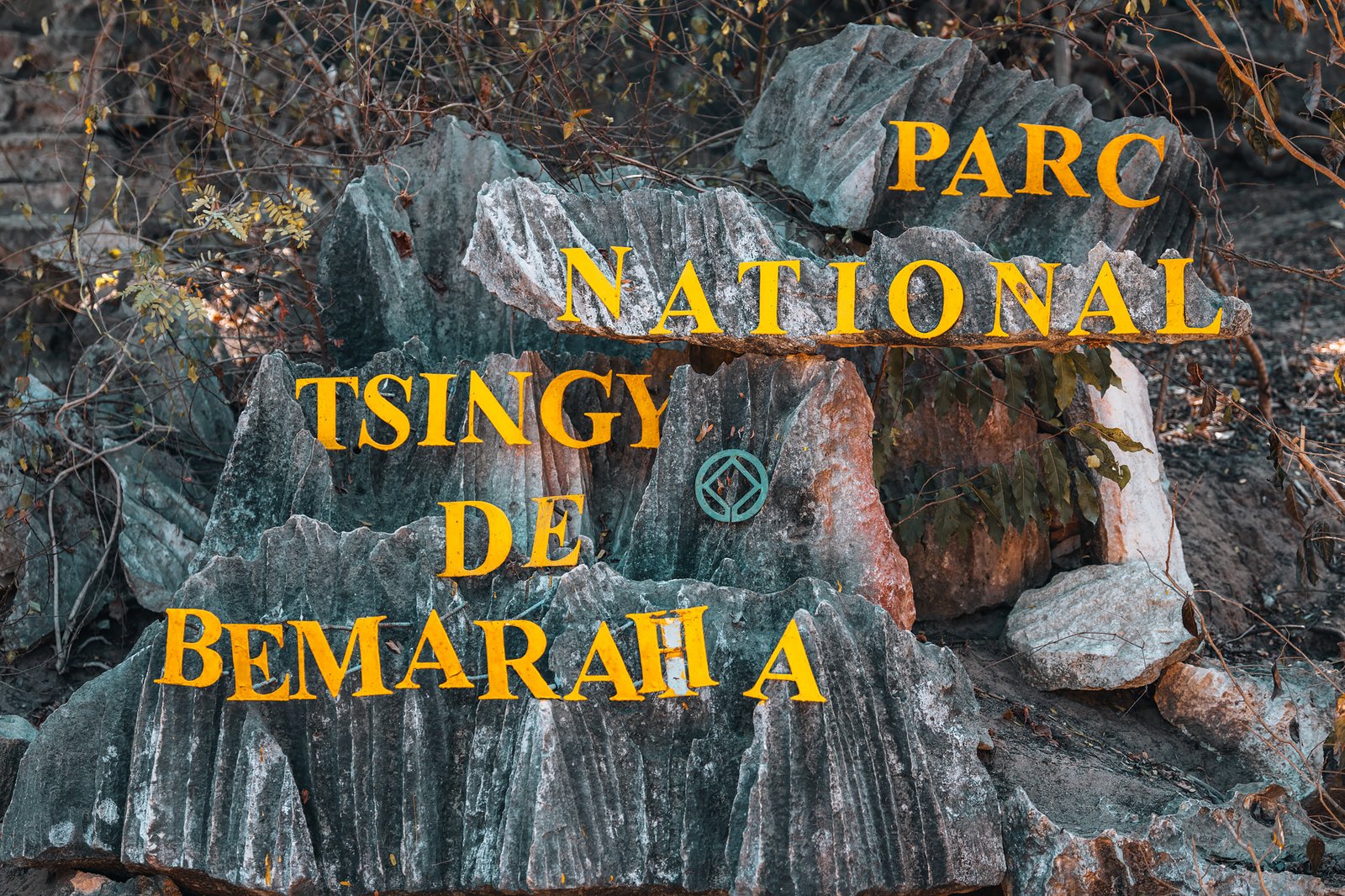
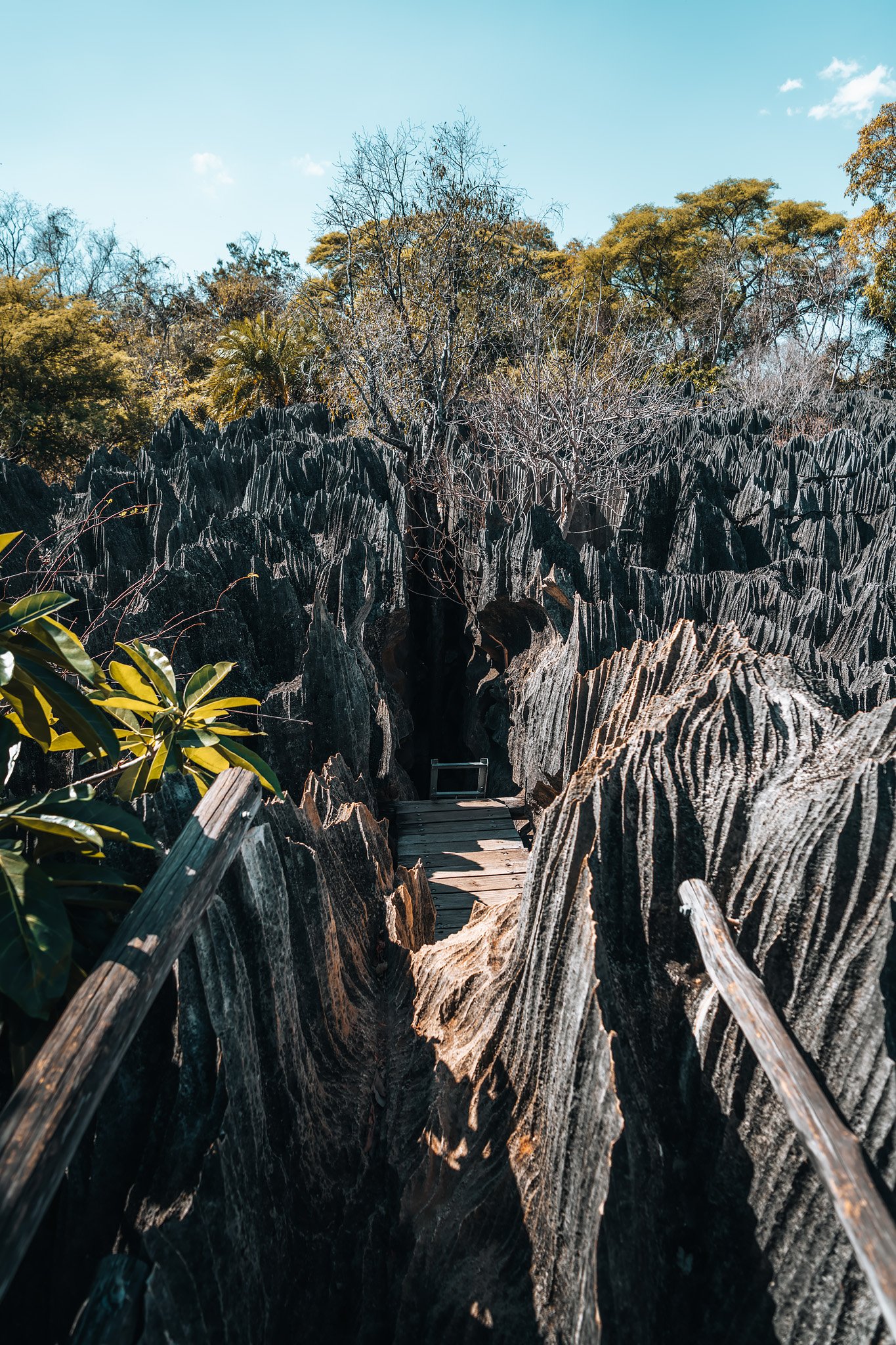
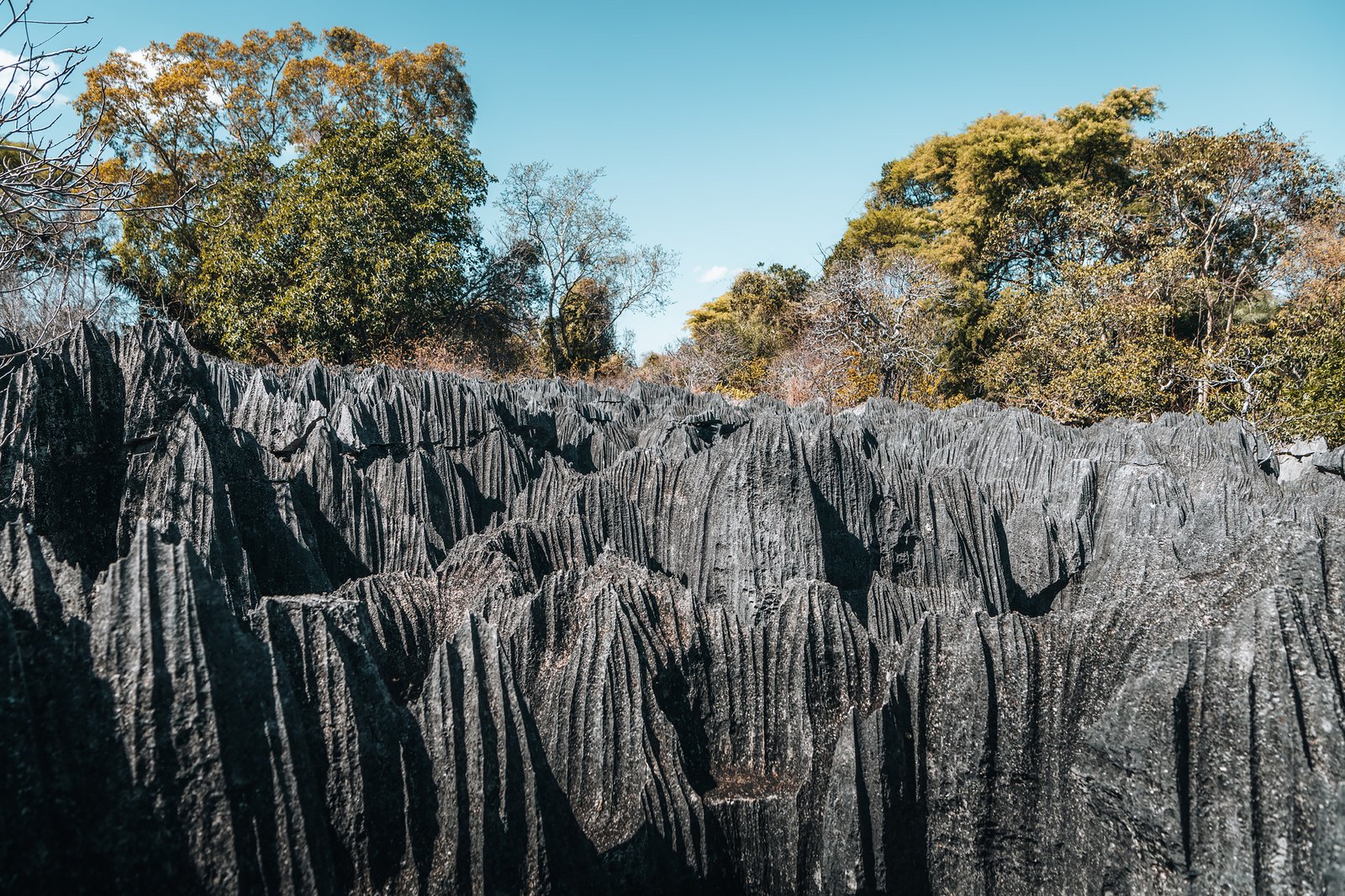
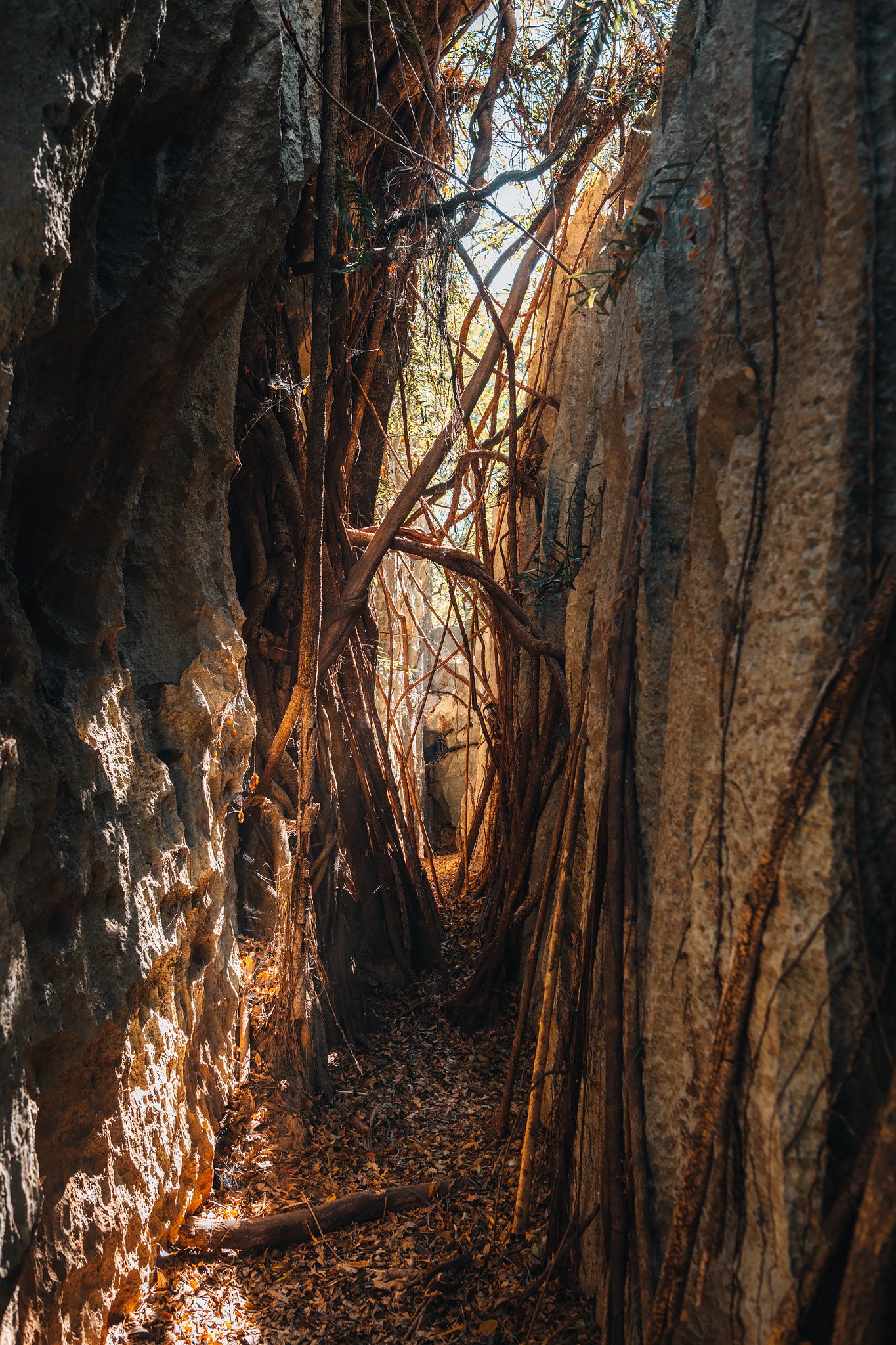
Our first contact with one of the world’s unique landscapes came from exploring Bemaraha National Park’s Small Tsingy. At first glance, the limestone appeared like anything else we had seen before, however, once we entered onto narrower trails, we realized how treacherous this environment is.
Walls of sharp rock surrounded us while massive tree roots stretched into narrow openings in search of buried soil beneath layers of stone. Every turn produced another passageway, another canyon or another maze created by millions of years of slow chemical dissolution of what was once a prehistoric coral reef beneath an ancient sea.
The Malagasy word tsingy is commonly translated as “the place where one cannot walk bare foot.” After only a few minutes of walking within this area we understood precisely why. The Small Tsingy is an excellent example of smaller formations present within Bemaraha National Park.
While far less expansive than the larger formations present further into Bemaraha, it demonstrates with clarity the intricate nature of this UNESCO World Heritage site, a harsh environment that supports life, an isolated habitat system that has led to evolution of species that do not exist anywhere else on Earth, and possibly one of the most complex ecosystems known.
It was difficult to envision anything more unusual than what we saw here. We would learn otherwise the day after when we explored the Great Tsingy de Bemaraha.
Madagascar. Part II: The Ghost of Kirindy
After days walking in the rainforests of Andasibe surrounded by tall ferns and moss covering the trunks, we took a short flight from Tana to Morondava, and the view from the plane windows showed us a completely different country. The deep greens were gone. Instead, dry river beds, sparse shrubs, and reddish-brown plains stretched into the hazy distance.
Western Madagascar lies within a rain shadow zone. Before reaching this region, the trade winds release their precipitation along the eastern edge of the escarpment. This is why the forests in this area are dry and deciduous rather than permanently wet. We could see the entire transformation from the plane!
Morondava felt slower, dustier, and a little more improvised when we arrived. Many tourists travel along the RN7 (the major highway leading south from the capital) through Ranomafana and Isalo. The road is rough, but paved and relatively predictable. West of this point, the pavement disappears and travel times become uncertain. Many people simply take a flight rather than risk the journey by road.
Madagascar was preparing for Presidential Elections. We could see everywhere campaign T-shirts, posters… while drivers and guides debated candidates during lunch conversations. Even the airport had that same political energy. Passengers queued outside under the hot sun before moving through security beneath flickering fluorescent lights, and yet the flight departed right on schedule.
The First Baobabs
Just outside the terminal, we met our guide, Rado. He would be with us for the next two weeks throughout the west and south of the country.
Before departing for Kirindy, we stopped at the famous Avenue of the Baobabs, perhaps one of the most photographed stretches of road in the country. I had seen photos of these trees for years, but seeing them in person was slightly different from what I had imagined. At first, I didn’t notice anything particularly special about the trees themselves. Instead, I noticed that this was still just a road. Zebu carts continued to pass through the dust, motorcycles disappeared into reddish clouds and children walked beneath some of the most bizarre trees on earth with no apparent interest on the trees.
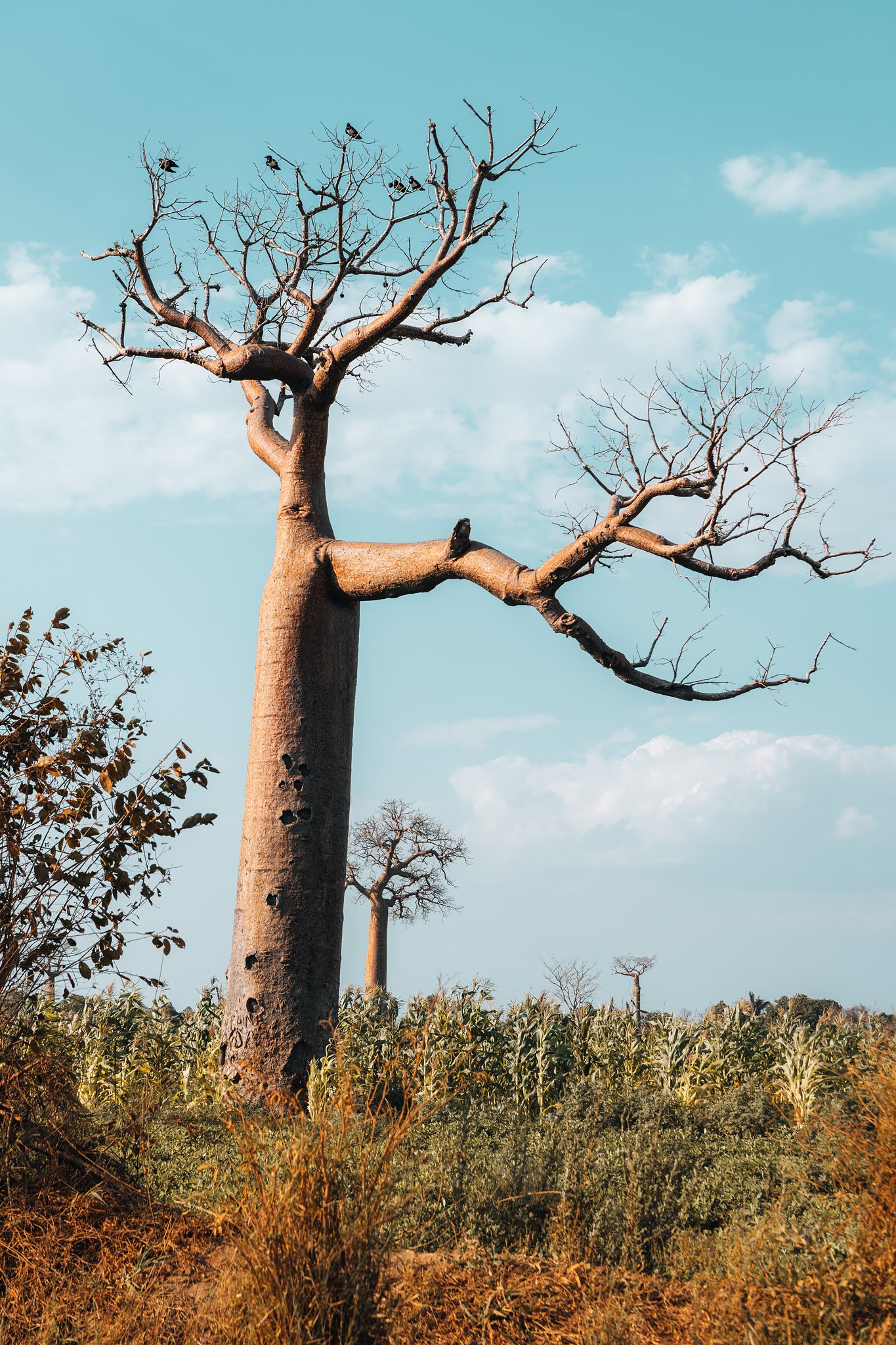
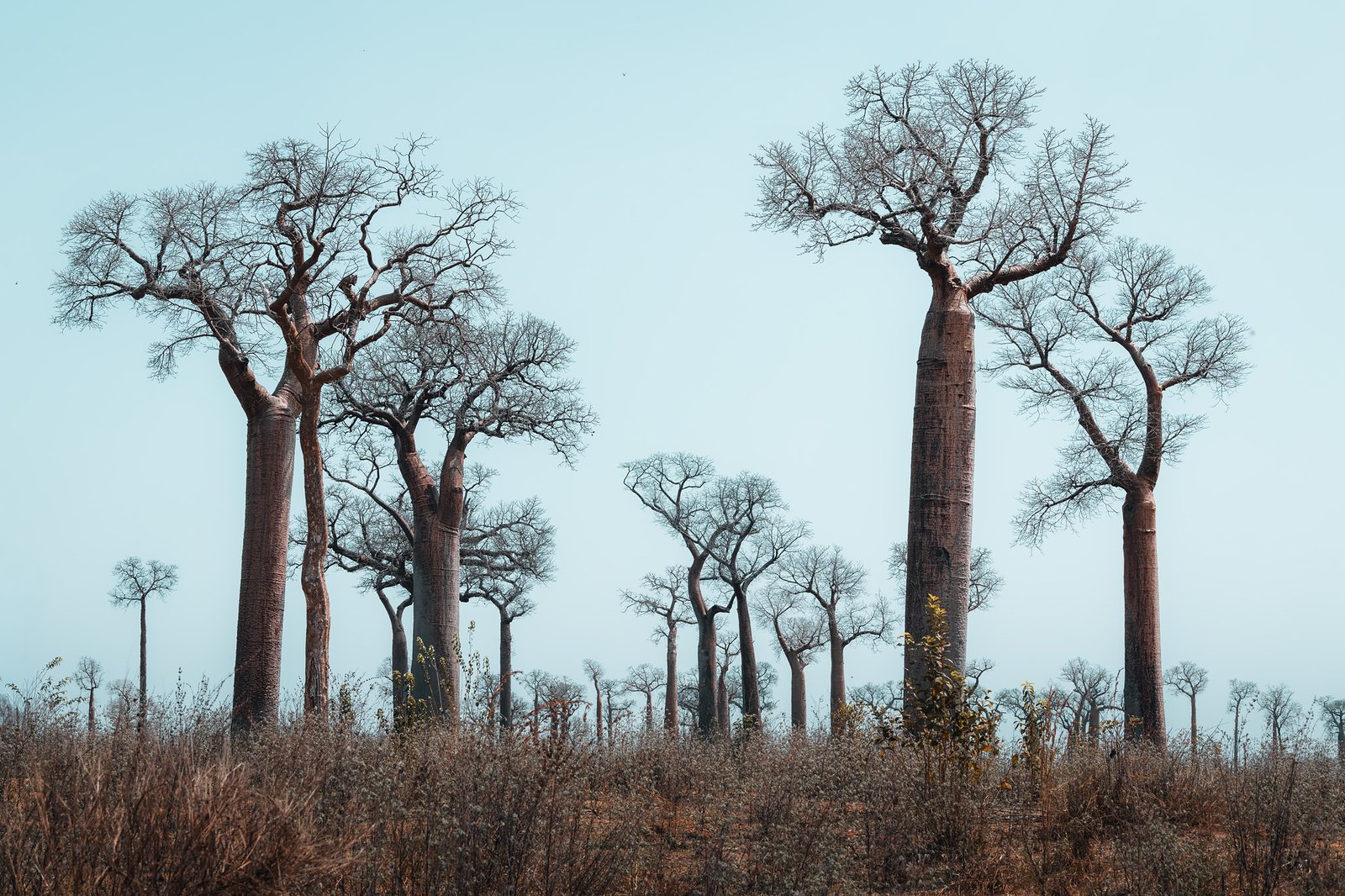
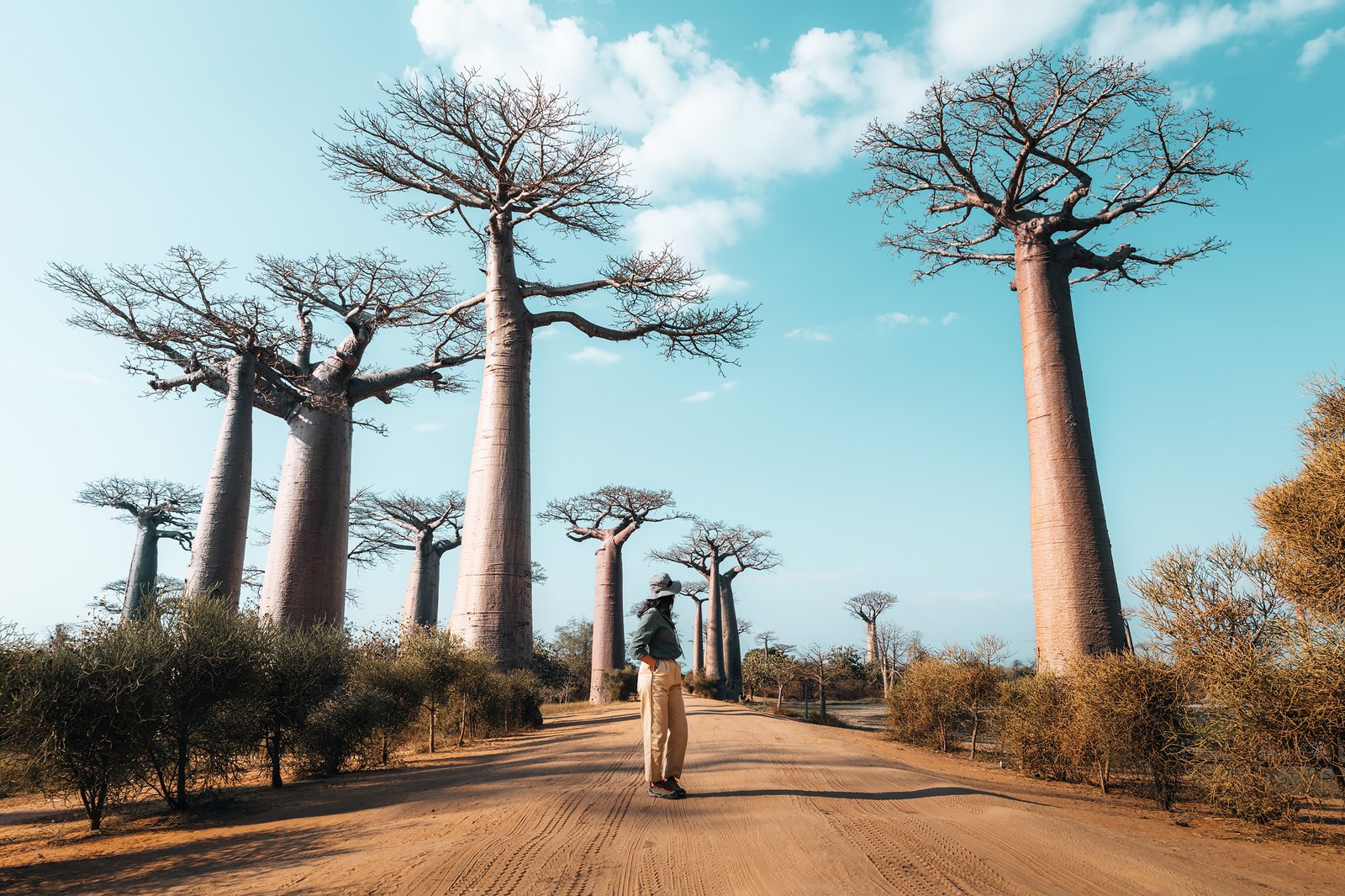
During the dry season, the Baobabs lose their leaves to conserve water, so when we visited, only the trunks and branches were visible. Some of these trees still held large amounts of fruit. Baobab fruit has been used by Malagasy communities for hundreds of years in food, beverages, and traditional remedies.
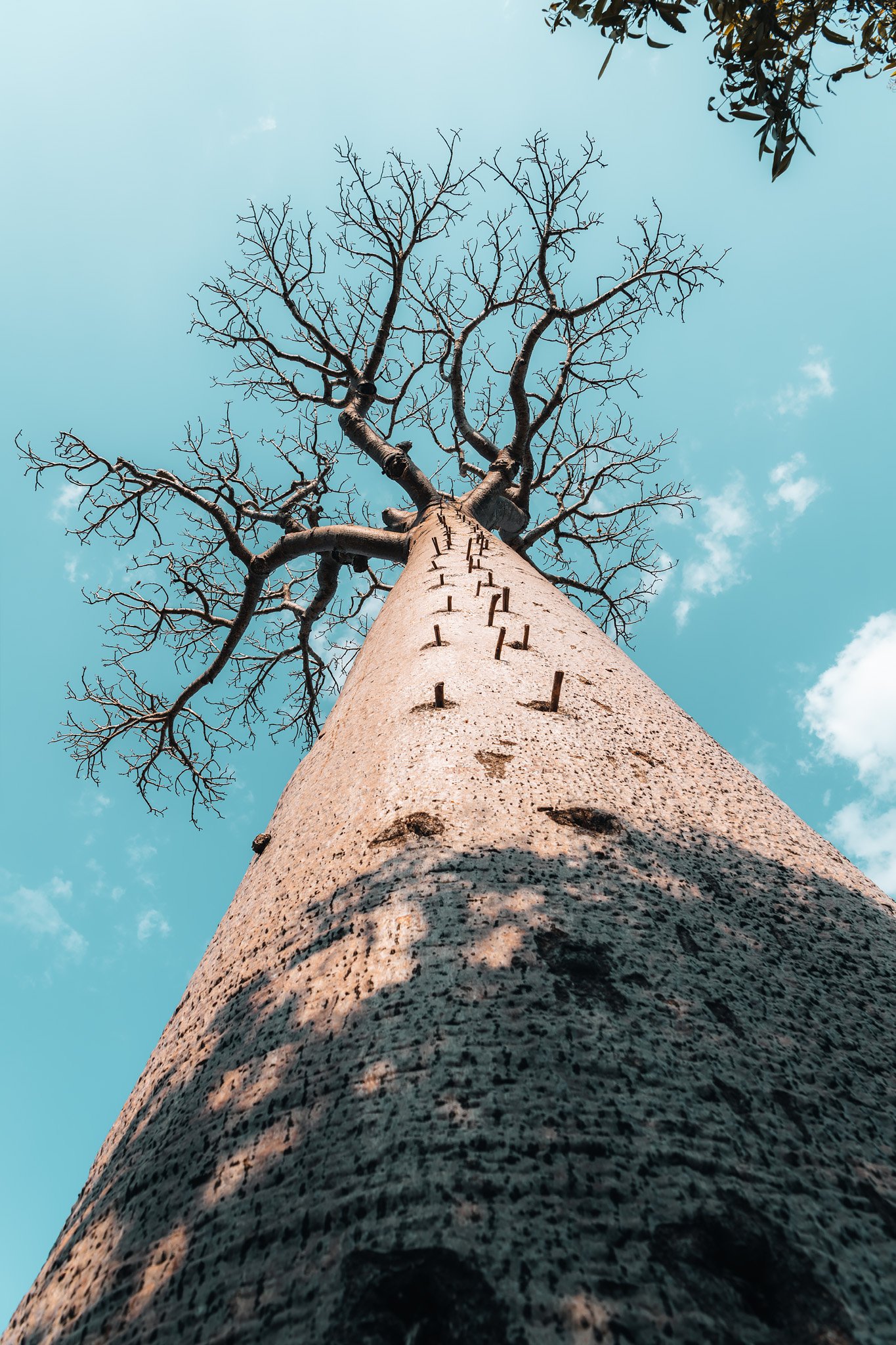
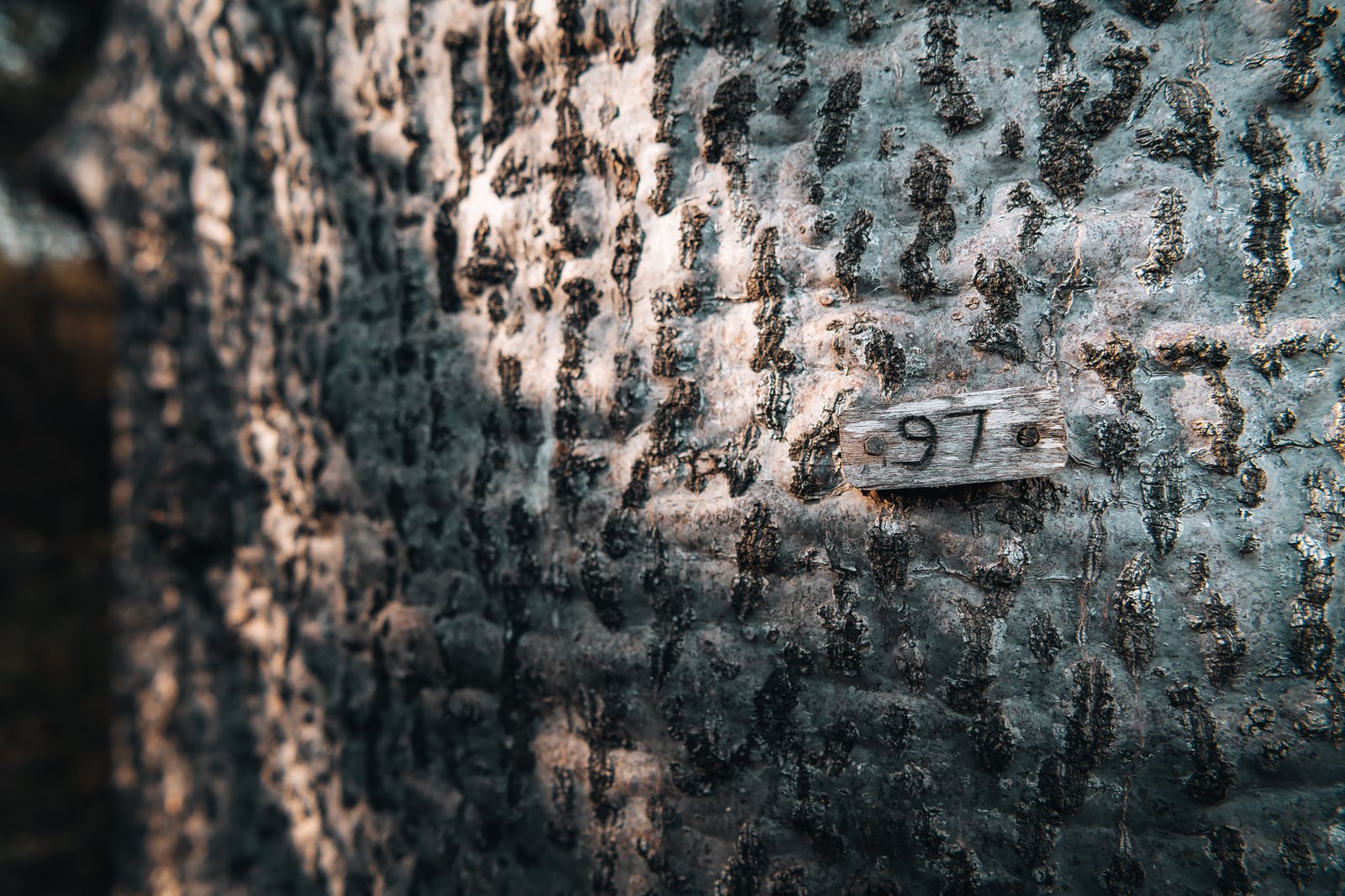
Almost all of the trees lining both sides of the Avenue are adansonia grandidieri (also known as the African Baobab). Some are more than 1,000 years old. They develop horizontally before growing vertically. They first create a wide base to store enough water to survive extended droughts, and only later begin to rise upward. Nothing can prepare you for how massive these trees appear when viewed up close. In reality, they resemble enormous pillars with branches extending high above your head. Against a pale winter sky, they seemed almost like human-made structures rather than simple plants.
Rado suggested that we return after our departure for Bemaraha so that we could experience the trees at sunset. We were now ready to continue on to Kirindy, entering into the dry forest
It was really hot. The reserve is approximately sixty kilometers north of Morondava, however, by the time we reached Kirindy it was difficult to believe that we were still in Madagascar. The asphalt ended shortly after leaving the Avenue and turned into dusty dirt trails lined with baobabs and thorn scrub. We also encountered several villages along the way, where children would momentarily stop their games and greet us as we drove by.
Kirindy was the complete opposite of Andasibe, direct sunlight reached almost every part of the forest floor. Open canopy, branches devoid of leaves, and dry leaves blown by every breeze across red-colored sand covered the forest floor.
Initially, it appeared as though almost nothing lived in that environment, but we couldn’t be more wrong.
Kirindy is one of the last remaining habitats of Western Madagascar’s dry forest ecosystem. Before deforestation significantly reduced this habitat, this type of forest dominated much of Madagascar’s landscape. Dry forest ecosystems operate according to cycles of abundance and drought. Trees lose their leaves during dry periods to reduce transpiration and remain dormant until rainfall returns. Every species present in this habitat has developed unique adaptations to cope with drought conditions, including reducing metabolic activity, retreating to sheltered locations, and other survival strategies.
Many decades of scientific research have focused on Kirindy, mainly due to its geographical isolation, which allows scientists to conduct comparative studies on evolutionary processes among the various species inhabiting this environment.
Night Walk at Kirindy
Once dusk began to fall, we left the lodge with our local guide to explore the forest.
Within minutes of sunset, the forest erupted into chaos, strange calls echoed through the trees, an intense wall of insect sounds filled our ears, and flashlights cast beams across branches searching for the glowing eyes of animals hidden in the darkness.
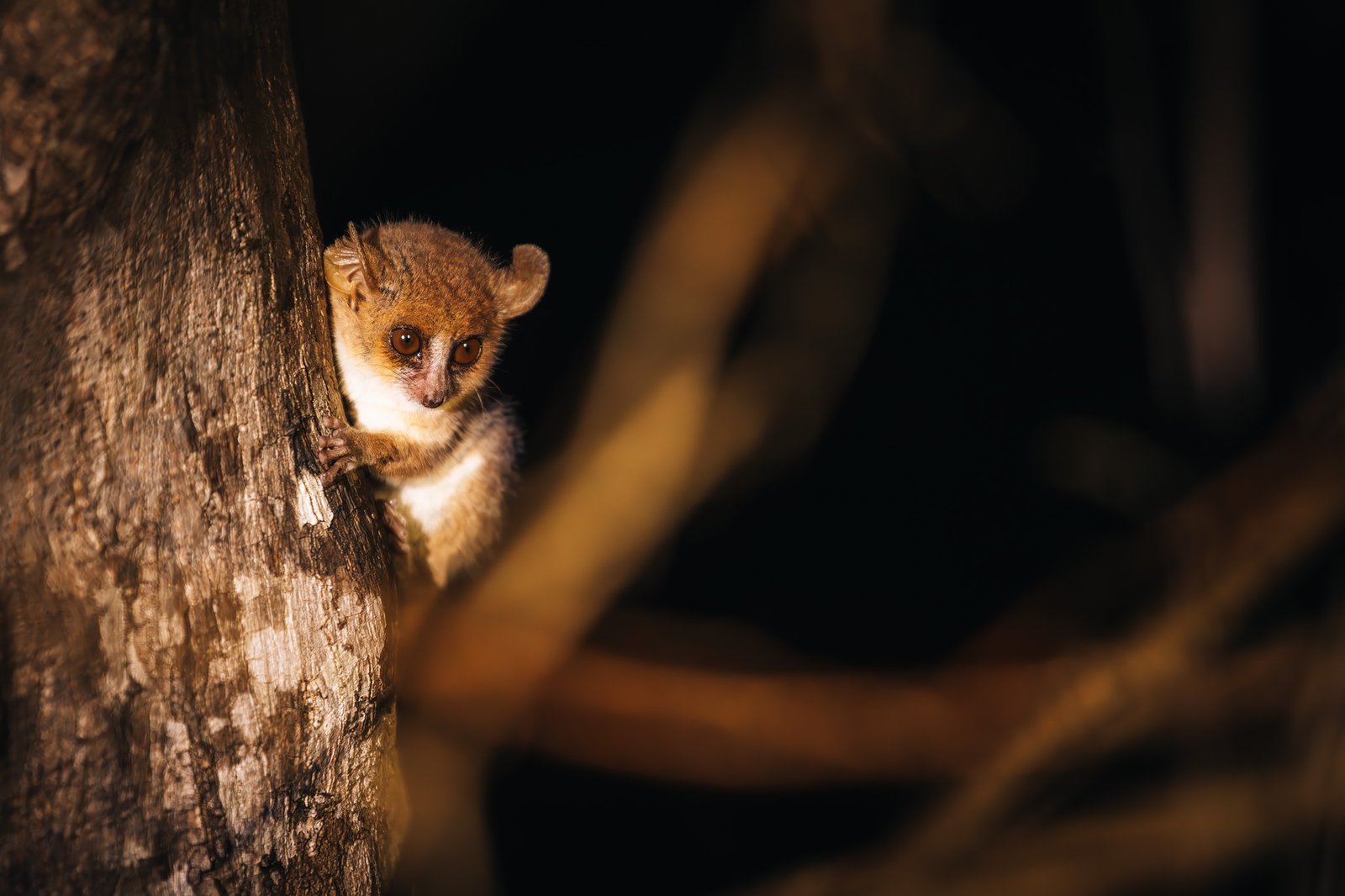
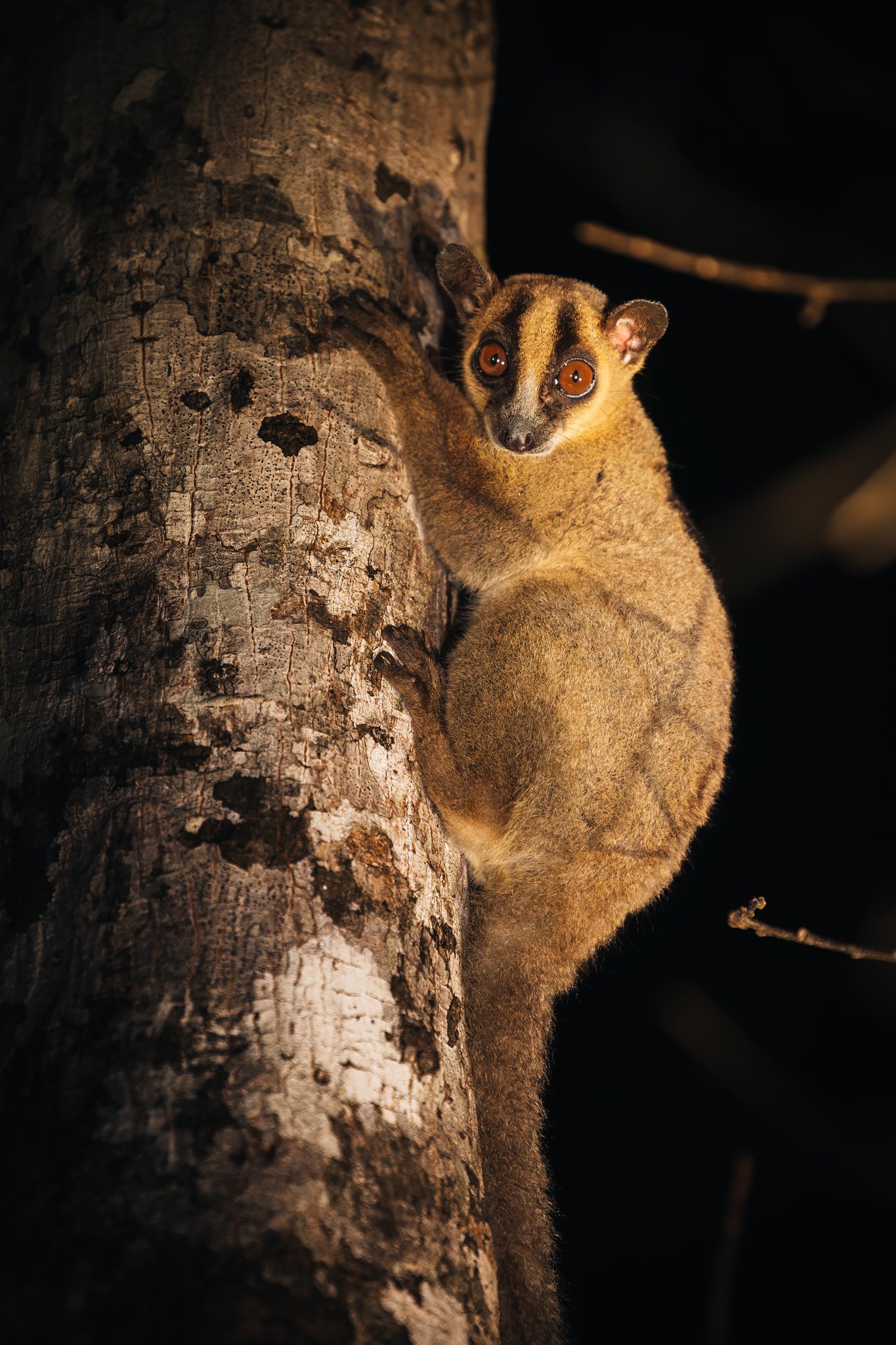
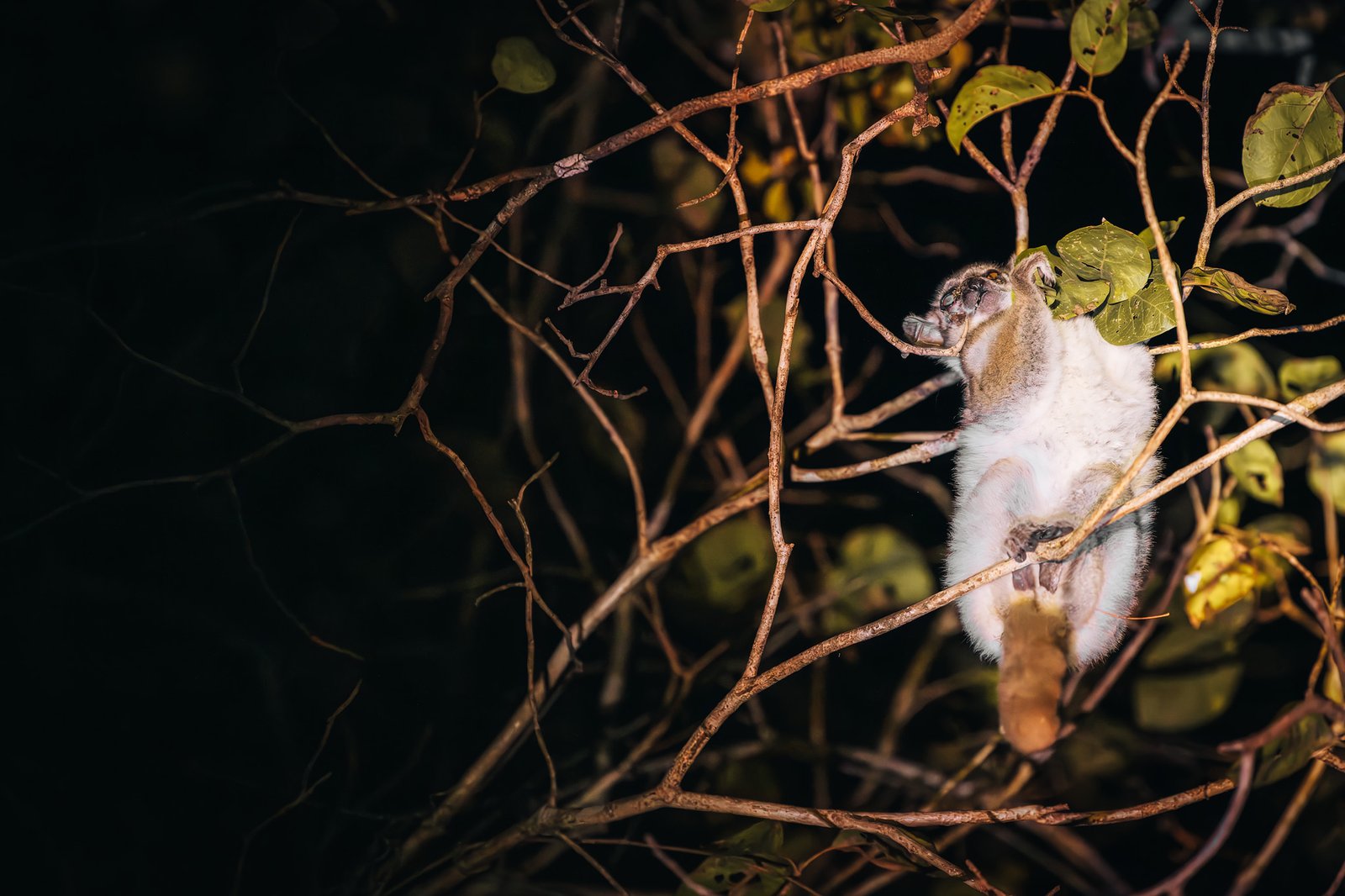
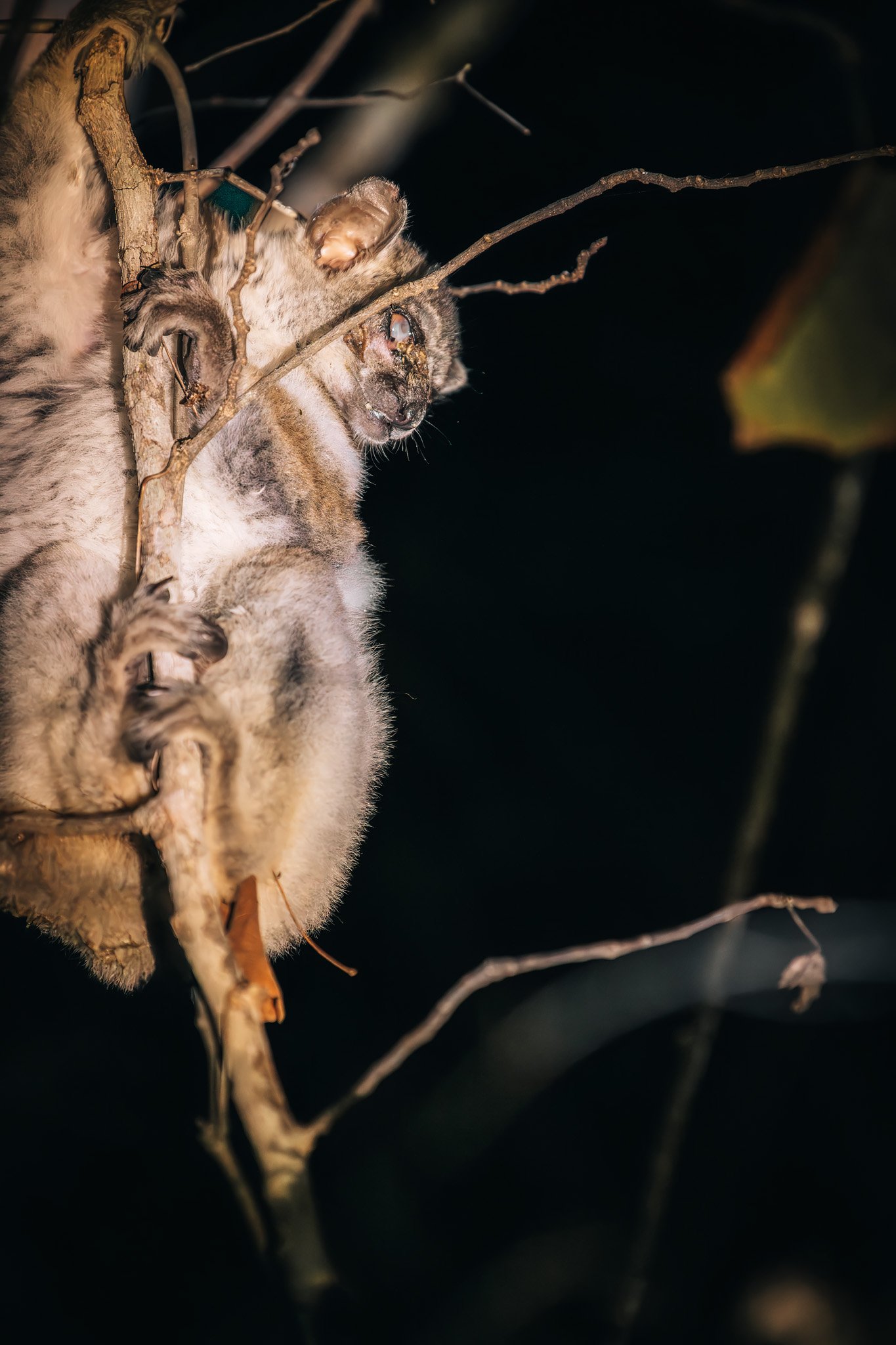
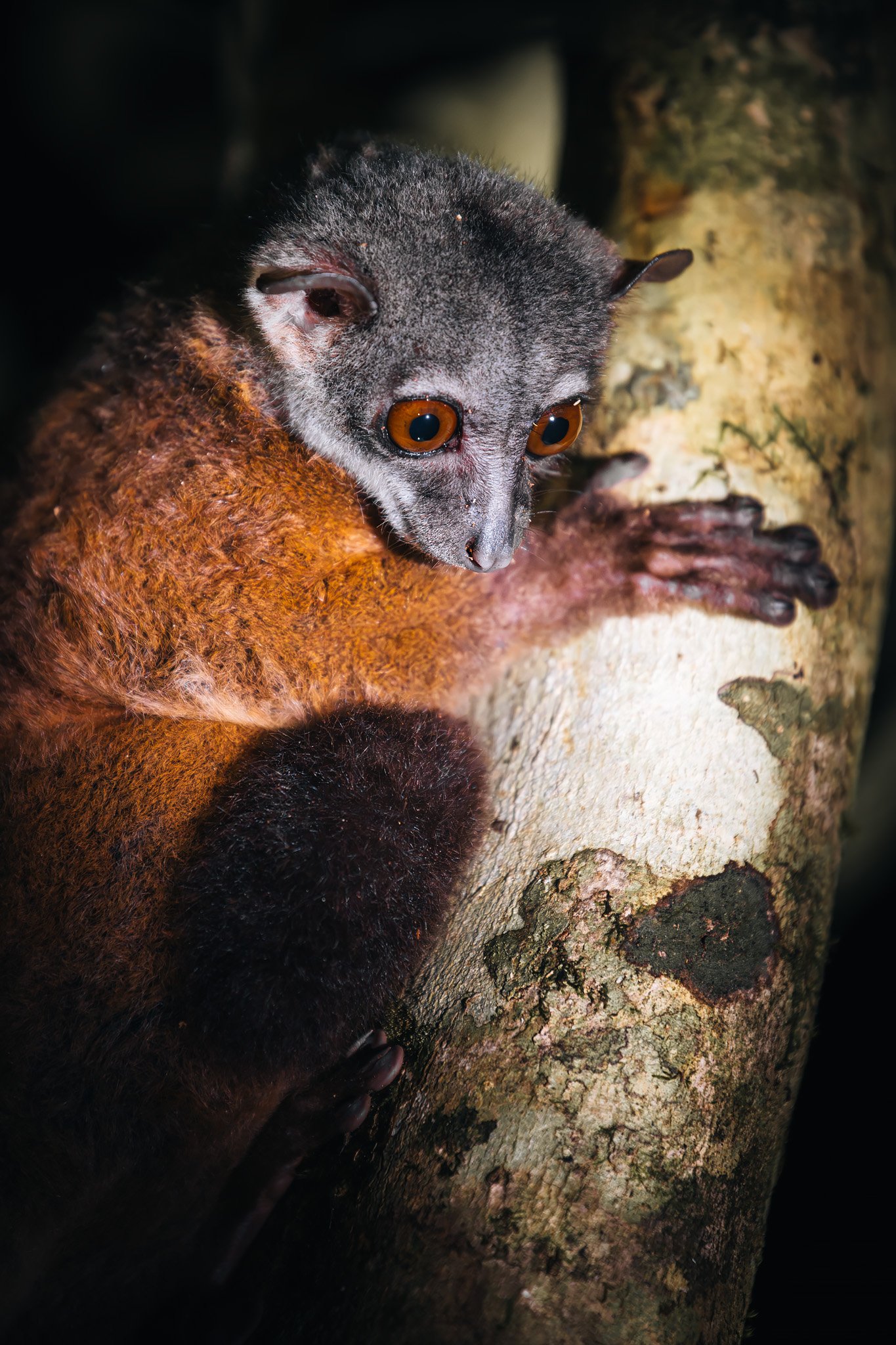
The guide located things that we likely would have overlooked had we attempted to find them on our own. Lemurs in Madagascar vary depending on location, season and time of the day. One of the most special ones is Berthe’s mouse lemur, one of the few left in the world and only found in Kirindy, perched delicately on a branch no thicker than my index finger… We saw as well several Sportive lemurs, appearing invisible until their eyes reflected the beam of a flashlight, and a Fork-marked lemur peered out from a tree cavity.
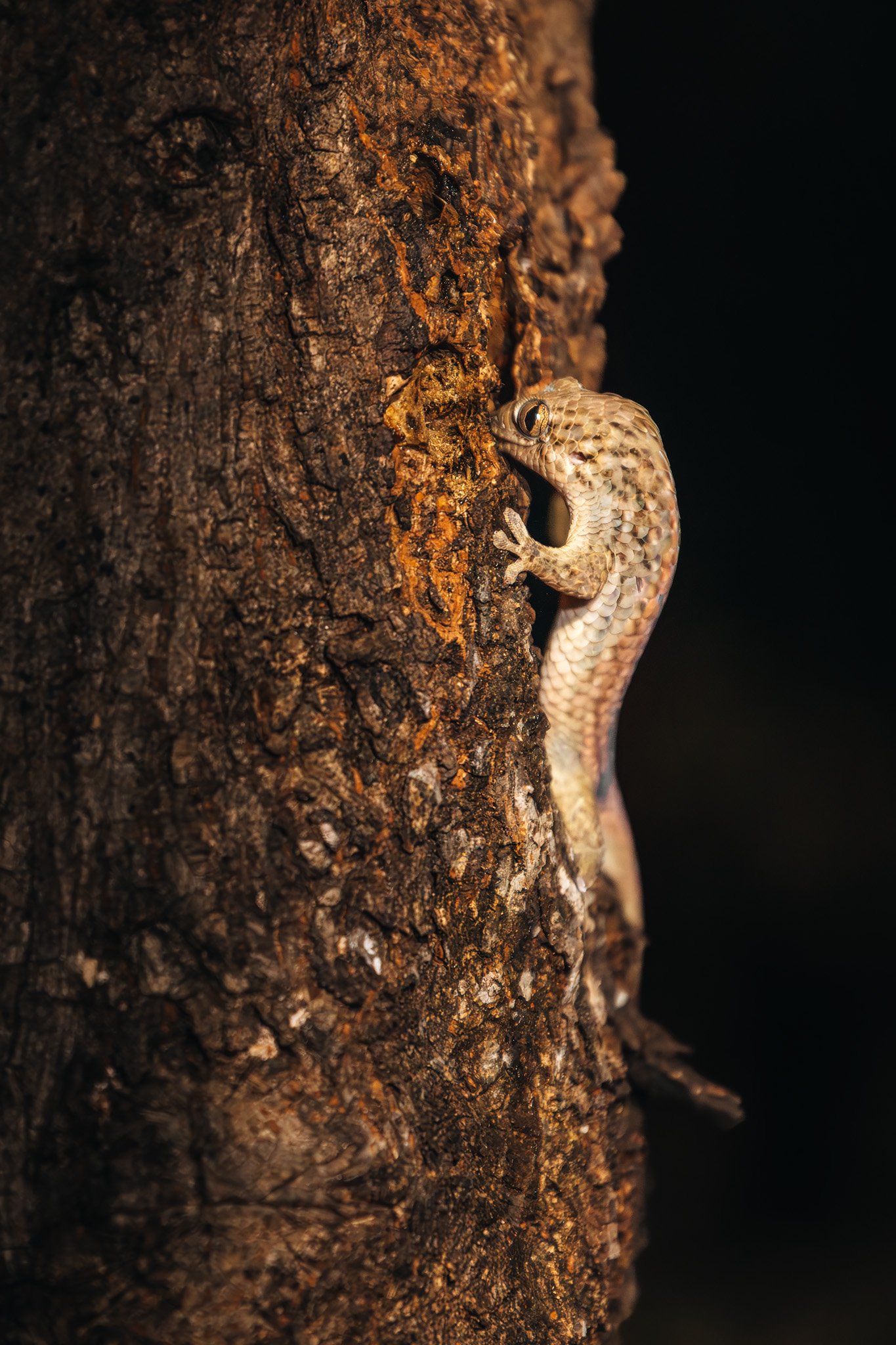
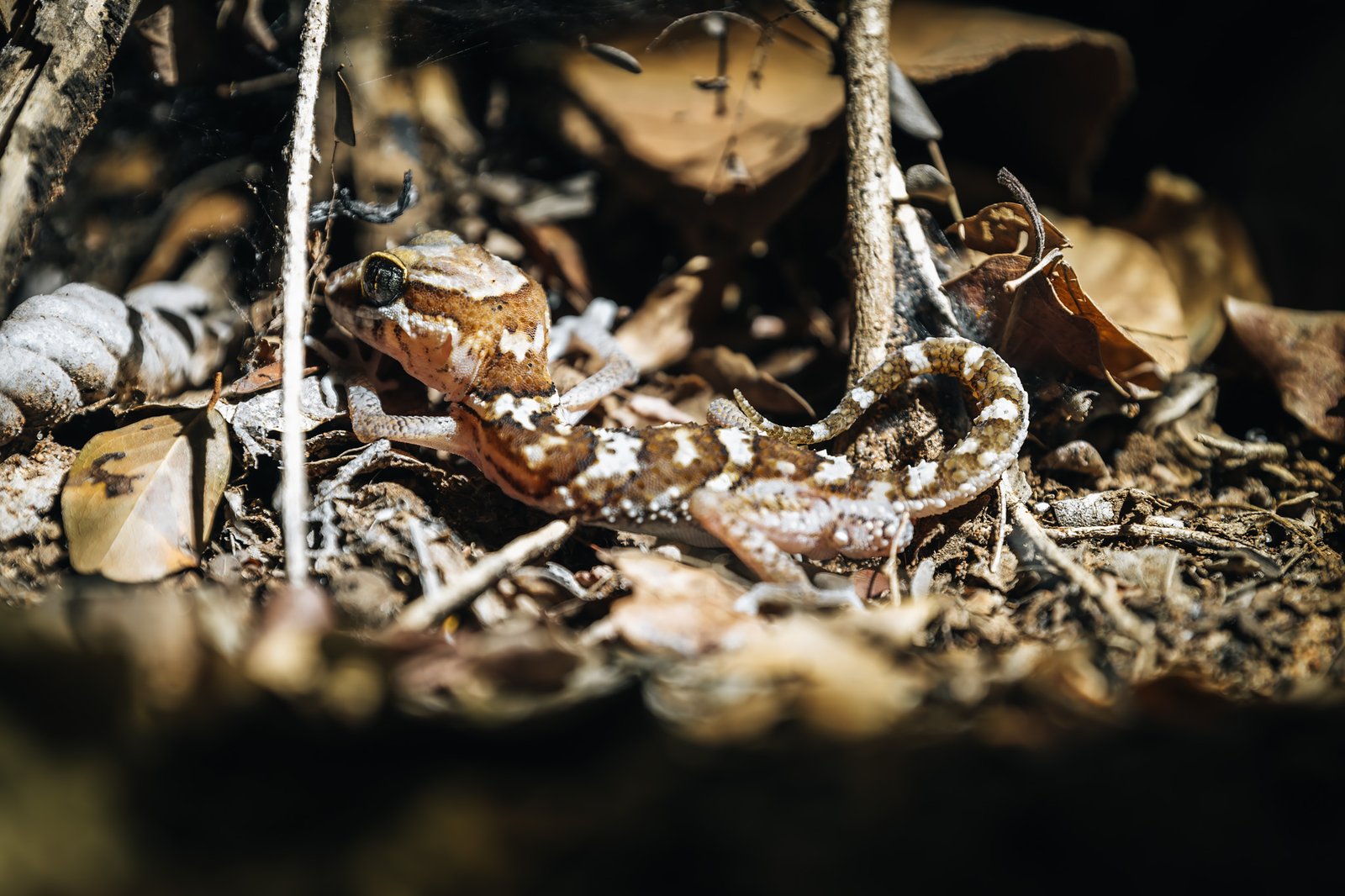
The reptiles displayed their own remarkable adaptations. Geckos possess scales that can be shed instantly when captured by predators, allowing them to regrow lost skin later. Chameleons proved surprisingly easy to locate at night, as their resting coloration is pale enough to distinguish them from the surrounding darkness.
Every twenty metres or so, our guide would stop again. Another pair of glowing eyes. Another animal we probably would never have discovered ourselves.
However, there was one creature we were all eager to encounter…
The Ghost of Kirindy
Before visiting Madagascar, there was one creature I wanted to see more than any lemur, the Fossa.
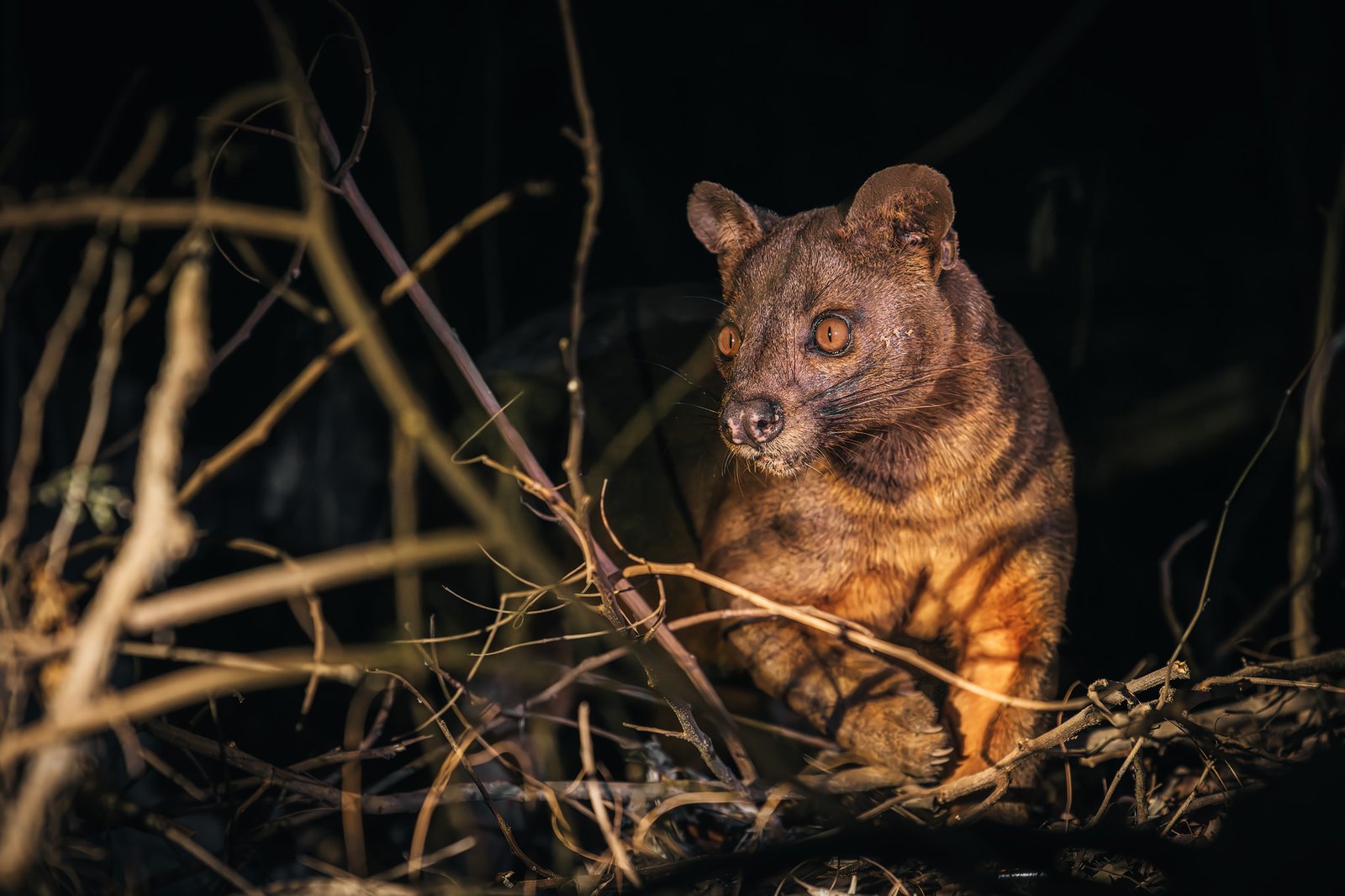
A mix between a cat and a dog, but different from all and totally unrelated to them. Fossas belong to a separate family of carnivorous mammals found exclusively in Madagascar. These predators descend from ancient mongoose-like creatures that reached Madagascar millions of years ago. Today, they represent Madagascar’s apex predator, hunting everything from small birds to lemur species.
Their bodies appear almost designed for this purpose, powerful legs, ankles capable of rotating nearly 180°, and tails almost equal in length to their bodies, all allowing them to maneuver quickly through tree branches.
Researchers have documented fossas descending tree trunks head-first, an ability shared by very few mammals.
Kirindy is considered one of Madagascar’s best locations for spotting them, but finding one is never guaranteed. Our guide told us that a few had been active recently in the area, nevertheless, we spent nearly two hours walking before finally accepting defeat and heading back empty-handed.
Close to the end of the route, he stopped walking and pointed upward, without saying a word. At first, nothing happened. Only bare branches disappearing into the darkness. Then, movement.
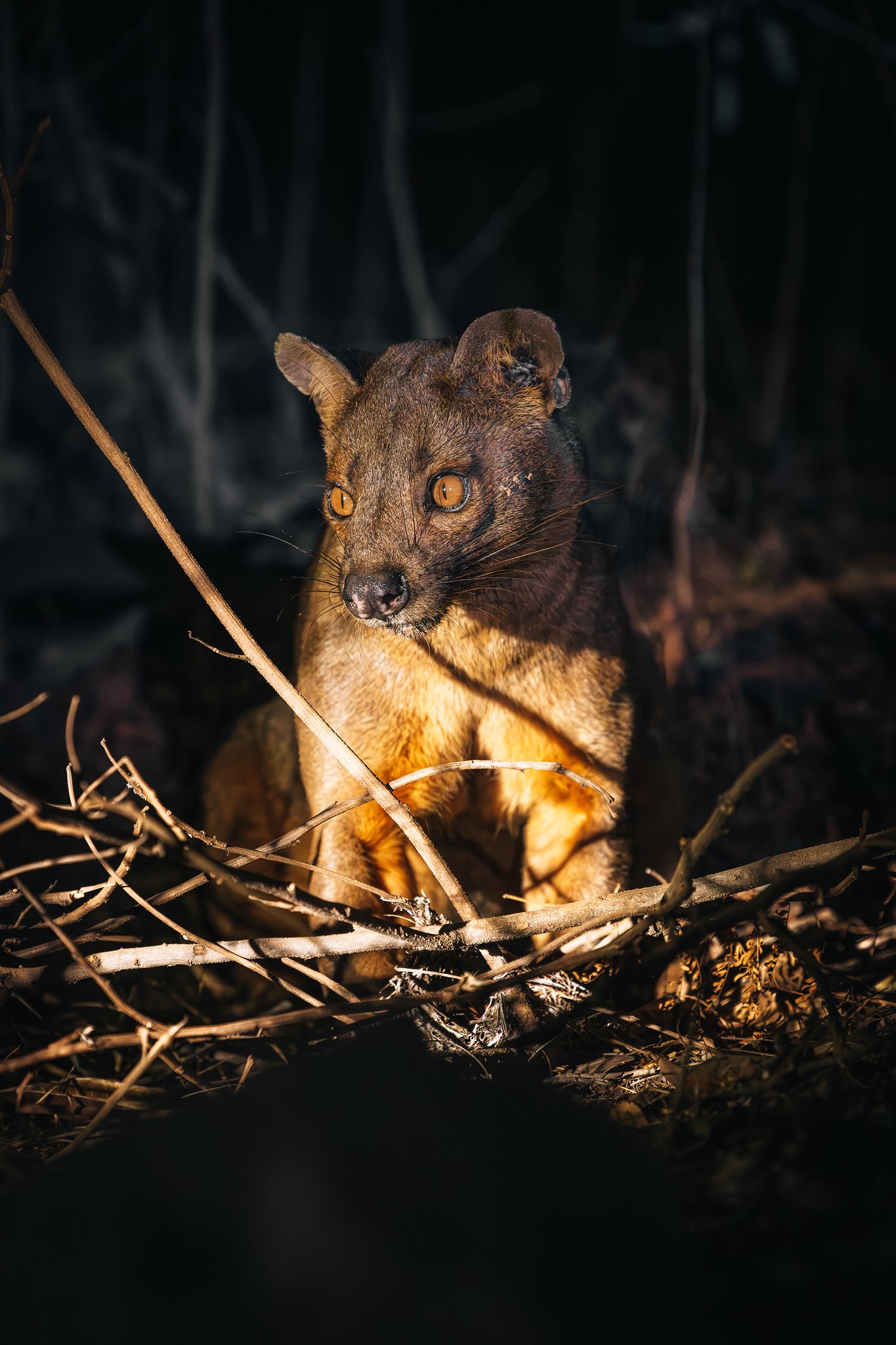
A young male fossa moved silently between the trees and paused briefly to scan his surroundings before continuing onward, with the confidence of a creature that owned the entire forest.
Nearby, a red-tailed sportive lemur missing one eye froze against a tree only a few meters away. An unsuspecting predator with an unsuspecting prey. Both occupying the same small section of forest, separated only by darkness and nothing else.
We didn’t know it then, but the fossa had already smelled and spotted him, and was preparing its attack. The lemur, alerted by the screams of some of his companions, reacted quickly and hid inside a hollow tree, prepared to wait there, if necessary, for the entire night.
The fossa waited for a while, lying on top of a trunk, which allowed me to take some great (but really difficult to take) photos, but eventually it grew impatient.
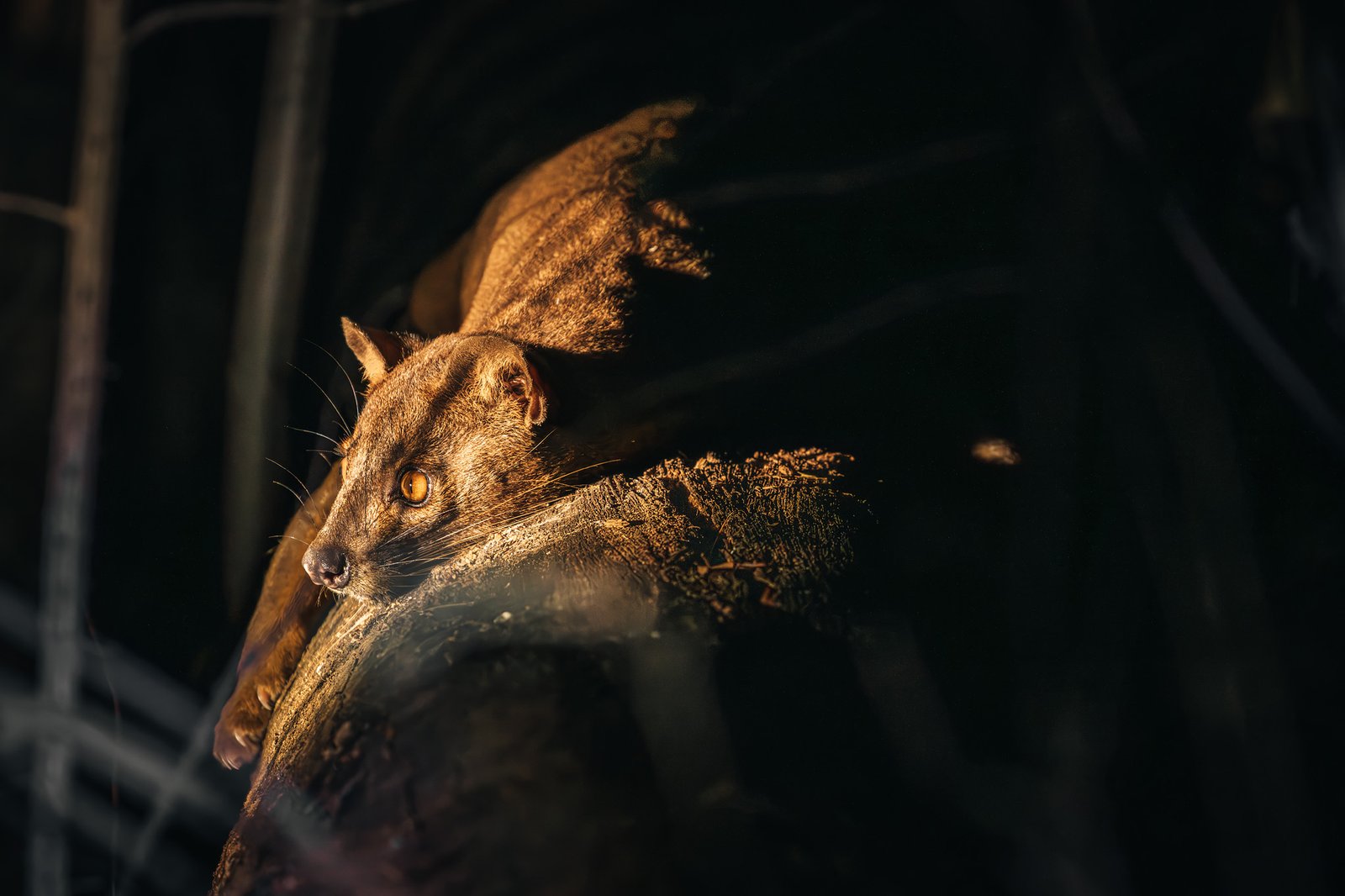
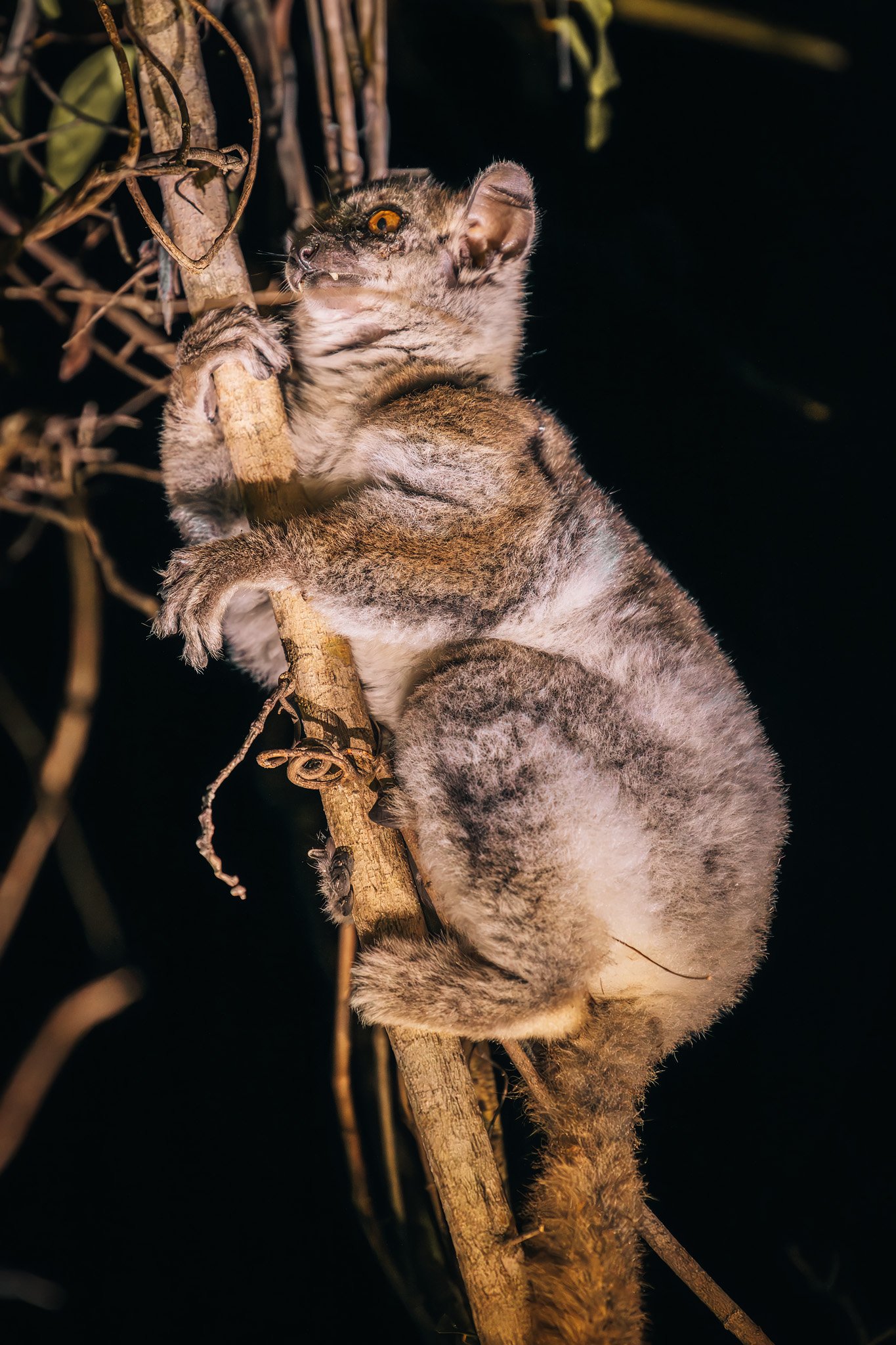
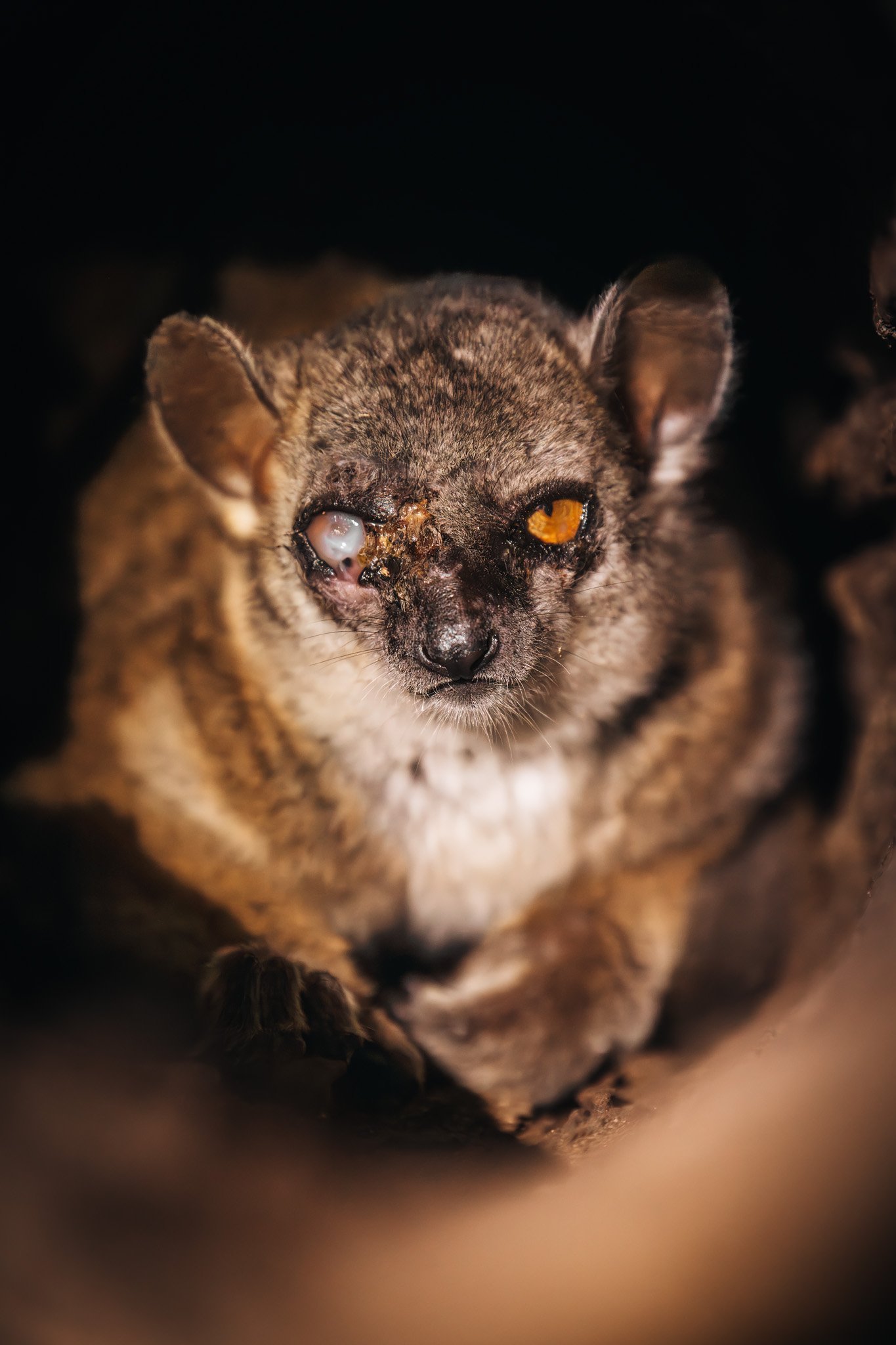
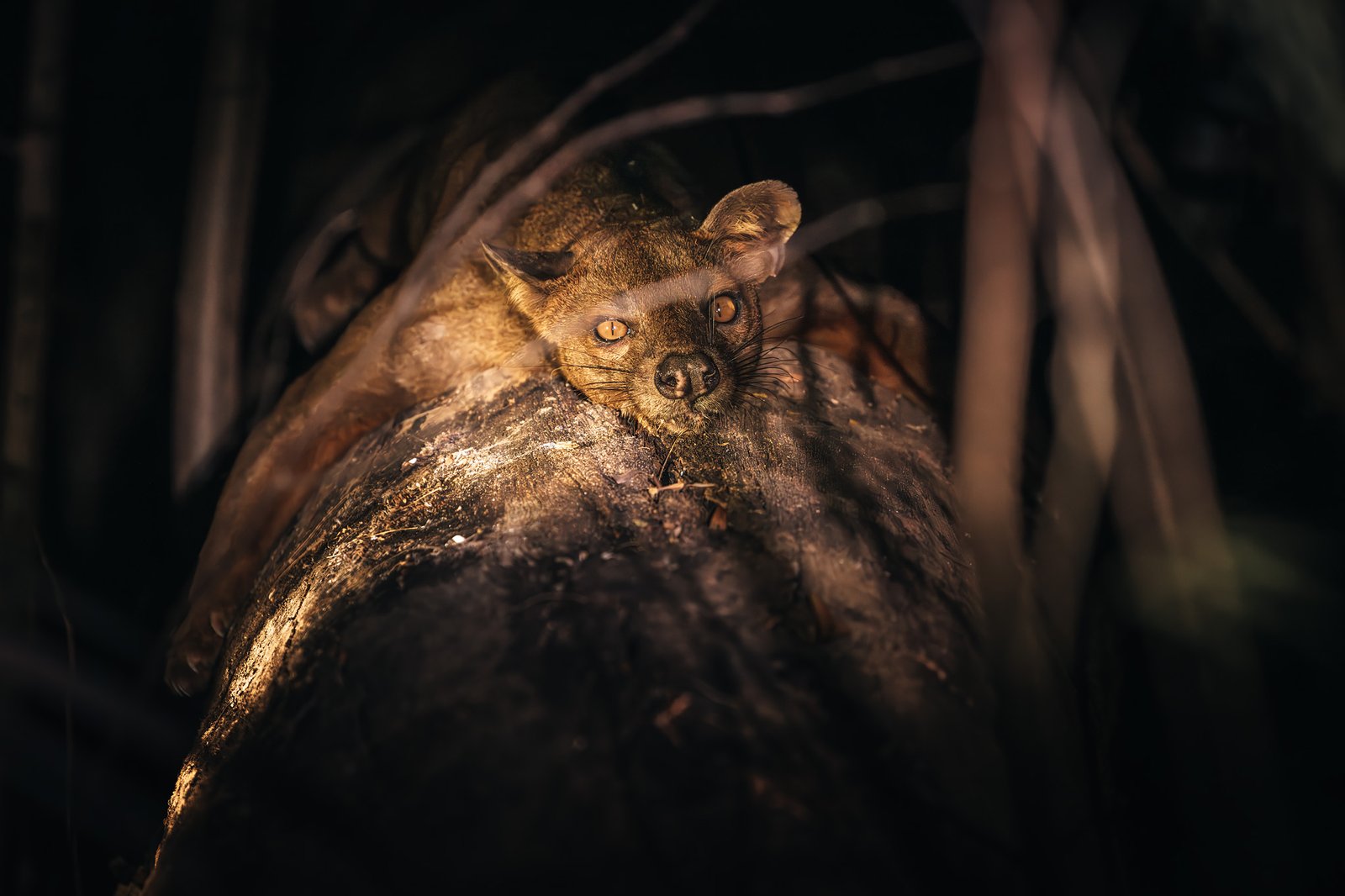
The encounter lasted barely a couple of minutes… but it remained with me ever since as a reminder that nature does not always follow our expectations. Often, the greatest moments happen when two creatures simply continue their evening routines, completely unaware of the handful of people watching them from the shadows.
On our return journey to camp beneath an incredibly star-filled sky, Kirindy once again looked completely different from how it had appeared only hours earlier.
Still, the forest had new surprises awaiting us the morning after.
Madagascar. Part I: Arrival in the 8th Continent
All children love maps.
In my case it all started with one of those Earth globes that glowed softly in the dark. It was actually my brother’s, but we shared most of our toys when we were little kids. I remember him pointing at countries and naming capitals, rivers and mountain ranges. I sat fascinated by places that at the time seemed impossibly far away.
Eventually it became something I would do too. Before long I had memorized all the countries from every continent, rivers, mountain ranges and capitals I probably would never visit. Some names sounded strange, others exotic and a few became unforgettable. One of them was Antananarivo.
At the time Madagascar felt like just another large island near Africa, probably not so different from the rest of the continent. I had no idea it would eventually lead to one of the most unforgettable journeys of our life.
Separated from Africa for tens of millions of years, Madagascar developed into its own world. Species evolved independently, ecosystems adapted in isolation and life followed directions found nowhere else on Earth. Lemurs, baobabs, fossas, giant chameleons and entire forests exist nowhere else on the planet.
Even the people who arrived on this island came from somewhere completely unexpected. Malagasy, the language, belongs to the Austronesian language family and is closer to the languages spoken in various regions of Borneo and Southeast Asia than to those spoken in mainland Africa. These peoples crossed enormous distances across the Indian Ocean using advanced sailing technology, and for hundreds of years these origins intermixed with African, Arabic and European influences and ultimately created one of the most distinct cultures on the continent.
That isolation is still visible today.
Although Madagascar is a huge country, approximately equal in size to the Iberian Peninsula and considered the fourth largest island in the world, infrastructure remains limited across much of the island. Many roads are either broken or only partially paved, though this is changing rapidly. Traveling across the island is long, slow and quickly becomes part of the experience itself.
Africa is often imagined through the lens of safari landscapes, however Madagascar feels totally different. Not solely because of the uniqueness of the wildlife, but because of the sheer diversity of environments concentrated within a single island. Rainforests, dry forests, limestone karst formations, high plateaus, mangrove swamps, tropical coastlines and isolated rural villages separated by roads that seemingly vanish into mud, fog or dust.
For an entire month we would be walking through all of those landscapes, but everything began in that place with a funny name, Antananarivo.
From Tana to Andasibe
After flying from Madrid to Paris and then southward through Eastern Africa we landed at night in Tana, as locals call it.
The airport was already a sign of what awaited us. There were advertisements for the 2023 Indian Ocean Island Games plastered over parts of the terminal while lines formed at currency exchange booths and SIM card vendors. The sounds of Malagasy, French and sporadic English surrounded us while drivers stood outside waiting with handwritten signs beneath fluorescent lights.
Our driver immediately taught us our first Malagasy phrases. Salama = hello. Misaotra = thank you. Azafady = excuse me.
The first night was brief and mostly strategic, as Madagascar didn’t really start in the capital city, but the following day heading east to Andasibe.
Malagasy standards consider Andasibe to be relatively close to Antananarivo. However, even considering the relatively short distance, the drive still takes several hours.
When leaving the capital city, the landscape rapidly transformed from rice terracing to eucalyptus forest and red dirt villages scattered across the highland region. We made several stops along the way.
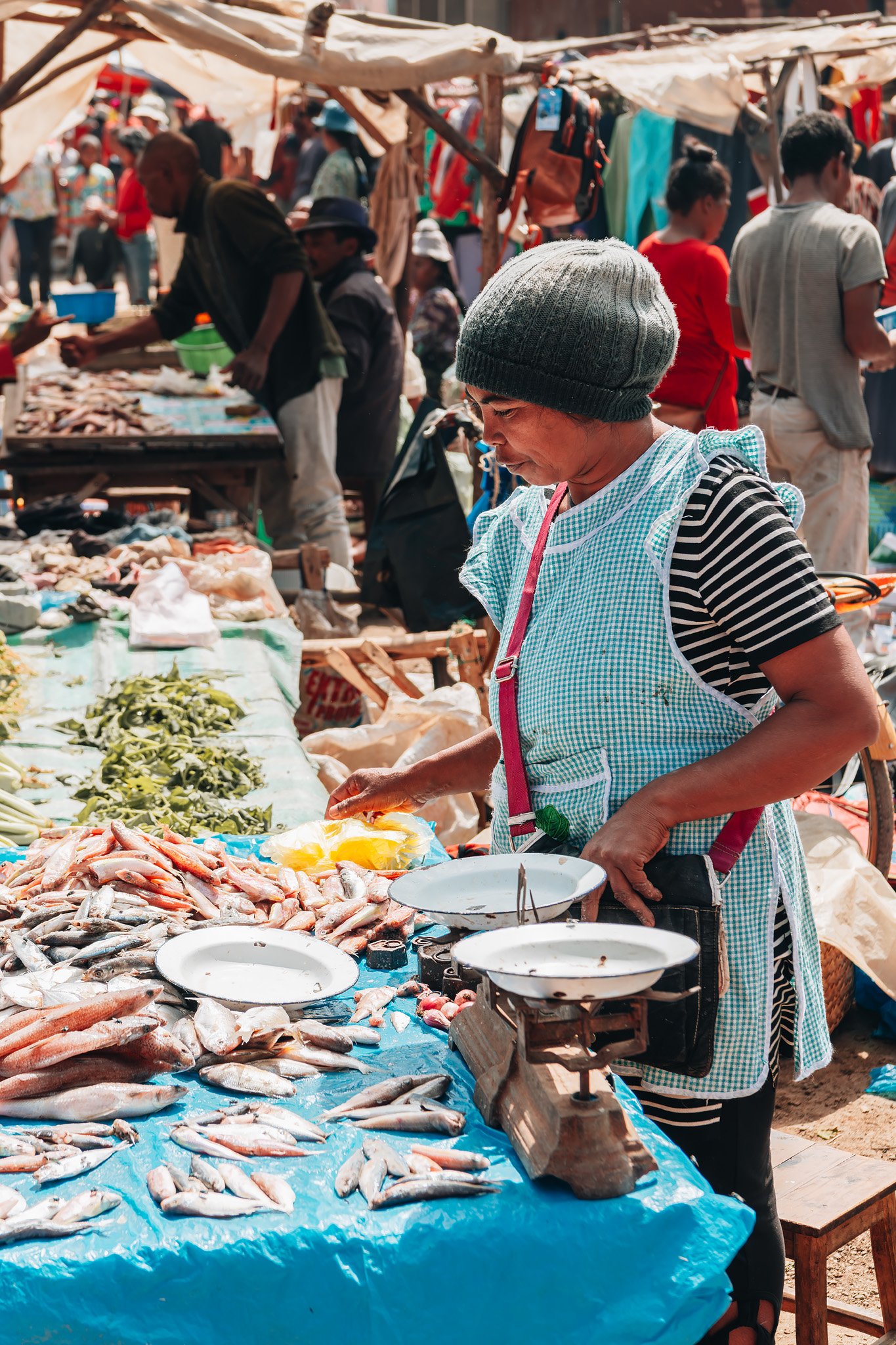
Roadside markets appeared constantly beside the highway. These were makeshift collections of wooden structures and vegetables placed directly on the ground. Stacks of bananas and unfamiliar fruits were located adjacent to dried fish displayed under the open sky despite being miles away from the coast. People were always on the move between market stalls while overloaded minivans traversed villages trailing clouds of dust.
My first impression was movement occurring everywhere. Life felt really local and authentic.
I could find virtually no evidence of mass tourism anywhere outside of the national parks themselves. Most people around us were merely traveling between villages, carrying products, selling food, or tending rice paddies surrounding the roadway.
As we traveled further east, the landscape began changing slowly. The air became wetter and fog started developing over the mountains. Trees became thicker along the mountainous slopes while the roads continued to become increasingly muddy and narrow.
It wasn’t long before night fell rapidly. One moment sunlight filtered through cloud cover and the next moment the road had vanished into darkness. By the time we arrived in Andasibe, the rainforest had overtaken the whole landscape.
The Edge of the Rainforest
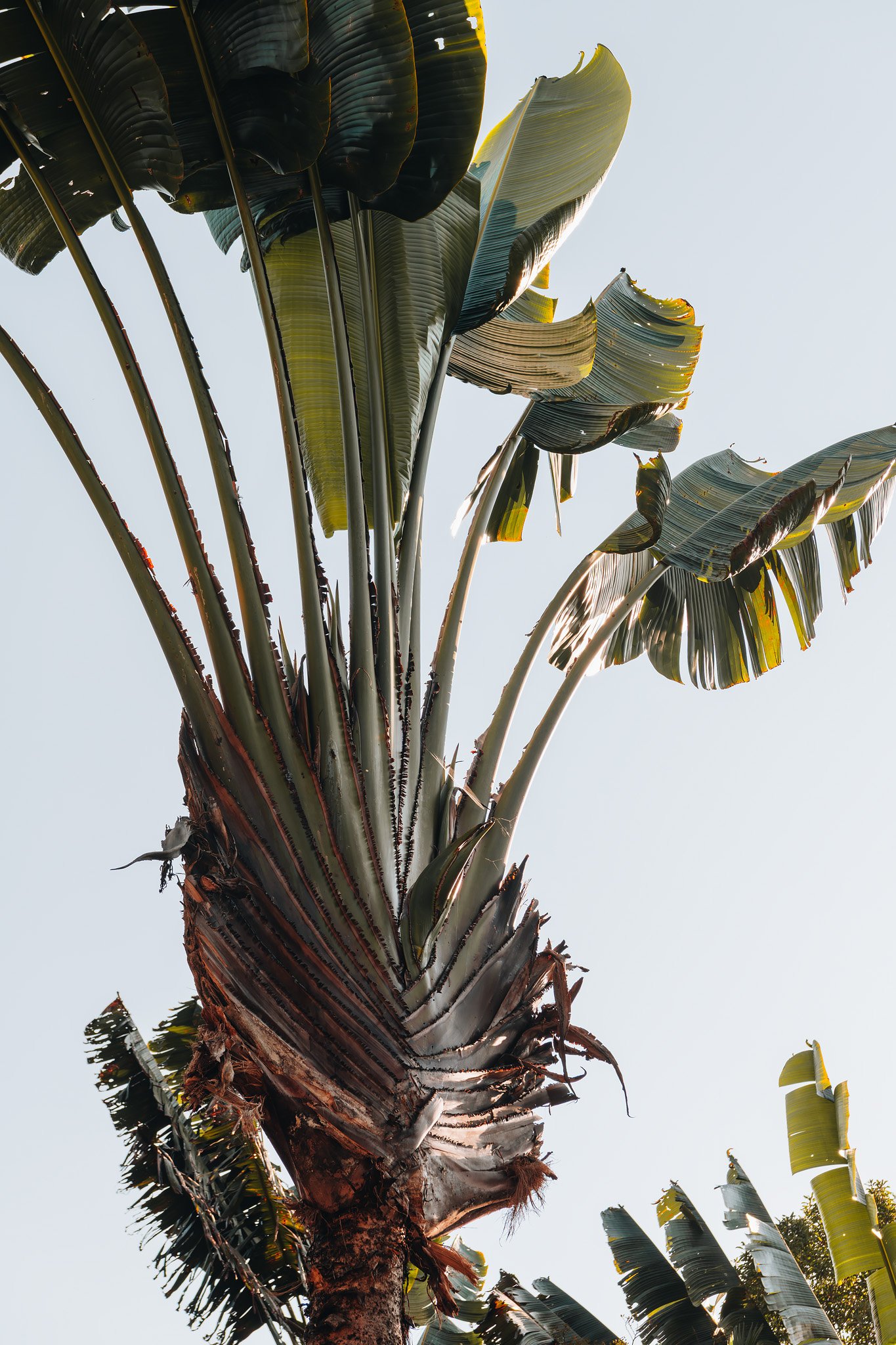
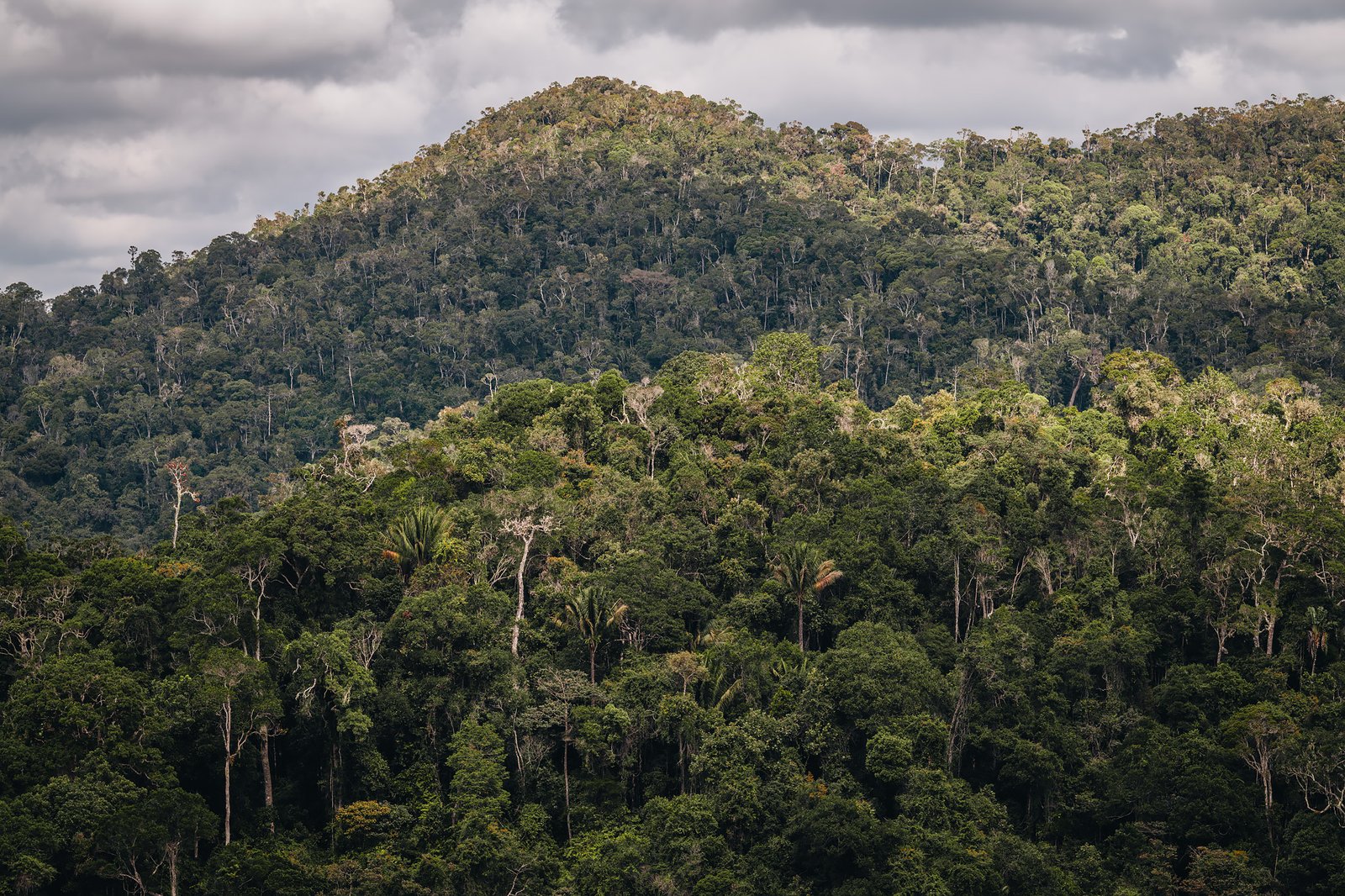
Forests near Andasibe and Mantadia form part of the last remaining eastern rainforests of Madagascar. These represent fragments of much larger ecosystems that once covered far greater portions of the island. These are ancient forests.
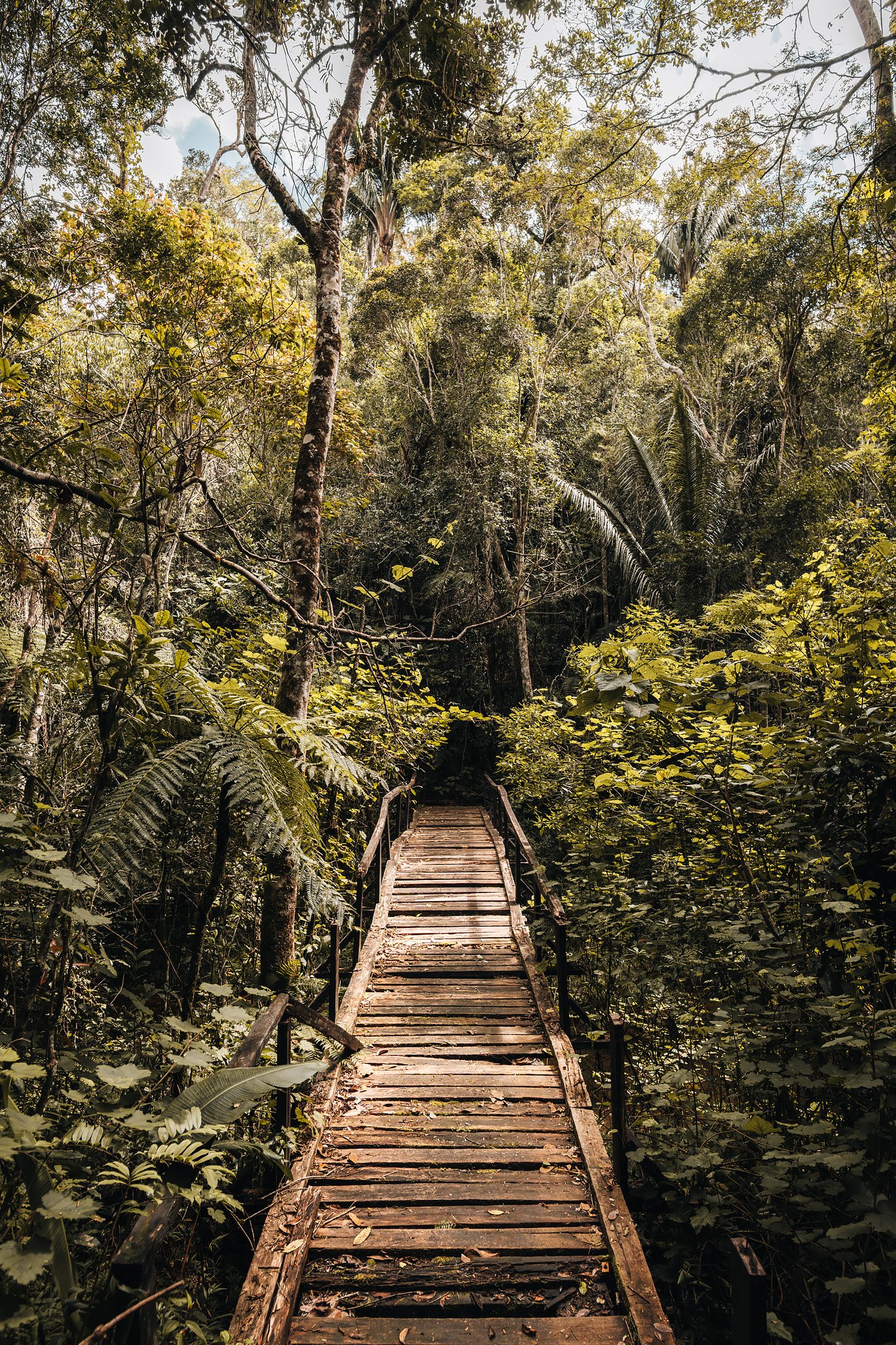
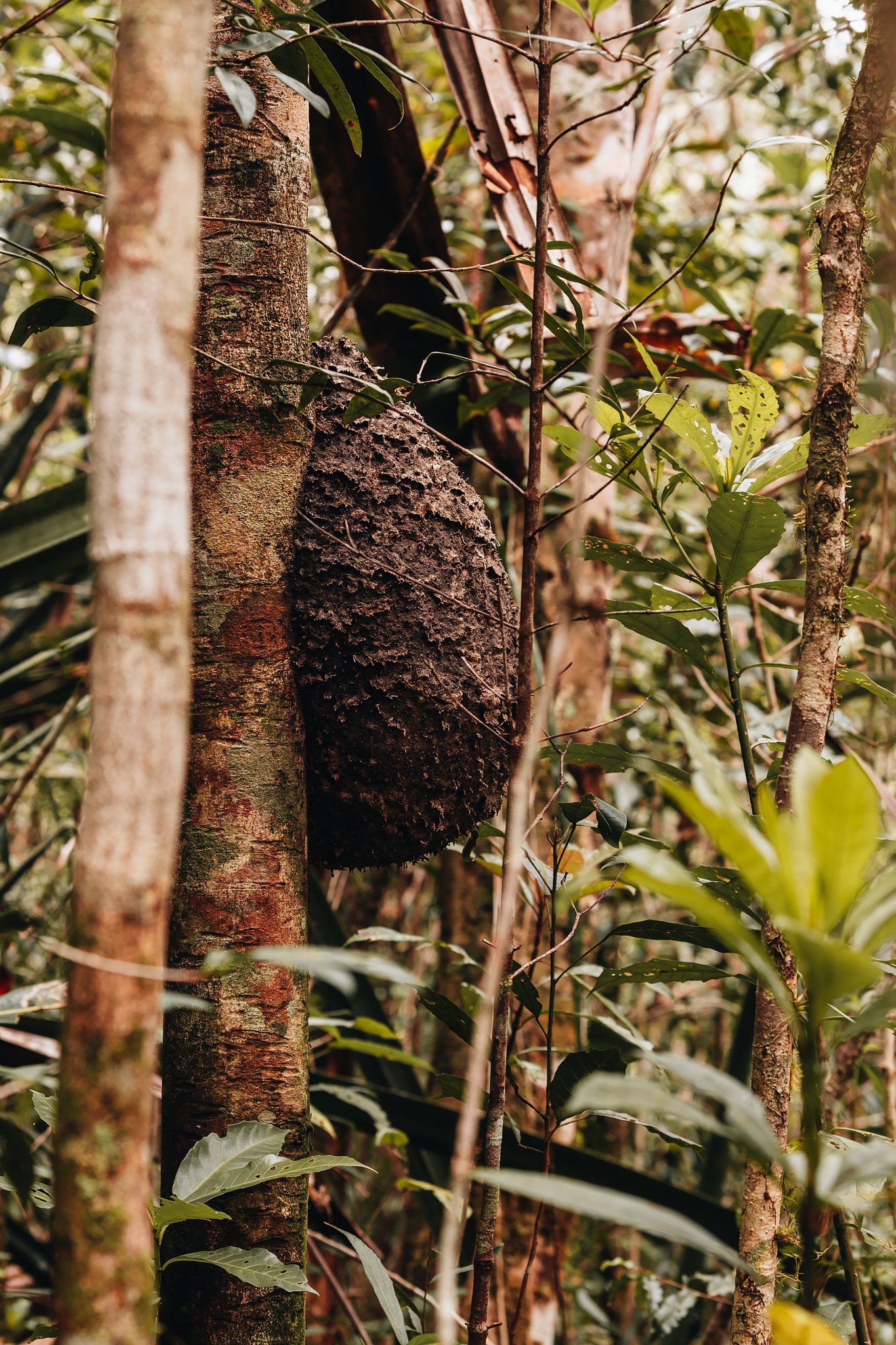
Dense, humid and biologically overwhelming environments where life appears to occupy every layer of space. Moss blankets tree trunks and branches while giant ferns rise from beneath the canopy. The air smells permanently of damp earth and vegetation.
Andasibe is also one of the most-visited protected areas in Madagascar mainly because it is one of the best places in the world to see the Indri, the largest living lemur.
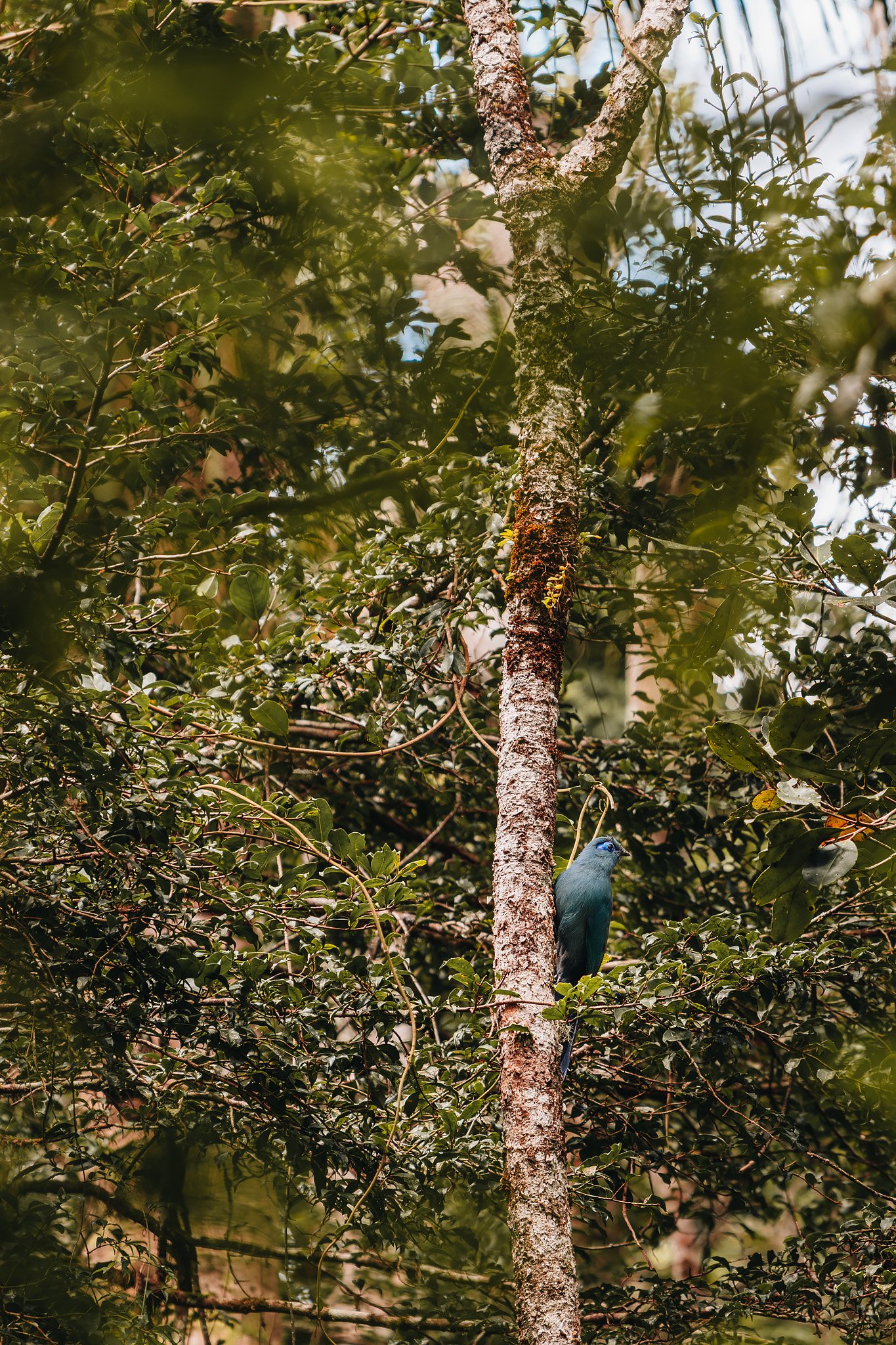
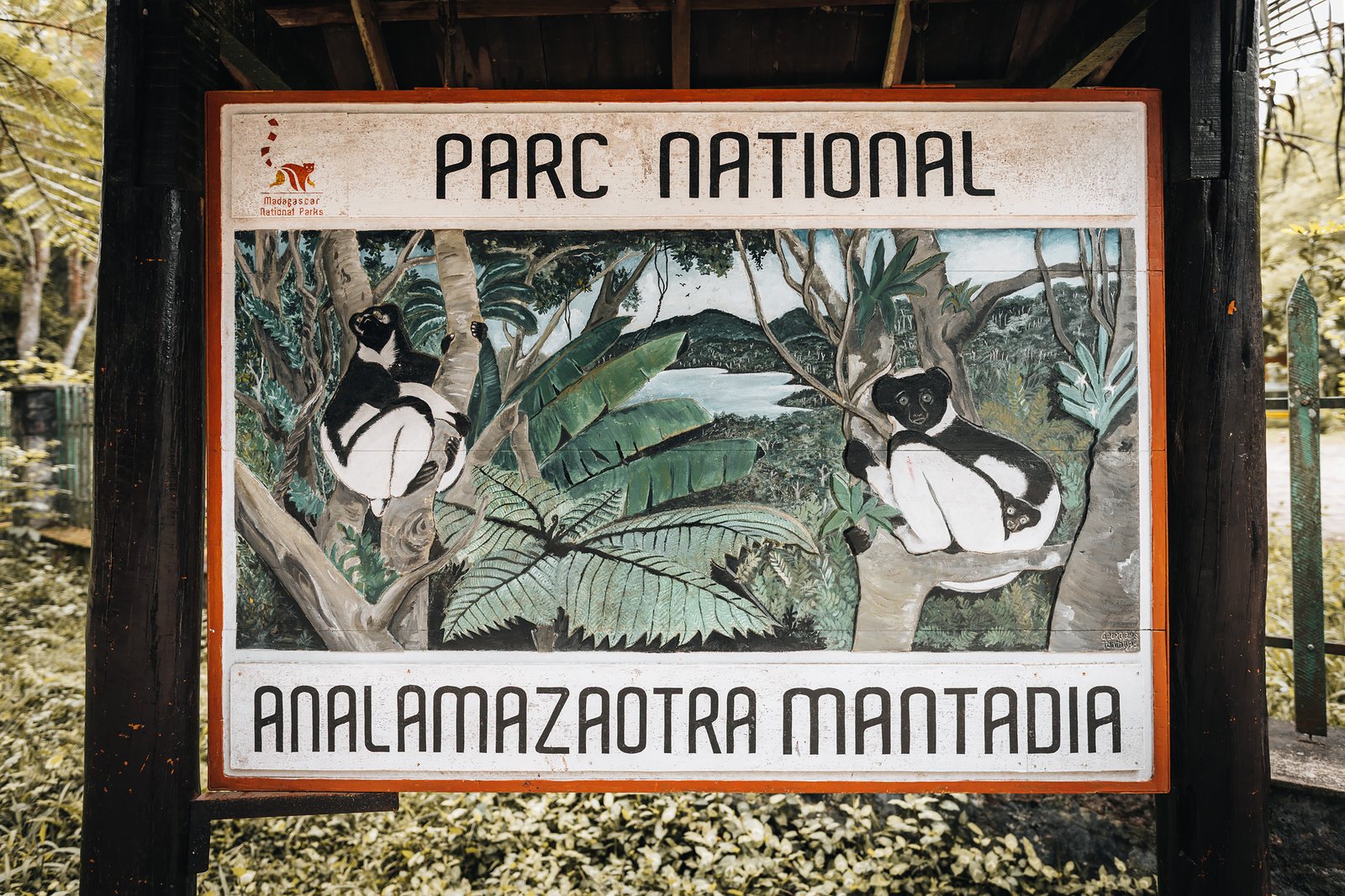
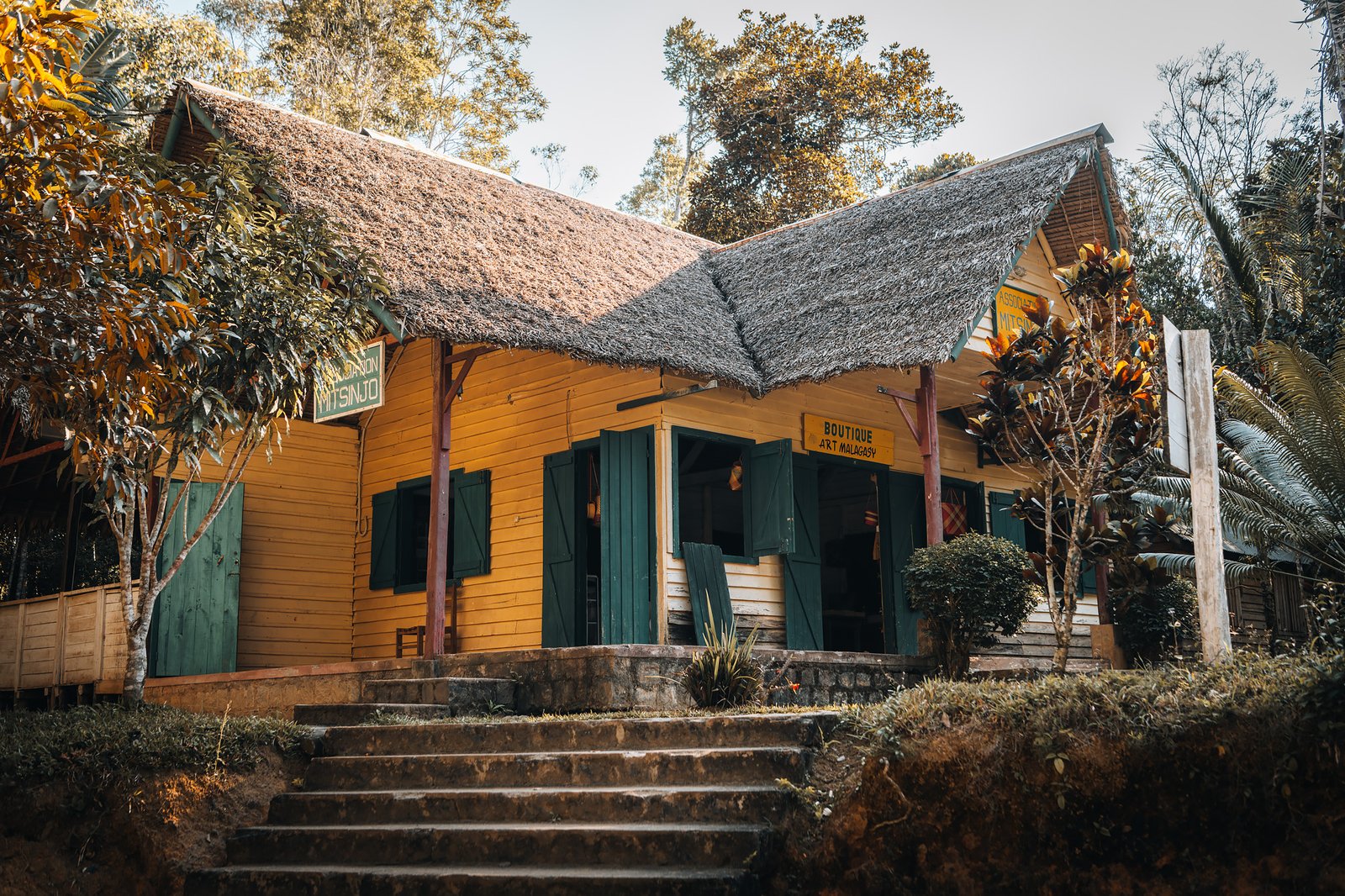
During the next days we spent considerable time exploring several areas surrounding Andasibe including Mitsinjo & V.O.I.M.M.A, primarily consisting of nighttime walks and smaller community-managed rainforests, Mantadia during the day, a denser and rougher primary forest with fewer visitors, and finally Analamazaotra, perhaps the most renowned portion of the park system, particularly popular for resident Indri groups.
In addition to our driver-guide, Coleggue, accompanying us into reserves, local guides also walked with us once inside the park. These trackers possessed an amazing understanding of their environment. They knew exactly where specific lemur families rested, which trees attracted geckos and insects, and where chameleons slept at night.
Initially it felt staged, but you soon realized it was merely experience. Fano, our primary local guide, and then Flavia during our nighttime walk at V.O.I.M.M.A, consistently demonstrated a great knowledge of biology, local customs, animal behavior and many other things.

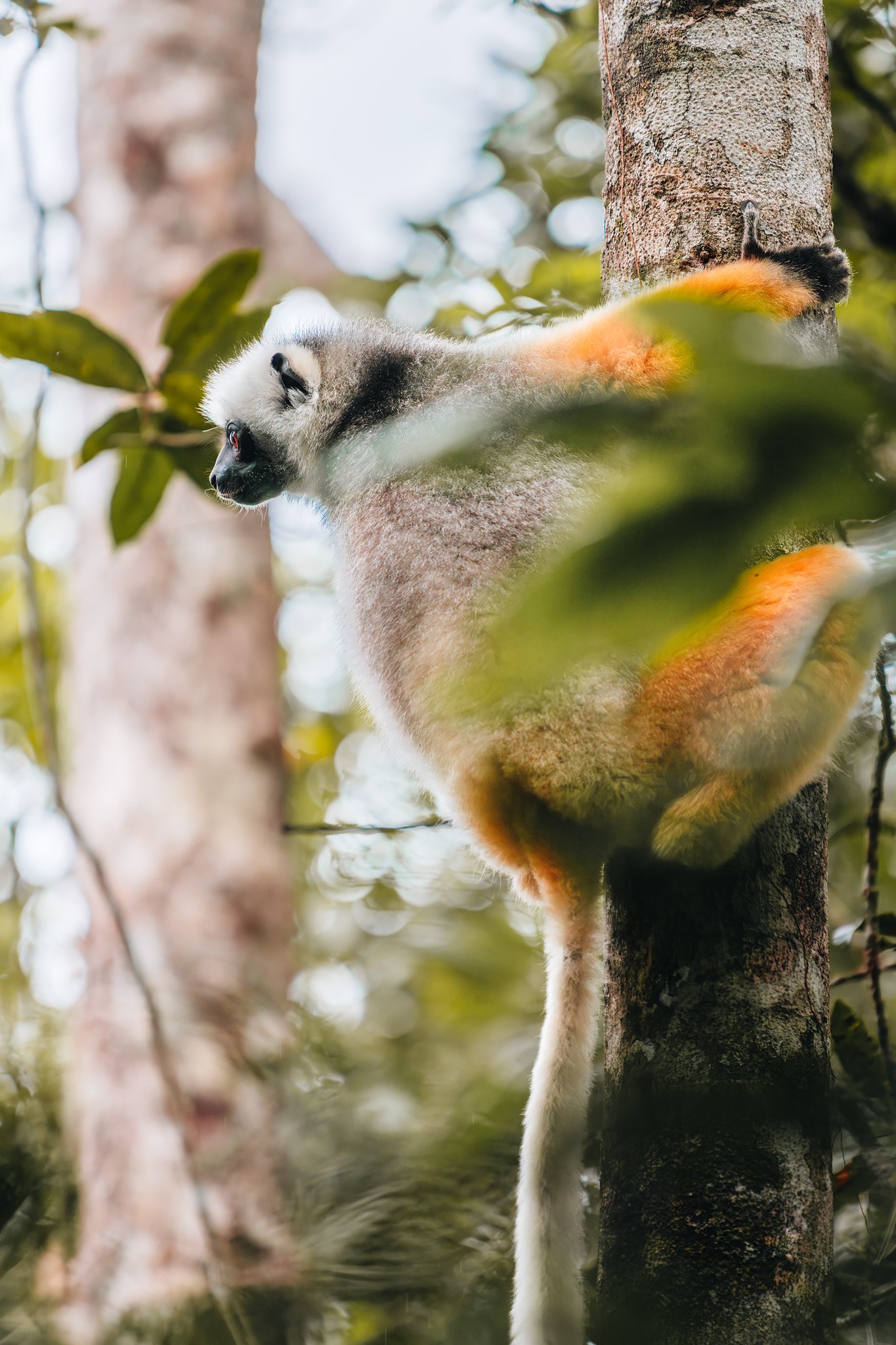
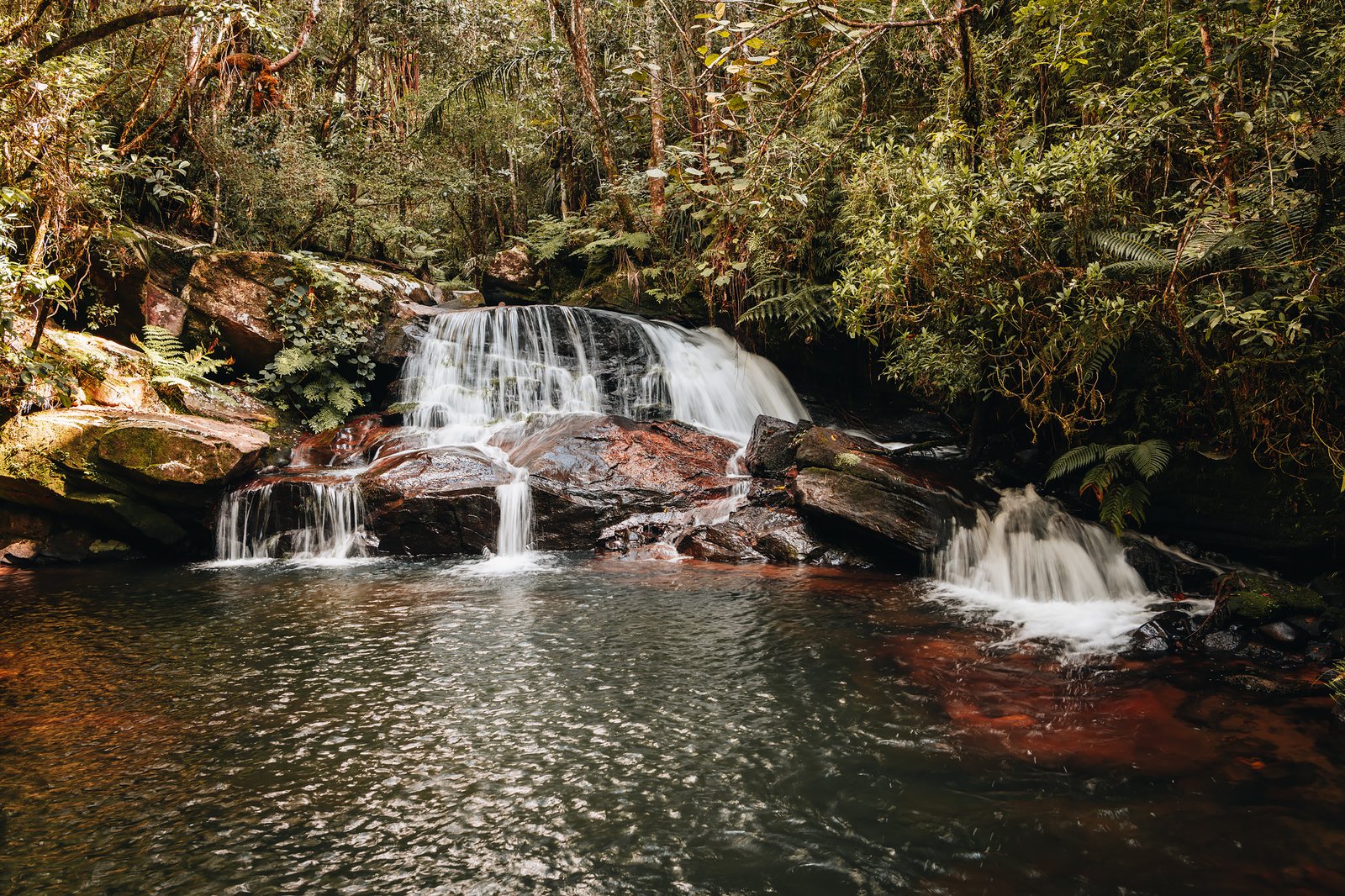
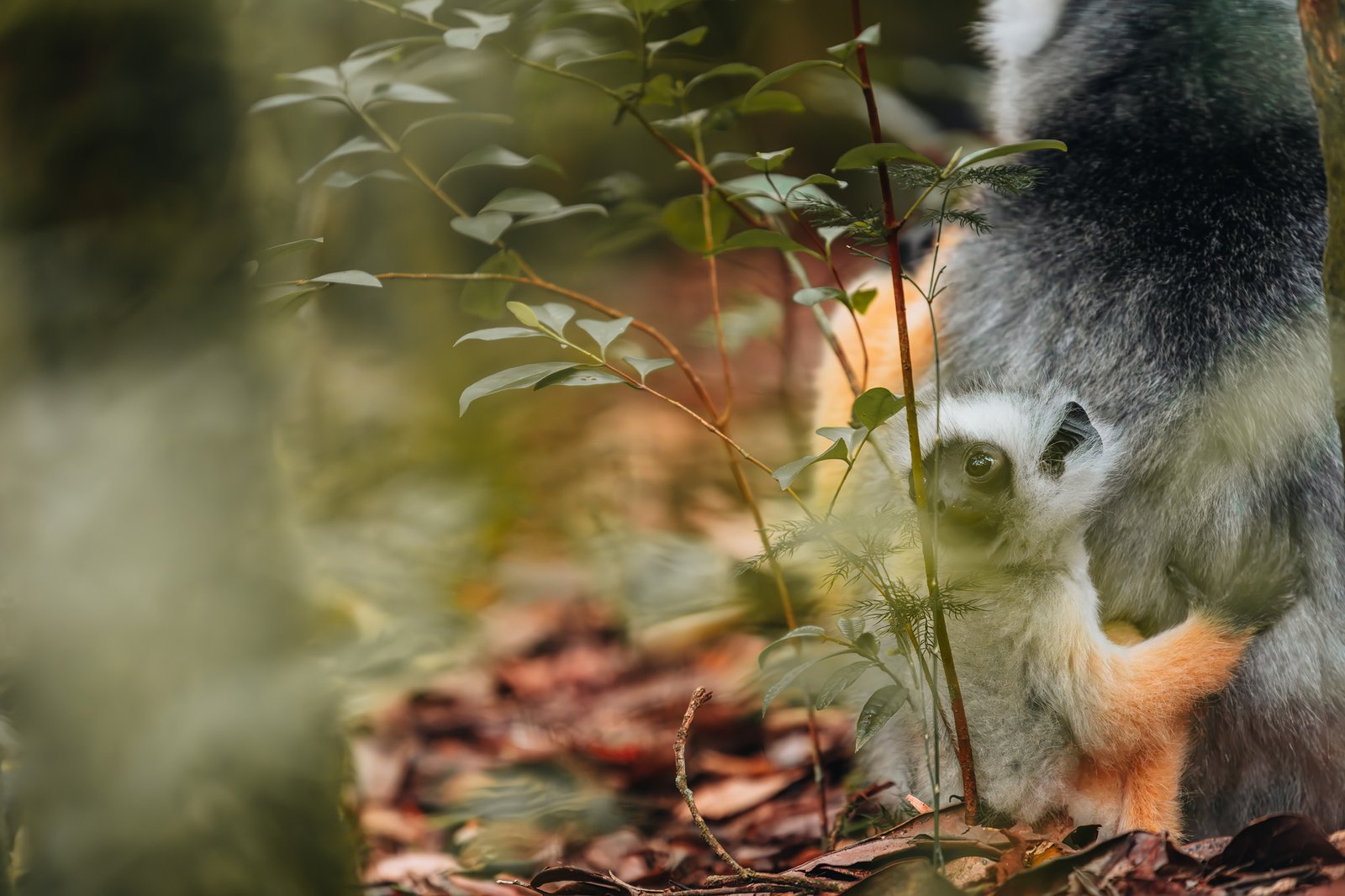
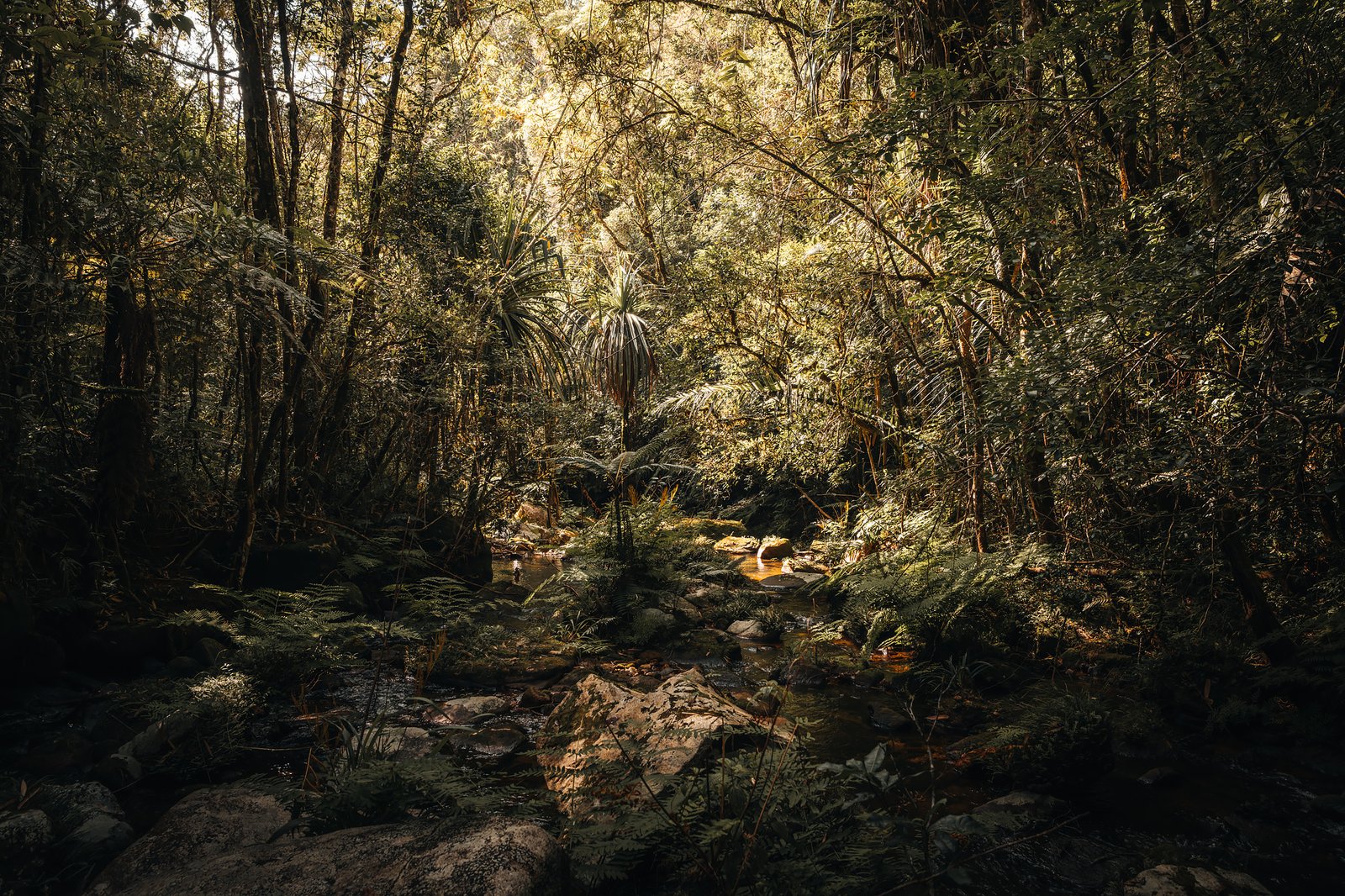
After Dark
If visiting the rainforest during daylight already felt kind of alien, things became even more surreal at night. Nighttime walks revealed an entirely different ecosystem hidden within essentially the same forest.
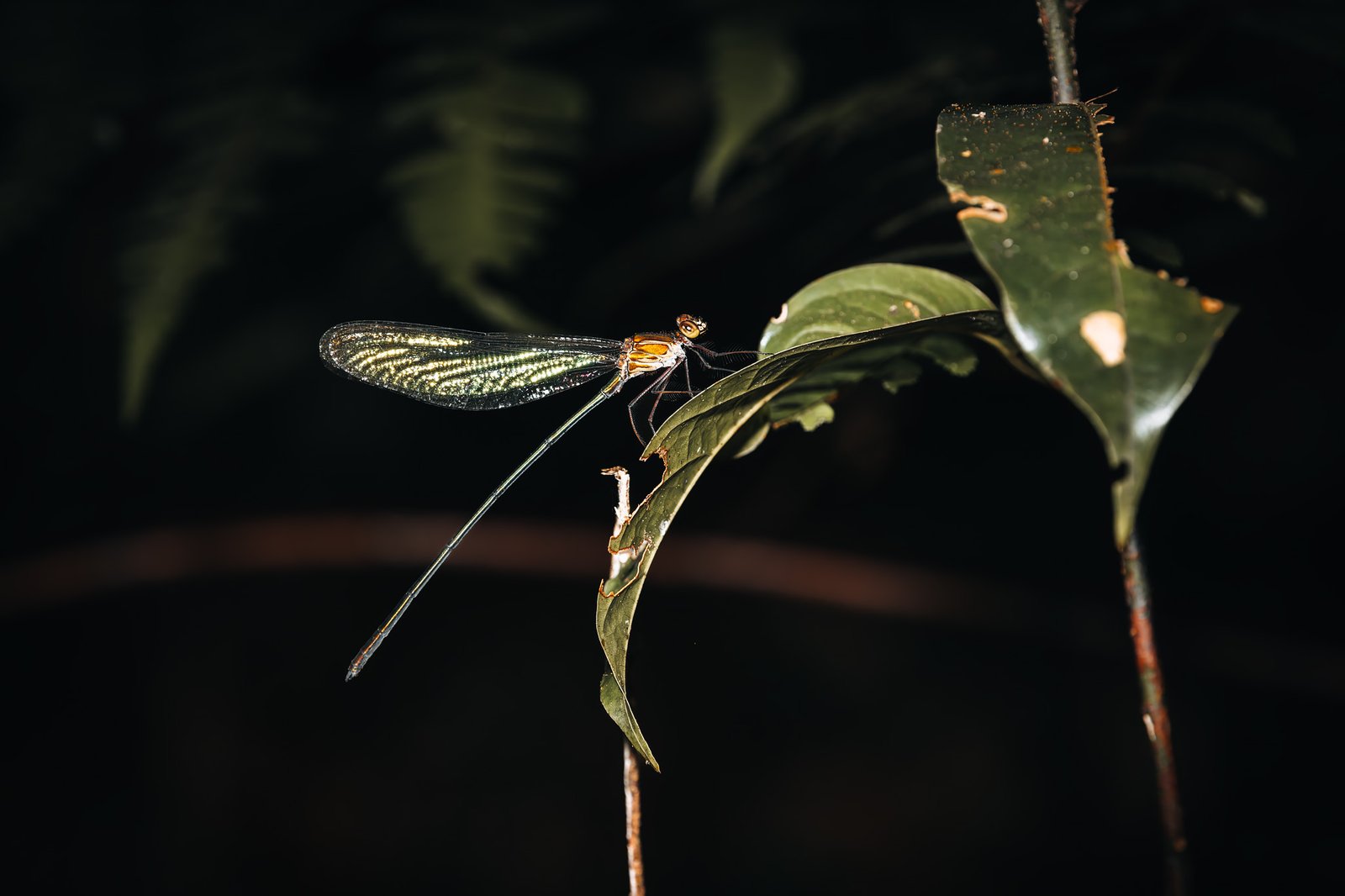
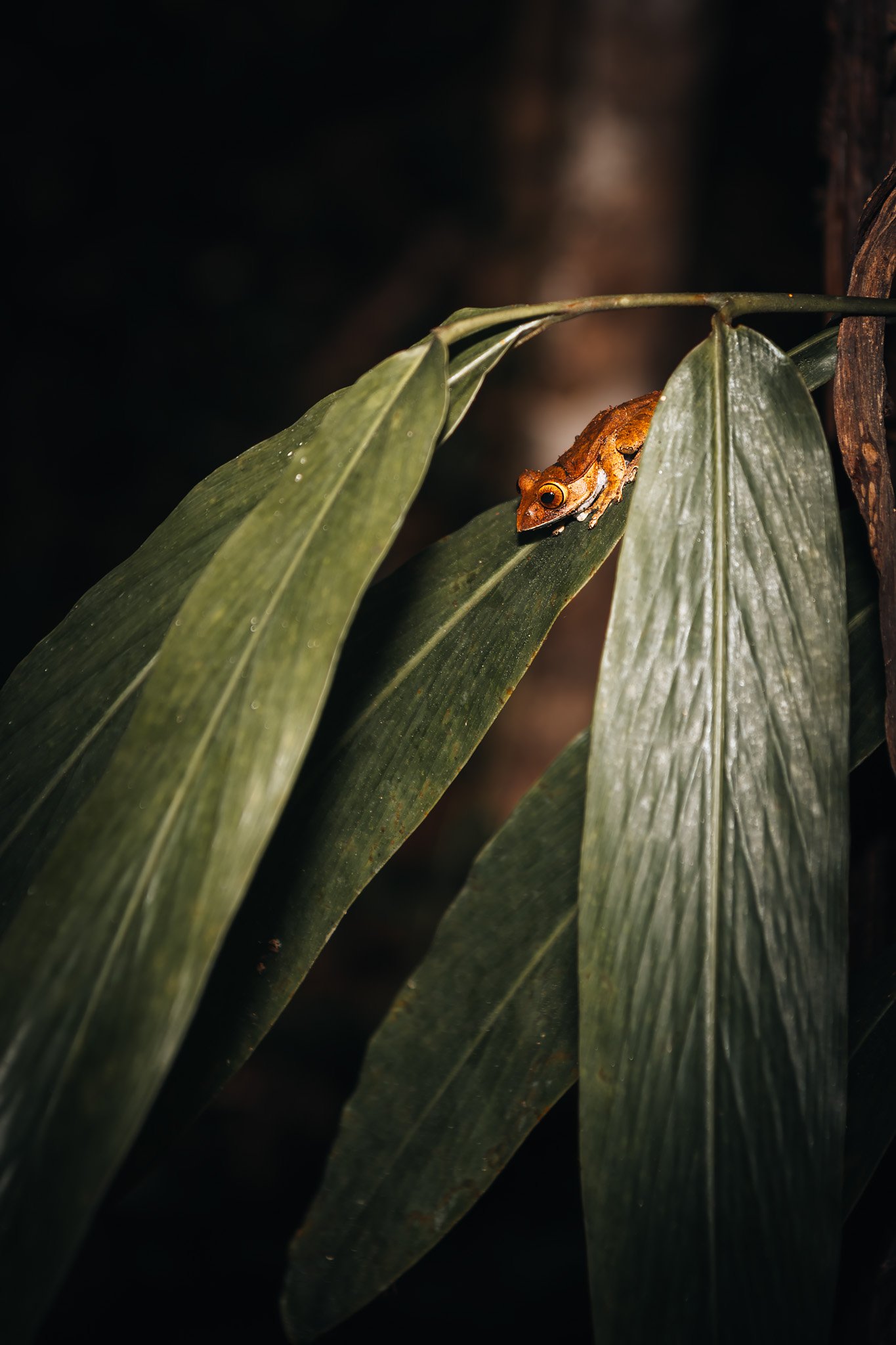
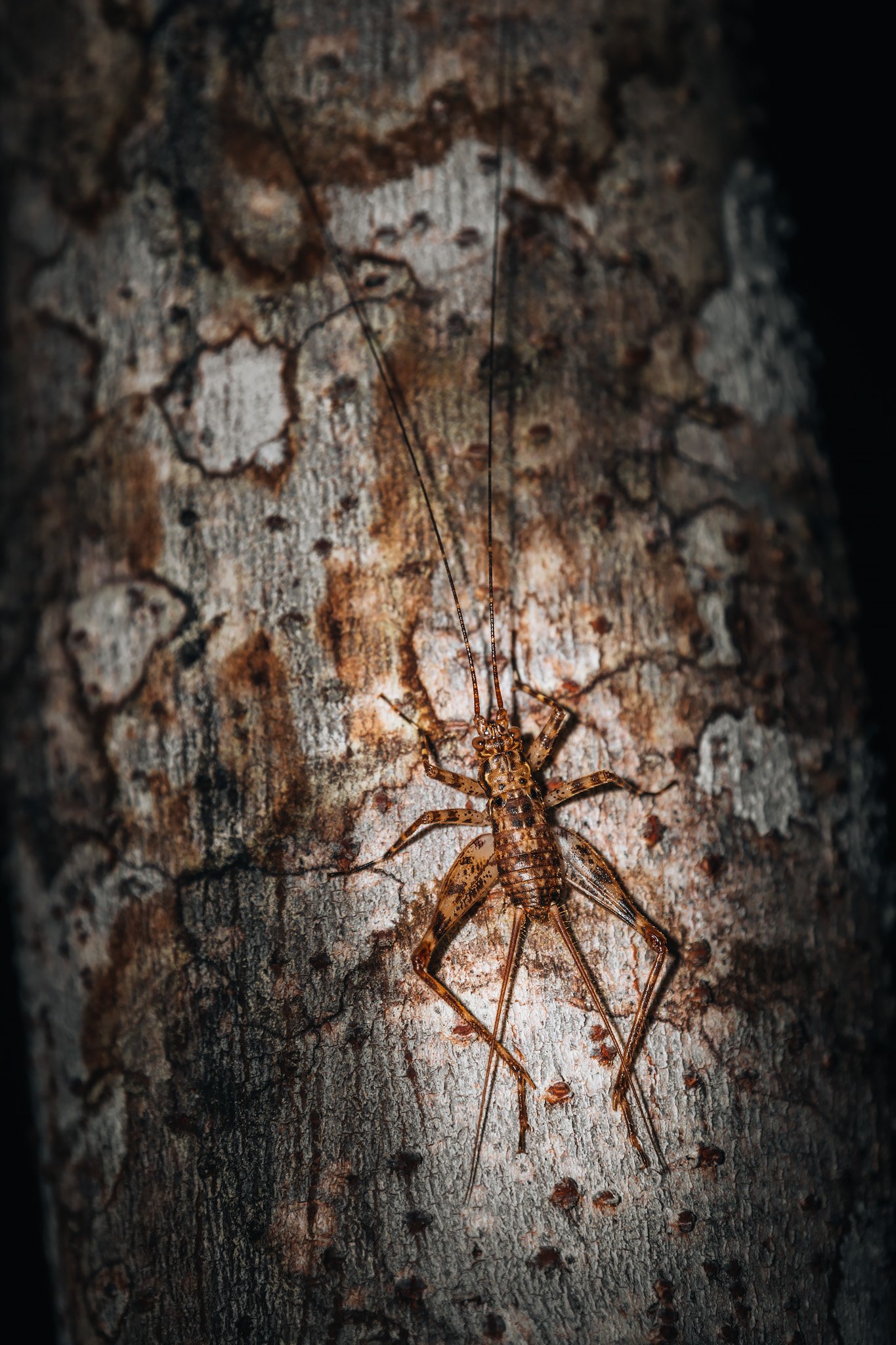
The humidity increased immediately following sunset and total darkness enveloped all areas outside of our flashlights. Frogs called continuously from every direction as insects previously hidden within moss and bark began moving through foliage.
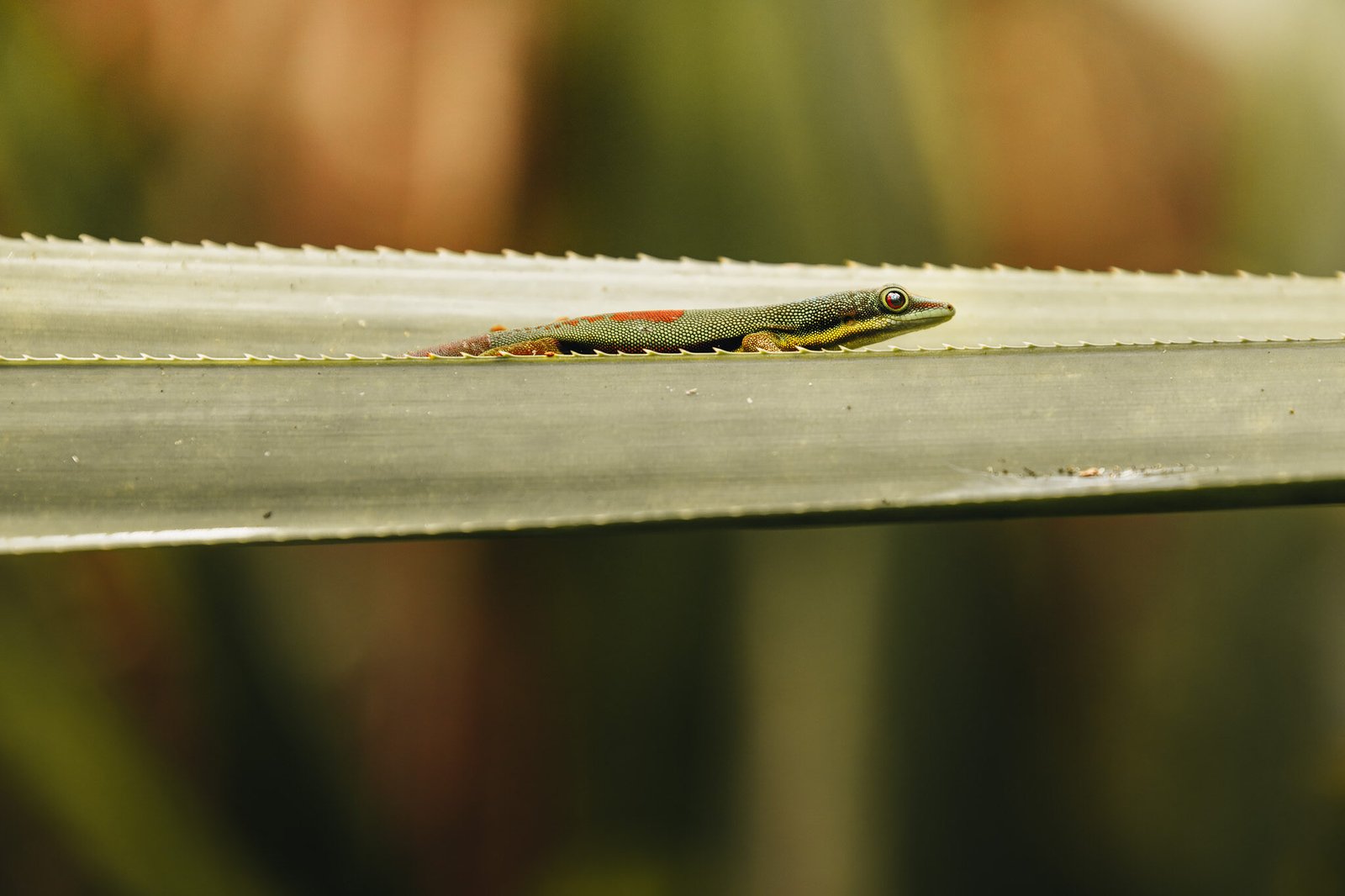
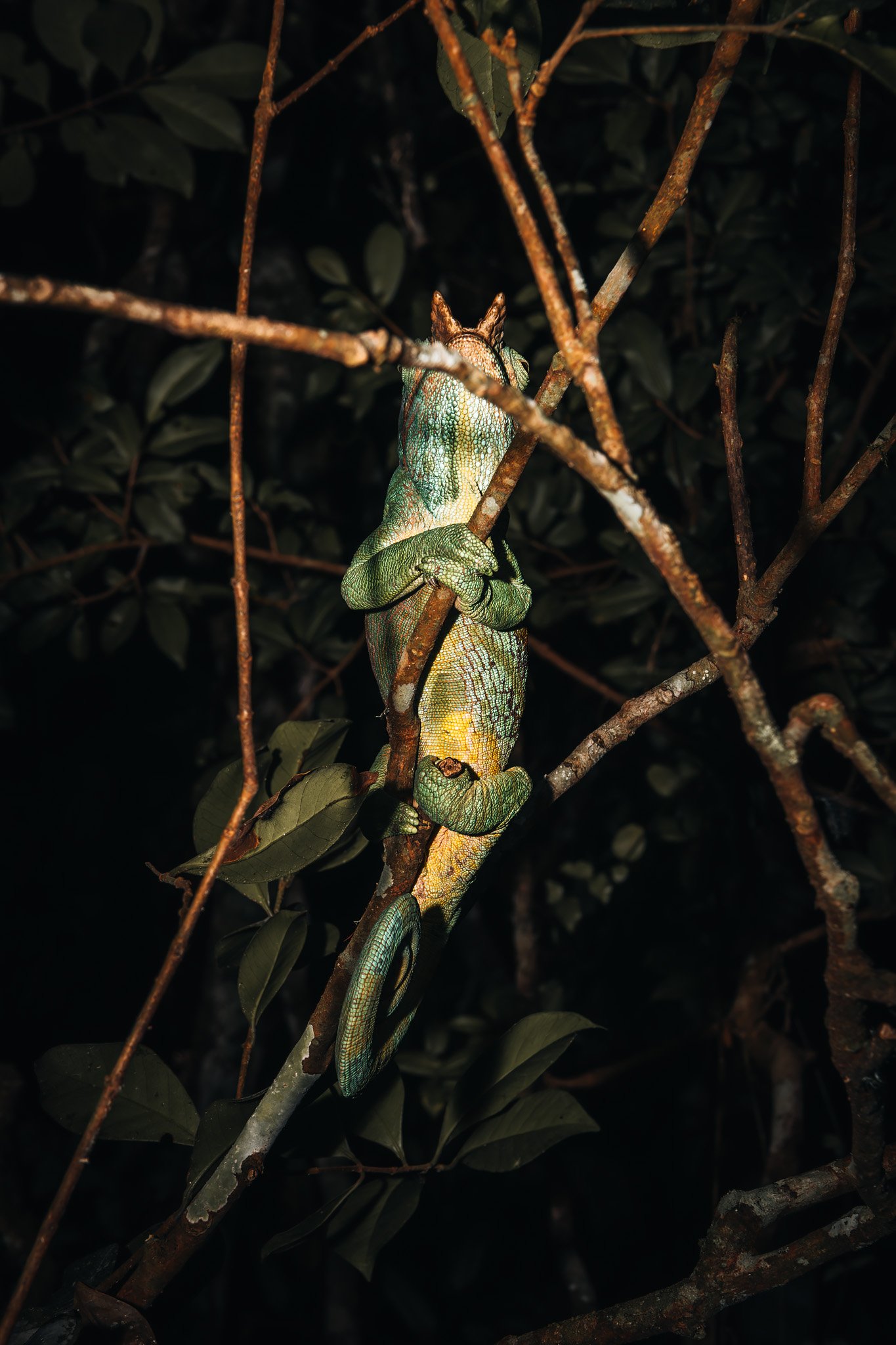
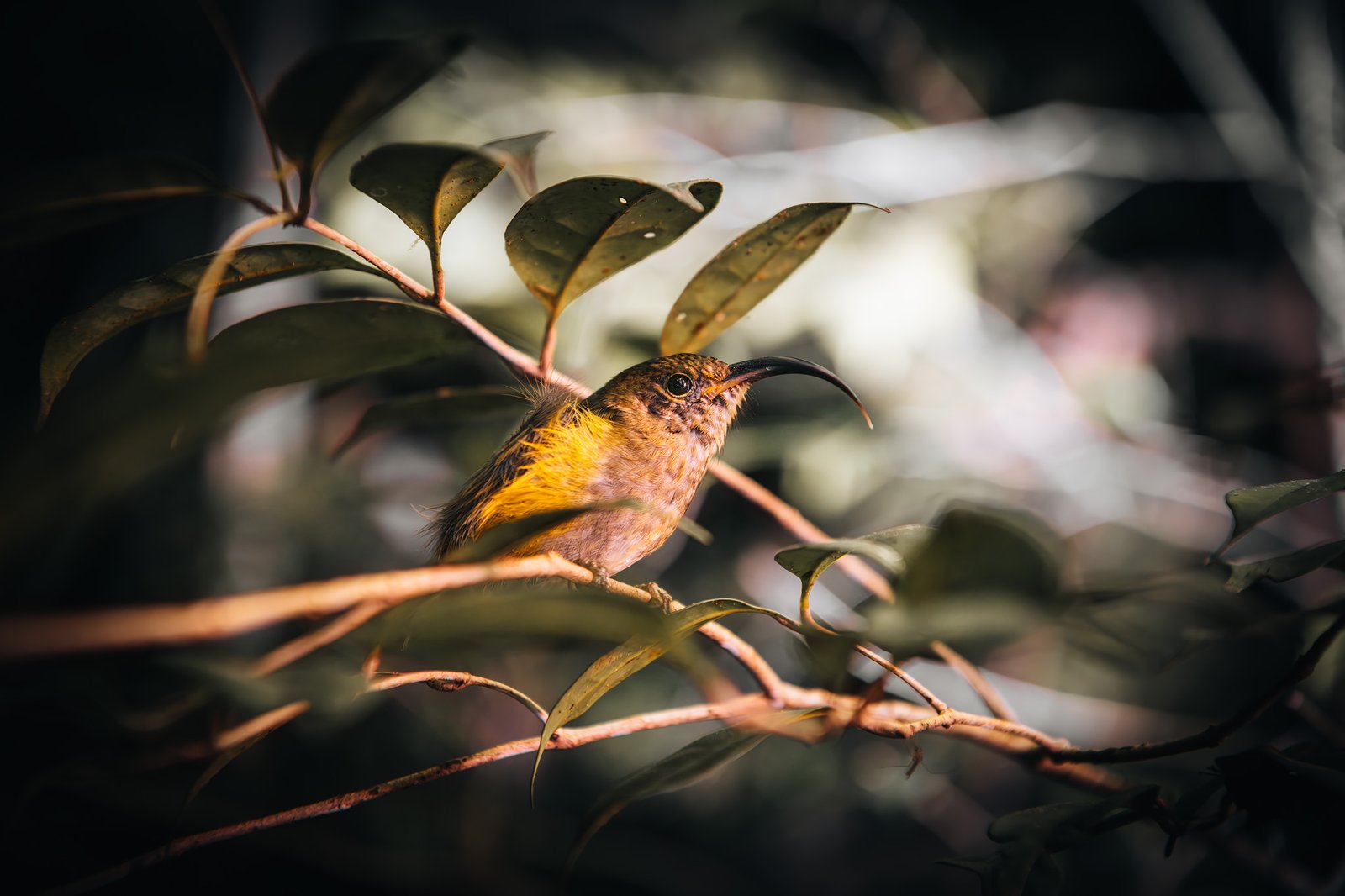
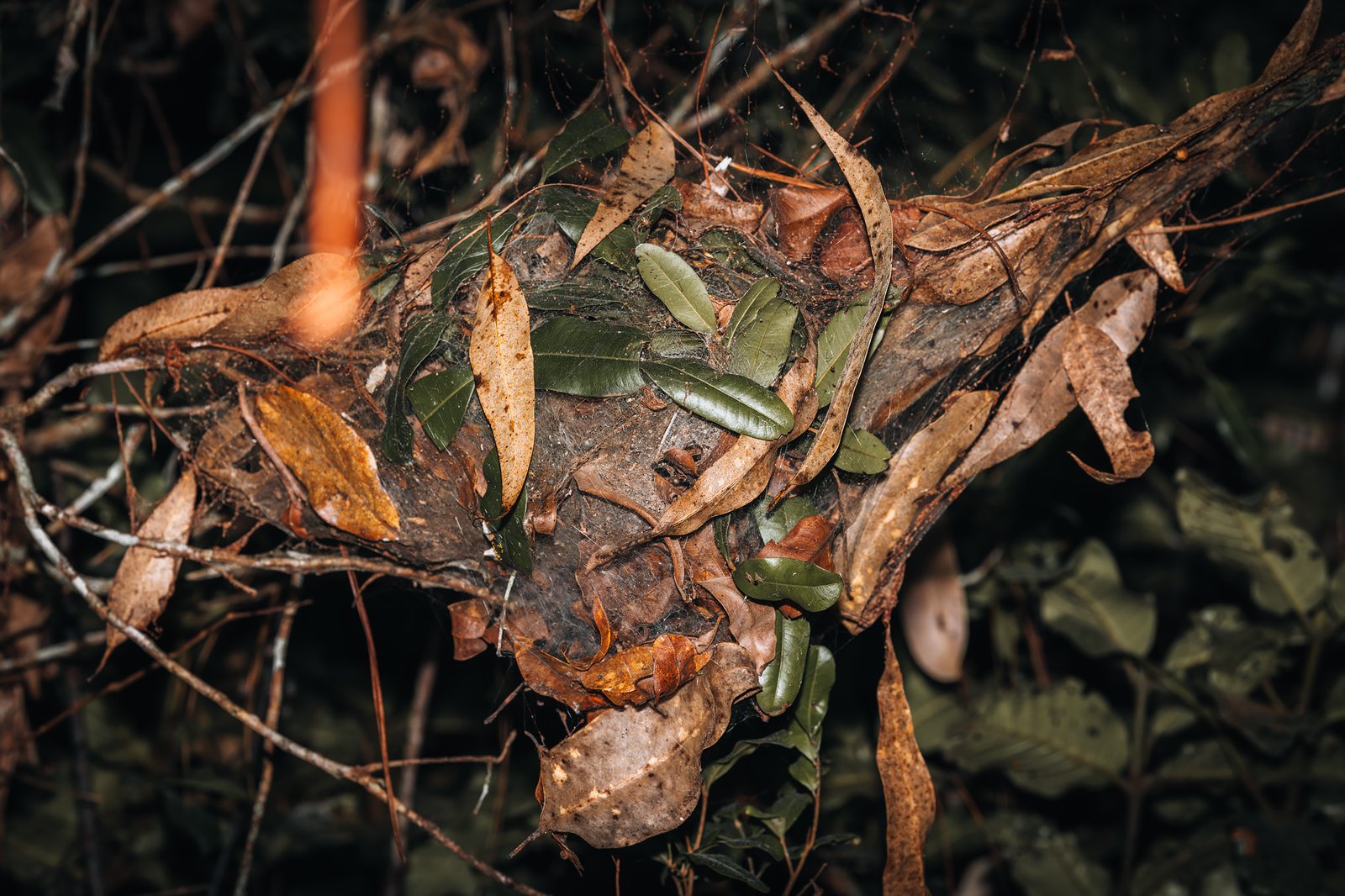
Each flashlight beam illuminated something unusual. Chameleons hanging several meters above the ground while leaf-tailed geckos disguised themselves perfectly as bark. Small frogs that blended completely with leaves until the reflection from their eyes revealed them.
The rainforest operated differently at night. One aspect that fascinated me most regarding these nighttime walks was how respectfully our guides treated wildlife. They allowed animals to remain calm without unnecessary interaction. Frequently guides knew exactly where certain species would appear since they understood feeding patterns and sleeping sites with an uncanny degree of accuracy.
Some species also appeared quite indifferent toward humans. Madagascar possesses extremely low levels of native predators compared to mainland Africa, thus much of its wildlife has developed without constant predation pressures experienced elsewhere on the continent. For photography, this meant leaving the big zoom lenses at home. A simple 200mm was usually more than enough unless you planned to photograph birds.
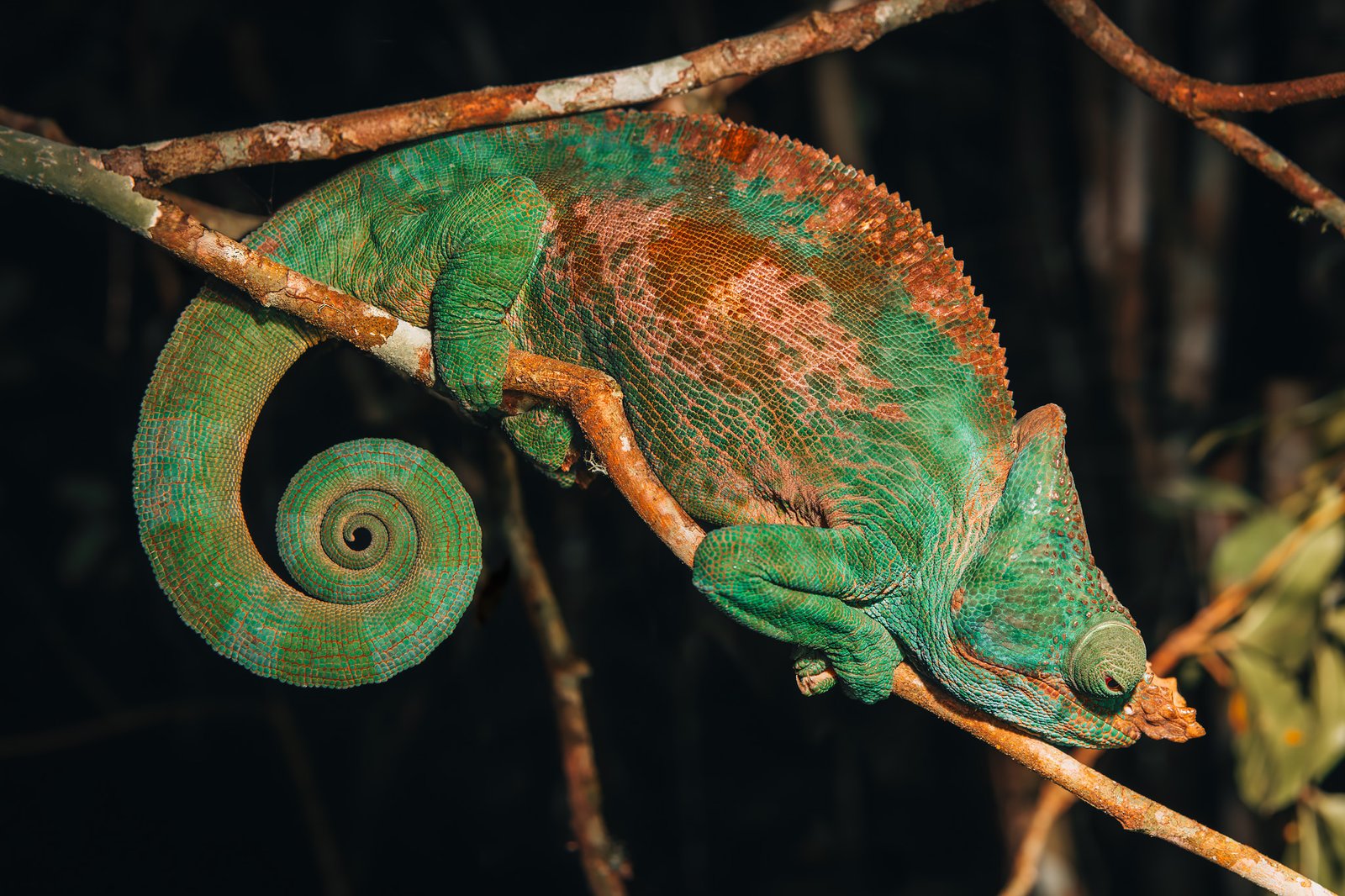
One of our most memorable experiences was encountering a Parson’s Chameleon. Locating one is difficult enough, photographing one at least five meters above ground partially concealed between branches in complete darkness is a whole different story.
Another memorable moment was trying to spot the famous Comet Moth, one of the largest silk moths in the world, without success, only to later find one calmly sitting outside our cabin once we returned.

The Voice of the Forest
Perhaps the most memorable experience occurred early before sunrise on the second day.
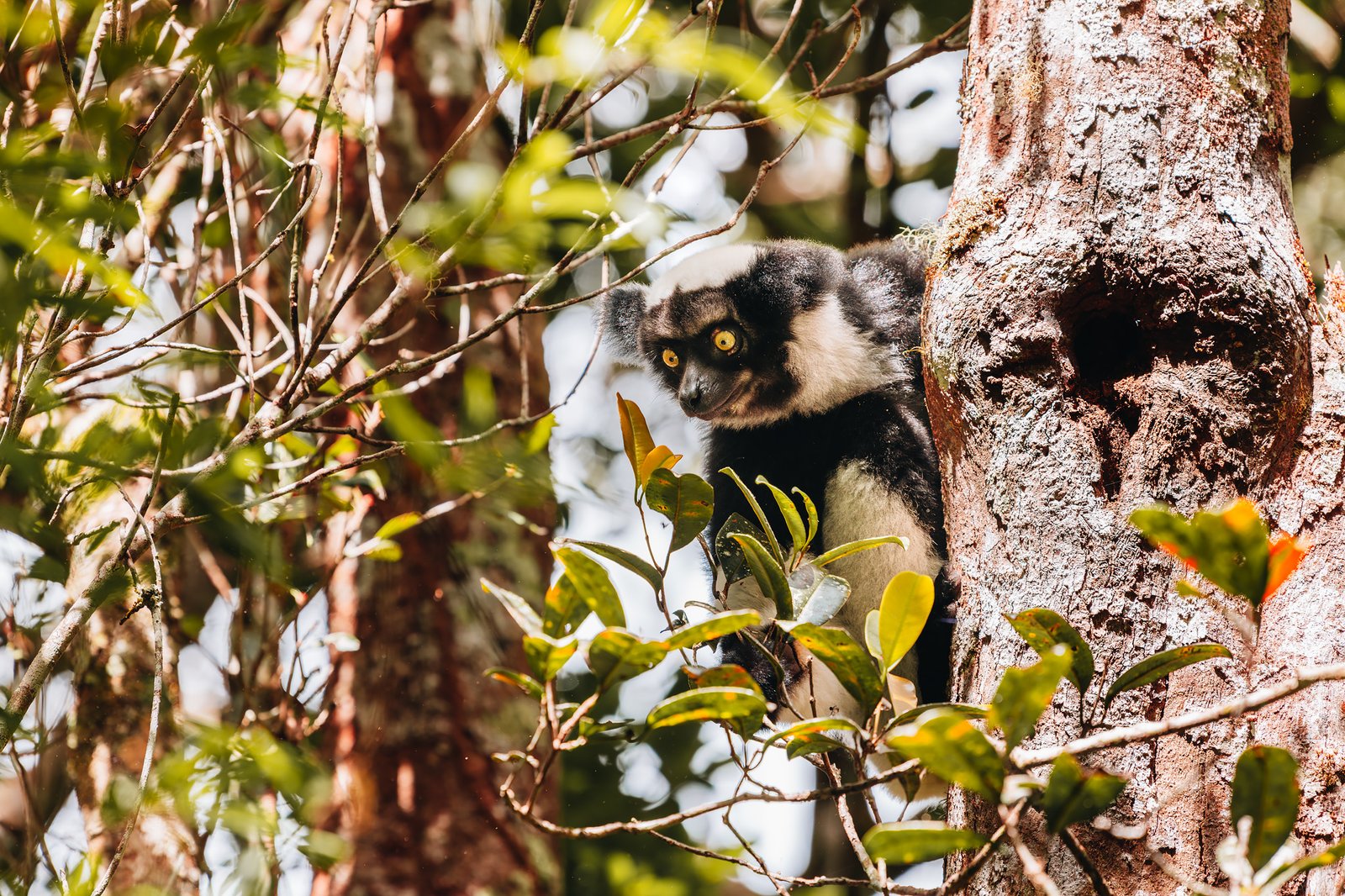
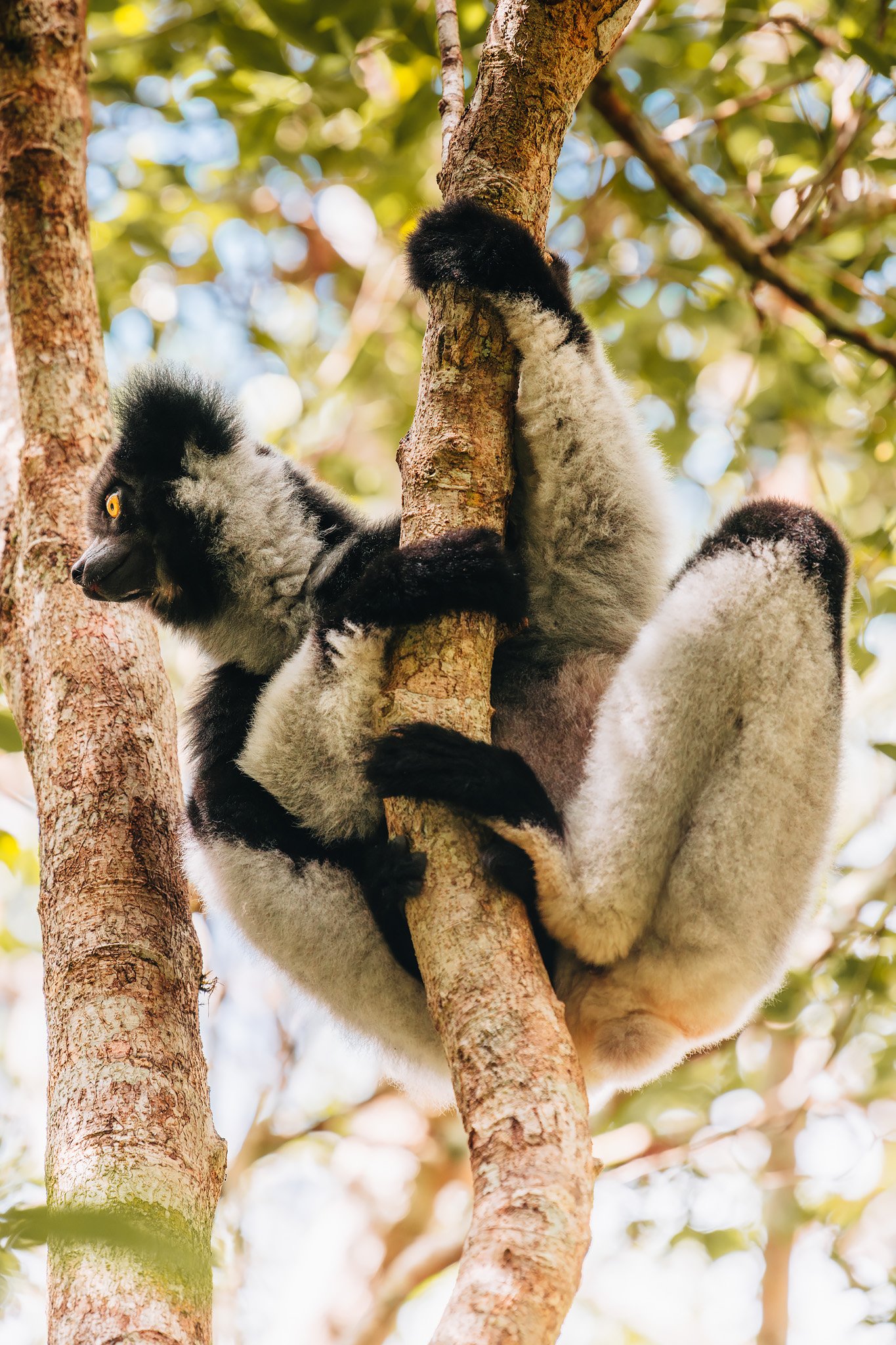
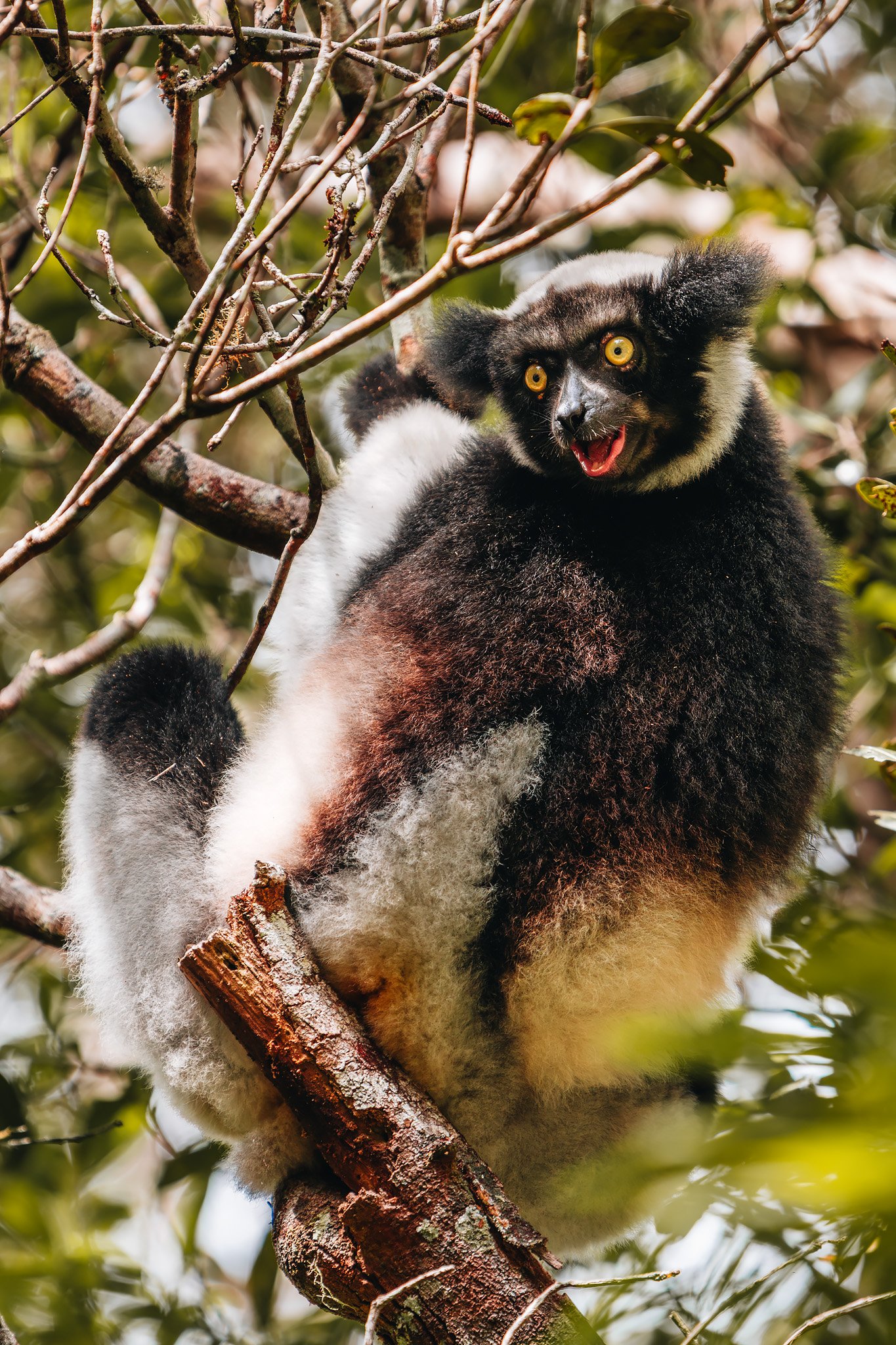
A distant rising call moving through mist above the canopy, followed by a second response deeper within the forest. The Indri.
Indri calls carry for miles through rainforests and are unlike anything else in nature; somewhere between a whale song, a siren, and something ancient emerging from the forest itself.
The Indri is not only one of Madagascar’s most iconic creatures but also one closely associated with Malagasy belief systems and fady, Malagasy taboos and ancestral myths that pervade nearly all areas of the island. Some myths portray Indris (or Babakoto) as relatives or ancestors of humans. Other legends depict Indris worshiping the sun at dawn when they occasionally stand upright facing the morning light before calling.
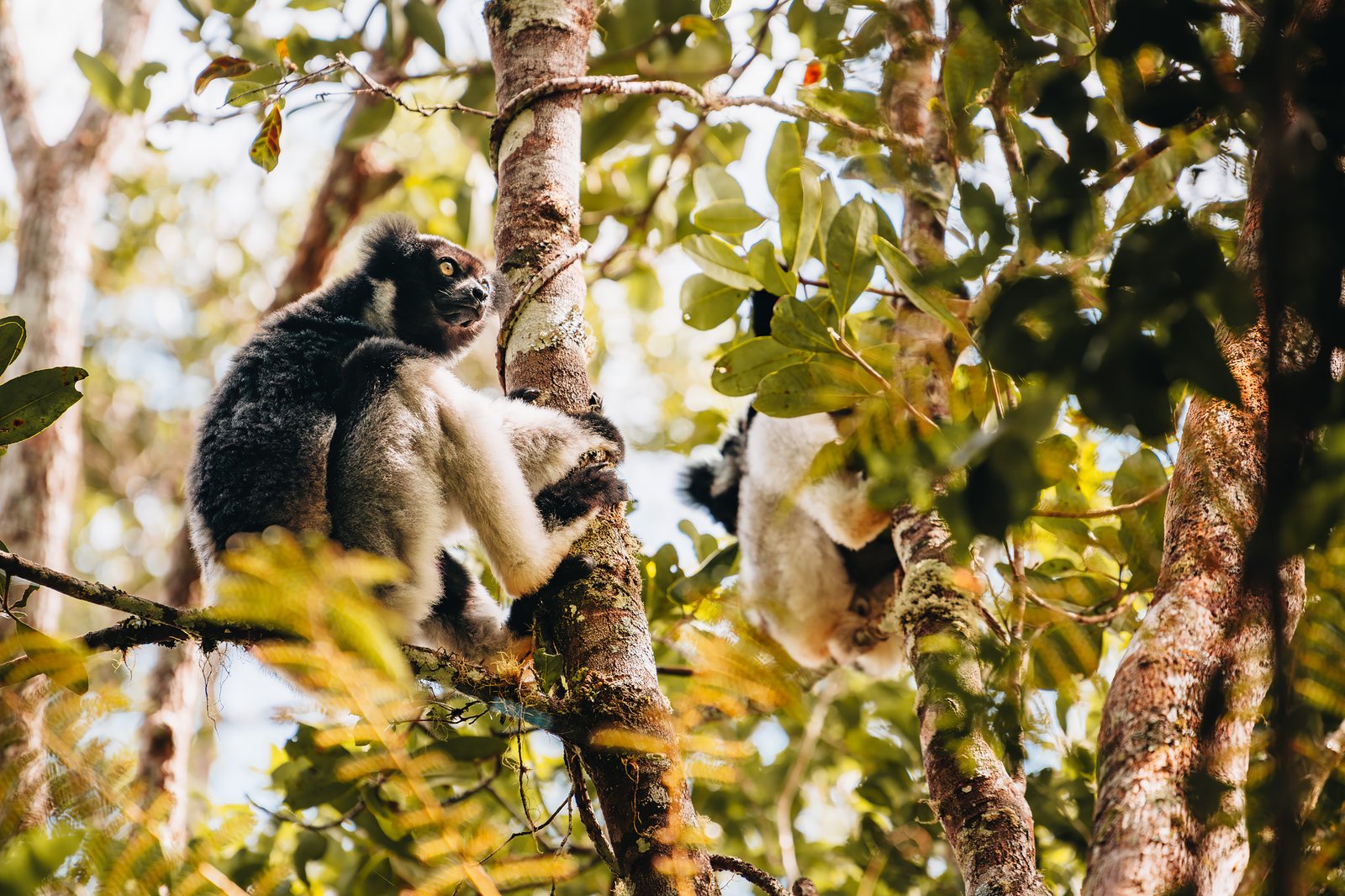
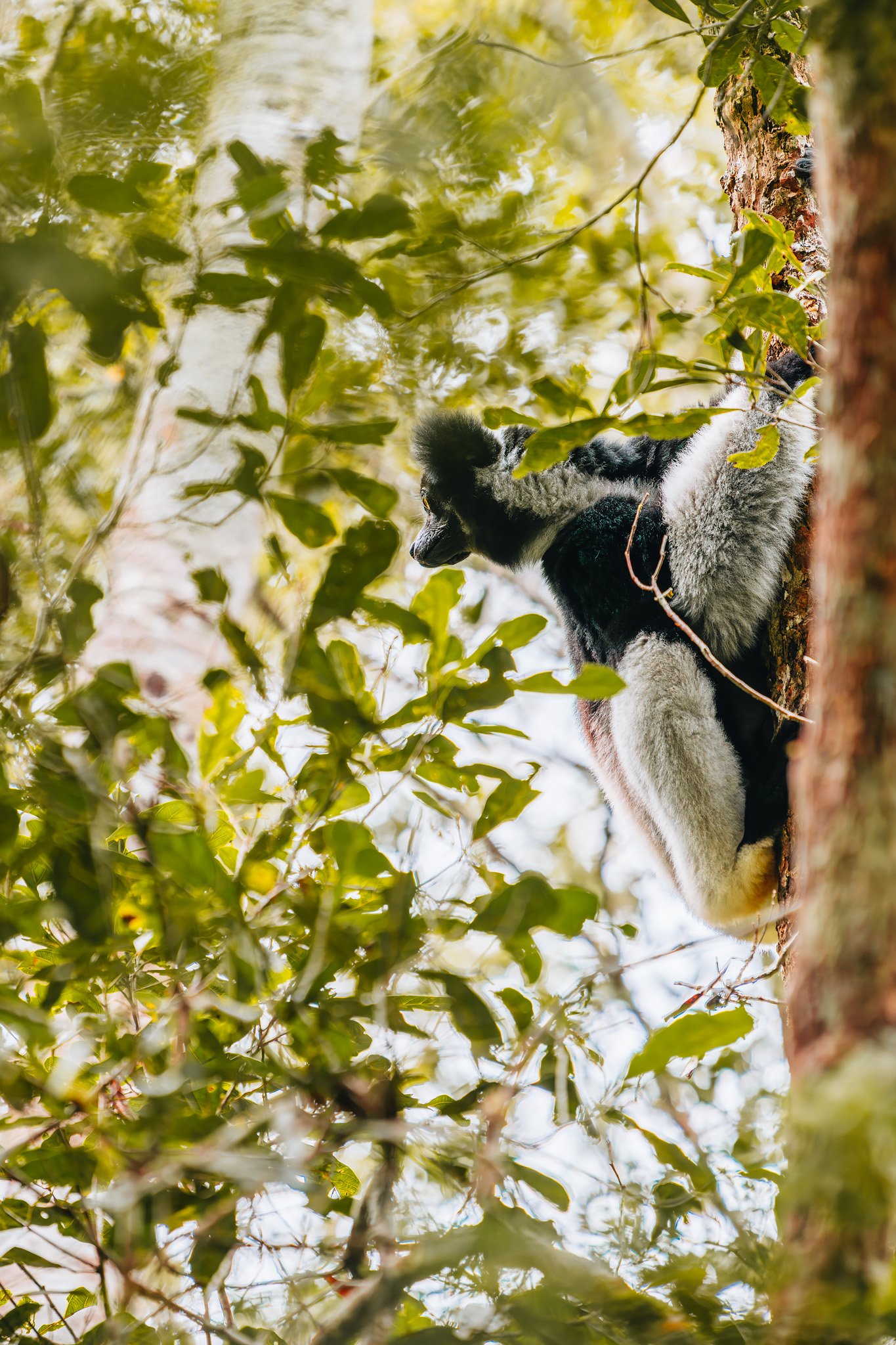
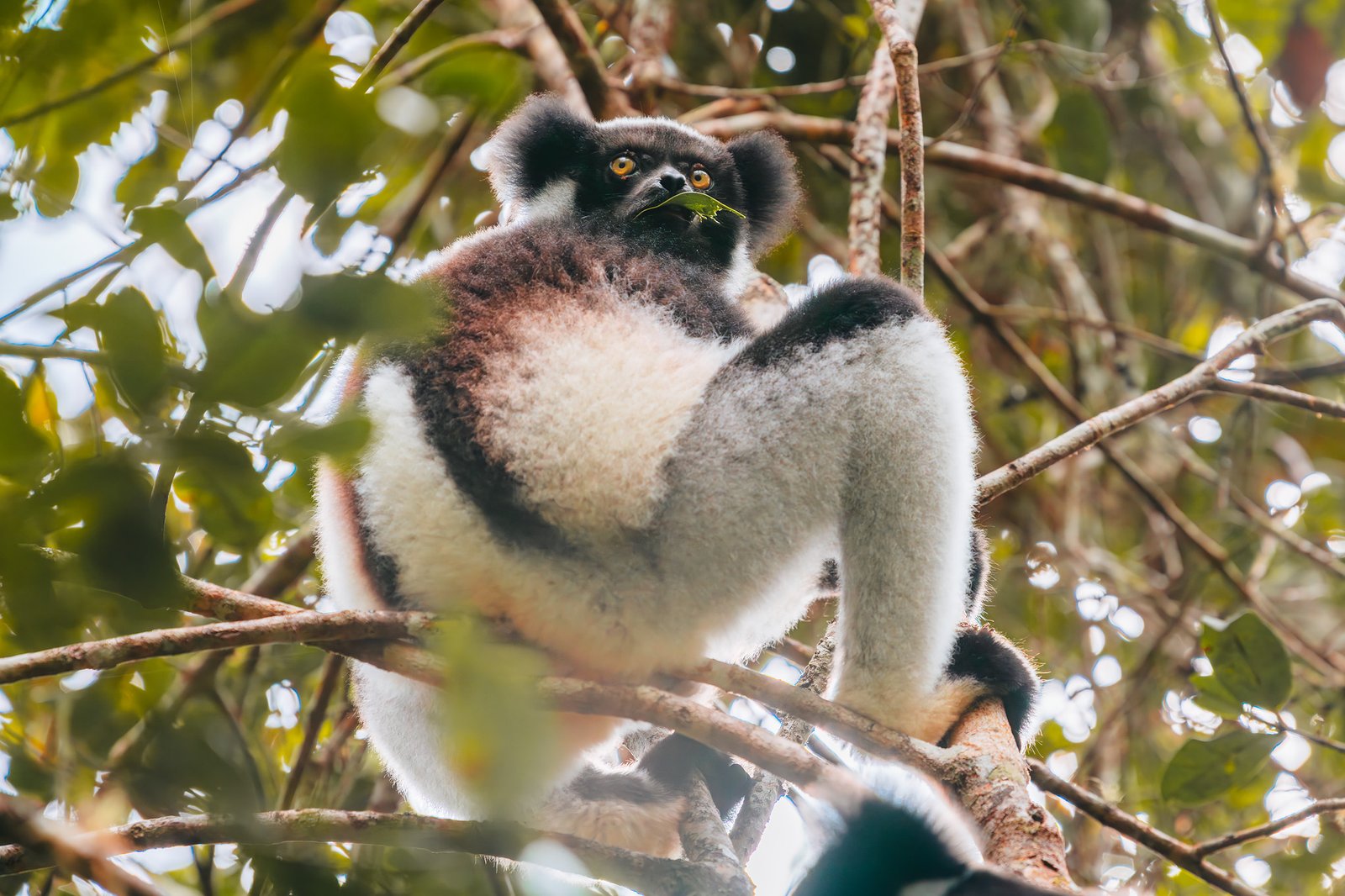
Finally we spotted them high above us eating quietly from leaves while moving through the canopy with impressive agility.
They are certainly larger than most lemurs and remarkably expressive, however it is their movement that becomes etched in memory as suddenly they propel themselves acrobatically through enormous spaces separating trees with complete control.
Observing them eat and groom each other high above the forest floor sometimes felt strangely human, and deeply ancient too.
Return To Tana
Following a couple days in Andasibe we headed back west toward Tana.
Rainforests gradually disappeared behind us while highlands re-emerged through mist, rural villages and rice terraces. However, Madagascar already felt far larger and more fragmented than when we arrived.
Only Andasibe was merely the beginning. Ahead lay the dry forests of Kirindy, the baobabs of the western coastline and the limestone labyrinths of Bemaraha. We would be going through water crossings, dust roads and environments unlike the humid forests encountered in eastern Madagascar.
The island was already dividing itself into separate worlds.
Alta Via 1. Part V: Tre Cime di Lavaredo - A Necessary Detour
The Alta Via 1 had ended.
Belluno marked the end of the route; lower elevation, warmer air and a return to normalcy. The rhythm of the trip had changed, and with it, the perception that the trip had reached its logical conclusion.
But not all had settled. Something had appeared days earlier, from the summit of Seekofel. At the time, Tre Cime was simply a reference point, far away, abstract. Something that belonged elsewhere in the trip. Officially, that area is part of a different trek, the Alta Via 4, but many visit it as a one-day trip, or even as their main experience of the Dolomites.
Regardless of fatigue or pain in my right leg, which would worsen over the next few days, the decision was simple. Just one more push.
Stage 8. Auronzo – Rifugio Locatelli (via Cadini di Misurina)
Distance: 8.15 km · Elevation Gain: +389 m · Elevation Loss: −313 m · Technical Difficulty: Easy
Returning to the mountains from Belluno felt more like a return to a very familiar place. The trip back to the mountains was quieter and more direct. There was no anticipation, only movement toward something that somehow felt like the more obvious conclusion to the trip.
There was an issue at the rental car agency. License plate information and parking near Auronzo caused a slight moment of friction. This type of detail can be more important than it should be, but it was addressed quickly with the guys at the entrance gate at the bottom of the mountain and then forgotten.
And then the road began to climb toward Auronzo.
The shapes began to return. The pale rock, so distinct and nearly artificial in its tone, was back in plain sight above the tree line. Layers of spruce and larch forest gave way to more open terrain as the elevation increased.
The rhythm of the landscape was back, but the experience would be different.
Cadini di Misurina was the first stop after leaving the car.
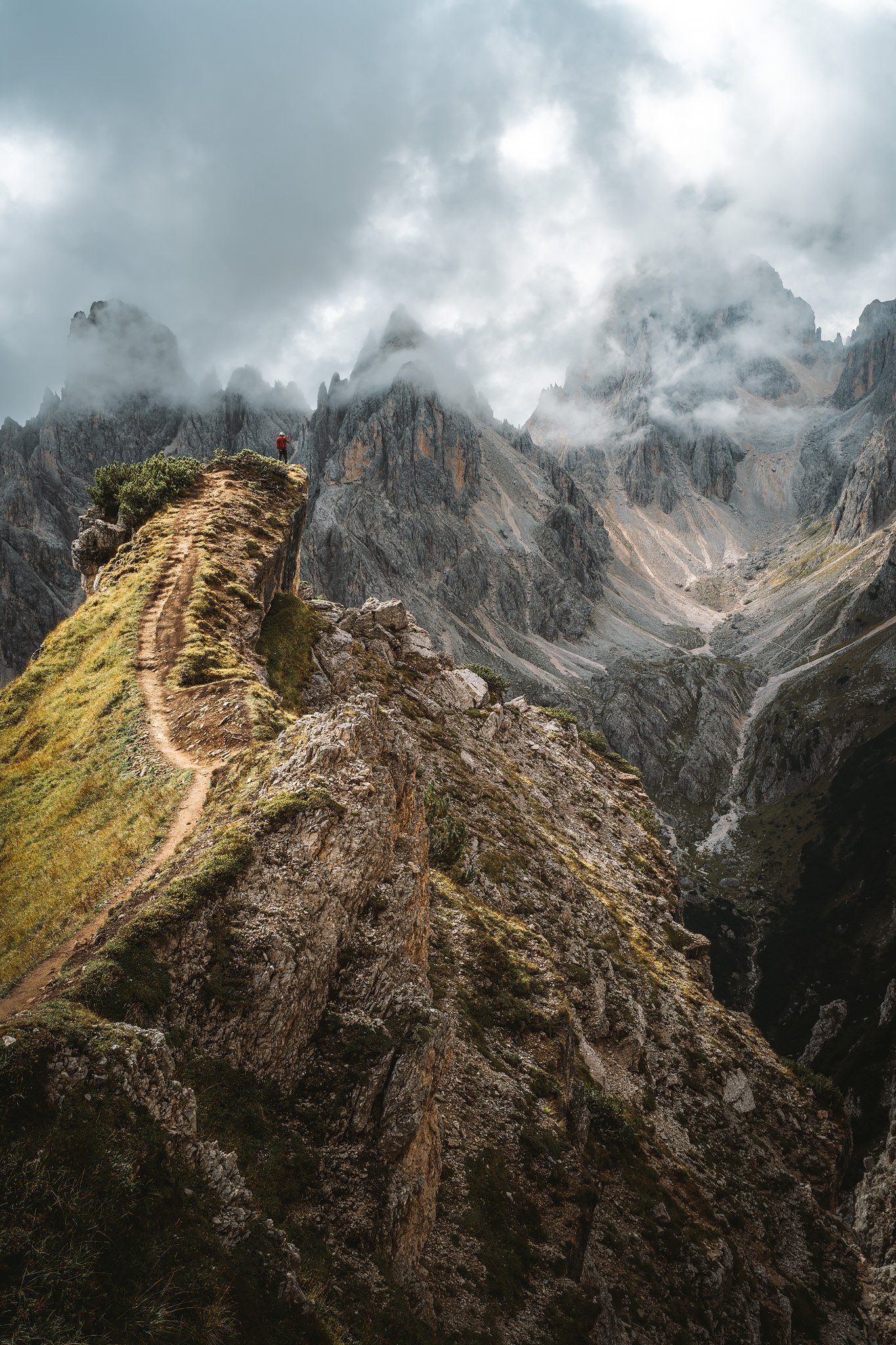
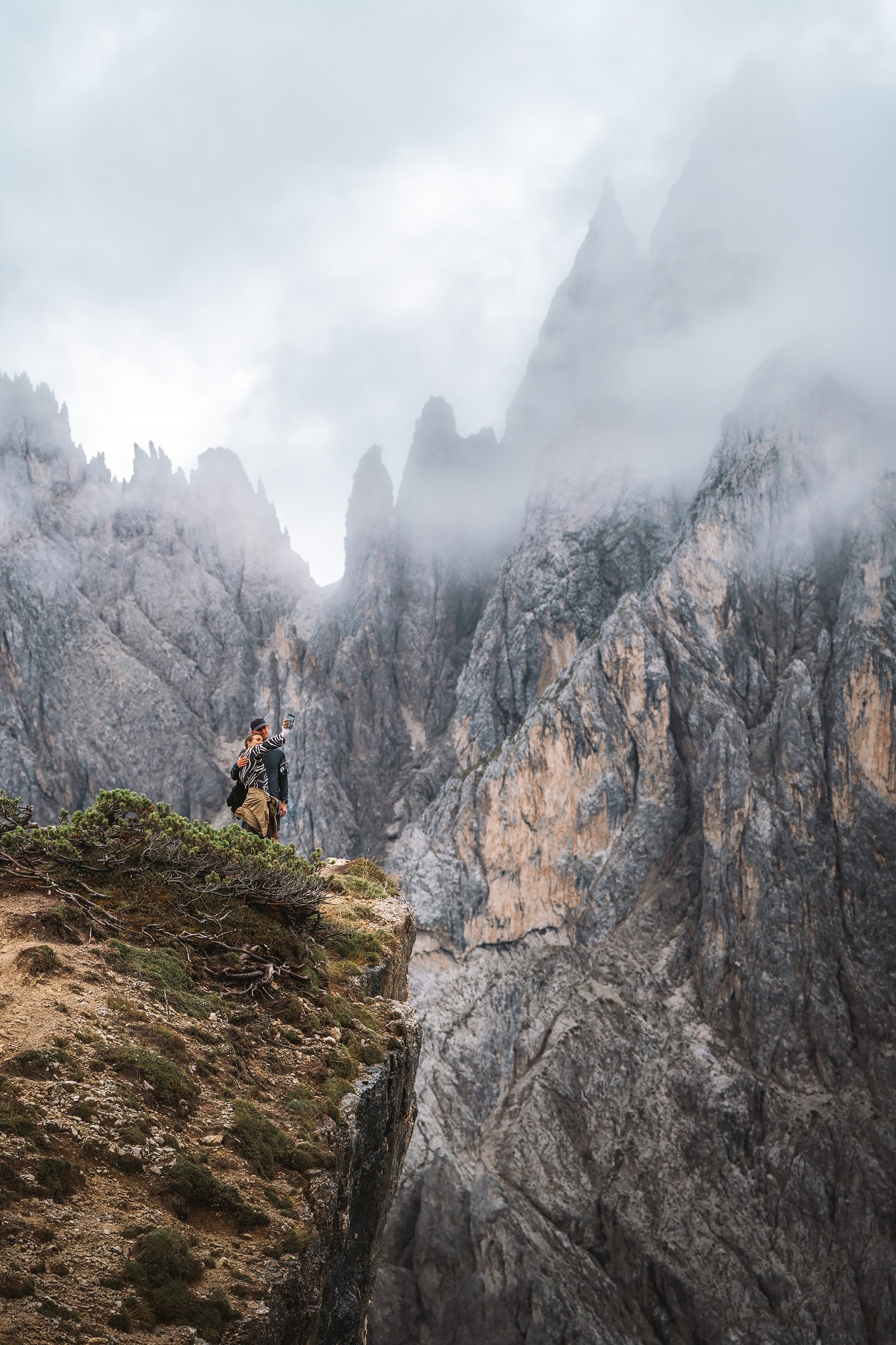
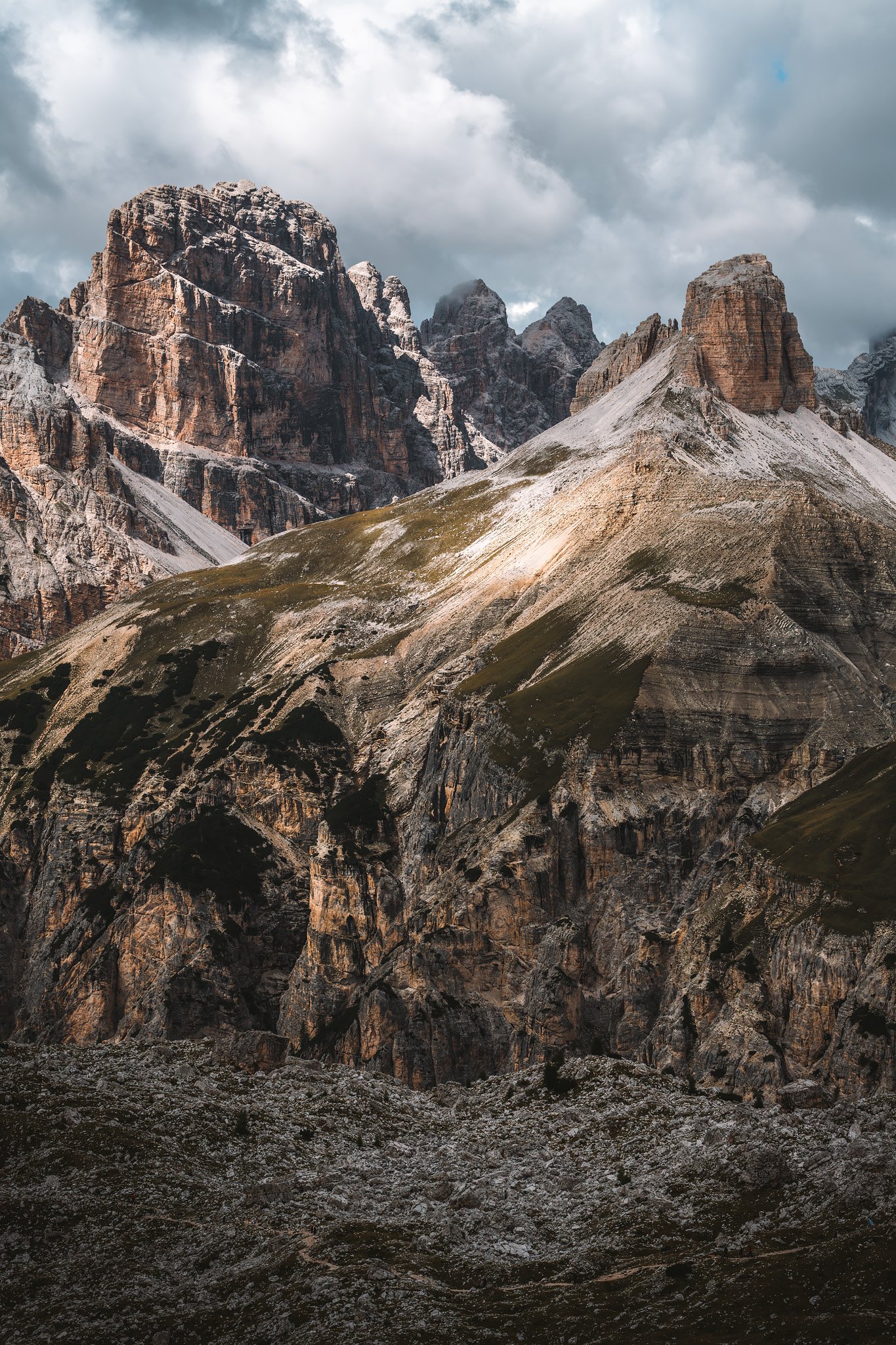
These formations differ from those that had characterized the previous days. More angular, more fractured. A collection of narrow ridges and spires created by erosion on brittle dolomitic rock, producing a sense of depth compressed into a single plane.
They lie immediately in front of the south-facing sides of Tre Cime and serve as a sort of foreground, chaotic, irregular, contrasting with the more monolithic form of the towers behind.
This contrast is part of what makes the area so compelling. It is also what has made it so visible.
A crowd had gathered for a photo. A particular vantage point, created as much by social media as by the landscape itself.
Mass tourism has hit Cadini di Misurina. Not only due to how easily accessible it is, but also due to how many times it has been shared. And yet, even there, once you see the view, the mountains remain.
The Way to Tre Cime
The trail leading to Tre Cime is surprisingly straightforward.
Wide, well-compacted trails, built into the slope and maintained for constant traffic, dominate the terrain. The ground is stable, composed of packed gravel and worn rock, a product of both natural erosion and continuous human use.
For several days, the terrain was inconsistent and technical parts of the trip were frequent. The distinction here is quite obvious. The towers begin to show themselves exponentially, until you see their most recognizable shape.
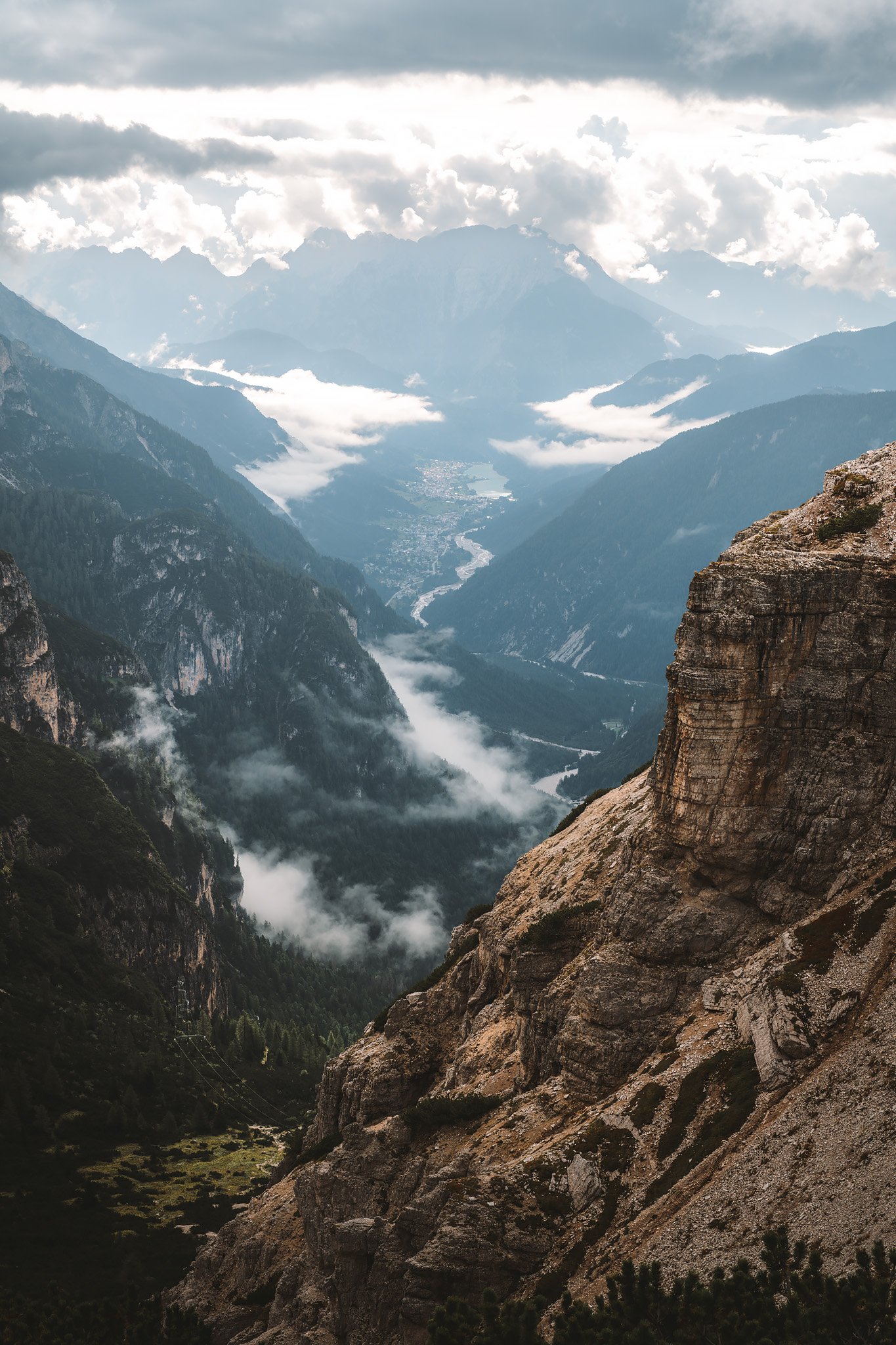
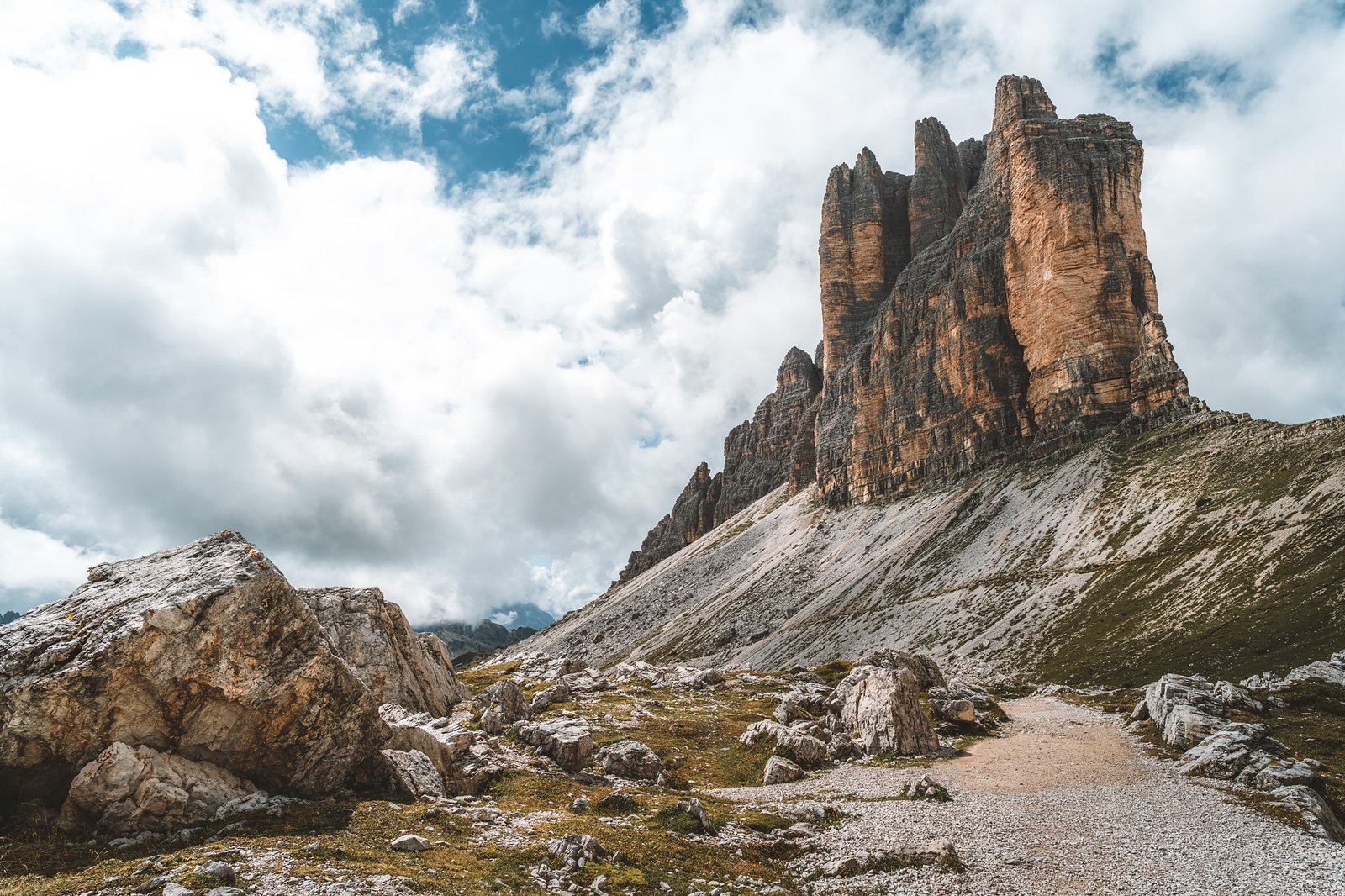
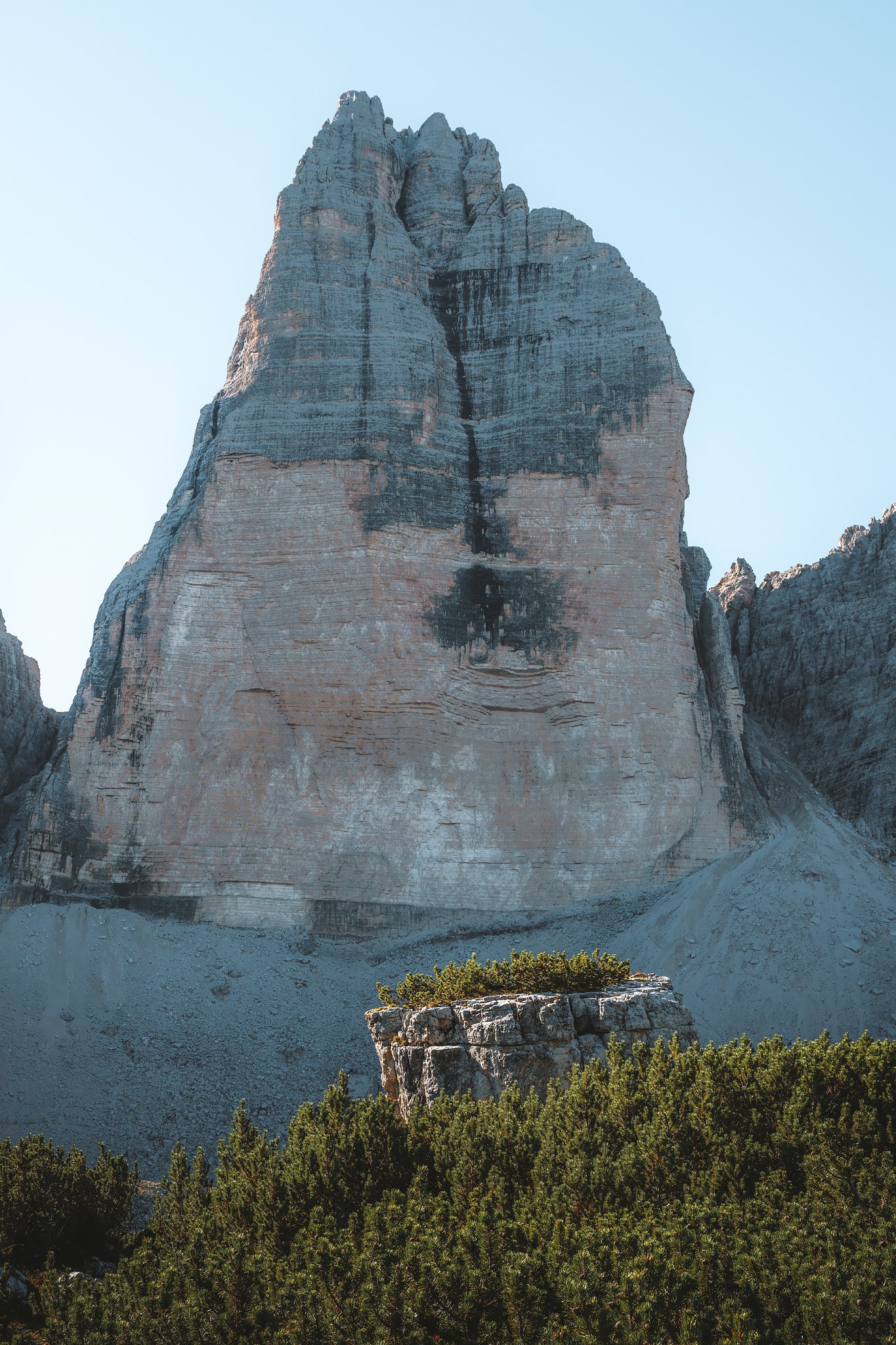
From the east, where the view opens up to the distant Passo Grande dei Rondoi, the geological structure becomes clear. Towering vertical walls of pale dolomite rise sharply from a relatively flat foundation. They are the product of millions of years of marine sedimentation followed by uplift and erosion.
Layers within the rock are sometimes visible, remnants of their origins as ancient coral reefs, now elevated into the air.
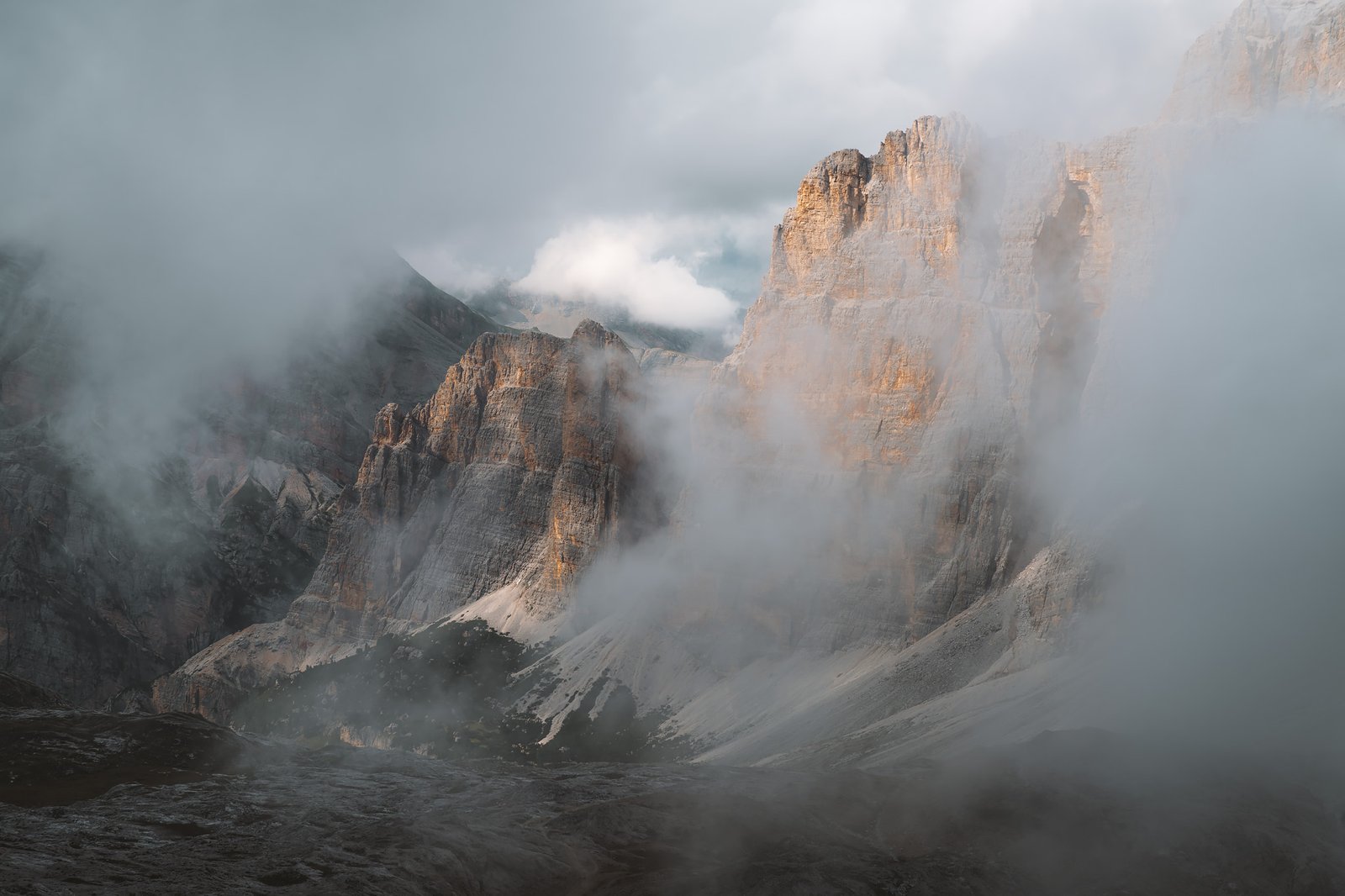
Mist circulated slowly through the terrain. Sometimes, it obscured the edges. Sometimes, it dissipated entirely, leaving the rock exposed, sharp against the sky.
Enough to understand both aspects of the location, why it draws so many, and why many do not continue past.
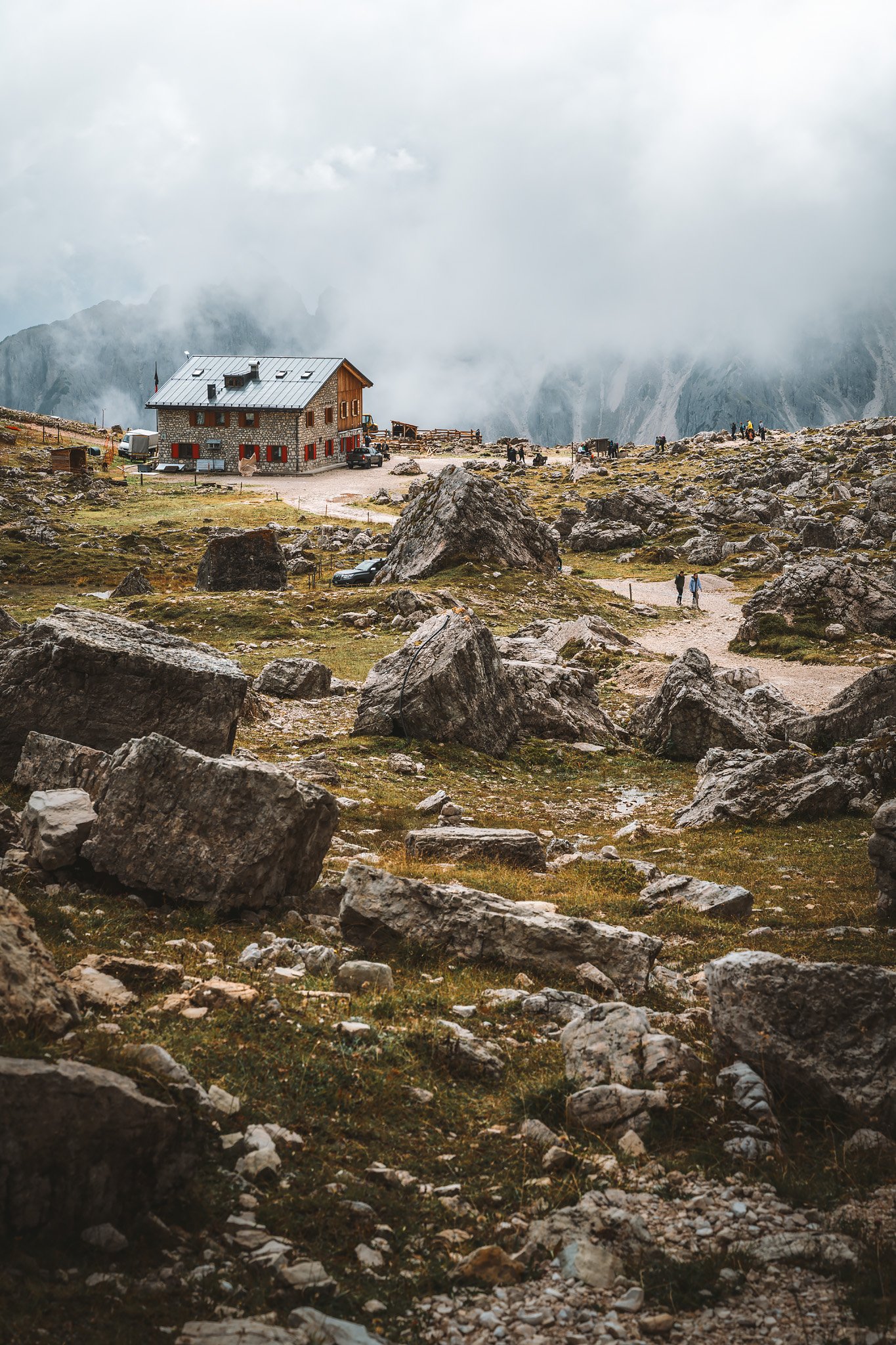
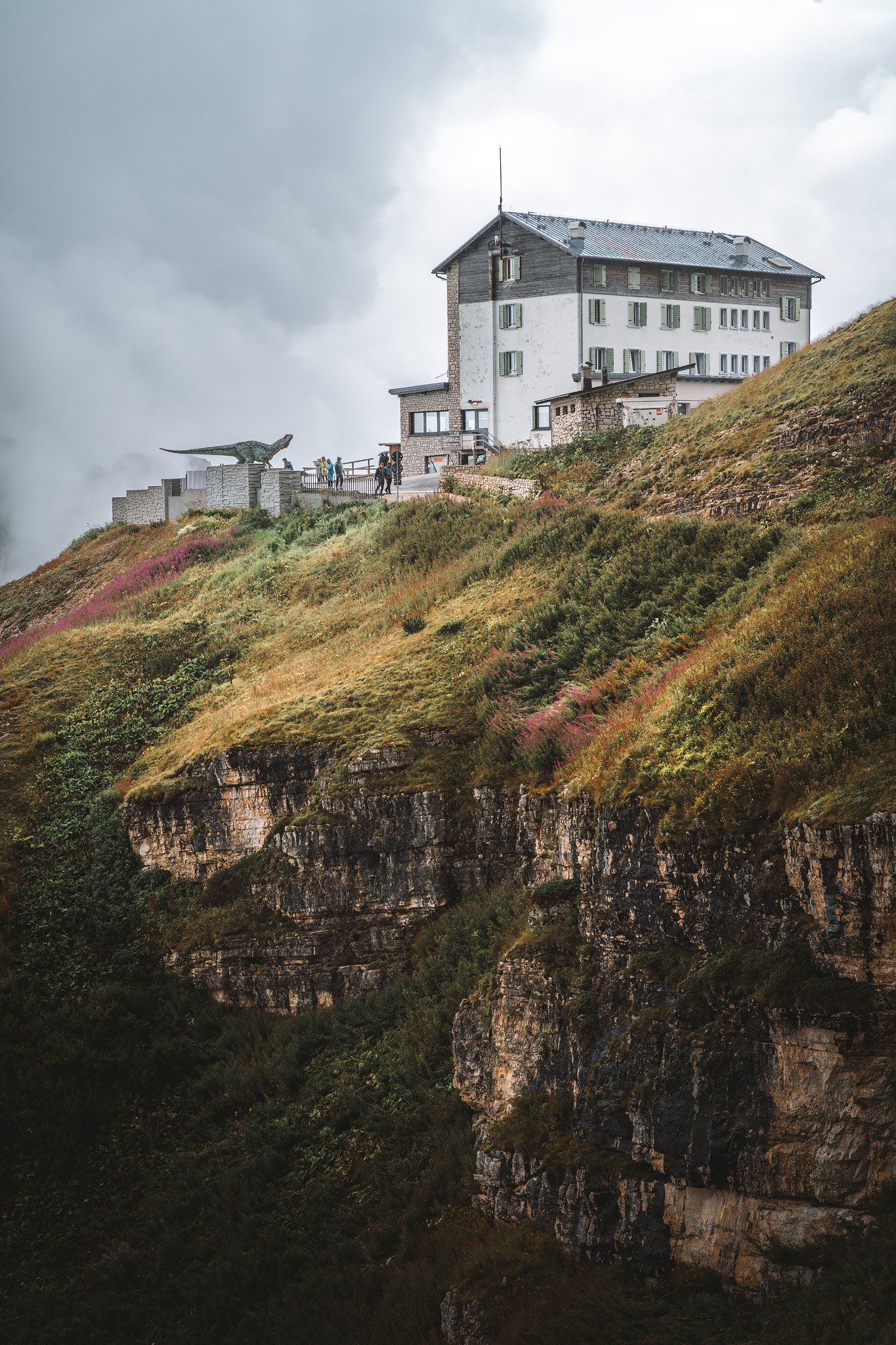
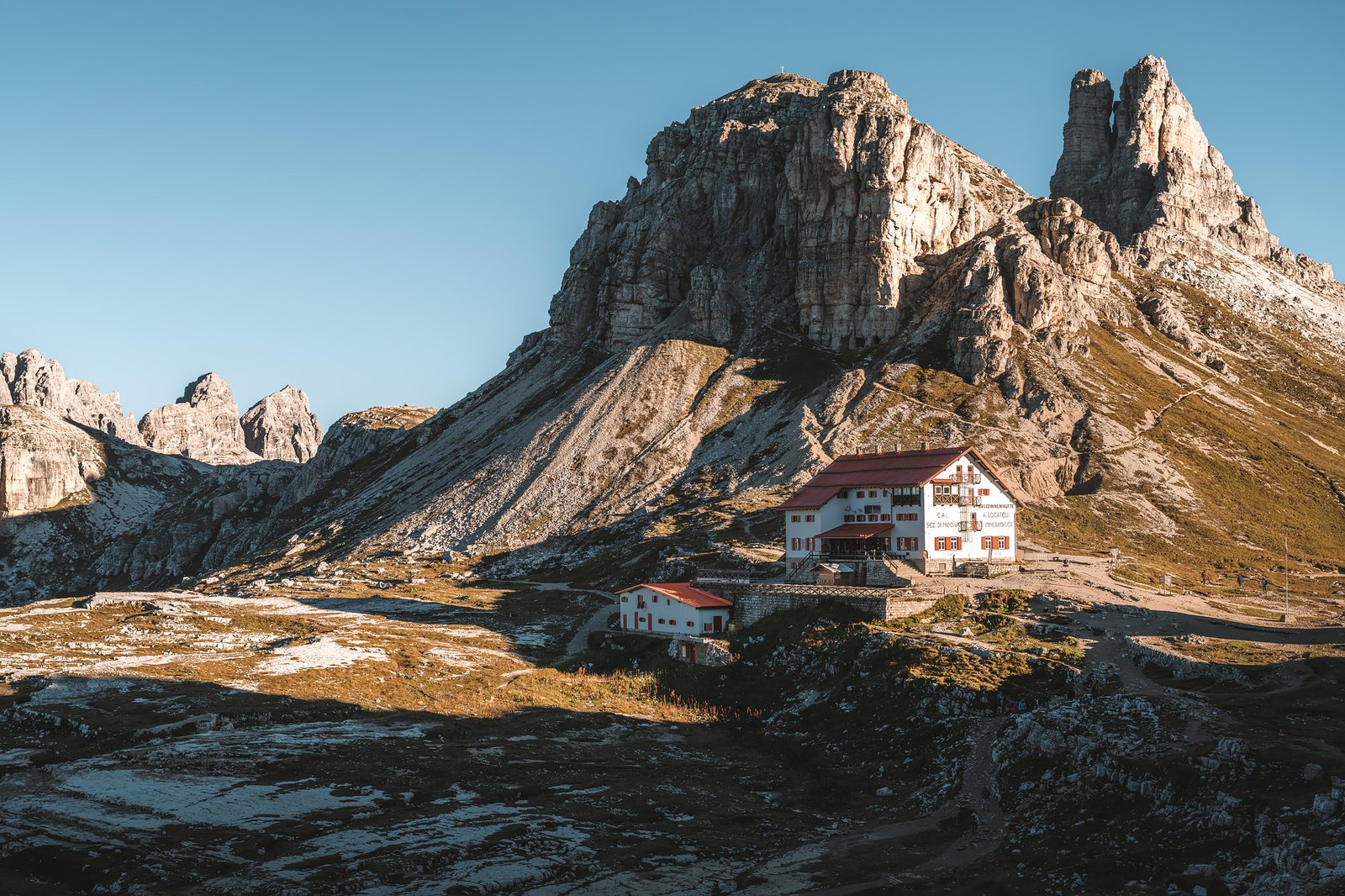
Rifugio Locatelli confirmed the contrast. Busy, active, and yet, situated perfectly.
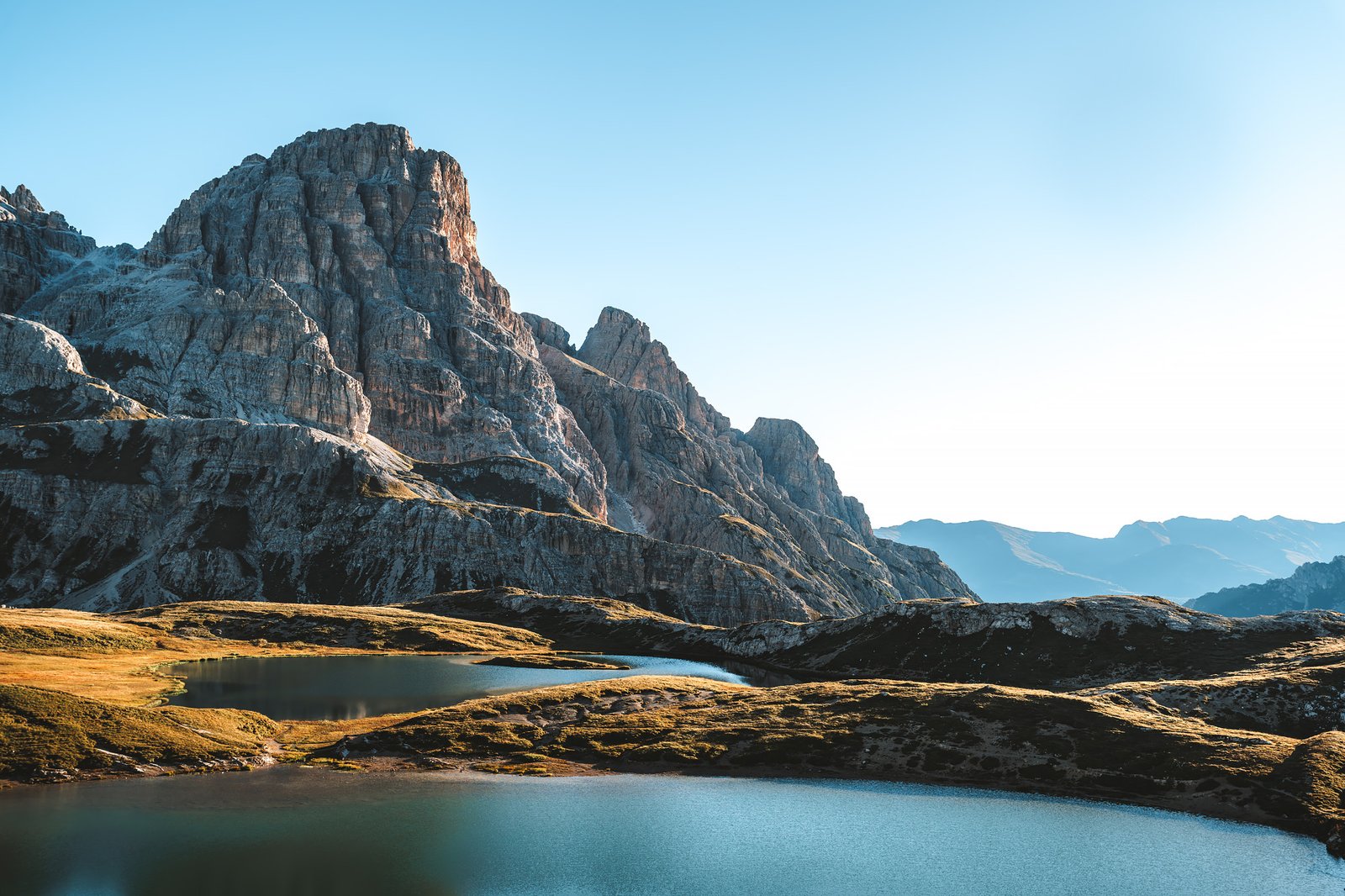
The Laghi dei Piani behind the refuge are located in shallow depressions carved into the rock. Their calm surfaces reflect the towers when the wind permits. The terrain surrounding them is bare. There is low-alpine vegetation and isolated clumps of grass between the rocks.
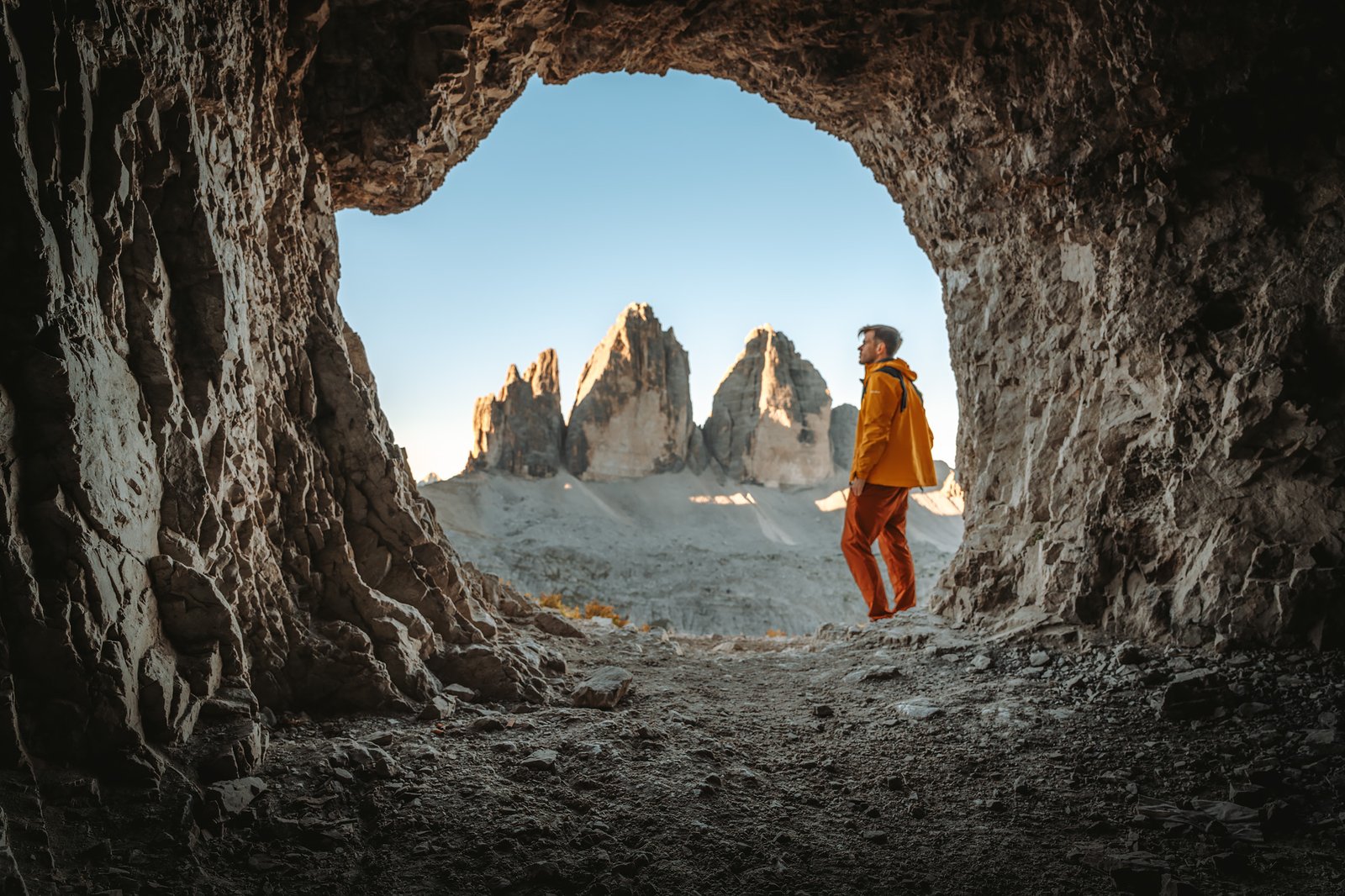
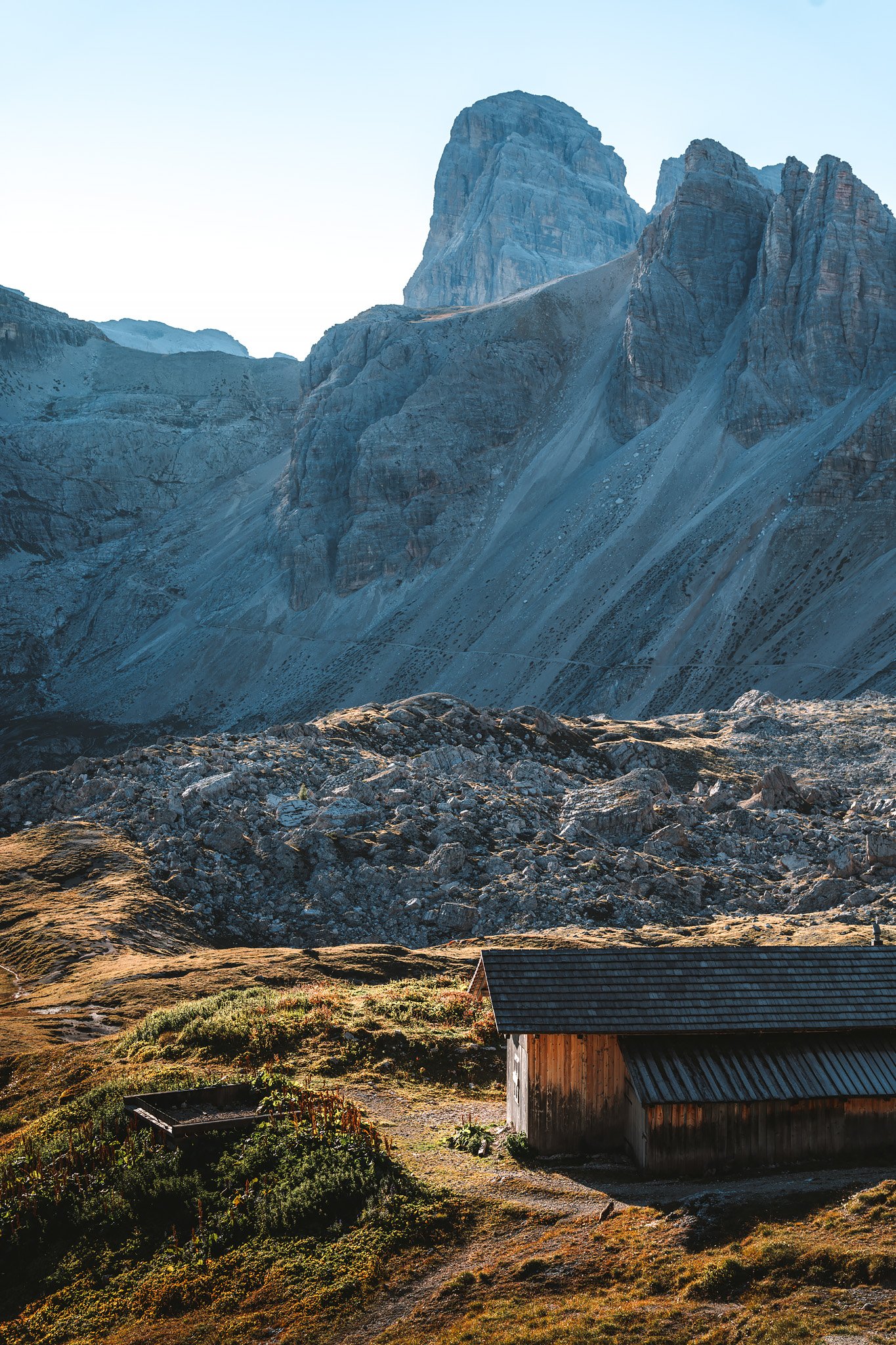
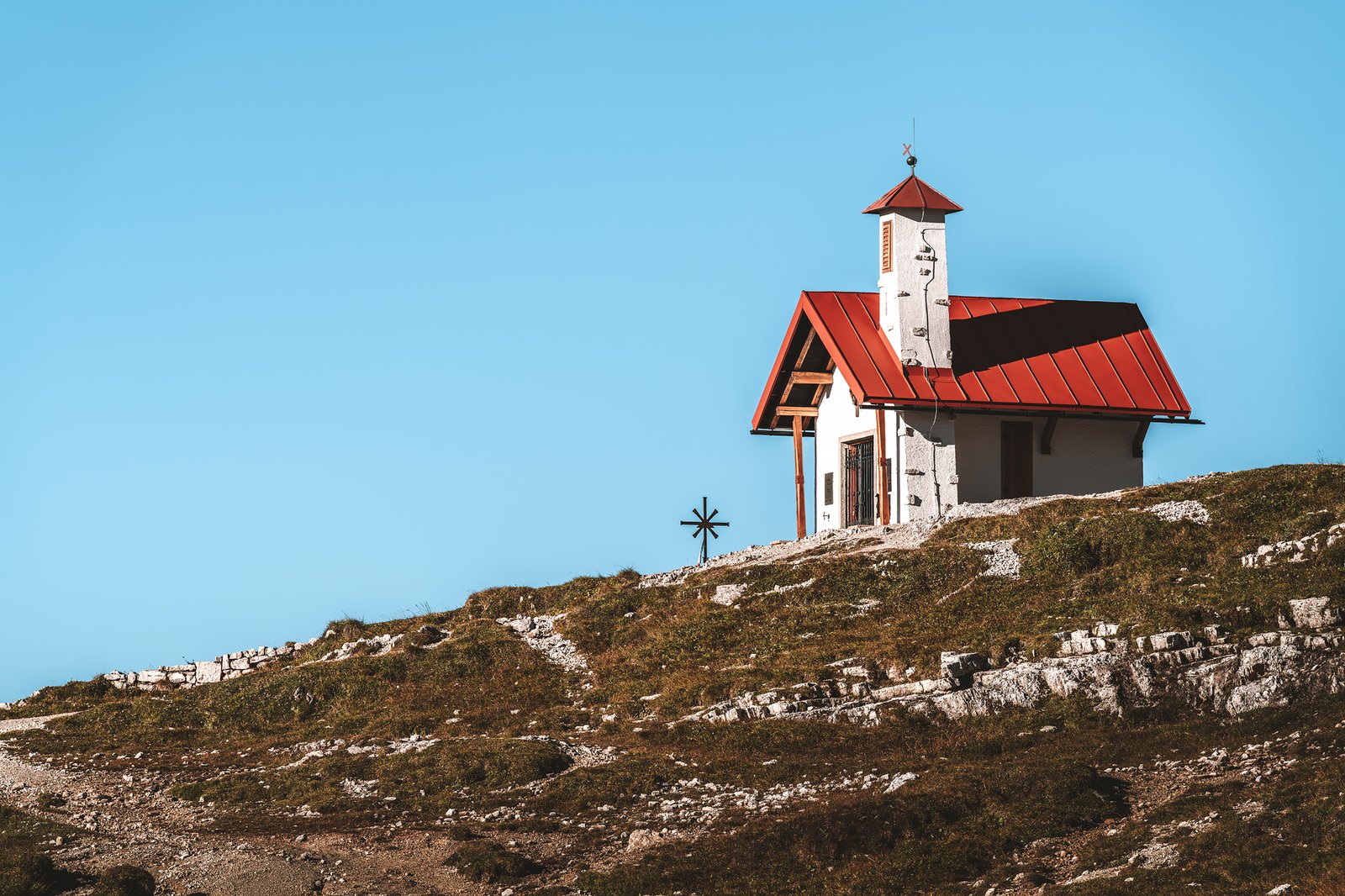
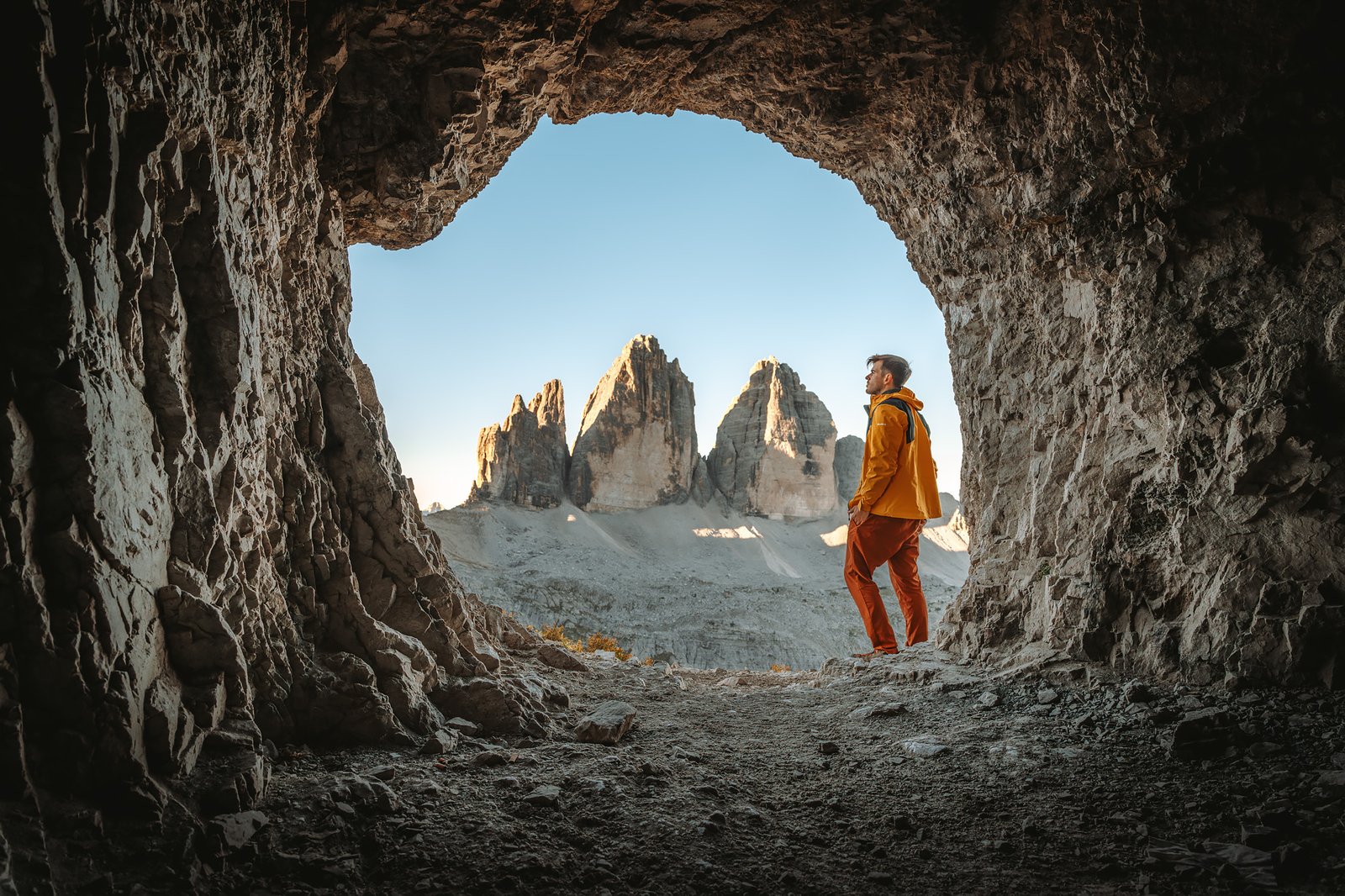
Sheep walk around this terrain without hesitation, accustomed to its irregularities. The caves nearby carved into the rock during WWI represent a continuation of the locations previously encountered.
I was walking with a limp by then, but it did not matter.
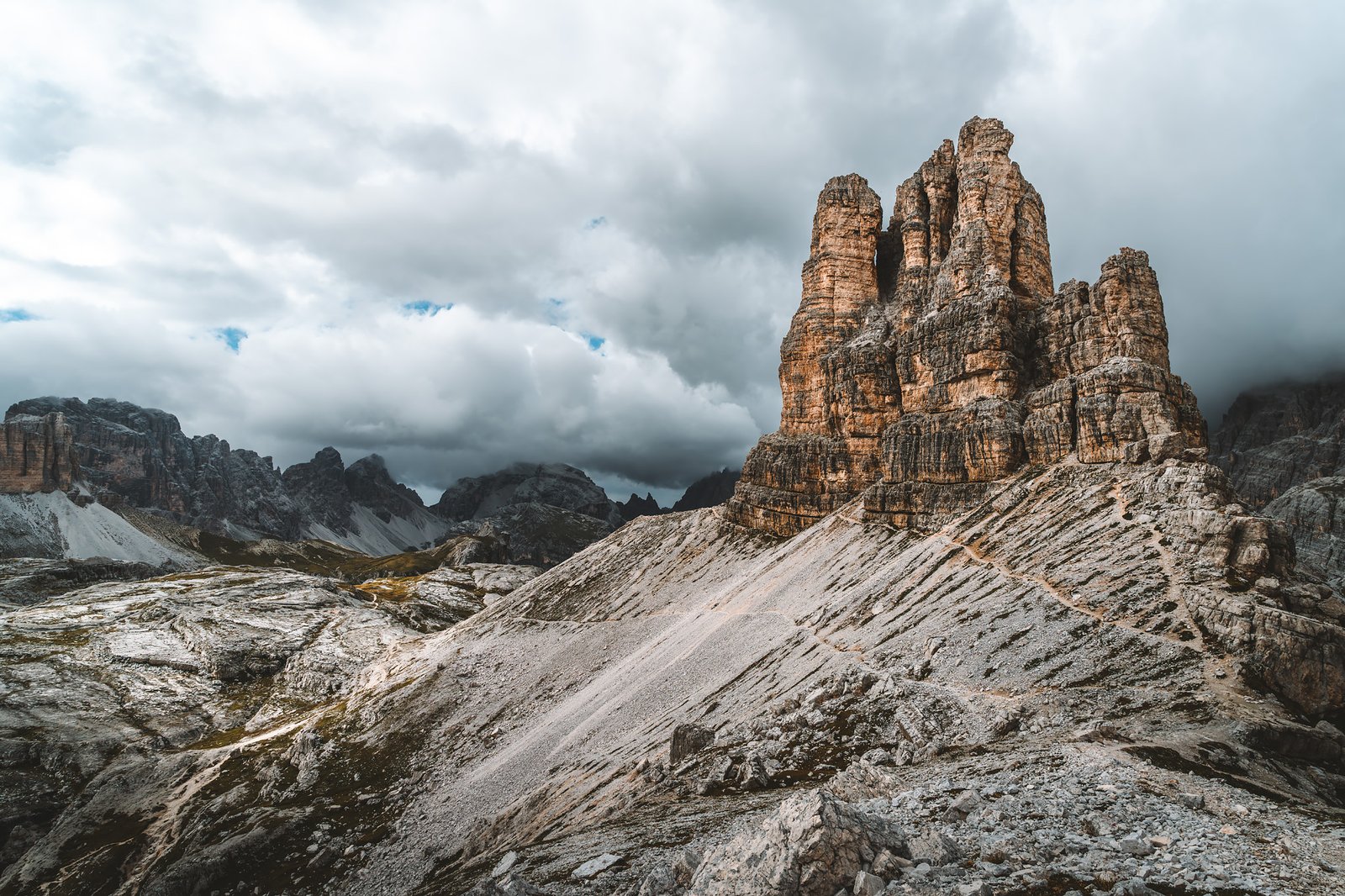
Climbing toward Sextenstein changes the perspective again. The trail to this peak that dominates the landscape around the refugio is more rugged. There is more loose rock and unstable footing. Parts of the mountain show more of its structural foundation. The pale dolomite here breaks into sharp shards, producing a visually stunning but mechanically unstable terrain.
From the top, everything enlarges. The refuge is tiny and the pathways disappear. The summits stretch farther than Tre Cime and clouds move rapidly in discrete masses, circulating through the valleys, breaking against the steep faces of the rock.
The landscape never fully settled.
The Guardians of Light
Right after an interesting dinner with two other solo travelers, an Australian and an Italian lady living not far from Belluno, whose Nepalese husband worked in the refugio and had invited her for the first time, the conditions began to align. Clouds parted in patches and sunlight struck the vertical faces of the towers, and those who wished to contemplate its quiet majesty made their way toward the cliff.
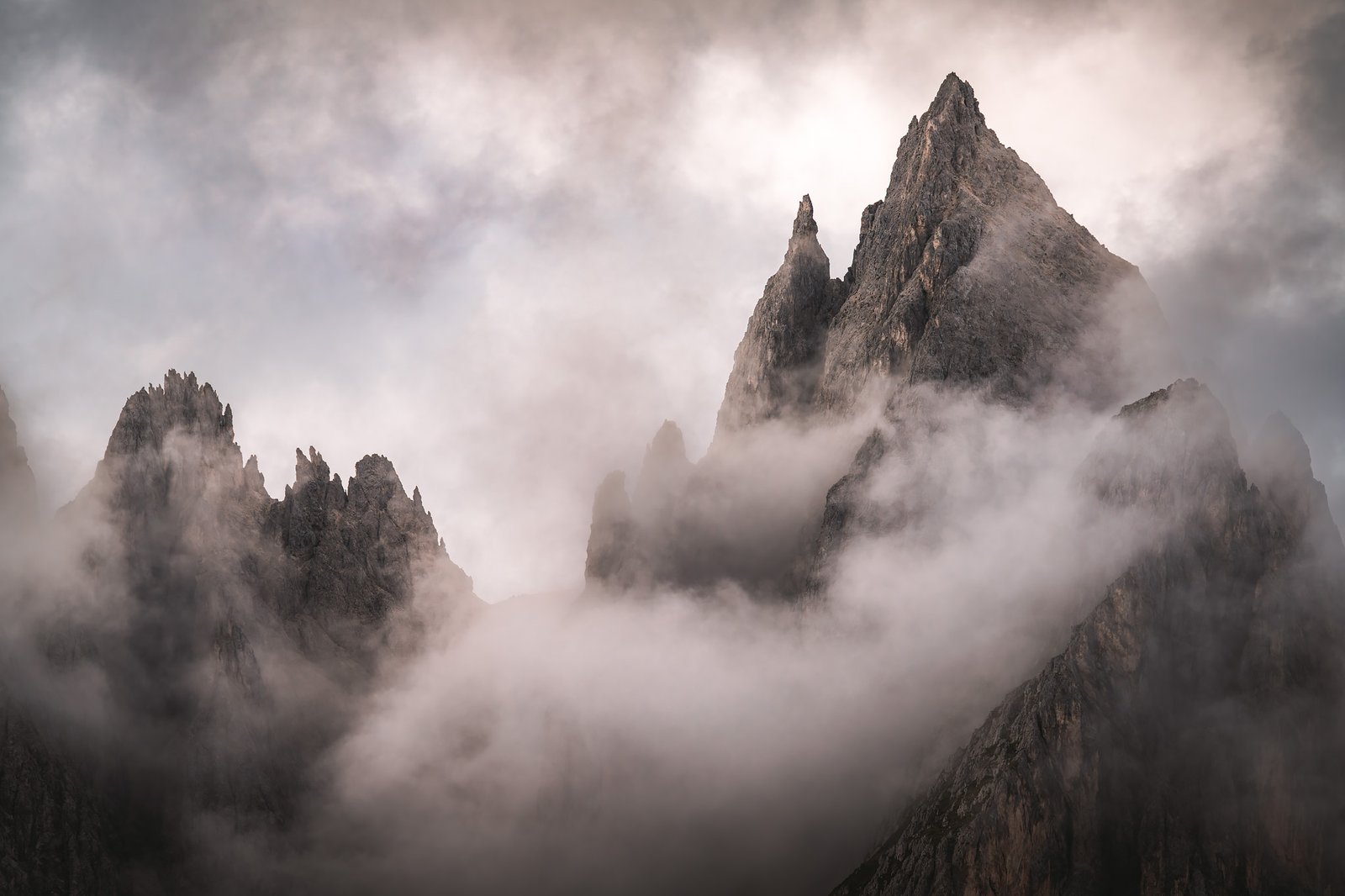
The rock colors shifted, orange. Then deeper, almost red. The mineral content of the dolomite enhances this effect. Light interacts differently with angle and surface, creating strong contrasts between illuminated and shaded areas.
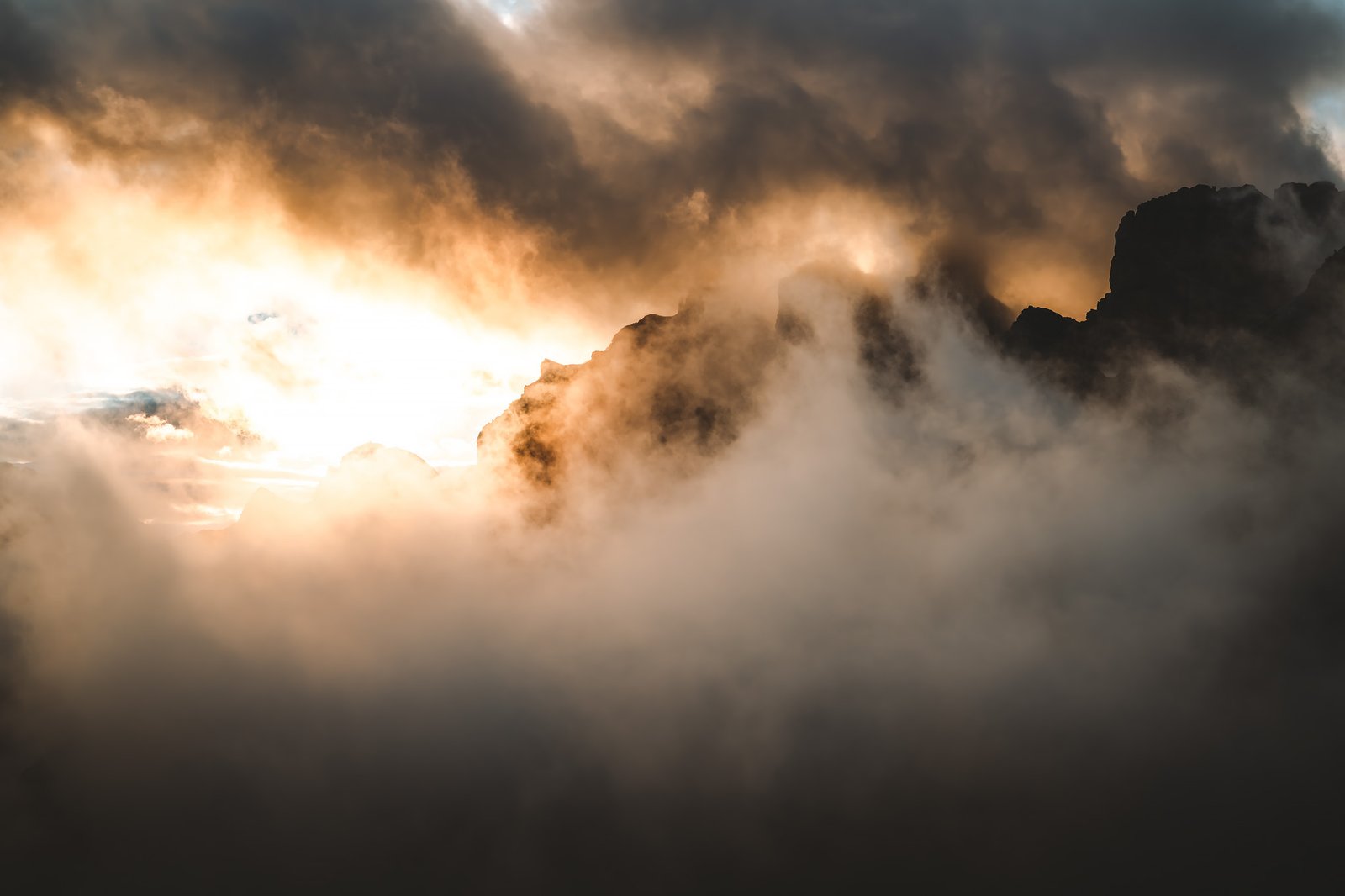
The mist passed through it.
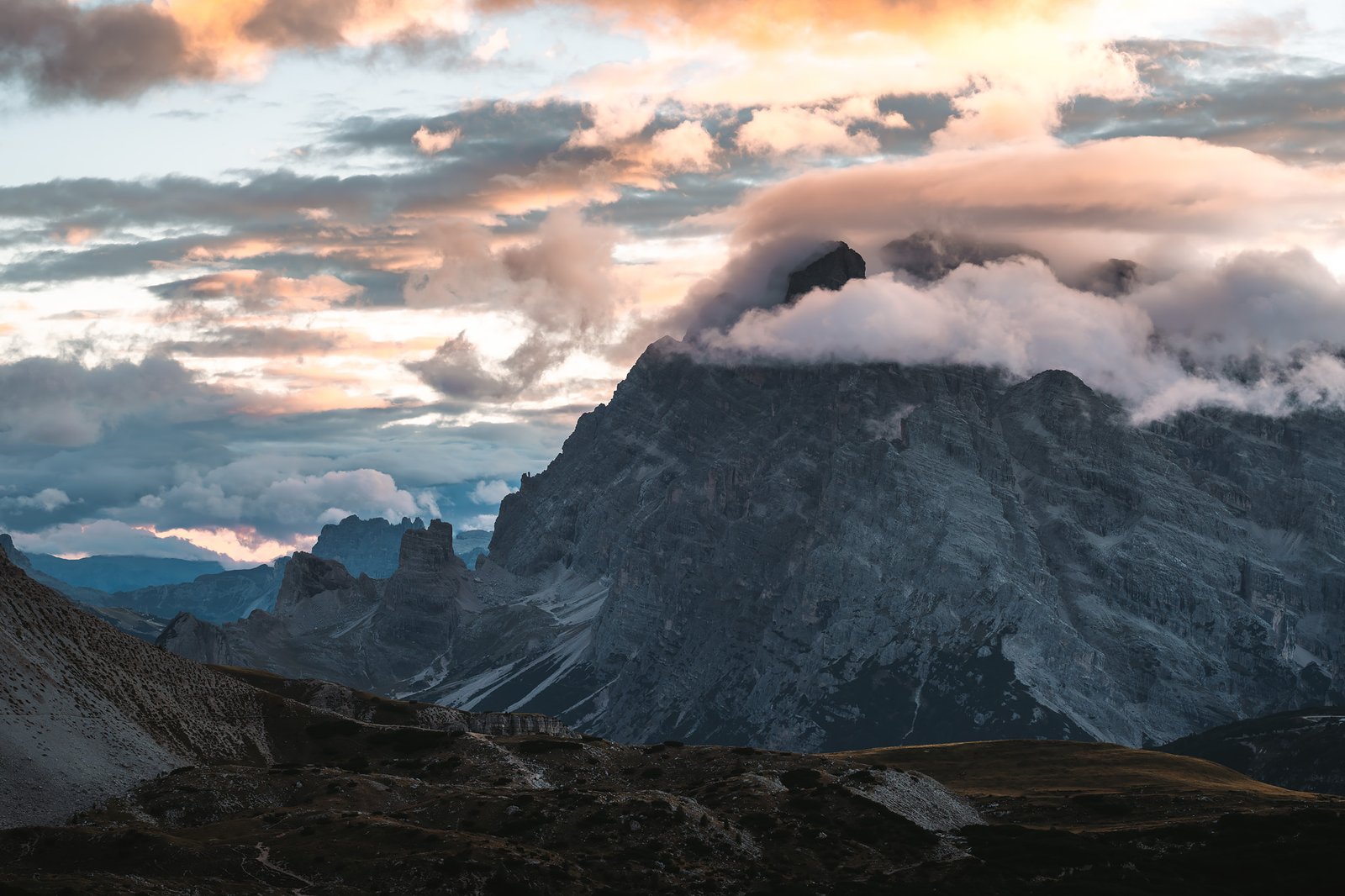
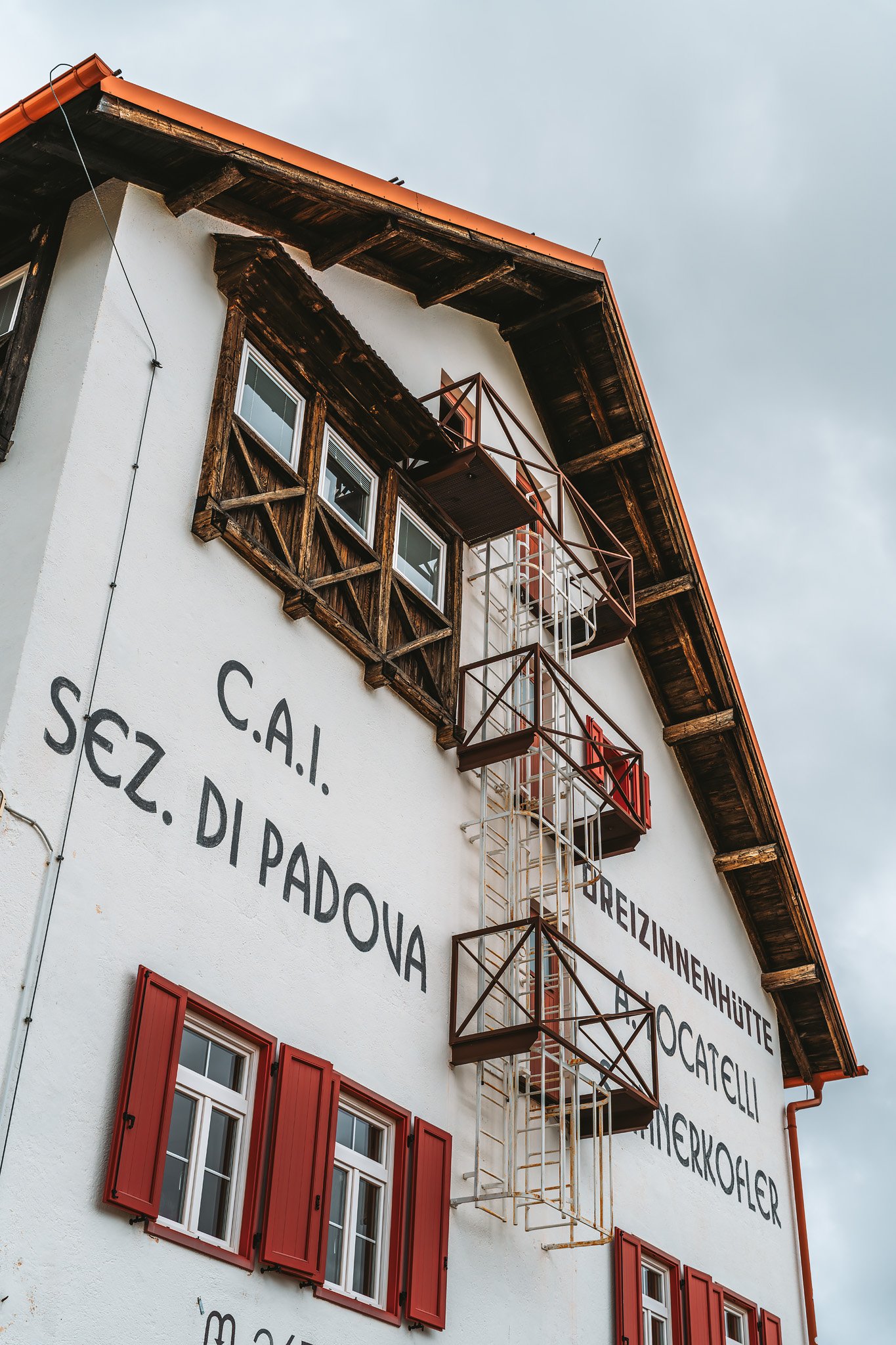
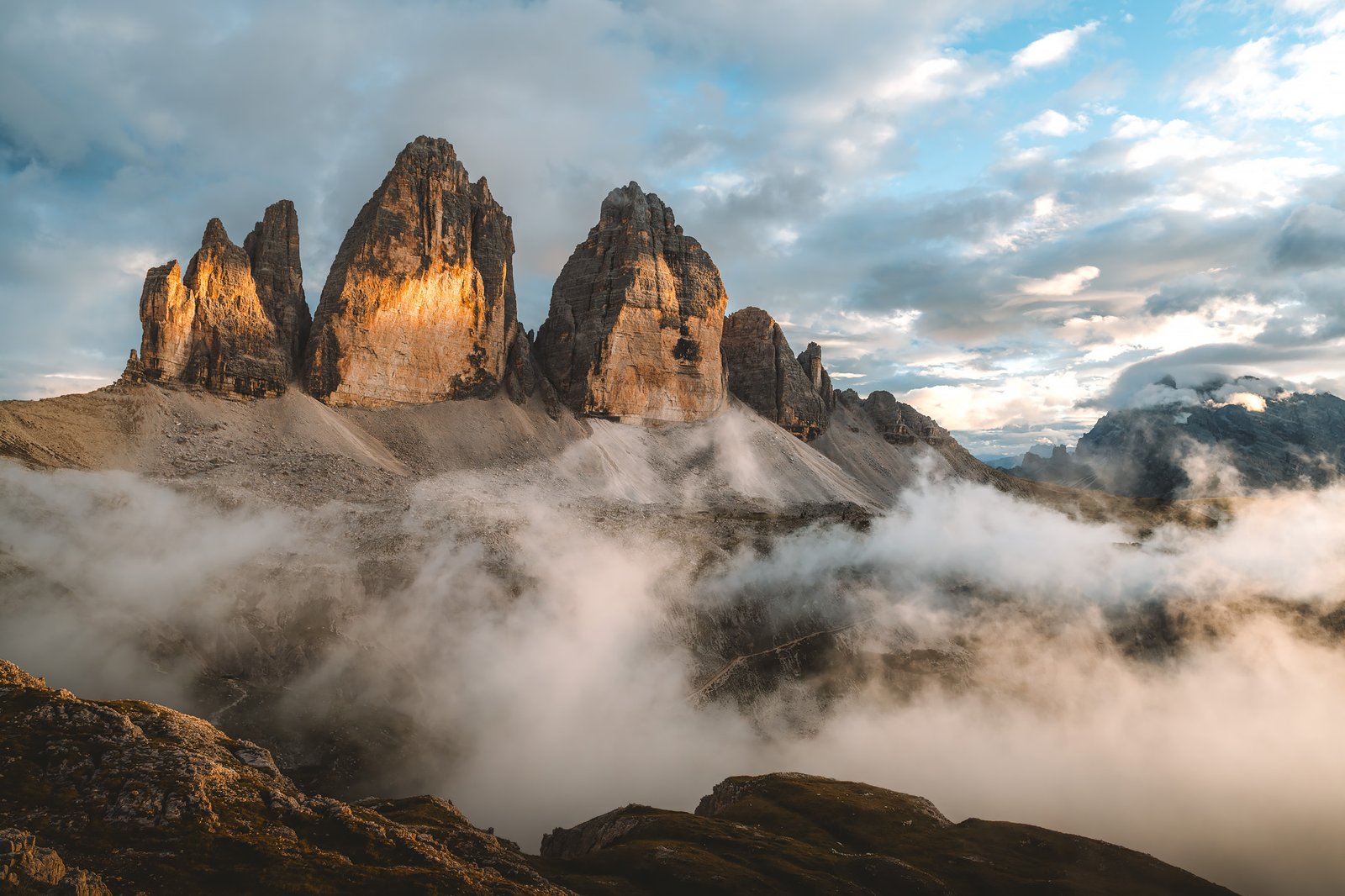
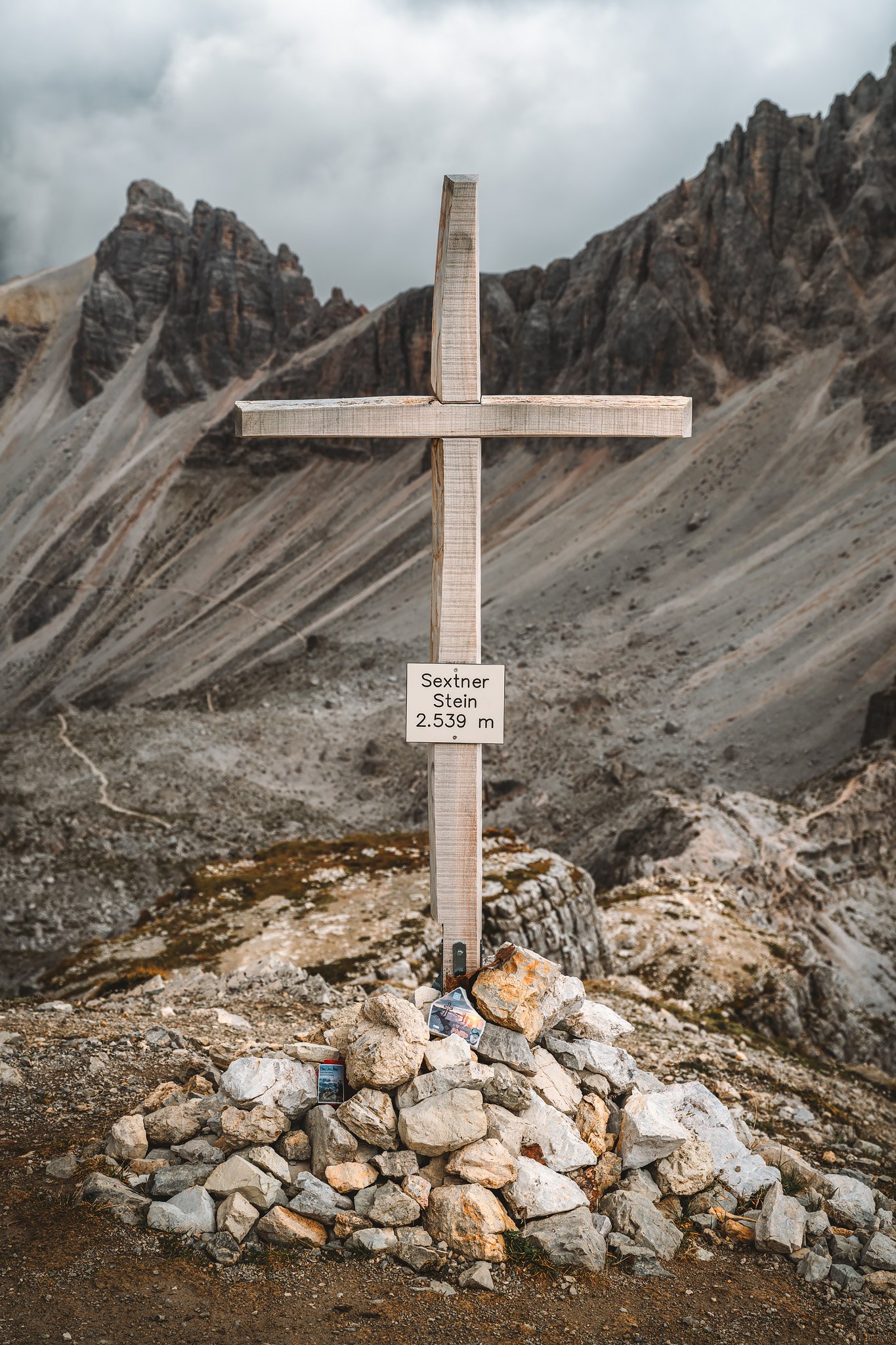
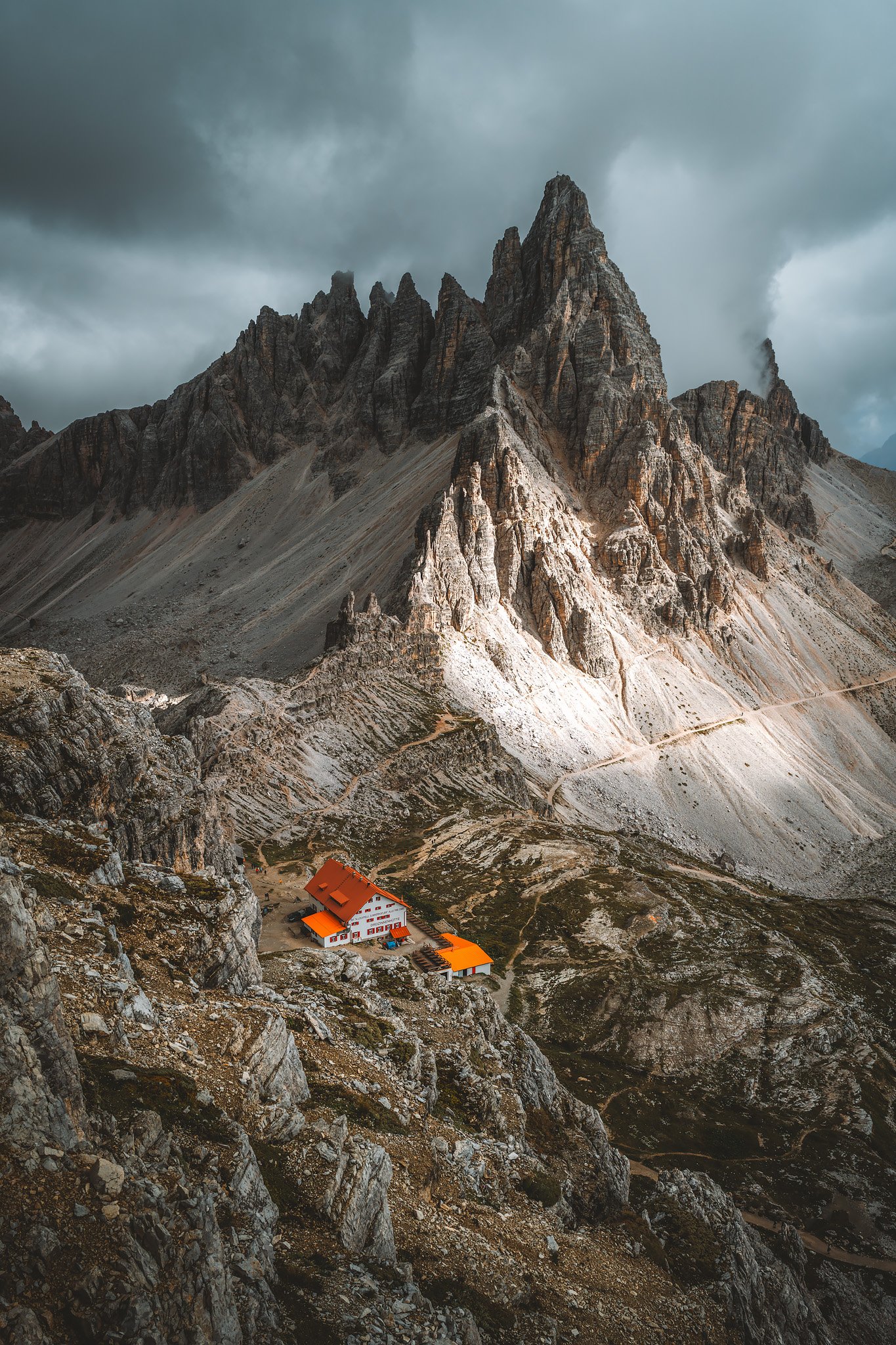
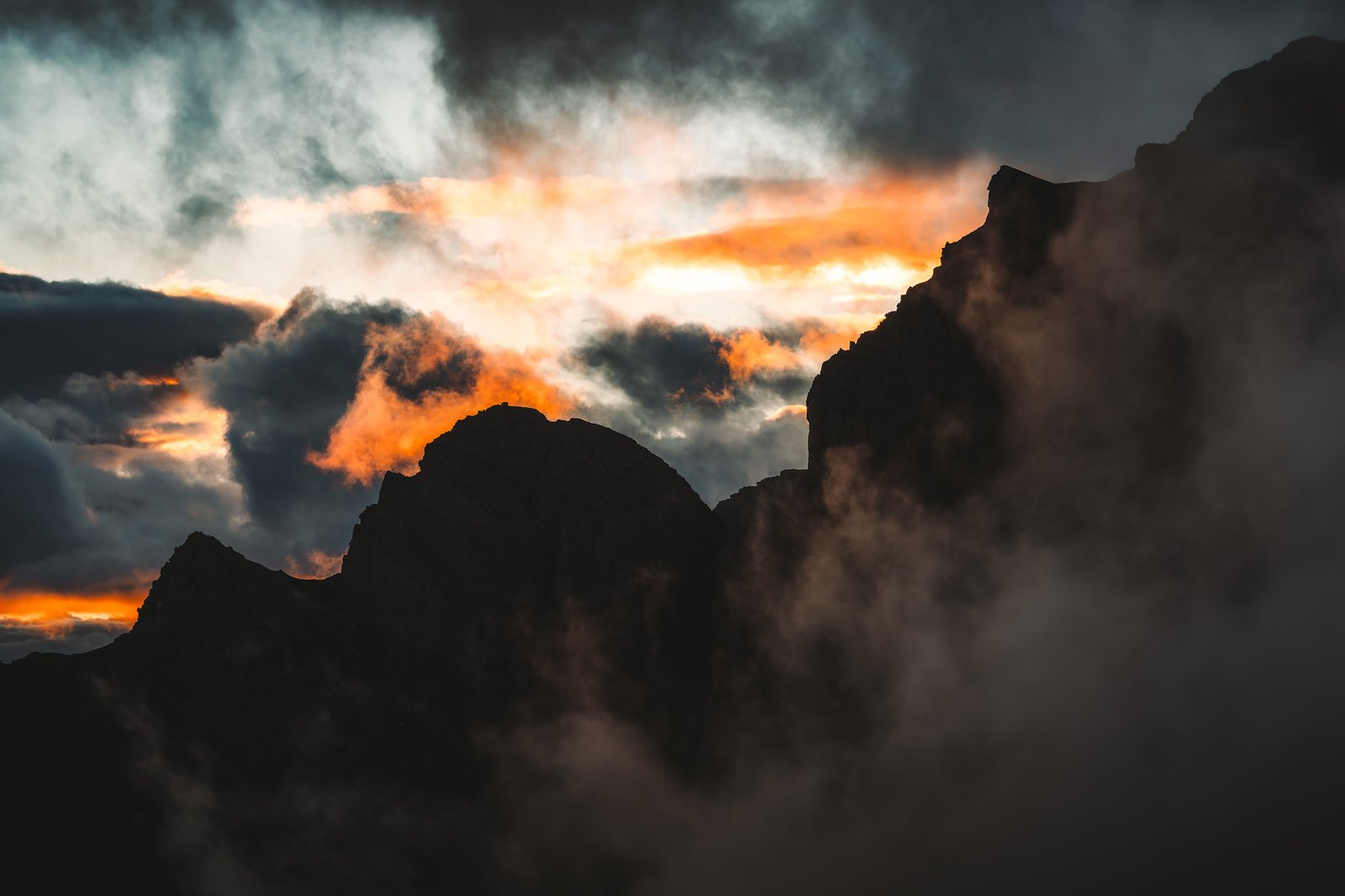
At various moments, it seemed as though the clouds were burning, absorbing light and dispersing it across the summits like suspended flame. It did not last long, but it did not need to.
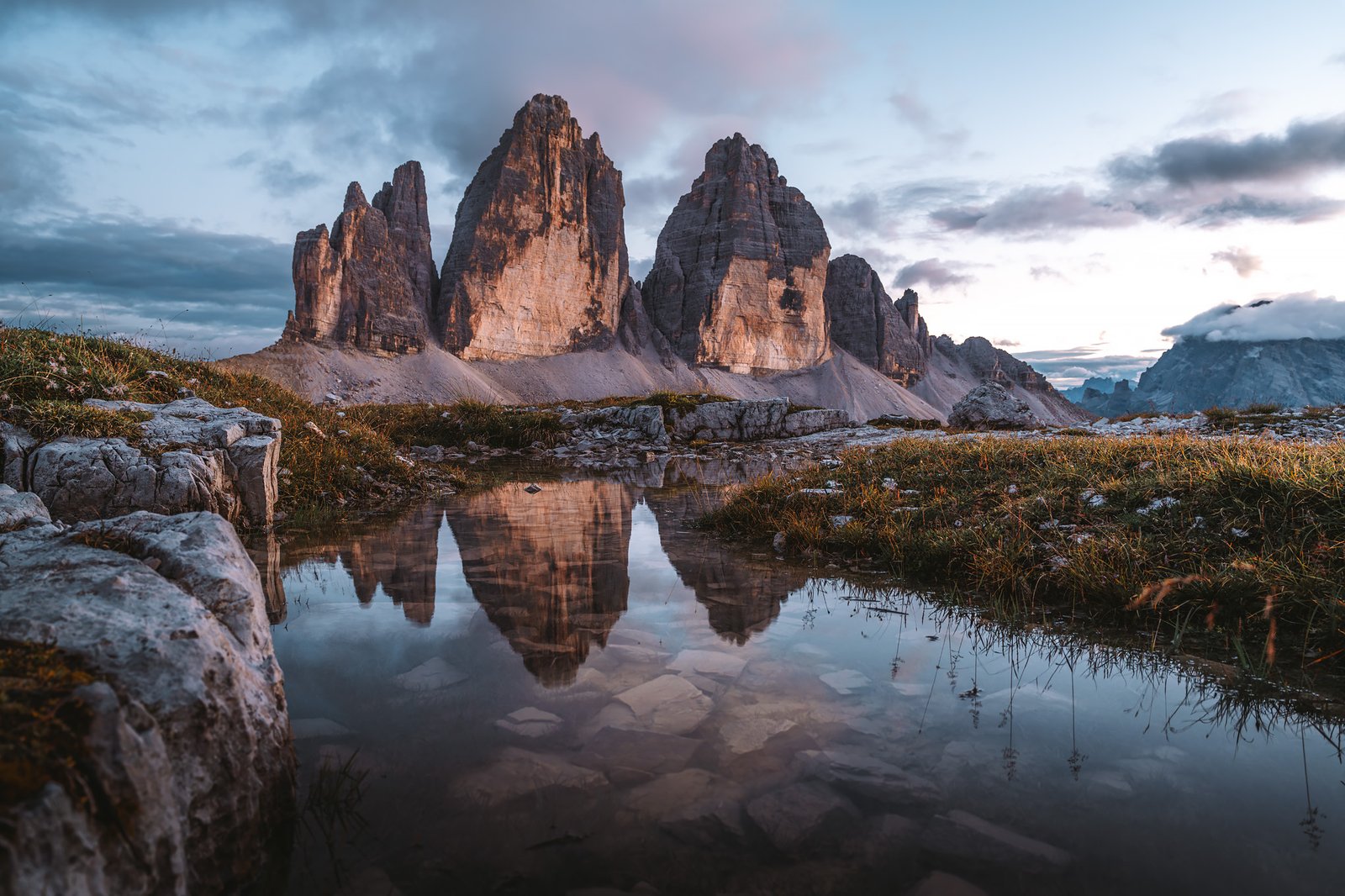
Once the light dissipated, the atmosphere shifted again. Blue hour set in, and while returning to the refuge, temporary ponds, formed in shallow depressions in the rock, captured the last reflections of the towers.
Stage 9. Rifugio Locatelli – Auronzo
Distance: 5.59 km · Elevation Gain: +198 m · Elevation Loss: +274 m · Technical Difficulty: Easy
The day following was different. A cloudless blue sky with steady light.
The Laghi dei Piani reflected a completely different version of the same landscape. The reflections were more defined. The geometric clarity of the towers is more visible, clean edges, vertical lines, clear separation between each tower.
There was almost no movement, only geometry.
Walking around the massif from the other side showed another level. The terrain relaxed gradually with more grass and less exposed rock. Gradual transition from high-alpine terrain to lower-elevation meadows. While descending toward Auronzo, people became more abundant.
Accessibility defines this place as much as the mountains themselves.
A brief stop in Misurina Lake framed by trees and smaller peaks. Less dramatic, but connected to the larger system. It started to feel like the experience was about to end.
The Return
The train from Belluno to Venice was the final transition.
When I arrived at Santa Lucia station, the change was total. Heat and large crowds moving in every direction. Sound bouncing off surfaces rather than disappearing into open space.
The Alta Via 1 should not be confined to a begin and an end location. Tre Cime represents a type of closure to the route that is difficult to replicate elsewhere. Seeing it at the end, and not at the beginning, changes its meaning completely.
By then, the Dolomites are no longer something to discover, but an experience that even after leaving, remains.
Alta Via 1. Part IV: From Pelmo to Belluno - Into the Bellunesi
Stage 5. Rifugio Venezia – Rifugio Mario Vazzoler
Distance: 24.80 km · Elevation Gain: +1389 m · Elevation Loss: −1608 m · Technical Difficulty: Moderate
The Alta Via 1 changes from here. The route is defined by altitude, exposure, open spaces and a big dose of humidity. Past Pelmo the terrain softens. The peaks are still there, but they start to retreat behind forested valleys, and longer descents. The scale is still there, but the feeling of the landscape is more subdued.
And, very soon, another aspect of the AV1 will become obvious, there are significantly fewer hikers.
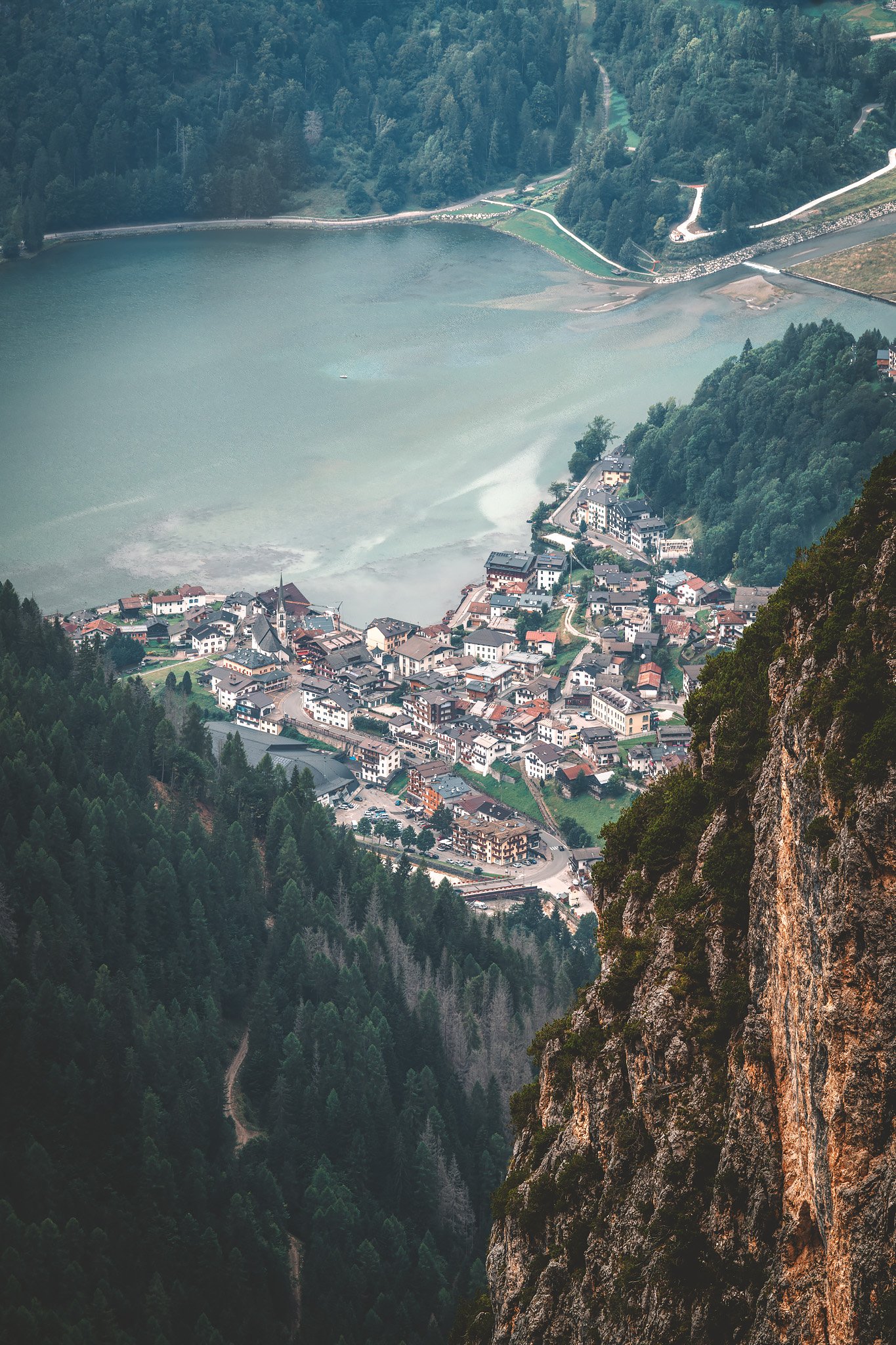
The morning at Rifugio Venezia starts slowly, it is before the sunrise and when is really peaceful and quiet. The sky is heavy and the air is still. The first steps are easier than anticipated, descending toward Palafavera, a ski resort that takes on a different character in summer. Here the trail reconnects with a different kind of world, roads and infrastructure. There is a cappuccino, some supplies, and the kind of small decisions that, for a while, make you feel connected to the world again.
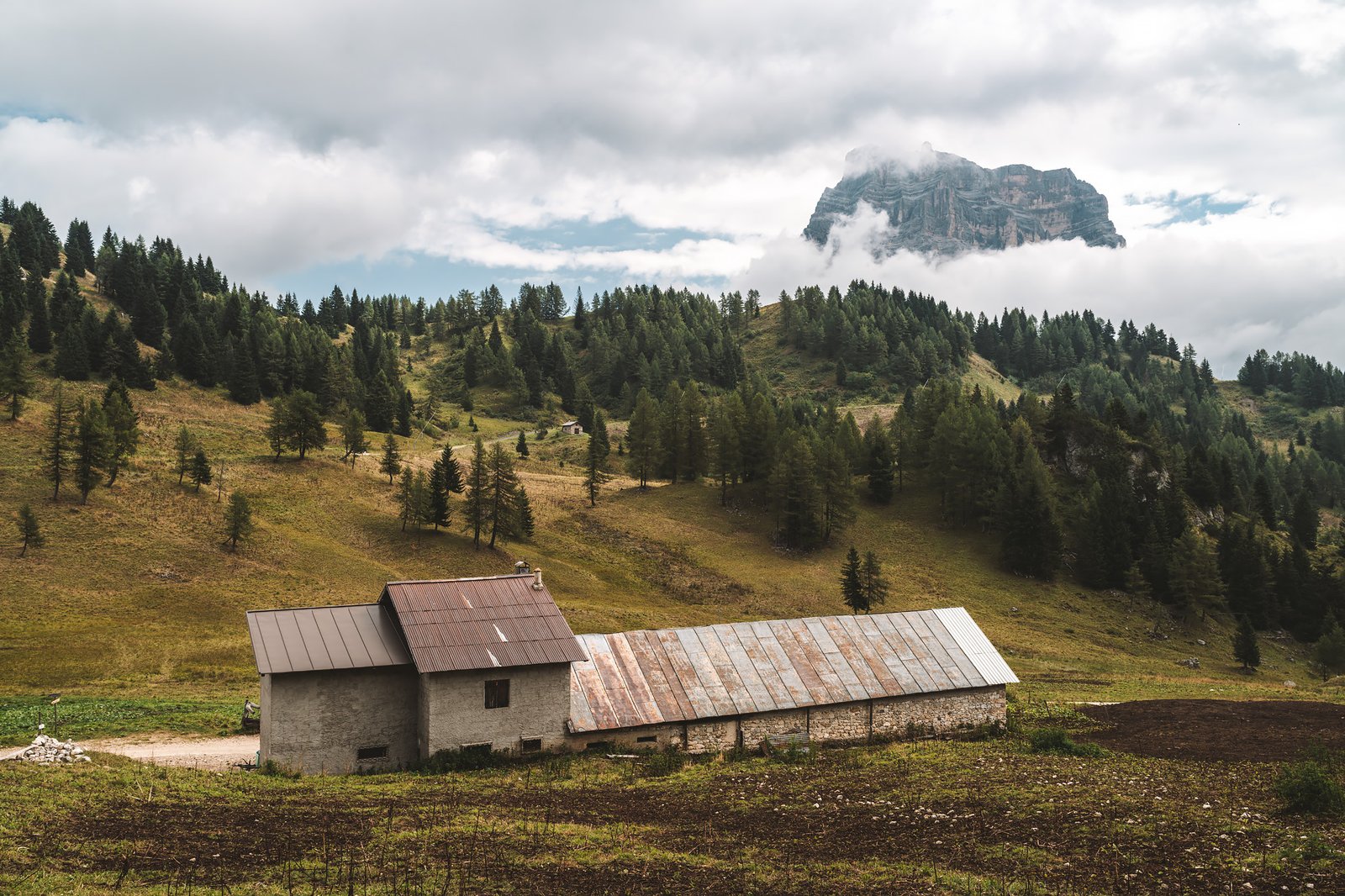
Then, the ascent recommences. The path toward Coldai winds its way through open slopes and scattered cabins. Sheep graze near the trail, unconcerned with the activity happening nearby. The terrain is softer here and less rugged.
However, the sense of calmness is what stands out the most. After the exposure of the preceding days, this area of the Alta Via 1 feels quieter. Longer sections of trail pass without seeing anyone. The trail starts to feel more like an individual experience, and less like a shared route.
At Rifugio Coldai, the mood shifts once again. People congregate and watch a cloudy and uncertain sky, while a share my french fries with a kid that happened to be hiking with his family but was really there for the food mostly.
There is a collective awareness that the light may change. And then it does.
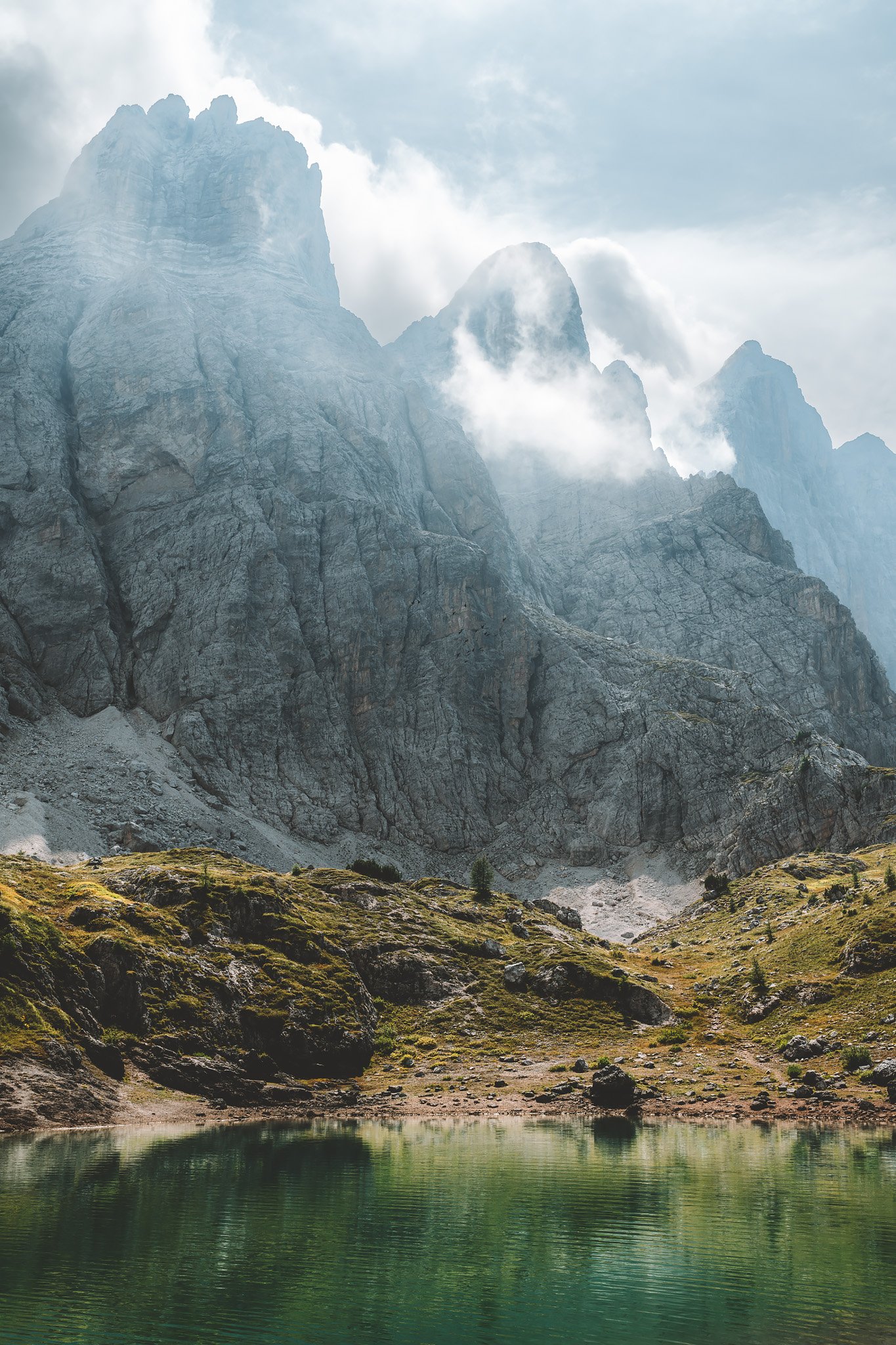
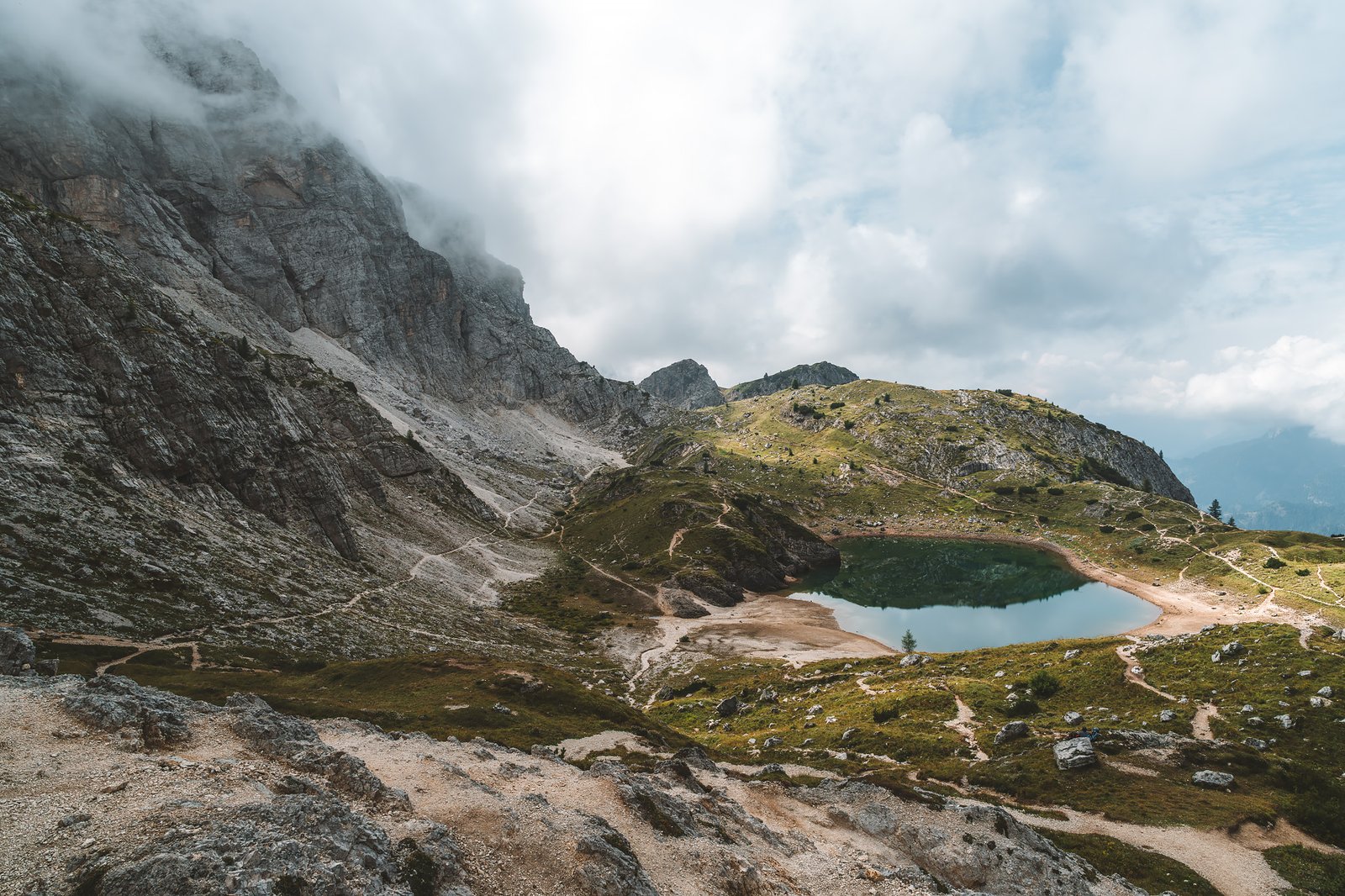
Just enough of the clouds clear, and Lago Coldai appears, fully formed, as if the fog had been holding it back until that instant. The water in the lake mirrors the surrounding peaks with a clarity that feels almost unreal after the grey morning.
Many stop here. Some even wade into the water and swim across it, despite the cold. The effect is strong enough to be impossible to resist.
The First Rains
The route proceeds through meadows and valleys. This is where the Alta Via 1 becomes more human. Interactions occur more frequently, a few exchanged words, trail comparisons, adjustments to plans. An Australian couple share a stretch of the trail; then a group of Swedish friends or a Korean lady that had been living not far away from me back in the day, a casual conversation begins, and just as easily ends.
These encounters do not change the journey, but they help define it. They add perspective and context. They make the trail feel less solitary, without disrupting the silence.
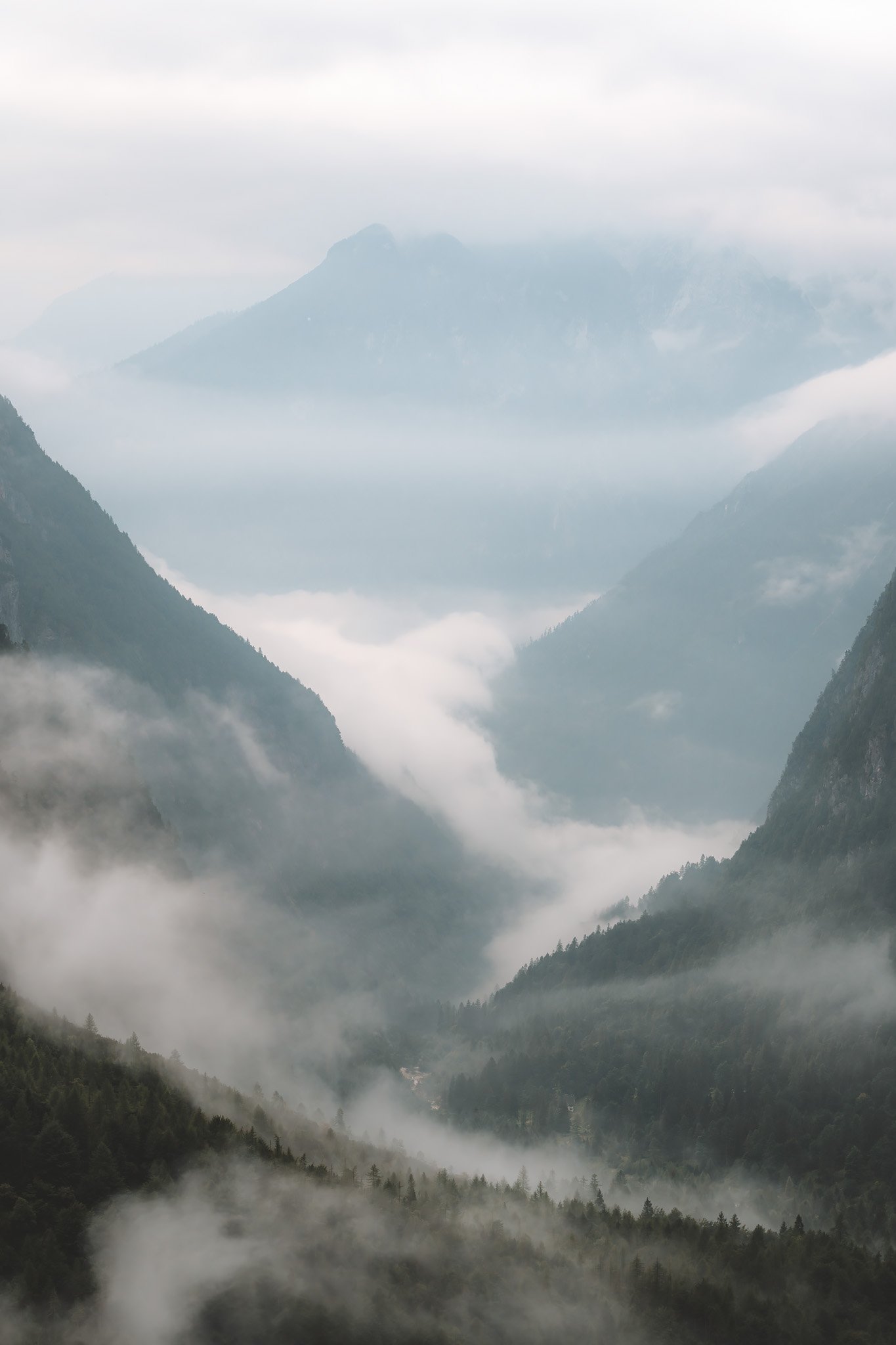
For the first time on the Alta Via 1, the weather changes. Initially, the rain is quite gentle. A light drizzle that barely disrupts the rhythm, but that doesn’t last. Fog develops and valleys disappear. Visibility is much reduced and the trail becomes softer underfoot. Then wetter.
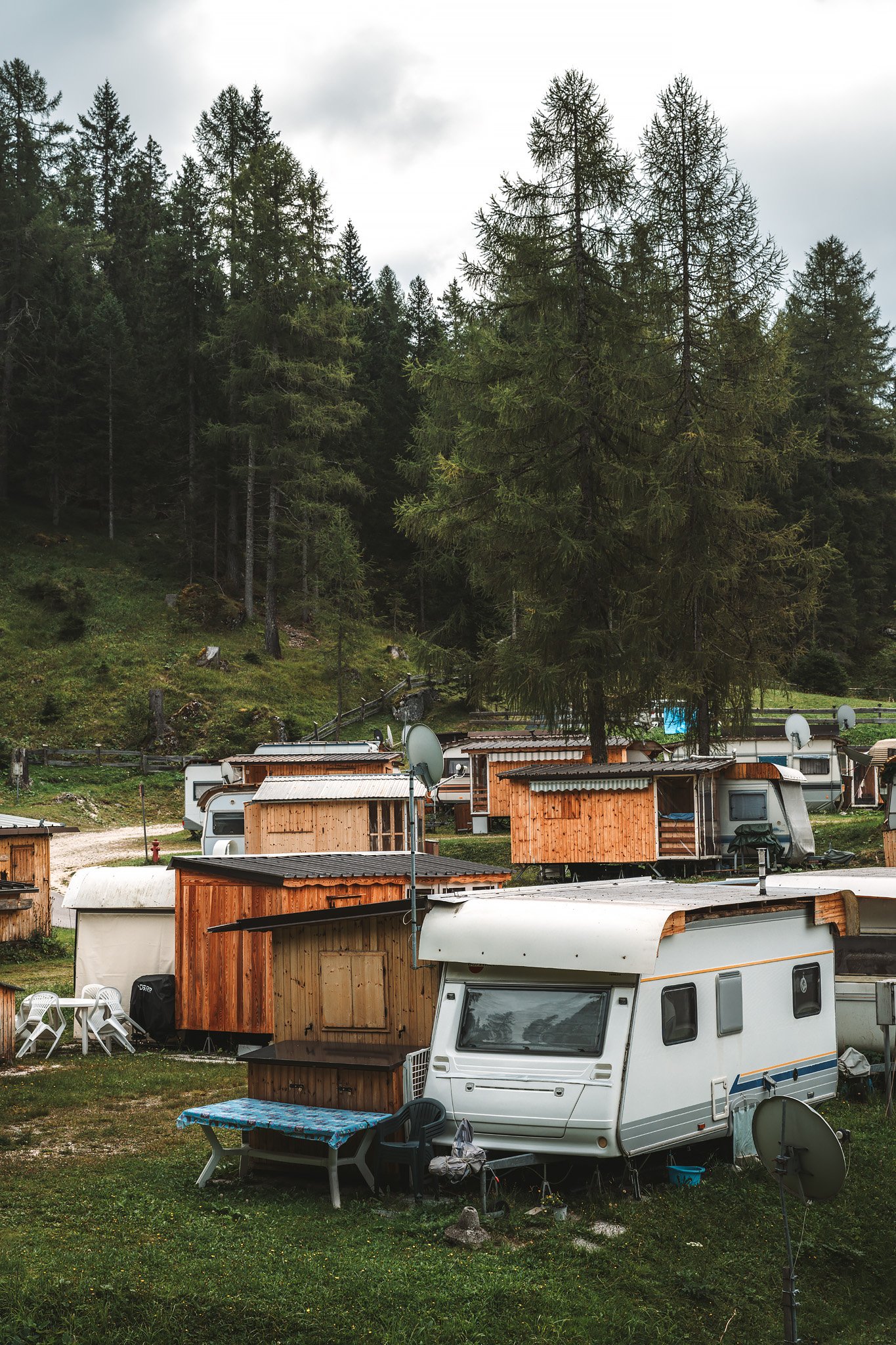
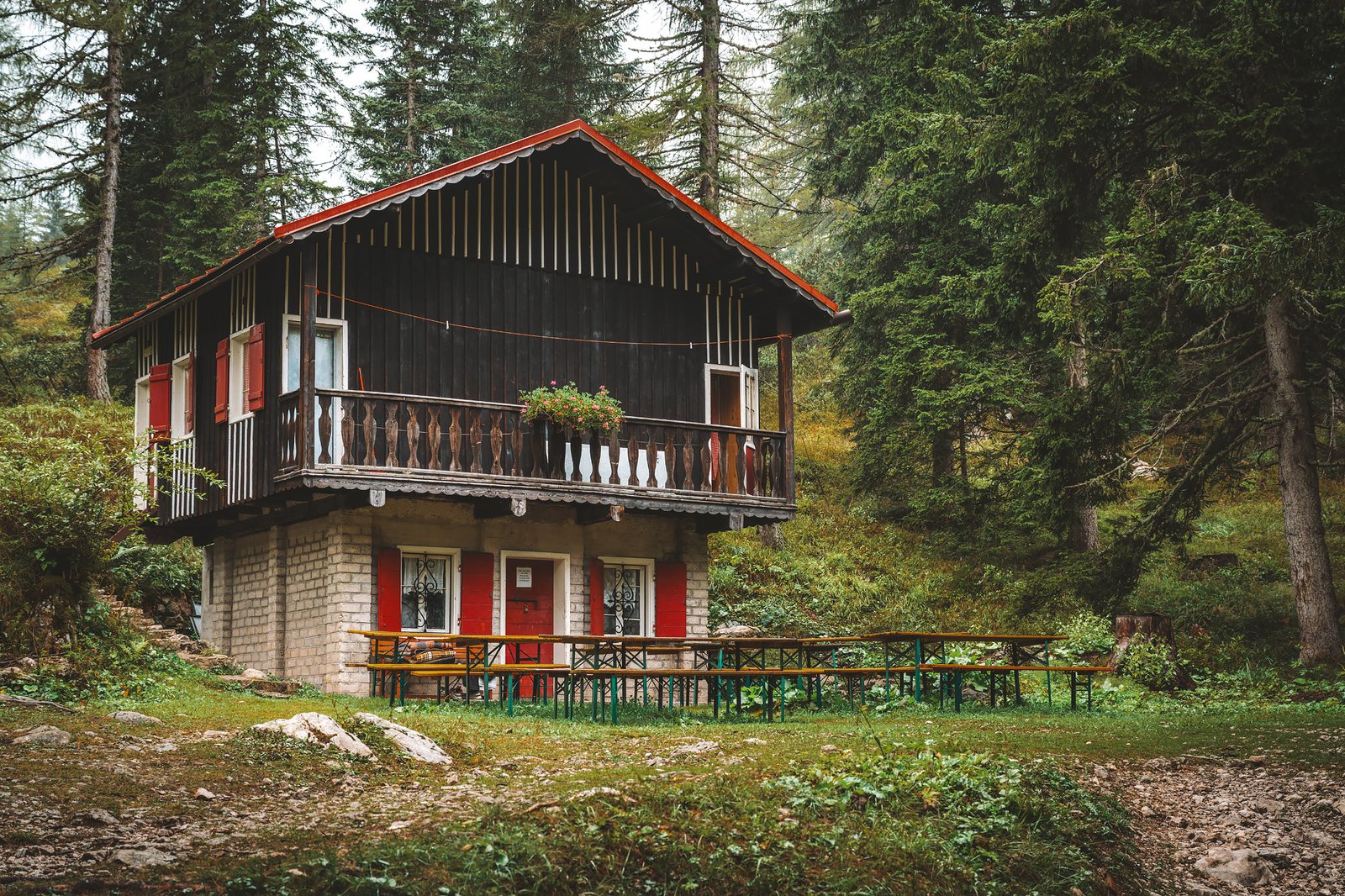
When Rifugio Mario Vazzoler comes into view, the rain becomes steady. The refuge is located in a clearing within the forest, three buildings, basic, functional. Surrounded by open space and grazing animals.
By the time I arrive, the light is already fading. Not because of the hour, but because of the forest. The refuge is set deep within it, and even during the day, it feels darker than it should Inside, everything slows down again.
Wet gear dries where it can. Conversations resume around tables. The outside world continues, but from a distance.
On that night, the experience is less about the landscape and more about the people within it. Shared tables and unexpected conversations with a Canadian couple who were visiting Europe for the first time. Stories exchanged between people who have nothing in common except the trail that brought them there.
At times, the Alta Via 1 feels like a sequence of landscapes, but on that night, it felt like something more.
Stage 6. Rifugio Mario Vazzoler – Rifugio Sommariva al Pramperet
Distance: 23.92 km · Elevation Gain: +1373 m · Elevation Loss: −1223 m · Technical Difficulty: Moderate
The next morning begins early and with the sound of hikers surprised that their gear is still wet despite being hanged outside from the day before (under heavy rain at night…) Forecasts indicate mixed weather. The plan is simple, wake up early, skip breakfast, move quickly.
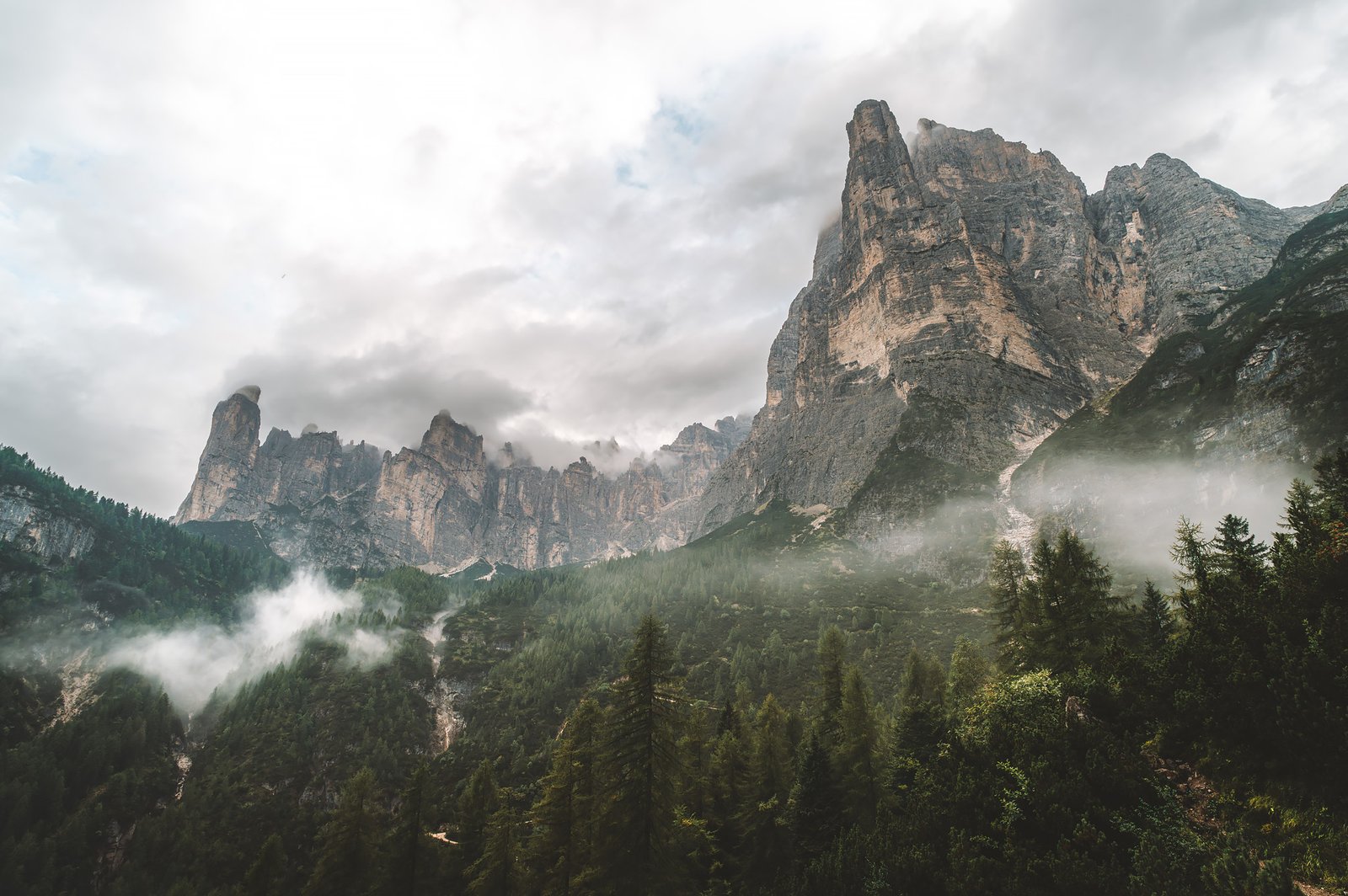
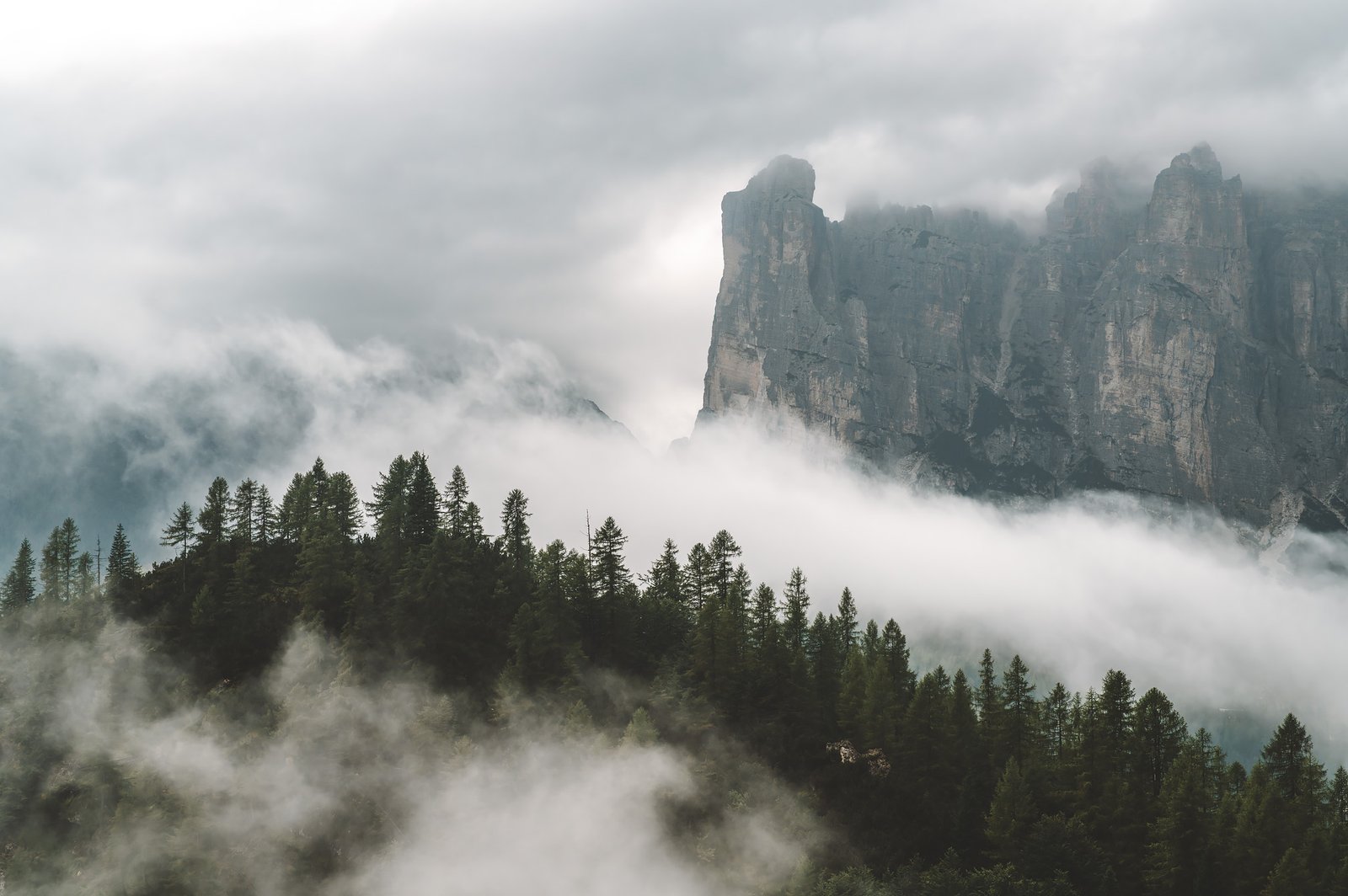
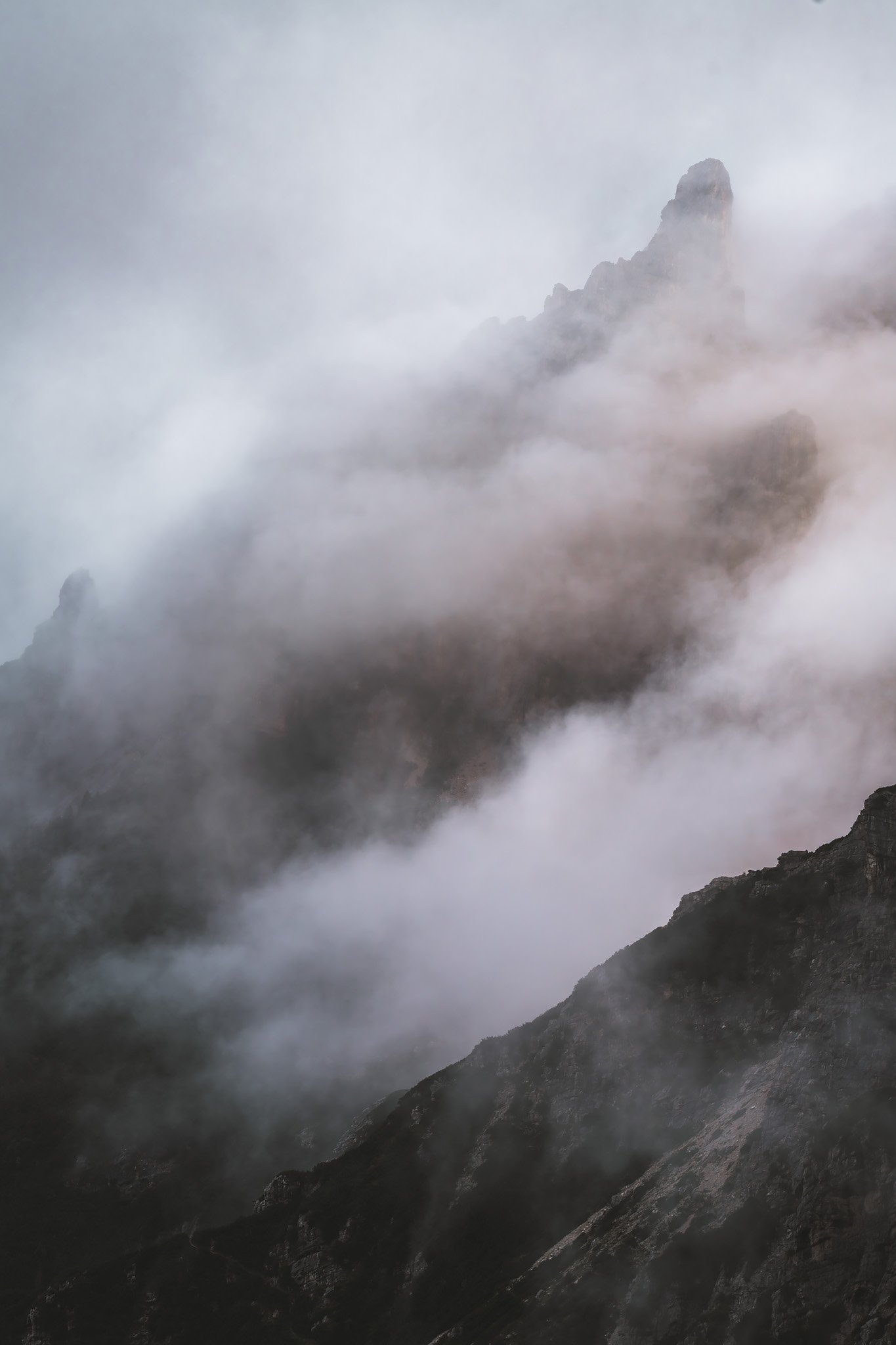
Initially, the conditions were in favor. Fog defines the landscape, obscuring visibility and compressing depth. Photography becomes secondary and movement becomes the priority.
Then the rain returns. Light at first, then constant, and eventually, intense. In a matter of minutes, everything is soaked. Pants cling heavily and boots are full. Water runs down your arms, into your hands, into every item of clothing. The trail becomes invisible beneath flowing water. Muddy areas transform into small streams and rocks become pathways for water.
There were moments when I walked in water up to my ankles and each step felt heavier than the one before.
Eventually, it transitions from unpleasant to mechanical, simply putting one foot in front of the other instead of contemplating the landscape.
Shelter from the Storm
Casera Moschesin appears almost unexpectedly, an old, abandoned building, once a small hut for shepherds. Very simple and functional. A temporary shelter from the storm in the middle of nowhere.
I was completely alone, only the sound of the rain hitting the roof. It seemed unlikely that anyone was close.
Everything I was wearing was soaked. There was no way around it. So I removed everything I was wearing and got completely naked. It wasn’t comfort, but necessity.
I put back my wet clothes and check my gear, the camera gear is not affected. The decision is simple, continue or wait. The rain answers. It doesn’t stop. I keep walking.
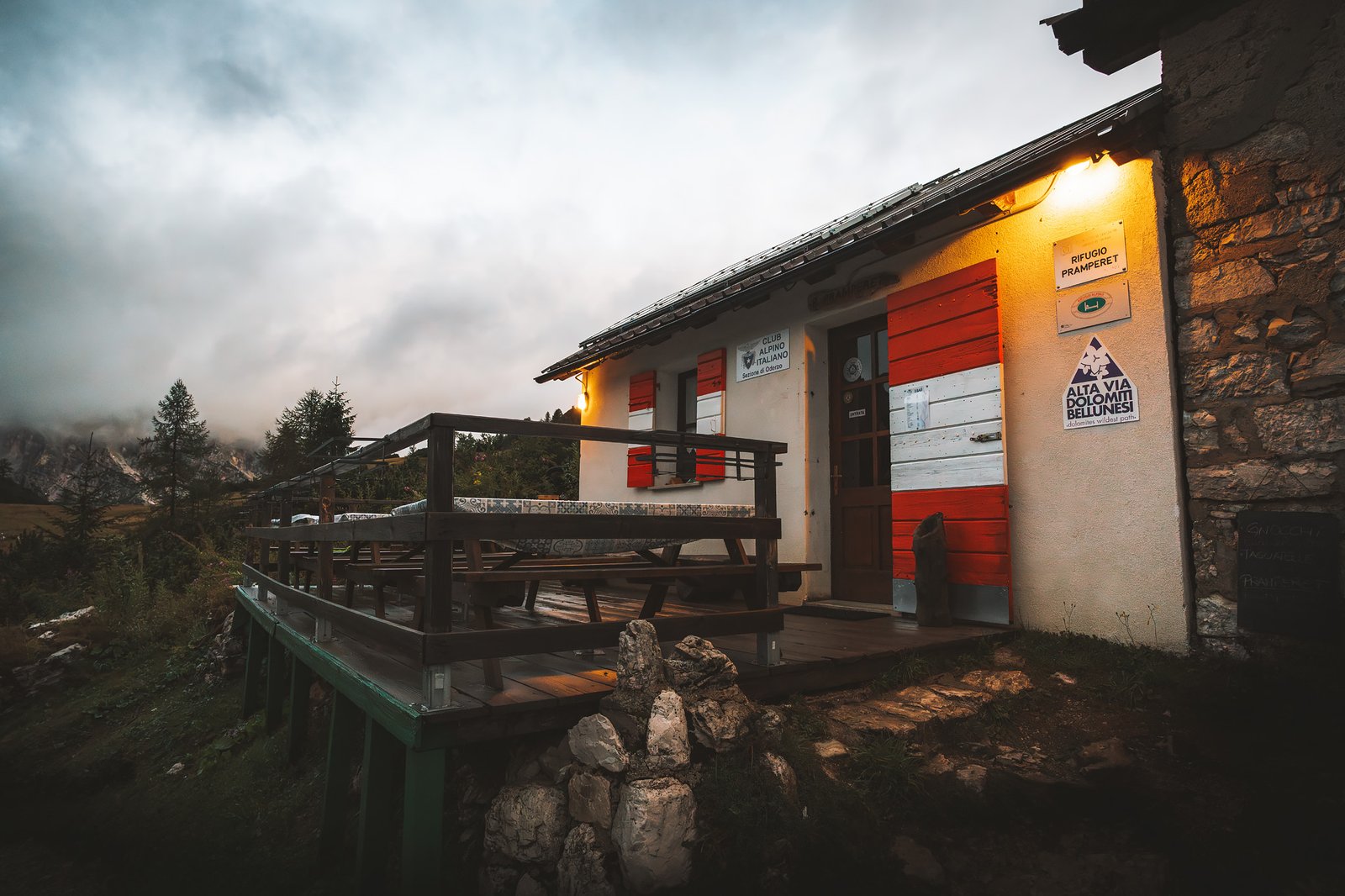
Eventually, the rocky path, waterlogged and uneven, opens into a meadow. The rain pauses for a moment, and I catch sight of Rifugio Sommariva al Pramperet.
Inside there is no cell phone reception. None at all. No occasional connection. No messages. Nothing.
And the rain does not stop. It continues through the evening, steady and uninterrupted. Few hikers make it this far. Most stop earlier, or choose to walk only the first half of the Alta Via 1. Beyond this point, the route becomes quieter, less predictable, less traveled.
Conversation replaces distraction. A simple dinner with a Scottish young man who was camping with a friend of his, sick that night from a bad snack. Szymon was also there, a Polish completing the trek in just six days while preparing for a Marathon in Valencia. The last night before the final push feels magical under the heavy rain.
Stage 7. Rifugio Sommariva al Pramperet – La Pissa
Distance: 20.00 km · Elevation Gain: +827 m · Elevation Loss: −2198 m · Technical Difficulty: Moderat
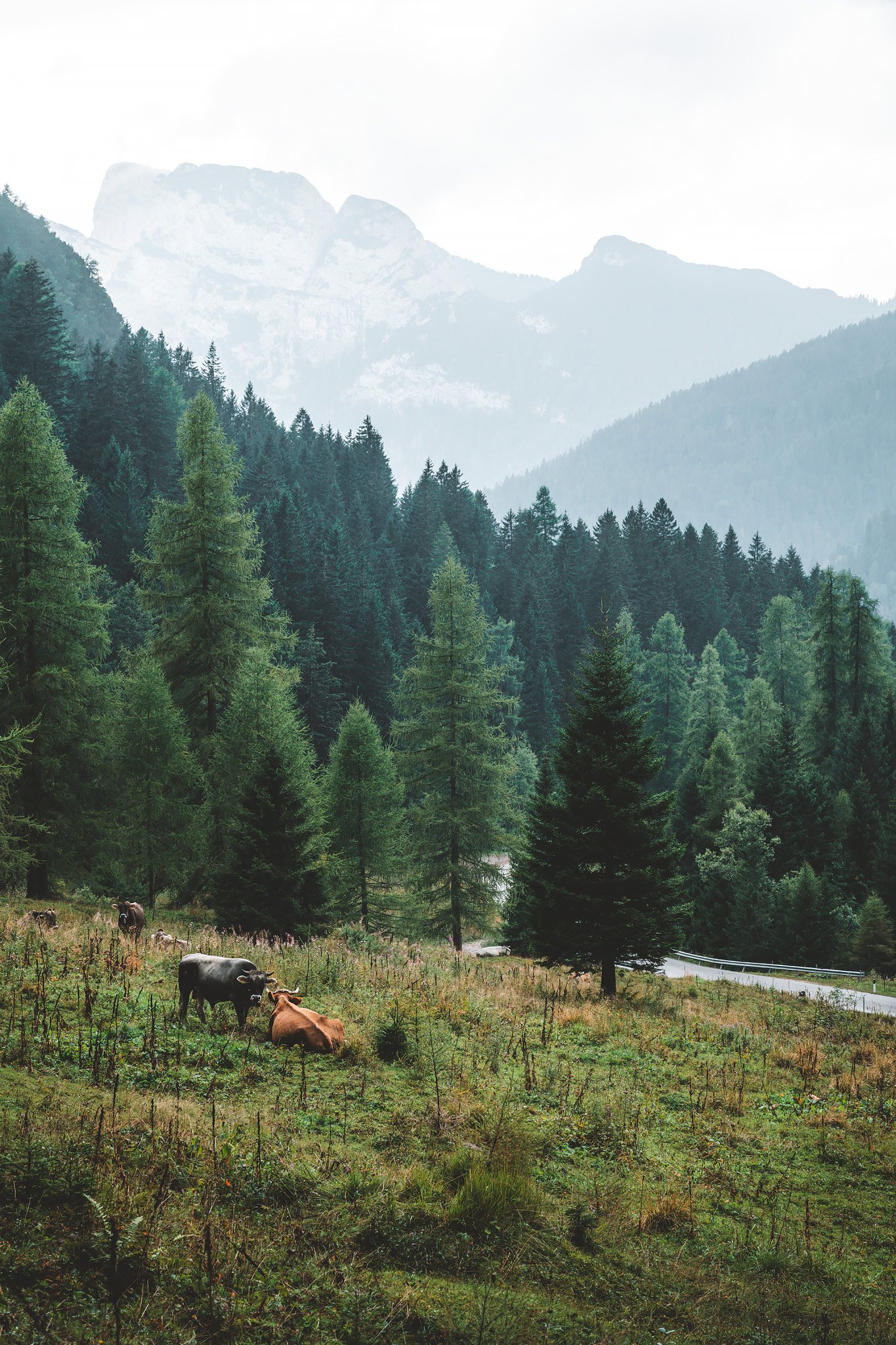
The final day begins early. The rain has diminished, but everything remains wet. The air is heavy and the ground is saturated. The ascent begins immediately, very steep, quiet, and enclosed within forest.
The Bellunesi landscape appears gradually.
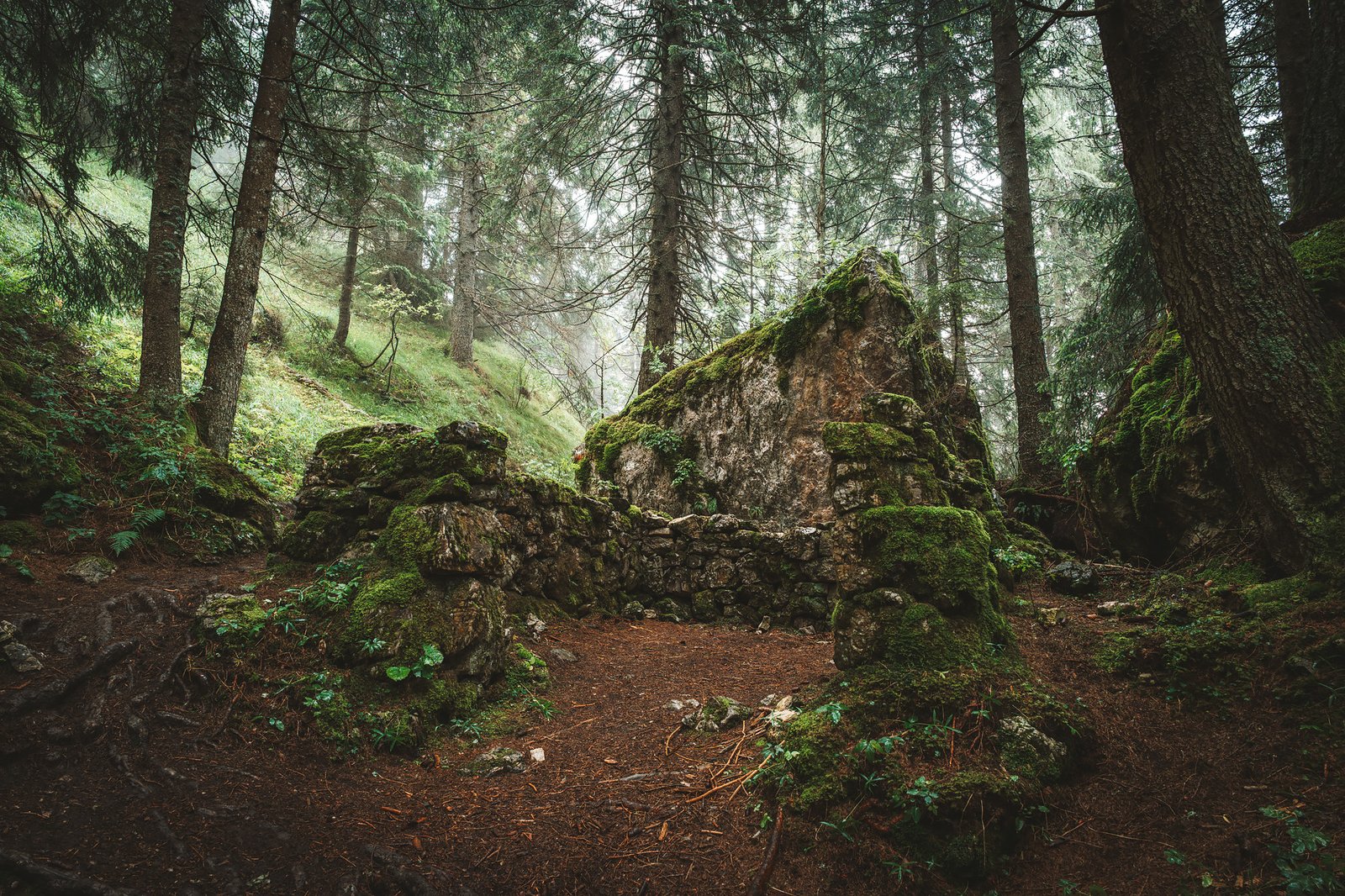
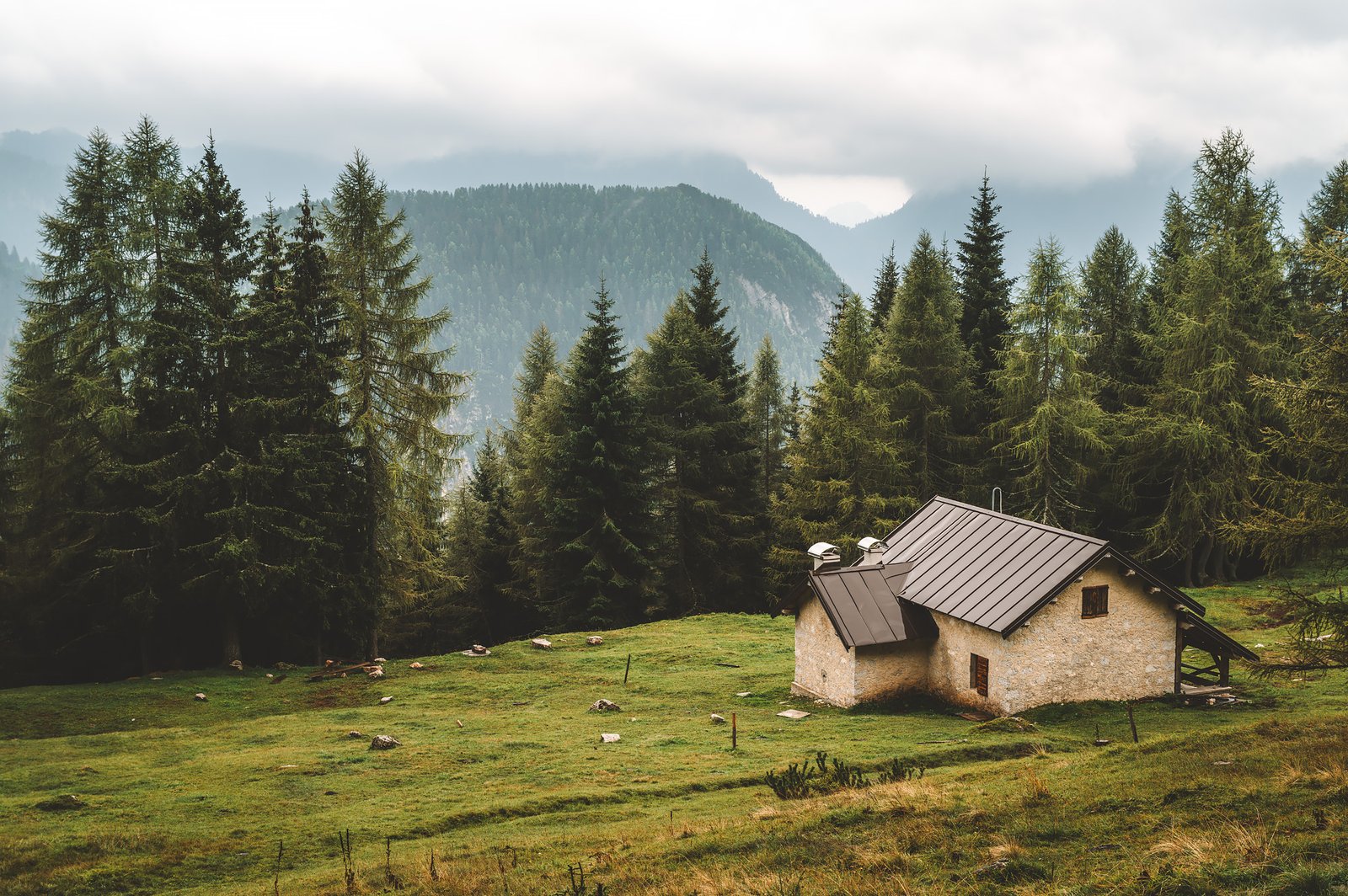
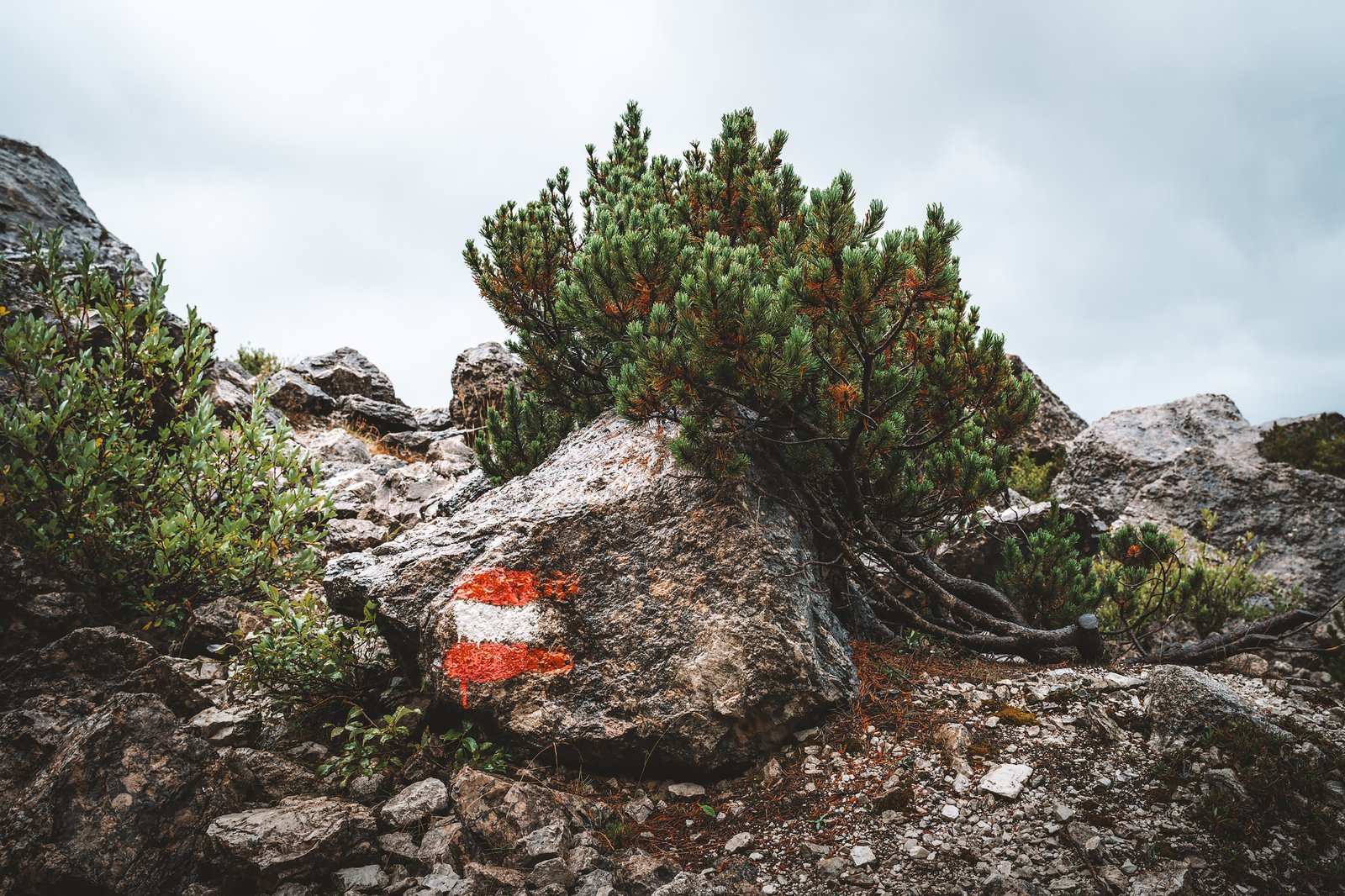
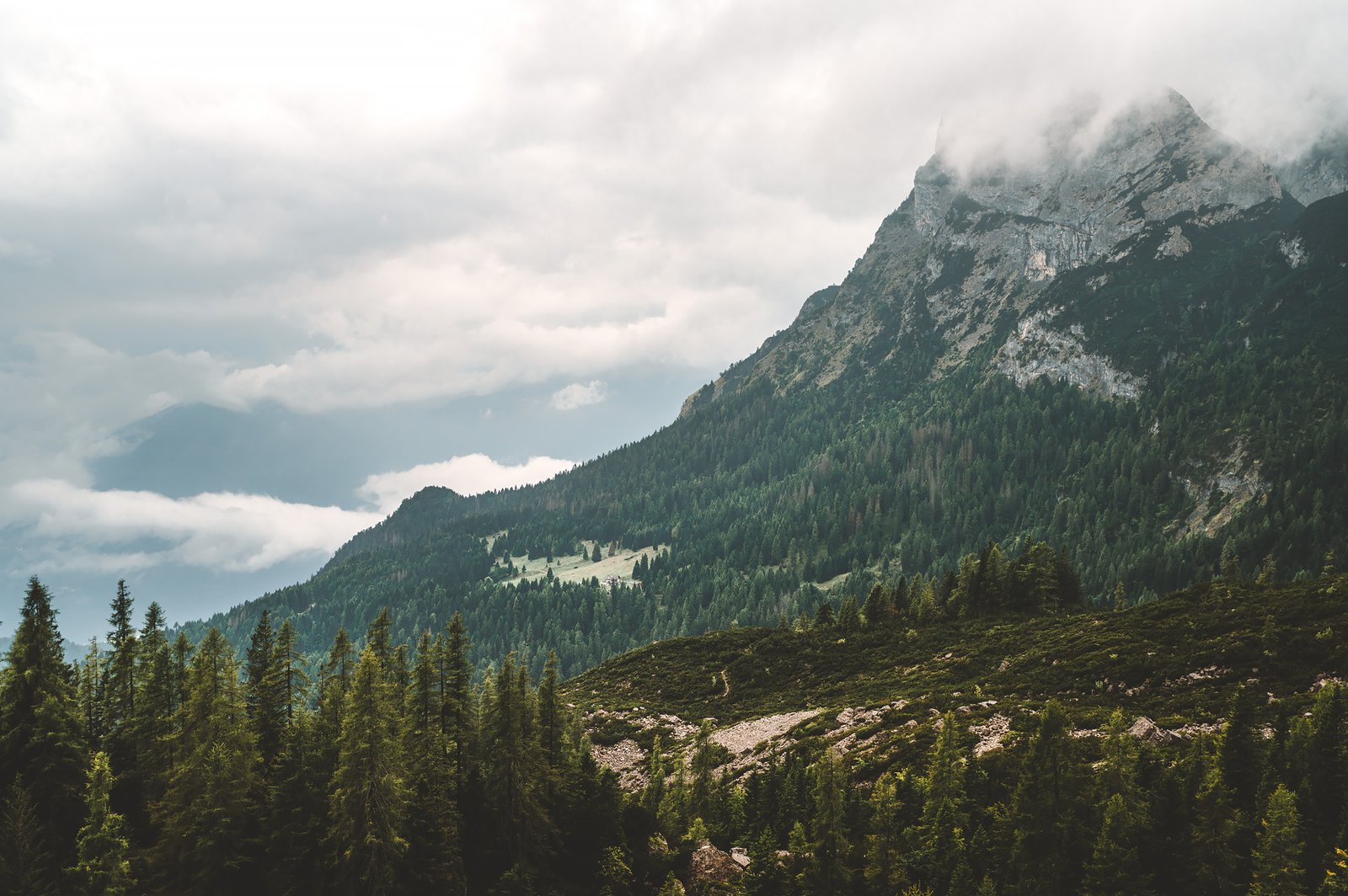
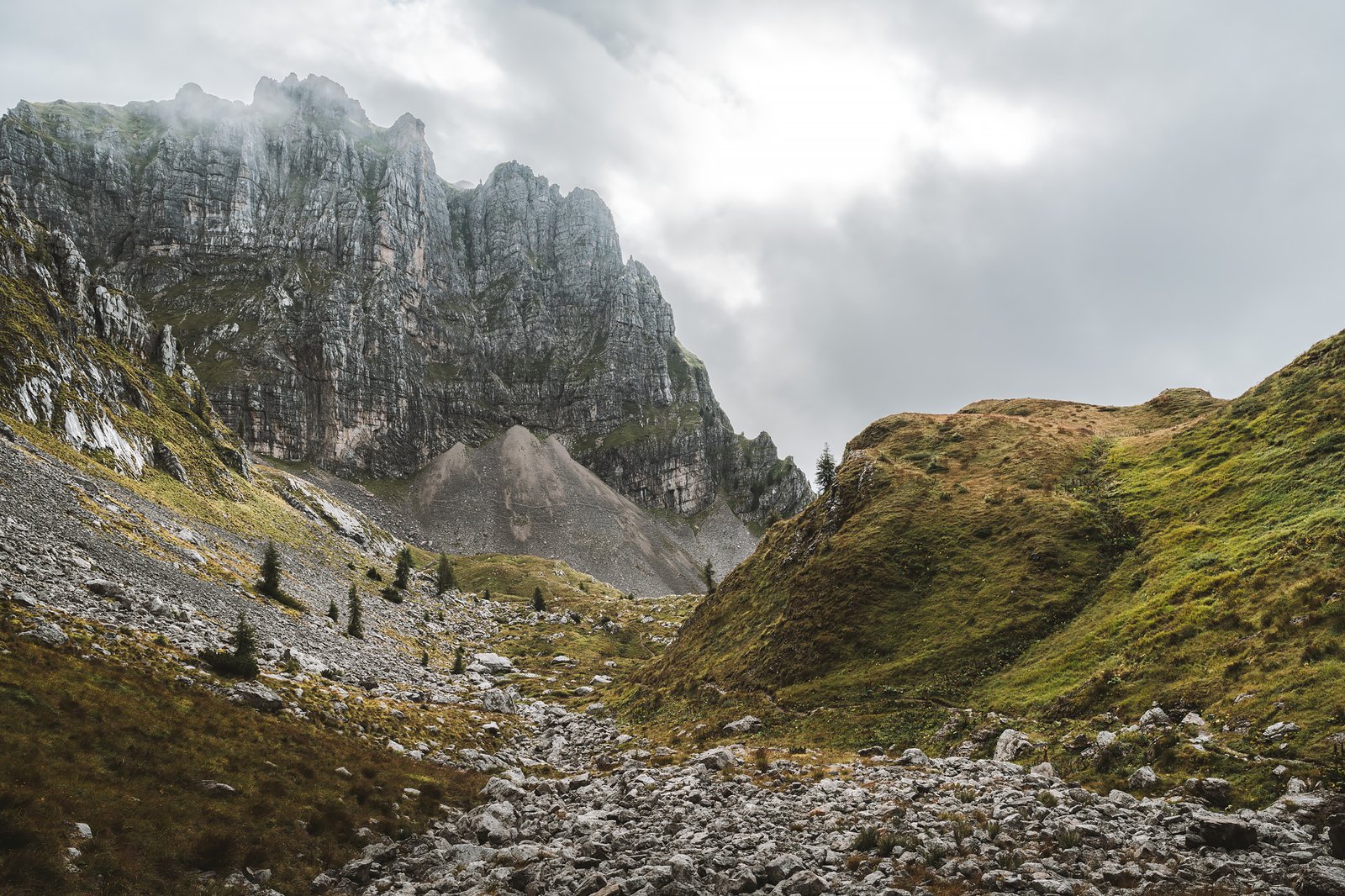
This is not the Dolomites of vertical faces and dramatic silhouettes. This is something older, wilder and less structured. The geology shifts here, pale dolomite gives way to darker, more weathered rock, covered in dense vegetation.
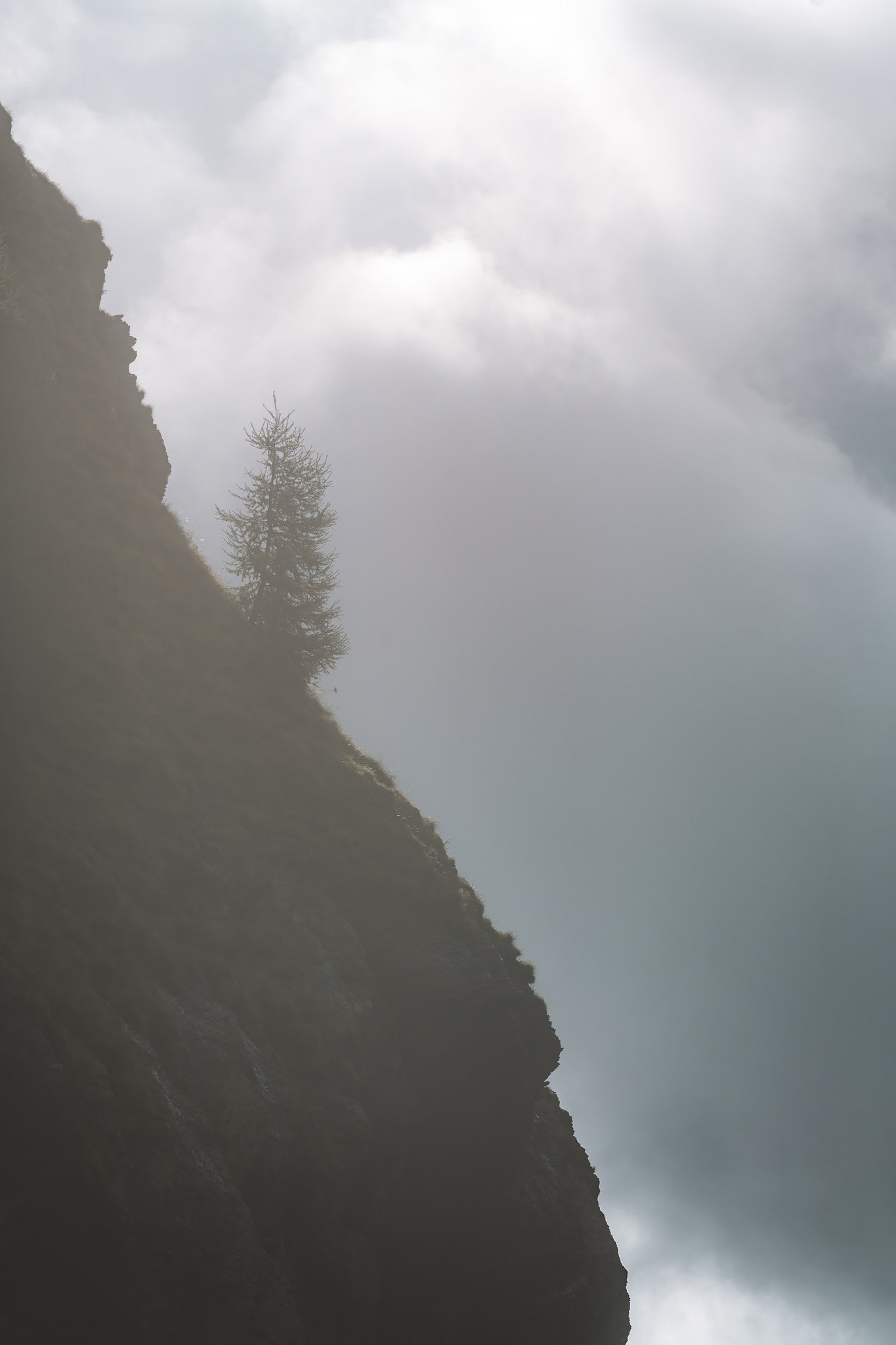
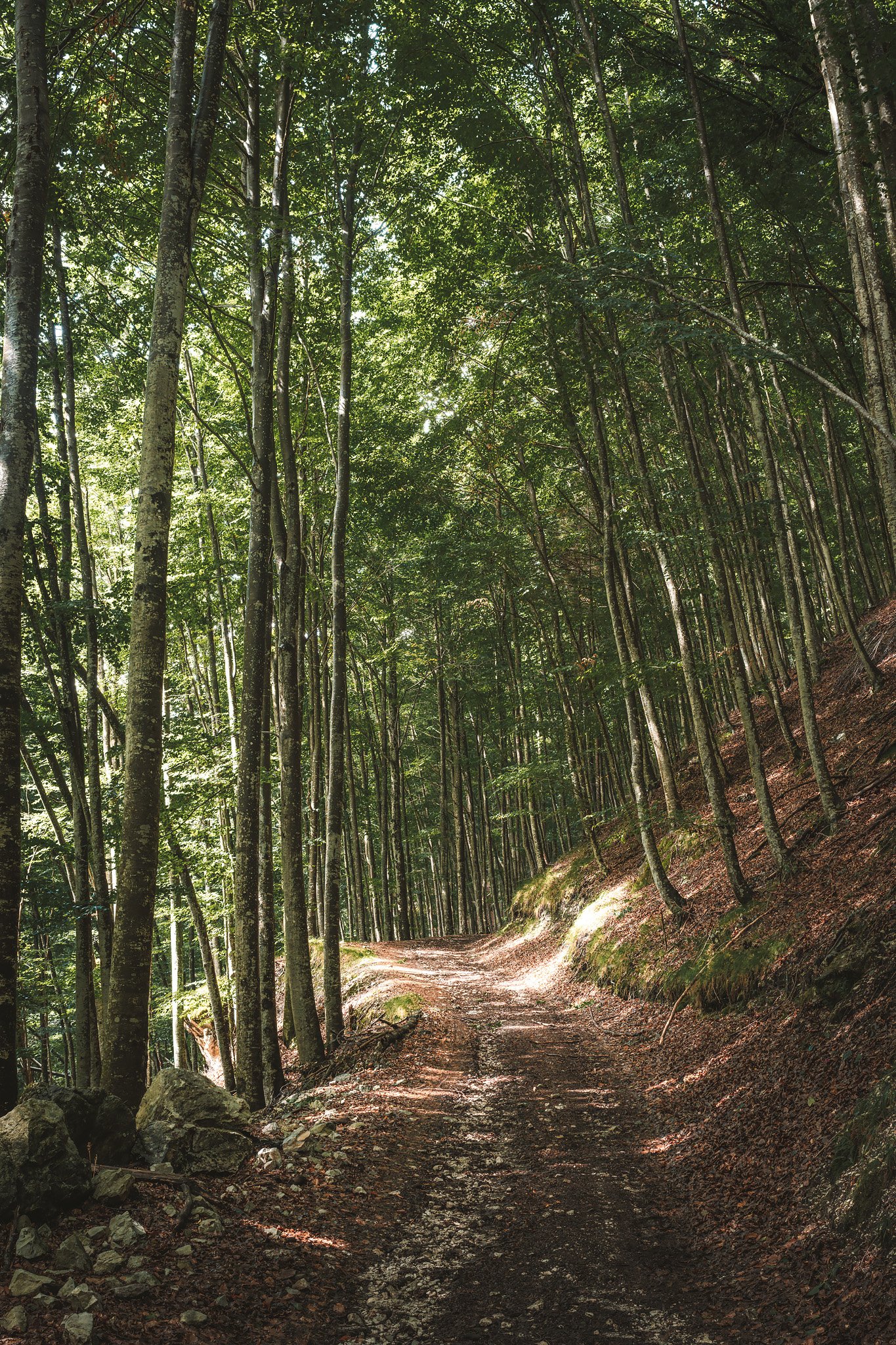
The forest reflects that change, beech and larch cover the slopes, forming a thicker, more continuous canopy. The terrain feels deeper and more enclosed, almost primal.
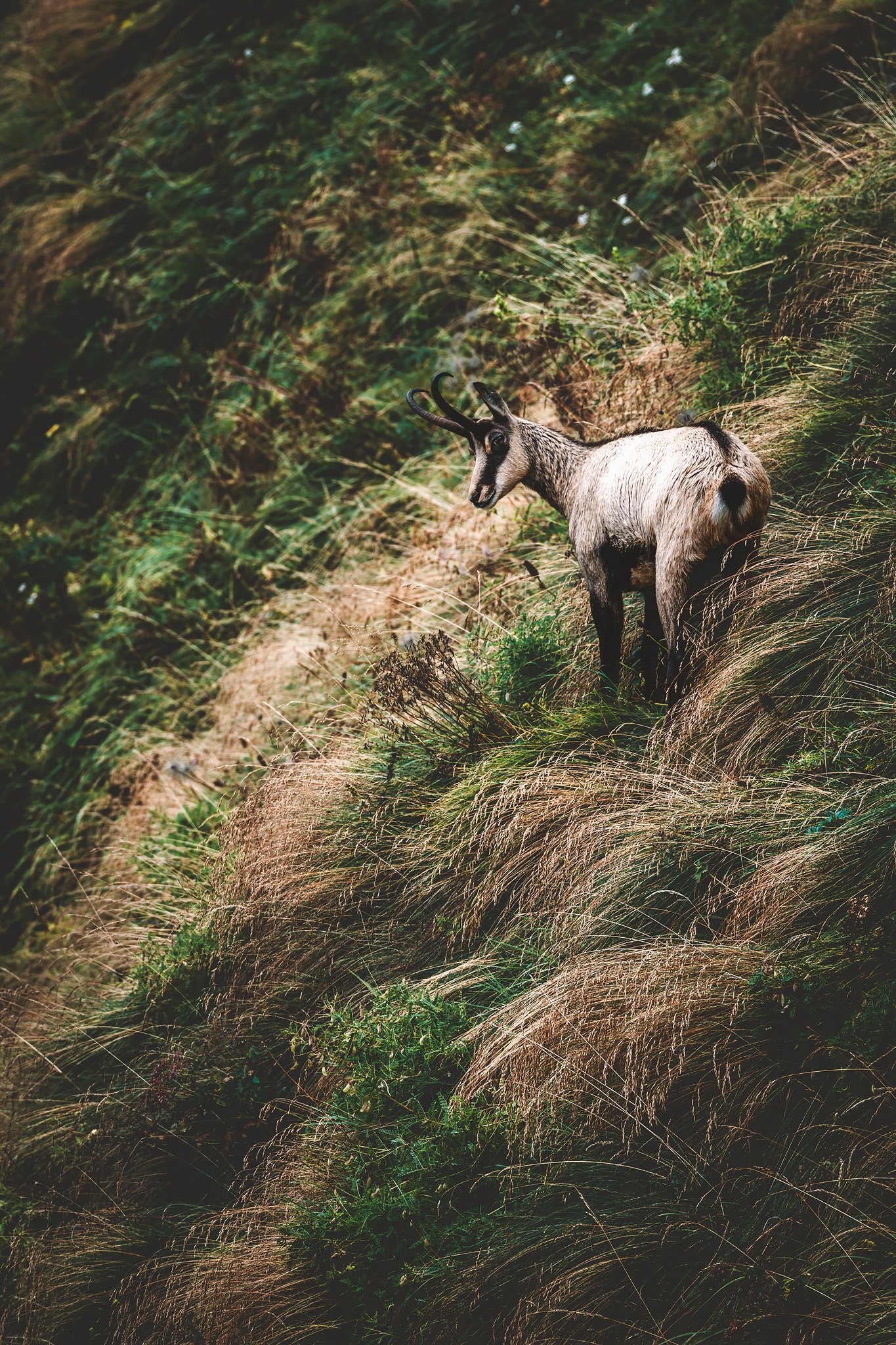
And then a chamois appears. Then several make their way where the one I saw first was.
Before seeing them, I had been hearing something, sharp, high-pitched calls echoing across the rock. At first, it sounded like a bird, something like an eagle. But it wasn’t, it was them. I manage to take a picture of one of them, he stops in front of me, and repeats the call. What a moment to remember!
They move across the slopes with complete ease, triggering small cascades of falling stones as they run. The sound carries far and unmistakable.
This part of the Dolomites feels different. Not less impressive, simply less controlled and wilder.
The Bellunesi Forest and the Final Descent
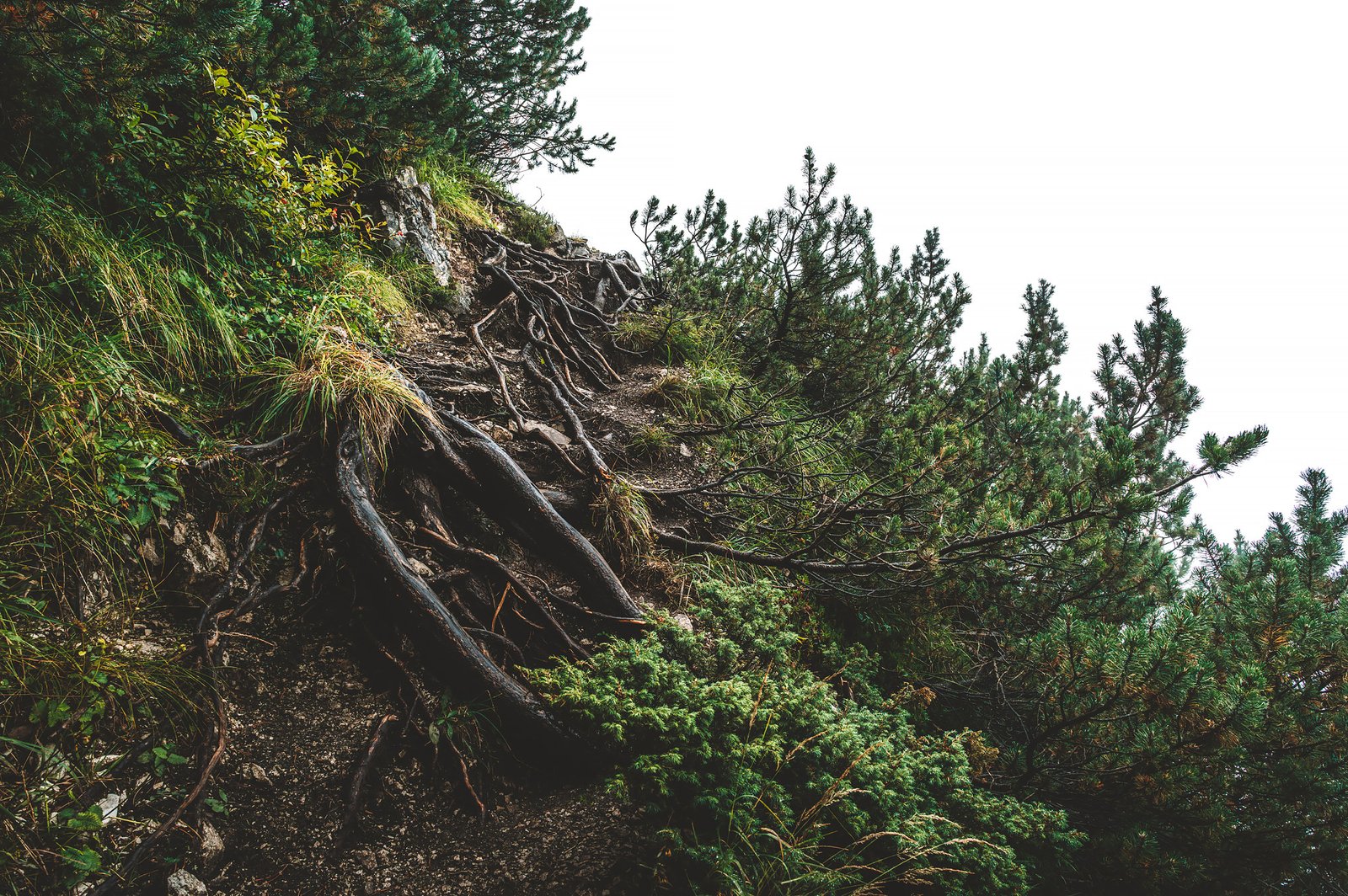
As the descent continues, the forest becomes denser. Roots cross the trail in irregular patterns. The ground shifts constantly, mud and exposed roots. The terrain demands attention again, but in a different way. Less exposure and more instability.
Light filters unevenly through the trees, but occasionally, it breaks through.
Near Rifugio Pian de Fontana, the sun finally reaches the slopes. After days of changing conditions, the light feels direct and the landscape sharpens again.
After a short capuccino break, Szymon, who was still asleep when I left, entered the rifugio. He would then catch me again after a few kilometres, just to disappear into the wilderness of teh Bellunesi.
The last section toward La Pissa is long and continuous.
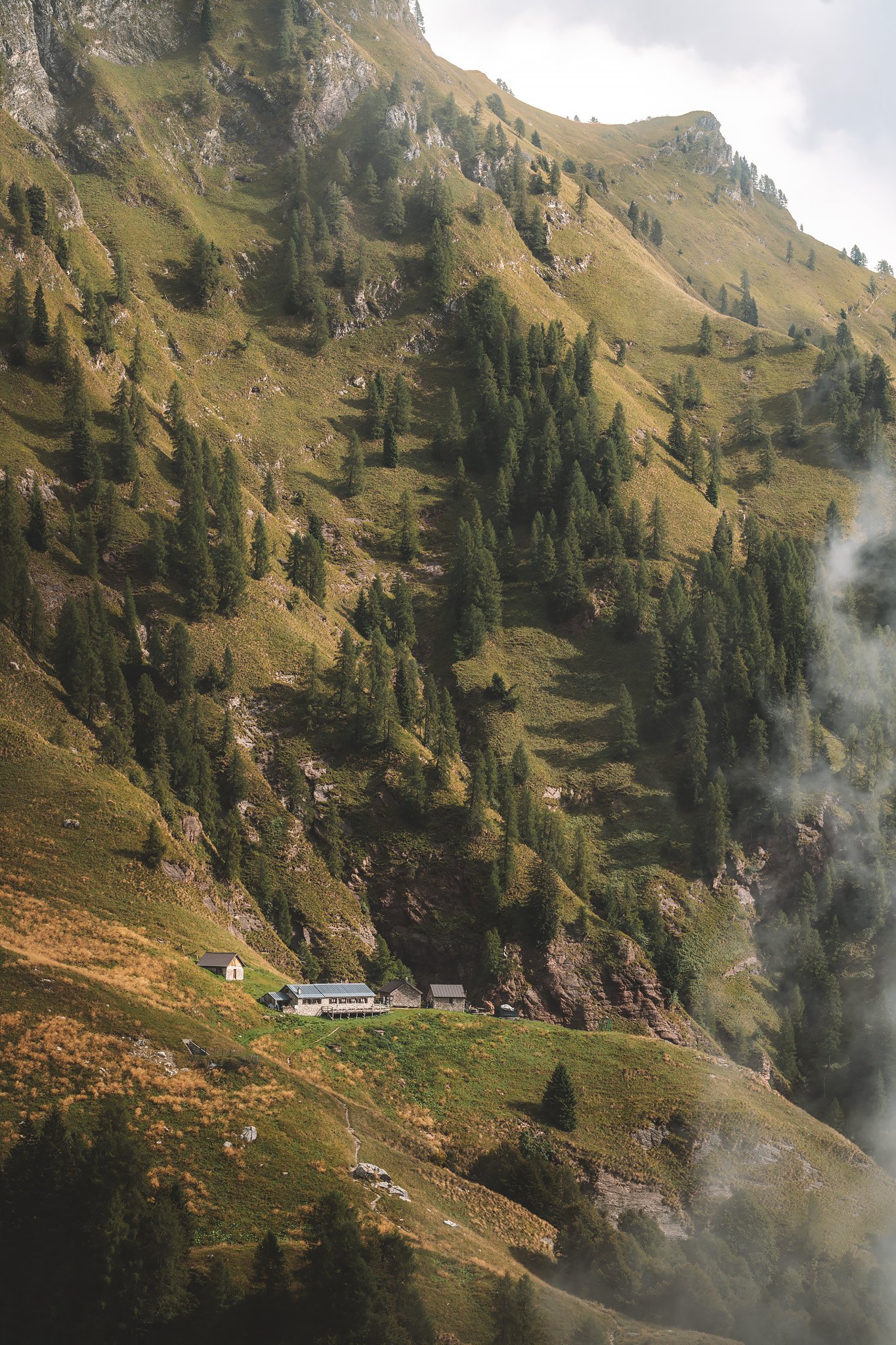
The forest remains and surrounds the last rifugio before the end of the trek, Bianchet. The path becomes steeper and more technical. In places, footing is irregular. Roots and rocks force constant adjustment and the descent takes its toll cumulatively.
My right leg began to give in somewhere along the way. A slight limp at first, barely noticeable. Then more evident with each step. Over two thousand meters of descent in a single day begin to take their toll.
The final section is steep, slippery and uneven. It is the kind of terrain that demands attention, even when the body is already exhausted. And then, suddenly, it ends. The road appears.
I was just in time for the last bus of the morning to Belluno. Szymon was there, waiting, smiling, happy to see that I made it. The trail dissolved into infrastructure, movement became direction again, and we shared the understanding that something had just finished.
Belluno
The bus ride to Belluno from La Pissa takes about 45 minutes. The town feels different. Larger than Dobbiaco, but quieter in a different way. Less influenced by tourists and more by everyday life.
Closer to the southern edge of the Dolomites, it feels like Italy again. The rhythm changes. Cafés, shops and conversations unrelated to the mountains. A place to rest, to eat, to wash, to dry everything that had been soaked for days.
And to think. To think about whether the journey is complete, or whether something still remains.
The last few days of this trip have been quieter, less dramatic. Not as much “iconic” action, but they finish the journey.
They show another aspect of Alta Via 1 that does not rely on peak experiences; it relies on the flow of the trail, on the weather, on your tenacity. And some time in that long walk down, you get so caught up in the details of walking and looking at everything, that the act of walking becomes something you’ve done, rather than something you’re doing.
Or almost.
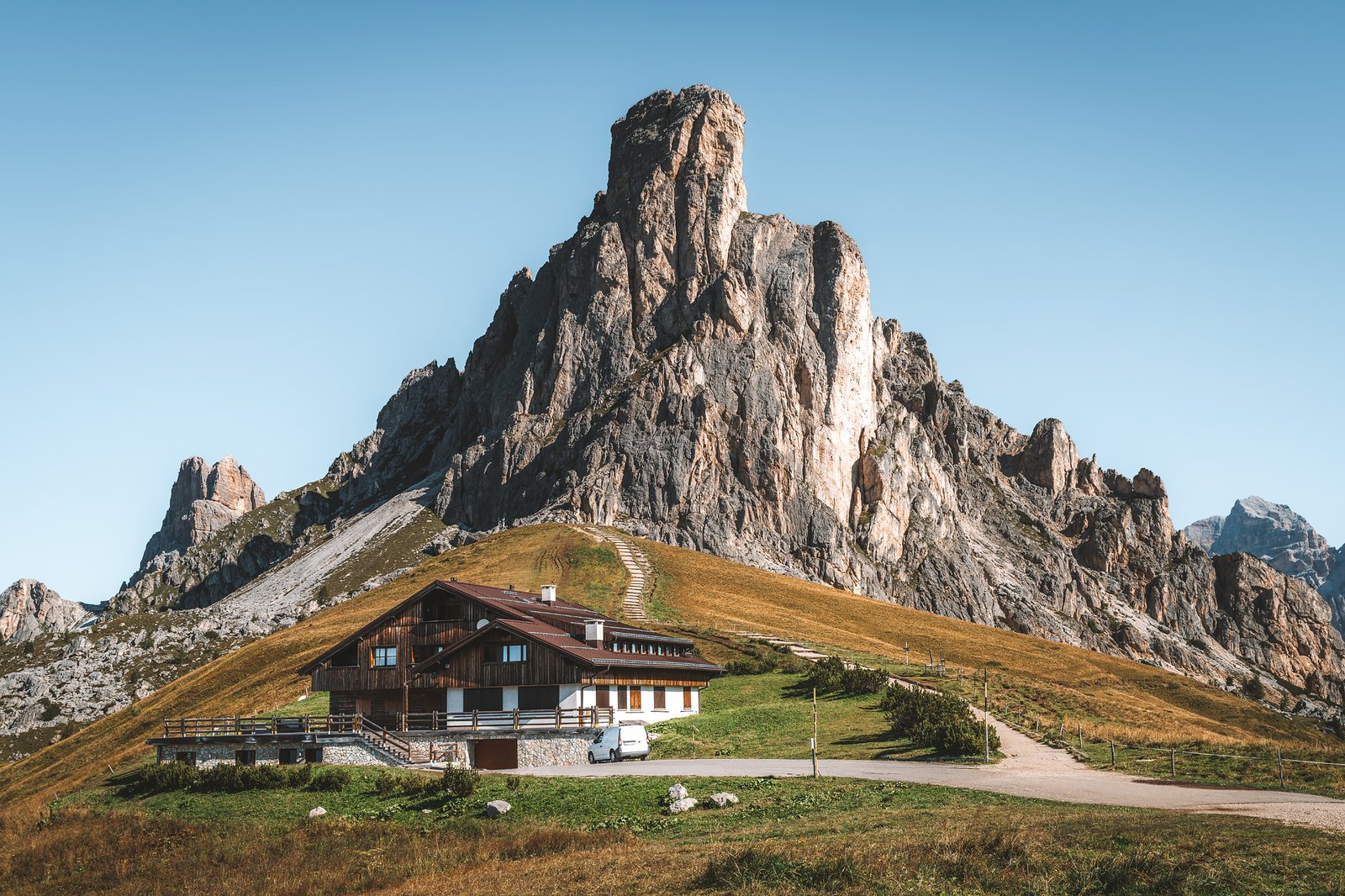
Alta Via 1. Part III: From Lagazuoi to Pelmo - Memories of a Battle
Stage 3. Rifugio Lagazuoi – Rifugio Nuvolau
Distance: 24.61 km · Elevation Gain: +1848 m · Elevation Loss: −2023 m · Technical Difficulty: Difficult
On a clear day in the Dolomites, the sun rises with a clarity that is unlike anything in lower elevations. It’s a little more intense, a little more vibrant. The landscape unfolds in all directions, the horizon stretching farther and farther.
From the cross that sat atop the rifugio, the light spread across the Dolomites with remarkable clarity. It was a clean light, with edges and shadows defined, and the tones were incredible.
For a brief moment, the peaks in the distance turned a soft pink and orange hue known locally as Enrosadira (alpenglow). This would be followed by a much cooler light.
Some of the most recognizable massifs in the Dolomites were visible from the cross on the rifugio. Civetta and Pelmo could be seen in the distance. The Tofane group filled the skyline nearby. Farther away, layers of mountains stretched out endlessly. Also, the Cinque Torri could be seen in the distance, though smaller than elsewhere on the route.
Then, quite quickly, a mass of mist rolled into the valley. It moved with a kind of intention, behind the cliff that sustained the rifugio. The mist came from below and began filling the space between the mountains. It swallowed portions of the landscape while leaving others untouched. The entire scene transformed within minutes.
After one of the most extraordinary breakfasts of the route, filled with options, tasty pastries and a warm capuccino, I left the rifugio.
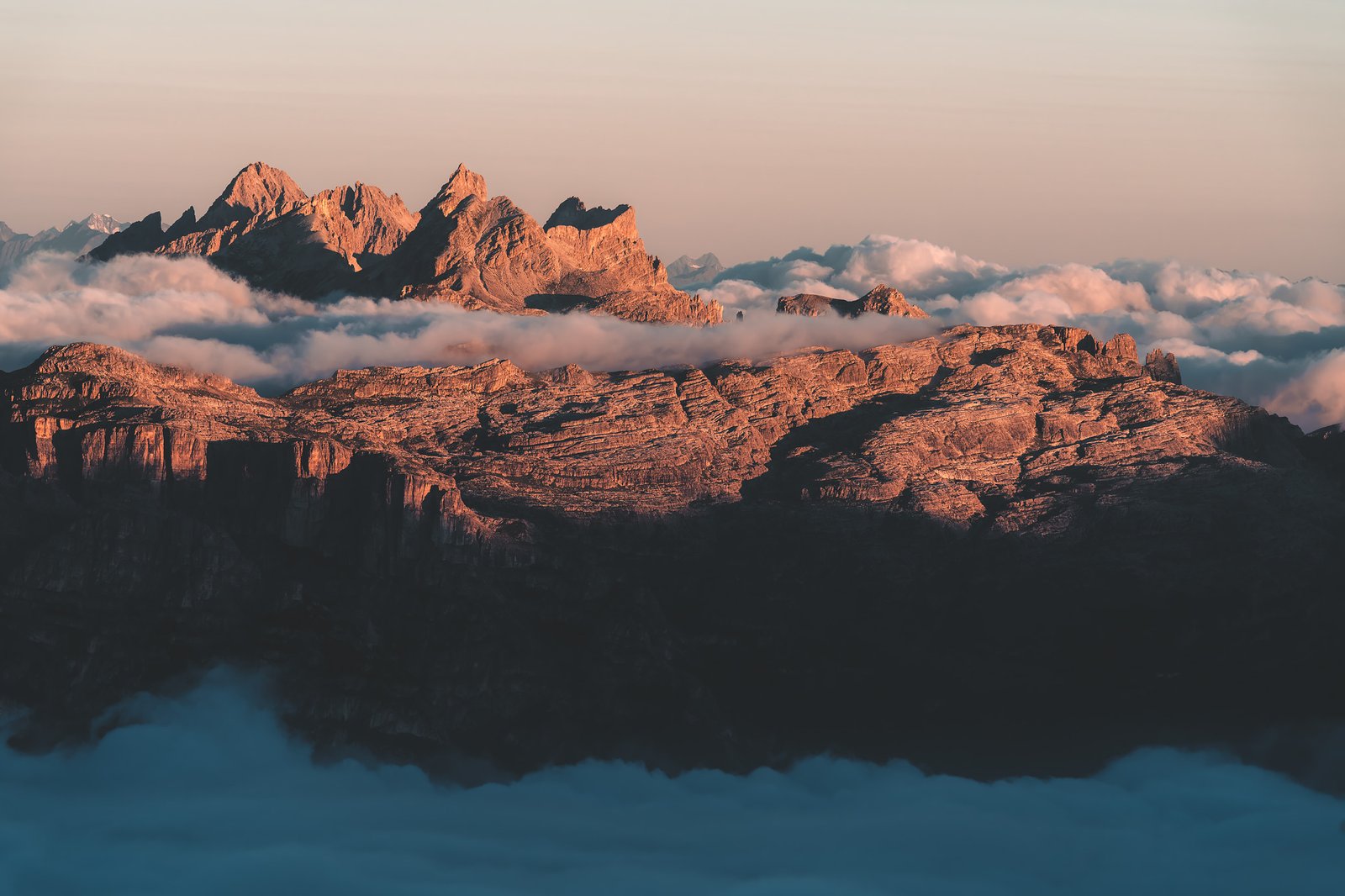
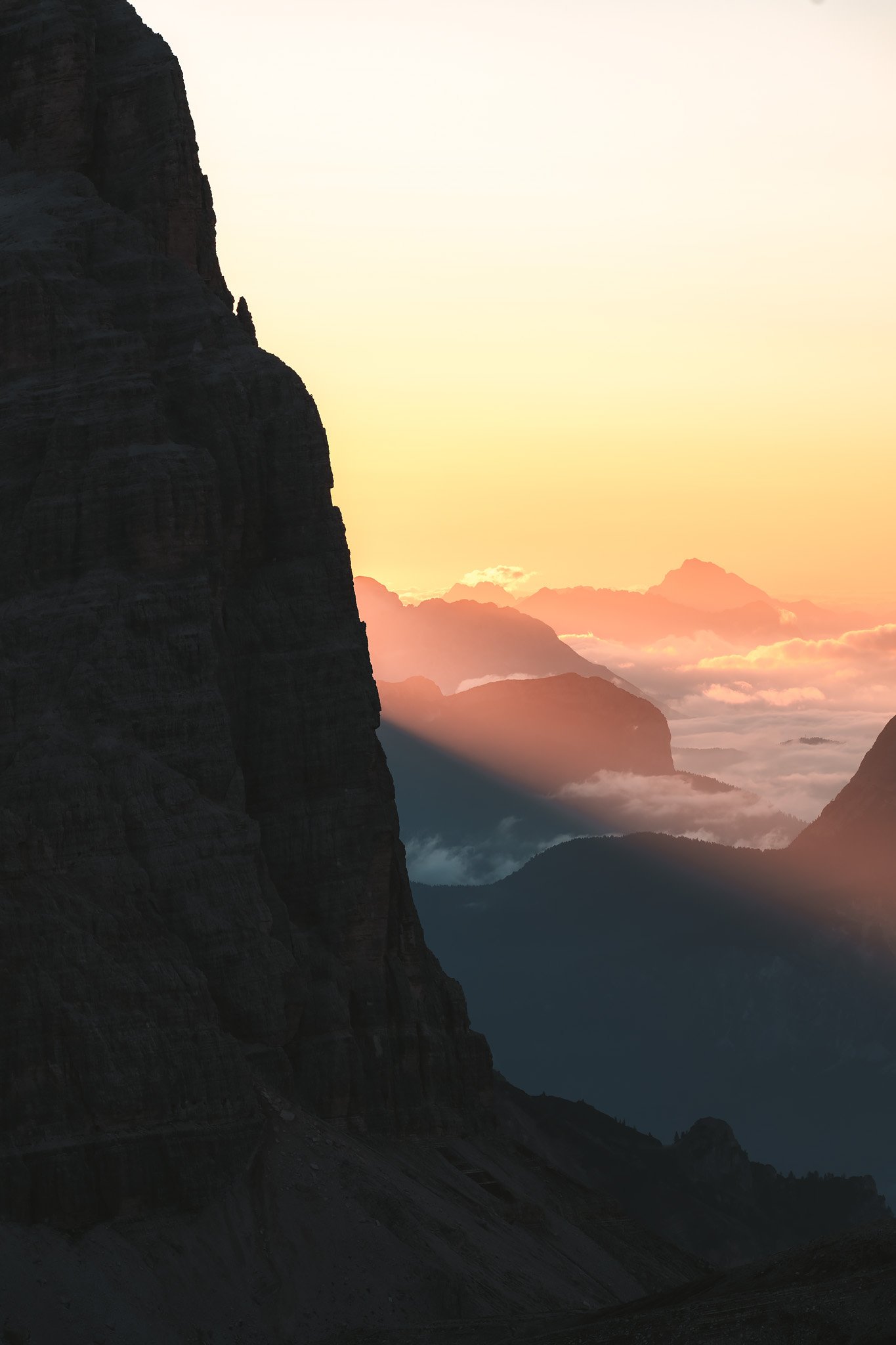
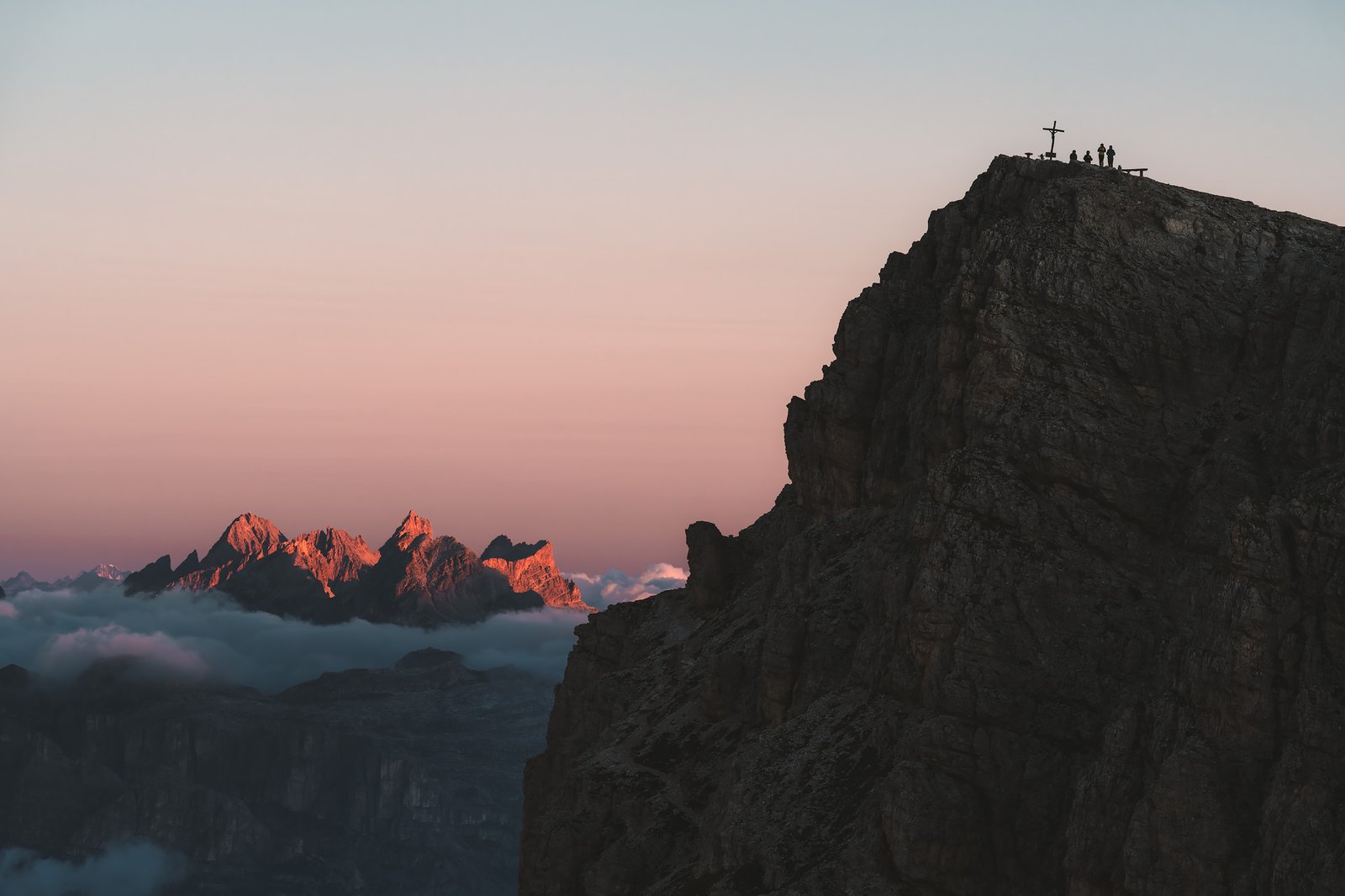
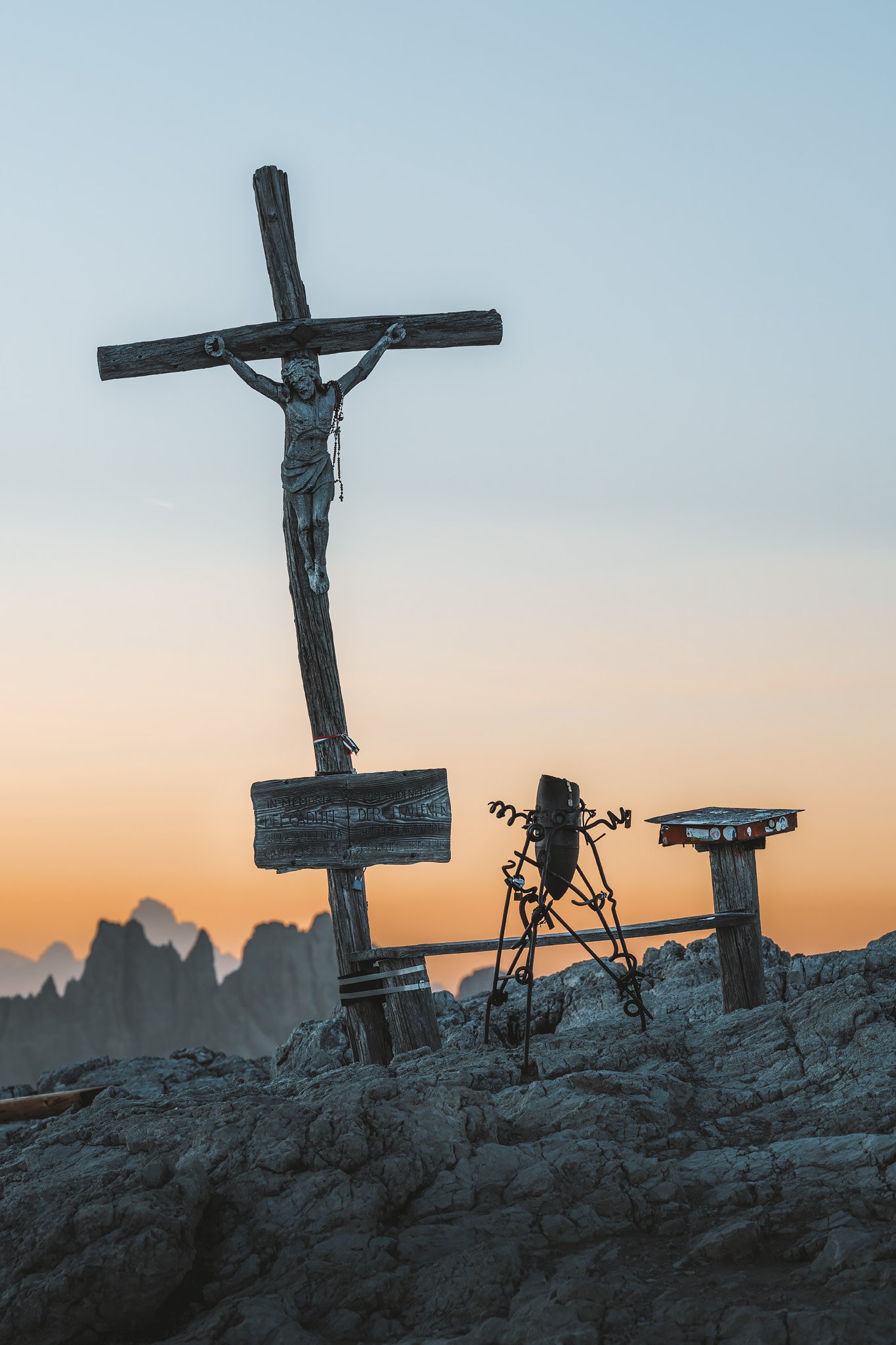
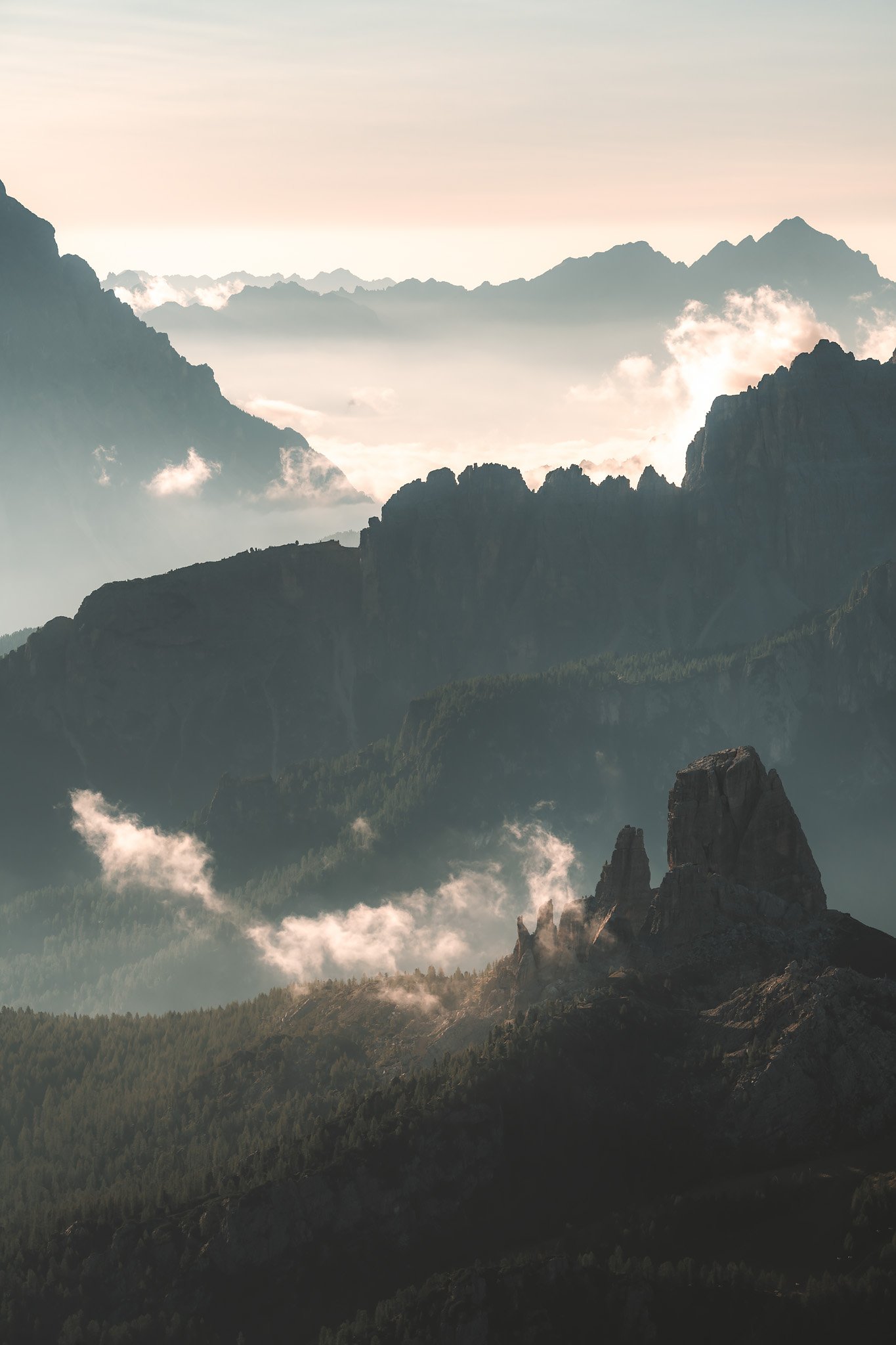
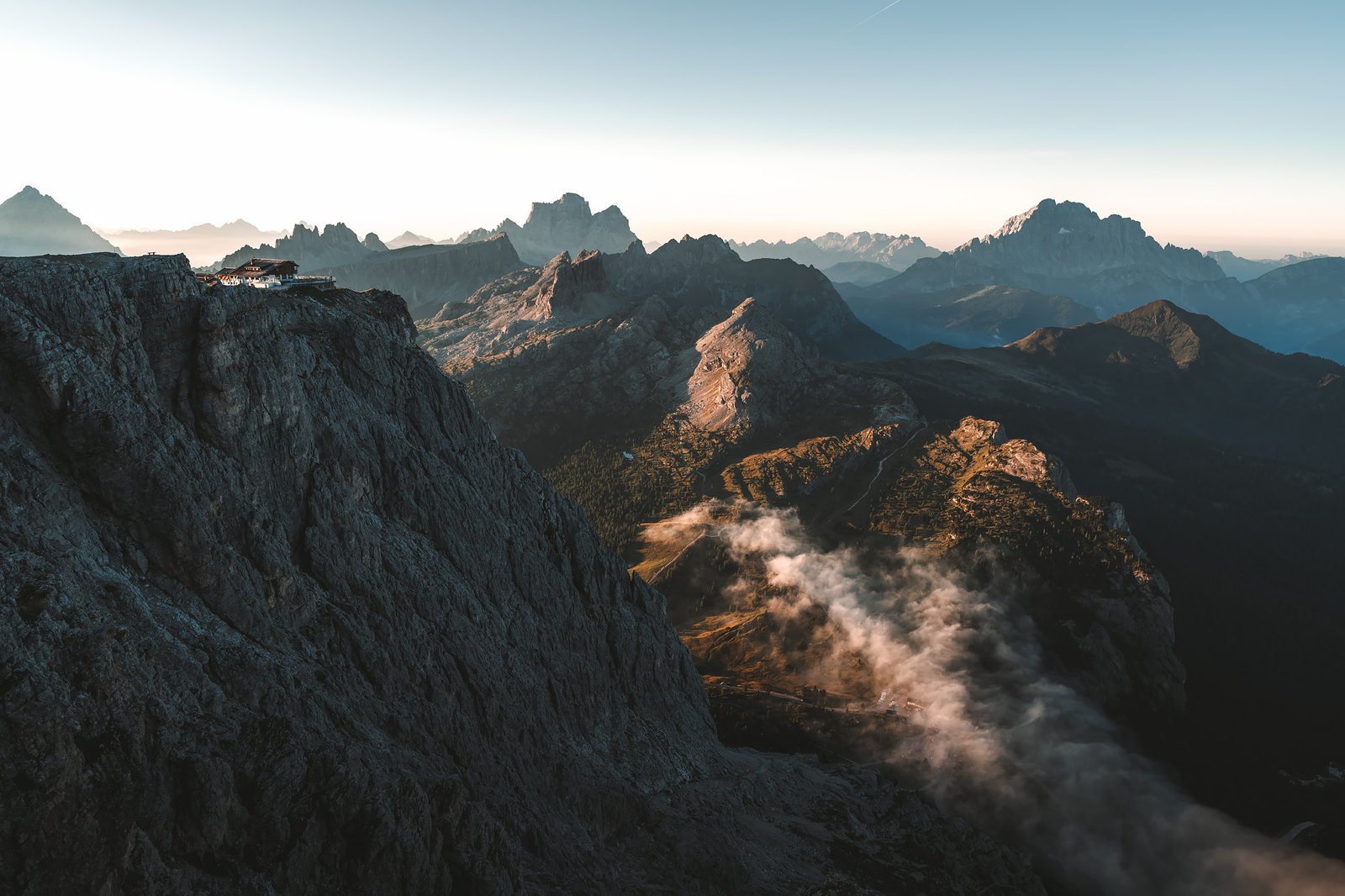
War in the Mountains
One place cannot be missed before leaving Lagazuoi, the tunnels.
Much of this area was a front line during the Great War. Italian and Austrian troops fought not only across ridges, but inside the mountains themselves. What remains today is an extensive network of tunnels, trenches, and carved passages.
Finding the area was quite straightforward, but locating the correct entrance takes some effort. It is easy to take a longer route than necessary, I did. But that detour led to something unexpected. A marmot emerged cautiously from its burrow. For a brief moment, curiosity overcame fear, and it stepped out just enough to allow for a close encounter before disappearing again.
Once inside, the tunnels are cold, wet, steep, and disorienting. Some sections of the floor are submerged, and in places the tunnels feel more like channels than walkable paths.
Hundreds of stairs carved into the rock lead upward through narrow corridors, making orientation difficult. Small openings appear along the walls, once used as observation posts or firing positions. In some sections, the tunnels branch into separate spaces, storage areas, living quarters, defensive positions, some still fitted with old machine guns pointing outward.
It is easy to lose your sense of direction. Reaching the lower sections and then making your way back up is physically demanding. The return to Lagazuoi is long and exhausting, especially after navigating the darkness below.
Still, it is worth it. This entire area is also a hub for via ferrata routes, something that feels like a natural extension of the experience, even if left for another time.
Near the bottom of the tunnel system, after a detour, lies Cengia Martini. From a distance, it is striking, a narrow ledge cutting across a steep rock face. Reaching it is another matter. Parts of the path have collapsed, and other sections are loose and exposed. Still, I managed to get there.
Up close, it reveals something different. The ledge is wider than it appears in places, and carved into the rock are the remains of simple wooden rooms, basic shelters once used by soldiers. Standing inside them changes your perspective entirely.
And then there is the climb itself back to the summit, long, in complete darkness, with no clear sense of distance or direction. The tunnels seem endless, splitting into multiple branches, making it easy to get lost. Eventually, after longer than expected and several attempts, the exit appears, quietly, almost unexpectedly, just behind the rifugio itself, surrounded by rocky trenches.
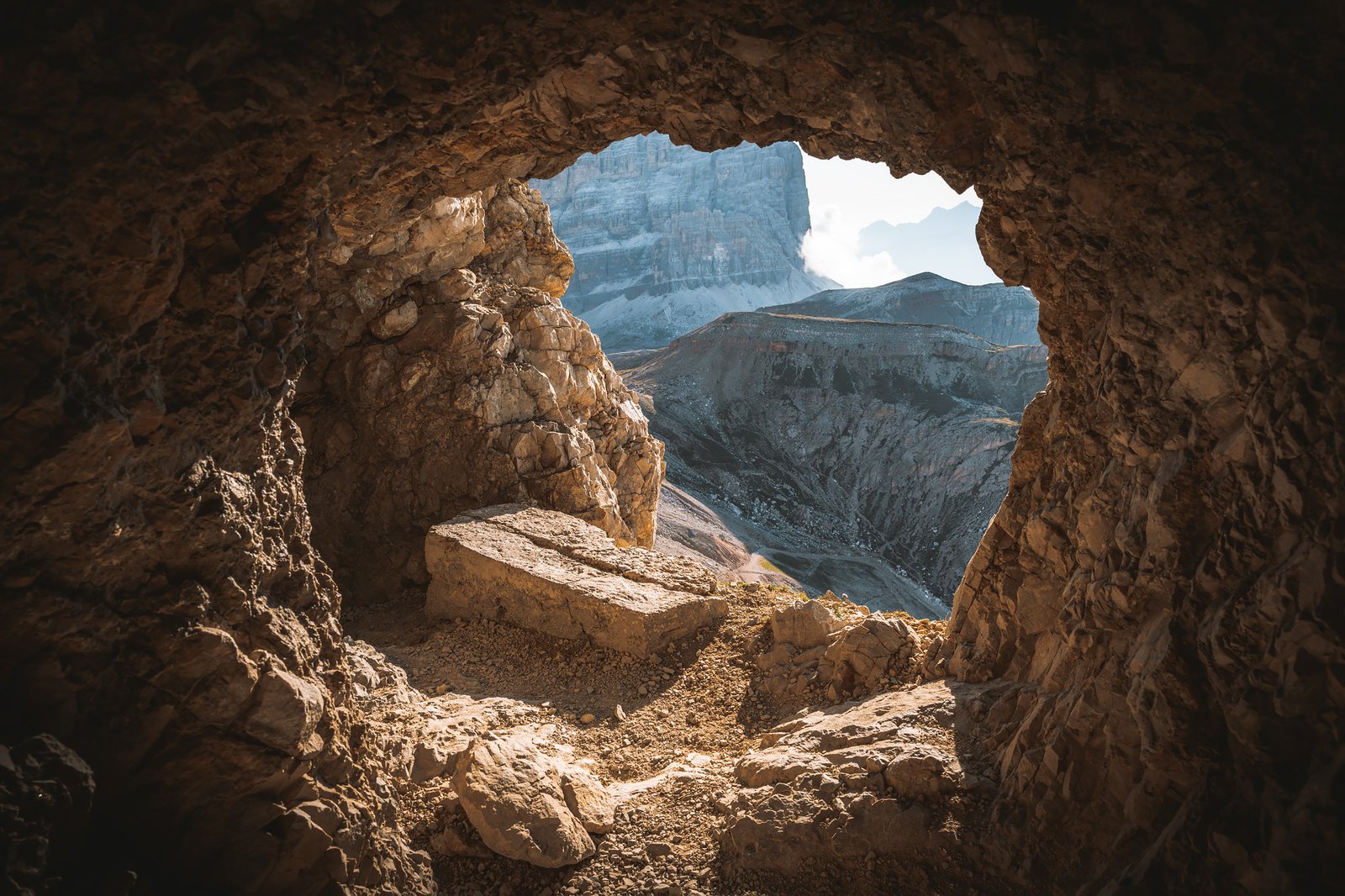
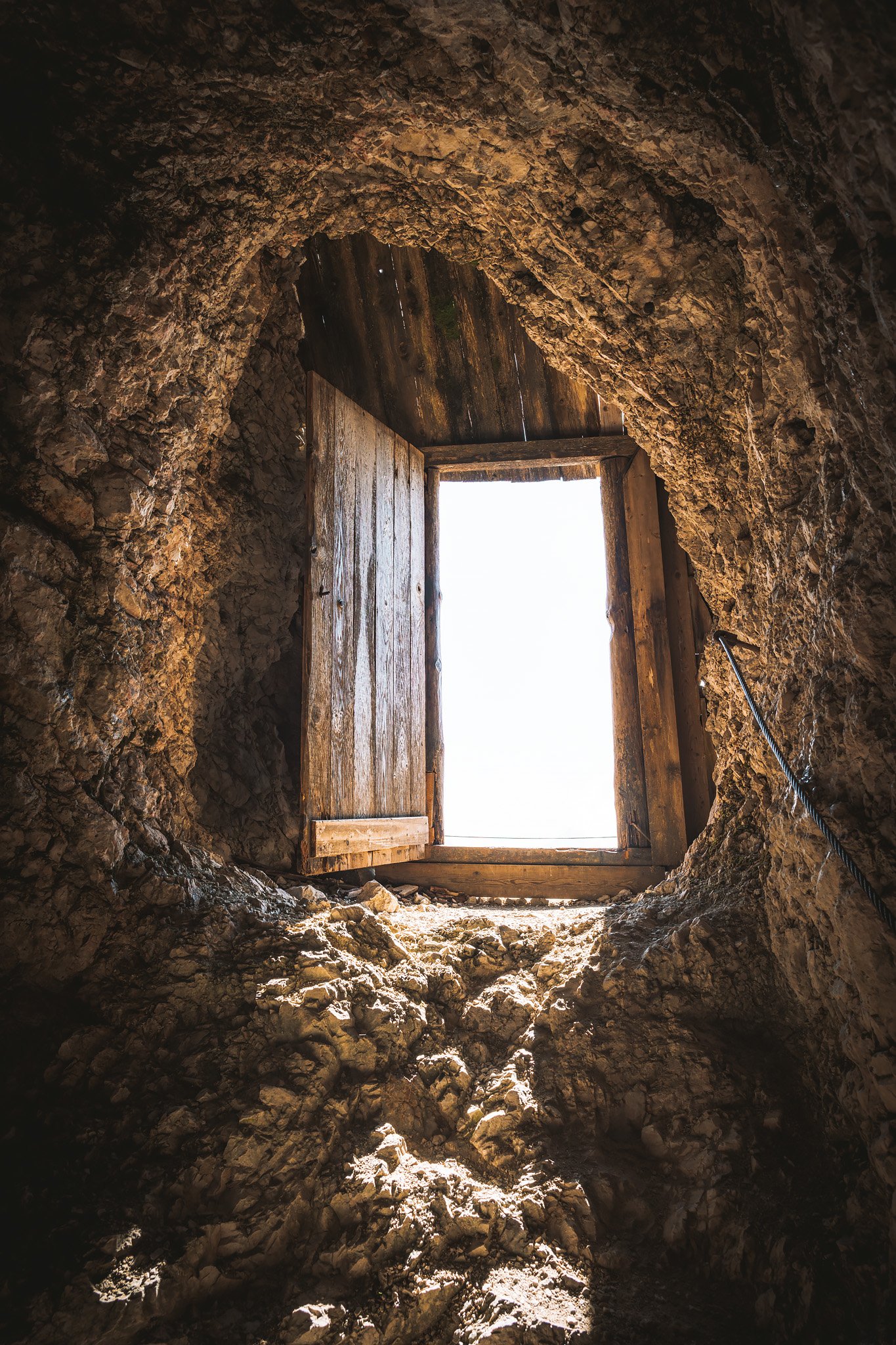
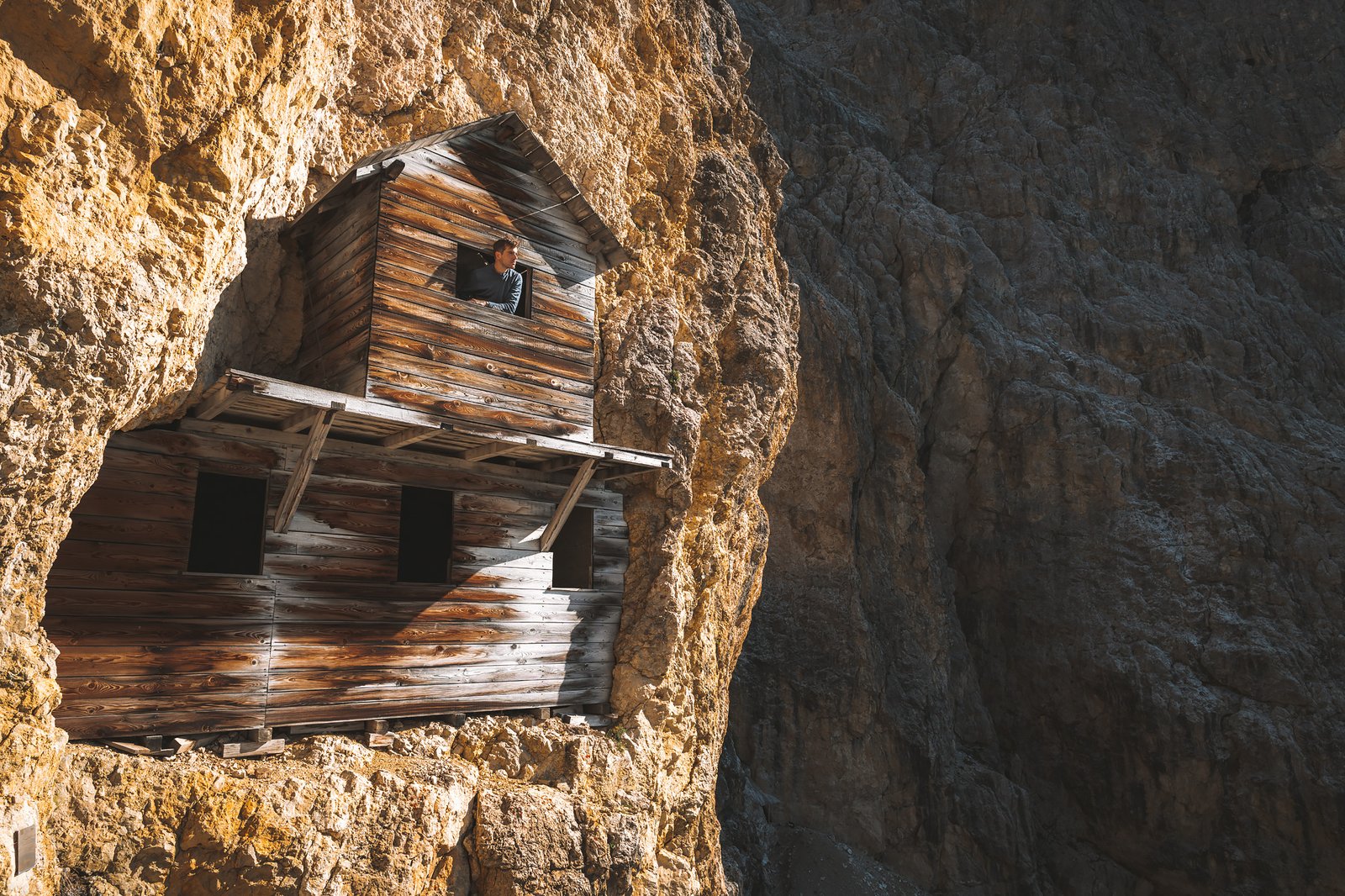
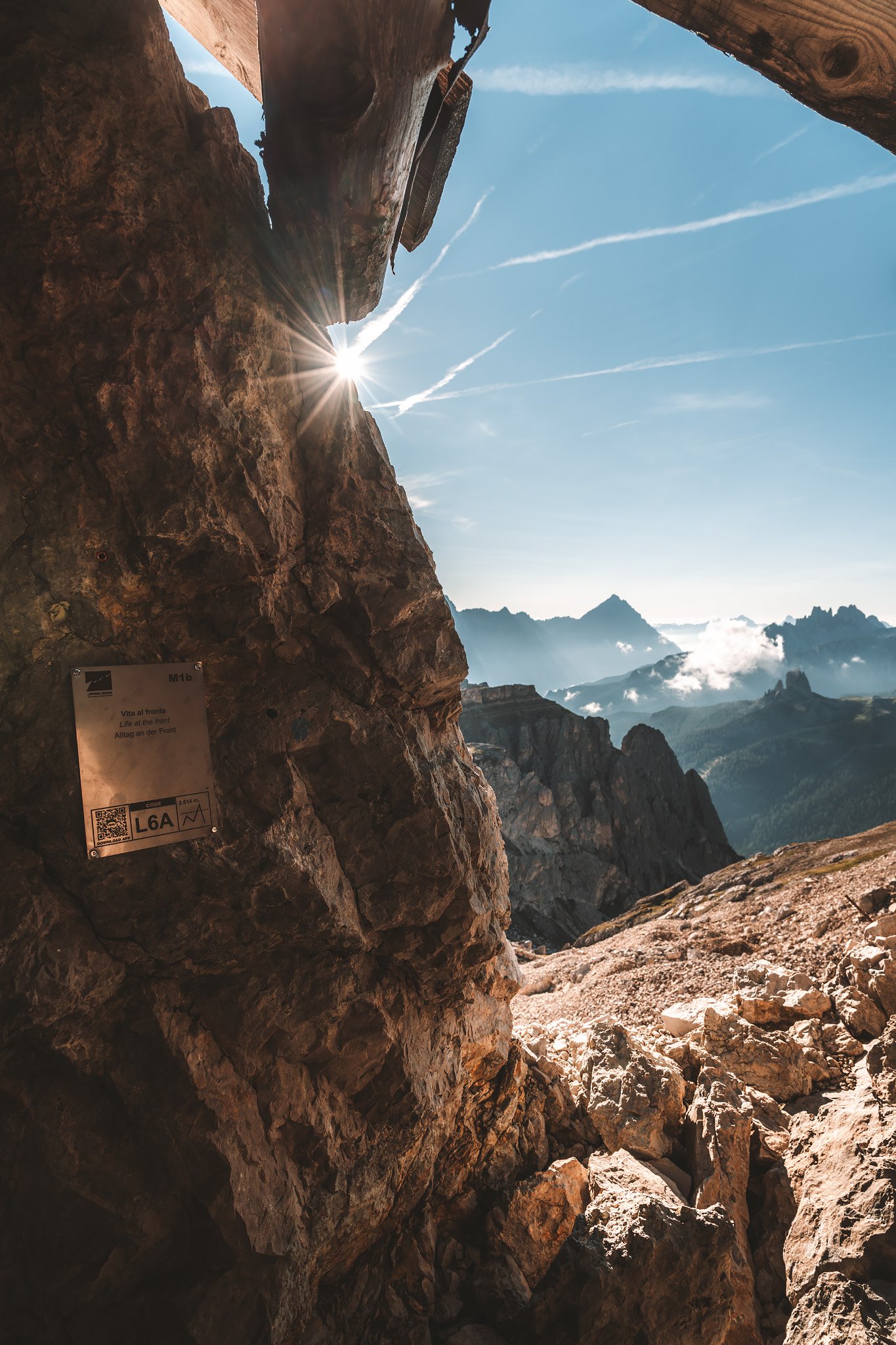
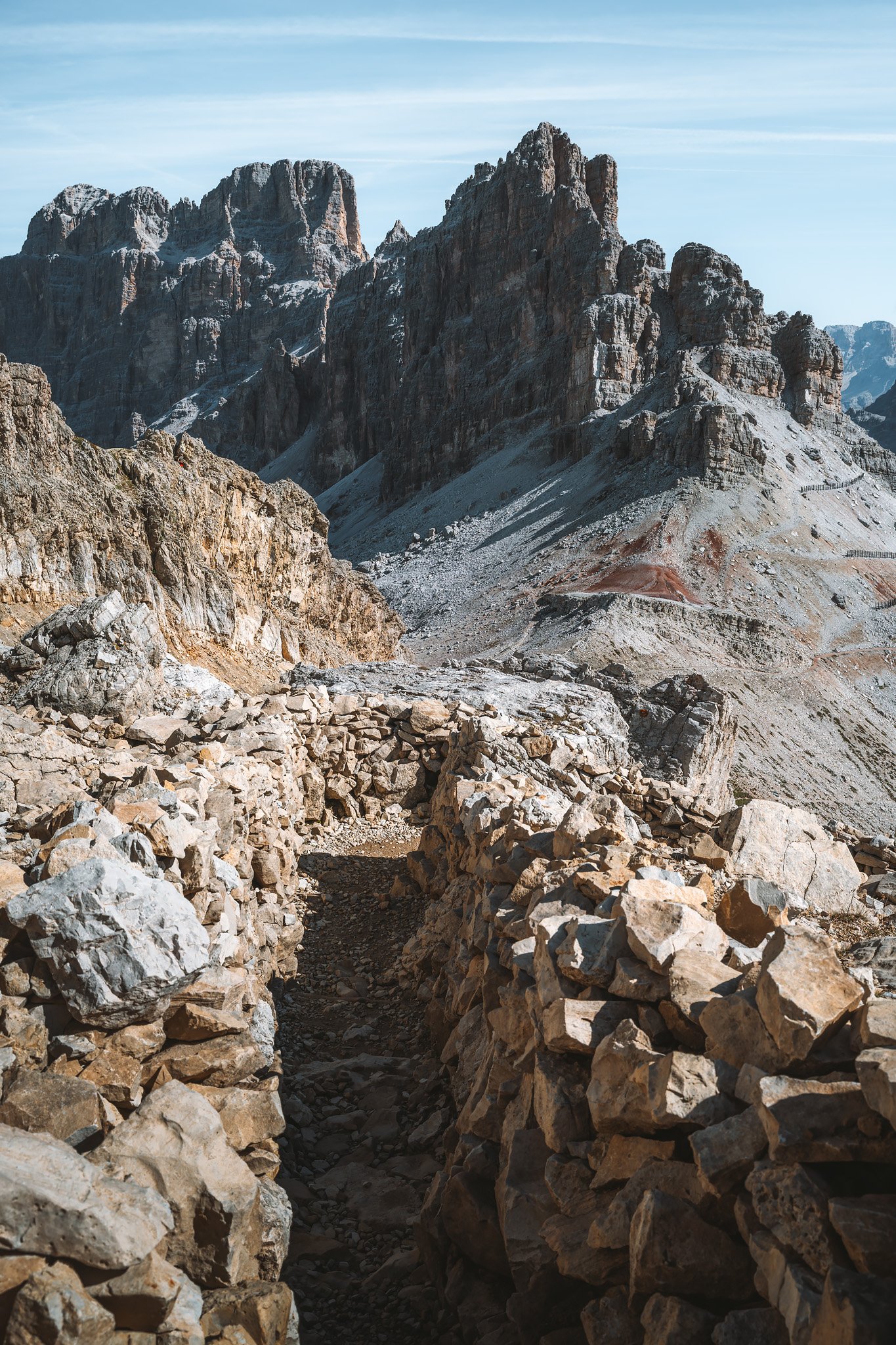
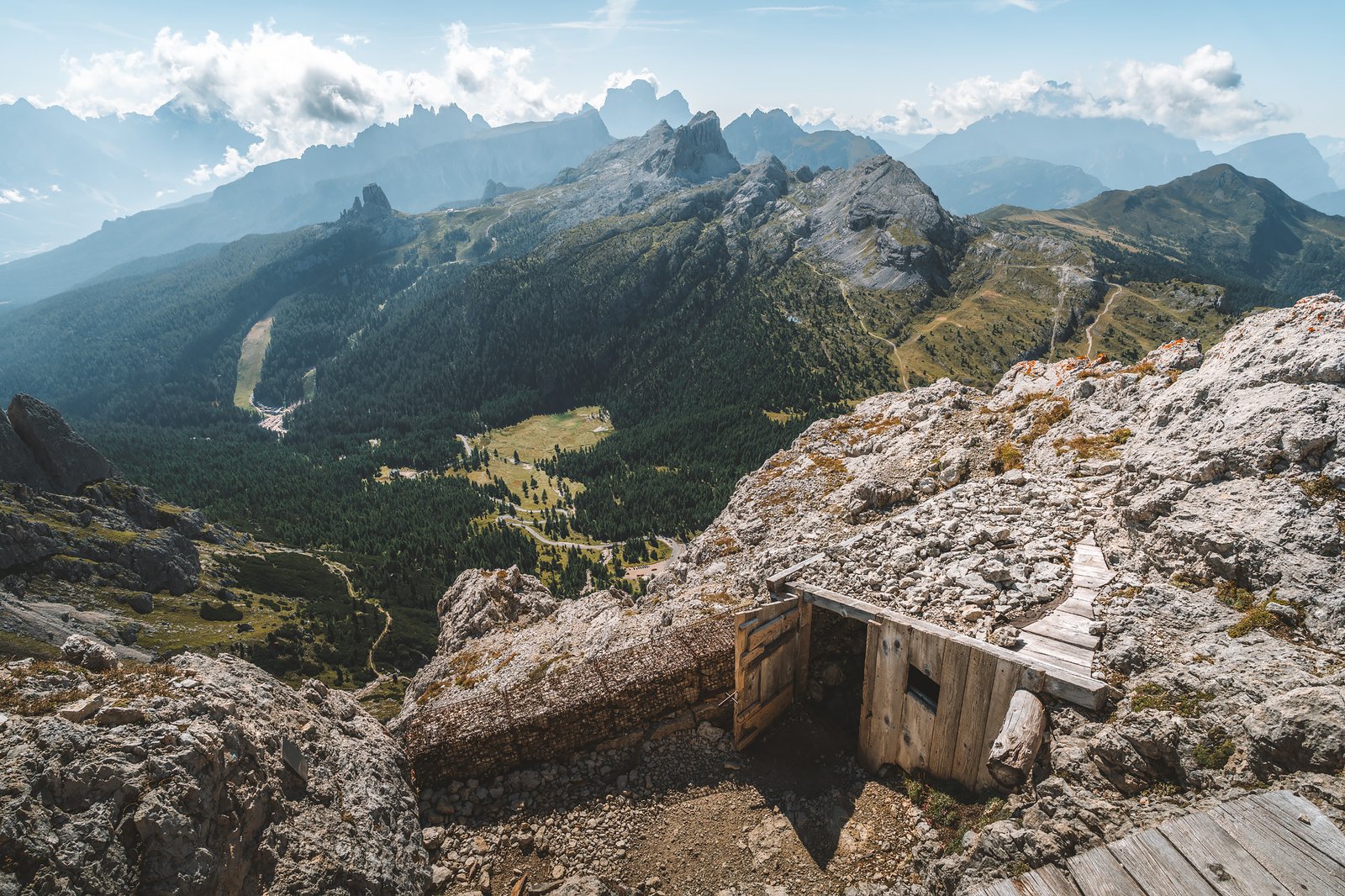
Toward Cinque Torri
The descent from Lagazuoi is long and continuous. As you go down, the terrain softens. The forest returns.
The transition between the Tofane and Cinque Torri passes through dense woodland, mainly spruce and larch. Light filters unevenly through the canopy, creating alternating bands of brightness and shadow. The ground shifts between soft layers of needles and exposed rock.
This section feels quieter, more enclosed. And then the landscape opens and Cinque Torri emerges to your right.
Five vertical towers rise from the ground, each distinct in shape and structure. From below, they are easier to distinguish than in most photographs.
What stands out is how much they change depending on perspective. From one angle, they appear compact. From another, separated and independent. The time of day reshapes them completely, light defines everything here.
An open-air museum spreads across the slope. You can walk through trenches, wooden structures, and reconstructed positions. You follow the same lines once used in war, understanding how the terrain shaped movement and strategy.
Meanwhile, rock climbers move along the rock faces, giving scale to the towers.
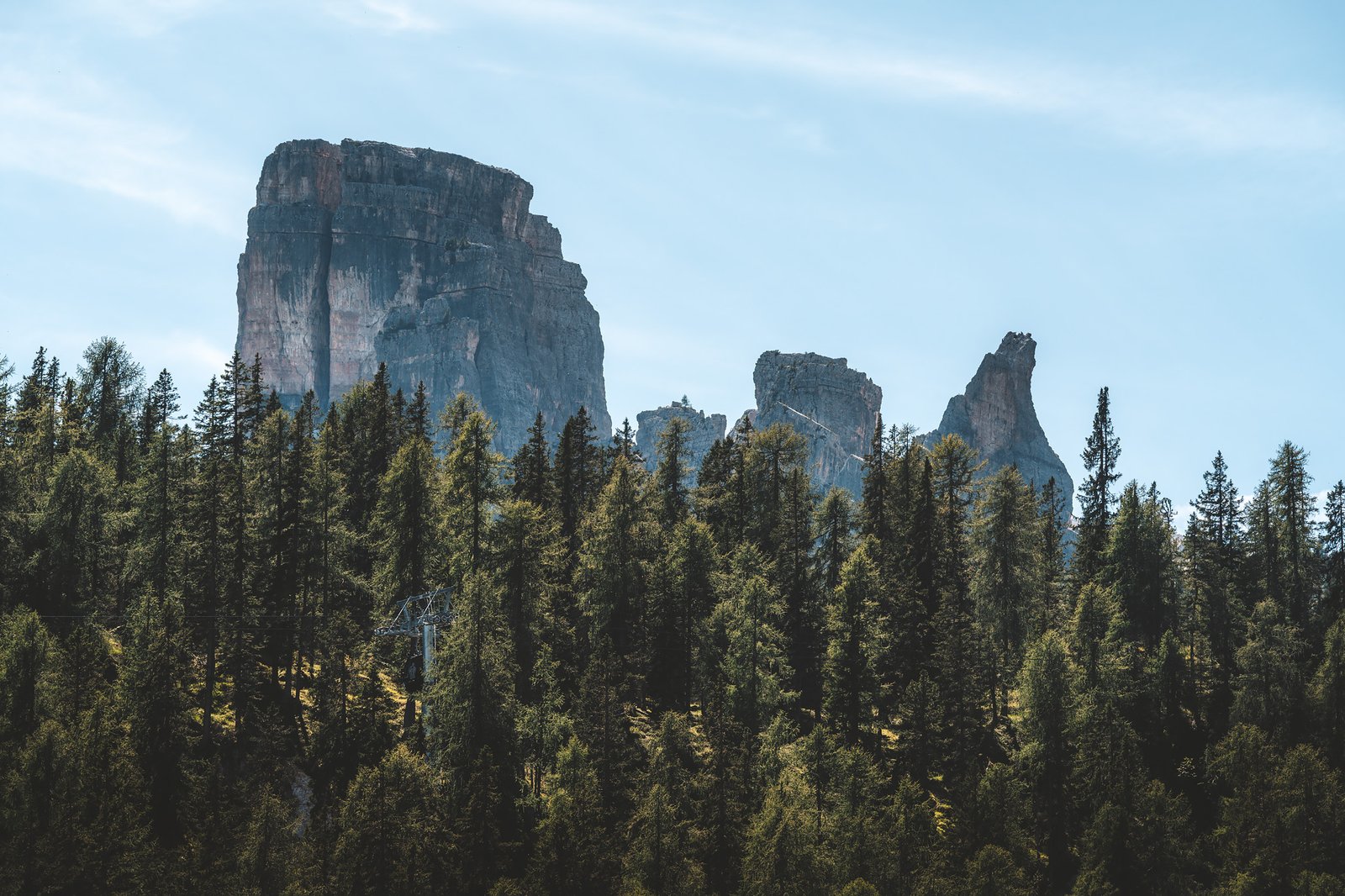
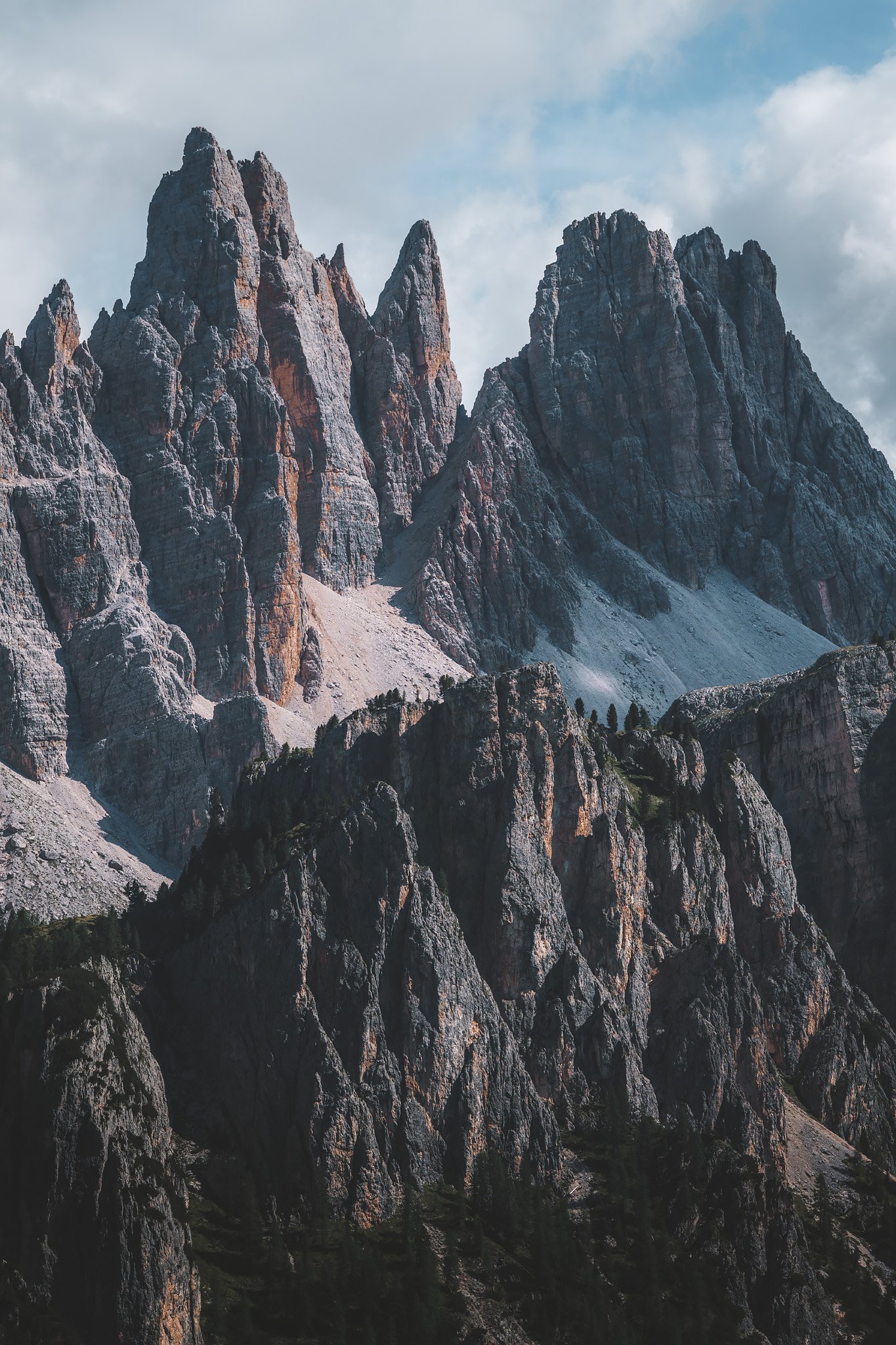
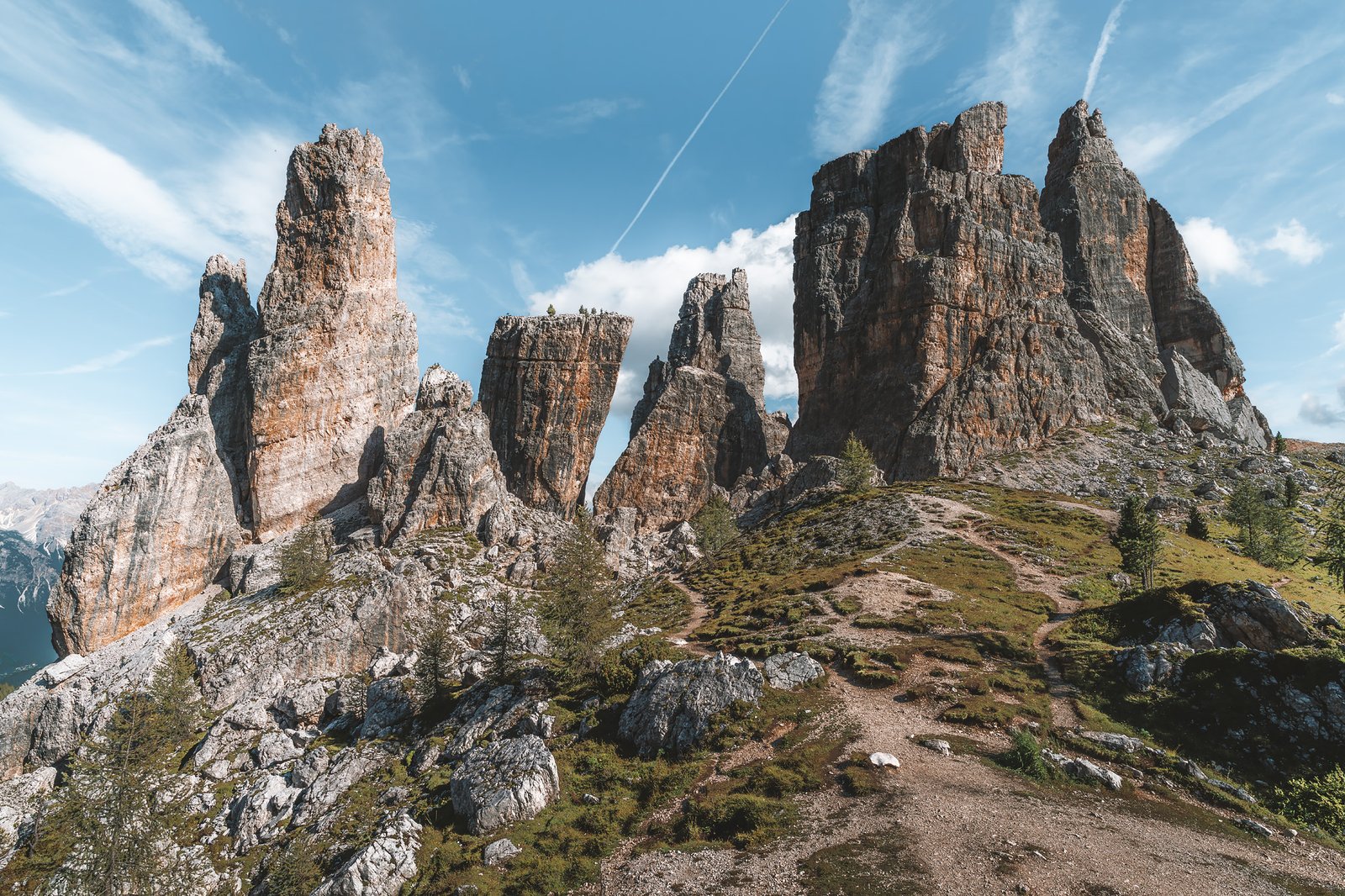
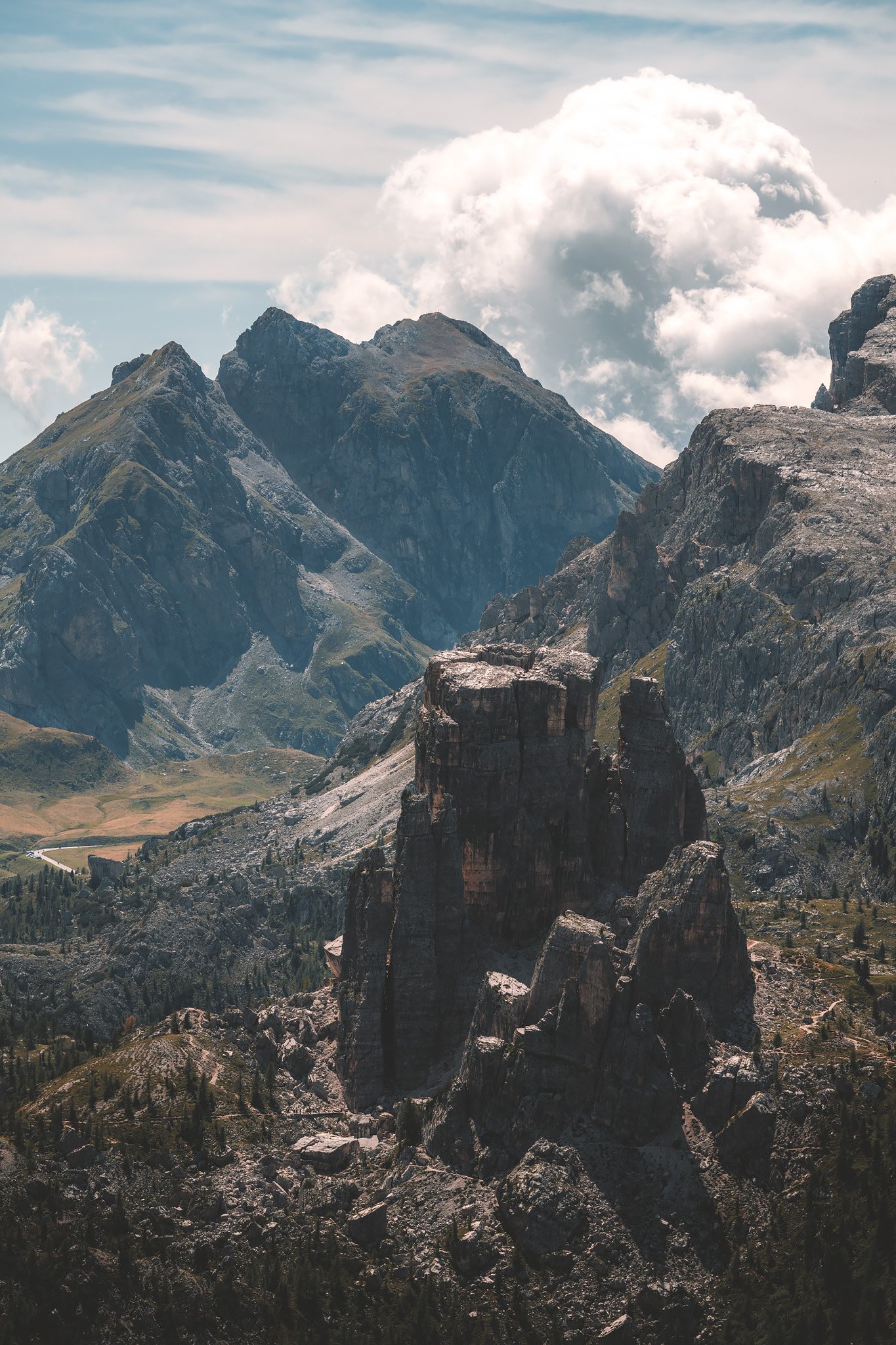
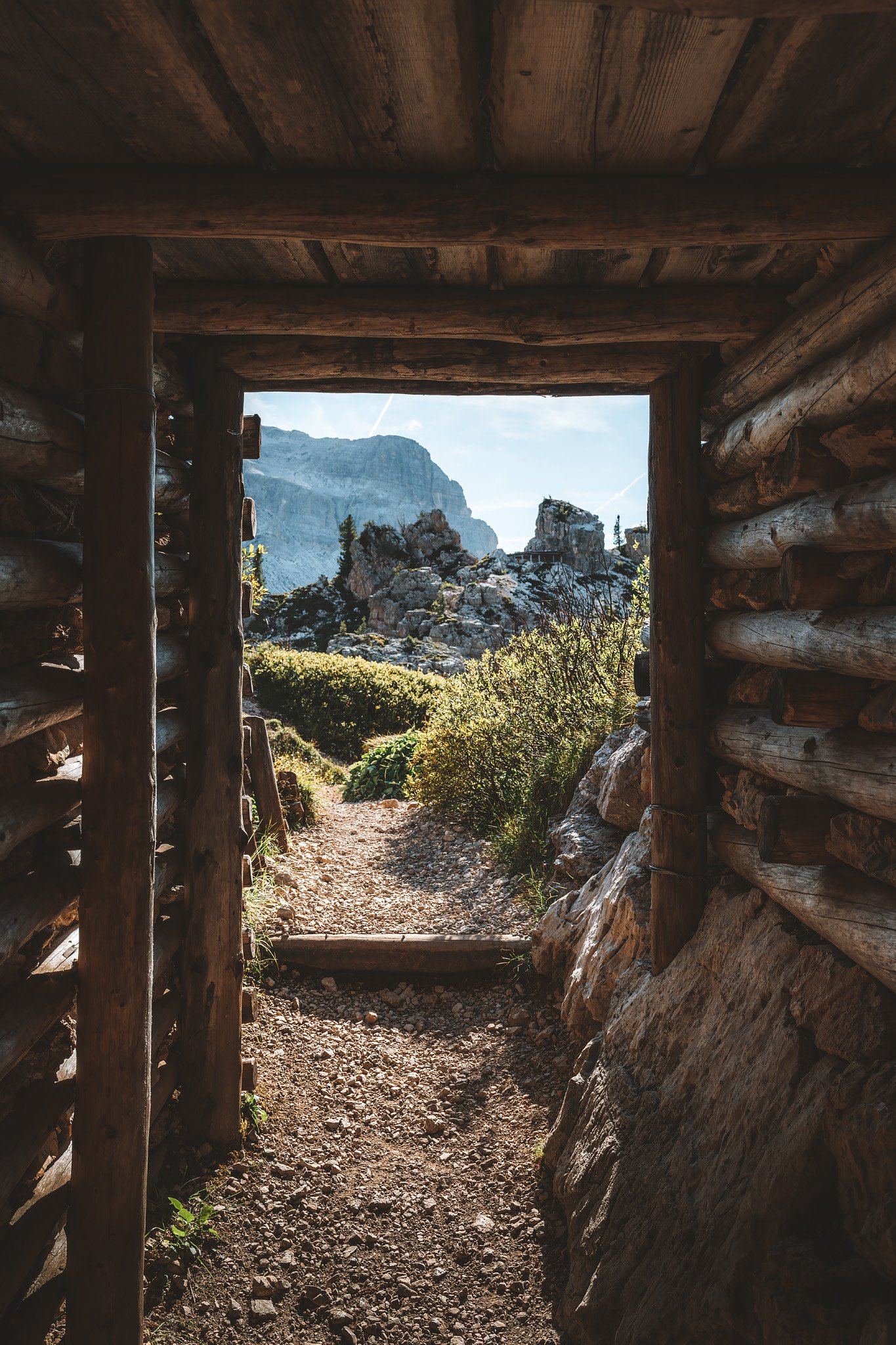
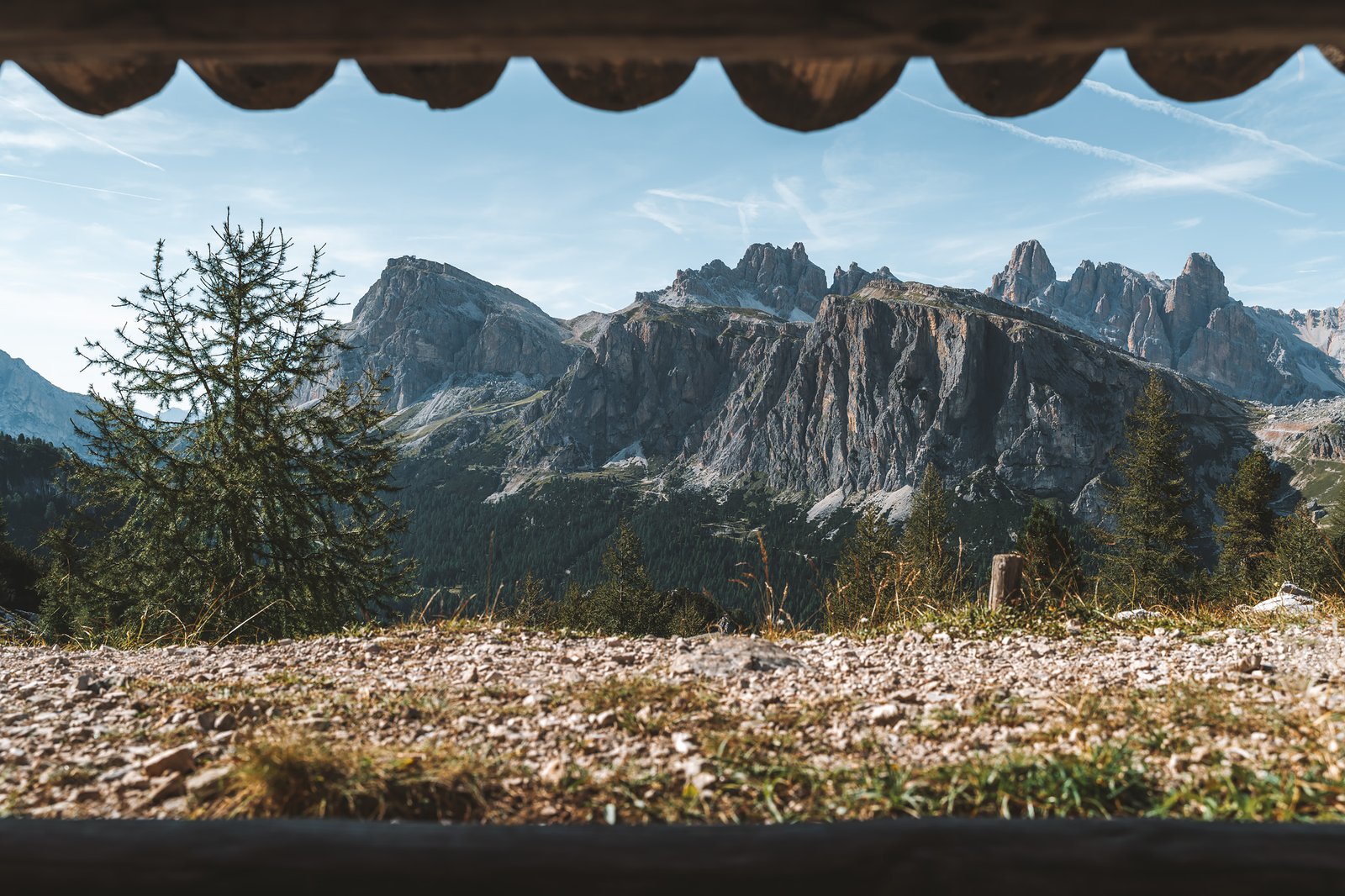
Nuvolau
From Cinque Torri, the trail climbs again, first to Averau, then to Nuvolau. The final stretch is relatively short and exposed.
Nuvolau sits on a rocky summit with no gradual transition. One moment you are climbing, the next you are completely exposed to the horizon. The views are overwhelming.
From the terrace, Cinque Torri lies below. Behind, the Tofane dominate. In the distance, opposite to the towers, Civetta and Pelmo appear once again. Mountains extend in layers in every direction.
Once in the rifugio, after yet another fantastic dinner with a great conversation with an Austrian I had met the night before and a Swedish couple on their honeymoon, sunset gathers everyone outside. The light moves constantly across the peaks. There is no single focal point, only shifting compositions depending on where you look.
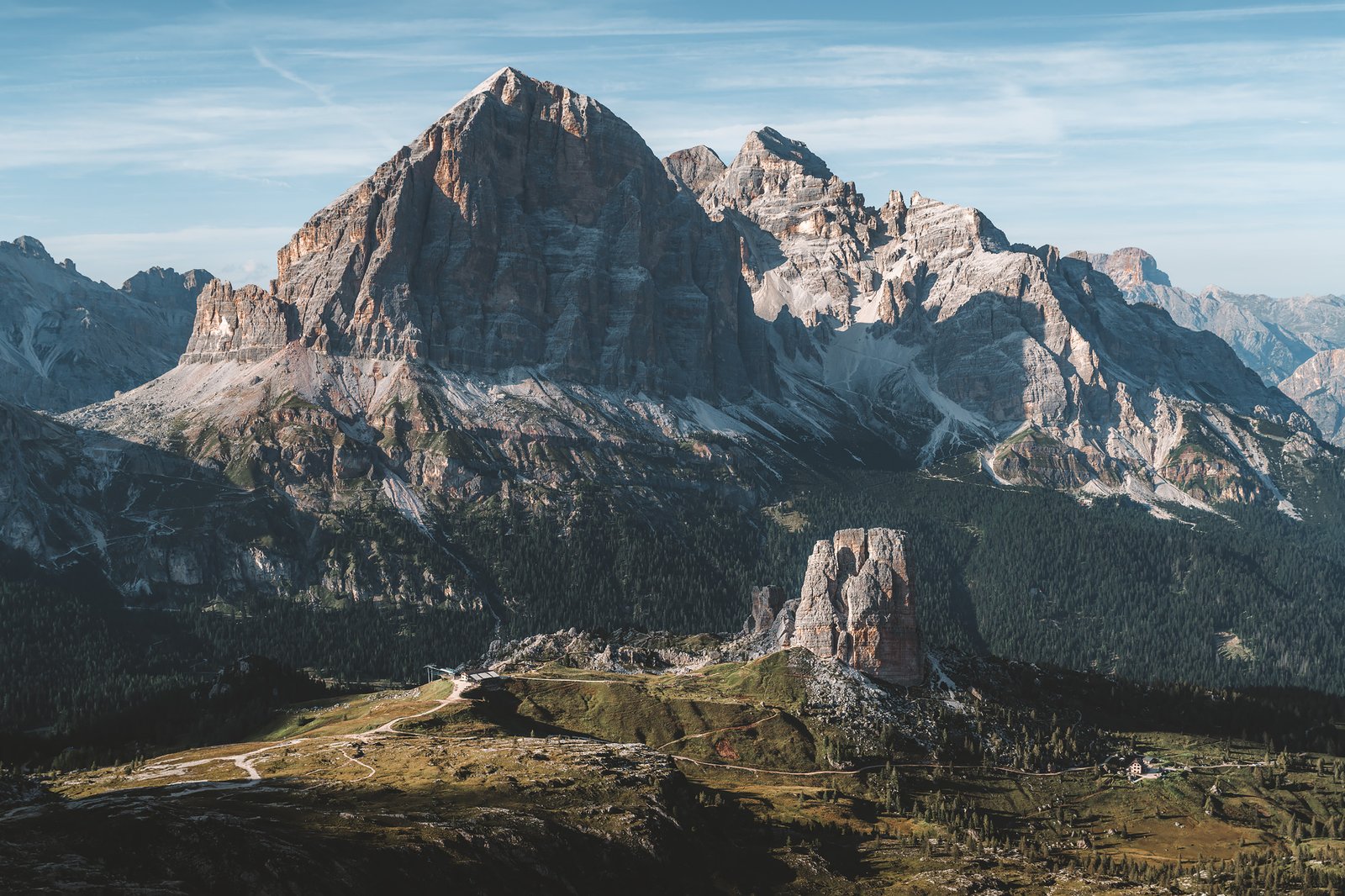
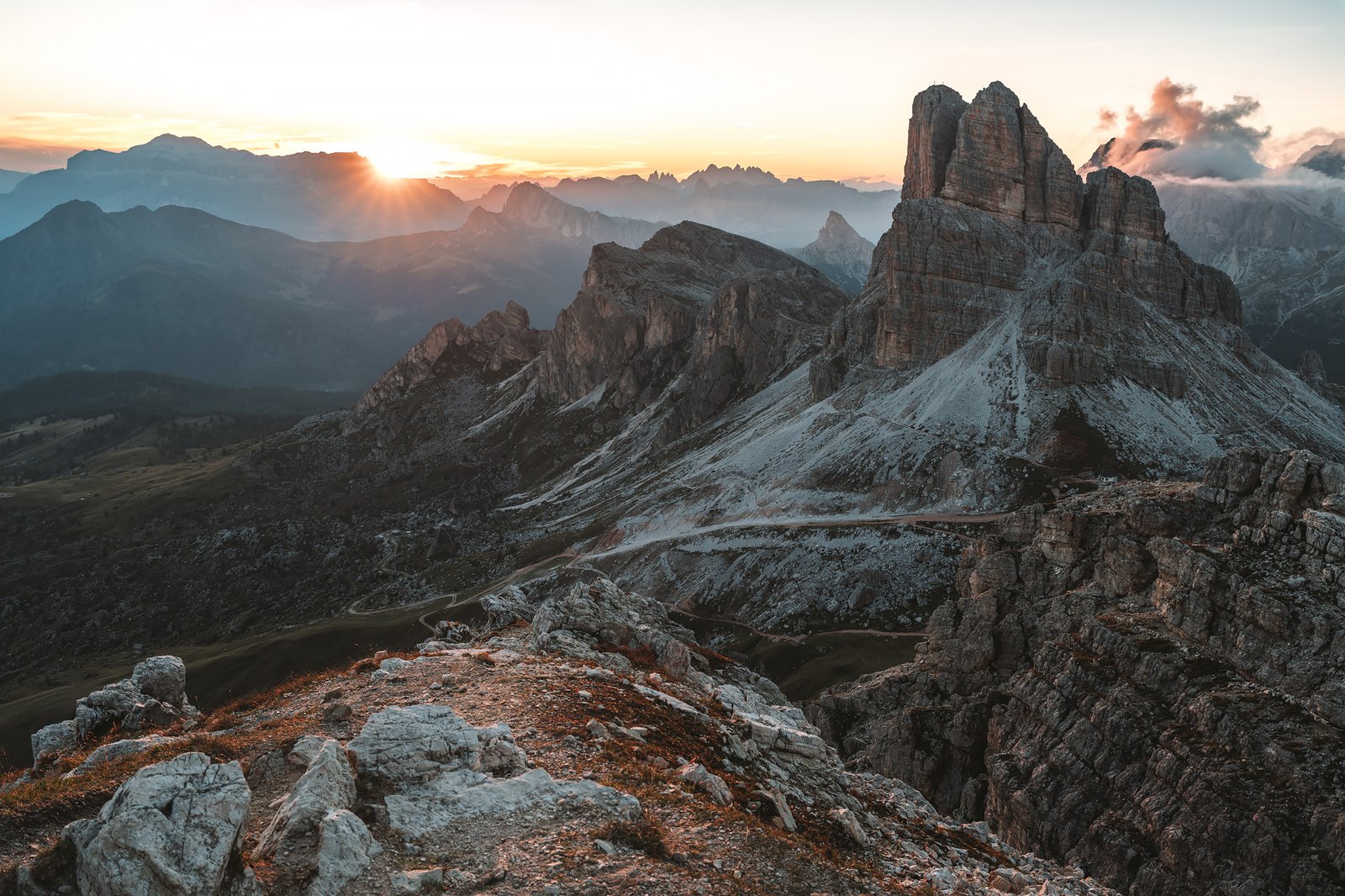
Stage 4. Rifugio Nuvolau – Rifugio Venezia
Distance: 24.30 km · Elevation Gain: +1076 m · Elevation Loss: −1870 m · Technical Difficulty: Very Difficult
The following morning is just as striking. The sunrise is sharp and clear. Light reveals textures and details of the Averau massif that were hidden the evening before.
The descent toward Passo Giau is quick but challenging. Rock gives way to open grasslands, with occasional narrow and exposed sections.
Passo Giau is one of the few places along the Alta Via 1 accessible by road. People arrive by car or bicycle, bypassing sections of the trail entirely. And yet, it loses none of its impact.
From here toward Lago Federa, the route crosses one of the most beautiful meadows of the entire journey. Wide open spaces bordered by steep cliffs. Horses grazing freely around Lago delle Baste. There is also a small Neolithic settlement, now largely abandoned and difficult to reach, but another layer of history in the landscape.
A detour leads down to Lago Federa. The lake sits beneath steep slopes and reflects the surrounding peaks with near-perfect clarity when the water is still. The rifugio there serves as a great spot for a quick snack and some rest.
This is also a well-known cycling route, with riders making their way up the rocky tracks.
From above, the entire basin opens up.
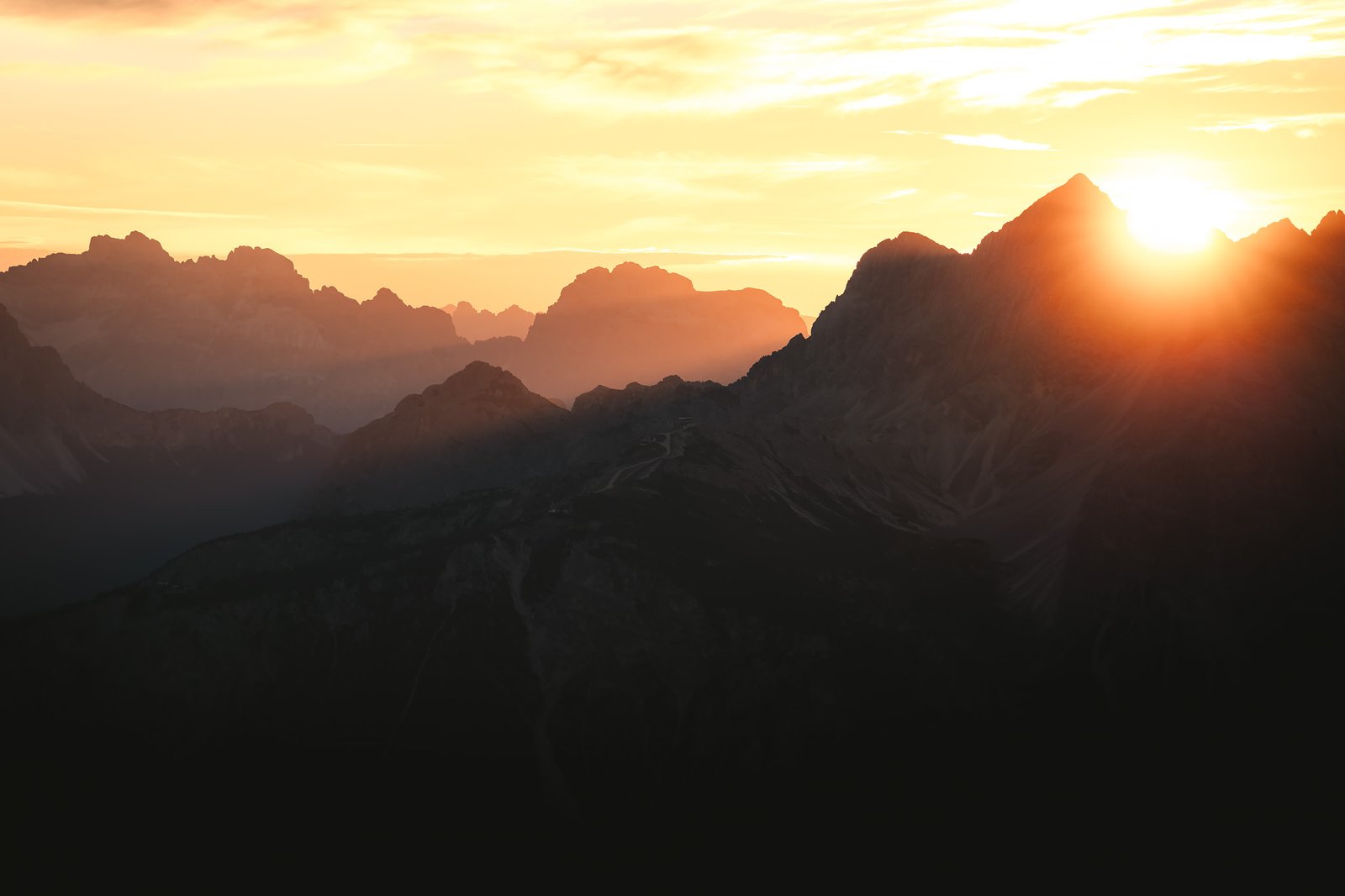
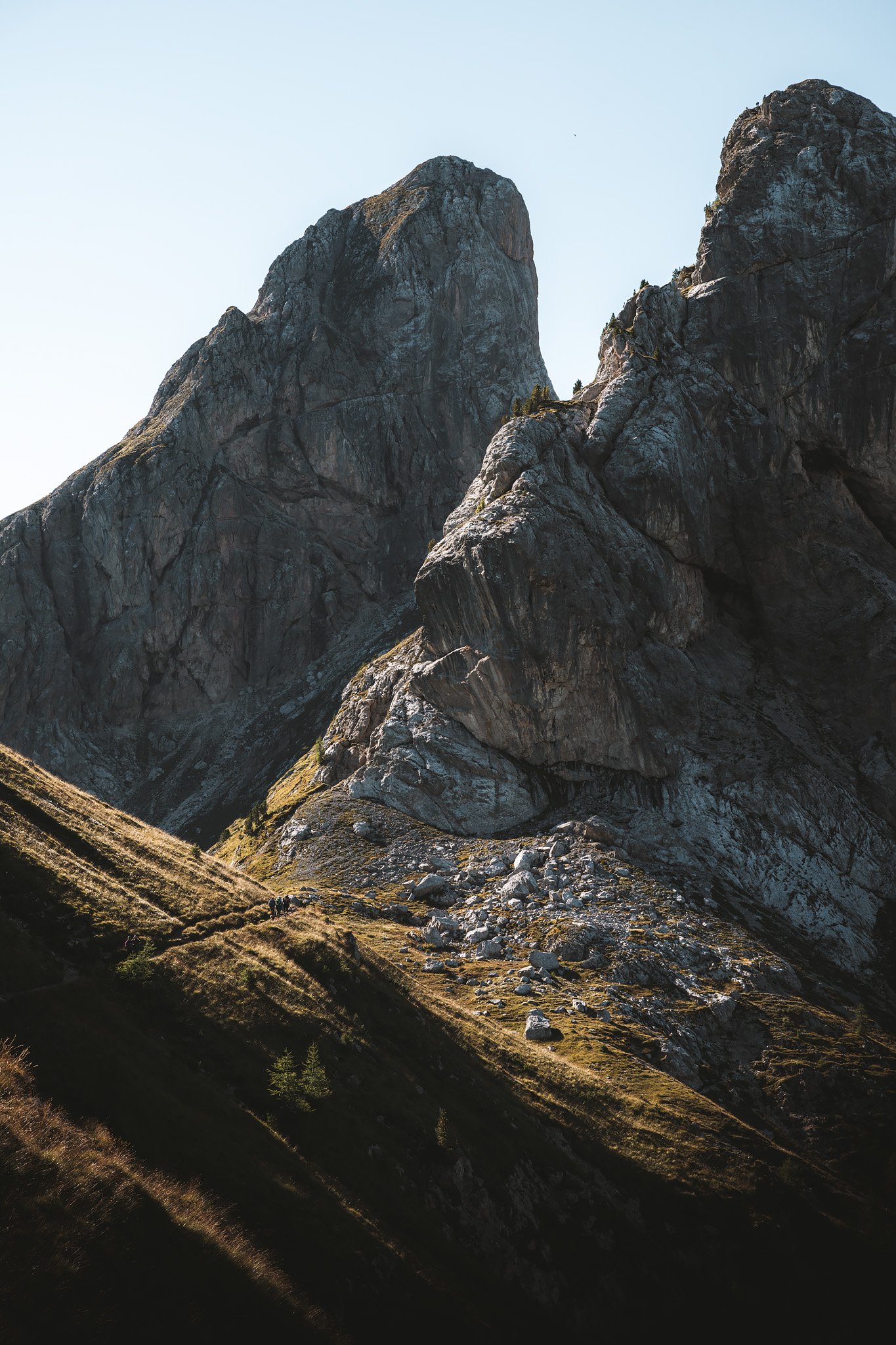
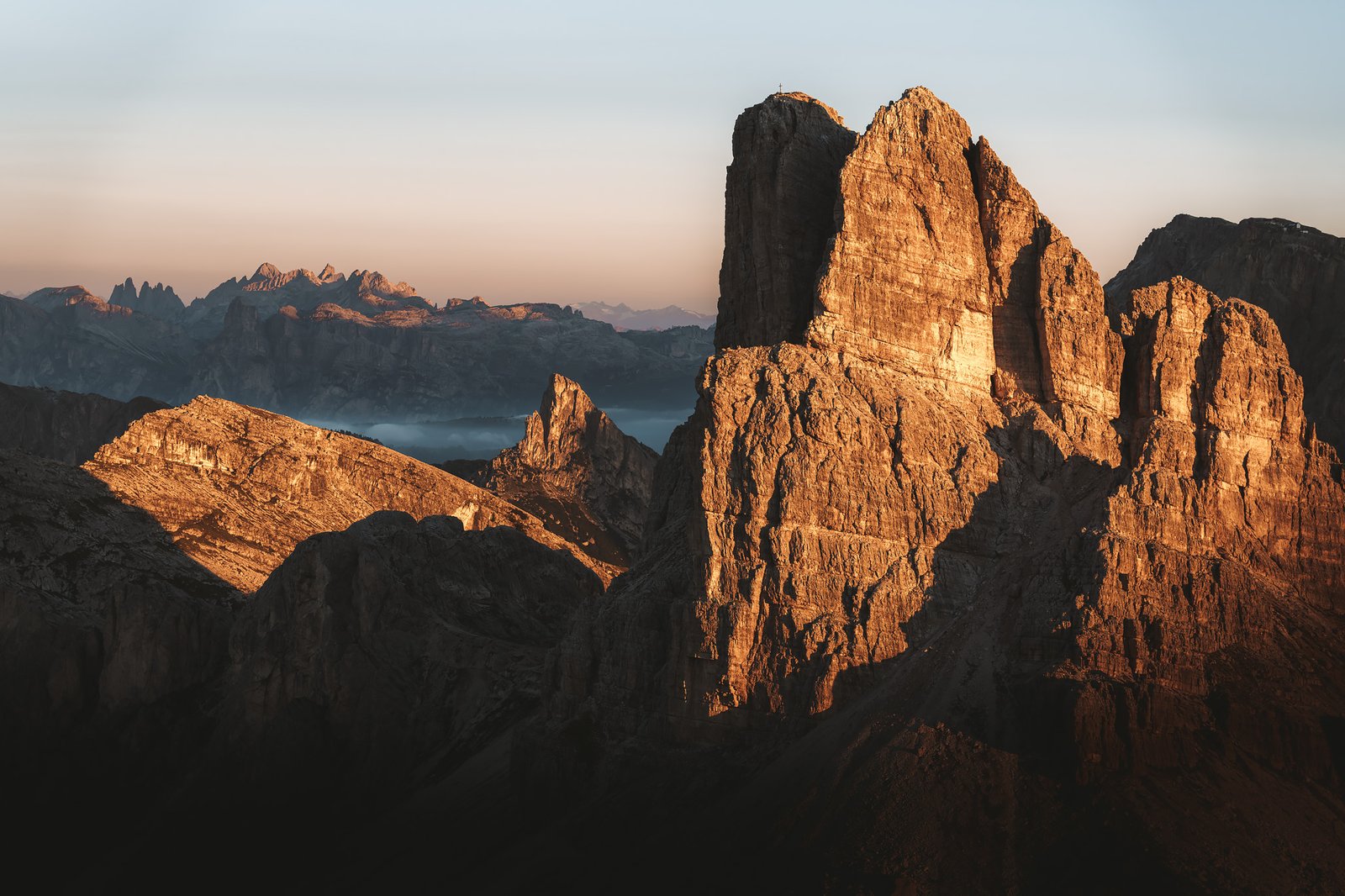
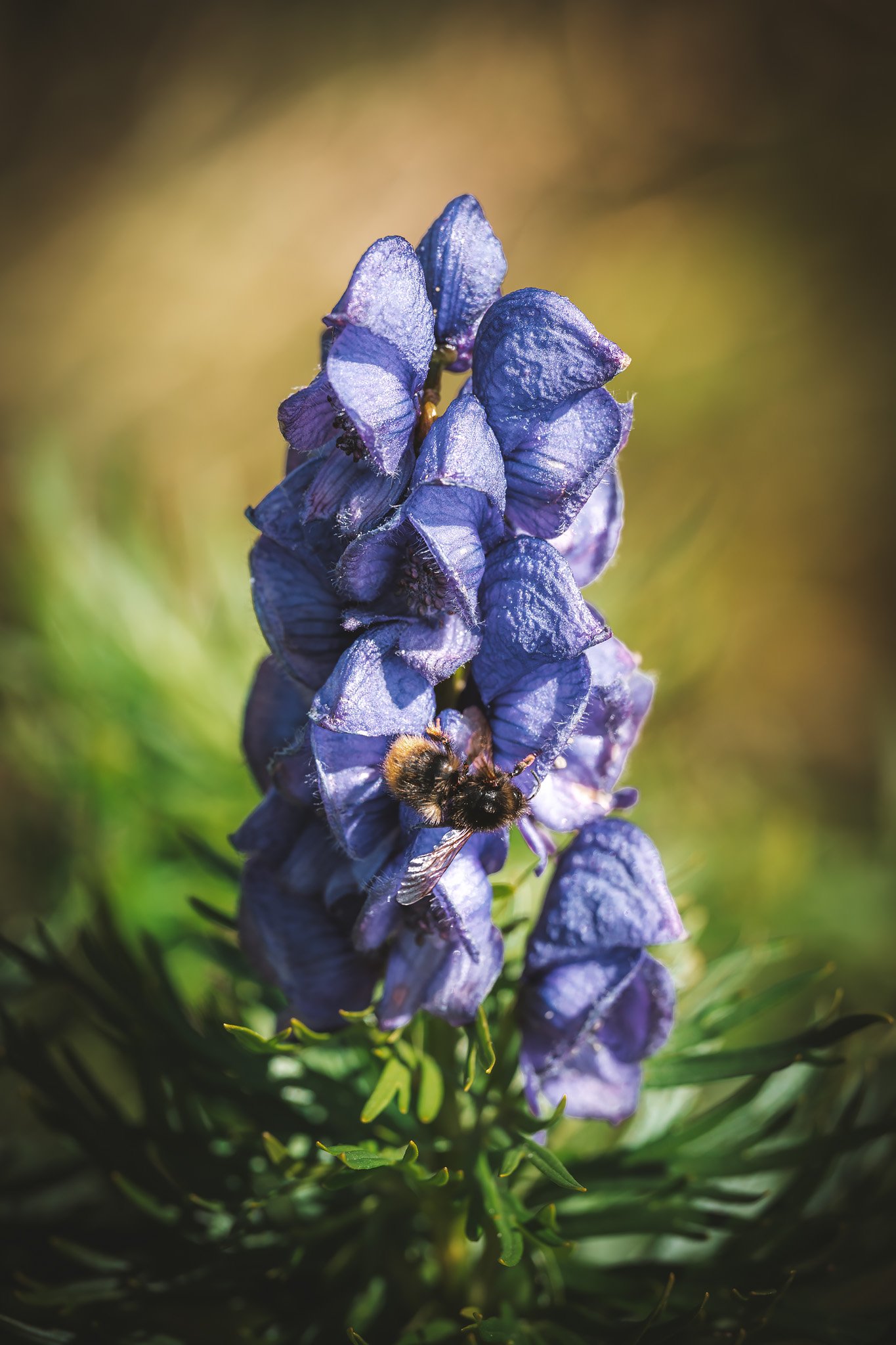
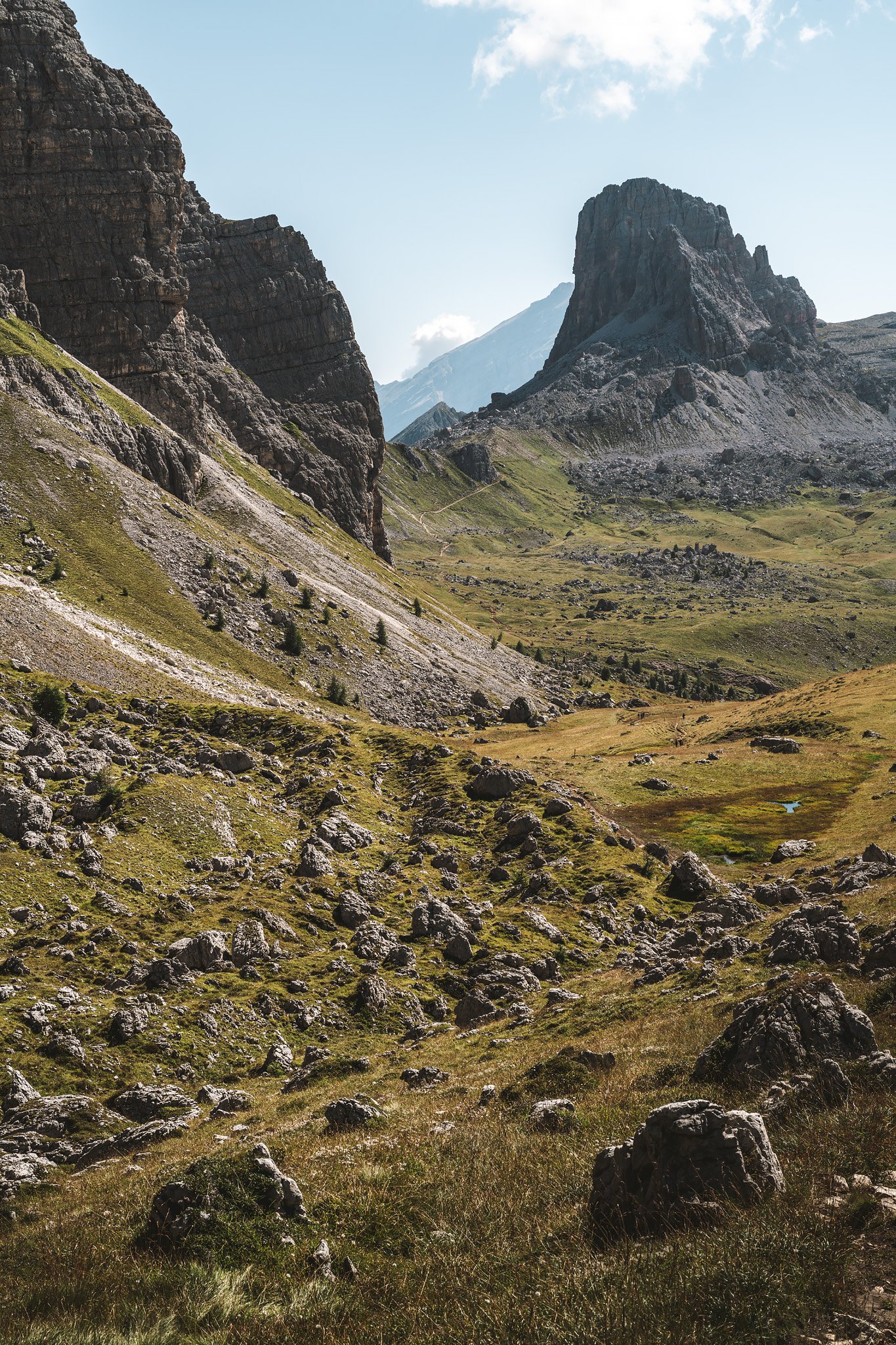
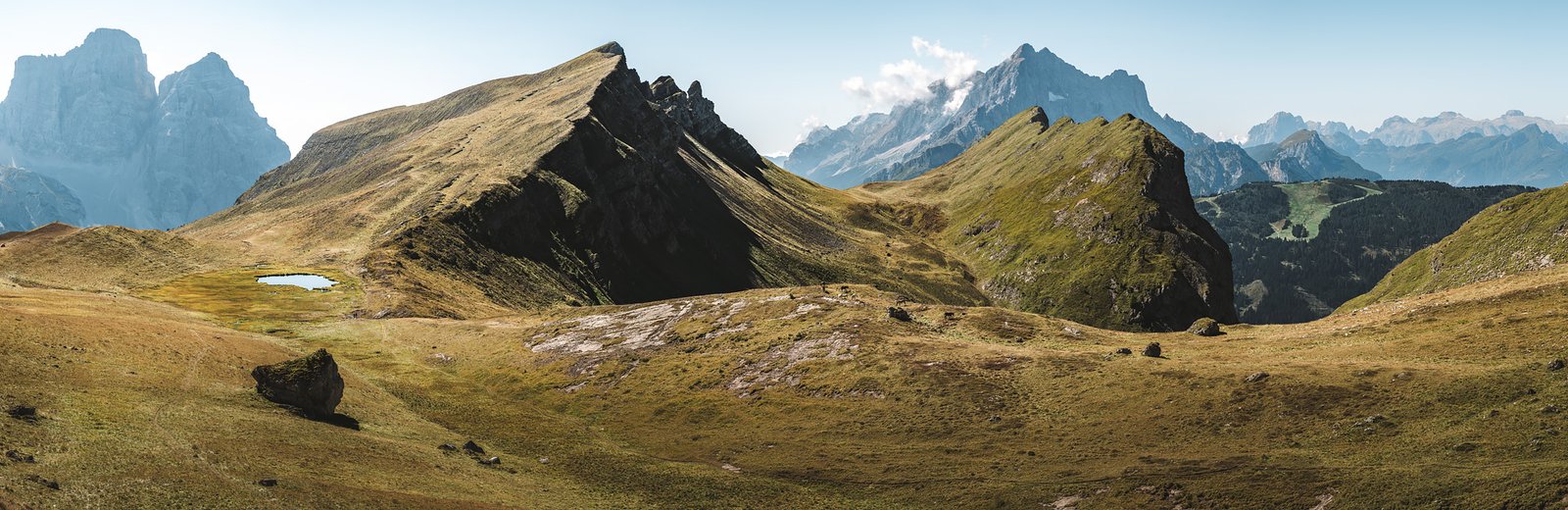
A lunar Landscape – The Trans-Pelmo Route
After coming back from a short hike around Lago Federa, the route changes completely. The Trans-Pelmo AV1 alternative is less traveled, and far more technical.
It begins in forest with a steep initial climb, then quickly turns into unstable terrain. Poles become essential. In some sections, cables provide support, and many hikers use via ferrata gear.
The markings are not always clear. It is easy to miss them, I did, more than once. Even when paying attention, it is possible to lose the path, and sometimes you have to stay calm and focus to minimize risk.
Higher up, the landscape becomes almost entirely rock. Pale, irregular, with almost no vegetation. A lunar terrain where orientation depends entirely on the red and white markings and, if you are lucky, other hikers showing the way.
The highest point is the Passo Val d’Arcia. From there, the descent begins.
The zigzag path to the right, slippery, irregular, and easy to miss, is still the better option. The alternative on the left is more exposed, more technical, and significantly more demanding, despite appearing more direct. Two hikers ahead chose the latter and arrived at the rifugio two hours after me, in complete darkness.
Even on the correct route, the descent is long and physically draining.
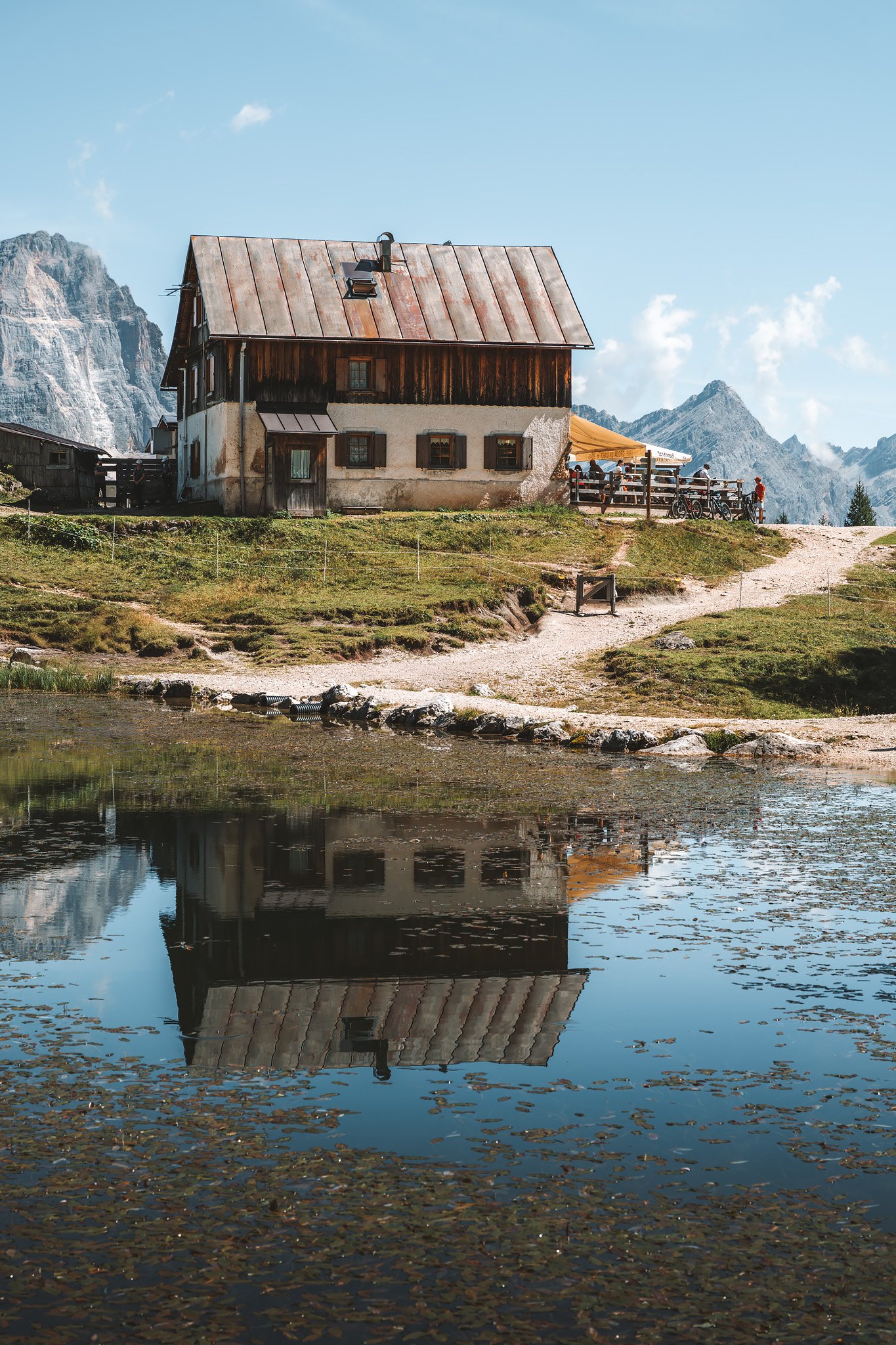
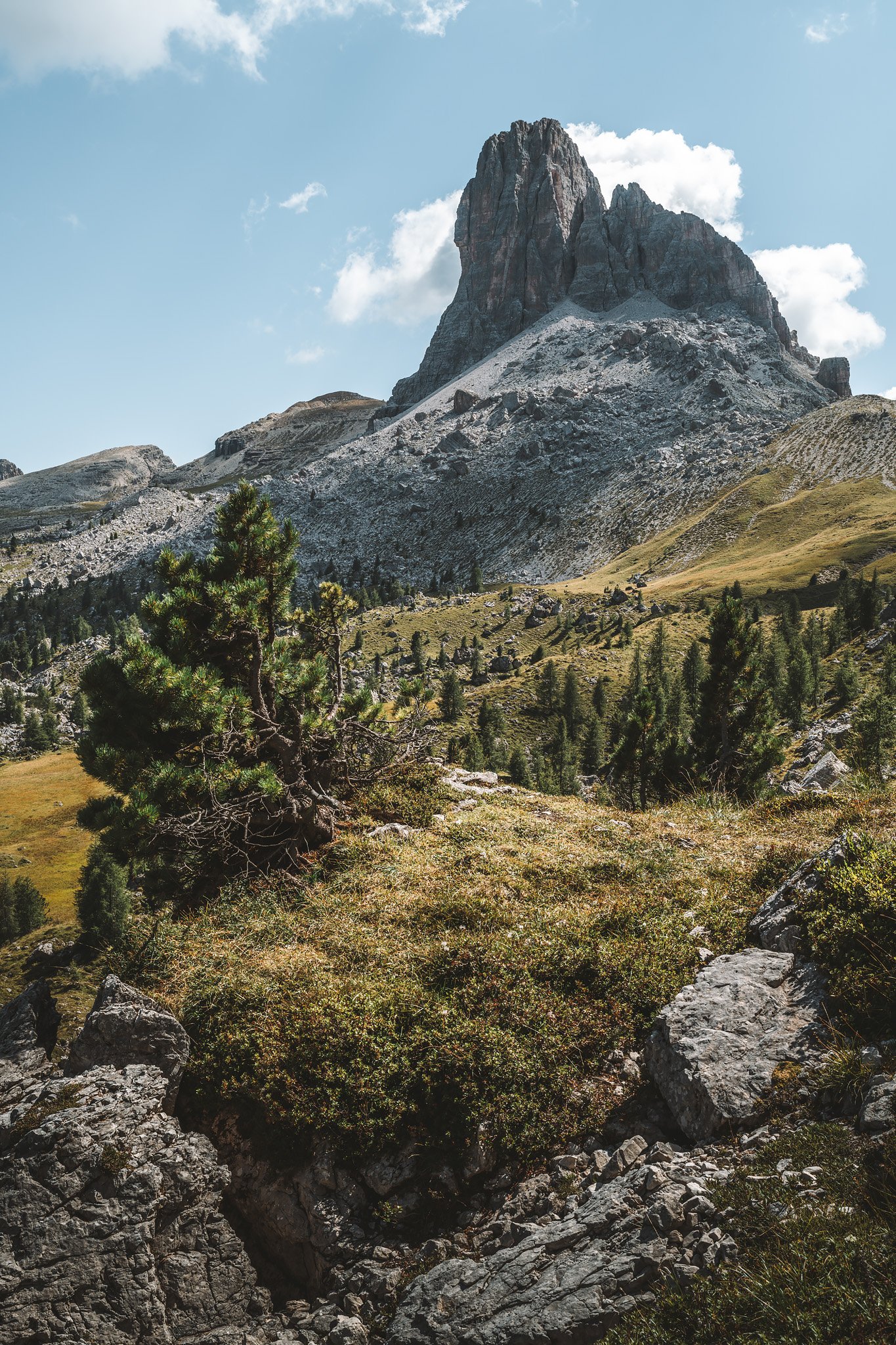
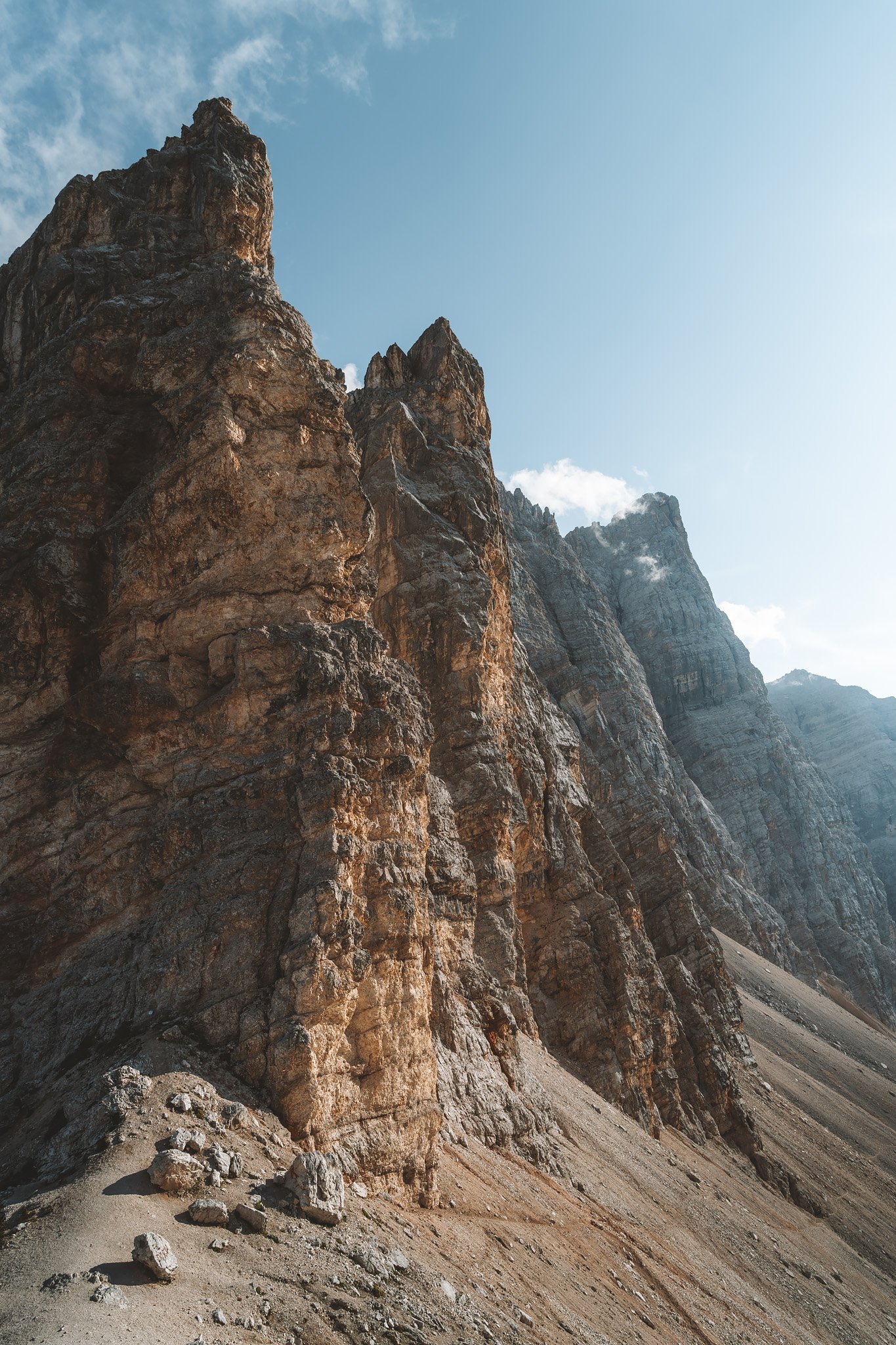
The Far Side of Pelmo
Rifugio Venezia appears late. It is partially hidden behind Monte Pelmo, only revealing itself when you are already close. Compared to previous refugios, it feels quieter and less crowded.
Most hikers arrive from the easier side. Approaching from the Trans-Pelmo route changes that completely.
At some point during these days, something shifts. This is no longer just a hiking route. Lagazuoi makes that clear first, through the tunnels, the trenches, the physical traces of what happened here. But it is way more than that. Cinque Torri, Nuvolau, Passo Giau, Pelmo… Each place offers something distinct. Together, they build a different understanding about the Dolomites and its true nature.
You begin to realize this is not just another hiking destination. It is a place where history remains present, embedded in the rock, in the paths, and in everything around you.
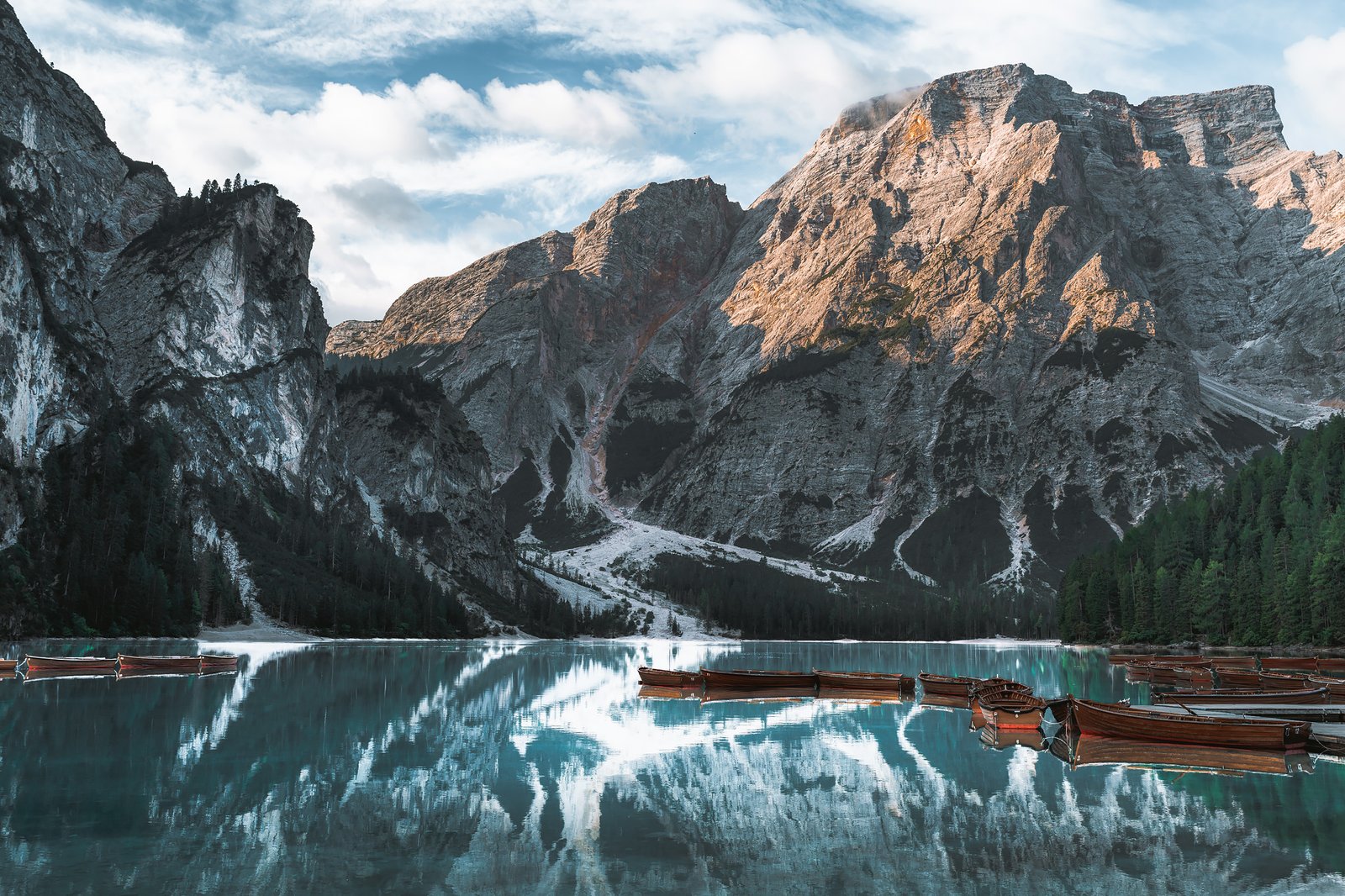
Alta Via 1. Part II: From Braies to Lagazuoi - The First Ascent
The trip to Dobbiaco was marked by many small uncertainties, timing, delays, the type of details that seem insignificant at first, but can have a disproportionate impact. A delayed departure, a short layover in Venice, figuring out if there would be enough time to catch the bus… In the end, all went smoothly. Just enough margin to arrive without rushing.
We made a brief stop in Cortina d’Ampezzo, one of the most important ski resorts in the world and host of the last Winter Olympics. It is noticeable how much more different everything is to the rest of Italy, even from a quick stop. The atmosphere is also a bit more polished, more focused on high-end tourism.
Dobbiaco is a very popular tourist town, and that is apparent immediately. Restaurants fill up fast, especially in the evenings, and unless you have made a reservation, it may be difficult to find a place to dine. It’s the kind of place where logistics matter more than you expect.
The first afternoon was pretty low-key. A short walk through the town center, a few stops for photos, mountain gear shops, church, small streets and references to one of its most famous neighbors, Gustav Mahler. The composer spent his summers here at the beginning of the 20th century, finding in these landscapes the stillness he needed to work.
As you head towards the lake, the path opens. Lago di Dobbiaco appears gradually, framed by trees, with the Hotel Baur am See quietly situated on the main shore.
It’s a calm place. Very easy to photograph. Reflections are clean. Compositions are fairly straightforward. Along the lake, groups of coots quietly cut through the water. Small details, but they add movement to the scene.
A family cycled along the path leading from the village to the lake, the atmosphere remained very relaxed and natural. The first afternoon wasn’t about standout moments. It was more about getting used to the flow, the light and the weather.
The next morning changed all of that.
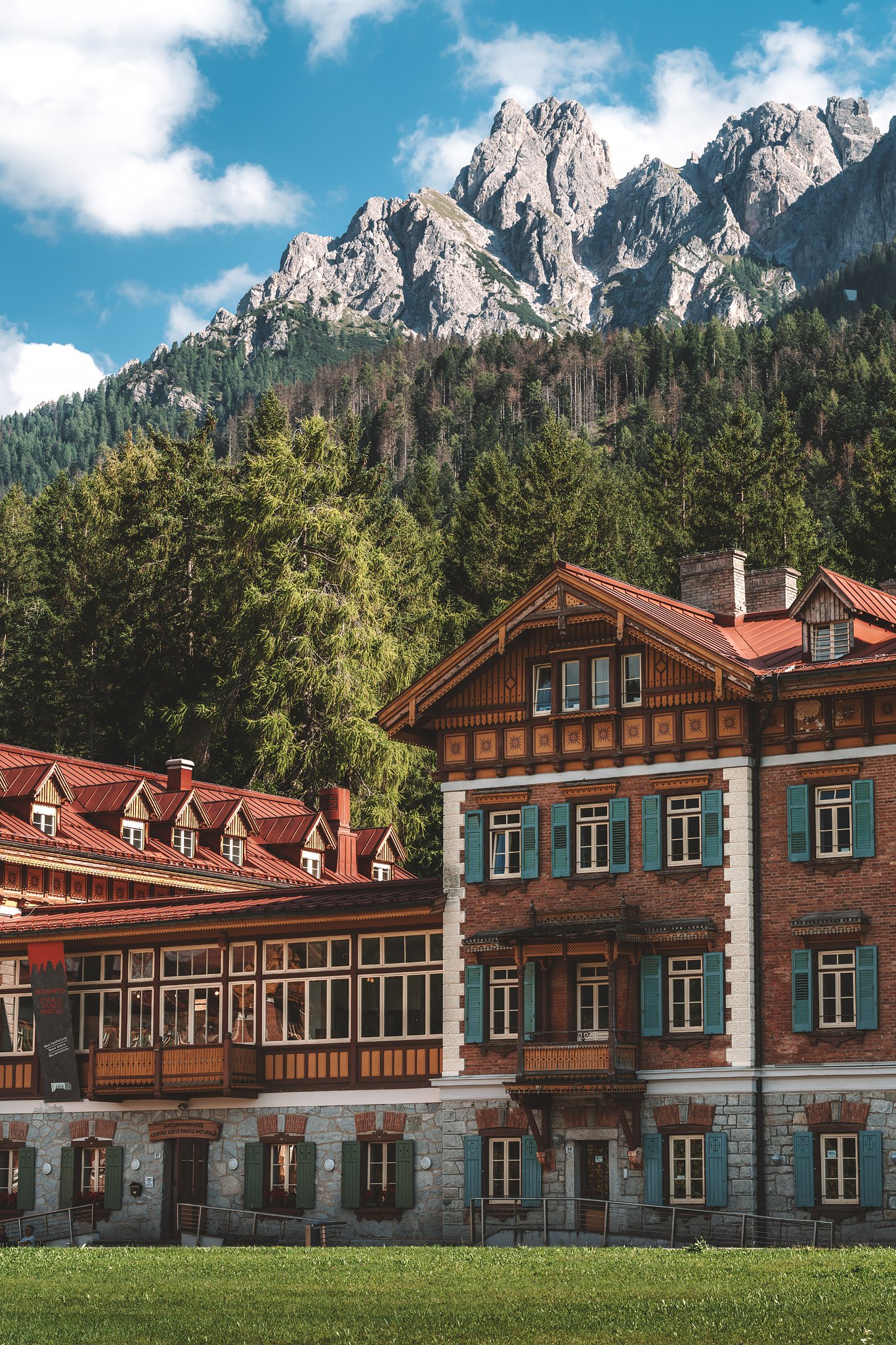
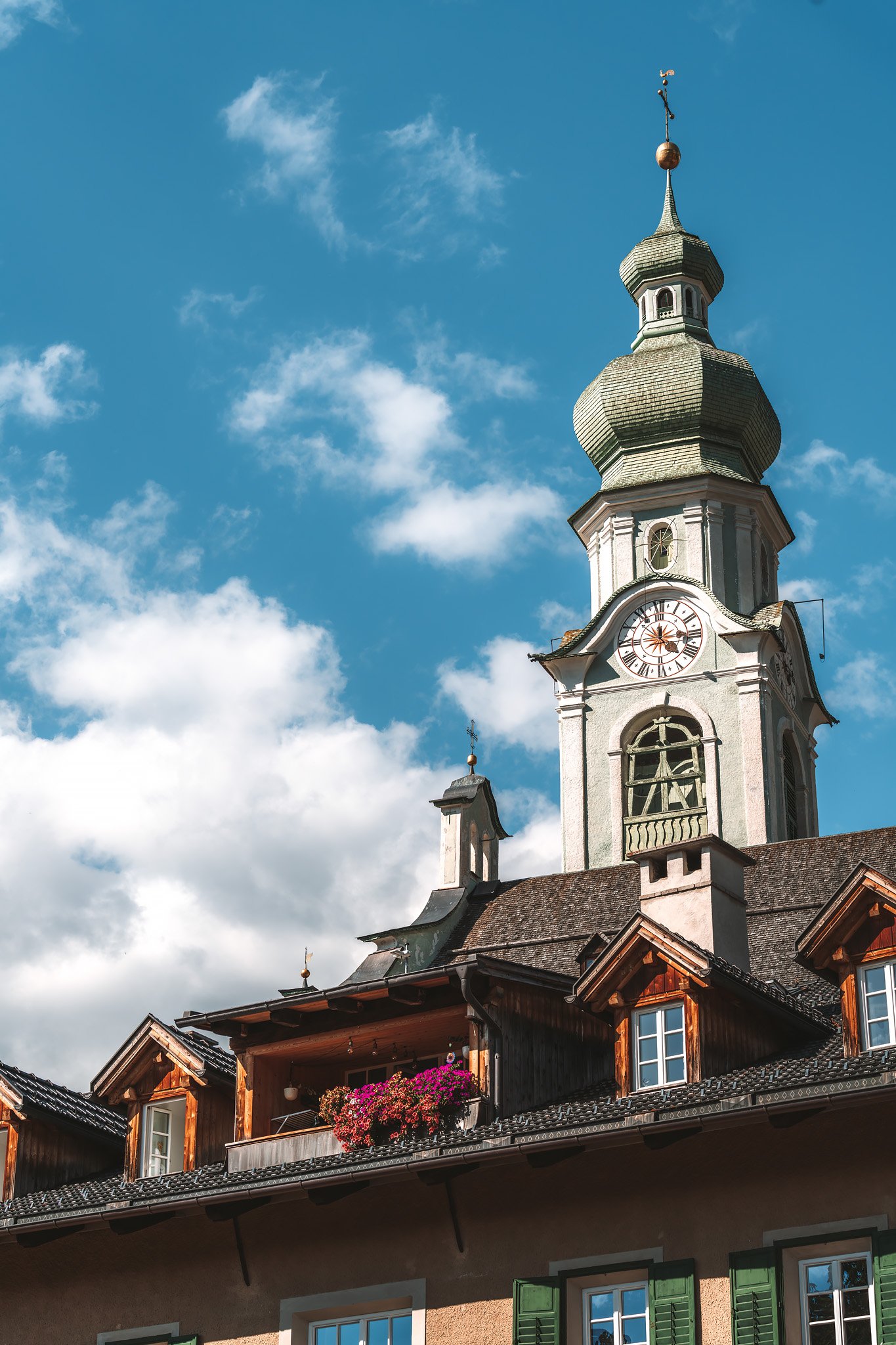
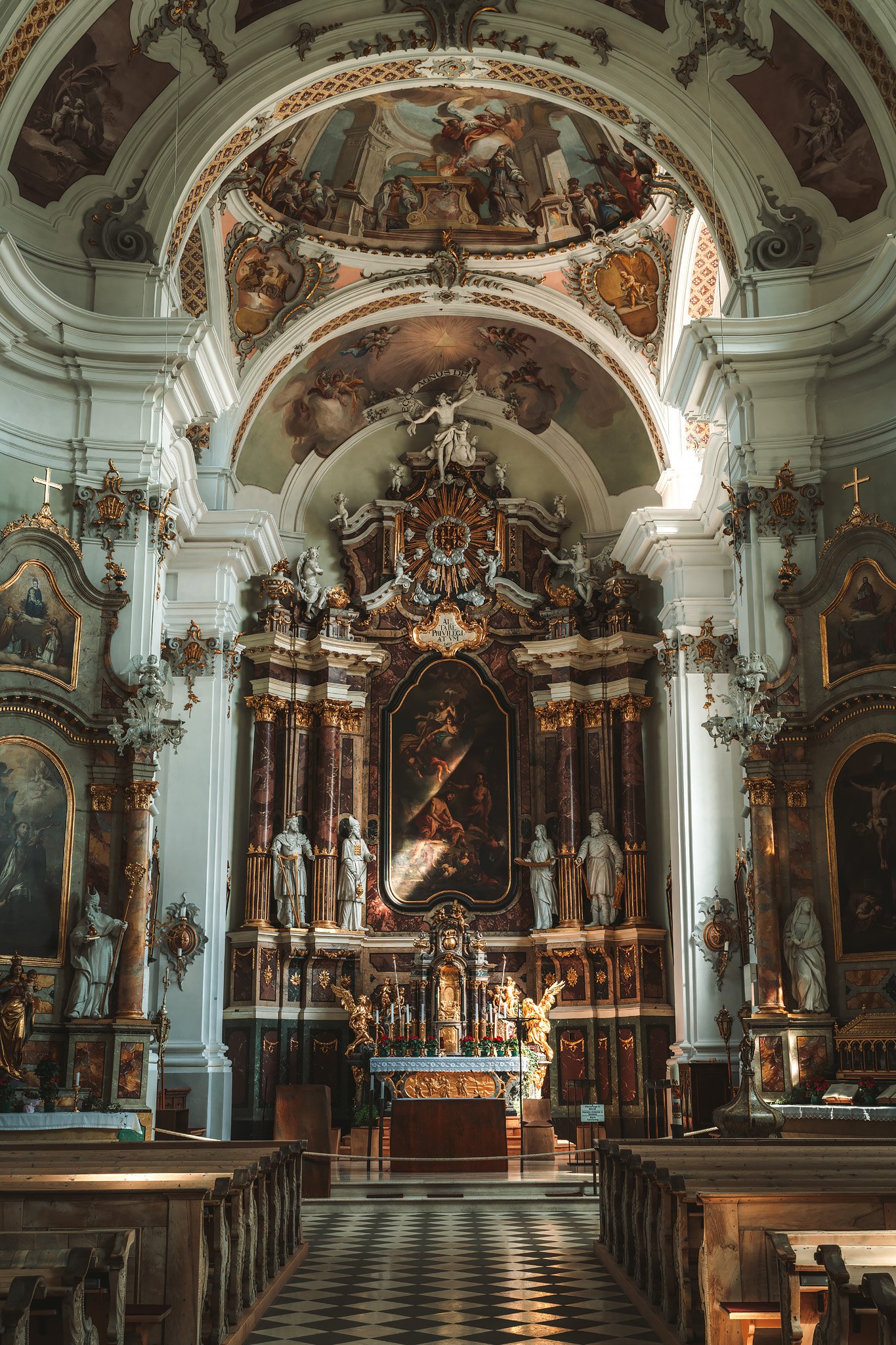
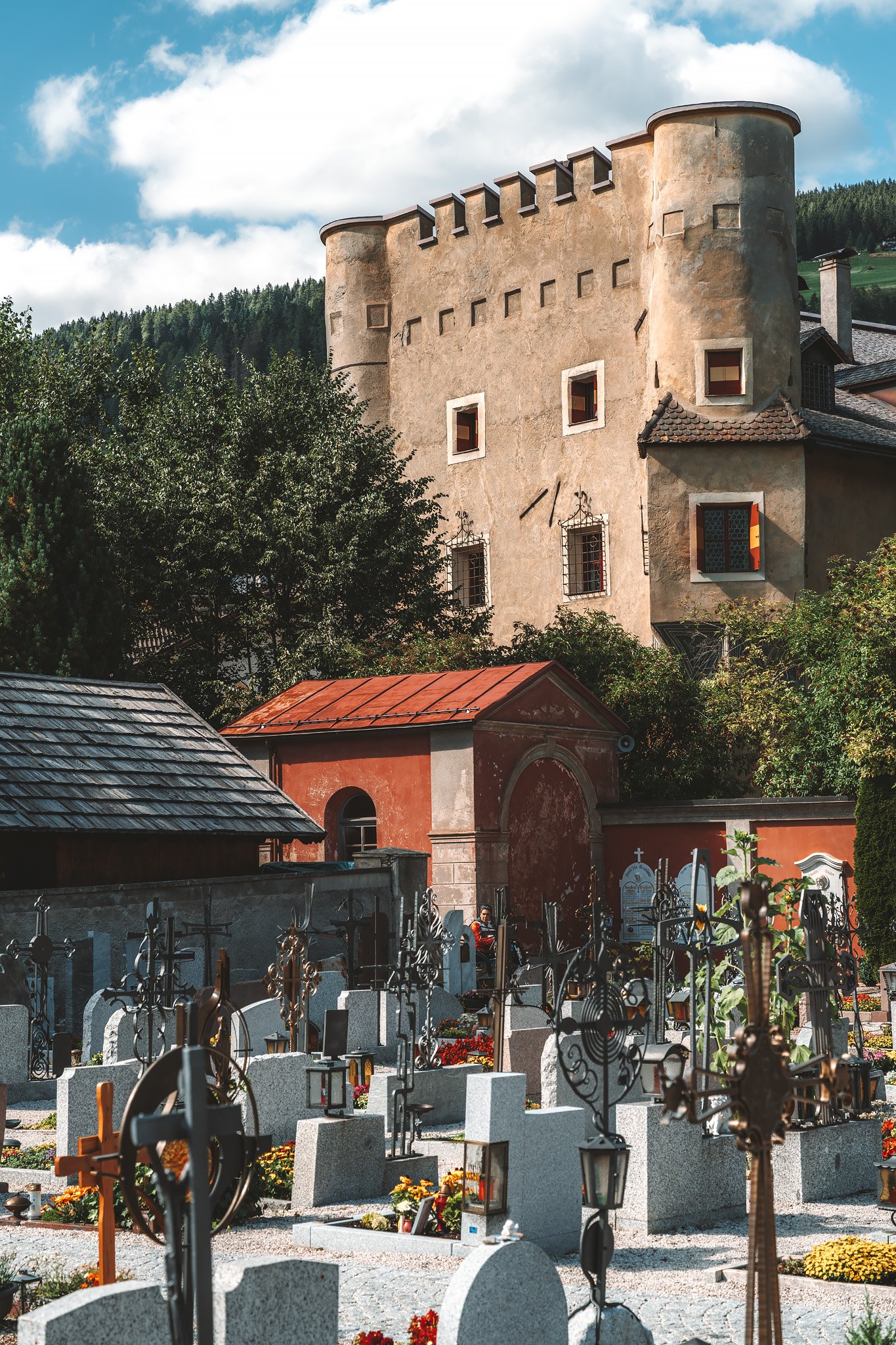
Stage 1. Lago di Braies – Rifugio Pederü
Distance: 18.07 km · Elevation Gain: +1343 m · Elevation Loss: −1242 m · Technical Difficulty: Difficult
The bus to Lago di Braies left quite early, around 7:15 AM, and took approximately 30 minutes. Getting on the first bus allowed me to arrive before most people, and before the lake becomes what it usually is, a hotspot for tourists.
At that hour, Braies was empty.
The pier was closed. The boats were tied up. The lake was absolutely still. And because of the clear sky, the lake showed its full range of colors, deep turquoise, almost surreal. This color comes from fine minerals, dolomitic sediment, suspended in the water that scatter the light, a common phenomenon throughout the entire region.
There is a very short period of time when nothing moves. As I walked around the lake, a single paddle surfer crossed the water, the only disturbance in the most absolute quietness.
Later, from the top of Seekofel, the same lake would look completely different, the boats were moving, people were everywhere, and the whole atmosphere had been transformed.
Many visitors treat Braies as an endpoint. Most visit the lake alone and depart. The Alta Via 1 begins precisely where most people stop. After the lake, the route goes along the right-hand side and then turns upwards. The first part of the route is relatively flat. Then the climb begins.
It is a steep climb. Forest, rocks, roots. Predominantly spruce and pine. The forest is dense enough to keep the light out. The path is clear, but constantly climbing. Further up the mountain, the terrain opens up. The forest is replaced by rock and lower-growing vegetation. The temperature drops rapidly and the Seekofel becomes visible.
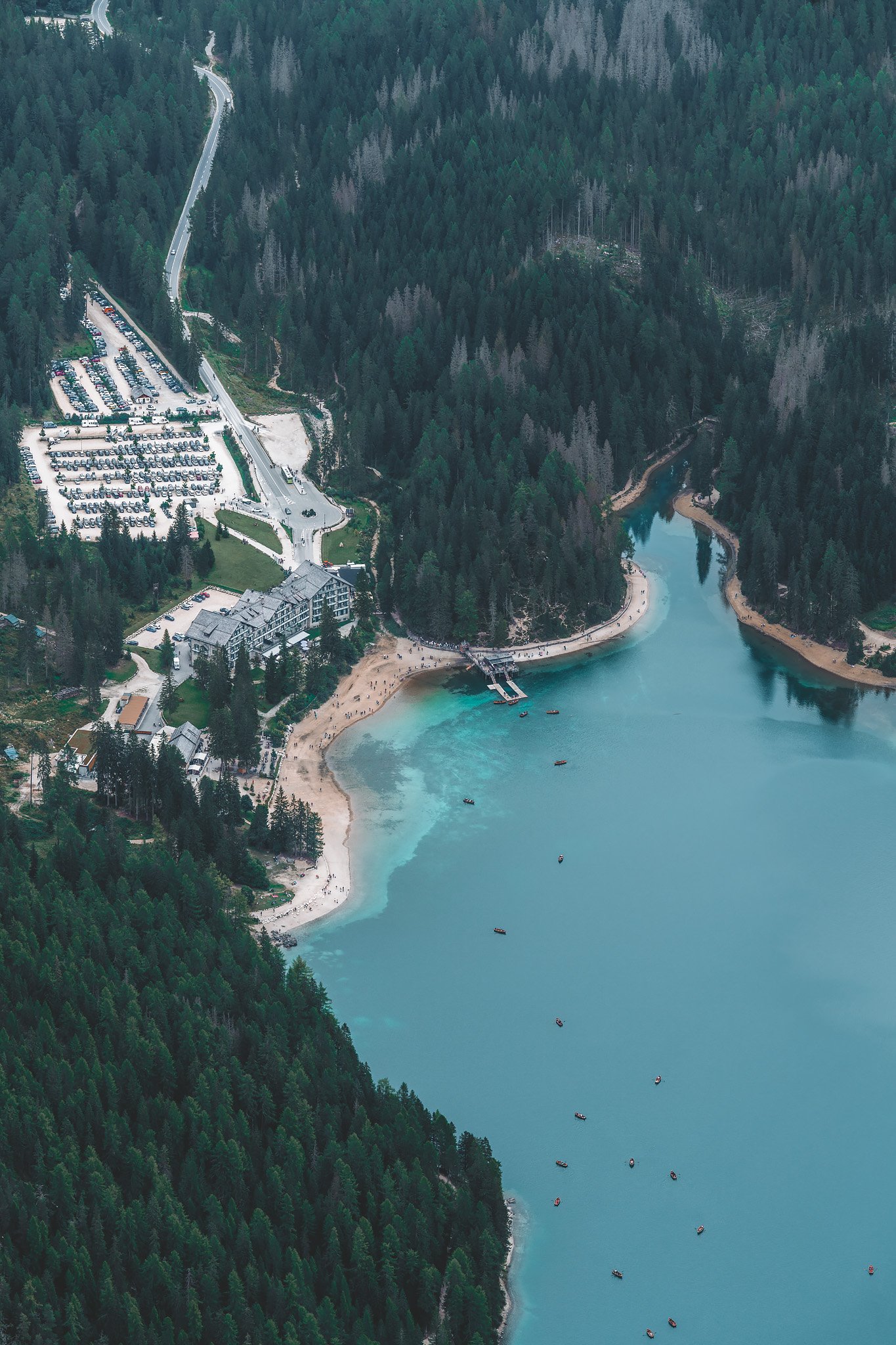
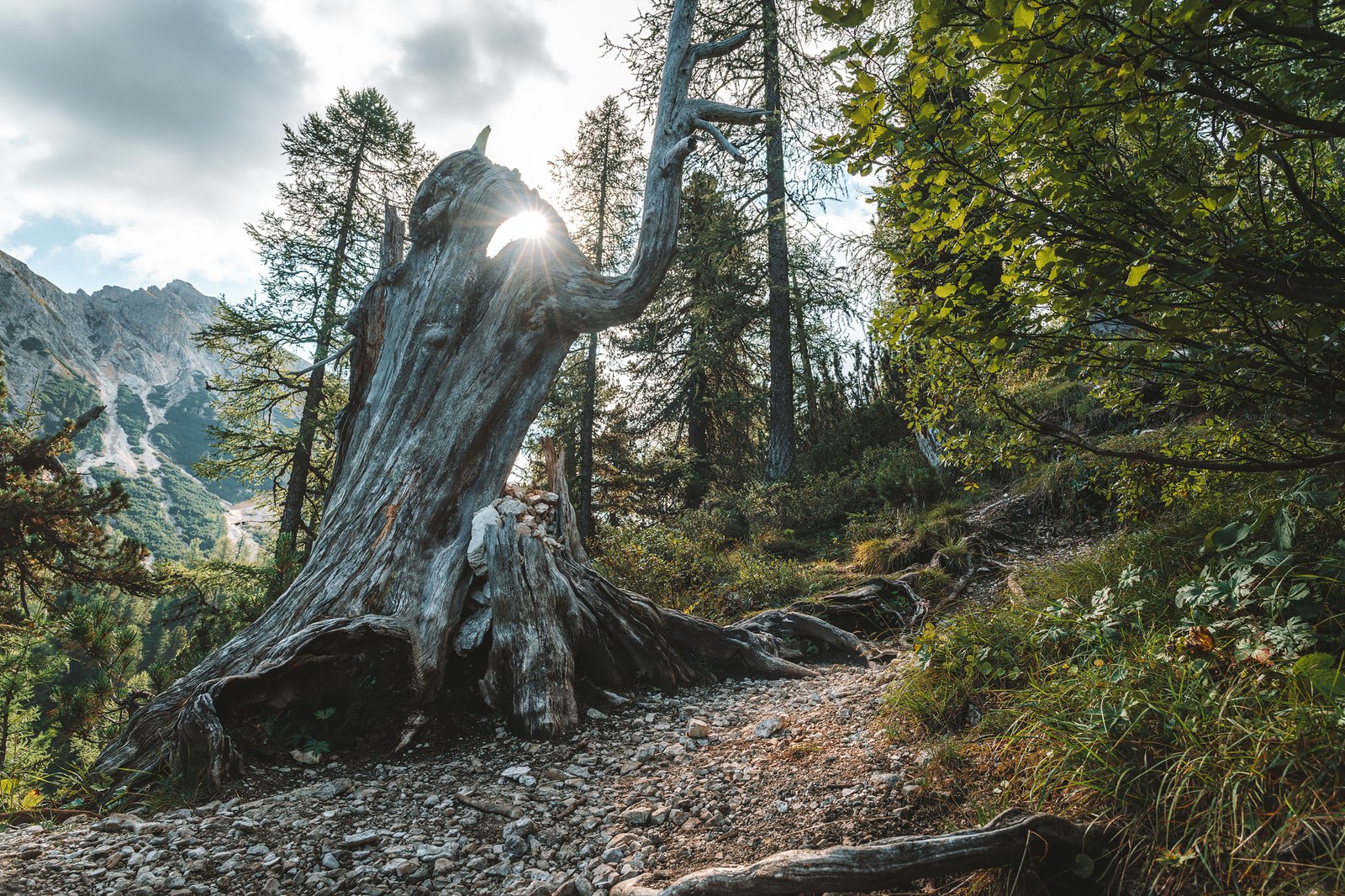
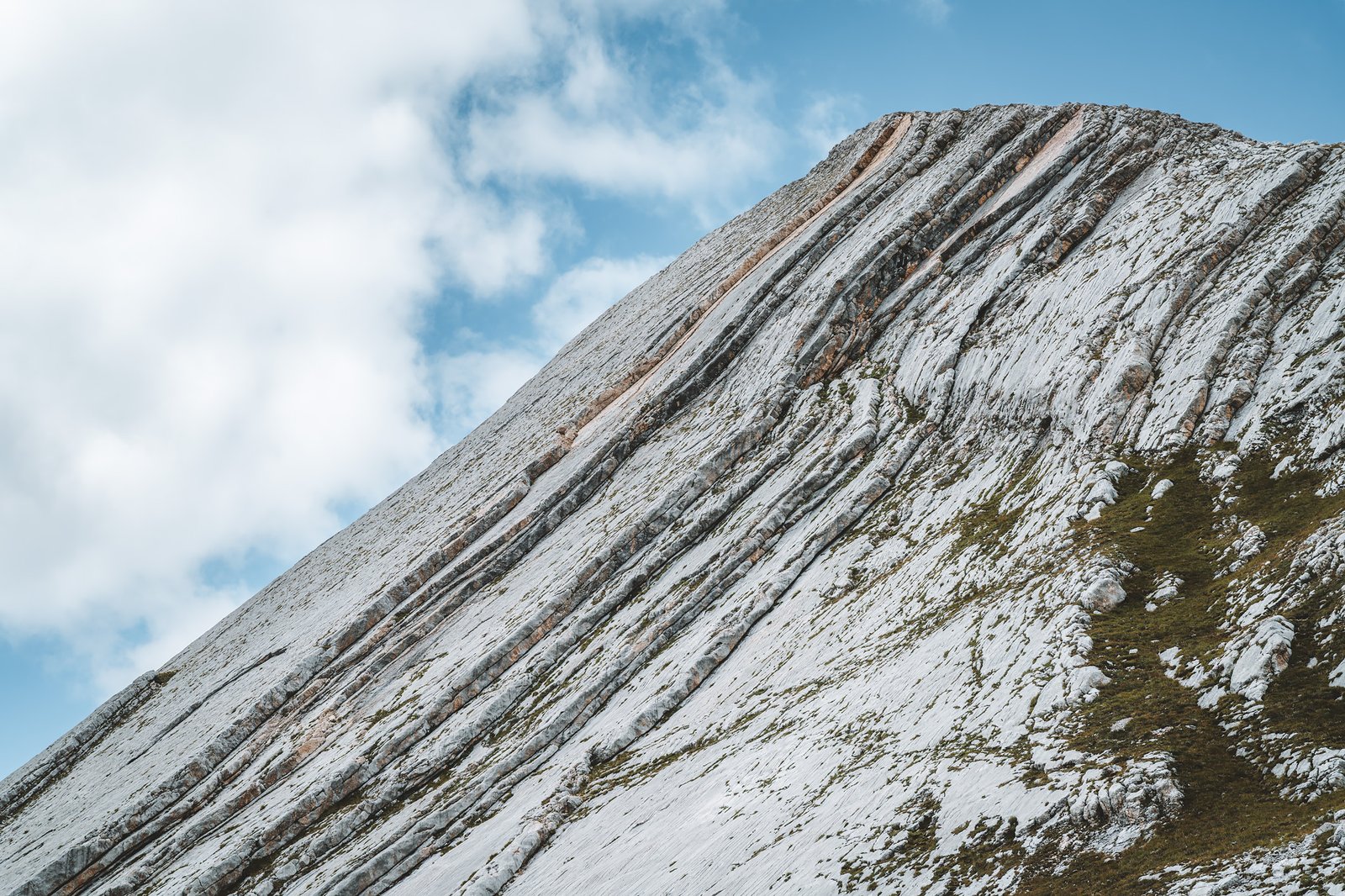
The View from Seekofel
It is optional, but one of the best parts of this leg of the route. When going to the summit, it is highly recommended to leave the backpack at the bottom of the mountain. The route will return to the same spot, and the climb to the summit will be much easier without the extra load.
At the summit, the landscape transforms. The terrain is pale and fractured. The scale of the land expands below you. Lago di Braies lies below, and in the distance the Tre Cime can be seen. They stand out enough even from a great distance, and you know you can’t leave the Dolomites without seeing them.
Alpine ibexes roam freely at the summit, gliding across the rocky terrain with the ease of walking on flat ground. The air feels thinner and the views leave you speechless.
Going down from Seekofel is quicker. The weather changes, less sunlight, stronger winds, cooler temperatures and an uneven rocky terrain. Back at the base, Rifugio Biella indicates that we are returning to the primary route. After that, the route becomes easier, the paths expand and branch out into a range of alternatives. More people.
Along the way, there are some short conversations about the route, the weather, where you’ll go next or how many days will it take for you to complete the route. They don’t last long. But each conversation brings little bits of new information. Little perspectives that enhance the journey.
The landscape begins to turn green again, meadows and scattered refuges. We arrive to Fodara Vedla, a collection of buildings, a church, animals grazing nearby. Voices can be heard in Ladin, German or Italian, some in English too, mostly from tourists or locals giving indications.
The route down to Pederü is long, steep, slippery and unstable. The strain builds in the legs.
Pederü feels more like a rural hotel than a mountain hut, larger and more comfortable. It’s also the last place on the route where you’ll find this level of comfort. Special mention goes to Pederü’s à la carte menu, an incredible end for the first stage.
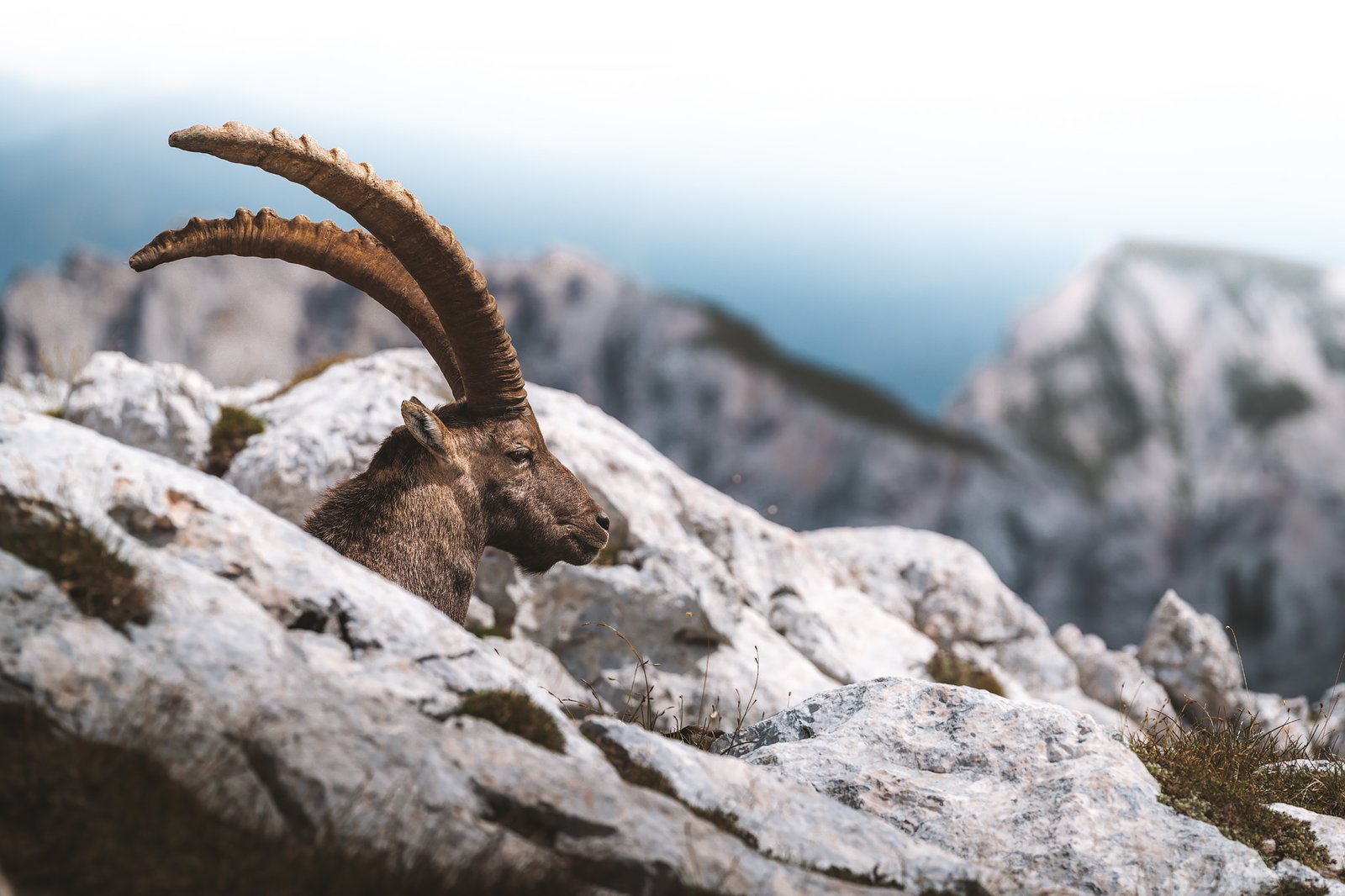
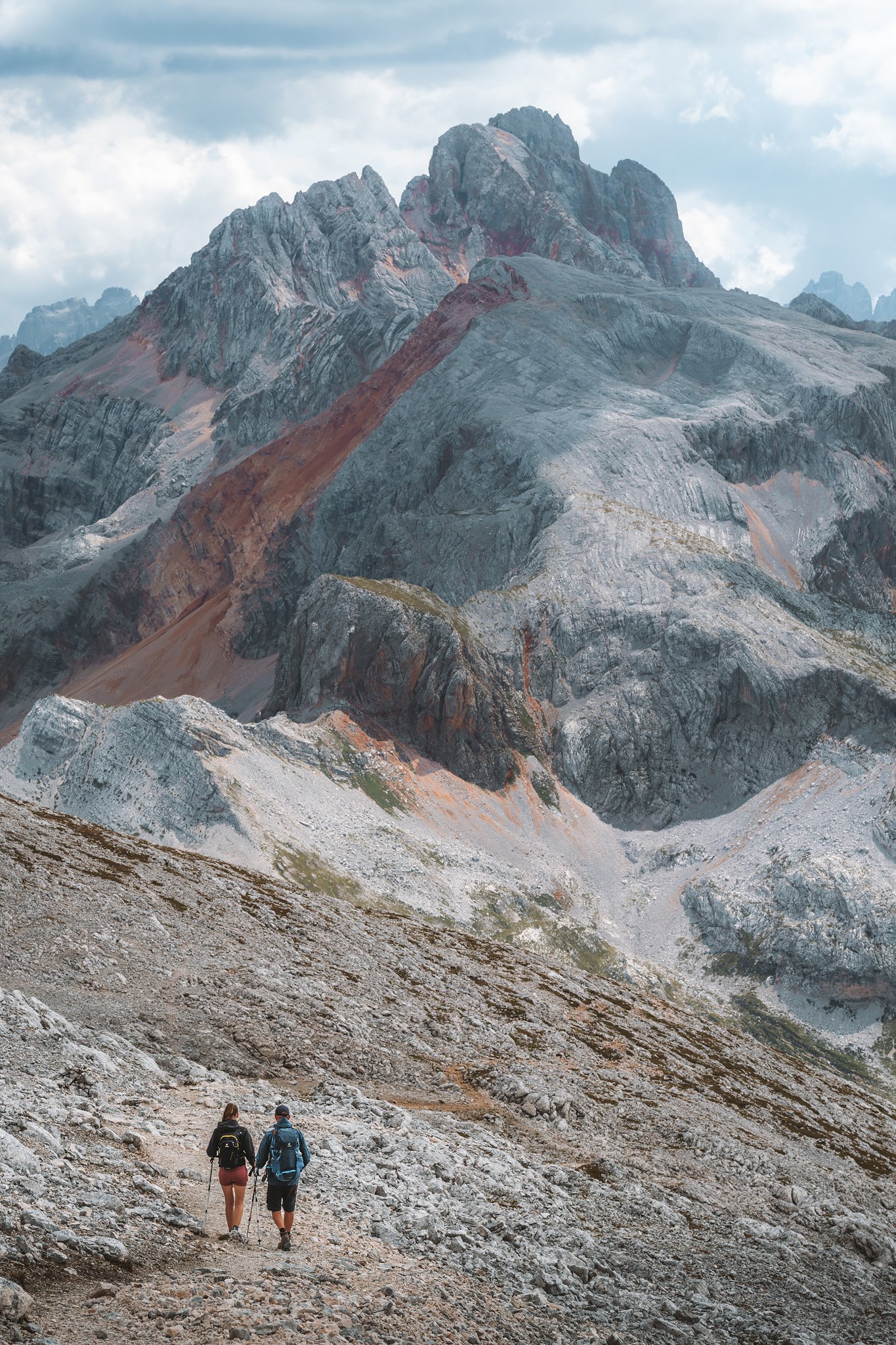
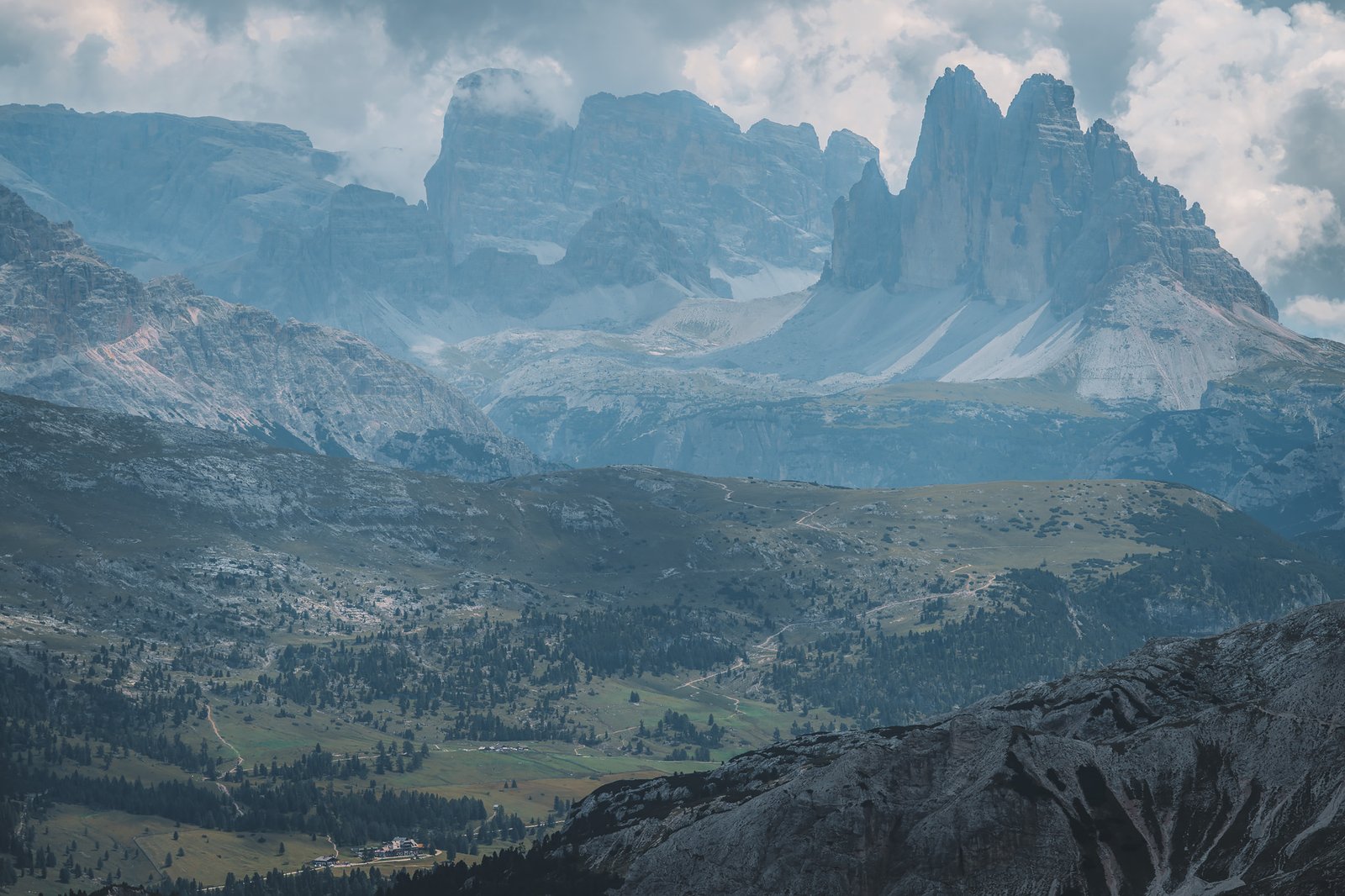
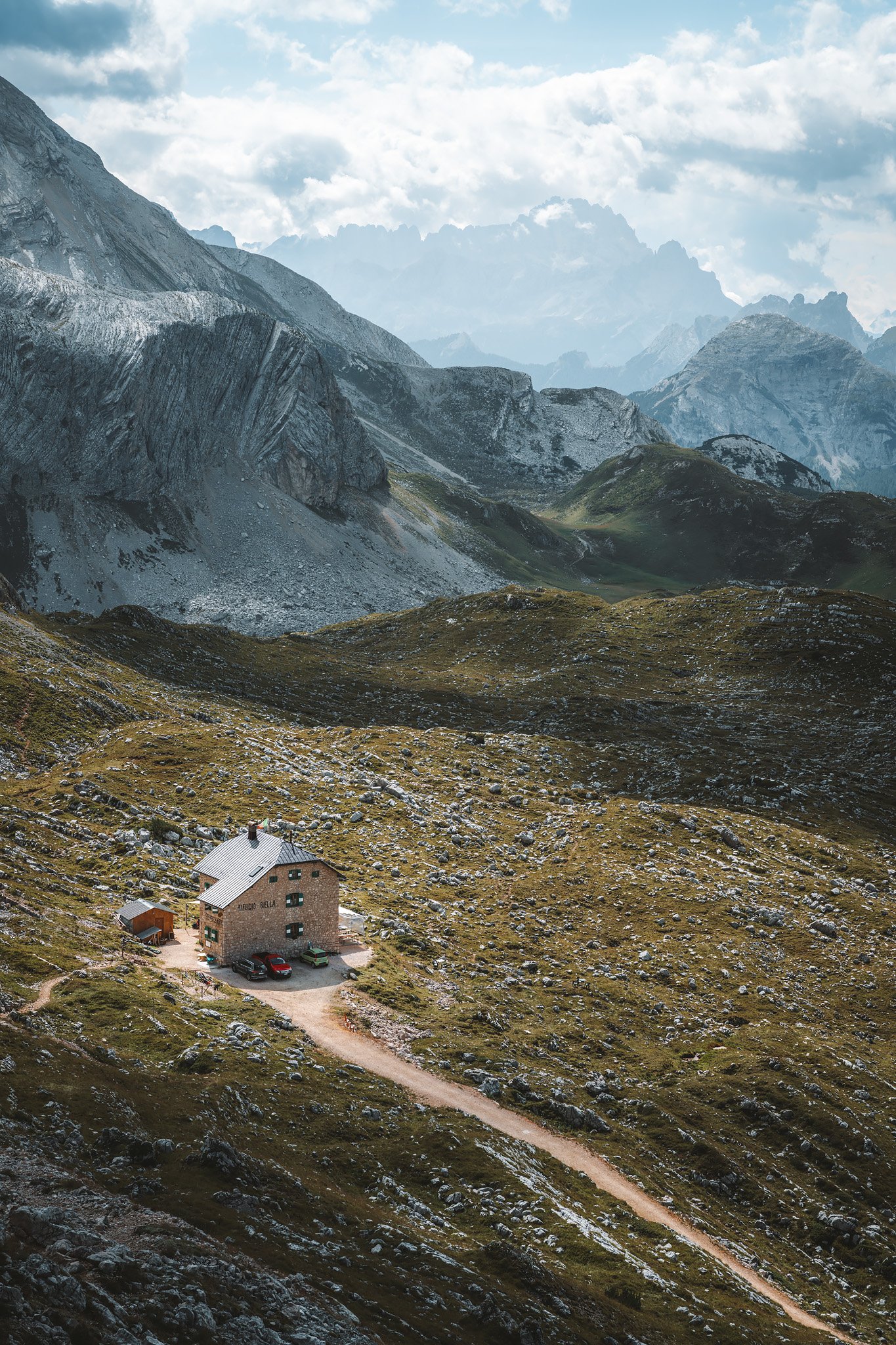
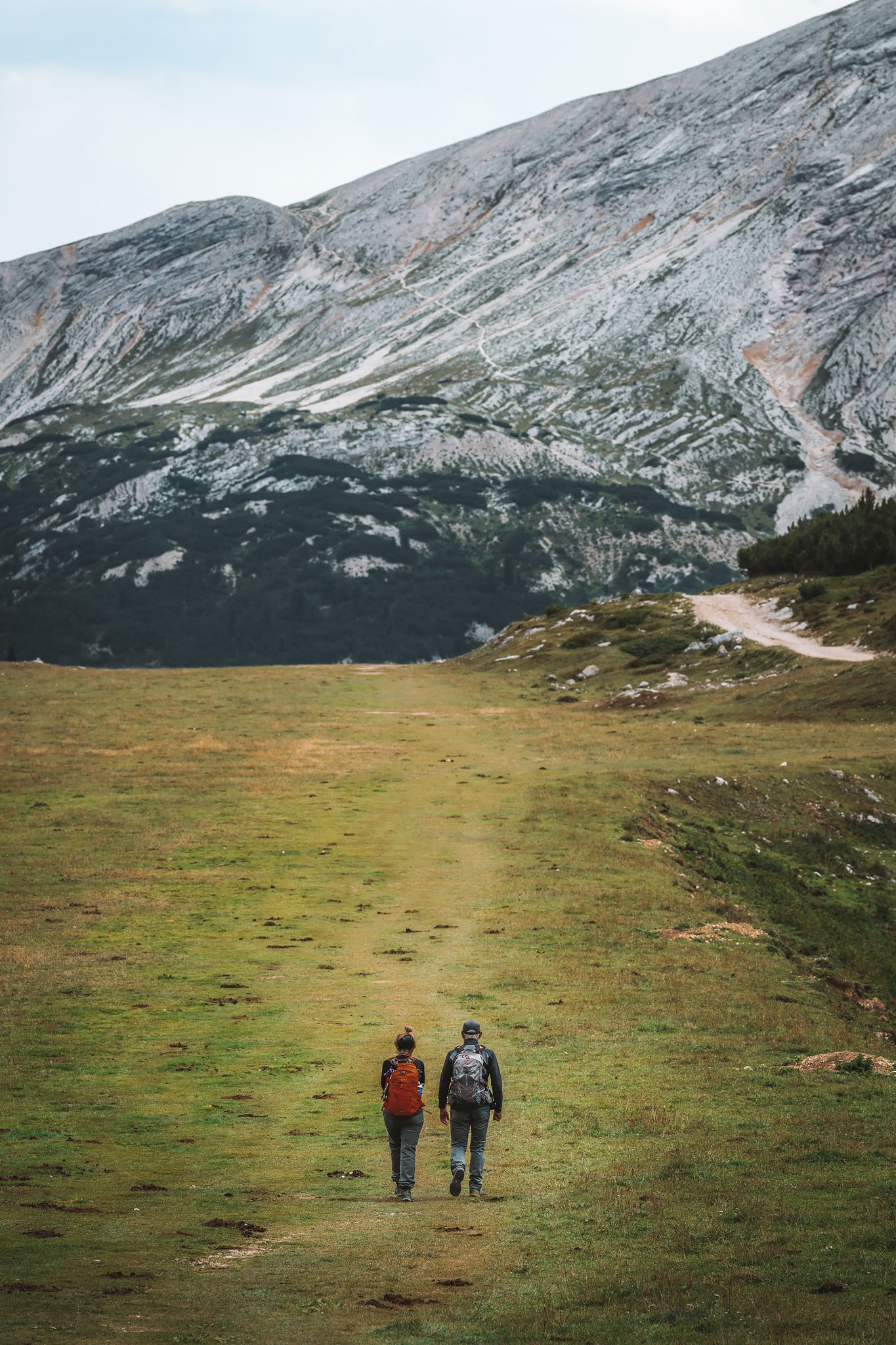
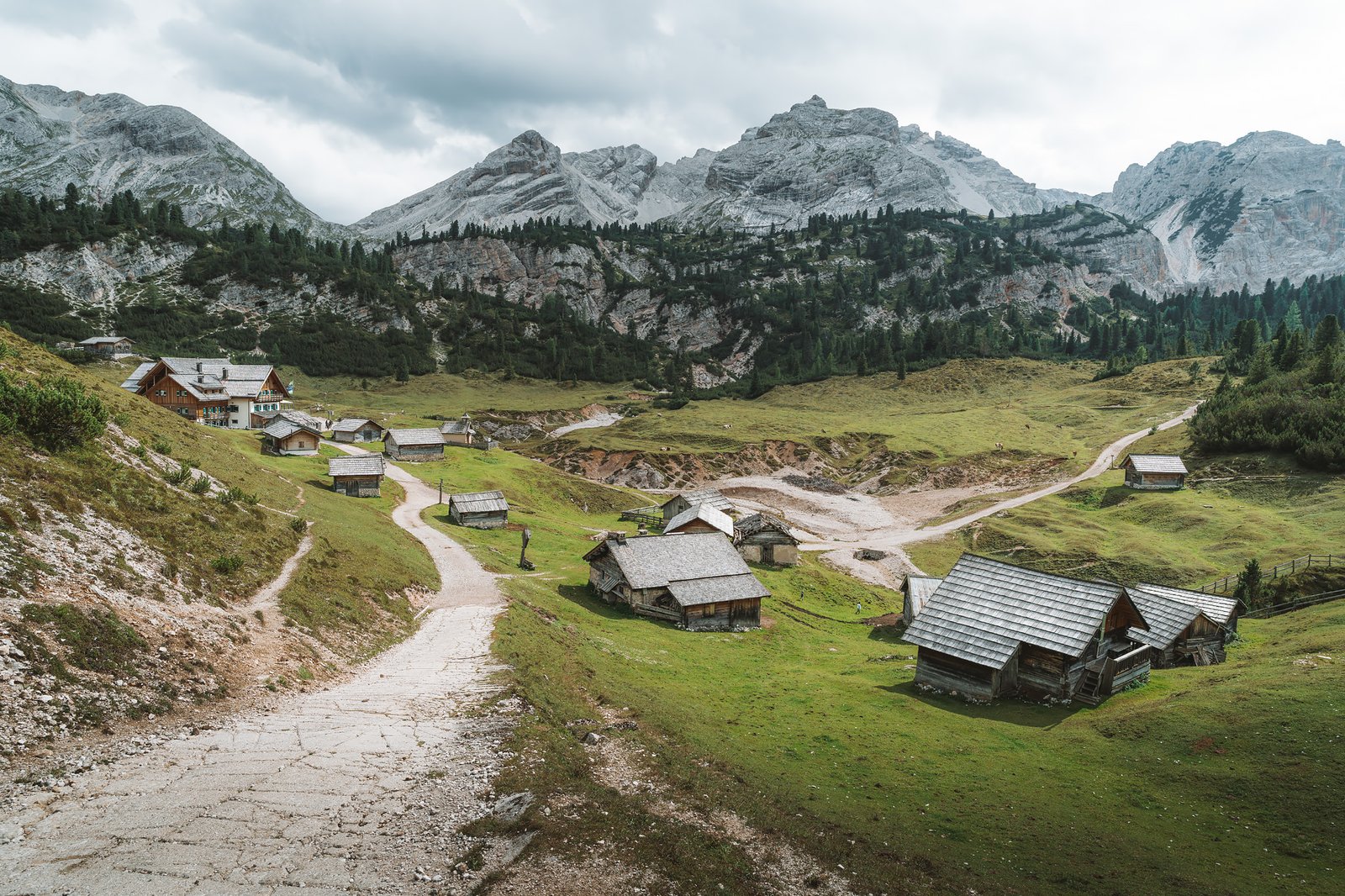
Stage 2. Rifugio Pederü – Rifugio Lagazuoi
Distance: 18.79 km · Elevation Gain: +1627 m · Elevation Loss: −425 m · Technical Difficulty: Moderate
The second day started early. The first section was through forest, mostly shaded and dominated by conifers. It was a while before the scenery opened up.
And when it did, it was the Fanes Valley. Large open fields and a river cutting through the land. Animals roaming freely, goats, cows and distant cabins. One of the most well-rounded sections of the route. A detour to Lavarella is worth doing.
Lavarella is a small occupied village. It provides a human element to the route. A sense of continuity beyond the trail itself with incredible morning light. Further along, back into the main route, Lago di Limo. The water displayed the same tones as earlier, slightly greener, shaped by the same minerals in suspension. Under the right lighting, the green intensified. In one moment, a couple attempted to bathe their dog, and the scene became strangely memorable.
The route continued through smaller valleys. Some wildlife, marmots, horses crossing the path. The terrain remained manageable.
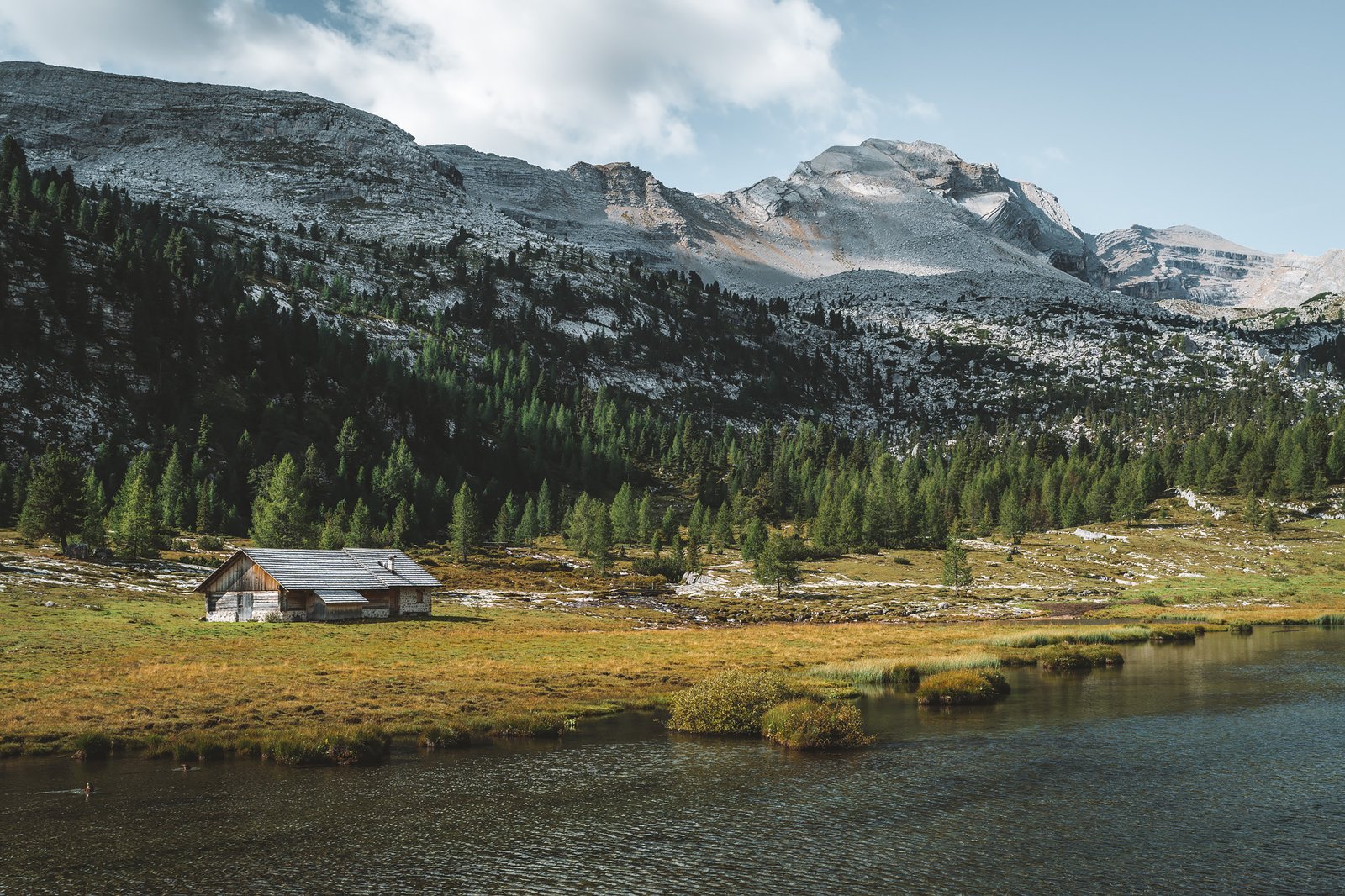
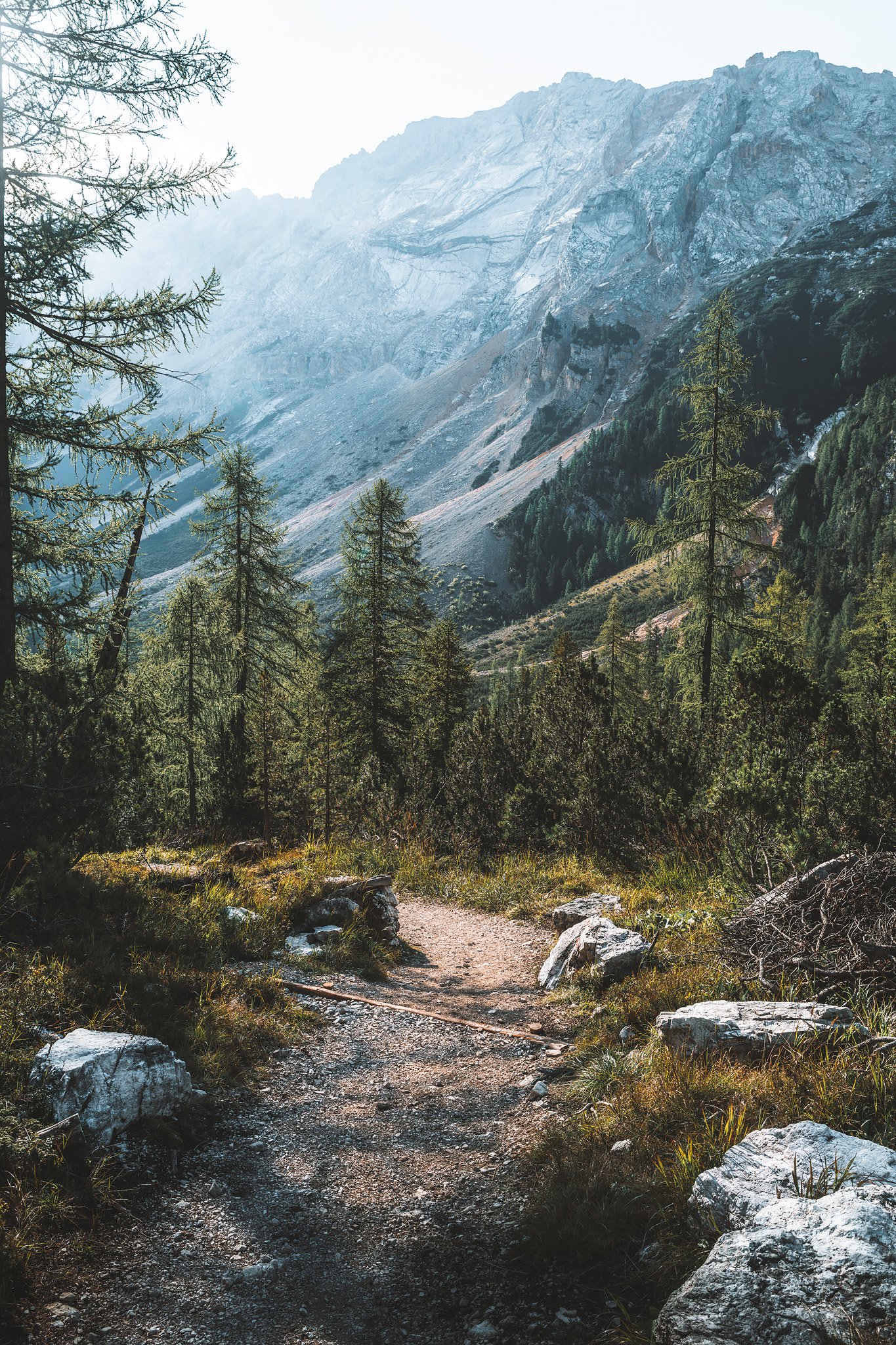
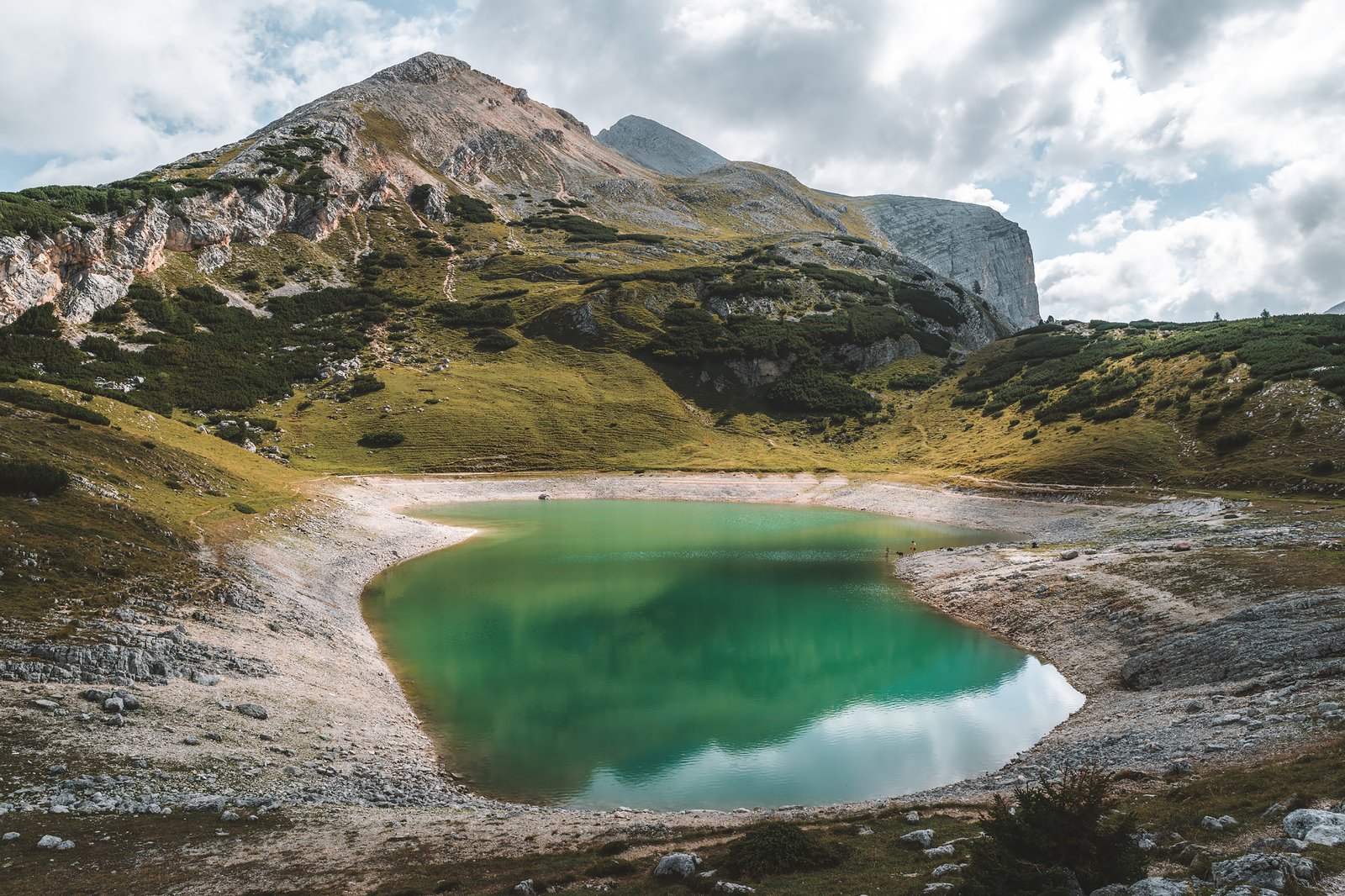
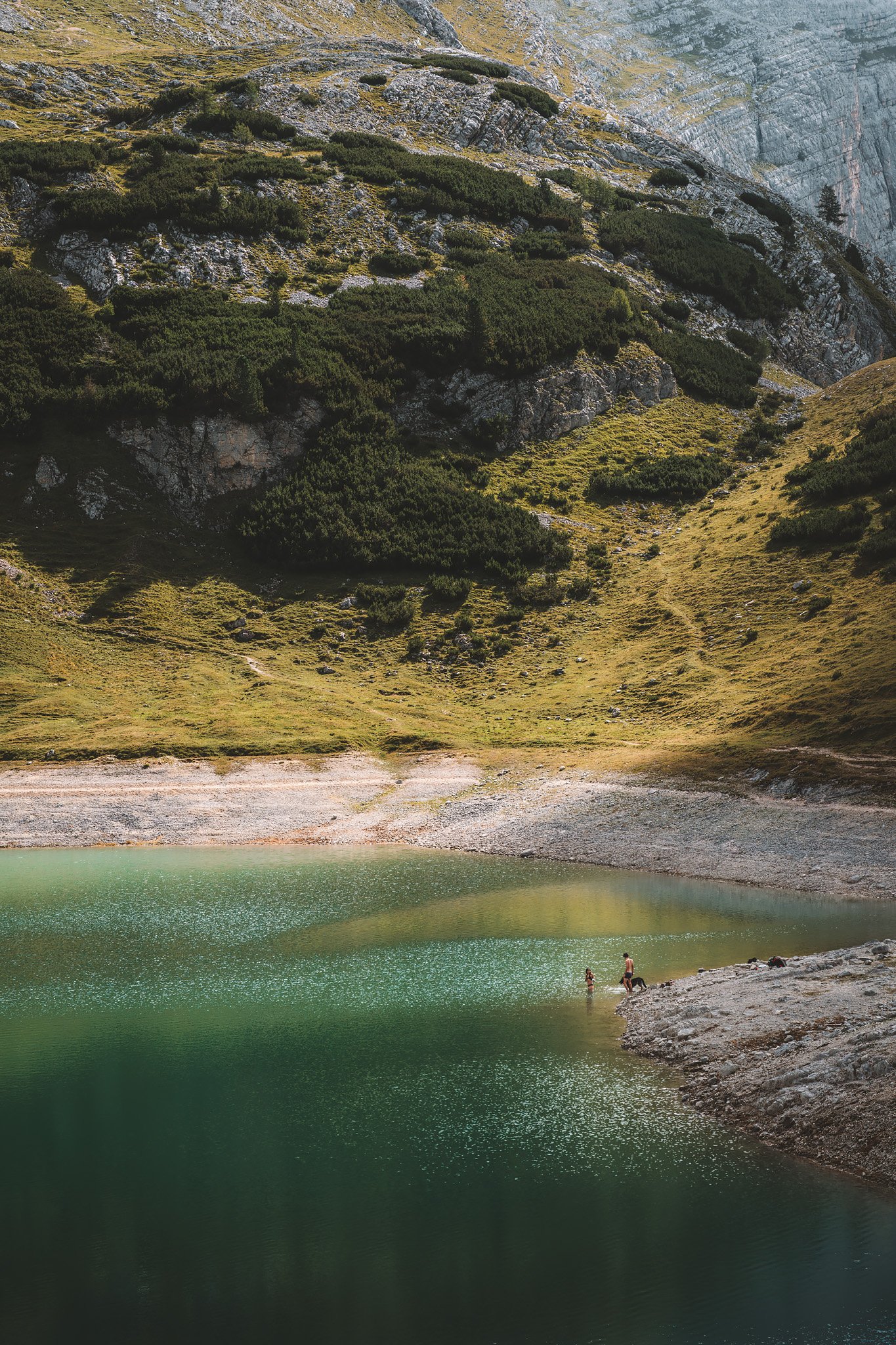
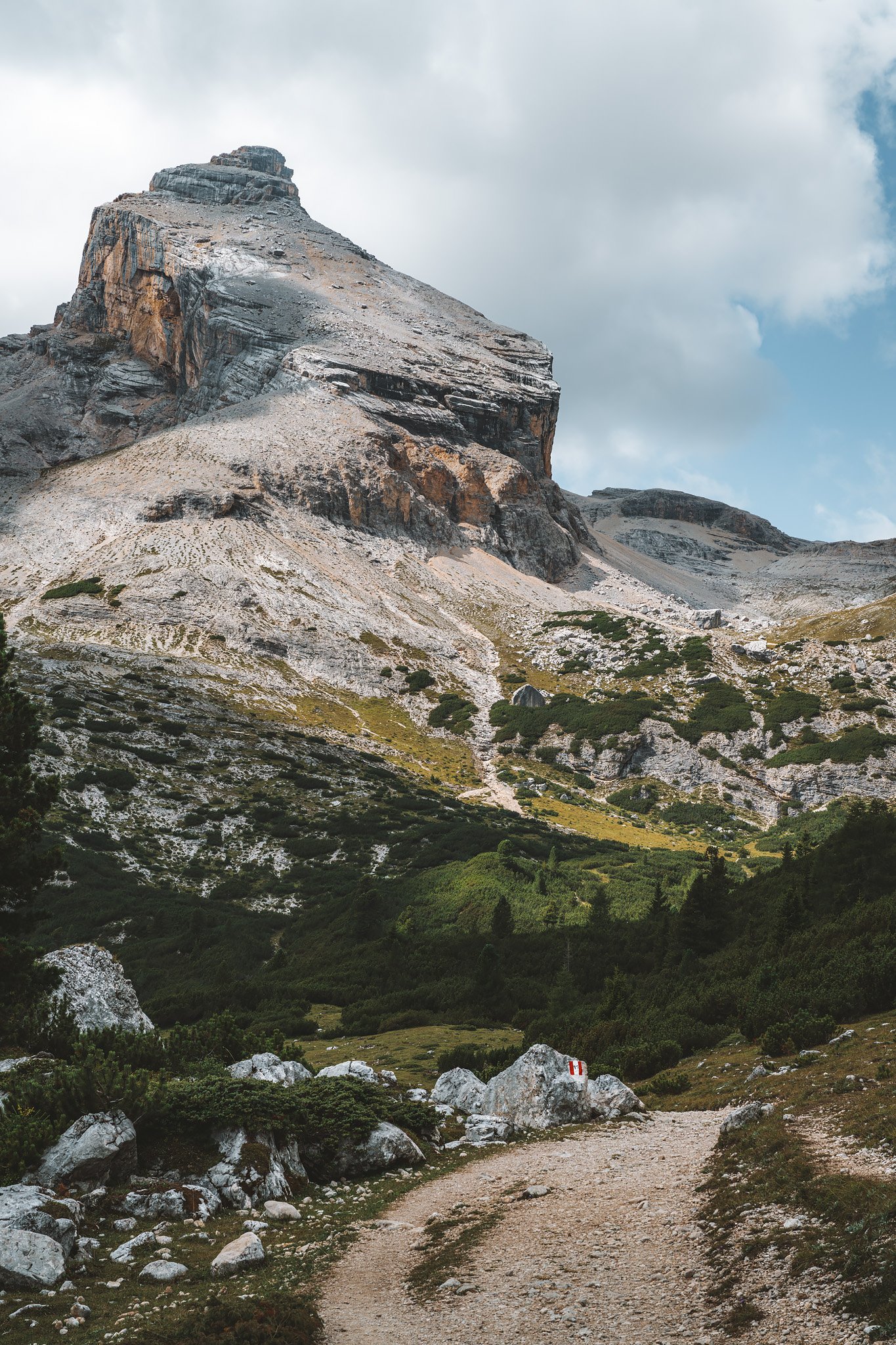
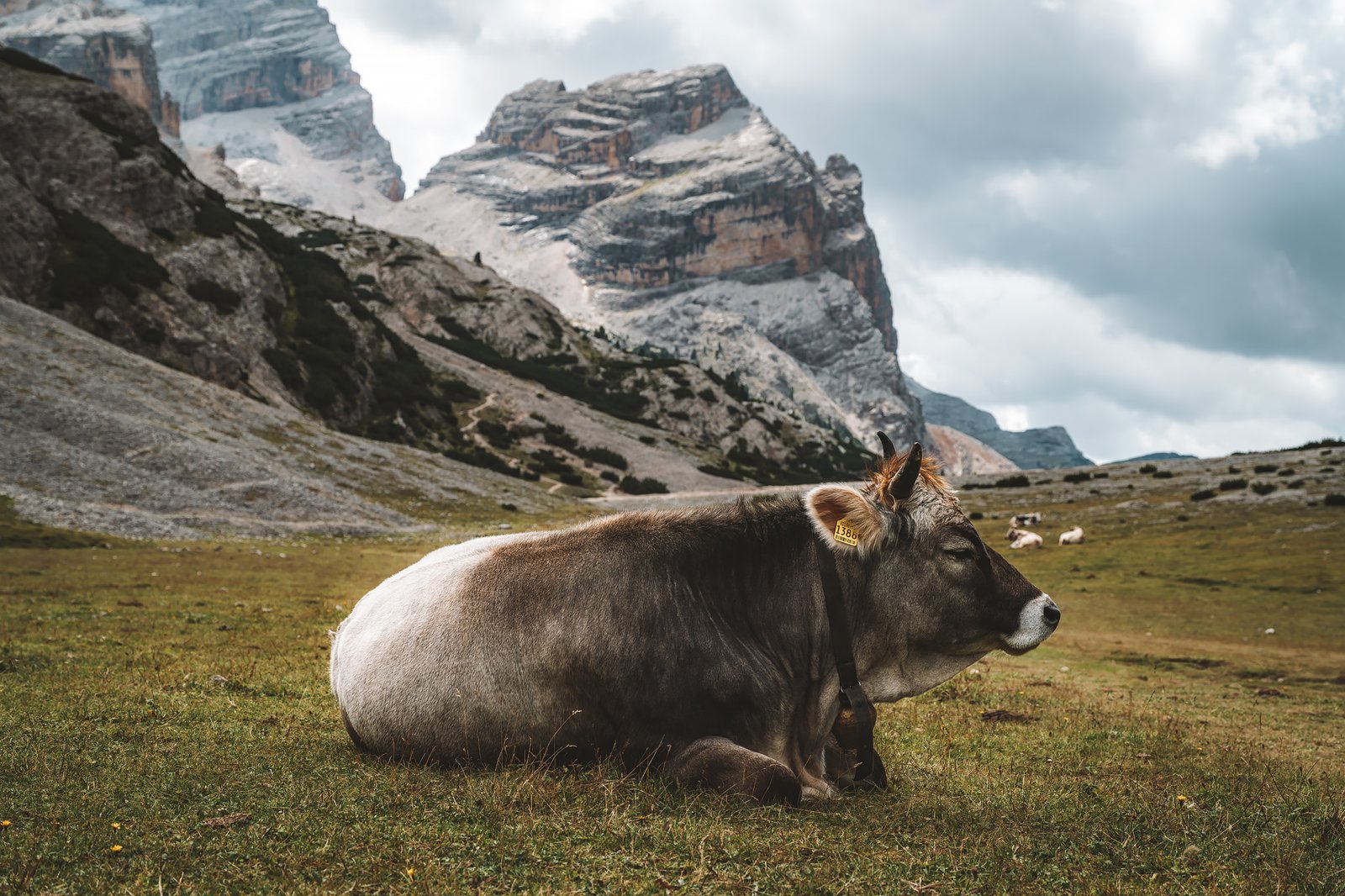
A Lake Between Stone Walls
The final section to Lagazuoi was different. The climb started gradually from the Fanes plateau and became progressively steeper. Vegetation almost disappeared and led to a more rocky terrain. And suddenly the view opened up.
The first sight of Lago Lagazuoi after reaching the summit could be seen through a narrow passageway formed by steep rock walls. At first glance, the area seemed confined, until the landscape gradually unfolded into one of the most striking views of the Alta Via 1.
The lake sits below, deeply colored, and surrounded by steep inclines. The route down to the lake was direct, a classical zigzag protected by wooden planks, well-structured and visually stunning.
From there, the final climb began to Rifugio Lagazuoi, at 2,752 meters. The fog rolled in quickly and the visibility dropped. The path to the rifugio was broken, turning into a lunar landscape, and could only be followed by the white and red markings found along the route.
Many of the tunnels from WWI could be seen from the outside. Hinting at a deeper story that would be revealed the day after. Despite the fog, there were a few times when the mist allowed for a quick photo. And through the haze, one could see the silhouettes of the Civetta and Pelmo for the first time.
At the top, the surroundings felt almost surreal. The peaks rise and fall behind the layers of mist. Never completely visible, but an incredible thing to witness. Before reaching the refuge, the day had exceeded the expectations of the morning and from the day before.
It had been an incredible journey so far, Braies at dawn, Seekofel, the meadows of Fanes and the descent to Lagazuoi. Each one very different from each other and offering not only great photography, but different feelings as well mixed with sweat and effort.
At 2,752 meters, it was time for a rest.