


After days walking in the rainforests of Andasibe surrounded by tall ferns and moss covering the trunks, we took a short flight from Tana to Morondava, and the view from the plane windows showed us a completely different country. The deep greens were gone. Instead, dry river beds, sparse shrubs, and reddish-brown plains stretched into the hazy distance.
Western Madagascar lies within a rain shadow zone. Before reaching this region, the trade winds release their precipitation along the eastern edge of the escarpment. This is why the forests in this area are dry and deciduous rather than permanently wet. We could see the entire transformation from the plane!
Morondava felt slower, dustier, and a little more improvised when we arrived. Many tourists travel along the RN7 (the major highway leading south from the capital) through Ranomafana and Isalo. The road is rough, but paved and relatively predictable. West of this point, the pavement disappears and travel times become uncertain. Many people simply take a flight rather than risk the journey by road.
Madagascar was preparing for Presidential Elections. We could see everywhere campaign T-shirts, posters… while drivers and guides debated candidates during lunch conversations. Even the airport had that same political energy. Passengers queued outside under the hot sun before moving through security beneath flickering fluorescent lights, and yet the flight departed right on schedule.
The First Baobabs
Just outside the terminal, we met our guide, Rado. He would be with us for the next two weeks throughout the west and south of the country.
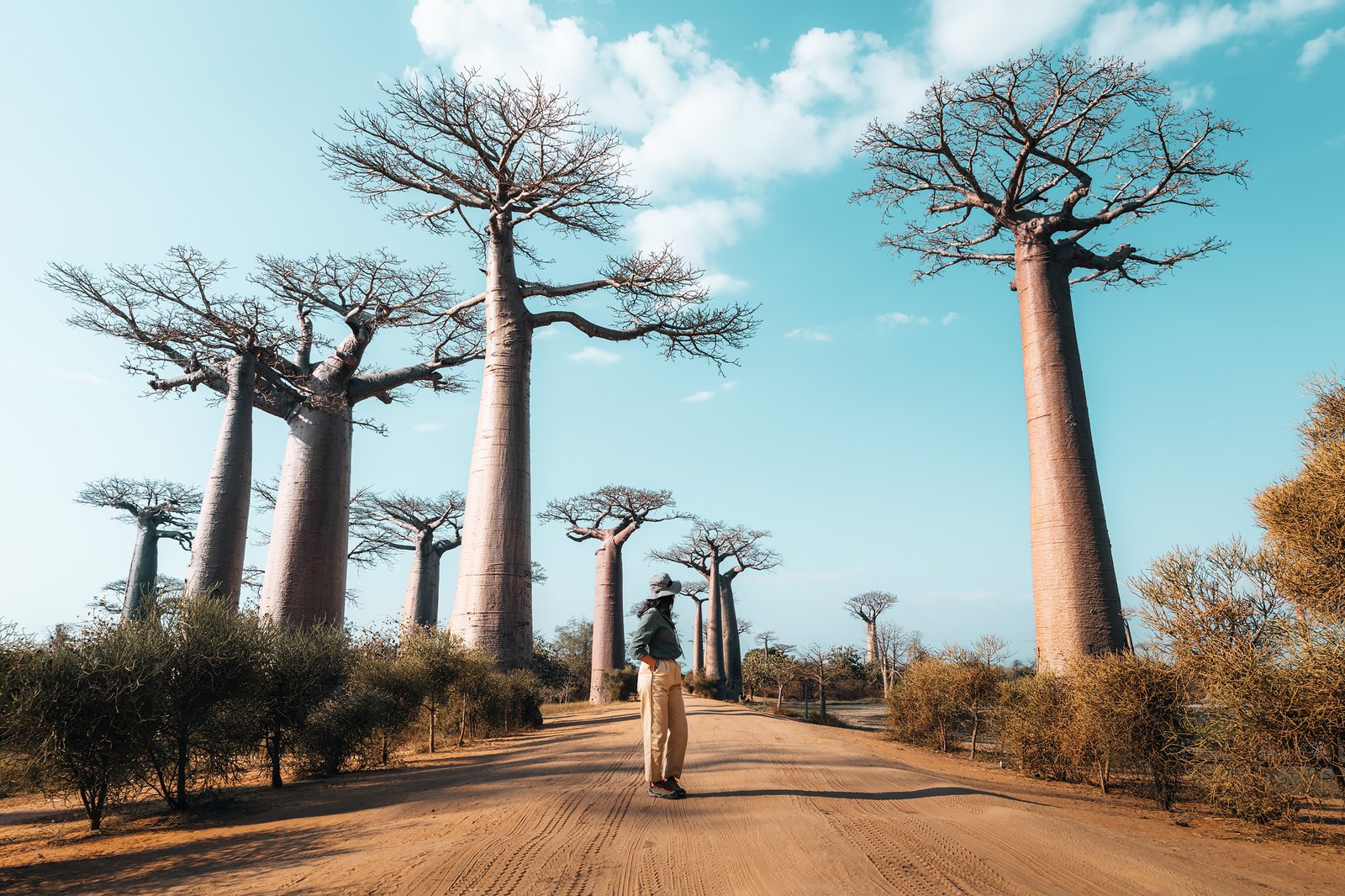
Before departing for Kirindy, we stopped at the famous Avenue of the Baobabs, perhaps one of the most photographed stretches of road in the country. I had seen photos of these trees for years, but seeing them in person was slightly different from what I had imagined. At first, I didn’t notice anything particularly special about the trees themselves. Instead, I noticed that this was still just a road. Zebu carts continued to pass through the dust, motorcycles disappeared into reddish clouds and children walked beneath some of the most bizarre trees on earth with no apparent interest on the trees.
During the dry season, the Baobabs lose their leaves to conserve water, so when we visited, only the trunks and branches were visible. Some of these trees still held large amounts of fruit. Baobab fruit has been used by Malagasy communities for hundreds of years in food, beverages, and traditional remedies.
Almost all of the trees lining both sides of the Avenue are adansonia grandidieri (also known as the African Baobab). Some are more than 1,000 years old. They develop horizontally before growing vertically. They first create a wide base to store enough water to survive extended droughts, and only later begin to rise upward. Nothing can prepare you for how massive these trees appear when viewed up close. In reality, they resemble enormous pillars with branches extending high above your head. Against a pale winter sky, they seemed almost like human-made structures rather than simple plants.
Rado suggested that we return after our departure for Bemaraha so that we could experience the trees at sunset. We were now ready to continue on to Kirindy, entering into the dry forest
It was really hot. The reserve is approximately sixty kilometers north of Morondava, however, by the time we reached Kirindy it was difficult to believe that we were still in Madagascar. The asphalt ended shortly after leaving the Avenue and turned into dusty dirt trails lined with baobabs and thorn scrub. We also encountered several villages along the way, where children would momentarily stop their games and greet us as we drove by.
Kirindy was the complete opposite of Andasibe, direct sunlight reached almost every part of the forest floor. Open canopy, branches devoid of leaves, and dry leaves blown by every breeze across red-colored sand covered the forest floor.
Initially, it appeared as though almost nothing lived in that environment, but we couldn’t be more wrong.
Kirindy is one of the last remaining habitats of Western Madagascar’s dry forest ecosystem. Before deforestation significantly reduced this habitat, this type of forest dominated much of Madagascar’s landscape. Dry forest ecosystems operate according to cycles of abundance and drought. Trees lose their leaves during dry periods to reduce transpiration and remain dormant until rainfall returns. Every species present in this habitat has developed unique adaptations to cope with drought conditions, including reducing metabolic activity, retreating to sheltered locations, and other survival strategies.
Many decades of scientific research have focused on Kirindy, mainly due to its geographical isolation, which allows scientists to conduct comparative studies on evolutionary processes among the various species inhabiting this environment.
Night Walk at Kirindy
Once dusk began to fall, we left the lodge with our local guide to explore the forest.
Within minutes of sunset, the forest erupted into chaos, strange calls echoed through the trees, an intense wall of insect sounds filled our ears, and flashlights cast beams across branches searching for the glowing eyes of animals hidden in the darkness.
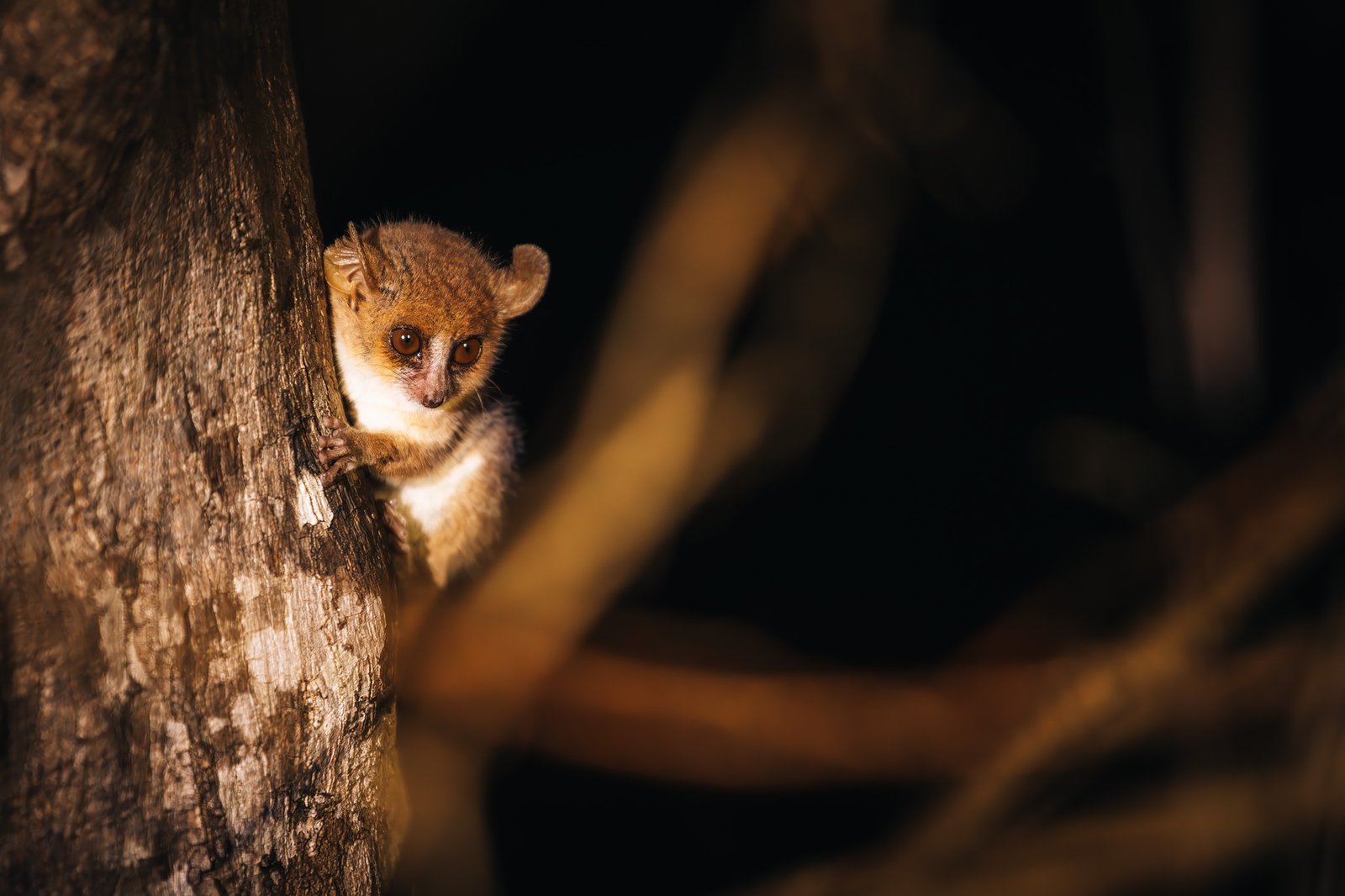
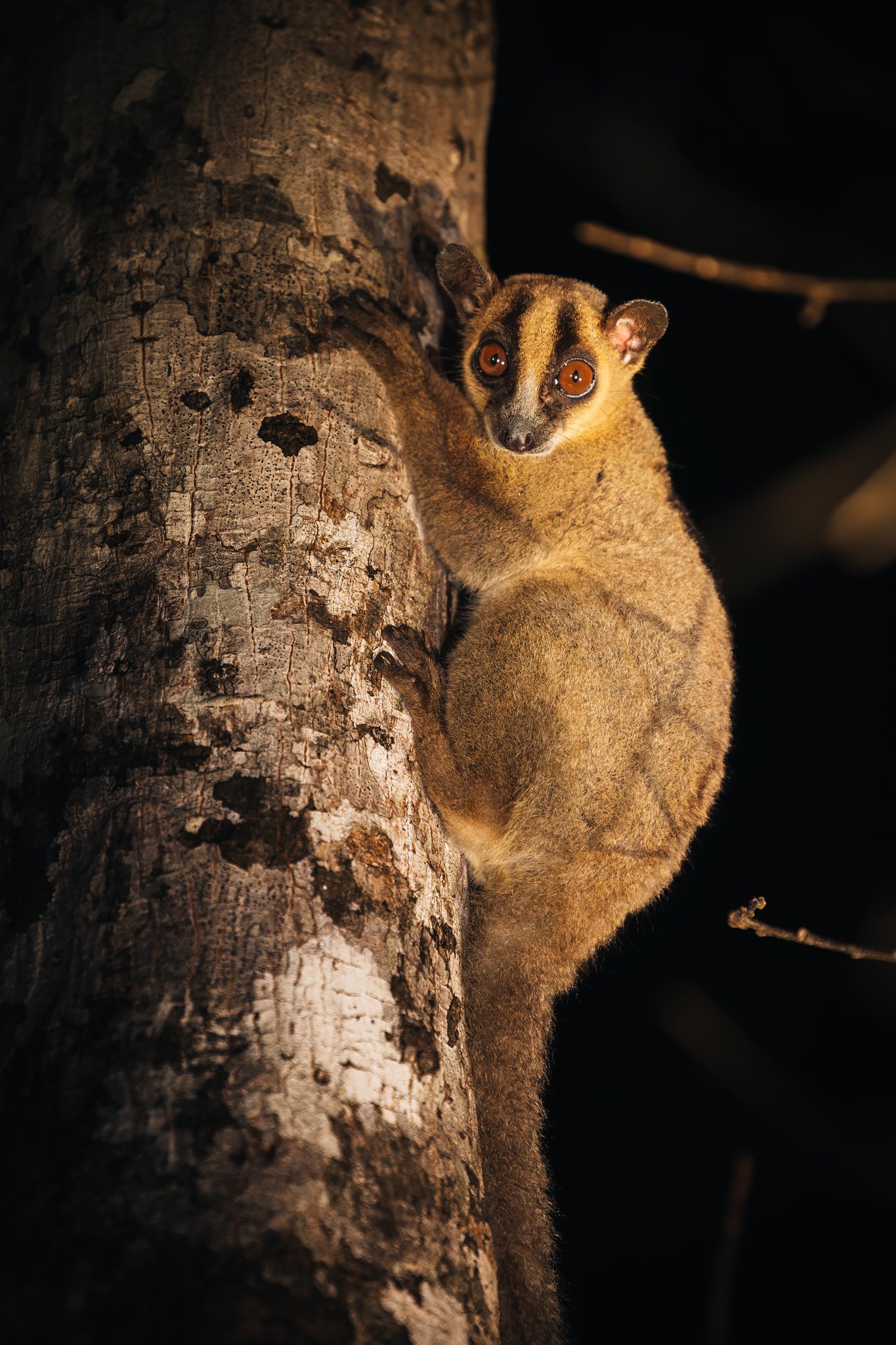
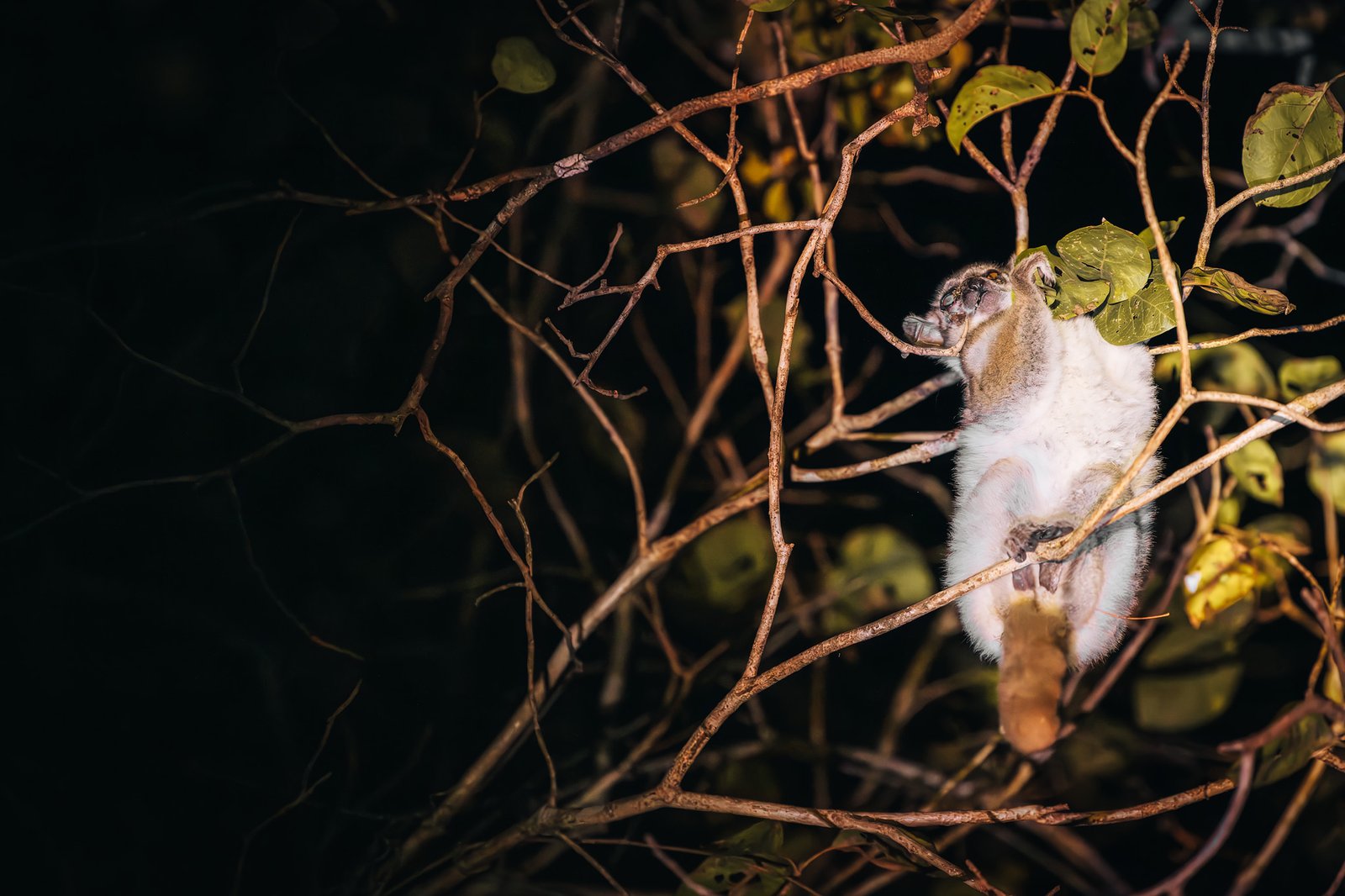
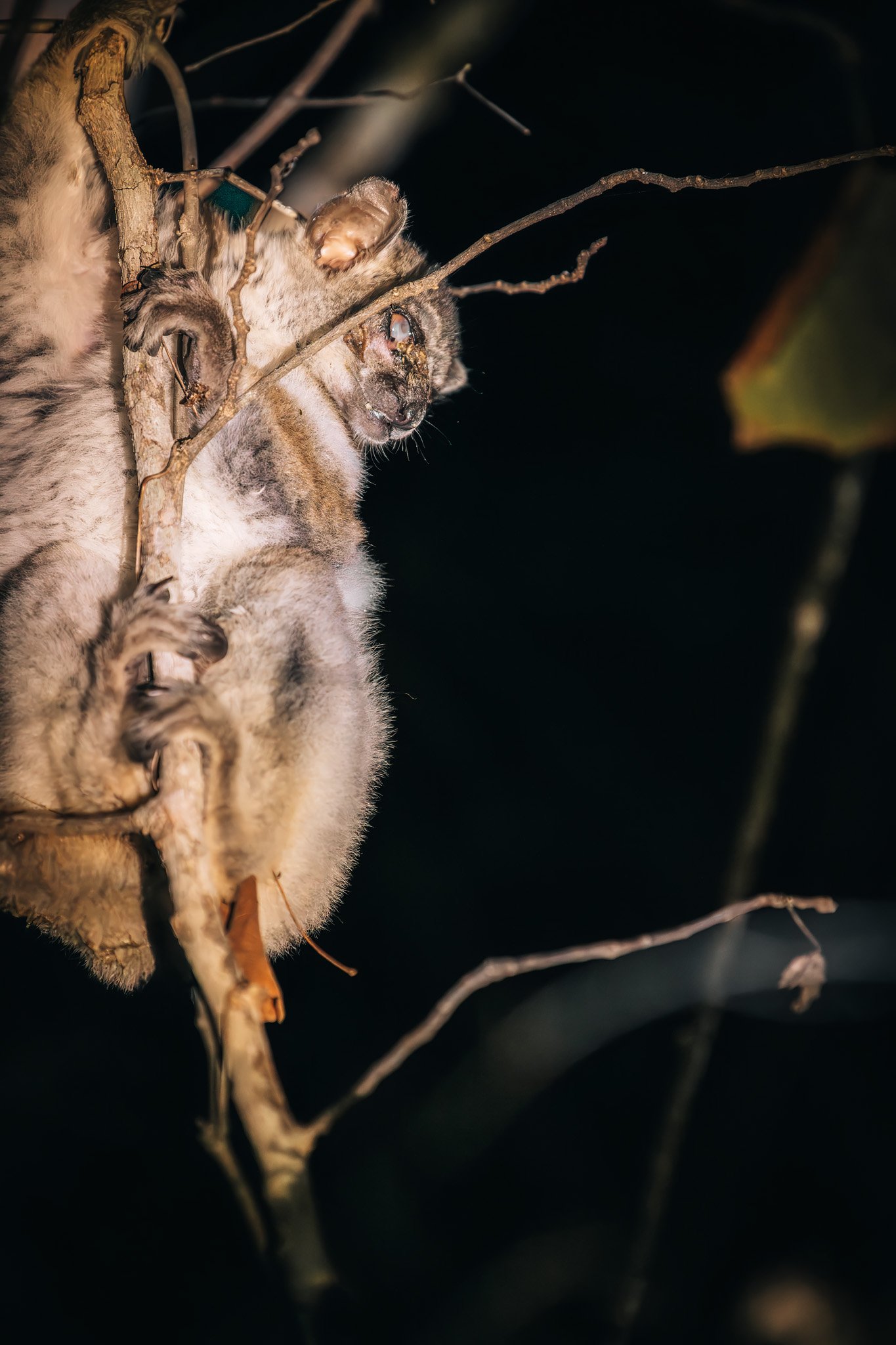
The guide located things that we likely would have overlooked had we attempted to find them on our own. Lemurs in Madagascar vary depending on location, season and time of the day. One of the most special ones is Berthe’s mouse lemur, one of the few left in the world and only found in Kirindy, perched delicately on a branch no thicker than my index finger… We saw as well several Sportive lemurs, appearing invisible until their eyes reflected the beam of a flashlight, and a Fork-marked lemur peered out from a tree cavity.
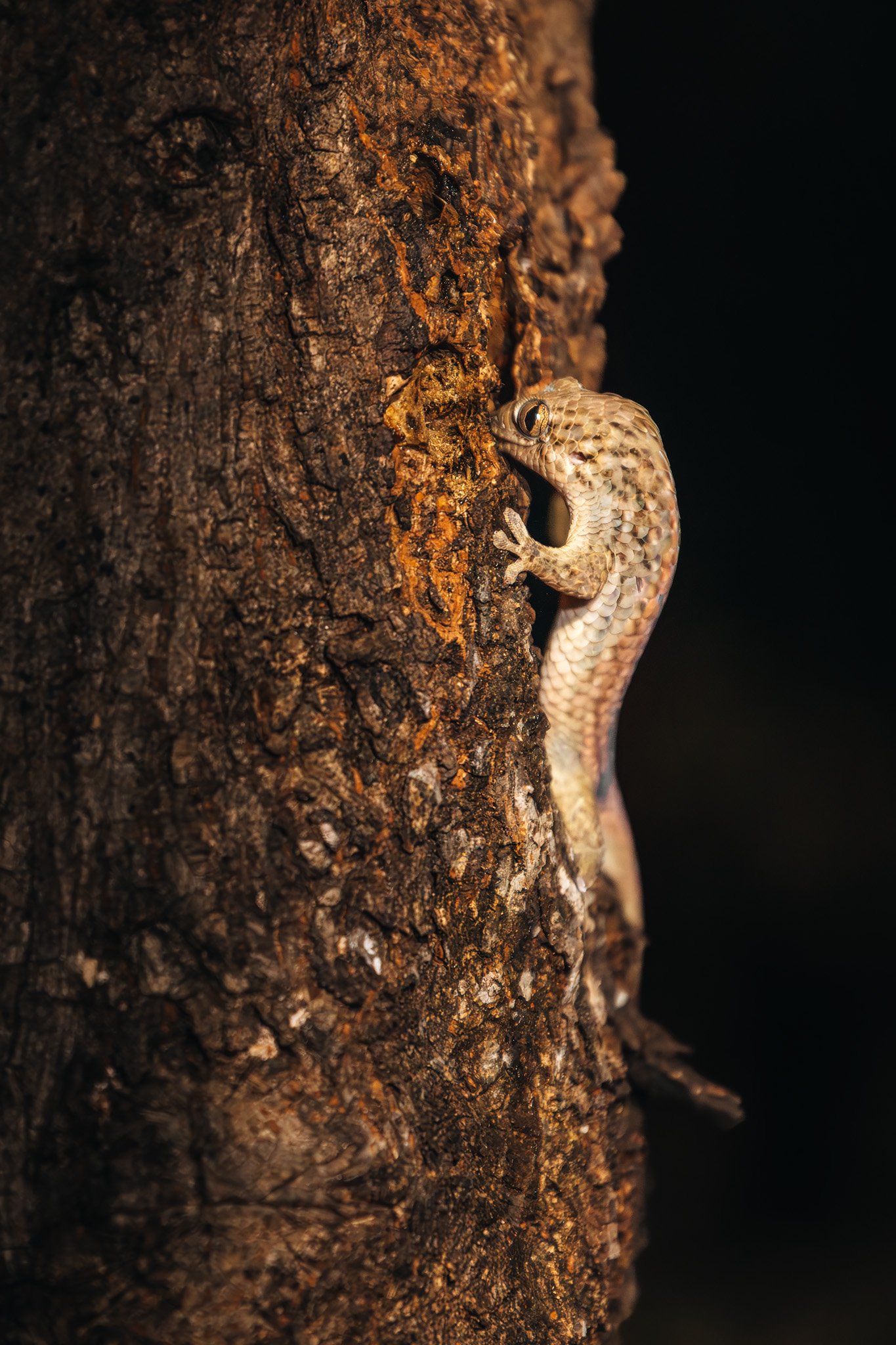
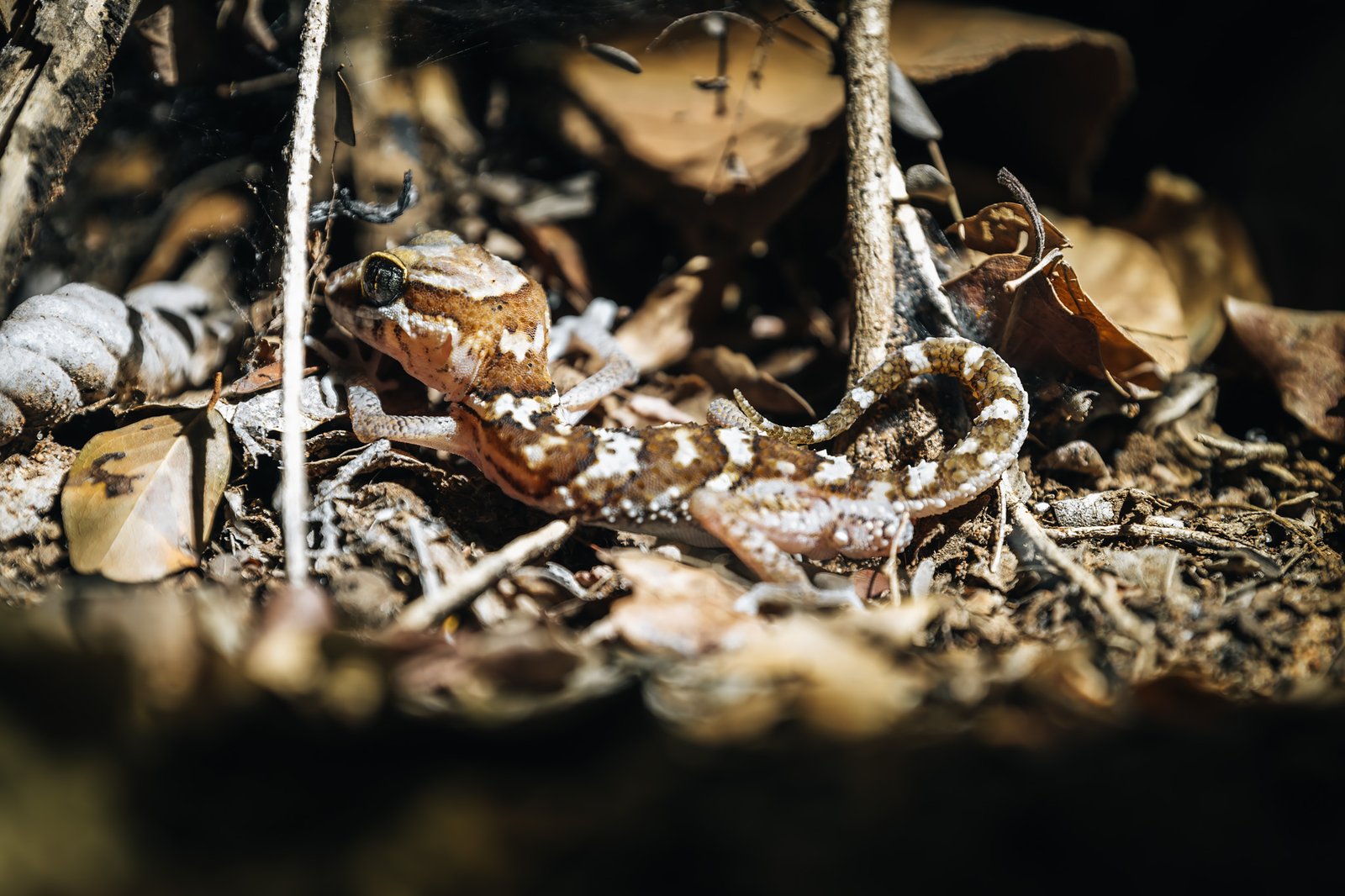
The reptiles displayed their own remarkable adaptations. Geckos possess scales that can be shed instantly when captured by predators, allowing them to regrow lost skin later. Chameleons proved surprisingly easy to locate at night, as their resting coloration is pale enough to distinguish them from the surrounding darkness.
Every twenty metres or so, our guide would stop again. Another pair of glowing eyes. Another animal we probably would never have discovered ourselves.
However, there was one creature we were all eager to encounter…
The Ghost of Kirindy
Before visiting Madagascar, there was one creature I wanted to see more than any lemur, the Fossa.
A mix between a cat and a dog, but different from all and totally unrelated to them. Fossas belong to a separate family of carnivorous mammals found exclusively in Madagascar. These predators descend from ancient mongoose-like creatures that reached Madagascar millions of years ago. Today, they represent Madagascar’s apex predator, hunting everything from small birds to lemur species.
Their bodies appear almost designed for this purpose, powerful legs, ankles capable of rotating nearly 180°, and tails almost equal in length to their bodies, all allowing them to maneuver quickly through tree branches.
Researchers have documented fossas descending tree trunks head-first, an ability shared by very few mammals.
Kirindy is considered one of Madagascar’s best locations for spotting them, but finding one is never guaranteed. Our guide told us that a few had been active recently in the area, nevertheless, we spent nearly two hours walking before finally accepting defeat and heading back empty-handed.
Close to the end of the route, he stopped walking and pointed upward, without saying a word. At first, nothing happened. Only bare branches disappearing into the darkness. Then, movement.
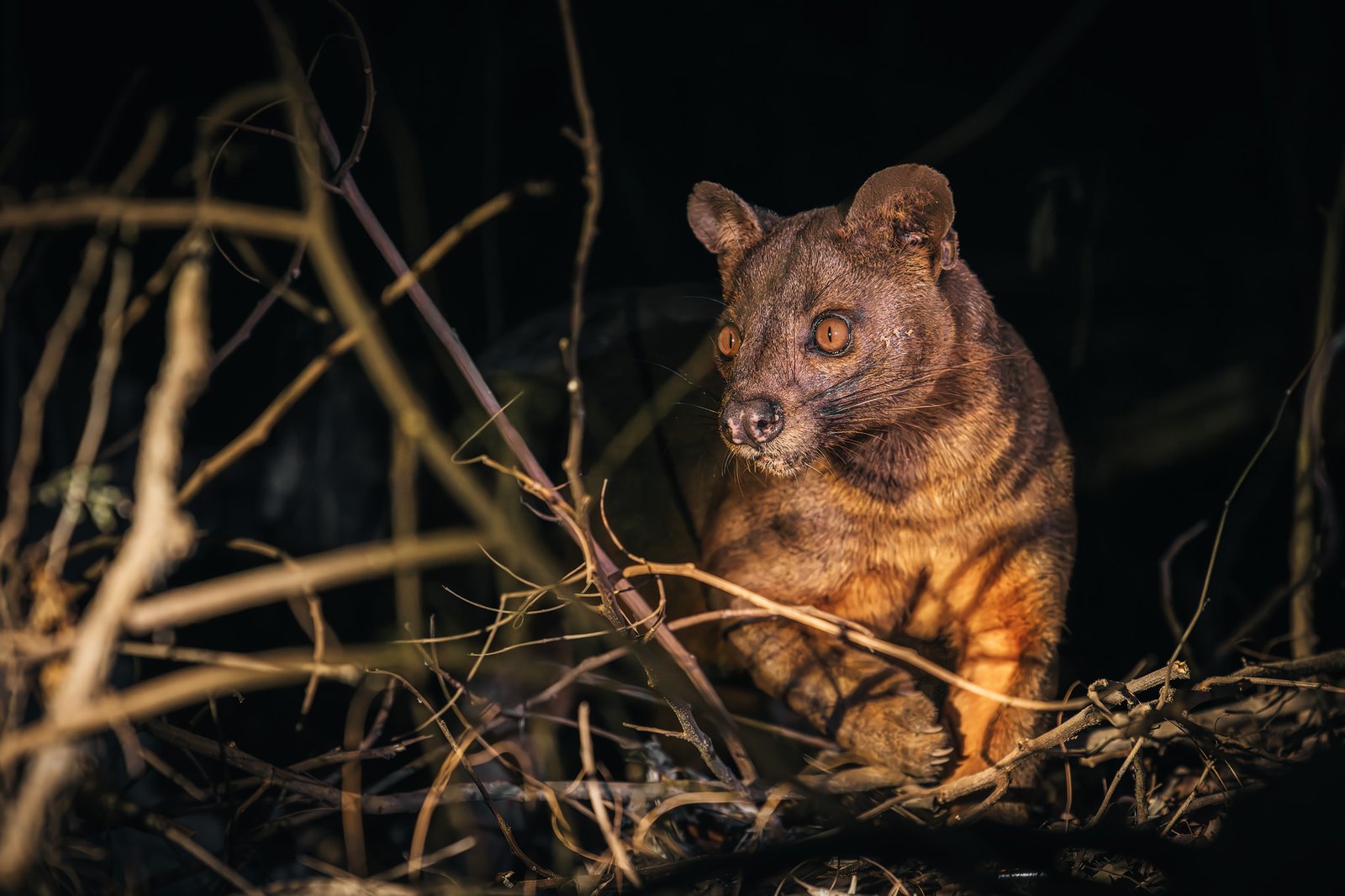
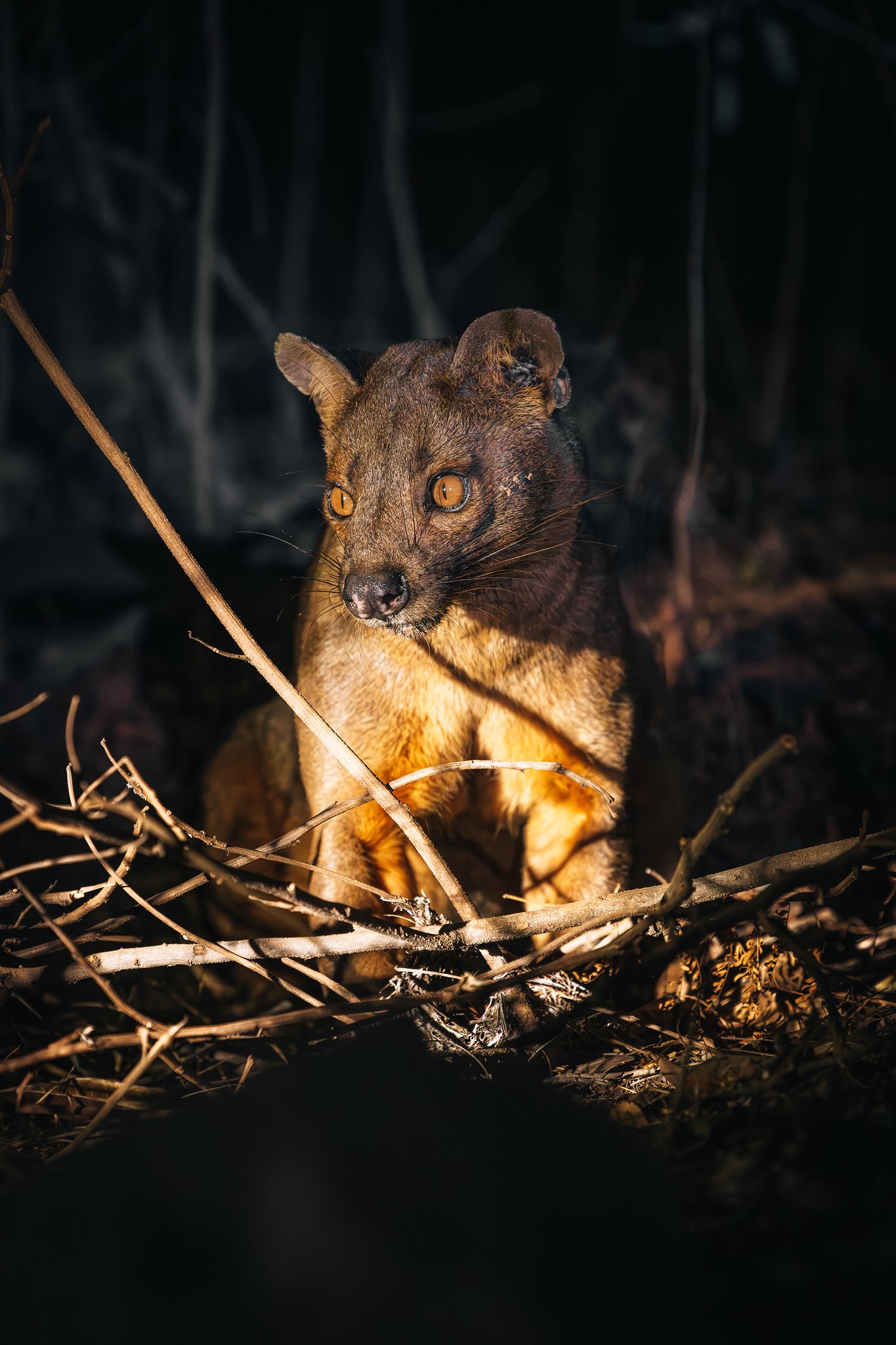
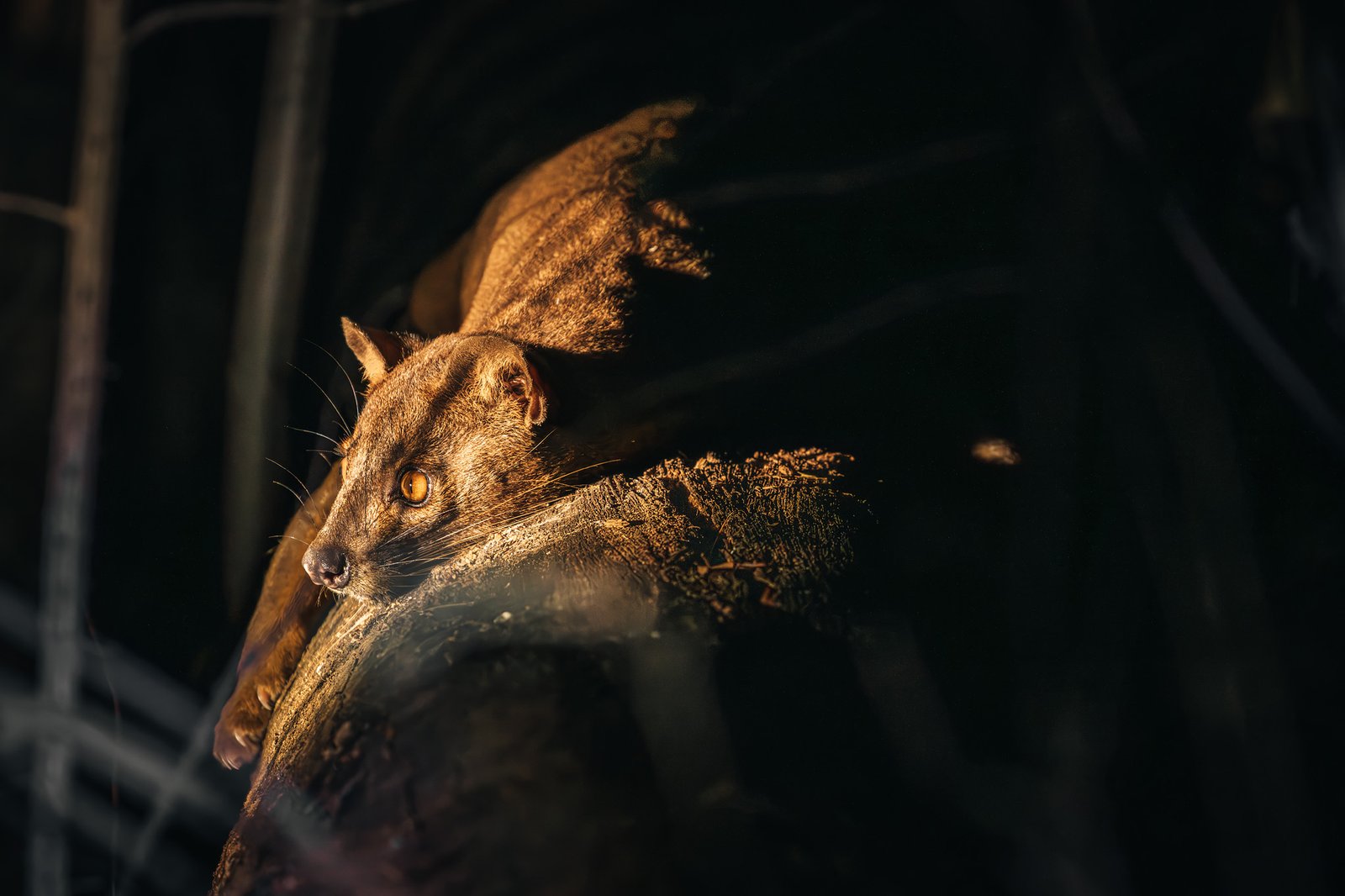
A young male fossa moved silently between the trees and paused briefly to scan his surroundings before continuing onward, with the confidence of a creature that owned the entire forest.
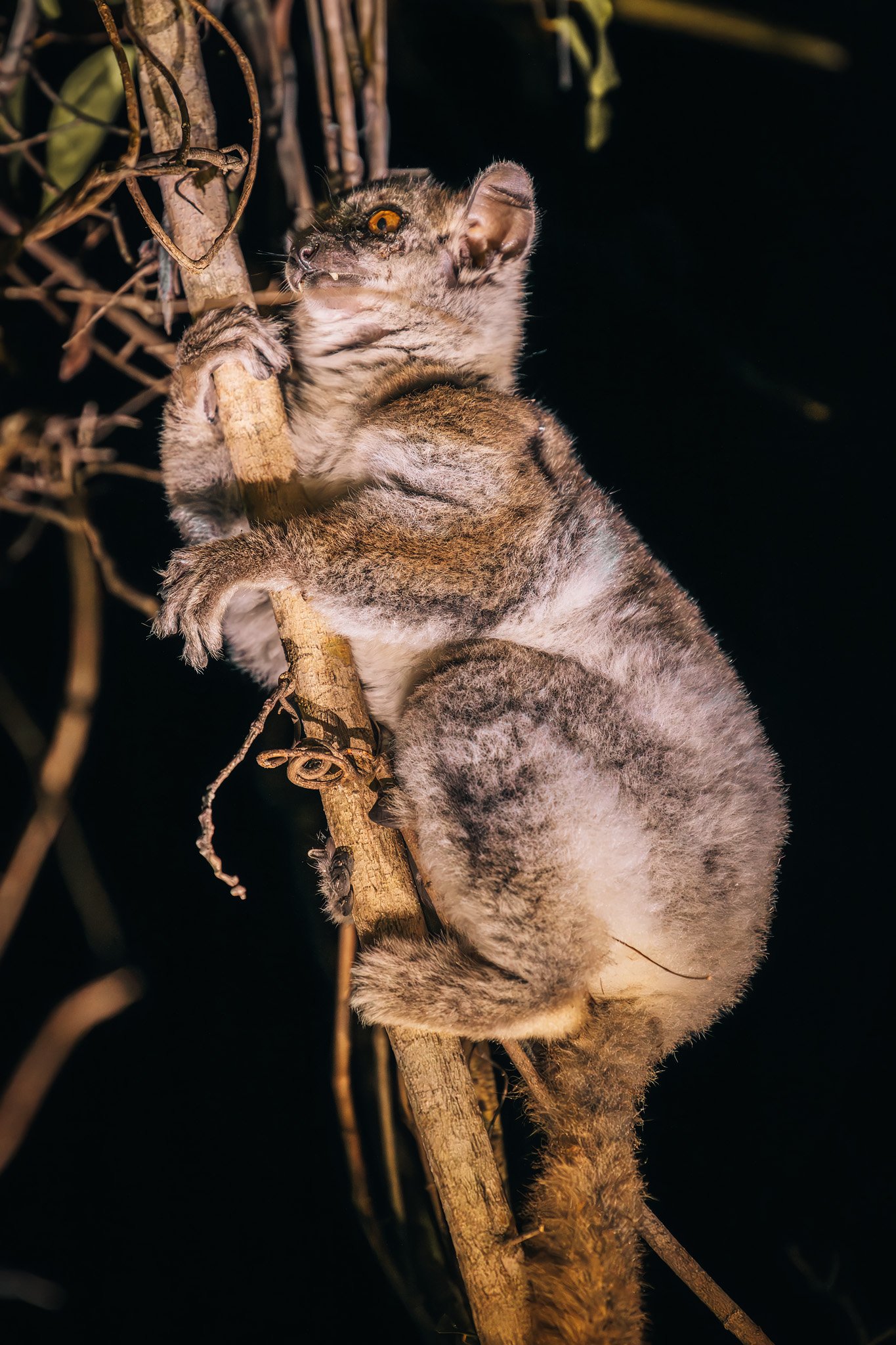
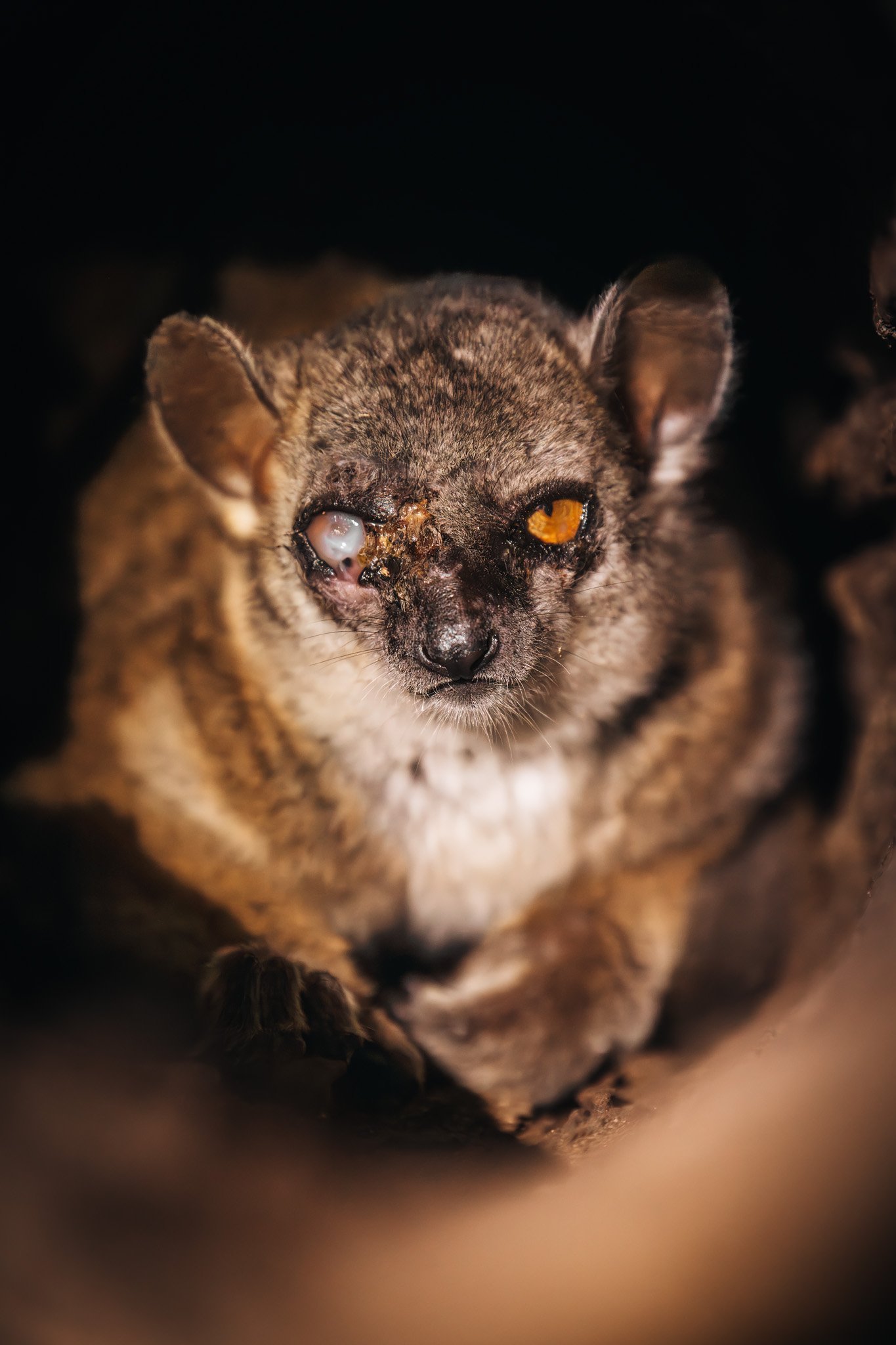
Nearby, a red-tailed sportive lemur missing one eye froze against a tree only a few meters away. An unsuspecting predator with an unsuspecting prey. Both occupying the same small section of forest, separated only by darkness and nothing else.
We didn’t know it then, but the fossa had already smelled and spotted him, and was preparing its attack. The lemur, alerted by the screams of some of his companions, reacted quickly and hid inside a hollow tree, prepared to wait there, if necessary, for the entire night.
The fossa waited for a while, lying on top of a trunk, which allowed me to take some great (but really difficult to take) photos, but eventually it grew impatient.
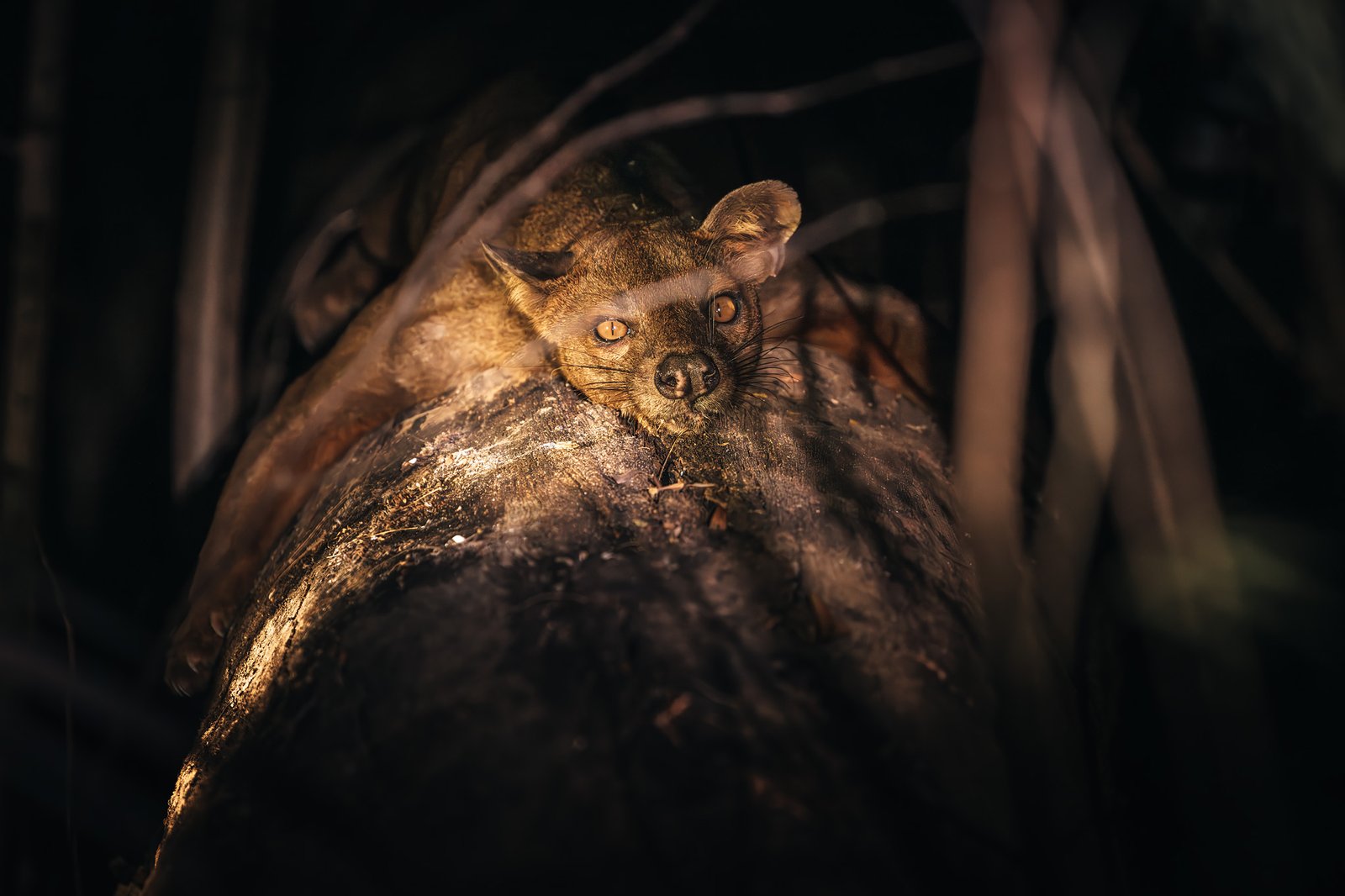
The encounter lasted barely a couple of minutes… but it remained with me ever since as a reminder that nature does not always follow our expectations. Often, the greatest moments happen when two creatures simply continue their evening routines, completely unaware of the handful of people watching them from the shadows.
On our return journey to camp beneath an incredibly star-filled sky, Kirindy once again looked completely different from how it had appeared only hours earlier.
Still, the forest had new surprises awaiting us the morning after.